A city where beer was born from a German colony in 1903 — drink fresh draft ladled into a plastic bag to carry home, walk Beer Street on Dengzhou Road eating spicy clams with an ice-cold pour, taste raw 原浆 beer you can't drink anywhere else, then hit Asia's biggest beer festival.
Picture yourself at a plastic table on the pavement on a summer night along Beer Street. A bag of fresh draft hangs under the table, a plate of spicy clams steams in front of you, and you pour beer from the bag into a glass, prise open a clam, take a sip, and chat with the people next to you. That's the scene that sums up Qingdao best — because here beer isn't just a drink, it's a way of life. Qingdao is the one city in China where the whole place revolves around beer, from the old brewery buildings to Beer Street to the largest beer festival in Asia.
The story starts in 1903, when Germany leased Qingdao as a colony (1898–1914) and German and British investors set up a brewery. They followed the German Beer Purity Law (Reinheitsgebot) — only malt, hops, water and yeast — and drew clean water from nearby Laoshan Mountain (崂山). From the start, Tsingtao had a clean, well-balanced taste. That German legacy runs so deep that Tsingtao is now the most widely exported Chinese beer brand in the world — but the best version is the fresh draft you have to come here to drink.
This page walks you through it all — from fresh draft sold in plastic bags (袋装啤酒), the city quirk you'll only see here, to raw 原浆 (yuanjiang) beer that still has live yeast in it, then on to the Beer Museum, Beer Street on Dengzhou Road, and the August beer festival. We'll be honest about where it's worth drinking and what to watch out for — if you come to Qingdao, beer is the one thing not to miss.
The German brewery building on Dengzhou Road is now China's first beer museum — walk a real production line, then finish with a fresh pour of raw beer.
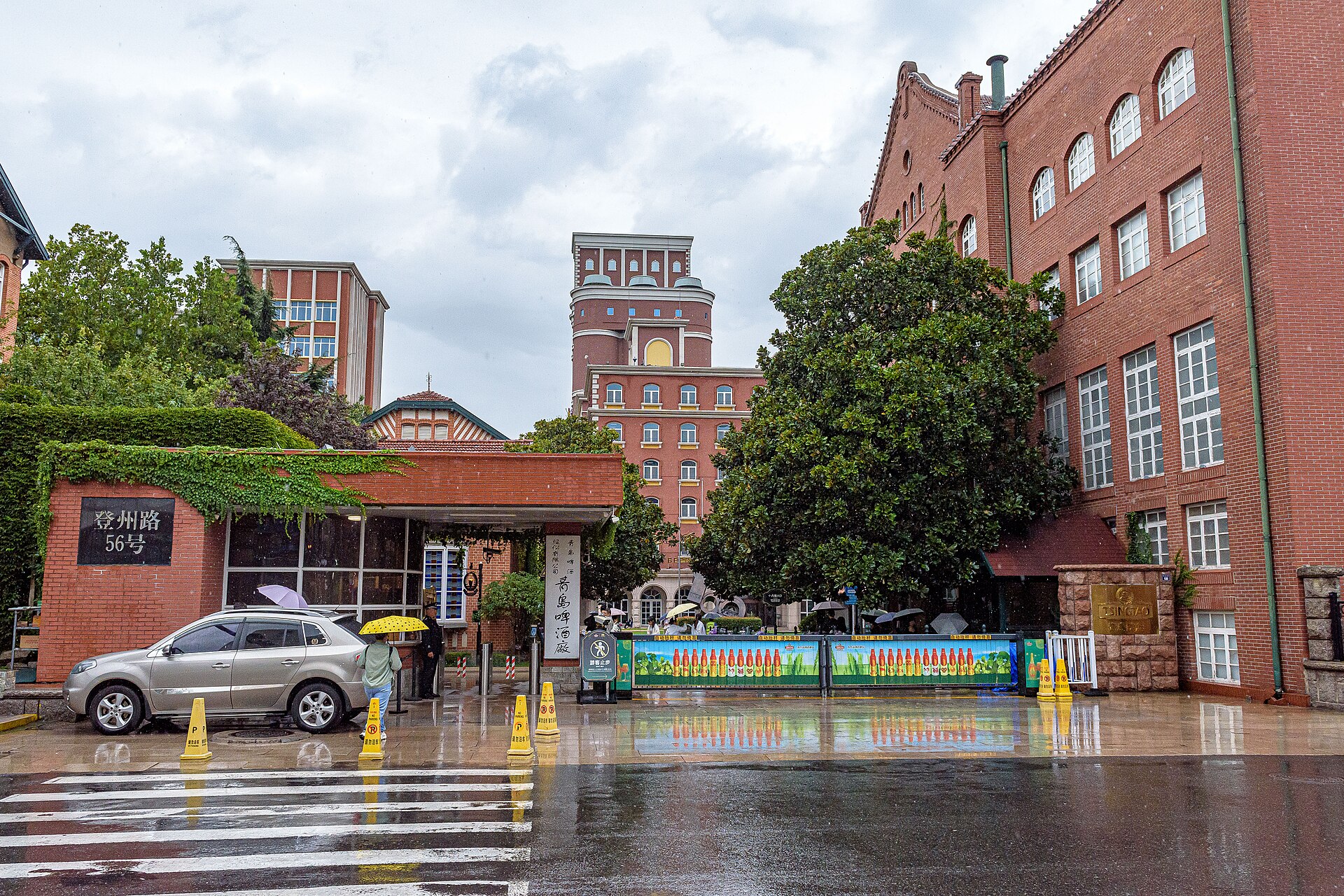
The old German-style Tsingtao brewery on Dengzhou Road (登州路 569) — today the Tsingtao Beer Museum
The Tsingtao Beer Museum (青岛啤酒博物馆) sits inside the original brewery buildings at No. 56 Dengzhou Road. It's the first beer-themed museum in China, and walking through it you get the story from 1903 — antique German machinery, vintage bottles and labels, rooms that recreate the colonial era, and the fun part, a real working production line you can watch. There's even a "drunk room" with a deliberately tilted floor that makes you feel tipsy as you walk. It's a museum that tells its story well and never feels dull.
A ticket runs about ¥50–60 (~฿250–300), and the best value is the combo ticket that includes two beer tastings — the first a pour of raw 原浆 (yuanjiang) straight off the line, unfiltered and unpasteurised, rich and full of yeast aroma you can't get elsewhere; the second a fresh draft 纯生 when you reach the bar near the end. Allow about 1–1.5 hours. Honestly, if you come to Qingdao and you like beer, this is the place to start.
Get to know each one first, then choose — some you can only drink in Qingdao, and the bottled beer you already know is just the starting point.
The most iconic Qingdao sight — fresh draft ladled into a plastic bag with a straw, to carry home or drink on the street. Locals prefer draft to bottled beer because it tastes fresher. The draft here is unpasteurised, brewed and delivered fresh every morning around 9 am, low in alcohol, malty and smooth — but it has to be kept cold. So beer houses and corner shops along Beer Street keep kegs of fresh draft on hand to bag up. It's a beer culture you won't find in any other Chinese city.
If you want to try Tsingtao properly, 原浆 is the one to go for — beer that's unfiltered and unpasteurised, with live yeast still in it. The taste is rich, slightly cloudy, full of malt and yeast aroma — completely different from the clear, pasteurised bottled Tsingtao made to keep for a long time. Raw beer has a very short shelf life and has to stay cold, so you can only drink it fresh in Qingdao. Try it at the Beer Museum, the beer houses on Beer Street, and a few restaurants.
Pure draft 纯生 is the middle ground between raw beer and bottled — filtered clear but not heat-pasteurised, so it keeps its fresh taste and aroma well. It's crisp, smooth and refreshing, the beer that restaurants and beer houses across Qingdao pour by default, straight from the tap into an ice-cold glass. It goes beautifully with seafood and spicy clams. If you don't want to start with the bigger taste of raw beer, this is the easy-drinking pick — and noticeably fresher than the bottle.
That green bottle with the red "SINCE 1903" label you see in Chinese restaurants around the world started right here. It's a clean lager, balanced bitterness, easy to drink, filtered clear and pasteurised so it can travel far. In Qingdao you'll also find special editions like the 1903 line and premium versions to try. It's available everywhere, sure — but drinking a Tsingtao bottle in its home city by the sea, especially alongside the local seafood, simply hits different.
Four different scenes — the legendary Beer Street, the seaside Old Town, Golden Sands Beach during the festival, and the local beer houses where Qingdao actually drinks.
Qingdao's Beer Street is on Dengzhou Road, the same street as the original brewery and the Beer Museum. The whole stretch is lined with beer houses, seafood spots and fresh-draft stalls. At night, especially in summer, it gets buzzing — plastic tables spill across the pavement, bags of fresh draft hang under the tables, and plates of spicy clams and grilled squid cover every surface. This is where to come to soak up Qingdao's beer culture in full.
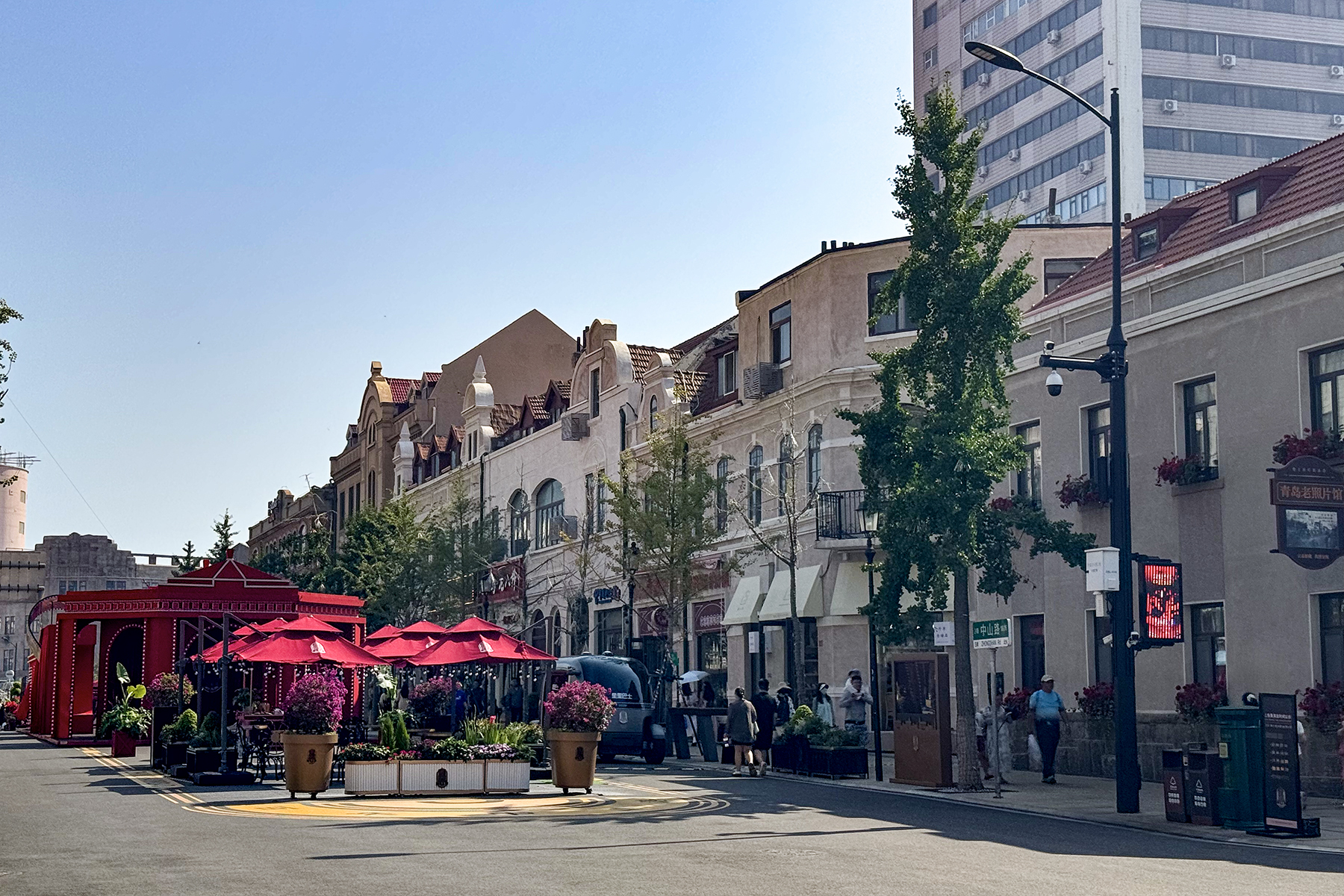
Around Zhongshan Road (中山路) and the Pichaiyuan (劈柴院) food alley, you'll find stalls selling fresh draft in bags to drink as you wander the lanes, alongside street snacks and grilled seafood. The setting is colonial-era old town that's slowly being restored, so you can photograph the handsome old buildings with a bag of fresh draft in hand. It's a fun, cheaper way to experience the city's beer than sitting down at a restaurant — and very much the Qingdao way.
From mid-July to mid-August, the Qingdao International Beer Festival's main venue moves to Golden Sands Beach (金沙滩, Jinsha Tan) on the West Coast (Huangdao). Expect giant beer tents, a concert stage, games zones and more than 2,000 beers from around the world. Admission is free; you only pay for beer and food. Come at this time and the city is at its liveliest — though honestly it gets very crowded and hotels cost more, so book ahead.
Beyond the tourist strips, the best beer is often in the small beer houses (啤酒屋) and local seafood spots scattered across the city. These places pour fresh draft straight from the tap, paired with spicy clams, prawns and squid — friendlier prices and bolder flavours than the tourist places. Look for somewhere full of Chinese diners with a menu of fresh seafood. This is where the people of Qingdao actually sit and drink, day in, day out.
People in Qingdao have a saying — "ha pijiu chi geli" — ice-cold fresh draft with hot, spicy stir-fried clams is the city's greatest pleasure.
Qingdao's Old Town — colonial-era buildings home to the beer houses and seafood spots where you drink beer with clams
To really understand Qingdao, you need this phrase — 哈啤酒吃蛤蜊 (ha pijiu chi geli), "drink beer, eat clams." The word "ha" (哈) is Qingdao dialect for "drink," and "geli" (蛤蜊) means clams, which locals call "gala" (嘎啦). The two are inseparable — spicy stir-fried clams (辣炒蛤蜊), fresh clams wok-fried with chilli, garlic and scallion, hot and savoury. Eaten with ice-cold fresh draft, the heat of the clams cuts against the cold crispness of the beer so perfectly you can't stop.
The classic city scene is a street-side table with a bag of fresh draft hanging underneath, a plate of spicy clams in front of you, slowly pouring, slowly prising open clams, sipping and chatting all night. Beyond clams there's grilled squid, prawns, mantis shrimp (虾虎) and other grilled seafood that pairs with beer. It's all fresh because Qingdao sits on Jiaozhou Bay (胶州湾), rich in seafood. If you want to go deeper on spicy clams and seafood, we have separate pages for both below.
What you can drink in Qingdao but rarely anywhere else — from the most essential first.
If you only have time for one beer in Qingdao, make it raw 原浆 — unfiltered, unpasteurised, slightly cloudy, full of malt and yeast aroma, far richer than the bottle. It's the taste that captures the fresh-draft soul of this city best. Try it at the Beer Museum or a beer house on Beer Street, and you'll understand why the real Tsingtao has to be drunk on home ground.
Skip this and you haven't really been to Qingdao — walk up to a fresh-draft stall in the Old Town or on Beer Street, ask for draft ladled into a plastic bag with a straw, then sip it as you stroll the lanes or sit street-side. The unpasteurised draft, delivered fresh every morning, tastes noticeably fresher than the bottle. It costs just a few yuan a bag — a fun, cheap and unmistakably Qingdao way to drink that you can't replicate elsewhere.
The combo Qingdao loves most — ice-cold draft 纯生 from the tap with a plate of hot, spicy stir-fried clams. The cold crispness of the beer cuts the heat of the clams so well you can't stop. Order it at a local beer house with seafood for the best value and the boldest flavour, then drink, prise open clams and chat as you go. This is the Qingdao dinner everyone should try at least once.
If you come between mid-July and mid-August, don't miss the Qingdao International Beer Festival at Golden Sands Beach, with more than 2,000 beers from over 40 countries — special-edition Tsingtao, craft beers and imports alike — under giant beer tents with a concert stage and a fun Asian-Oktoberfest atmosphere. Admission is free; you only pay for the beer. Perfect if you want to taste many styles in one place.
On payment, Qingdao runs almost entirely on mobile pay — beer houses, seafood spots and street stalls mostly take WeChat Pay and Alipay. Small fresh-draft stalls and street vendors often take WeChat Pay or cash only. Before you travel, set up Alipay and link a Visa/Mastercard via its international mode (it works for tourists · see our China payment guide).
On prices, it helps to know Qingdao has both tourist-heavy areas and areas where locals actually drink. Some seafood spots in tourist districts charge by weight and mark it up — always ask the price and check the weight when ordering seafood. To drink beer and eat seafood at better value with bolder flavour, find a local beer house with seafood that's full of Chinese diners. And the fresh draft in a bag in the Old Town costs just a few yuan — the cheapest and most fun way to drink.
On getting around, the Beer Museum and Beer Street are in the city centre and easy to reach — Qingdao has a metro with several lines linking the main sights. Golden Sands Beach, where the festival is held, is over on the West Coast (Huangdao) and means crossing the bay, so allow extra travel time. During the festival (mid-July to mid-August) crowds are heavy and hotels cost more, so book ahead · if you need general internet access in China, set up a VPN before you travel — see our China internet & VPN guide.