The Terracotta Army and the walled old city in the first two days, then a Tang-dynasty evening and a full day on Mount Hua — the two days most travellers have to cut, and exactly what makes Xi'an feel complete.
Two days in Xi'an already shows you the essentials — the Terracotta Army on one day, the walled old city on the next. That is the classic core everyone comes for, and it genuinely delivers. The trouble is that two days always force you to cut two things that are just as good.
Four days answers that directly. Days one and two handle the core in full — the Terracotta Army with Huaqing Palace, then the City Wall, the Bell and Drum Towers, the Muslim Quarter and the Great Mosque. After that, days three and four are the two a short trip simply can't fit: a complete Tang-dynasty day combining the Big Wild Goose Pagoda, the Shaanxi History Museum and Datang Everbright City after dark, plus a full day on Mount Hua, one of China's Five Great Mountains.
The difference from the five-day plan: this one keeps Mount Hua as a there-and-back day trip with no overnights outside the city. It suits anyone with exactly four days who wants both UNESCO-grade history and a proper mountain in a single trip. With only two or three days, see the three-day plan instead.
One of the greatest archaeological finds of the last century — over 8,000 clay soldiers, each face different — and the imperial hot springs at the foot of Mount Li, wrapped in a Tang-dynasty love story. This is the day that explains why you came.
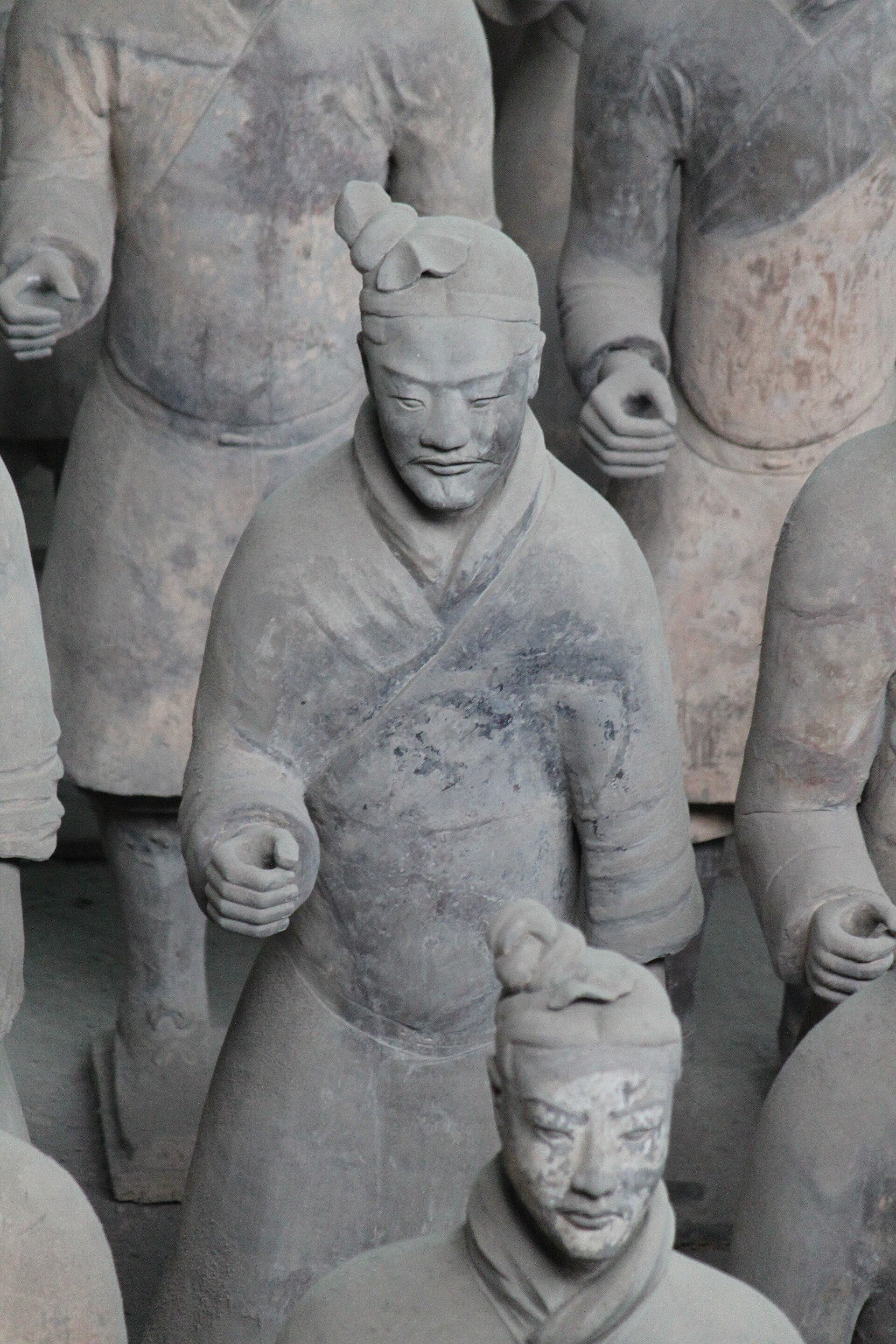
Leave your hotel around 07:30 to catch bus 306 (Tourist Bus 5) from the east square of Xi'an Railway Station (西安站). The aim is to reach the Terracotta Army for opening at 08:30, before the coaches from the big hotels arrive around 10:00. Pit 1 in the early hours is still open enough to stand at the rail and take in the full sweep of life-sized warriors — and no two faces are the same. Work through Pit 1 (the largest) to Pits 3 and 2, then finish at the hall of bronze chariots.
Your ticket includes the shuttle to the Lishan Garden mausoleum site nearby. Budget 2.5 to 3 hours in total. To make sense of what you're seeing, rent the audio guide or read our Terracotta Army guide beforehand.
Huaqing Palace sits about 10 km before the Terracotta Army on the same road — take bus 306 back and get off partway (or buses 914/915). These are the imperial hot springs at the foot of Mount Li, built by Tang Emperor Xuanzong for his consort Yang Guifei. The water gardens, lakeside pavilions and the wall of Mount Li behind them make a beautiful setting. In the evening there's a lavish music-and-light show, "Song of Everlasting Sorrow" (separate ticket), if you want to linger.
It's also where the 1936 "Xi'an Incident" took place, a turning point in modern Chinese history — the explanatory signage is fully bilingual. Allow 1.5 to 2 hours, then ride back into the city.
Arrive back inside the walls in the evening and walk into the Muslim Quarter (回民街) for your first dinner — the city's busiest food lane, all charcoal smoke and the rhythmic thud of biang-biang noodles being pulled. Try roujiamo (chopped pork or beef stuffed into a baked flatbread), yangrou paomo (mutton soup poured over torn bread) and lamb skewers. Grazing your way along is exactly the right way to eat here.
Cycle the most complete city wall in China, climb the Bell and Drum Towers at the dead centre of town, and find the Great Mosque hidden behind the food lanes — the day that shows you what Chang'an, capital to thirteen dynasties, once looked like.
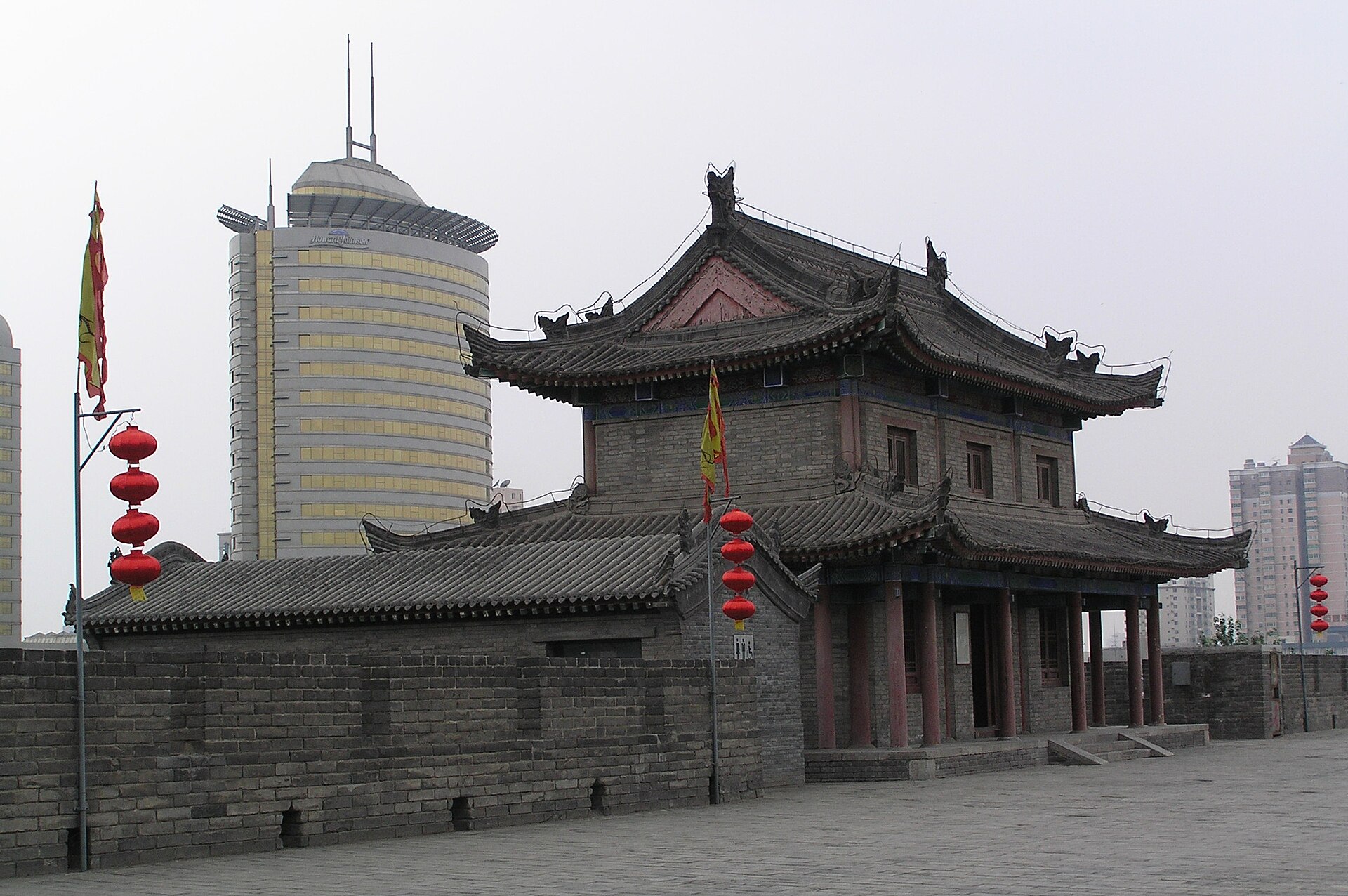
Start at the South Gate (Yongningmen 永宁门) and climb onto the 600-year-old Ming-dynasty wall — wide enough to drive on, and the most complete ancient city wall in China, a 13.7 km loop. The best way to do it is to rent a bike and ride the full circuit, which takes 1.5 to 2 hours at an unhurried pace. You look down on the old city inside on one side and the modern skyline on the other, with gate towers and corner forts at intervals.
If you'd rather not cycle, walking the South Gate to the southeast corner tower and back gives you the full feel of it. Mornings are cooler and quieter than afternoons.
Come down off the wall and take Metro Line 2 to the Bell Tower (钟楼), which stands at the exact centre of the old city (Bell Tower station). Climb up for a four-way view over the rooftops, then cross the square to its twin, the Drum Tower (鼓楼). The combined ticket is better value than buying each separately, and both stage scheduled bell and drum performances.
From the Drum Tower, walk through the Muslim Quarter and turn into Huajue Lane (化觉巷) to find the Great Mosque (清真大寺) — one of the oldest mosques in China, and unusual in that it looks far more like a Chinese temple than an Arabian one, with gardens, pavilions and tiered pagoda-style halls fused with Islamic art. It's so calm you almost forget you're in the middle of the busiest food lane in town.
After dark the Bell and Drum Towers light up gold against the night sky — one of the best photo spots in the city. Stand in the square between the two and you can frame both in a single shot. For dinner, head back into the Muslim Quarter to try whatever you missed yesterday, or find a sit-down restaurant in the streets around the Bell Tower.
This is the day a two-day trip never reaches: the pagoda the real Tang monk built to house his scriptures, a museum that tells five thousand years of Chinese history, and the brightest Tang-dynasty street in the city after dark.
Start at the Shaanxi History Museum — if ancient China interests you, this is the place. It holds over 370,000 artefacts from the region that was China's heartland through thirteen dynasties: Zhou bronzes, Tang tri-colour horses and camels, and tomb murals lifted from royal burials. It makes the backdrop to everything else you see in Xi'an far clearer.
Important: entry is free but you must reserve online in advance via WeChat or the official website (booking opens 5 to 7 days ahead, with 6,000 tickets released per day). They go fast. If you don't get one, paid special-exhibition tickets are sometimes available on the day.
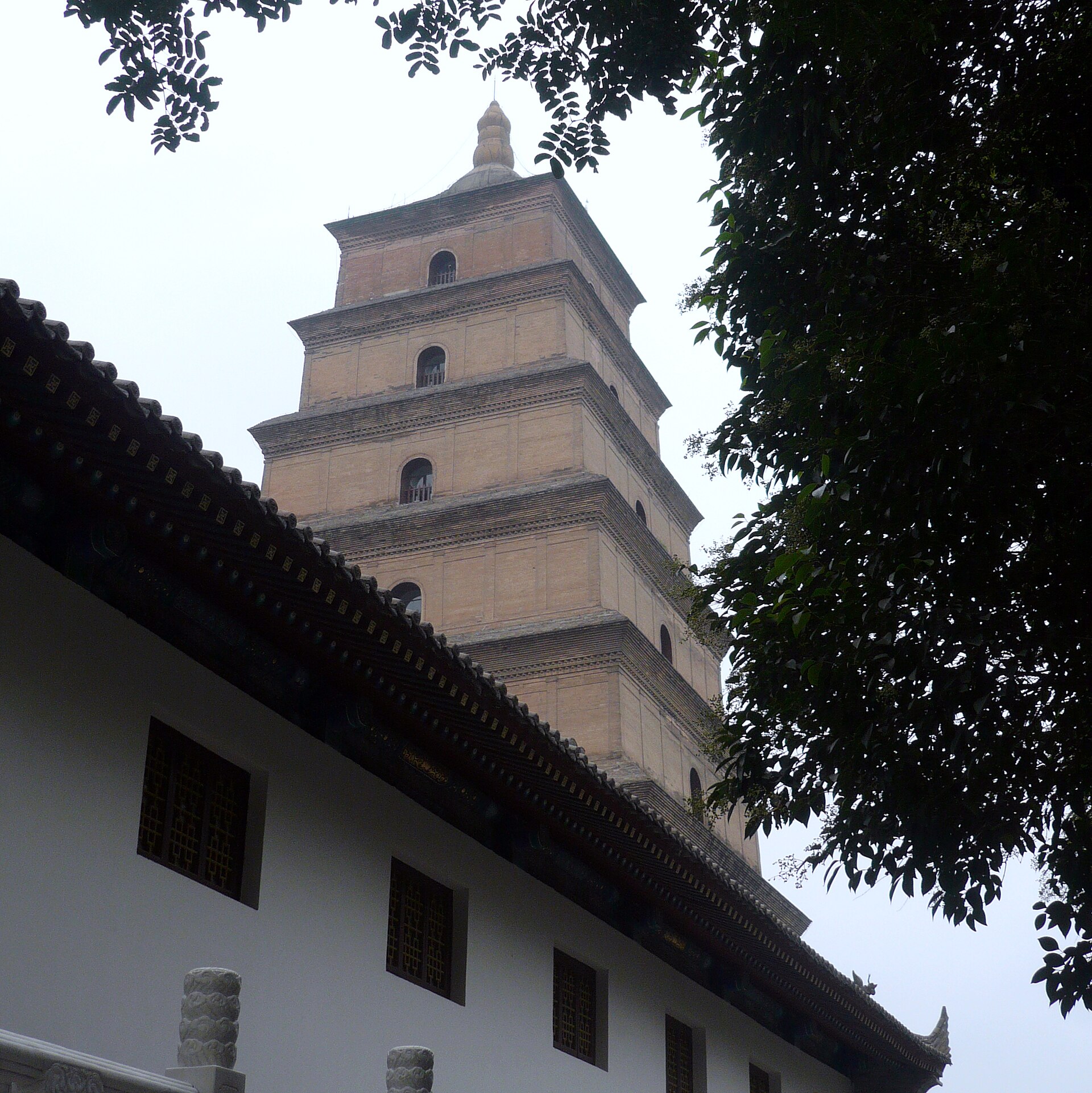
Take the metro to the Big Wild Goose Pagoda (Line 3/4, Dayanta station) — a seven-storey Tang-dynasty brick pagoda built by the monk Xuanzang (the real-life "Tang Monk") to store the scriptures he brought back from India. It stands inside Daci'en Temple, still a working temple. You can climb the pagoda (extra fee) for a view over the whole Yanta district. Allow 1.5 to 2 hours here.
Afterwards, walk to the pagoda's North Square, home to the largest musical fountain show in Asia — shows run at 12:00, 16:00, 19:00 and 21:00 (about 10 minutes each). Timing your visit for the afternoon or evening show is well worth it.
Walk south from the pagoda and you reach Datang Everbright City, a long pedestrian boulevard recreating the atmosphere of Tang-dynasty Chang'an — red-and-gold timber buildings, lanterns, and performers in Tang costume throughout. It's at its most striking after sunset and entirely free to enter; the Tang-style performances begin around 18:30. This is exactly why day three runs into the evening — visit in daylight and you miss the whole point.
Dinner is easy to find in this district. Wander among the lights for a while, then take the metro back. Get a good night's sleep — tomorrow's an early start for Mount Hua.
One of China's Five Great Mountains: sheer granite peaks, cable cars hanging over ravines, and a cliffside plank walk billed as the most dangerous trail in the world — the day trip a short itinerary simply can't fit.
Get an early start to Xi'an North Station (西安北) (Metro Line 2 to Line 4, or direct from some neighbourhoods) and take a high-speed train to Huashan North Station (华山北) — the ride is only about 30 minutes, a second-class seat costs around ¥55 (~฿275), and more than 50 trains run daily. But morning departures sell out fast, so book ahead via the 12306 app or Trip.com. A free shuttle runs from Huashan North to the visitor centre.
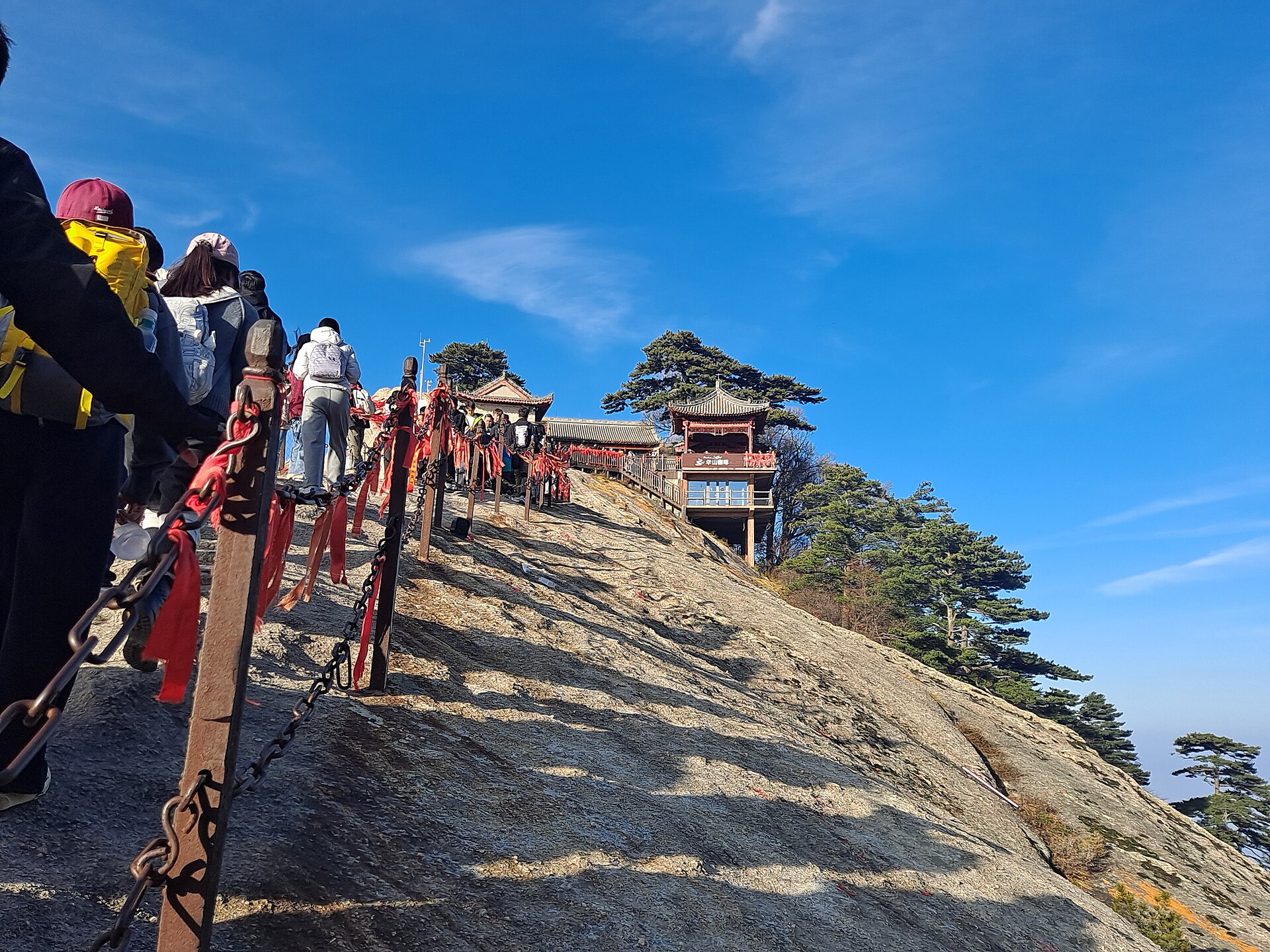
From the visitor centre, mountain buses run up to the cable-car stations. The route most people take, and the least exhausting, is to ride the West Peak cable car up, walk the peaks, and come down by the North Peak cable car — the "up West, down North" loop covers all the main peaks in 5 to 6 hours without much steep climbing. The pointed granite summits, cliff-edge pavilions and stairways cut straight into the rock are like nowhere else.
The Plank Walk in the Sky, the cliffside trail famous as the world's most dangerous, is near the South Peak — it has a safety harness and a long queue, and is an optional add-on (extra fee) for the brave. Skip it and you'll still get the full Mount Hua experience.
Take the shuttle back to Huashan North, ride the high-speed train back to Xi'an North in another ~30 minutes, and you're back inside the walls in good time for dinner. The last night is made for proper Shaanxi food — biang-biang noodles as wide as a belt, Xi'an dumplings, or one last lap of the Muslim Quarter for anything you missed. See the Xi'an food guide.
The Bell Tower and Muslim Quarter area works best for this plan — central inside the walls, walking distance to the food and the day-two sights, and on Metro Line 2, which covers day one (transfer to the bus at the railway station), day three and day four (out to Xi'an North for the Mount Hua train). Alternatives are inside the walls around the South Gate, or near Xi'an North if you're focused on day trips. See the top 10 hotels or the six best luxury hotels.
Use the metro as your backbone — eight-plus lines cover nearly every sight. Line 2 runs north–south through the Bell Tower and South Gate, Line 3/4 reach the Big Wild Goose Pagoda, and Line 14 links the airport and Xi'an North. Fares are ¥2–9, paid by scanning a QR code in Alipay or WeChat Pay at the turnstile. For the Terracotta Army you transfer to bus 306 at Xi'an Railway Station.
Link a Visa or Mastercard to Alipay via its international mode before you travel. Most places accept Alipay or WeChat Pay only — some take no cash at all (though bus 306 is cash-only, so carry small notes). Download and test a VPN before leaving home (Google Maps, Instagram and Gmail are blocked). See the Alipay guide and internet, VPN & eSIM guide.
| Item | Budget | Mid-range | Comfortable |
|---|---|---|---|
| Hotel · 3 nights | ¥300–600 (~฿1,500–3,000) |
¥900–1,500 (~฿4,500–7,500) |
¥1,800–3,600+ (~฿9,000–18,000+) |
| Food · 4 days | ¥280–440 (~฿1,400–2,200) |
¥560–900 (~฿2,800–4,500) |
¥1,000–2,000 (~฿5,000–10,000) |
| Metro + buses · 4 days | ¥50–90 (~฿250–450) |
¥80–140 (~฿400–700) |
¥150–280 (+ some DiDi) |
| Day 1 (warriors + Huaqing) | ¥120 (warriors only) |
¥240 (+ Huaqing) |
¥360+ (+ Huaqing show) |
| Day 2 (wall + towers + mosque) | ¥80–130 (walk the wall) |
¥150–200 (+ bike rental) |
¥200–260 (every ticket) |
| Day 3 (pagoda + museum) | ¥50 (museum free) |
¥80 (+ climb pagoda) |
¥120 (extra tickets) |
| Day 4 (Mount Hua rail + cable car) | ¥230 (train + North cable car) |
¥330 (+ West cable car) |
¥450+ (both cable cars + entry) |
| Total per person (approx.) | ¥1,110–1,740 (~฿5,550–8,700) |
¥2,340–3,390 (~฿11,700–16,950) |
¥4,080–7,070+ (~฿20,400–35,350+) |
Exchange rate reference: ¥1 ≈ ฿5. Estimates may vary by season (peak/off-peak) and personal spending — check before you go.