A seven-storey brick pagoda that has stood in the heart of the city since 652 AD — Tang-dynasty Buddhism by day, and Asia's largest musical fountain dancing to light and sound by night.
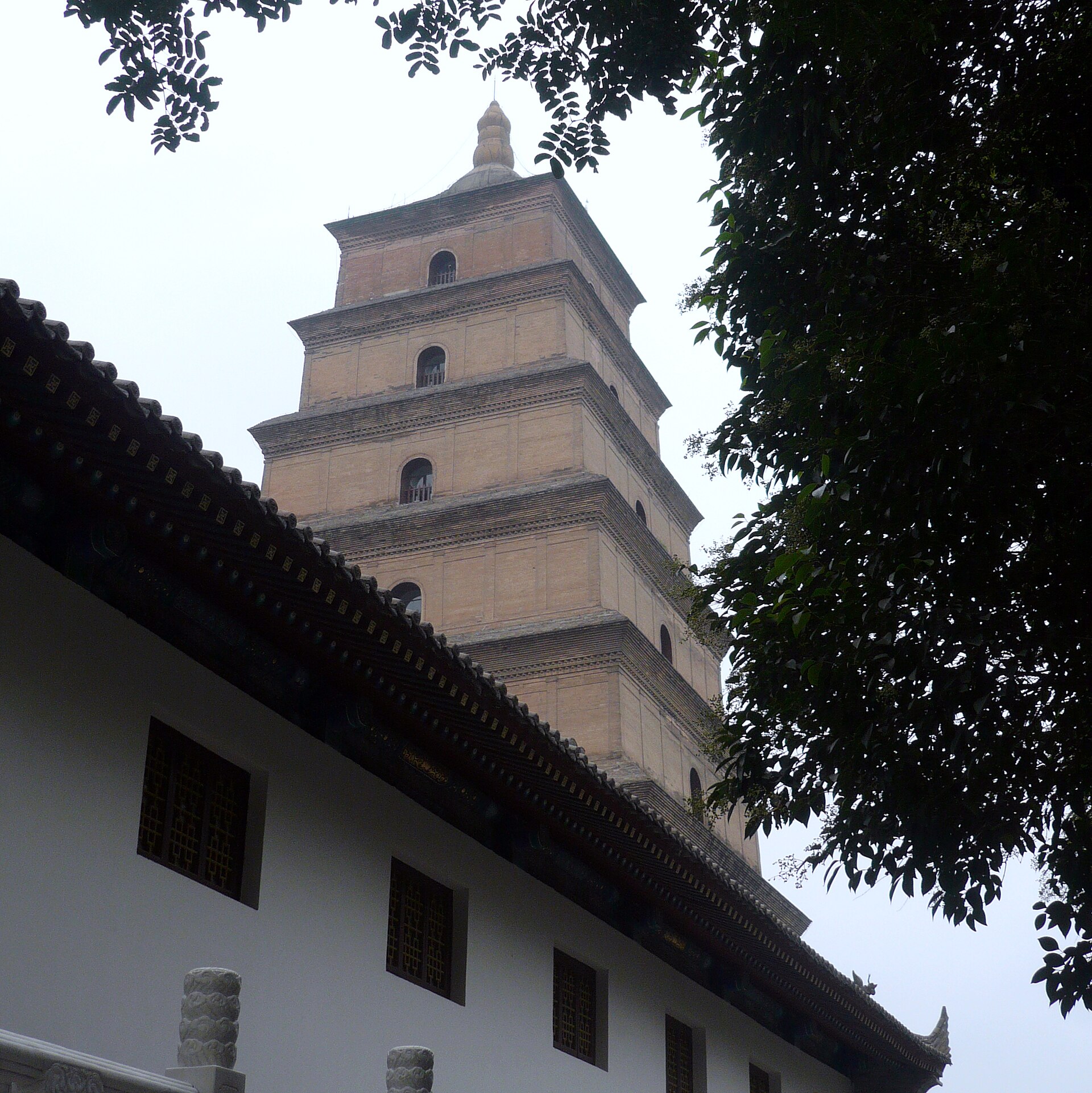
Picture this: you tilt your head back to take in a pale-brown brick pagoda, seven storeys tall, rising behind the tiled roofs of an old temple. Big shade trees frame it, chanting drifts from a hall nearby, and it occurs to you that this exact structure has stood on this exact spot since 652 AD — long before most of the city around it existed. That is a rare feeling at a famous landmark, and it is the first thing the Big Wild Goose Pagoda gives you.
The Big Wild Goose Pagoda (大雁塔 Dàyàntǎ) is a Tang-dynasty brick pagoda that stands inside Da Ci'en Temple in Xi'an. The story starts with a monk named Xuanzang, who travelled to India for more than 17 years to study and bring back Buddhist scriptures — the journey that later inspired the classic Chinese tale "Journey to the West". When he returned to Chang'an, present-day Xi'an, he had this pagoda built in 652 AD to store the sutras and relics he had carried home, and to translate the texts into Chinese.
What sets it apart from most temple sights is that it is the real thing, still standing — not a reconstruction. And in a single visit you get two completely different moods: a quiet temple walk and a climb up the pagoda by day, then a transformation at dusk when the North Square fills with locals watching the largest musical fountain in Asia, which is free to enjoy.
From the North Square into the temple, up the pagoda, then back out for the fountain — each part has its own story.
A square-based brick tower about 64 metres tall, one of the best surviving examples of Tang-dynasty pagoda design — plain in form but genuinely imposing. Buy the extra ~¥25 ticket to climb the 256 wooden steps to the top floor for a view over the North Square and across Xi'an. Allow around 20 minutes up and down; the staircase is narrow.
The temple that surrounds the pagoda is still an active place of worship, with a main hall, walking courtyards and mature shade trees. The ~¥30–40 entry covers the whole temple grounds (climbing the pagoda is the only thing paid separately). It is a place to walk slowly — modern Chinese temple life layered over a thousand-year-old site.
A bronze statue of Xuanzang in mid-stride stands on the southern plaza — a popular photo spot and a reminder that this whole pagoda grew out of one monk's 17-year journey on foot. His story is the root of the "Journey to the West" legend that the whole of Asia knows.
The broad square to the north of the pagoda holds what is billed as the largest musical fountain in Asia, the water choreographed to music and lights several times a day. Watching from the square is free (there is a paid seating zone for around ¥30, but it is not necessary). The evening shows are the best, with lights and the lit pagoda as a backdrop.
South of the pagoda the site connects to Datang Everbright City (大唐不夜城), a long pedestrian street styled after the Tang dynasty and lit up all night. It is the natural next step after the fountain — a fitting end to the evening that keeps the Tang theme going. There is a separate full guide to Datang Everbright City.
Entry to Da Ci'en Temple is about ¥30–40 and does not include climbing the pagoda. To go up, buy a separate ticket for around ¥25 at the base. Inside is a 256-step wooden staircase over 7 storeys, each level with windows looking out over the city in a different direction. The top floor gives an open view of the North Square and Xi'an beyond. Allow about 20 minutes up and down — and note that prices change with the season, so check before you go.
If you would rather not climb, walking the temple and photographing the pagoda from ground level is already worth the entry fee. The climb suits anyone after the elevated view who does not mind a narrow staircase.
The North Square (大雁塔北广场) sits outside the temple wall, is free to enter, and is home to the largest musical fountain in Asia. The water performs to music and lights several times a day — the shows you will most often catch are around midday, 4 pm, 7 pm and 9 pm, each lasting roughly 10–20 minutes.
But these times shift with the season, and some days (Tuesdays, for example) drop the daytime shows for maintenance, so always check the day's schedule before you go. If you can only catch one, make it the evening show from 7 pm onward — you get the water, the lights and the floodlit pagoda behind it all at once.
The most efficient plan is to visit the temple in the late afternoon, walking the grounds and climbing the pagoda in the softer light (the temple stays open until 5 pm), then come out to wait for the evening fountain on the North Square. From there, walk straight into Datang Everbright City just to the south — closing the night with the floodlit Tang-themed pedestrian street. All of this connects on foot, with no need to take a car between them.
If you prefer quiet and want photos of the pagoda without crowds, swap to the 8.30 am opening instead: soft morning light and the crowds yet to arrive.
The metro is the easiest option, dropping you close to both the North Square and the temple entrance.
Stay near the old city wall for easy sightseeing, or in the Yanta district close to the pagoda and the pedestrian street.