Home Xi'an China Xi'an Hotels About
Home  ›  Asia  ›  China  ›  Xi'an  ›  Shaanxi History Museum
🇨🇳 Xi'an · Attraction Guide

Shaanxi History Museum
Free to enter, but book ahead — 13 dynasties under one roof

Xi'an was the capital of China for 13 dynasties, and the whole story is gathered inside this Tang-palace-style building — over 1.7 million artefacts. Entry costs nothing, but turn up without a booking and you simply will not get in.

What it is

Why this is the museum to do before everything else in Xi'an

Here is the honest tip: visit this museum before you head out to the Terracotta Army, and you will be able to read the whole city. The Shaanxi History Museum (陕西历史博物馆) is the place that explains why Xi'an matters at all. The city — once called Chang'an — served as China's capital for 13 dynasties, from the Zhou, Qin and Han through to the high-water mark of the Tang. The objects pulled from the ground all around the city now sit together in one building.

The museum opened in 1991 in the style of a Tang-dynasty palace, designed by the architect Zhang Jinqiu — dark grey tiled roofs, upturned eaves, a broad stone forecourt; dignified but quiet, exactly as a national treasure house should feel. Inside, the collection runs to more than 1.7 million artefacts, including 18 designated national treasures, displayed chronologically across three main halls.

What sets the place apart is the quality of what is actually in the cases, not just the volume — the Tang agate cup carved as an animal's head, the gold bowl chased with mandarin ducks and lotus petals, the Han-dynasty empress's jade seal, the tri-colour camel carrying a band of musicians. These are objects from the Chinese-history textbooks, and the main halls are free to enter — with one important condition you need to plan around first.
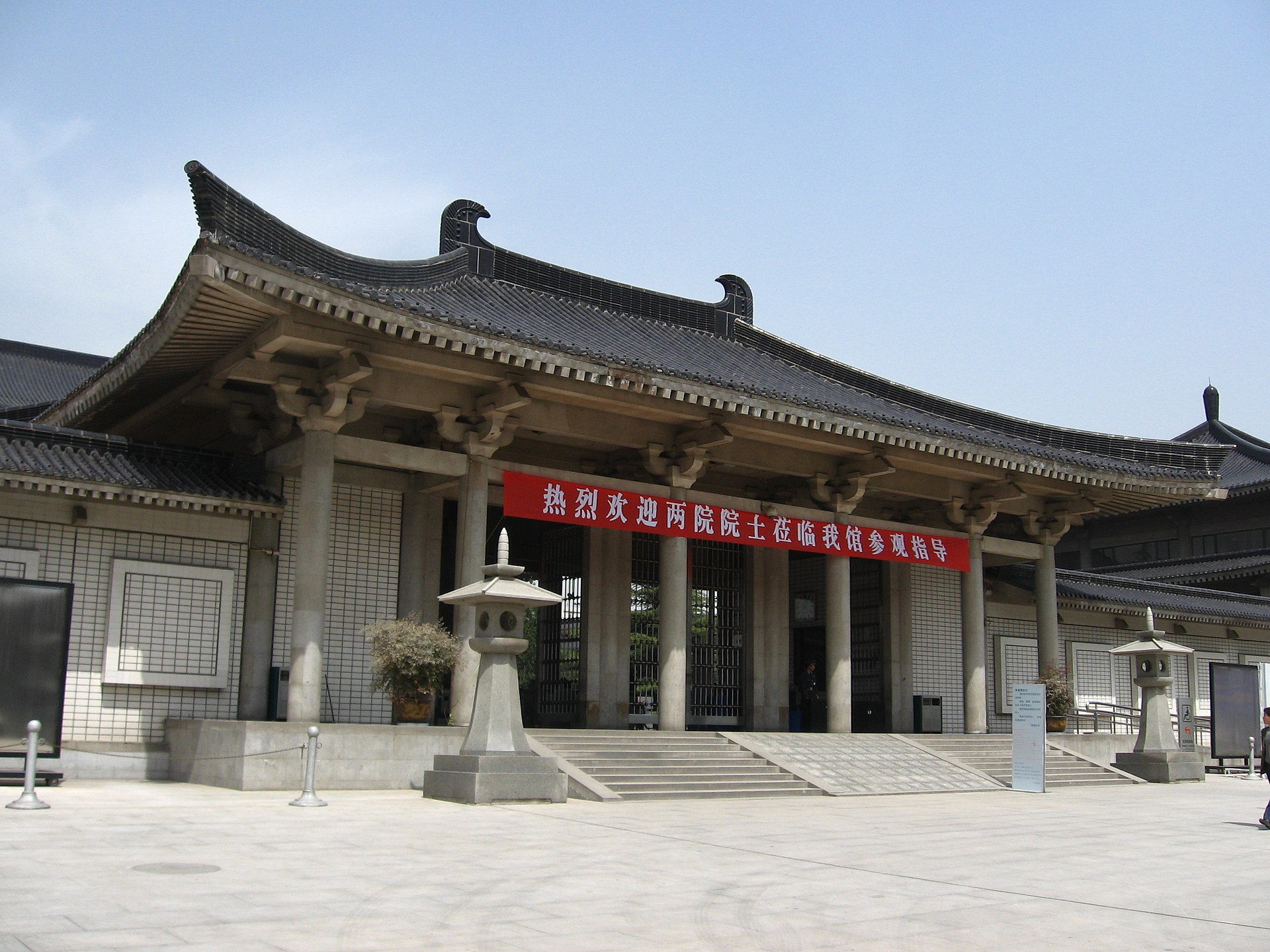
Shaanxi History Museum, Xi'an — Tang-palace-style entrance hall with dark grey tiled roof, upturned eaves and a pair of stone lanterns at the gate
The Tang-palace-style museum building, designed by Zhang Jinqiu — the dark grey roof and upturned eaves are its signature
🎫
Admission
Free (main halls)
But everyone must book ahead
🕗
Hours
8.30 am – 7 pm
Last entry 6 pm · closed Mondays
🚇
Metro
Xiaozhai Station
Lines 2/3 · 11–15 min walk
🏺
Collection
1.7 million artefacts
18 national treasures · 3 halls
⏱️
Time needed
2–3 hours
Half a day with the Tang hall
💎
Tang Treasures hall
~¥30 (~฿150)
Separate ticket · on-site only
Read this first

Free, yes — but no booking means no entry, full stop

This is the single thing visitors get wrong most often. Here it is, plainly, before you waste a trip across town.

⚠️ You must reserve a timed slot online — there are no walk-up tickets

The museum runs on a timed-entry reservation system and caps daily visitors at roughly 10,000–12,000. Everyone needs a booking, free admission or not — you cannot simply buy a ticket at the gate the way you might at most museums. And because it is both free and the city's most famous museum, slots sell out fast, especially on holidays and in peak season.

Tickets are released 5 days in advance, with a fresh batch opening at around 5 pm China time each day. If you are planning your Xi'an trip, set a reminder and book the instant a batch opens.

📱 How to book (and why overseas visitors often need help)

There are two official channels: the website ticket.sxhm.com and the museum's WeChat mini-program (account 陕历博 / 陕西历史博物馆). The catch is that the system is Chinese-only and tied to a verified WeChat account. Roughly, the steps are:

  1. Open WeChat and search for the museum's mini-program (or go to ticket.sxhm.com)
  2. Choose your date and time slot (morning or afternoon)
  3. Enter the name and passport number for every visitor — they must match the real documents
  4. Confirm the booking (no payment for free entry) and save the QR code / confirmation number
  5. On the day, show the physical passport at the gate, matching the name on the booking

If you cannot manage it yourself (no WeChat, or you do not read Chinese), the more reliable route is to join a guided tour or use a local agency to reserve the slot for you — many offer English-speaking guides who handle the ticketing for you. See the options on Klook below. Check the rules and the ticket-release timing again before you go, as China's booking systems change often.

Objects to seek out

5 pieces not to walk past

The main galleries are arranged by era — but these are the objects people specifically come to see.

Tip: English labelling is limited, and some objects are captioned only in Chinese. Renting an audio guide at the counter, or joining a guided tour, helps you understand where each object came from — particularly worthwhile if you are here mainly for the Tang material.
Make the most of it

How to walk it, when to come, and what sits beyond the main halls

🕗 Arrive right at opening

Summer hours (roughly 15 March to 14 November) are 8.30 am to 7 pm, with last admission at 6 pm. Winter closes about an hour earlier, and it is closed every Monday (except public holidays). Anyone who has been will tell you the same thing: if you can book a morning slot, get there as the doors open — by late morning it is packed enough that you queue to get in and struggle to photograph the cases.

Allow about 2–3 hours for the three main halls, working through prehistory–Qin → Han to the Northern and Southern dynasties → Sui, Tang and post-Tang. If you plan to add the Tang Treasures hall or the murals, give yourself half a day and it will feel much more relaxed.

💎 The Great Tang Treasures hall — a separate ticket

Beyond the free main halls there is a special exhibition, the Treasures of the Great Tang Dynasty, concentrating the gold and silver from the Hejiacun hoard in one dense room. It costs around ¥30 (~฿150), and the Tang Murals hall runs around ¥270–300. Both can only be bought on-site, once you are inside the museum — they are not bookable online in advance. If you are particularly into Tang gold and silver, the Treasures hall is well worth the ticket.

Note: the Tang Treasures hall has previously closed for temporary refurbishment around the turn of the year (roughly mid-December 2025 to mid-January 2026) — check the hall's status for your date before you plan around it.

🏛️ The new Qin Han Museum branch — a separate site, separate booking

In 2024 the museum opened a new branch, the Qin Han Museum (秦汉馆), devoted specifically to the civilisations of the Qin and Han dynasties, with over 1,500 artefacts on display (about 90% shown publicly for the first time). But it sits on a completely separate site, well to the north in the Xixian New Area, near the ruins of Xianyang, the old Qin capital. To visit it you need a separate booking and a separate journey — it is not within walking distance of the main building.

Getting there

How to reach the Shaanxi History Museum

The main building is at 91 East Xiaozhai Road, close to the Big Wild Goose Pagoda. The metro is the easiest and cheapest way to get there.

🚇
Line 2 / Line 3
Xiaozhai Station
Exit D or E, walk east along East Xiaozhai Road ~800 m (~11–15 min) — the most-used route
🚇
Line 3 / Line 4
Dayanta Station
Near the Big Wild Goose Pagoda, walk west ~870 m — handy if you pair the two in one day
🚌
Bus
Routes 5 / 19 / 24 / 26 / 30 / 400
Alight at the Shaanxi History Museum (省历史博物馆) stop directly
Planning your day: the museum is less than a kilometre from the Big Wild Goose Pagoda, so the two pair neatly. Do the museum on your booked morning slot, spend 2–3 hours inside, then walk over to the pagoda in the afternoon and stay for the free musical fountain show on the North Square at dusk.
Keep exploring

Pair it with nearby sights and food

The Xiaozhai–Dayanta area is a full day on foot — here is where to go next.

Where to stay

Hotels in Xi'an

Around the central Bell & Drum Tower district, or out by the Big Wild Goose Pagoda — pick a base that keeps sightseeing easy.

Frequently asked

FAQ · Shaanxi History Museum before you go

Is the Shaanxi History Museum really free?
Yes, but a reservation is mandatory for everyone. The main museum (the permanent galleries) charges no admission, but there is a daily visitor quota of roughly 10,000–12,000 and tickets sell out fast. The paid extras are the separate Great Tang Treasures hall (around ¥30, ~฿150) and the Tang Murals hall (around ¥270–300), and both can only be bought on-site after you have entered — not booked online in advance.
How do I book tickets, and how far in advance?
Tickets are released 5 days before your visit date, with a new batch opening at around 5 pm China time each day, via the official website ticket.sxhm.com or the museum's WeChat mini-program (陕西历史博物馆). The system is Chinese-only and tied to a verified WeChat account. At booking you must enter the passport number of every visitor, and at the gate you must show the physical passport matching the name on the booking. Slots go quickly, so book the moment a batch opens. If you cannot book it yourself, a guided tour or a local agency that reserves the slot for you is the more reliable route — and check again before you go, because the rules change.
What are the opening hours and closing day?
In summer (roughly 15 March to 14 November) it opens 8.30 am to 7 pm, with last admission at 6 pm. In winter (15 November to 14 March) it closes earlier, around 6 pm, with last admission at 5 pm. It is closed every Monday except on public holidays. Aim to arrive right at opening — it gets crowded by late morning and the entry queue grows long.
How long should I spend there?
About 2 to 3 hours for the three main halls (prehistory to the Qin dynasty; Han to the Northern and Southern dynasties; Sui, Tang and post-Tang). Allow half a day if you also buy a ticket for the Great Tang Treasures hall or take a full guided visit. An audio guide or a guided tour helps a lot, because English labelling is limited.
How do I get there, and which metro line?
Take Metro Line 2 or Line 3 to Xiaozhai Station, use Exit D or E, then walk east along East Xiaozhai Road for about 800 metres (~11–15 minutes). Alternatively, Line 3 or 4 to Dayanta Station near the Big Wild Goose Pagoda, then walk west about 870 metres. The new Qin Han Museum branch is a separate site far to the north in the Xixian New Area and needs its own separate booking.
Klook · Xi'an tours & guides

Booking the museum looks like a headache? Let a guided tour handle the ticket

Plenty of Klook packages include an English-speaking guide who sorts the museum reservation for you, and pair it with the Terracotta Army or the Big Wild Goose Pagoda in one day — so you never have to fight the Chinese-only booking system yourself.

Browse Xi'an tours on Klook →
Wherebest is an affiliate partner of Klook — we may earn a commission when you book through our links, at no extra cost to you.