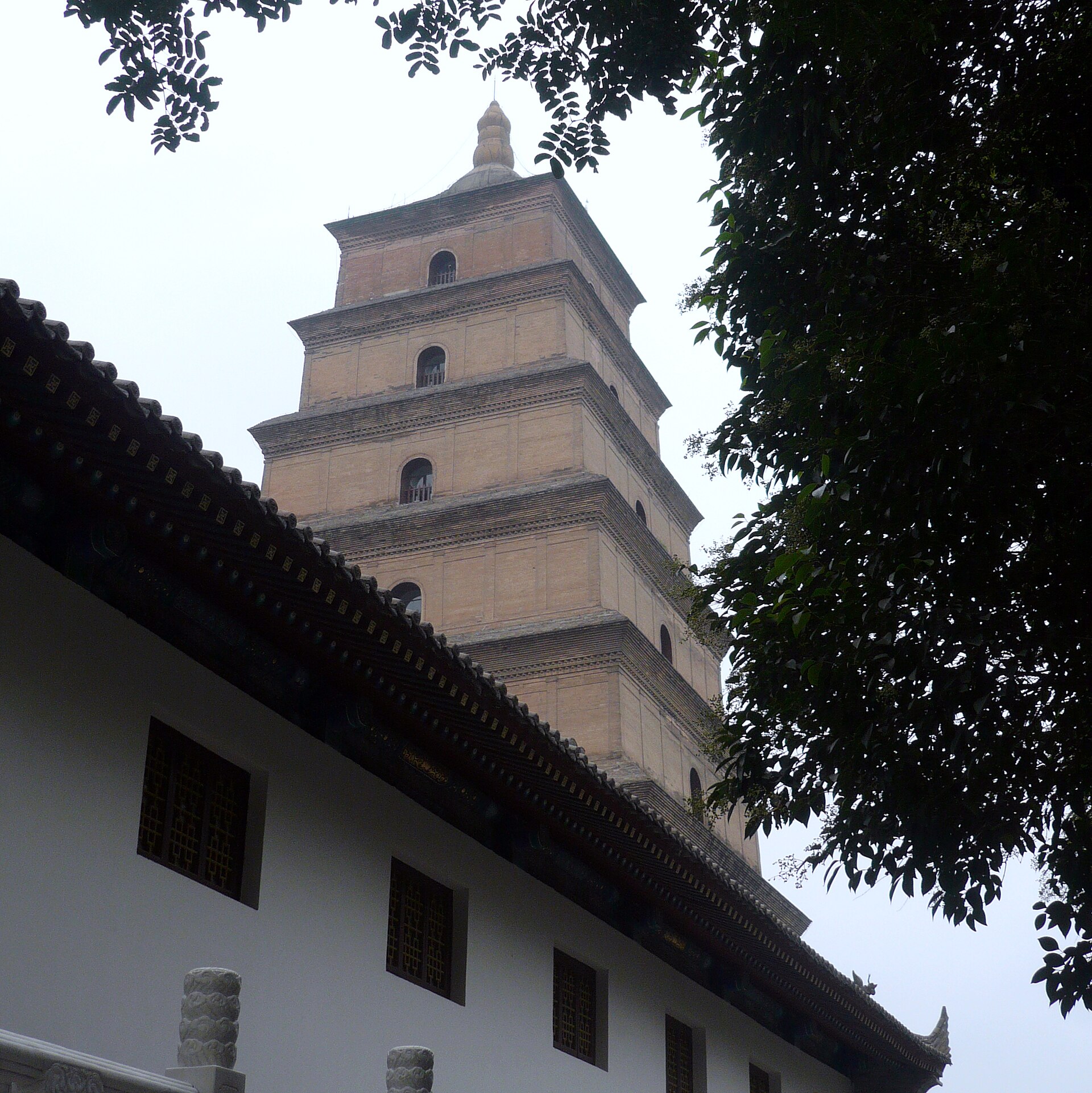
An underground army on the first morning, a 600-year-old wall you actually cycle on the second, and a Tang-dynasty pagoda rising over a sea of light on the third — three days is exactly enough to walk through the whole arc of Chinese history.
Here's the honest truth: most people come to Xi'an for the Terracotta Army and leave the next morning. That's a shame, because Xi'an was the capital of thirteen dynasties, the eastern end of the Silk Road, and it still has the most complete ancient city wall in China — a full ring you can genuinely cycle around, wide enough for vehicles to pass each other on top.
This three-day plan is built for first-time visitors. Day 1 is the Terracotta Army and Huaqing Palace as a day trip out east. Day 2 stays inside the old city walls the whole day — cycle the wall, climb the Bell and Drum Towers, find the Great Mosque, then eat your way through the Muslim Quarter. Day 3 is pure Tang dynasty: the Big Wild Goose Pagoda, the Shaanxi History Museum, and Datang Everbright City lit up at night. Every stop is reached by metro and bus — easy and very cheap.
Want a mountain instead? Day 3 has an alternative Mount Hua day trip for the adventurous — or browse all the day trips from Xi'an.
Eight thousand clay soldiers underground · an emperor's hot springs · the day trip that explains why this city matters to all of China
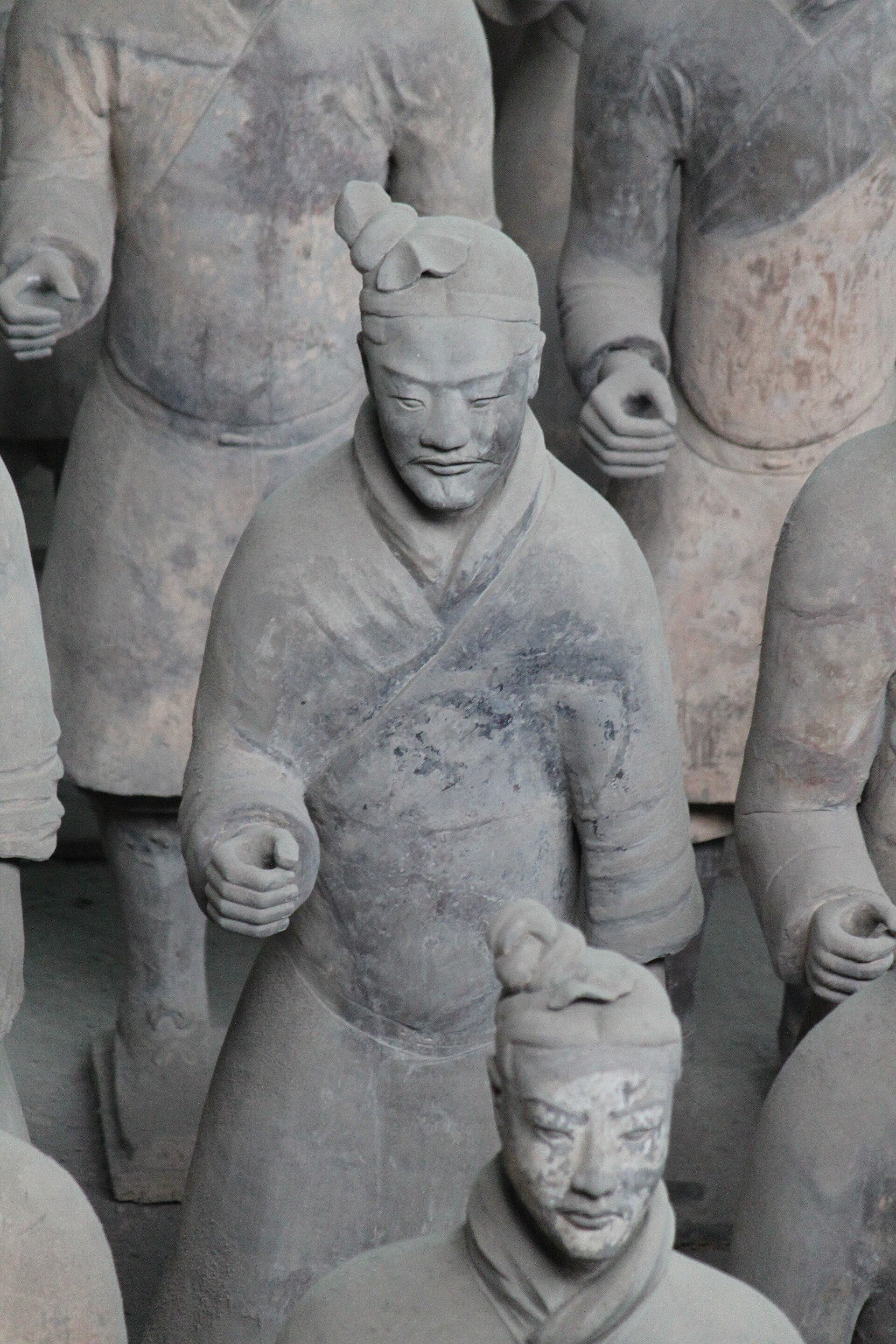
Leave your hotel early and aim to reach the Terracotta Army at the 08:30 opening — this is the one iron rule of the day. Going early means you beat the tour groups that pour in mid-morning. Start in Pit 1, the largest: more than 6,000 warriors stand in formation as far as you can see, and no two faces are alike. Then visit Pit 3 (the command post) and Pit 2 before finishing at the bronze chariots hall.
Two and a half to three hours here is about right. An audio guide or a guide hired at the entrance is well worth it — the on-site signage is limited and the story makes the place. Read the full breakdown in our Terracotta Army guide.
On the way back into the city, the 游5(306) bus passes Huaqing Palace — hop off and visit. These imperial hot springs at the foot of Mount Li were the setting for the famous romance between Tang Emperor Xuanzong and Yang Guifei, one of China's four legendary beauties. Wander the ancient bathing pools, gardens and lake; allow about 90 minutes.
This is also where the 1936 "Xi'an Incident" took place, a turning point in modern Chinese history. In summer and early autumn there's an evening outdoor show, Song of Everlasting Sorrow, staged against the real mountainside — but on a packed three-day plan, a daytime visit and an early return to the city works best. See the Huaqing Palace guide.
Back in the old city by early evening, take it easy — tomorrow is a full day on foot inside the walls. For the first night, keep dinner simple near your hotel. Try a roujiamo (肉夹馍), the "Chinese hamburger", or biangbiang noodles cut as wide as a belt, both ¥10–25 a bowl. Then take a slow stroll around the Bell Tower, which is beautifully lit after dark.
Cycling a Ming-dynasty rampart · a mosque that looks like a Chinese temple · a quarter where the scent of spice hangs in the air all day — the day when everything is within walking distance
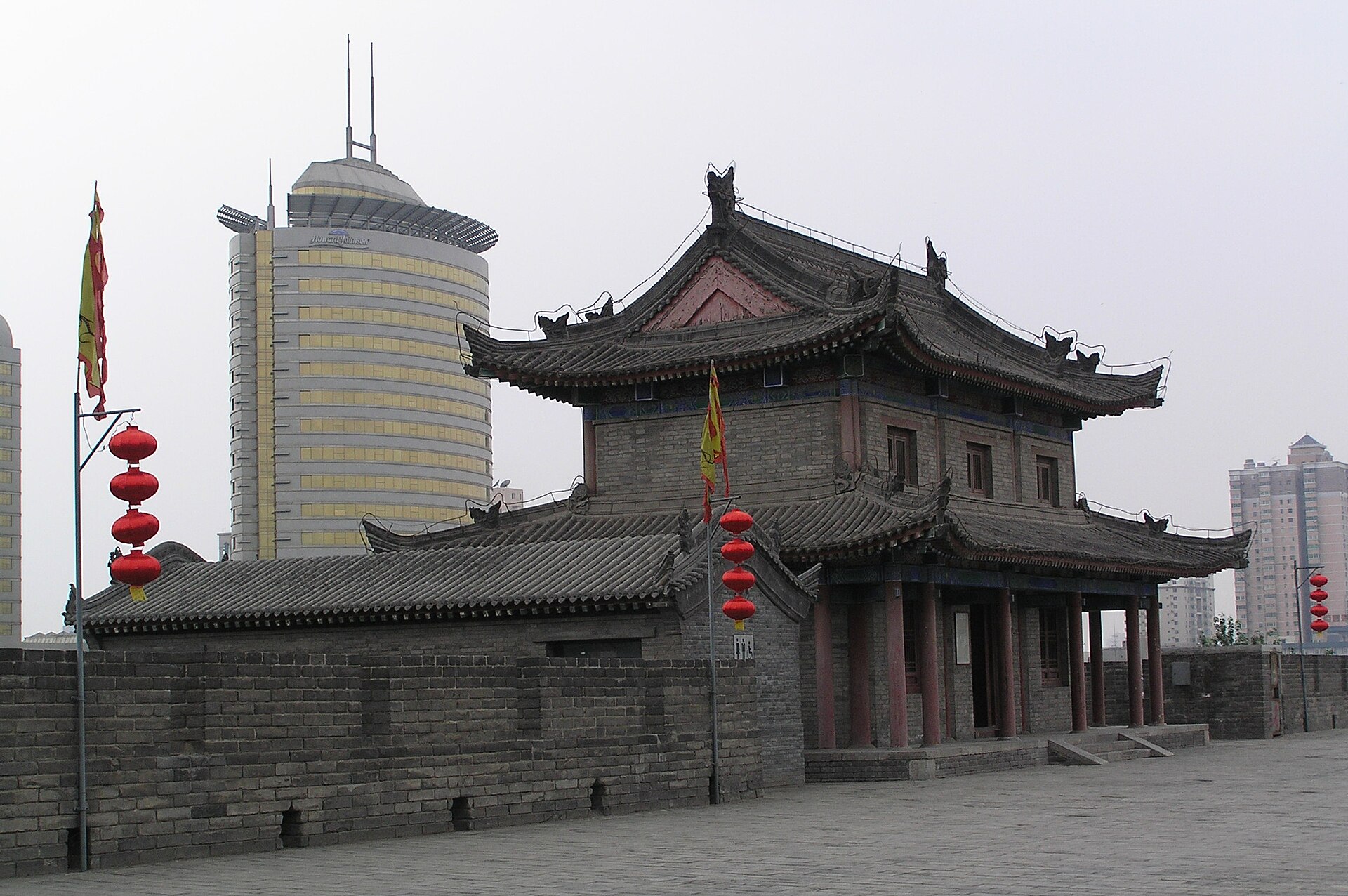
Start the day on the Xi'an city wall, climbing up at the South Gate (Yongningmen 永宁门), the closest point to the Bell Tower. This Ming-dynasty wall is over 600 years old, runs a complete 13.7 km loop, and is wide enough to rent a bike and ride the whole circuit — one of the most fun things to do in all of China.
Rent a bike at the gate; a full lap takes a relaxed 90 minutes to two hours, with plenty of stops for the corner towers and gates along the way. Go early before the sun gets strong. Read the tips in our Xi'an city wall guide.
Down from the wall, walk to the Bell Tower (钟楼) at the very centre of the old city, then the nearby Drum Tower (鼓楼) — you can climb both for a rooftop view over the surrounding old town. Check the bell and drum performance times in our Bell and Drum Tower guide.
Just behind the Drum Tower is the entrance to the Great Mosque (化觉巷清真大寺), one of the oldest in China and remarkable for being built entirely in Chinese architectural style — pavilions, gardens and a pagoda instead of domes and minarets. The calm inside is a complete contrast to the bustle of the Muslim Quarter just outside. See the Great Mosque guide.
This will be the meal you remember longest from the trip. The Muslim Quarter is a long string of food lanes where the smell of grilled lamb, spice and caramelising sugar fills the whole street. Eat as you walk: lamb skewers (羊肉串), yangrou paomo (羊肉泡馍 — mutton soup with torn flatbread), roujiamo, fried persimmon cakes (柿子饼) and freshly pressed pomegranate juice.
Take it slowly and graze until you're full — this is the best and cheapest "dinner" in Xi'an, a handful of yuan per item. See which dishes are unmissable in our Muslim Quarter street-food guide.
The pagoda where a monk kept his scriptures · the museum that tells all of China · a recreated Tang city lit end to end — or trade it all for a day climbing Mount Hua
Start the morning in the south of the city at the Big Wild Goose Pagoda, a 1,300-year-old Tang brick pagoda built by the monk Xuanzang to house the Buddhist scriptures he carried back from India. You can climb to the top for a view over modern Xi'an, and the Daci'en Temple around its base is still a working temple worth a wander.
The musical fountain on the north plaza runs on a schedule (one of Asia's largest), but the best show is after dark — in the morning, just take in the pagoda itself. Read the Big Wild Goose Pagoda guide.
This afternoon, head to the Shaanxi History Museum, very close to the pagoda — one of the finest museums in China. It tells the story of China from prehistory through the Zhou, Qin, Han and Tang dynasties with national-treasure-level artefacts: bronzes, gold, and the famous Tang tri-colour glazed ceramics (唐三彩).
The crucial thing: you must reserve a free timed slot online in advance with your passport. Slots go fast. If you miss the free entry, the special Treasures Gallery (国宝厅) at ¥30 and the Tang Dynasty Mural exhibition at ¥270 are easier to get into. See how to book in our Shaanxi History Museum guide.
End the trip at Datang Everbright City, the long pedestrian street south of the Big Wild Goose Pagoda that recreates the atmosphere of Tang-dynasty Chang'an across an entire district. After sunset the whole street glows gold, performers in Tang costume put on live shows, and statues of poets and emperors line the way. It's free to walk through.
Stroll, take photos, snack, and pick up souvenirs to close out the trip at an easy pace. The lights are at their best from around 19:30. Read the Datang Everbright City guide · and for everything the city offers, see things to see in Xi'an.
For this trip, base yourself inside the old city walls around the Bell Tower — walking distance to the Drum Tower, Muslim Quarter and Great Mosque, with Metro Line 2 right there. The other option is the Big Wild Goose Pagoda / Datang area to the south, more modern and with the night-light district. See options in our 10 best Xi'an hotels or 6 luxury hotels.
Use the metro as your backbone — Line 2 runs through the centre (Bell Tower and South Gate), Lines 3/4 reach the Big Wild Goose Pagoda. Fares are ¥2–9 per trip. The Terracotta Army uses bus 游5(306) from the railway station. Pay by scanning a QR code in Alipay or WeChat Pay, or with a 长安通 card. See the overview in our Xi'an travel guide.
Link a Visa or Mastercard to Alipay (via its international mode) before you travel. Most shops and street-food stalls in Xi'an take Alipay or WeChat Pay first, and some don't take cash at all — see our Alipay & WeChat Pay guide to set it up before you go.
| Item | Budget | Mid-range | Comfort |
|---|---|---|---|
| Hotel (per night) | ¥90–180 (~฿450–900) |
¥250–500 (~฿1,250–2,500) |
¥600–1,200+ (~฿3,000–6,000+) |
| Three meals | ¥40–70 (~฿200–350) |
¥80–150 (~฿400–750) |
¥200–400 (~฿1,000–2,000) |
| Metro + bus | ¥15–25 (~฿75–125) |
¥20–40 (~฿100–200) |
¥40–80 (~฿200–400) |
| Entry tickets | ¥120–180 (Terracotta + wall) |
¥200–300 (+ Huaqing + pagoda) |
¥250–450 (+ special exhibits/show) |
| Daily total (approx.) | ¥265–455 (~฿1,325–2,275) |
¥550–990 (~฿2,750–4,950) |
¥1,090–2,130+ (~฿5,450–10,650+) |
Reference rate ¥1 ≈ ฿5 · prices are approximate and vary by season — check before you go.