Paid and free — none of them a miss
From the city's icons to its food and the trips just outside it — with honest price ranges and logistics.
 1
1
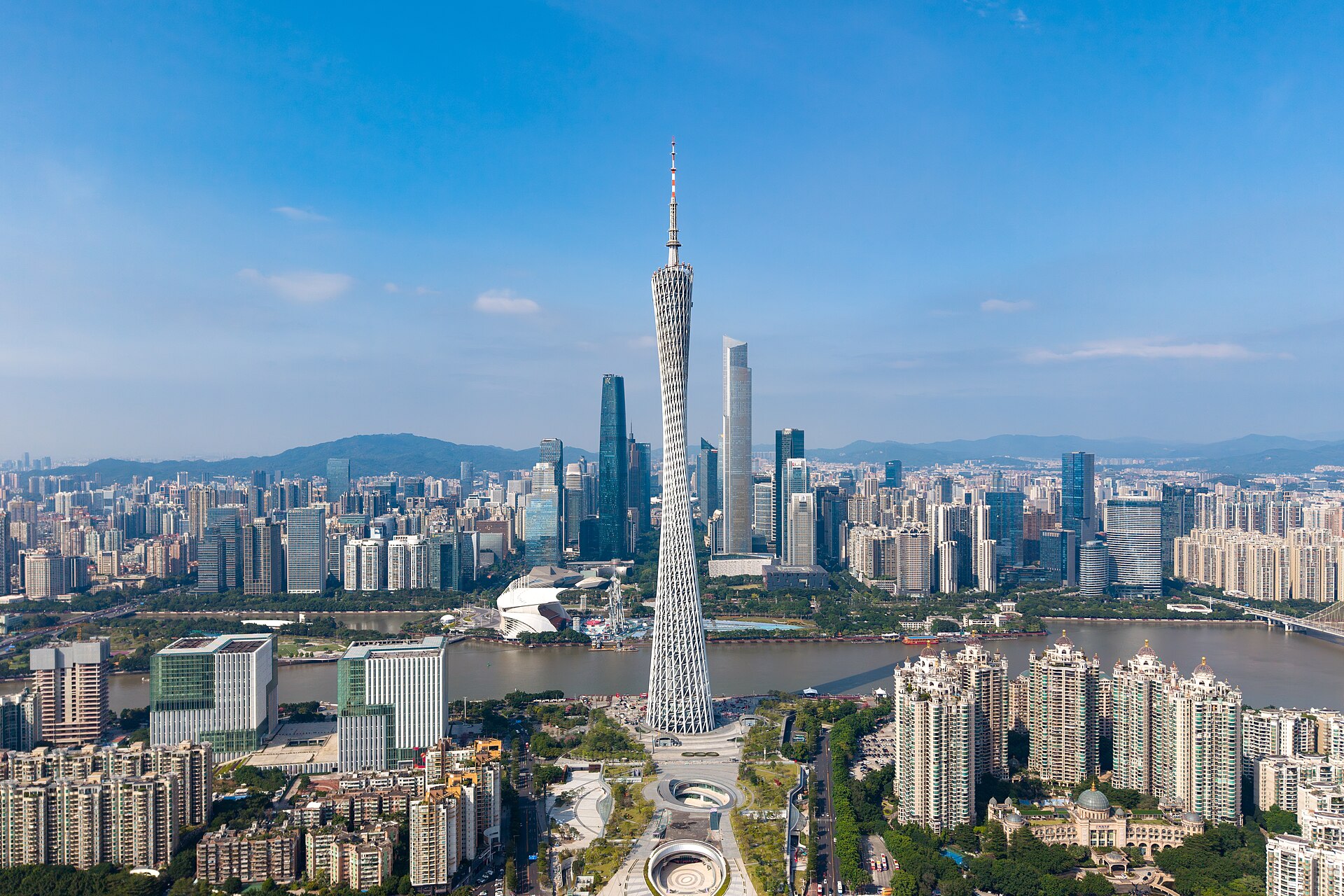
This 600-metre, wasp-waisted tower is the image everyone pictures when they think of Guangzhou — and it is at its best seen from the top, not just photographed from the riverbank. Inside there are several observation decks, from 428 m up to the open-air 450 m deck and the 488 m summit (higher, in fact, than the observation deck on Dubai's Burj Khalifa). The real highlight is the Bubble Tram — 16 transparent crystal cabins that crawl slowly around the rim of the roof, giving you the whole city in 360 degrees. The brave can add Sky Drop, one of the world's highest free-fall rides. Go around sunset to bank both the daytime view and the city lights in a single visit.
Book on Klook → Read more: Our full Canton Tower guide — which ticket tier to pick, the best time to go and tips.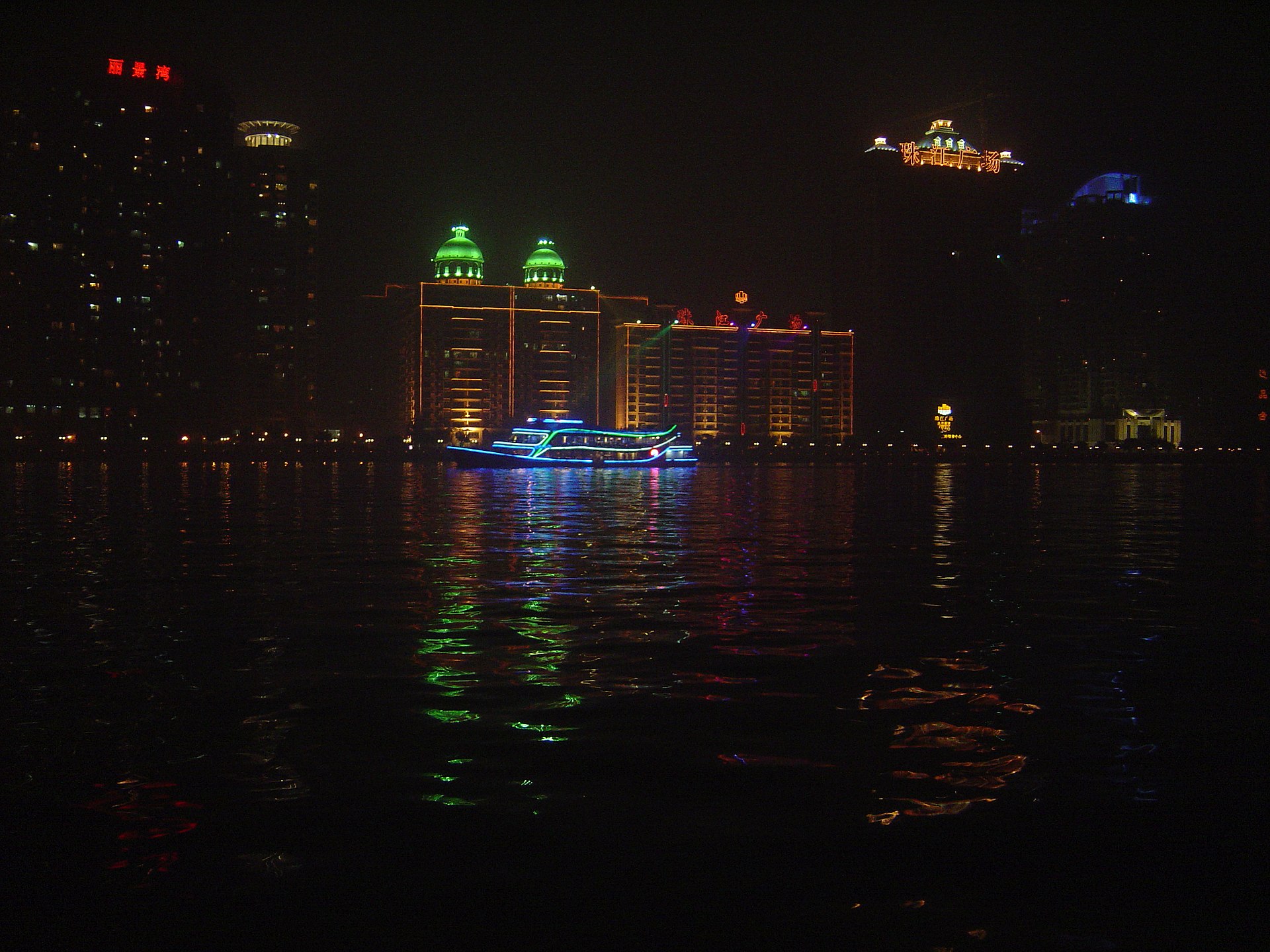 2
2
The Pearl River has been Guangzhou's lifeline for over a thousand years, and the best way to see the city after dark is from the middle of it. As the boat pulls out, both banks become a wall of floodlit skyscrapers and bridges; on one side Canton Tower cycles slowly from purple to pink to blue, while on the other the old colonial buildings and the library glow against the dark. The cruise runs about an hour, with everything from simple boats with open-deck seating to dinner-buffet boats. Tianzi Pier is the closest to the Beijing Road pedestrian street, so it is easy to combine; Dashatou Pier is the largest terminal with the fullest facilities.
Book on Klook → Read more: The Pearl River cruise guide — which pier, which boat, and the best views along the route.If you are travelling as a family or with children, Chimelong is what many people call the highlight of a Guangzhou trip. It is a vast resort in Panyu district that gathers several parks together — a Safari Park where you ride or walk among thousands of animals, including a famous set of giant-panda triplets; Chimelong Paradise, a theme park stacked with roller coasters and some of Asia's biggest thrill rides; and a globally ranked Water Park for the summer. Each one is huge and eats up most of a day, so the trick is to pick a single park per day rather than trying to cram in several. The metro runs right to the entrance, and booking tickets ahead on Klook is smoother than queuing on arrival.
Book tickets on Klook →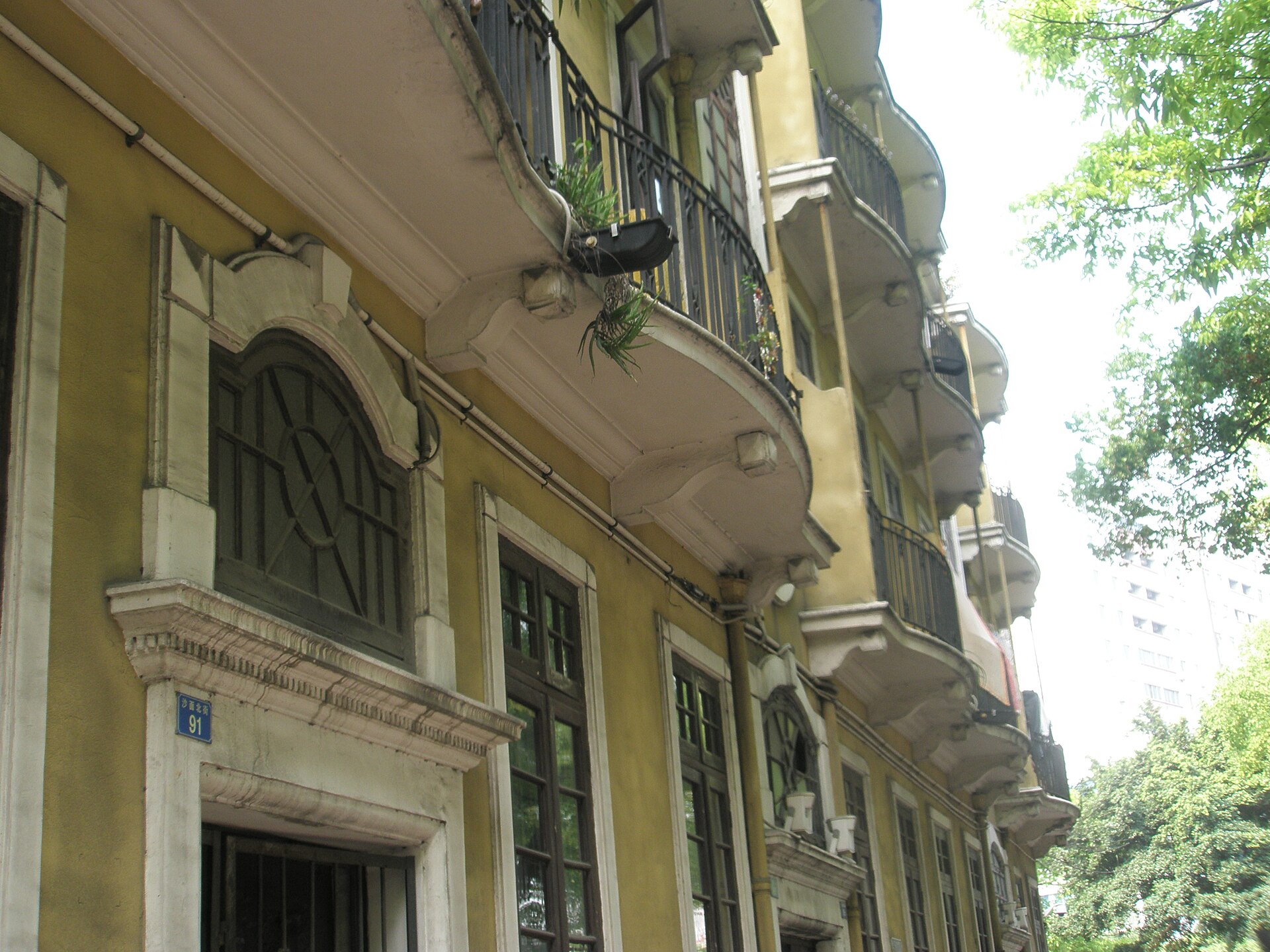 4
4
Shamian Island feels like another world dropped into the middle of busy Guangzhou. This small riverside island was a British and French concession in the 19th century, so it is lined with century-old European buildings — former consulates, churches and old banks — under huge banyan trees that arch over every street. Traffic is light, and people stroll and take photos at an easy pace; locals come here for wedding shoots and to sit in the cafés. Walking the whole island takes an hour or two, and it is free all day. It is loveliest in the late morning or early evening when the sun is soft. It sits right beside the Qingping herbal-medicine market and the Shangxiajiu arcades, so you can keep walking.
Read more: The Shamian Island guide — the walking route, the standout buildings and cafés worth a stop.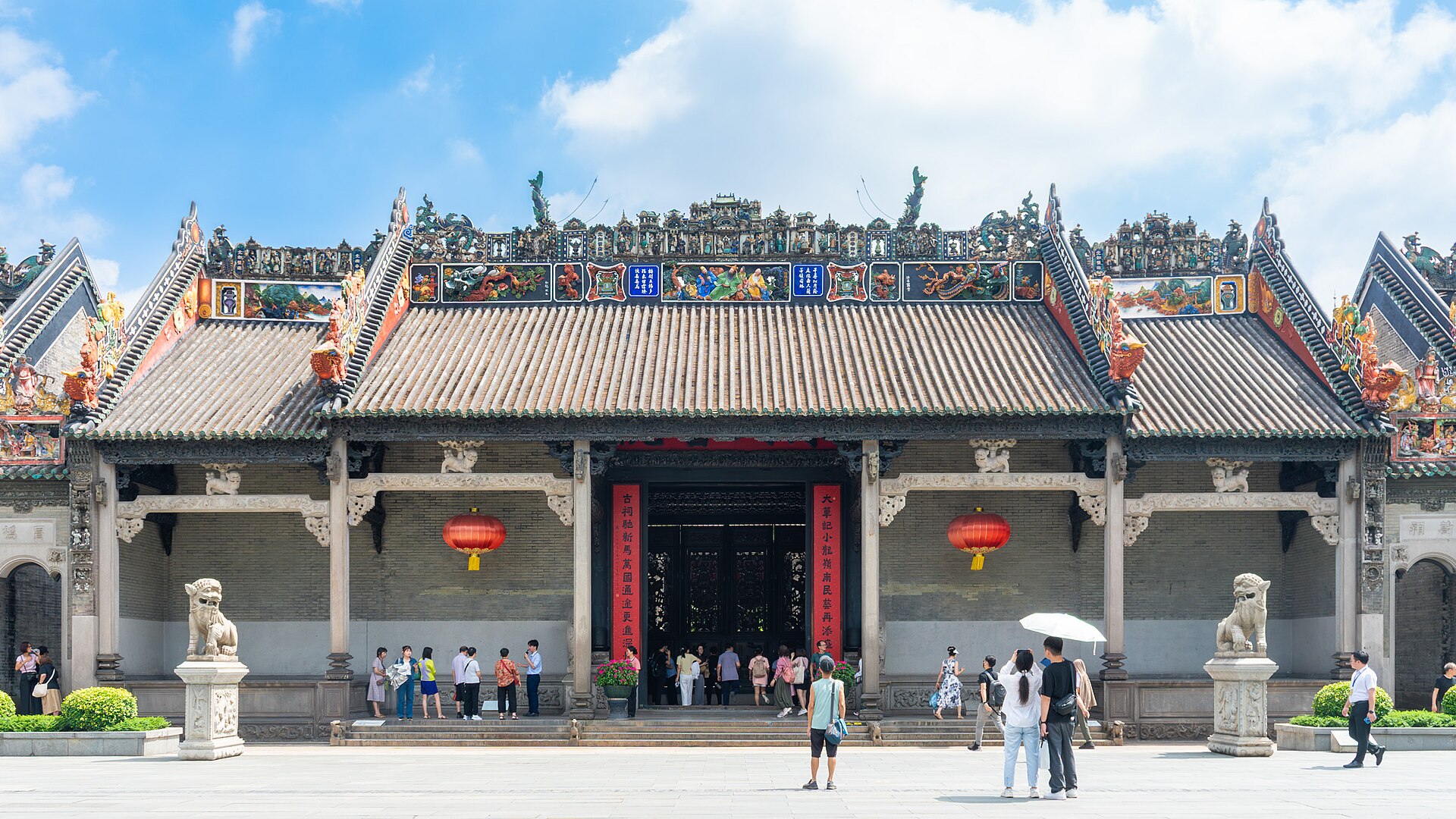 5
5
If you want to see Cantonese craftsmanship at its absolute peak, this is the place. Completed in 1894, the Chen Clan Academy was both an ancestral hall and an academy for the Chen families across Guangdong province. What stops people in their tracks are the roof ridges and walls, packed inch by inch with coloured-ceramic figurines, wood, stone and brick carvings depicting scenes from Chinese literature and legend. It is one of the most complete surviving examples of Lingnan (southern Chinese) architecture. Today it houses the Guangdong Folk Art Museum, showing embroidery, porcelain and ivory carving. Allow about an hour and a half to two hours, and the entry fee is tiny.
Read more: The Chen Clan Academy guide — the craft details not to miss and the quieter times to visit.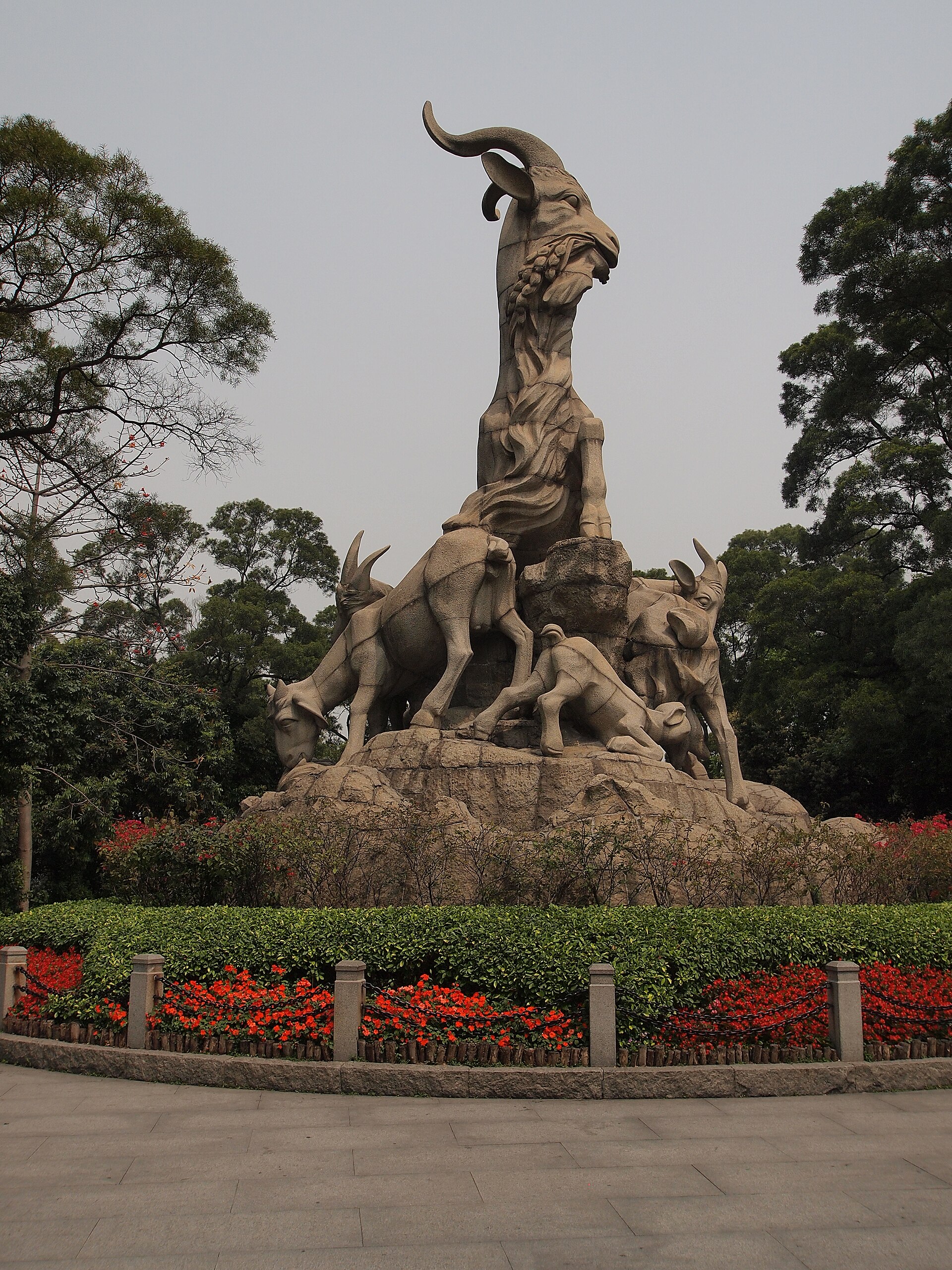 6
6
Guangzhou's nickname is "Ram City" (羊城), from a legend in which five immortals rode in on five rams carrying grain to save the people from famine. The stone Five Rams statue in Yuexiu Park is the city symbol everyone poses beside. Yuexiu is the largest park in central Guangzhou, with hills, a lake you can row on, and the Zhenhai Tower (镇海楼) — a Ming-dynasty fortress that now holds the Guangzhou Museum. It is a pleasant place to walk among the big old trees and watch locals exercising in the morning. Entry to the park is free (the Zhenhai Tower charges a small fee).
Read more: The Yuexiu Park guide — the Five Rams photo spot, the Zhenhai Tower and walking routes.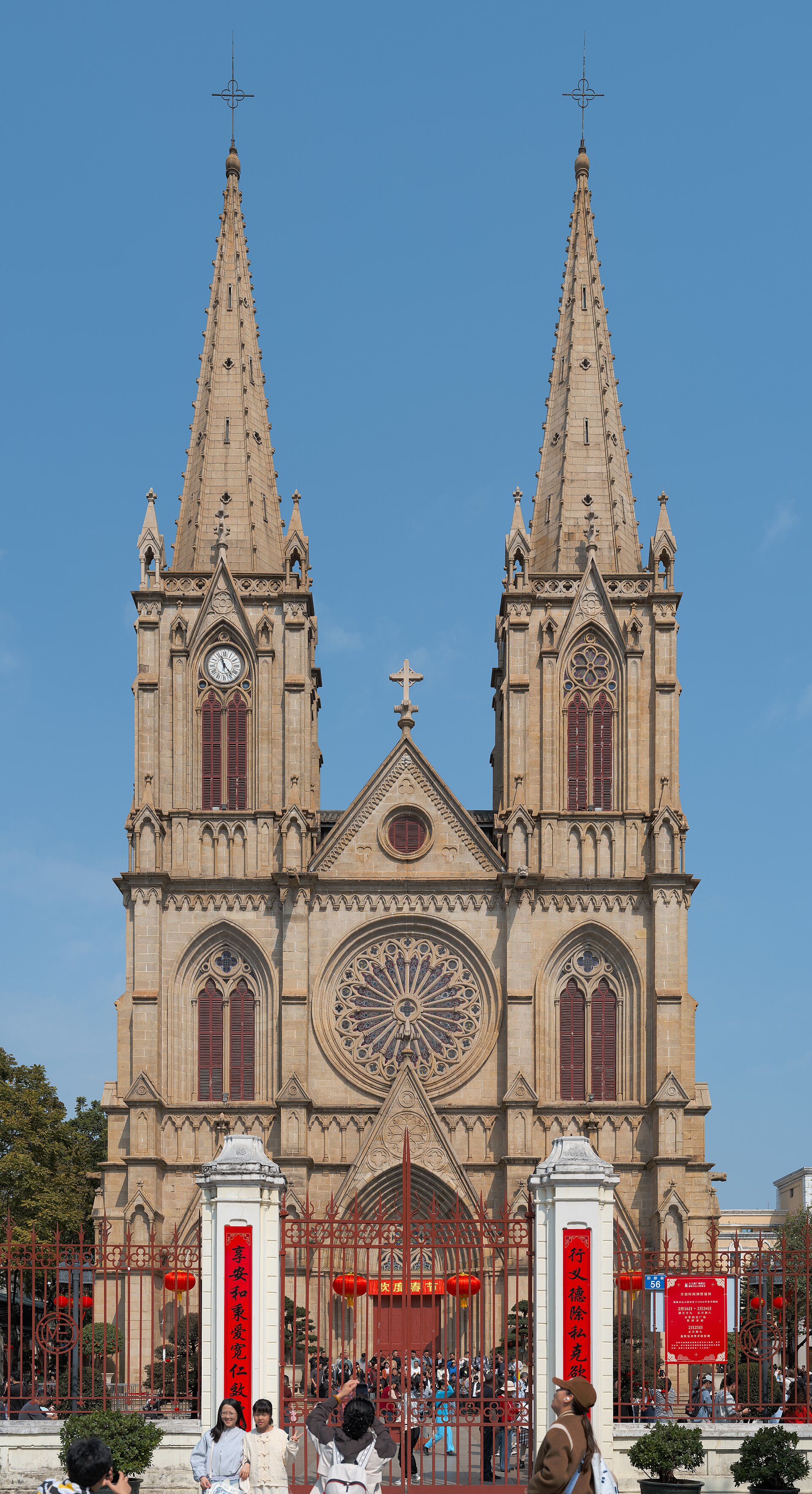 7
7
Locals call it simply the "Stone House" (石室), because it is built entirely of granite from foundation to spire — 25 years in the making, completed in 1888. It is one of the largest true-Gothic cathedrals in East Asia, which earned it the nickname "the Notre-Dame of the East". The twin spires rise over 50 metres, and inside the French stained glass throws coloured light across the floor in the afternoon — quiet and genuinely grand. It is a working church with weekly services, not just a photo stop. Entry is free; just dress modestly (aprons are handed out at the door). It is near Haizhu Square, an easy walk on from Beijing Road.
Read more: The Sacred Heart Cathedral guide — mass times, photo spots and visiting etiquette.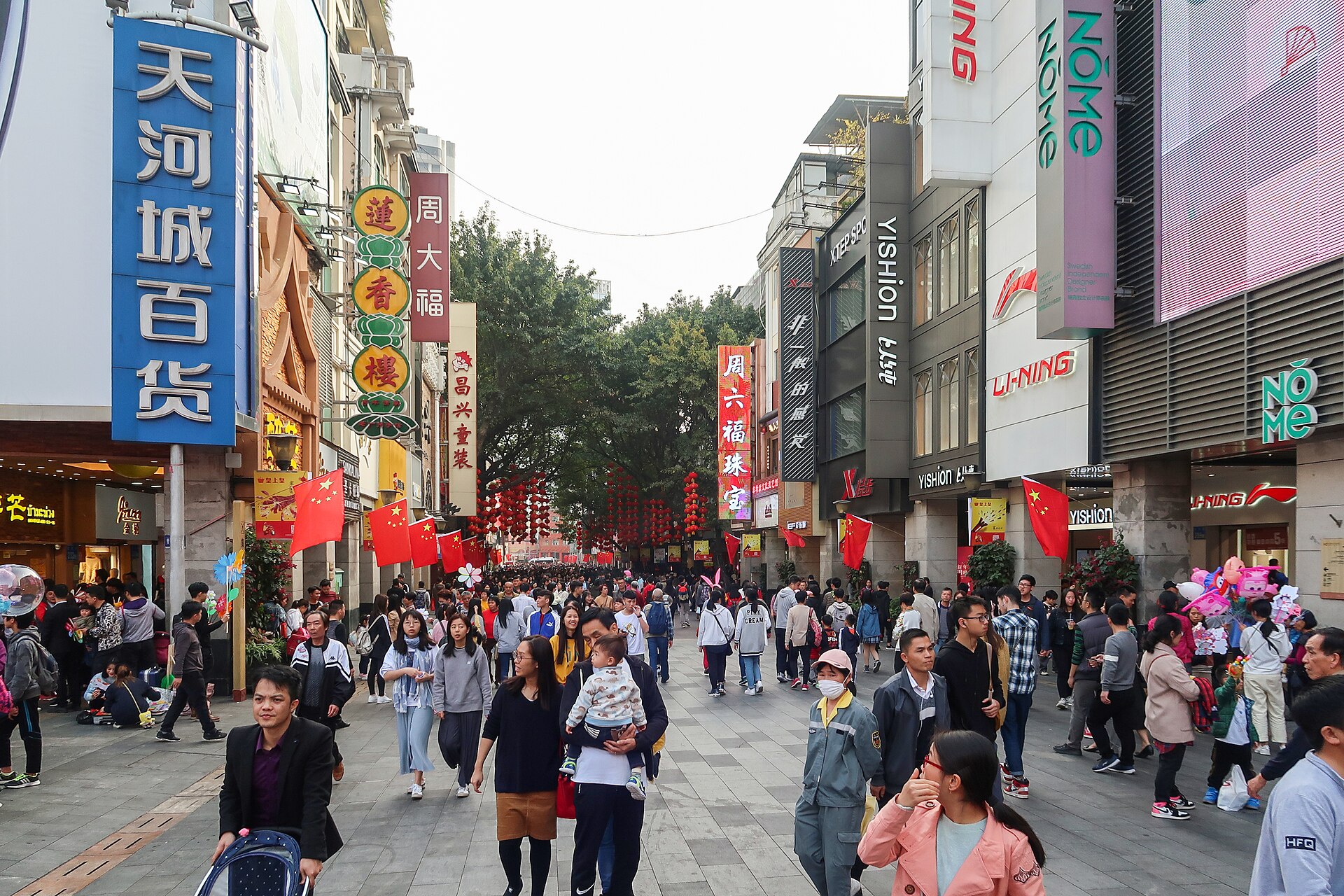 8
8
Beijing Road is the city's busiest pedestrian shopping street, lined end to end with shops, brands, malls and food. What sets it apart from any ordinary shopping street is the run of glass panels set into the middle of the pavement, covering excavated "ancient road ruins" — layers of road surface stacked up from the Tang, Song, Ming and Qing dynasties, proving this has been a main artery of the city for over a thousand years on the very same spot. Standing over them, you genuinely feel how old the city is. It is at its most alive in the evening when the lights come on, and you can walk straight on to the Stone House cathedral or Tianzi Pier. Free.
Read more: The Beijing Road guide — the ancient road ruins, the best street food and shops to stop at.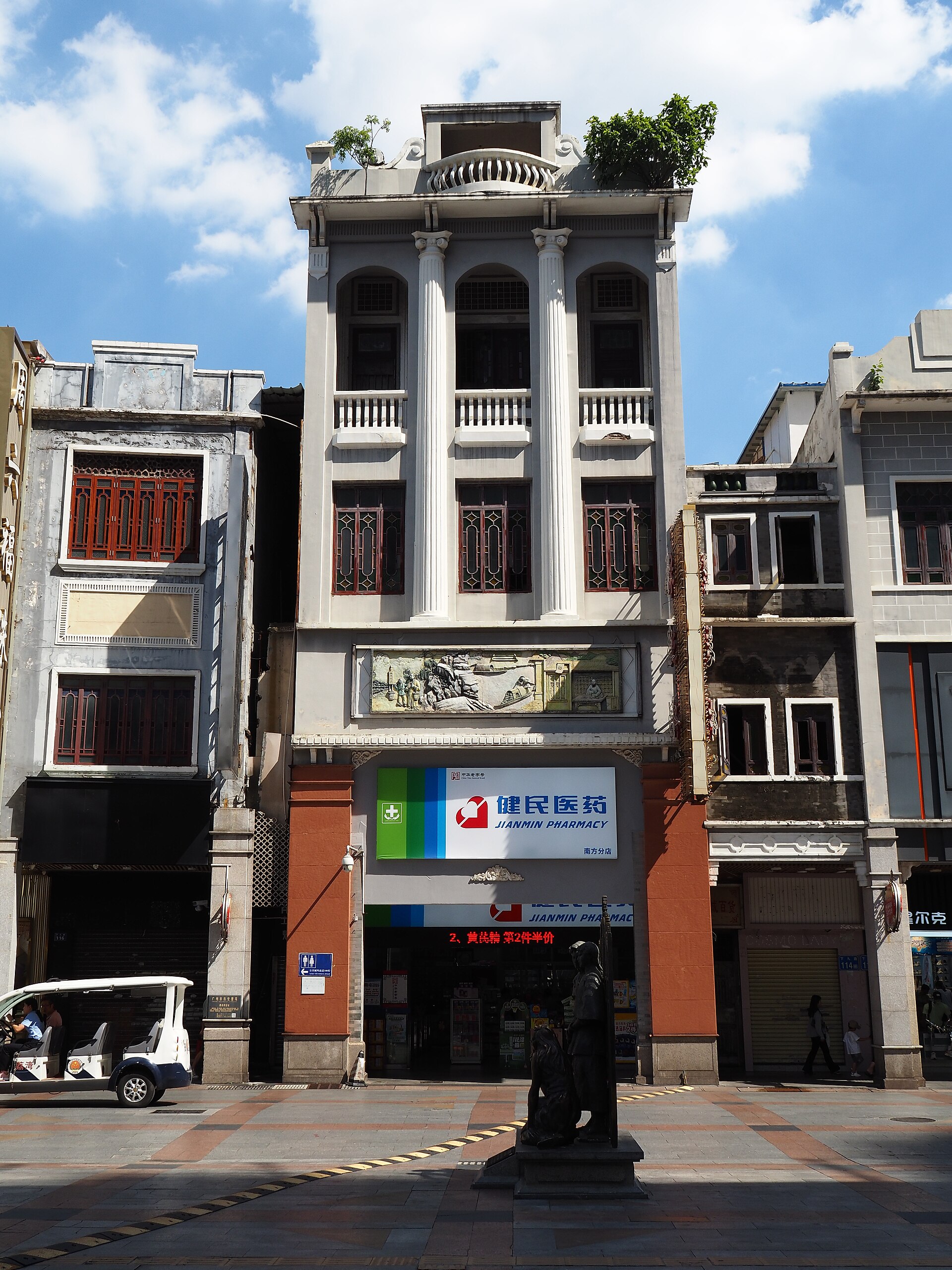 9
9
If Beijing Road is the modern shopping side, Shangxiajiu is old Cantonese through and through. This pedestrian street in Liwan district is lined with qilou (骑楼) — old commercial buildings whose upper floors project out over the pavement on columns, designed so you can shop in sun or rain, a hallmark of southern China. Above, the facades carry a European-meets-Chinese plasterwork that is beautifully faded. But the real heart of the street is the food — old dim-sum houses, Cantonese sweets, congee, fish-ball noodles and snacks line both sides, and locals eat here for real, not just tourists. Grazing your way along it in the evening gives you the full flavour of the old city. Free.
Read more: The Shangxiajiu guide — the old food houses and the qilou worth photographing.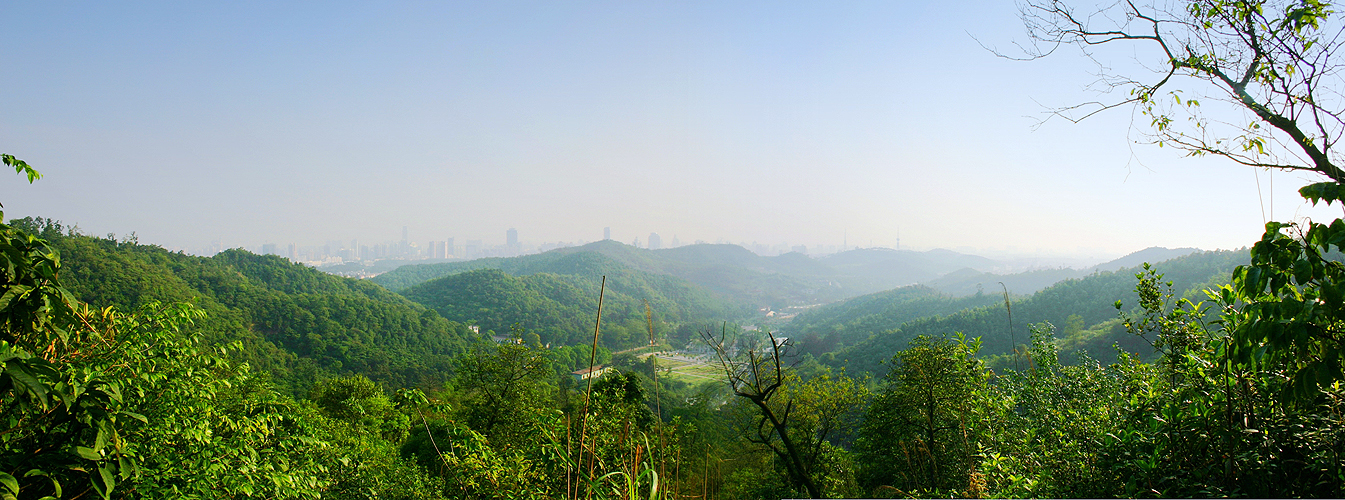 10
10
Baiyun Mountain ("White Cloud Mountain") is the big green hill north of the city that locals call its "lung". On a clear day the summit, Moxing Ridge (摩星岭), looks out over the whole of Guangzhou stretching away to the river. There are two ways up — walk the shaded forest trails (popular with locals out for exercise) or take the cable car up to save your legs. The gate fee is tiny at around ¥5, with the cable car charged on top. Up top there are gardens, temples and several viewpoints. It makes a good half-day when you want to escape the city's bustle, and the air is noticeably cooler than down below.
Read more: The Baiyun Mountain guide — the walking routes, the cable-car stations and the best viewpoints.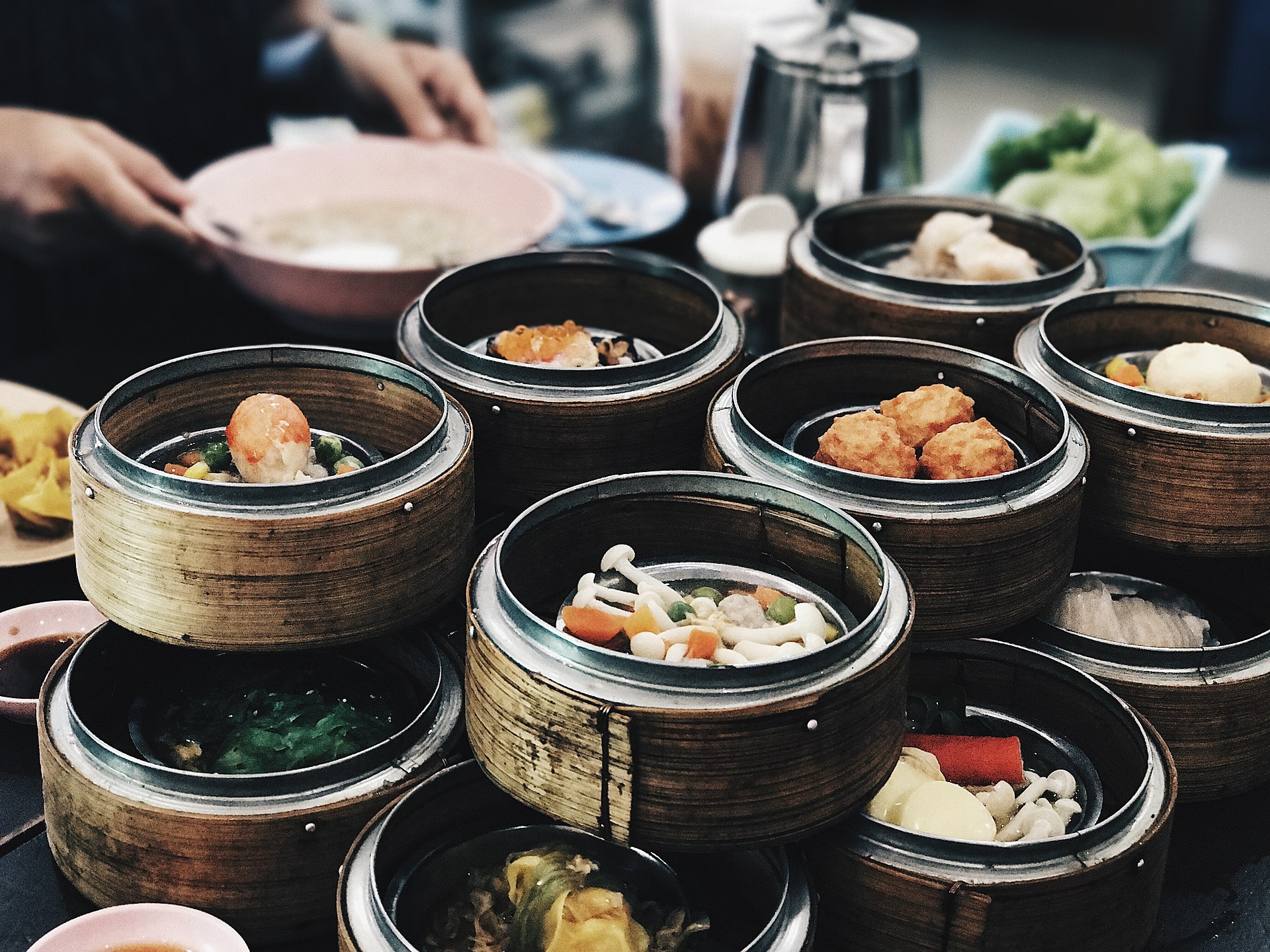 11
11
Come to Guangzhou and skip morning dim sum, and you miss the heart of the city. "Yum cha" (饮茶, "drink tea") is the Cantonese custom of gathering at a teahouse from early morning, ordering a pot of tea and then a steady stream of dim sum — it is both a meal and a social ritual. Springy shrimp har gow, siu mai, barbecue-pork buns, soy-braised chicken feet, turnip cake: all the names you know, but here at the source. Guangzhou ranges from century-old teahouses like Panxi Restaurant to bright modern places in shopping malls, with prices from a few tens of yuan a plate up to fine-dining halls. Go early to find the room full of locals.
Read more: The Guangzhou dim sum & yum cha guide — what to order, the best houses, and how to order like a local.Once you have done the city, Guangzhou is a fine base for trips just outside it. Two favourites: Foshan is closest — a cross-city metro ride straight there — and is the home of the Wing Chun kung fu of Ip Man (Bruce Lee's teacher), with the old Foshan Ancestral Temple (祖庙) and a ceramics museum, good for a half- to full-day. Kaiping is further (about an hour by high-speed train plus a transfer) but well worth it for anyone who likes the unusual — villages dotted with hundreds of "diaolou" (碉楼), fortified watchtowers blending western and Chinese architecture in the middle of the rice fields, a UNESCO World Heritage Site unlike anywhere else in China, and best as a full-day trip.
Read more: The day trips from Guangzhou guide — Foshan · Kaiping · Shenzhen · Hong Kong, with how to get there.