A forested range just north of downtown, ¥5 to enter — ride the cable car or hike up to the 382-metre Moxing summit for a full panorama of the Guangzhou skyline and the Pearl River. Best at sunset and just after rain.
Picture this: you're standing on the Moxing summit in the late afternoon, a cool breeze coming off the green hills behind you, and in front the entire Guangzhou skyline is beginning to light up tower by tower — Canton Tower spiking up to the south, the Pearl River curving through the middle of the city, the high-rises of Zhujiang New Town lined up beyond. And you got up here on a cable car that cost less than a hundred baht.
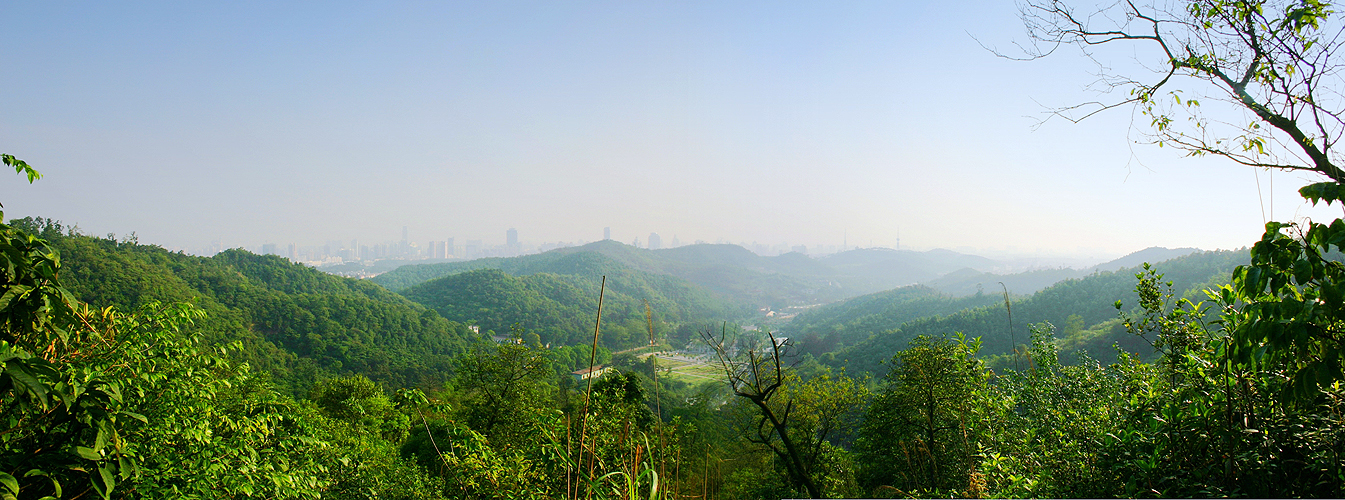
This is Baiyun Mountain — "White Cloud Mountain" — a low forested range covered in dense greenery on the northern edge of central Guangzhou. Locals call it "the lung of Guangzhou" because it's the largest patch of green closest to the city. Its highest point, Moxing Ridge (摩星岭), reaches 382 metres — the highest spot in urban Guangzhou and where the whole city comes to breathe, exercise and take in the view.
What makes Baiyun Mountain worth your time is that it's a public park, a hiking spot and a city viewpoint all in one — and you can do it the easy way (cable car up, gentle stroll, photos) or the serious way (the 1,836-step fitness staircase). Entry is just ¥5 for the whole forest, all day. That's why it sits firmly on the list of Guangzhou sights you shouldn't skip, for residents and visitors alike.
From the summit that sees the whole city to the valley where birds fly over your head.
The heart of a visit, and the highest point in urban Guangzhou. From here the view is genuinely 360 degrees — the Canton Tower skyline, the Pearl River and the Zhujiang New Town towers all spread out below. On a clear day you can see to the edge of the city. It's the sunset spot locals love most.
A valley enclosed under a vast net where hundreds of birds fly free — peacocks gliding overhead, cranes, and brightly coloured tropical species. Kids love it. It's billed as one of the largest natural aviaries in China. Admission is charged separately from the mountain ticket, so check the price on arrival.
A wooded clearing scattered with hundreds of stone tablets carved with classical Chinese calligraphy, set in the forest around the Cheng Precipice near the Nine Dragons Spring. It's a quiet, shaded corner — a good place to rest mid-walk and a photo spot far fewer visitors know about than the summit.
The easiest way up. The cable car leaves from a station near the South Gate and drifts up over the treetops in a few unhurried minutes, with forest and city views along the way. It runs 09:00–18:00. The usual move is to buy a one-way ticket up and walk down at your own pace, though you can buy a return too.
A large flower garden at the base on the South Gate side, with seasonal flower beds, fountains and open plazas. It's an easy add-on before or after the climb, especially with family or if you'd rather not hike the whole mountain. The Line 11 Yuntai Garden metro station is right here.
What most people do — take the cable car from the station near the South Gate up to near the top, walk the last stretch to the Moxing summit, photograph the city, then stroll back down at your own pace through the forest and rest stops along the way. This takes about 2–3 hours and works for everyone, including families with young children or older travellers. With the ¥5 entry plus the ¥25 cable car up, you're looking at roughly ฿150 a head.
For the best of it, time your cable car ride up for late afternoon, watch the sunset from the summit, then head down — but check the cable car's 6 pm closing time first. If you want to stay for the city lights after dark, you'll need to allow time to walk down.
Baiyun Mountain is Guangzhou's open-air gym — in the early morning you'll see locals hiking up as a daily routine. The trails come in several grades, from gentle paved slopes to the notorious 1,836-step fitness staircase, which is very steep and not recommended for beginners or anyone with knee trouble. If you hike up, allow a full morning or afternoon, carry enough water, and start early to beat the midday heat.
The golden window is late afternoon into sunset at the Moxing summit — warm light washing over the city as the towers begin to glow. But the mountain is most magical just after rain, when cloud and mist drift over the peak, the air clears, the city sharpens into view, and you understand instantly why it's called "White Cloud Mountain".
The best seasons are October–December (cool, dry, clear skies) and February–March (blossoms in the Yuntai garden). Skip summer middays, which are hot and humid, and avoid weekends and Chinese public holidays (such as early-October National Day) if you'd rather not queue for the cable car.
The good news: getting here got a lot easier in late 2024, when a new loop metro line opened a station right by the South Gate.
Baiyun Mountain is a half-day trip you return to the city from — stay somewhere central with easy metro access.