9 Guangzhou attractions worth your time
Not just photo spots — places where the experience matches the expectation. Tap a card to read the full deep-dive guide for each.
 1
1
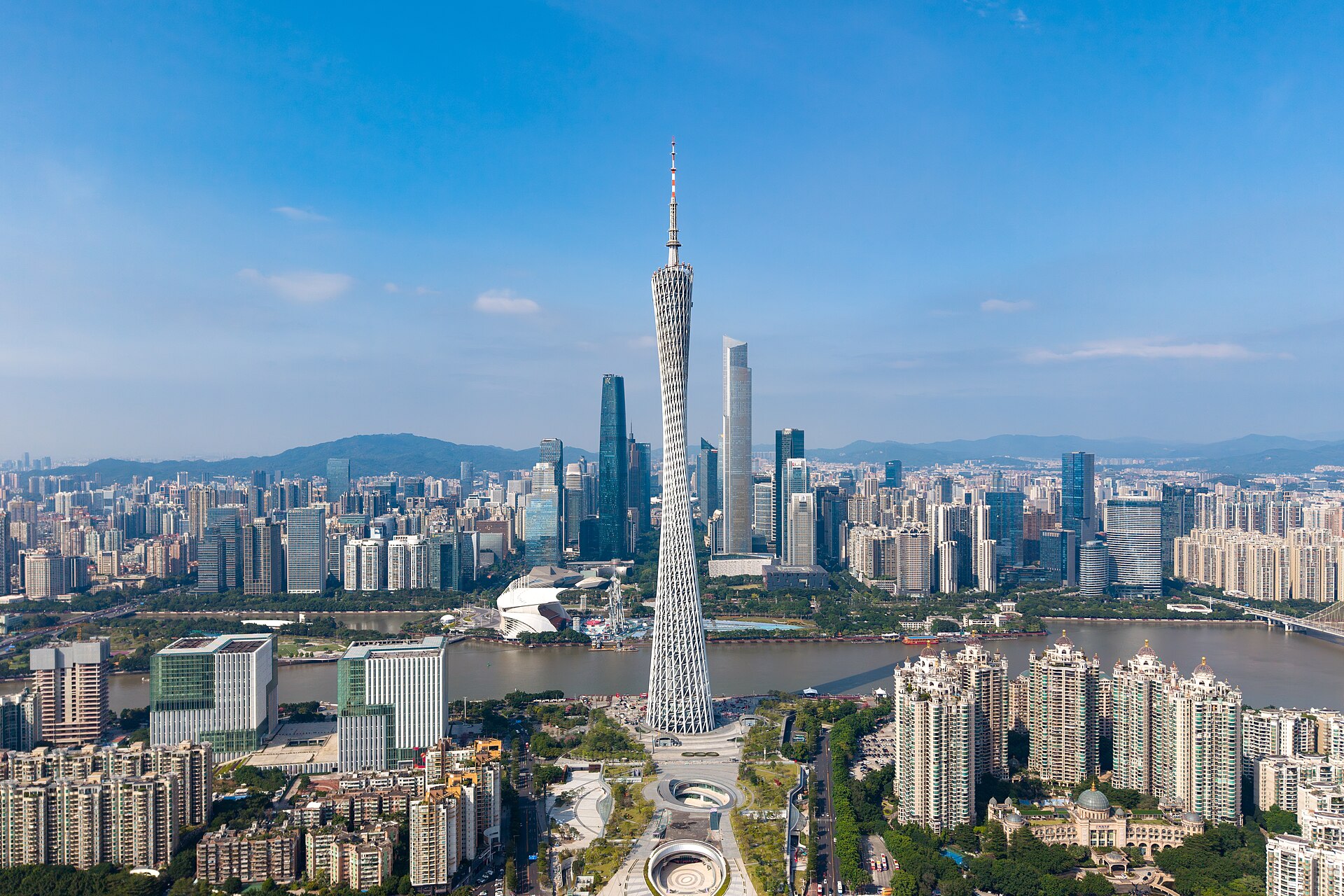
Picture a 600-metre tower that pinches inward at its middle — locals nicknamed it the "Little Waist" (小蛮腰) — standing on the south bank of the Pearl River and changing colour all night. The indoor observation decks sit at 433 and 450 metres. If you have the nerve for it, there is the outdoor Bubble Tram, a glass capsule that rotates around the rim at 450 metres, and the Sky Drop free-fall ride at 488 metres — the highest of its kind in the world. Observation-deck tickets start around ¥150 (~฿750), rising to ¥298 (~฿1,490) for the ride packages.
Read the full Canton Tower guide →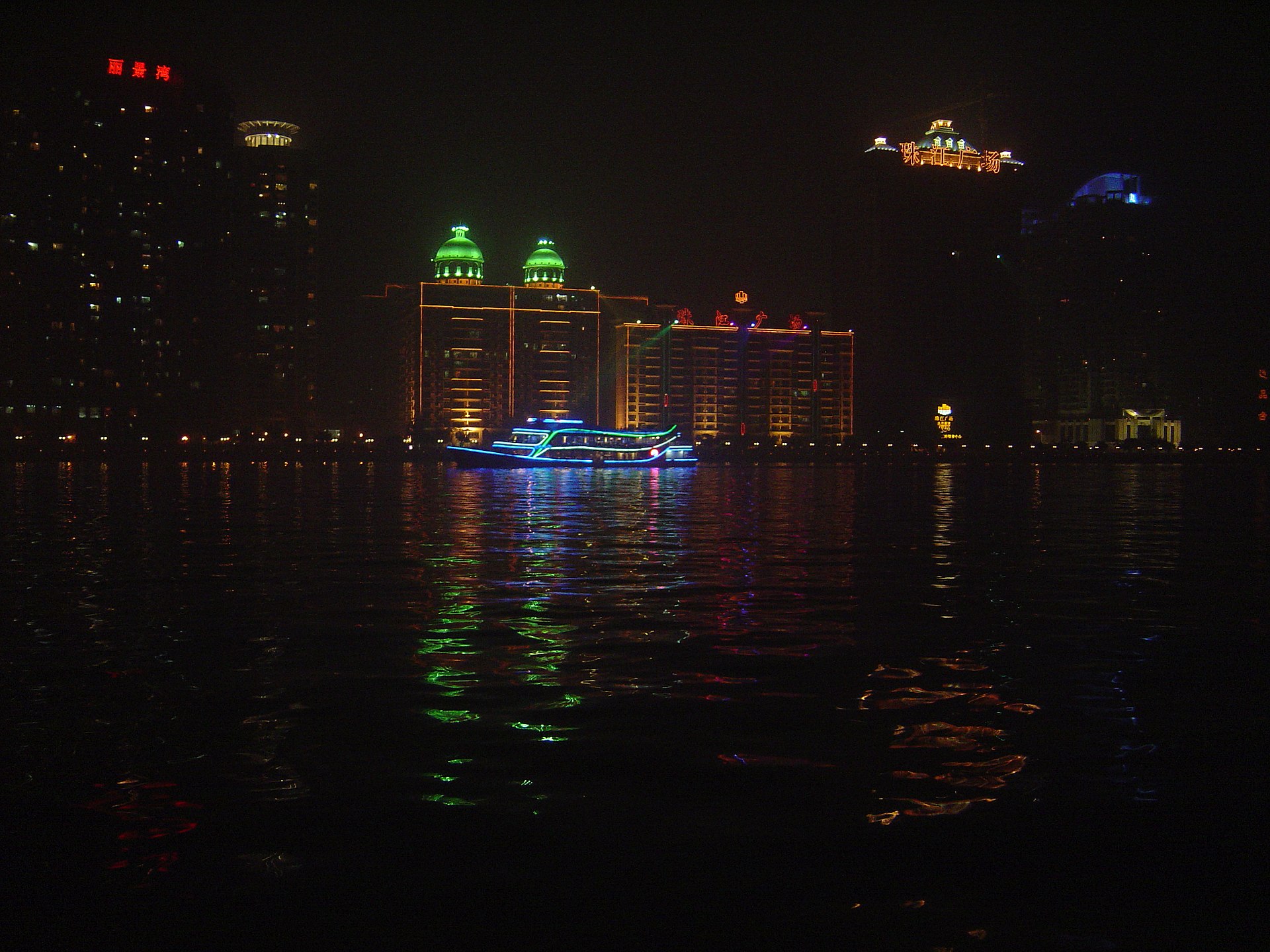 2
2
The best value way to see Guangzhou in a single evening is from the water. The cruise runs about an hour along a riverfront lit up on both banks — Canton Tower shifting colour, the twin towers, the colour-cycling bridges and Haixinsha island all sliding past in turn. A standard cruise with general seating costs roughly ¥70–100 (~฿350–500); dining cruises with a Cantonese buffet run ¥180–280. The main piers are Tianzi, which has the most frequent departures, and Dashatou. Book ahead on Friday to Sunday.
Read the Pearl River cruise guide →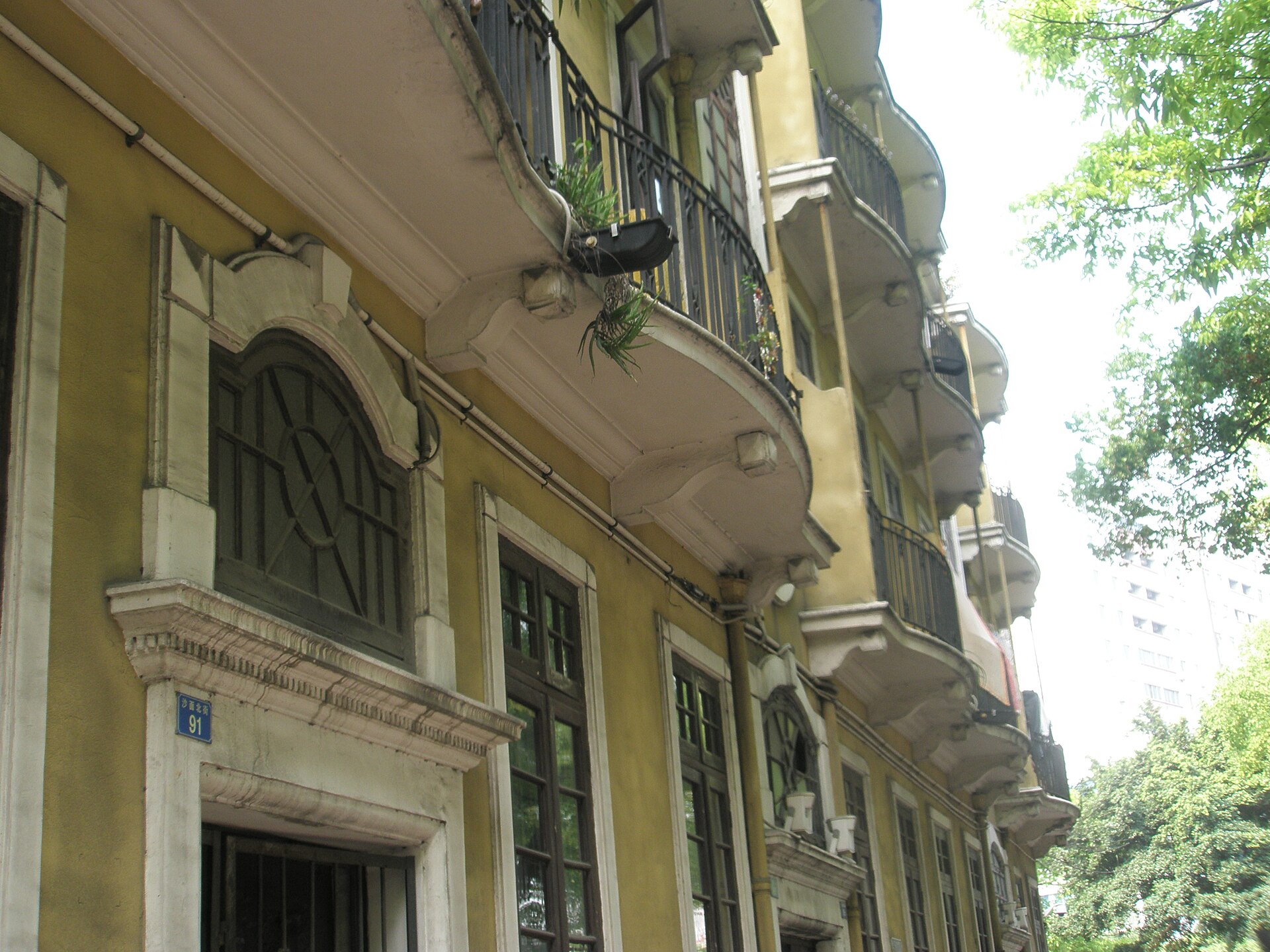 3
3
In a Chinese city this busy, there is a small island that feels like stepping into early-twentieth-century Europe. Shamian is a sandbank in the Liwan district that the French and British leased from the 1860s, leaving behind more than 300 European-style buildings — tree-lined lanes, very little traffic, old churches, cafés, and wedding-photo backdrops where Guangzhou couples shoot every single day. It is free, open at any hour, and pairs naturally with the nearby Qingping Market and the riverfront in one outing.
Read the Shamian Island guide →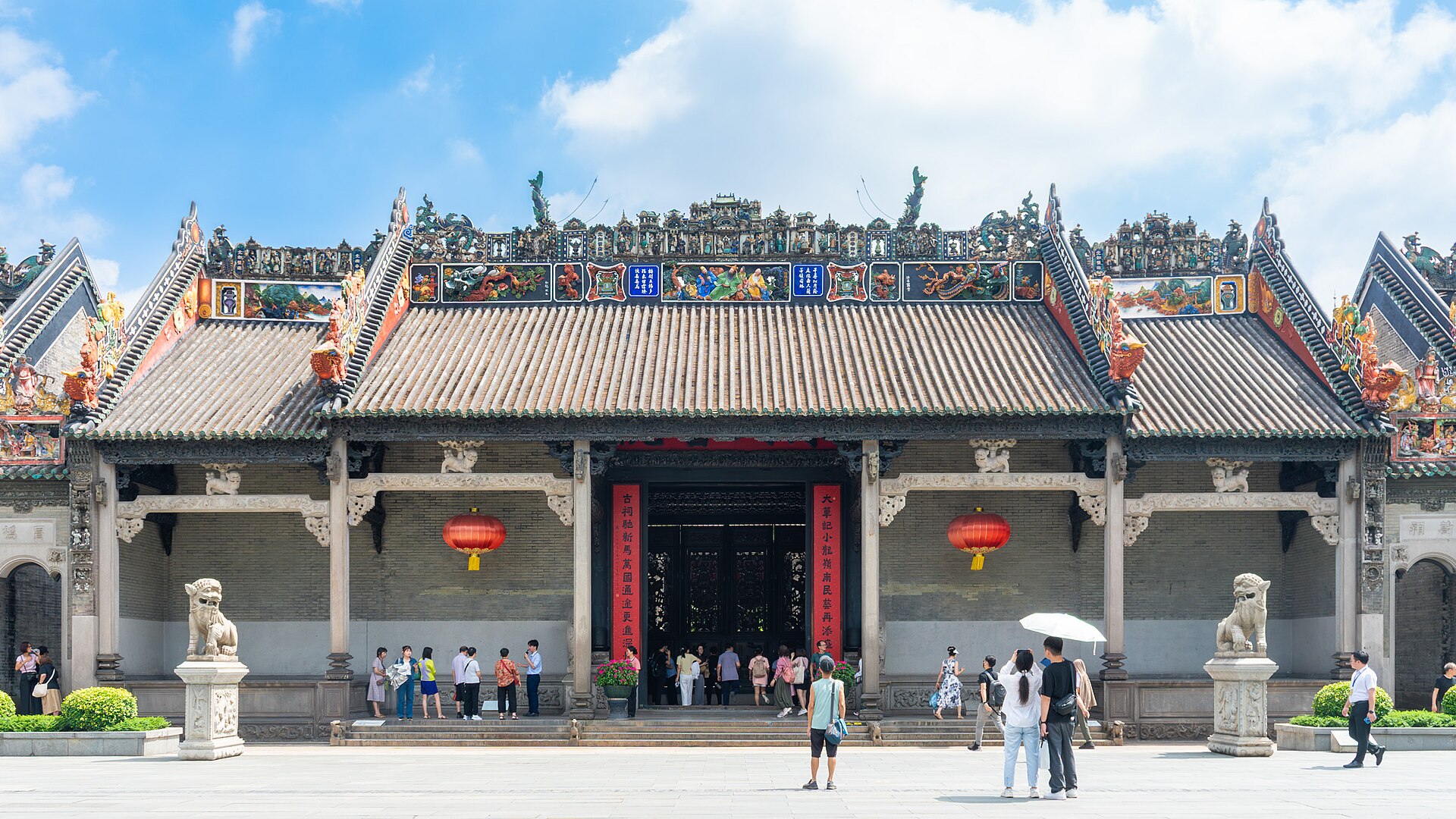 4
4
If you want proof of how good Lingnan craftsmanship was, this is it. The Chen Clan Academy was completed in 1894 as a shared ancestral hall for the Chen families across Guangdong province. What stops people in their tracks is the roof ridges — ceramic figure-work and lime sculpture telling scenes from Chinese literature, running in long bands above every roofline. Inside, 19 halls wrap around courtyards, dense with wood carving, stone sculpture and decorative ironwork. It is now the Guangdong Folk Art Museum, admission is just ¥10 (~฿50), and you will want about 1 to 1.5 hours.
Read the Chen Clan Academy guide →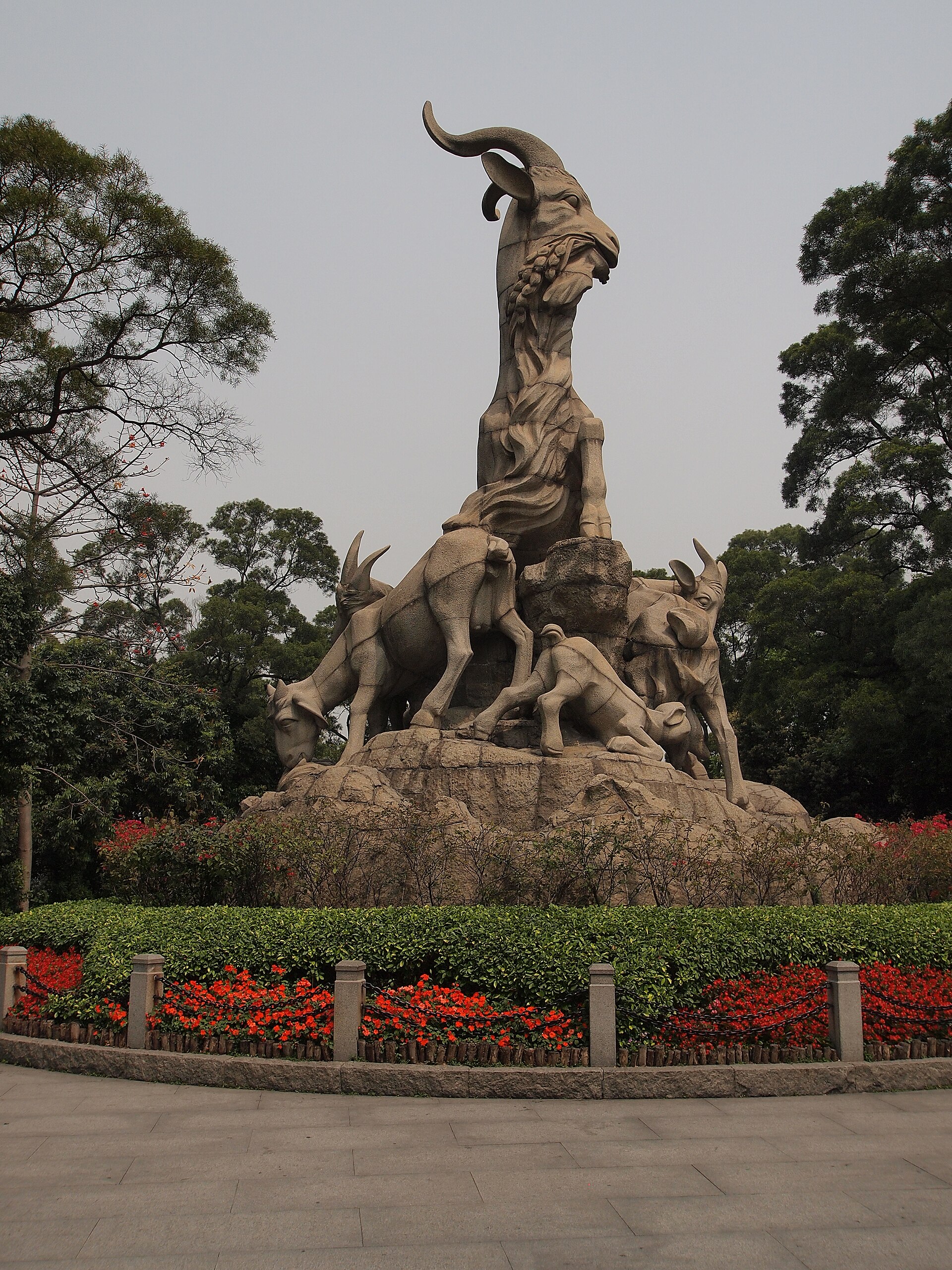 5
5
Guangzhou's other name is the "City of Rams" (羊城), and the legend lives here. The Five Rams Statue is carved from more than 130 pieces of granite, built in 1960 on Yuexiu Hill, telling the story of five immortals who rode five rams down to give the city its first grain. Yuexiu Park is the largest central park, with Zhenhai Tower — a remnant of the old city wall, now the Guangzhou Museum — plus lakes, big trees and shaded paths. The park is free (the museum charges a small fee). Allow about two hours.
Read the Yuexiu Park guide →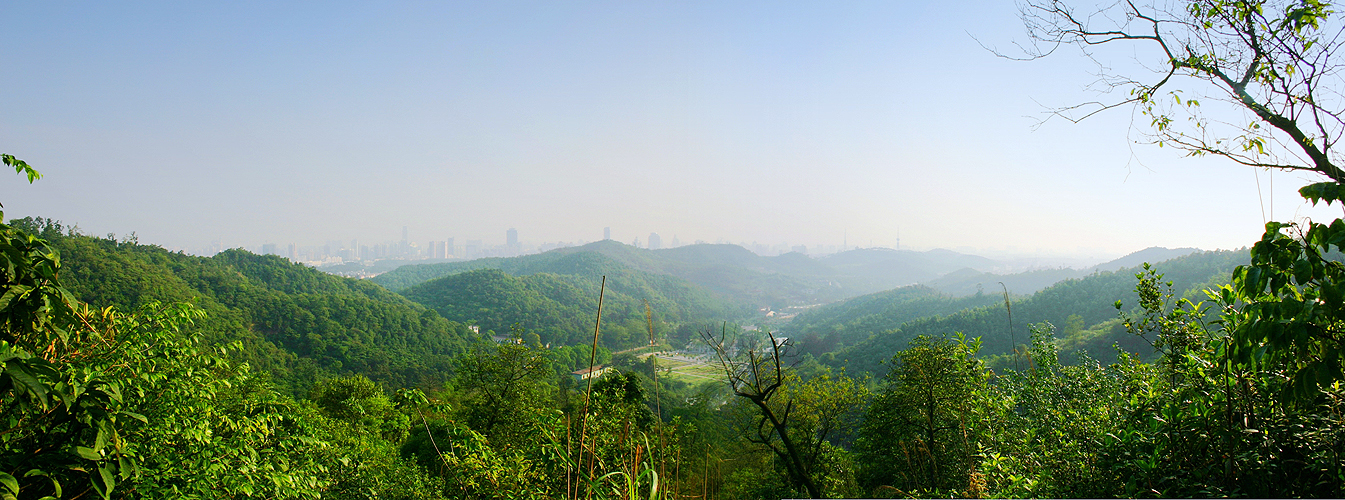 6
6
When the city's density starts to feel like too much, Guangzhou escapes up to Baiyun — the forested hills north of the centre, nicknamed the "lung of Guangzhou". The highest point is Moxing Ridge at 382 metres, with a panorama across the whole city, plus Cheng Precipice, a cable car and walking trails at several levels of effort. Entry to the mountain is just ¥5 (~฿25); the cable car is about ¥35 (~฿175) one way. It opens at 6 am, and it suits a relaxed half-day of fresh air and views.
Read the Baiyun Mountain guide →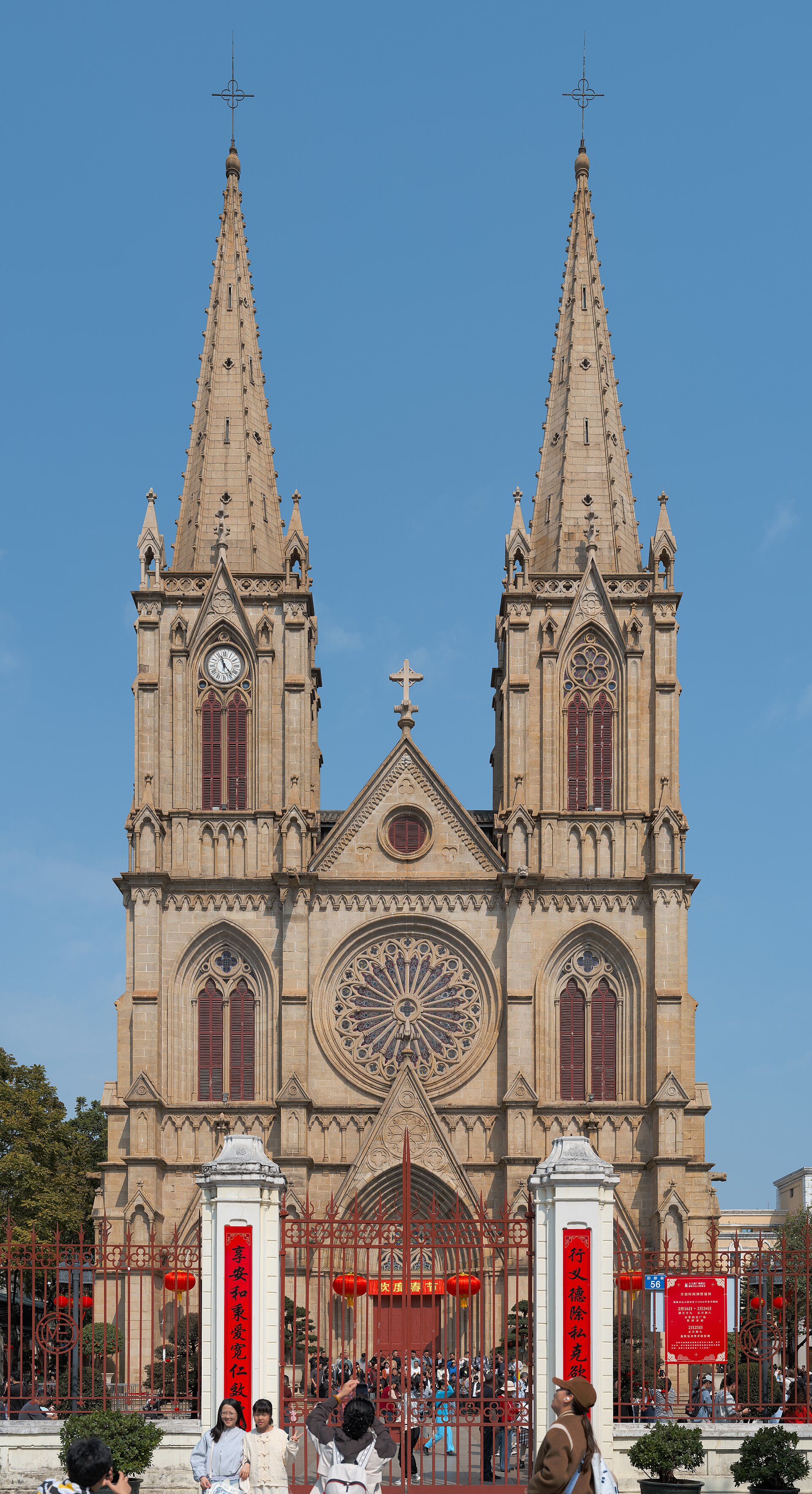 7
7
Locals call it the "Stone House" (石室) because Sacred Heart Cathedral is built entirely of granite rather than brick — one of only a handful of all-stone Gothic churches in Asia. Constructed between 1863 and 1888, its twin spires reach about 58 metres, and its stained-glass windows and pointed arches are handsome enough to have earned it the nickname "Notre-Dame of the East". It is still a working church today. Entry is free (respect Mass times), and it sits near Beijing Road and the river, so you can walk on from one to the next.
Read the Sacred Heart Cathedral guide →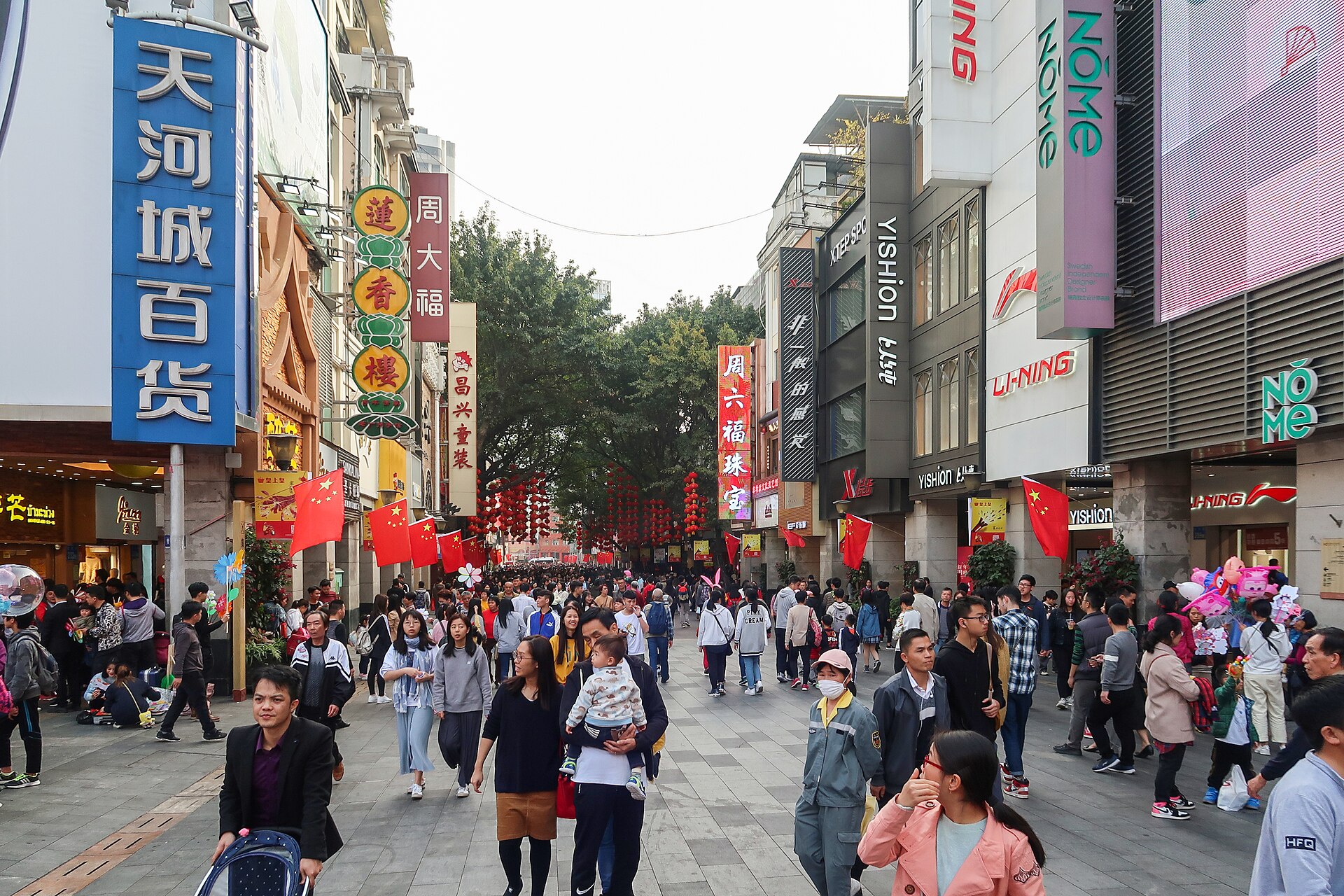 8
8
Beijing Road is where Guangzhou puts its energy on display — a central pedestrian street in the Yuexiu district, packed with malls, brand stores and snack lanes. What sets it apart from any other shopping street is the glass floor set into the middle of it. Look down and you see eleven layers of old road surfaces, excavated in 2002, running from the Tang Dynasty to the Republican era — more than two thousand years of the city literally underfoot. The Da Fo Si temple is nearby, and the street is lively day and night. It is free.
Read the Beijing Road guide →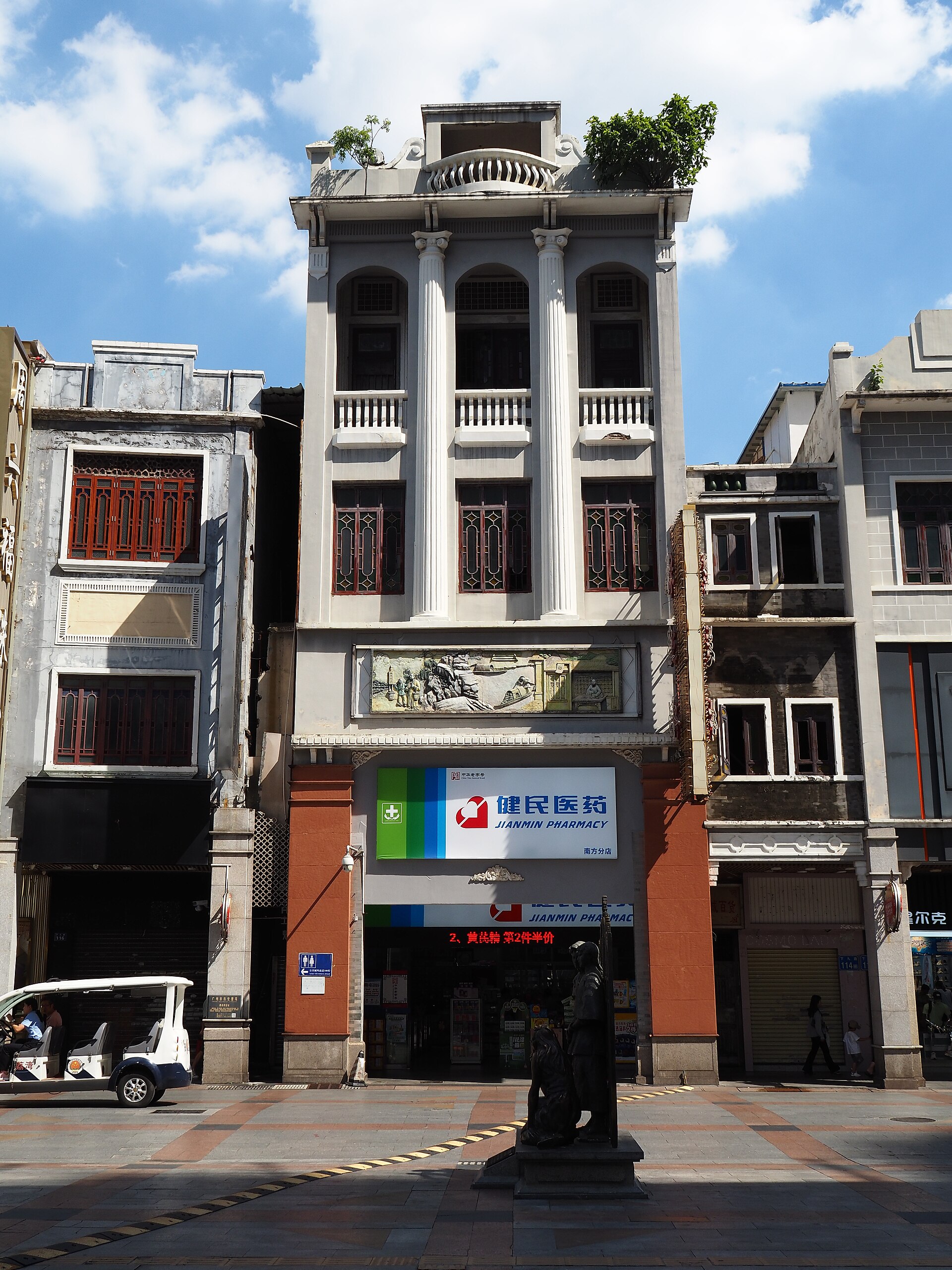 9
9
If you want the Guangzhou that locals actually live in, Shangxiajiu in the Liwan district is the answer. It is a pedestrian street lined with qilou — the 1920s arcade shop-houses where the ground floor is a covered colonnade that shelters you from the Cantonese sun and rain, with living quarters above. Here you will find legendary old Cantonese restaurants like Tao Tao Ju and Lin Heung, plus snacks, fabric shops and sweet stalls. It is free, and it pairs perfectly with the street-food guide. Walk from Changshou Lu station (Line 1).
Read the Shangxiajiu guide →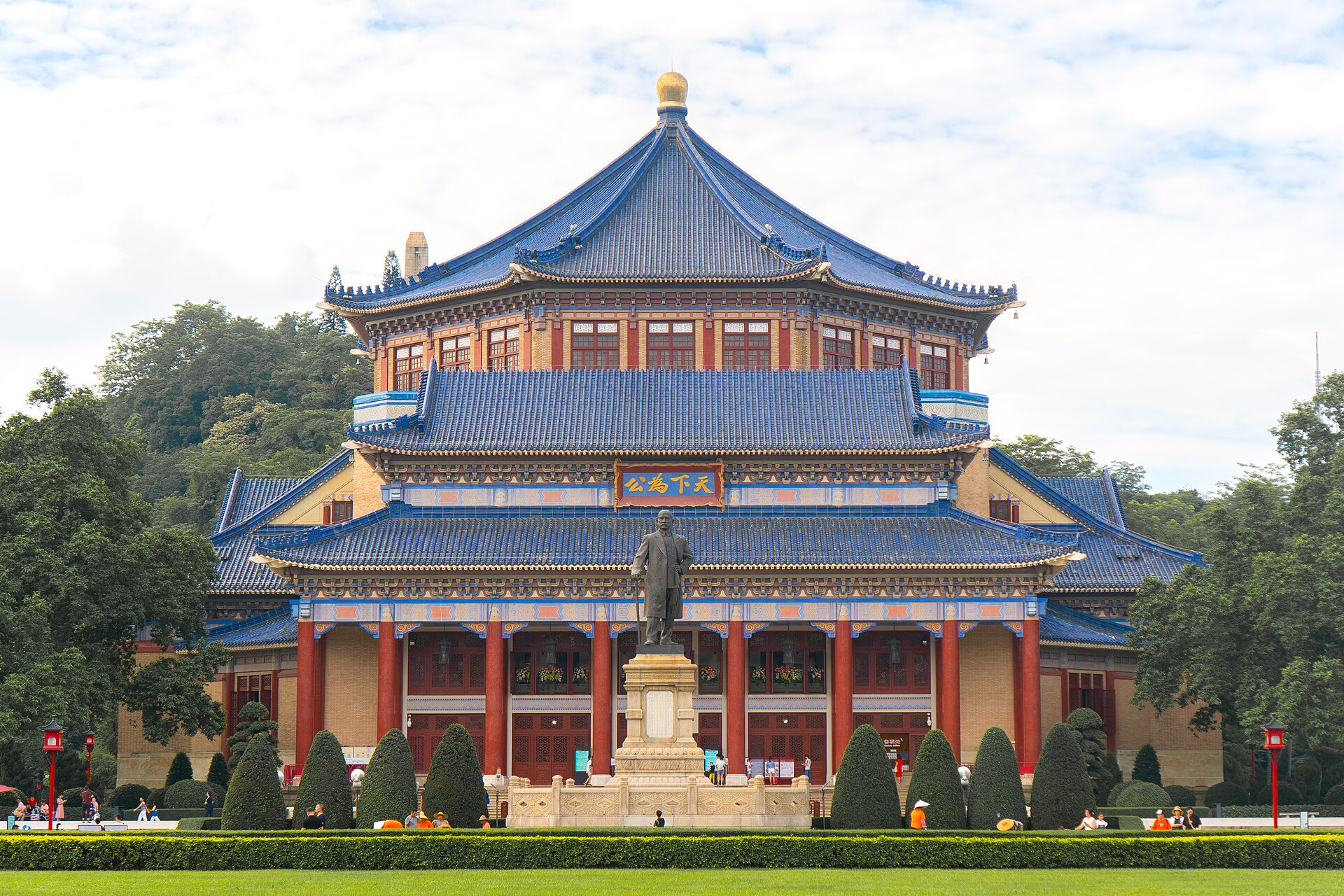 +
+
An extra day is well spent — Guangzhou is a hub with everything close by. Foshan (the Ancestral Temple, the home turf of Bruce Lee and Wong Fei-hung, and the Lingnan Tiandi district) is about an hour on the Guangfo metro line; the Kaiping Diaolou, the UNESCO-listed watchtower villages, are around 2 to 2.5 hours by bus; and Shenzhen is just 30–40 minutes by high-speed rail for theme parks and tech. Read the getting-there details and timings in the full day-trips guide.
See day trips from Guangzhou →