Cross one short bridge from a city of 18 million and you are suddenly on a sandbank that Britain and France leased 160 years ago — over 150 European buildings, tree-lined lanes with almost no cars, two old churches and cafés where couples queue to take wedding photos. Free, and yours to wander all day.
Picture it: you are standing in central Guangzhou — eighteen million people, traffic in every direction, skyscrapers to the horizon — and then you walk across a short bridge over a narrow canal onto a single island. The horns fade. What is left is birdsong, a few cyclists drifting past, and rows of cream-and-yellow buildings with sloping European roofs lining both sides of the street. This is Shamian Island (沙面), the place visitors so often describe as "not feeling like China at all".
It started as nothing more than a sandbank in the Pearl River — the name "Shamian" means, literally, "sandy surface" — used by foreign traders from the Song through the Qing dynasties. In 1859, Britain and France dug a canal (the Shajichong) along the north side, cutting the sandbank off from the mainland and turning it into an island, then divided it into two leased concessions: the French to the west, the British to the east. That concession status lasted until 1943, and across those decades the island filled with consulates, foreign banks, churches, schools and mansions.
Today Shamian is a protected historic district with over 150 buildings preserved in their original form — a mix of Neoclassical, Gothic and Baroque styles. The streets are almost entirely closed to cars, mature banyan trees shade the lanes end to end, and best of all, the whole island is free. No gate, no ticket, open at any hour.
The island is small, but every corner repays attention — walk it slowly and you will catch the lot.
1
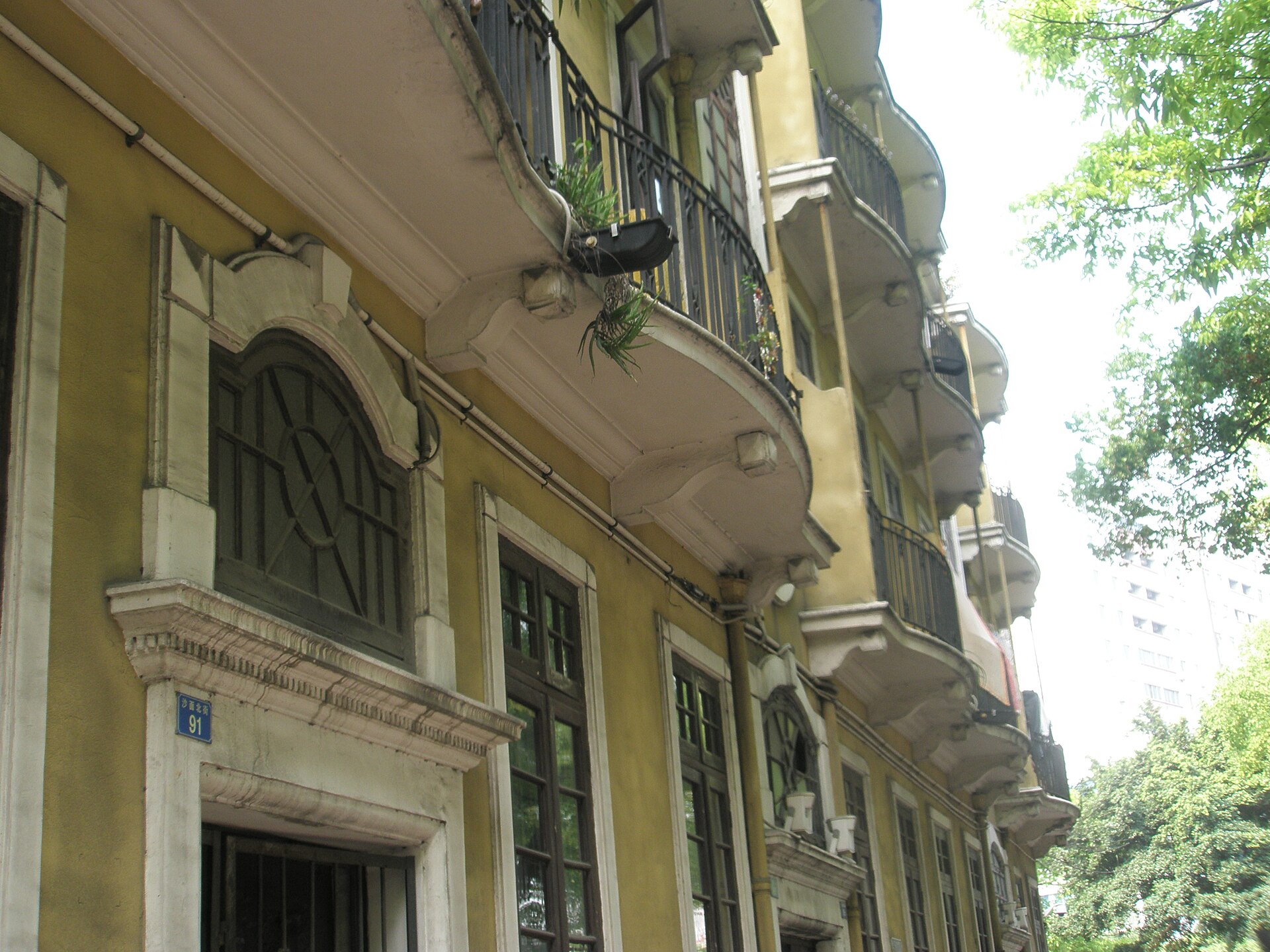
The heart of the island is the buildings themselves — former consulates, foreign banks and mansions raised from the 1860s on. Many are painted cream, soft green or pastel pink, with wrought-iron balconies, arched windows and Greco-Roman columns. Walk the main spine, Shamian Dajie (沙面大街), and read the small plaques outside each one: you will find what each building used to be. Some are now hotels, restaurants or offices, but the facades are essentially unchanged.
A small but lovely Catholic chapel, built in 1890 on what was the French concession. The facade is white sandstone, the spire is Gothic, and the windows are filled with coloured glass. It is one of the most popular wedding-photo spots on the whole island. It remains an active church, so it is free to enter but should be visited respectfully — if a Mass is underway, keep quiet and stay out of the way.
On the other side of the island is the Protestant church the British built back in 1865 — calm red-brick English design, a clear contrast to the prettiness of the French chapel across the way. It too is a favourite for wedding photography. General opening hours are 6 am–11 am and 2.30 pm–5.30 pm on weekdays, with longer hours of 6 am–5.30 pm on Saturdays, Sundays and holidays. Times can change, so checking ahead is the safest bet.
What really sets Shamian apart from anywhere else in Guangzhou is the atmosphere. The streets are almost entirely closed to traffic, century-old banyan trees arch right across them, and people stroll, cycle and sit on benches in the shade. Dotted along the lanes are life-size bronze statues recreating scenes from the old days — a saxophone player, a mother leading a child, a couple deep in conversation. They are a favourite for quick photos. The best way to "do" Shamian is simply to wander without a plan and let it unfold.
Plenty of the old buildings have been turned into atmospheric cafés and restaurants — you can genuinely sit with a coffee in a high-ceilinged room that was once a bank or a consulate. The southern edge of the island runs along the Pearl River, with a waterfront path looking across to the far bank and out to the boats. The White Swan riverside area sits right here, so you can carry on from the island and rest by the water, especially good towards evening.
Everything you actually need to know, in one place.
Shamian Island sits in the Liwan district on the western side of central Guangzhou, right against the Pearl River. The metro gets you there easily:
The simplest approach is Metro Line 1 or Line 6 to Huangsha station (黄沙). From the exit, an overpass connects to the small footbridge that crosses the canal onto the island at its northwest corner. It is about a 5–8 minute walk from the platform to the island.
If you are staying on the east side (Zhujiang New Town / Canton Tower), take the metro with one change to Huangsha — roughly 30–40 minutes depending on your start. Do Shamian in the morning or afternoon, then head back east to ride Canton Tower for the night skyline.
Just north of the island, across the narrow canal, is Qingping Market — an old market of Chinese herbal medicine, dried goods and tonics, with hundreds of things to look at. It is only a few minutes' walk from the island, and it pairs beautifully: the island gives you quiet European calm, the market gives you the colour and smell of old Guangzhou.
With a free half-day: Shamian Island (morning), then Qingping Market, then a walk along the Pearl River by the White Swan area, then a short metro hop to the Shangxiajiu (上下九) pedestrian street for dim sum and local snacks. A full, satisfying loop of the Liwan district.
Shamian itself has hotels in restored old buildings and along the White Swan riverside, and staying central with a short metro ride works just as well. Here are the Guangzhou hotels we have rounded up: