Home Guangzhou China Guangzhou Hotels About
Home  ›  China  ›  Guangzhou  ›  Food Guide
Guangzhou Food Guide · 2026

What to eat in Guangzhou
11 Cantonese dishes to try

There's a Chinese saying: to eat, go to Guangzhou. This is a city where the whole town sits down to tea and dim sum at dawn, where roast goose hangs crisp-skinned in shop windows, and where a tonic soup simmered for hours is treated as everyday medicine. Here's where to start.

Why eat here

The original that the world copied

The dim sum you've eaten in Bangkok, Hong Kong or San Francisco — its roots are here. Cantonese cuisine, or Yue cài (粤菜 / 广府菜), is the cooking of Guangzhou and the Pearl River Delta, and it runs counter to most other regional Chinese food. Instead of high-heat stir-frying with chilli and heavy spice, Cantonese cooking leans on steaming, poaching and slow simmering to protect the freshness and natural flavour of an ingredient. The aim is to draw out the clean, sweet taste of the real thing — not to bury it under sauce.

Guangzhou is also the capital of dim sum and roast meats. In the mornings the whole city is at yum cha, sipping Chinese tea while ordering har gow, siu mai and egg tarts basket by basket. The roast-meat shops (烧腊) hang rows of roast goose, char siu and soy chicken to slice over rice. And don't forget that Guangdong province is also home to Chaoshan (Teochew) cooking — its own distinct tradition, but found on every corner here. We picked 11 dishes and categories that tell the fullest story of Guangzhou, with places you can actually walk into.

The essential dishes

11 things to eat before you leave Guangzhou

Ranked by how essentially Cantonese they are — the dishes this city does better than anywhere.
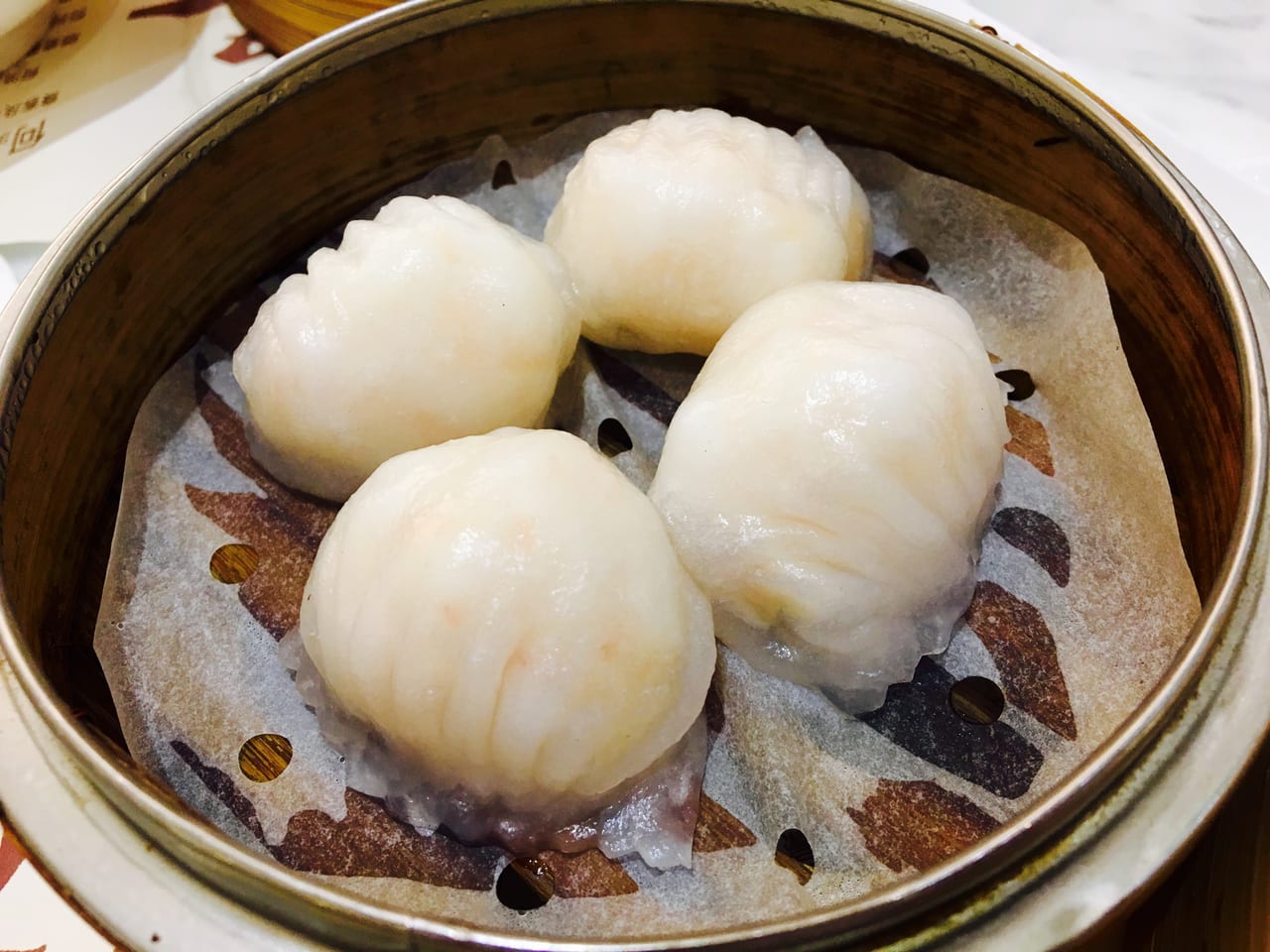
Har gow, four Cantonese shrimp dumplings in a bamboo steamer, translucent wrappers showing the pink shrimp inside 1
Dim Sum
点心 · the Cantonese morning-tea ritual

This is the dish Guangzhou exported to the world — but at the source it's a morning ritual, not just a meal. You choose a pot of tea first (pu'er, oolong or chrysanthemum), then order basket by basket: har gow with wrappers so thin you can see the pink shrimp; pork-and-shrimp siu mai; pillowy char siu bao; egg tarts crisp outside and silky within; chicken feet steamed in black-bean sauce. One etiquette note — when someone pours your tea, tap two fingers on the table to say thanks. Tao Tao Ju has been trading since 1880 and is still where locals bring family for weekend yum cha.
Where: Tao Tao Ju 陶陶居 (Liwan · in the Michelin Guide · since 1880) · Dim Dou Dak 点都德 (many branches · long hours) · Guangzhou Restaurant 广州酒家 · Pan Xi 泮溪酒家
Price: ¥60–120 per person (฿300–600) for 4–6 baskets plus tea
Tip: Arrive before 9am or after 1.30pm to dodge the longest queues
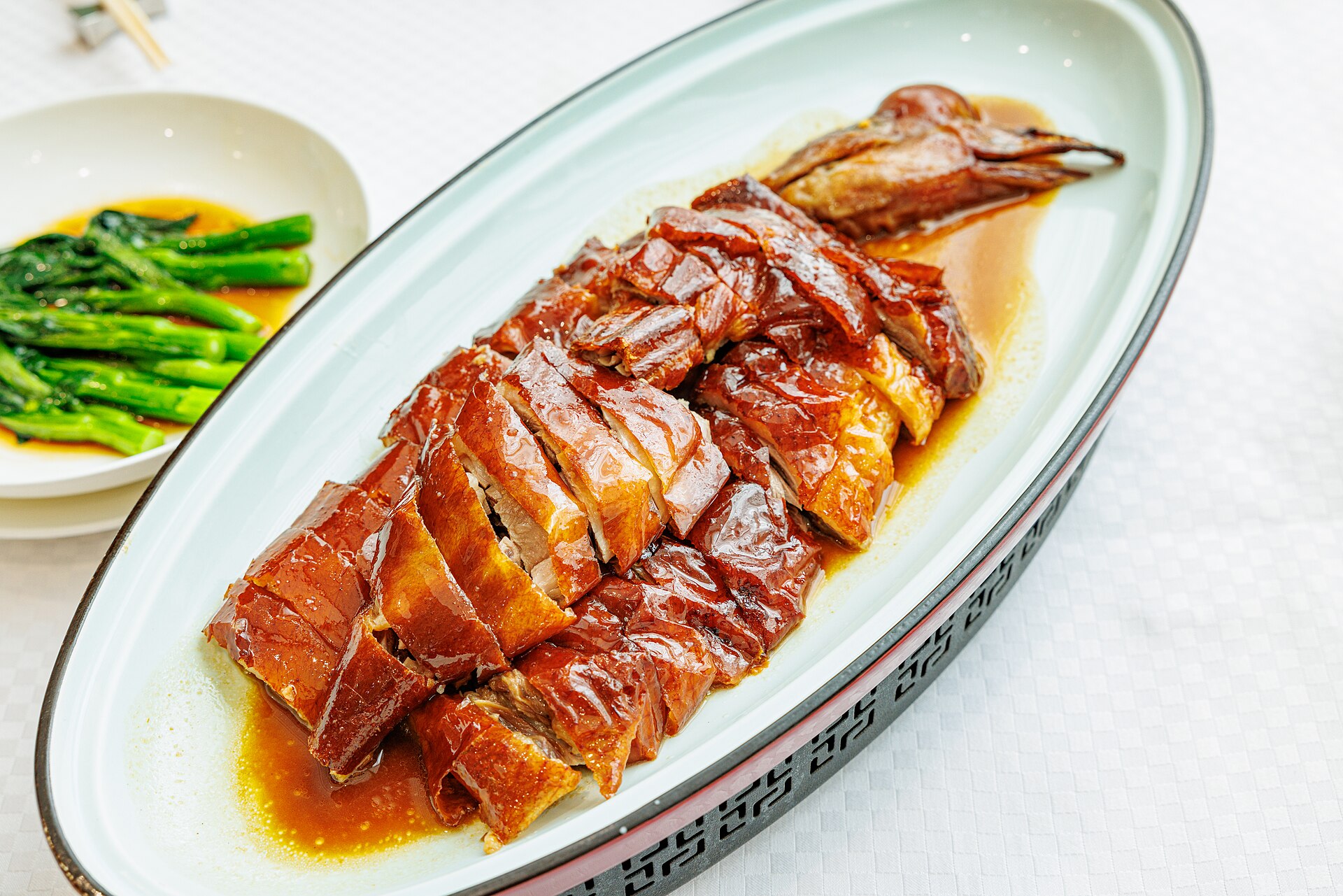
Cantonese roast goose chopped into pieces, glossy mahogany skin in a pool of sauce, served with blanched choy sum 2
Roast Goose
烧鹅 · crisp lacquered skin over plum sauce

Eat one good Cantonese roast goose and Peking duck starts to look ordinary. The whole bird is marinated with five-spice and roasted in a high-heat charcoal oven until the skin blisters crisp and turns deep mahogany. Below it sits a thin layer of fat that melts on the tongue, while the meat stays juicy rather than dry. It's chopped and served with a sweet-tart plum dip that cuts the richness. The legendary Yue Kee (裕记), out in the suburbs, has had locals driving to it for over 60 years — but Pan Xi and the old-town roast-meat shops do it well too.

Where: Yue Kee 裕记 (suburbs · traditional charcoal oven) · Pan Xi 泮溪酒家 · roast-meat shops 烧腊 in Liwan/Yuexiu
Price: ¥38–68 over rice (฿190–340) · half a goose ¥120+ (฿600+)
Order: Ask for the "upper cut" (上庄) — thicker skin, the most tender meat
🍖3
Char Siu
叉烧 · honey-glazed barbecue pork

Good char siu starts with the right cut — a piece with fat marbled through it (locals call it 半肥瘦, "half-fat, half-lean"). It's marinated in a barbecue-pork sauce with honey, then roasted until the edges caramelise into dark, glossy lacquer while the inside stays moist. The first bite should land all at once: the sweetness of the honey, the smoky char of the edge, the tenderness of the meat. Locals eat it sliced over hot rice with a sweet-savoury sauce and a few blanched greens on the side — a classic everyday lunch you'll find at any roast-meat shop.

Where: roast-meat shops 烧腊 across the city · Tao Tao Ju · Guangzhou Restaurant (a menu staple)
Price: ¥25–42 over rice (฿125–210)
Order: Ask for the charred edges (焦边) if you like it sweet and smoky
🐔4
Poached Chicken (Bai Qie Ji)
白切鸡 · the purity of a good bird

This is the dish that proves the whole Cantonese philosophy — no sauce to hide behind, no heavy spice, just a quality free-range bird gently poached in barely-simmering water, then plunged into cold water so the skin tightens and the meat stays pink and juicy right to the bone. It's chopped, served cool, and dipped in ginger-scallion oil (姜葱), finely minced and hit with hot oil. The whole point is the chicken itself — if the bird is good, its clean sweetness comes through with no help. Locals use this dish to judge a kitchen.
Where: traditional Cantonese restaurants · specialist chicken shops · Tao Tao Ju · Pan Xi
Price: ¥45–88 for half a bird (฿225–440)
With: ginger-scallion oil and hot steamed rice
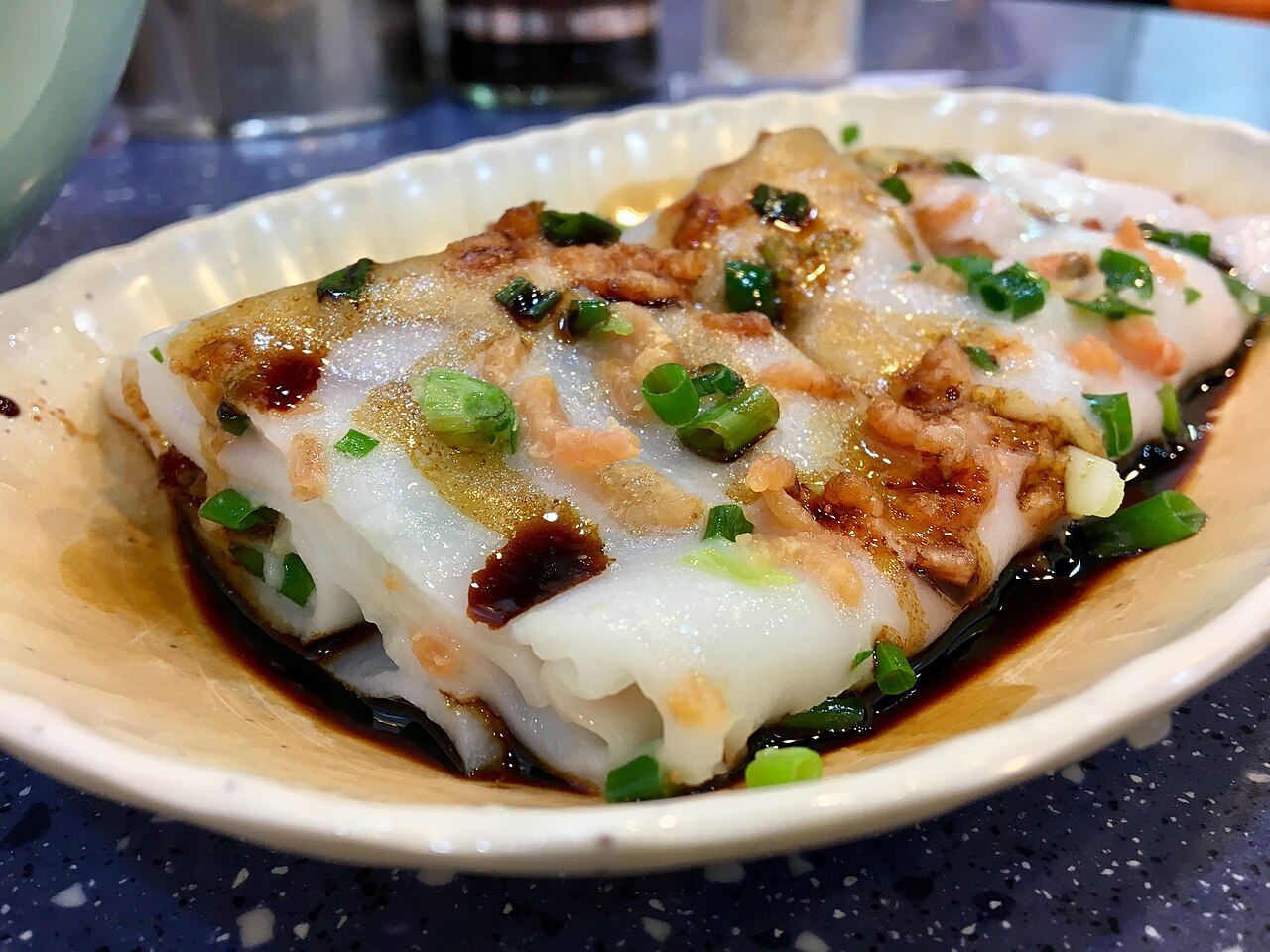
Cantonese cheung fun rice noodle rolls, silky white rolls in dark sweet soy sauce, topped with dried shrimp and chopped scallion 5
Cheung Fun
肠粉 · silky rice rolls in sweet soy

Guangzhou's favourite breakfast, made to order in front of you — a thin batter of rice flour is ladled onto a tray and steamed in a cabinet until it sets into a sheet so soft it barely needs chewing. Fresh shrimp, char siu or egg goes inside, then it's rolled, cut into sections, and drizzled with each shop's own lightly sweetened soy. The magic is the texture: slippery, tender, never gummy. The well-known Yin Ji (银记肠粉店) has been doing it for decades and still draws a morning crowd. A few yuan a plate — filling and cheap.
Where: Yin Ji 银记肠粉店 (several branches · the famous name) · morning stalls in Liwan/Xiguan · most dim sum shops
Price: ¥8–20 a plate (฿40–100)
Time: Best at breakfast, 6.30–11am — made fresh and hot
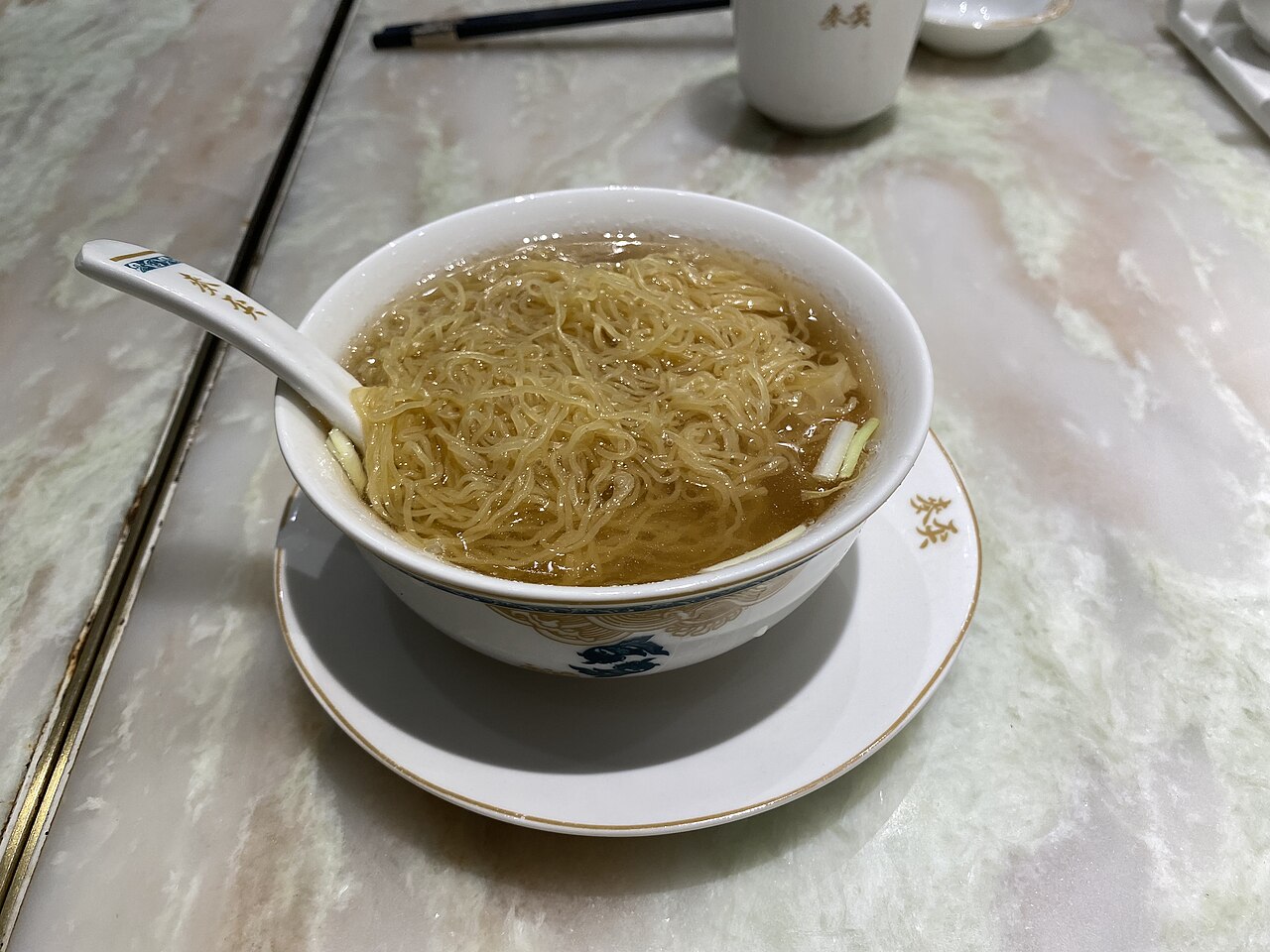
Cantonese wonton noodle soup, thin egg noodles in clear broth with shrimp wontons hidden beneath, in a traditional rooster-pattern bowl 6
Wonton Noodle
云吞面 · bamboo-pressed noodles, whole-shrimp wontons

A bowl that looks simple but hides a lot of detail. The best shops still make the egg noodles the old way — juk sing min (竹升面), where a thick bamboo pole is bounced over the dough again and again until the strands turn springy and taut. They're cooked just past raw and laid over plump shrimp wontons that sit hidden at the bottom of the bowl, in a clear broth simmered from dried shrimp and pork bones. The legendary Wu Cai Ji (吴财记面家) in Liwan has been at it for over 70 years and holds a Michelin Bib Gourmand. One trick: push the noodles down under the broth first so they don't go soft on top.

Where: Wu Cai Ji 吴财记面家 (Liwan · 70+ years · Bib Gourmand) · bamboo-noodle shops in Xiguan
Price: ¥15–30 a bowl (฿75–150)
Tip: Add braised beef brisket (牛腩) on top if you're hungry
🥣7
Sampan Congee
艇仔粥 · Liwan's everything-in congee

The name "sampan congee" comes from the days when vendors paddled small boats along the Liwan canals selling congee, and customers ate it fresh at the water's edge. Cantonese congee is different from congee elsewhere: it's simmered until the rice dissolves completely into a smooth, creamy texture with no grains left. Then everything goes in — fresh shrimp, thin slices of raw fish, squid, fried peanuts, crisp pork skin, and shredded scallion and ginger. Hot and easy to slurp, it's a breakfast or a late-night bowl that warms you through. Liwan and the lake area are still where you'll find the real thing.
Where: congee shops around Liwan/Liwan Lake · morning stalls in Xiguan · old congee houses citywide
Price: ¥12–25 a bowl (฿60–125)
Time: Morning and late night — many congee shops stay open till midnight
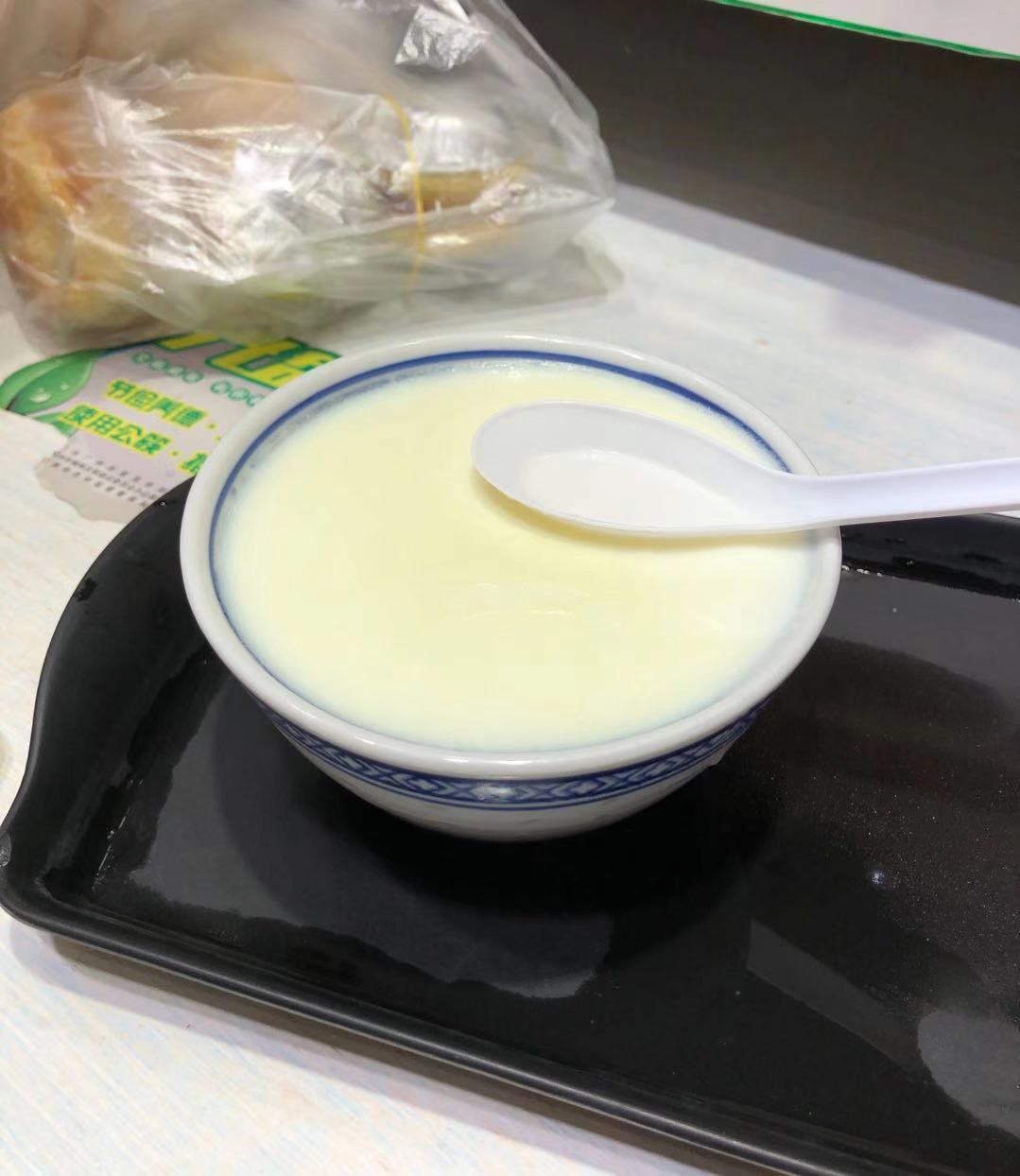
Double-skin milk, a pale-yellow steamed milk dessert with a silky surface in a blue-rimmed bowl, a spoon resting in it 8
Double-Skin Milk
双皮奶 · the silkiest Cantonese dessert

A dessert that comes from neighbouring Shunde (顺德) but has become part of Guangzhou's DNA. It's made from high-fat buffalo milk, steamed so a thin skin forms on the surface — twice — with a custard underneath that's silkier than any milk pudding. Eat it warm or cold; the sweetness is soft, never sharp. Some shops add red beans, bird's nest or quail eggs. Nan Xin (南信牛奶甜品专家) on Shangxiajiu Road has been trading since the 1940s, and people still queue for its double-skin milk and its ginger-curdled milk — the perfect way to close a Cantonese meal.

Where: Nan Xin 南信牛奶甜品专家 (Shangxiajiu Road · since the 1940s) · milk-dessert shops in Xiguan
Price: ¥12–22 a bowl (฿60–110)
Also try: ginger milk curd (姜撞奶), set with fresh ginger juice
🍲9
Slow-Boiled Soup (Lao Huo Tang)
老火靓汤 · the broth that takes hours

To understand Cantonese people, you have to understand lou fo tong — soup simmered over low heat for two to four hours from pork bone, chicken or beef, with Chinese herbs and seasonal ingredients like lotus root, carrot, goji berry, fig or winter melon. Locals drink it before meals every day and treat it as tonic, balancing the body's "heat" and "cool" according to traditional theory. A good soup is clear but deep-flavoured from the long simmer — not from seasoning powder. Almost every Cantonese restaurant has a "soup of the day" (例汤) that changes daily.
Where: any Cantonese restaurant (order the 例汤 soup of the day) · dedicated soup shops 老火汤
Price: ¥18–48 a bowl (฿90–240)
Tip: Ask what today's soup is — it changes daily with the ingredients
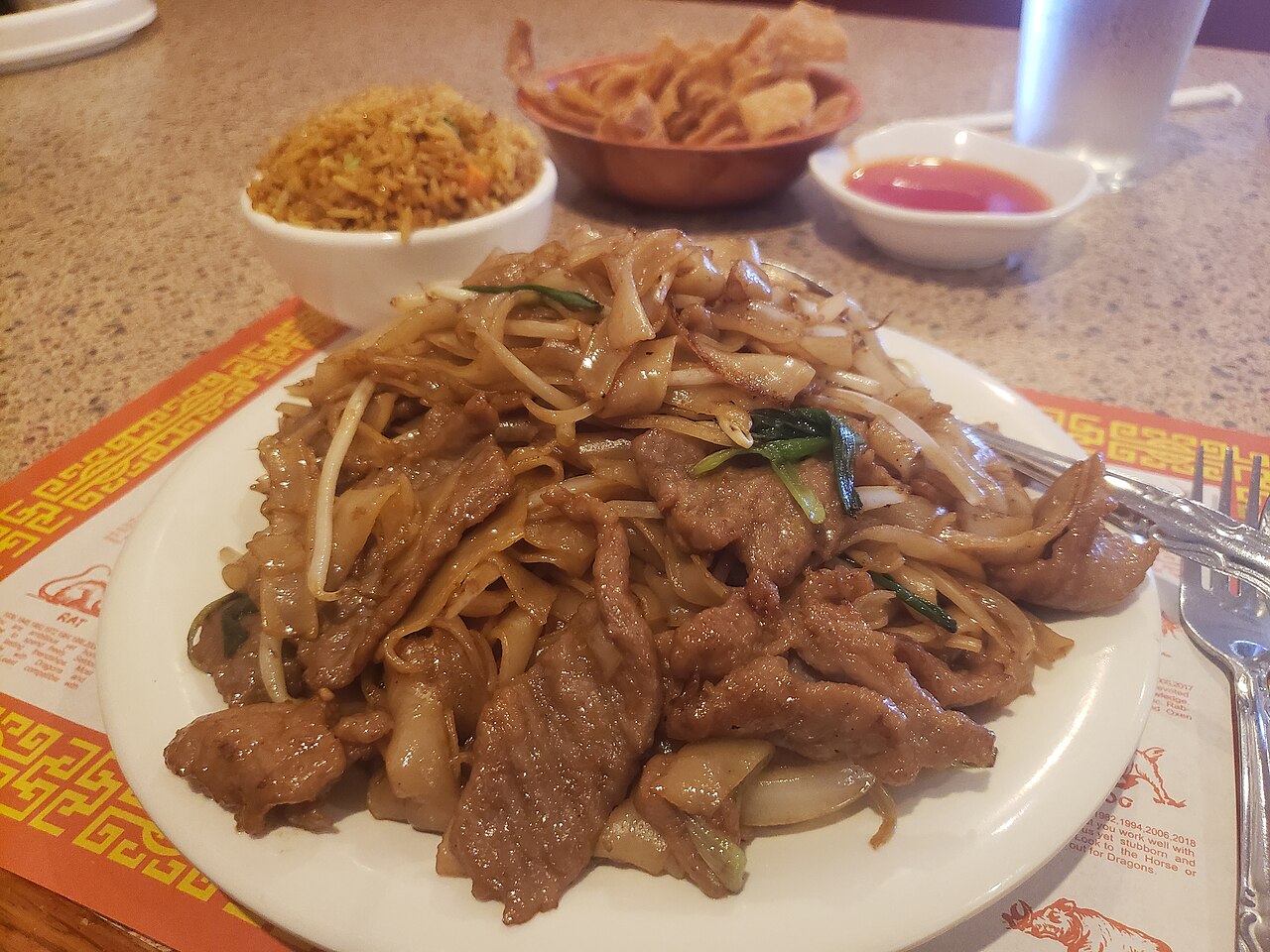
Beef chow fun, wide flat rice noodles wok-fried with beef slices, bean sprouts and scallion on a white plate 10
Beef Chow Fun
干炒牛河 · the wok-hei test

It looks like a humble plate of fried noodles, but Cantonese diners use it to judge a chef. Wide flat rice noodles (河粉) are dry-fried with marinated beef, bean sprouts, scallion and soy. The whole thing turns on wok hei (鑊气) — the "breath of the wok," that smoky aroma you only get from a screaming-hot pan. Every strand has to be coated in sauce, none sticking, none soggy, none greasy; the noodles stay separate, with a faint char, and the beef stays tender and moist. Simple to describe, hard to do — it takes restaurant-grade heat and a practised wrist. If a plate comes out "dry but not stiff," that's a kitchen that knows what it's doing.

Where: Cantonese restaurants and rice shops citywide · roast-meat shops with a noodle menu
Price: ¥22–40 a plate (฿110–200)
The test: Strands separate, not greasy, with a clear smoky aroma
🍚11
Claypot Rice & Tong Sui
煲仔饭 · 糖水 · crackly rice and warm sweet soups

Close out the day with two of Guangzhou's evening pleasures. Claypot rice (煲仔饭) is cooked in a small clay pot over charcoal until a sheet of rice at the bottom crisps into golden crust (锅巴), topped with cured sausage, chicken, salted fish or spare ribs, then dressed with sweet soy and tossed through. That crackly bottom layer is the prize everyone fights over. Then there's tong sui (糖水), the "sugar water" desserts served hot or cold — sago and ginkgo, red-bean soup, ground black sesame, or tofu pudding with milk. Wenming Road (文明路) is lined with tong sui shops that stay open late, where locals gather to end the night.

Where: claypot-rice shops in Liwan/Yuexiu · Wenming Road 文明路 (the tong sui dessert street)
Price: Claypot rice ¥25–45 (฿125–225) · tong sui ¥10–25 (฿50–125)
Time: Dinner to late — many tong sui shops stay open till 1–2am
Go deeper on each one

Want more detail? We have a guide for each category

The 11 above are the overview — when you're ready to eat your way through the city, pick a deep-dive guide below.

Food neighbourhoods

Which area for which mood

Guangzhou is huge — know what each district does best before you set out.

Liwan & Xiguan (西关)
荔湾 · Metro Line 1 to Changshou Lu / Chen Clan Academy

The heart of traditional Cantonese food — the old-town district where Tao Tao Ju, Wu Cai Ji and the old sampan-congee shops cluster together. The Xiguan lanes are full of bamboo-noodle joints, cheung fun stalls and milk-dessert houses; you can graze all day without getting bored. The most atmospheric quarter in the city.

Best for: dim sum · wonton noodle · sampan congee · double-skin milk · Time: 7am–2pm
Shangxiajiu (上下九)
上下九步行街 · Metro Line 1 to Changshou Lu

A pedestrian street beneath colonial-era qilou arcades, lined with old-school food shops — Nan Xin's double-skin milk, traditional sweets, roast meats and street snacks. Honestly, it's a tourist-heavy strip and it gets very crowded at weekends, but if you stick to the genuinely old institutions the food still delivers, and the streetscape is worth seeing once.

Best for: double-skin milk · traditional sweets · roast meats · Time: 10am–10pm
Wenming Road (文明路)
文明路 · Metro Line 1/2 to Nong Jiang Suo (near Beijing Rd)

Guangzhou's most famous tong sui dessert street — milk puddings, red-bean soup, black sesame, sago and ginkgo, shop after shop down the whole stretch. They stay open till 1–2am, and it's where locals come to round off the night after a big meal. An easy walk from Beijing Road, the main shopping strip.

Best for: tong sui · ginger milk curd · Cantonese desserts · Time: 7pm–1am
Tianhe & Zhujiang New Town (天河)
天河 · Metro Line 3/APM to Zhujiang New Town

The new-city side, all skyscrapers and the Canton Tower — home to air-conditioned Cantonese dining rooms, Chaoshan fresh-beef hotpot, specialty coffee and high-standard mall restaurants. The pick if you'd rather eat in comfort, pay by card and have an English menu to hand.

Best for: air-con dim sum · Chaoshan hotpot · cafés · Time: all day to dinner
The institutions

The places not to miss

Names locals have passed down for decades — put them on the plan before you go.

1
Tao Tao Ju (陶陶居)
Legendary dim sum house · trading since 1880 · in the Michelin Guide

One of Guangzhou's oldest restaurants, open since 1880 and still where locals bring relatives for morning tea. Old-world Chinese décor, plump har gow, dense-filled siu mai and freshly baked egg tarts. The main branch is in Liwan (Fu Road), open 8am–9pm, and it's listed in the Guangzhou Michelin Guide — arrive before 9am or book a table on weekends, because the queue is real.

Address: 20 No.10 Fu Rd, Liwan District (main branch · several locations)
Hours: 8am–9pm · Known for: dim sum, har gow, egg tarts · WeChat/Alipay/cards
2
Wu Cai Ji (吴财记面家)
Bamboo-pressed wonton noodles · 70+ years · Michelin Bib Gourmand

A noodle shop of over 70 years in Liwan with no décor to speak of — just bamboo-pressed noodles (竹升面) that are springy and taut, whole-shrimp wontons, and a broth fragrant with dried shrimp and dried seafood. Order it with shrimp wontons or braised beef. It holds a Michelin Bib Gourmand, and the room is the kind of genuinely old Cantonese setting that's getting hard to find in a big city.

Address: Liwan District (near Xiguan / Enning Rd)
Hours: roughly 8am–8pm · Known for: bamboo-noodle wonton soup · WeChat/Alipay
3
Pan Xi Restaurant (泮溪酒家)
Garden restaurant by Liwan Lake · classic dim sum and roast meats

One of Guangzhou's loveliest garden restaurants, set beside Liwan Lake among Chinese pavilions, lotus ponds and old trees. It's known for dim sum, roast goose and traditional Cantonese dishes, and the setting suits a big family meal or a special occasion — you come here for the food and a classic Chinese-garden view in one place.

Address: 151 Long Jin Xi Rd, Liwan (beside Liwan Lake)
Hours: roughly 7am–9pm · Price: ¥120–250 per person (฿600–1,250) · cards/WeChat
4
Nan Xin (南信牛奶甜品专家)
Legendary double-skin milk · Shangxiajiu Road · since the 1940s

An old milk-dessert shop on the Shangxiajiu pedestrian street, trading since the 1940s. It's famous for double-skin milk (双皮奶), made from rich buffalo milk with that silky double-set texture, and for ginger milk curd (姜撞奶), set with fresh ginger juice. Desserts come hot or cold, and there's a queue most afternoons — a place to close a meal or take a break from shopping that locals have recommended for generations.

Address: Shangxiajiu pedestrian street (上下九步行街), Liwan District
Hours: roughly 10am–10pm · Known for: double-skin milk · ginger milk curd · WeChat/Alipay
5
Dim Dou Dak (点都德)
Dim sum for first-timers · many branches · open early to late

If it's your first time in Guangzhou and you want to try yum cha without the guesswork, Dim Dou Dak is the safe pick — a dim sum chain with branches across the city (including the Beijing Road area), a menu with photos, easy ordering and long hours from morning to late. The quality is consistent and good value at around ¥10–15 a dish, so you can try har gow, siu mai, char siu bao and egg tarts in one place without queuing as long as at the older institutions.

Address: many branches (including the Beijing Road 北京路 area and Tianhe)
Hours: early to late (varies by branch) · Known for: easy-to-order dim sum · cards/WeChat
Frequently asked

FAQ · what people ask before they go eat

How much does a meal cost in Guangzhou?
Guangzhou works at every price point. A plate of cheung fun or a bowl of street congee is ¥8–20 (฿40–100). Wonton noodle soup runs ¥15–30 (฿75–150). A morning yum cha session is around ¥60–120 per person (฿300–600) for four to six baskets plus tea. Roast goose or char siu over rice is ¥25–45 a plate (฿125–225). A bigger meal at an institution like Tao Tao Ju or Pan Xi runs ¥120–250 per person (฿600–1,250). Double-skin milk is ¥12–22 a bowl (฿60–110).
Where is the best dim sum in Guangzhou?
The institutions locals point to are Tao Tao Ju (陶陶居, trading since 1880, in the Michelin Guide, Liwan), known for old-world atmosphere and plump har gow; Dim Dou Dak (点都德), with many branches and long hours, easiest for first-timers; Guangzhou Restaurant (广州酒家, the saying "to eat, go to Guangzhou" is tied to it); and Pan Xi (泮溪酒家), the loveliest, set beside Liwan Lake. All are busiest from 9–11am — arrive early or book a table on weekends. Read more in our dim sum and yum cha guide.
How is Cantonese food different from other Chinese cuisines?
Cantonese cuisine (粤菜) is built on freshness and a light hand — it favours steaming, poaching and slow simmering over heavy stir-frying or strong spice. The goal is to coax out the natural sweetness of good ingredients rather than mask them. Poached chicken is the clearest example: a whole bird gently cooked so the meat stays juicy, served with a ginger-scallion dip. Dim sum and roast meats (烧腊) — roast goose, char siu, soy chicken — are the dishes Guangzhou does better than anywhere. Locals also believe in slow-boiled tonic soups (老火汤) simmered for hours as everyday medicine.
How does Cantonese morning tea (饮茶) actually work?
Yum cha (饮茶) is sitting down to Chinese tea while ordering dim sum, basket by basket, at breakfast or late morning. The custom is "one pot, two dishes" (一盅两件): you pick a tea first (pu'er, oolong or chrysanthemum), then order har gow, siu mai, char siu bao and egg tarts as you go. A small etiquette point worth knowing — when someone pours your tea, tap two or three fingers on the table to say thank you; and when the pot runs dry, prop the lid open and a server will refill the hot water.
Do Guangzhou restaurants take credit cards or do I need cash?
Street stalls and many older shops accept WeChat Pay or Alipay only — some won't take cash at all. Download Alipay before you arrive and link a Visa or Mastercard via its international mode. Larger dim sum halls in malls and hotels generally accept foreign credit cards.
Is Chaoshan (Teochew) food different from Cantonese, given Guangzhou has so much of it?
They're distinct. Chaoshan (Teochew) cooking comes from the Chaoshan region in eastern Guangdong and has its own roots — famous for fresh-beef hotpot, where cuts are sliced to order and dipped in broth for seconds, plus braised goose, oyster omelette, springy beef balls and the gongfu tea ritual. It isn't Cantonese in the strict sense, but Guangzhou is full of excellent Chaoshan restaurants. Read on in our Chaoshan food guide.
Klook · Food Tour

Guangzhou Food Tour — eat at the right places, with someone who knows

A Guangzhou tasting tour with a local guide who takes you through morning dim sum, the Liwan food lanes, roast meats, bamboo-pressed noodles and double-skin milk — real food, no language barrier, and no guessing which shop is good.

See Guangzhou food tours on Klook →
Wherebest is a Klook affiliate partner — we may earn a commission when you book through our link, at no extra cost to you.