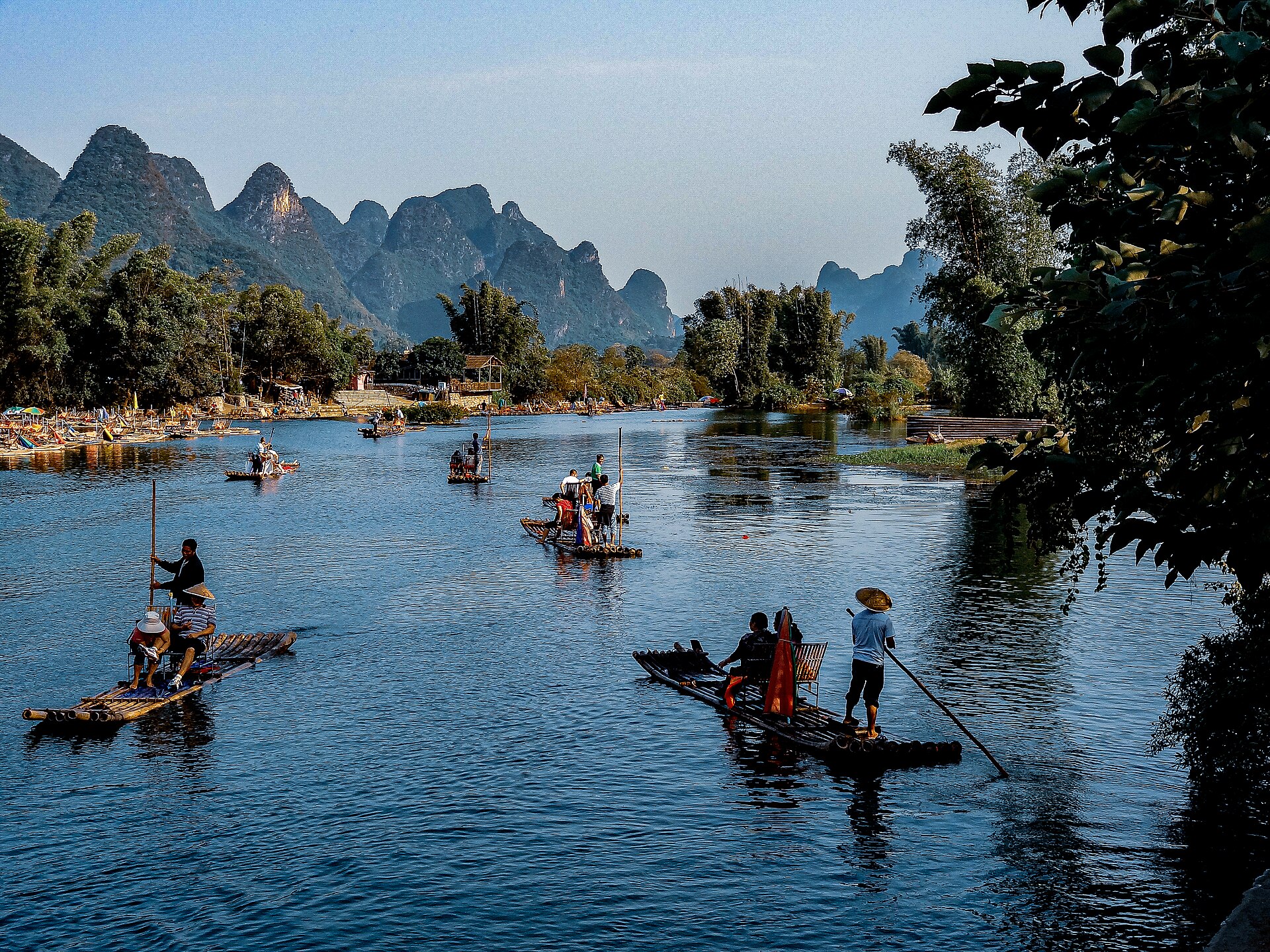
Elephant Trunk Hill in the city and twin pagodas glowing over a lake on night one, a full day cruising the Li River past karst peak after karst peak on day two, then bamboo rafts drifting down the Yulong River and the 20-yuan-note view at Xingping — this is the trip most travellers should do, the length that lands just right.
Guilin is not a place you can see in a single day, because its best parts are spread across three settings. There is Guilin city itself, with oddly shaped limestone hills rising in the middle of town and lakes that light up after dark; the Li River, which deserves a whole day of cruising past karst peaks all the way to Yangshuo; and the Yangshuo countryside, with bamboo rafts, bikes along the paddy fields, and Xingping — the spot that is literally printed on the 20-yuan note.
This 3-day plan is built for most first-time visitors to Guilin, and three days is the length that fits best. Day one covers Guilin city, day two is the full Li River cruise to Yangshuo, and day three is the Yangshuo countryside before you head back. It deliberately leaves out the Longji rice terraces, which need a full day and sit in a different direction — if you want Longji too, step up to the 4-day plan. Every leg here runs on buses, taxis, DiDi, boats and the high-speed train. Guilin has no urban rail system; everything moves on roads and water.
Shorter trip? See the 2-day plan, which covers Guilin city and the Li River cruise in tighter form. More time? The 4-day plan adds a full day at the Longji rice terraces.
A hill shaped like an elephant drinking from the river, a cave of stalactites lit in colour, a cruise under bridge after bridge, and gold-and-silver pagodas glowing on the water — the day you see why Guilin is famous.
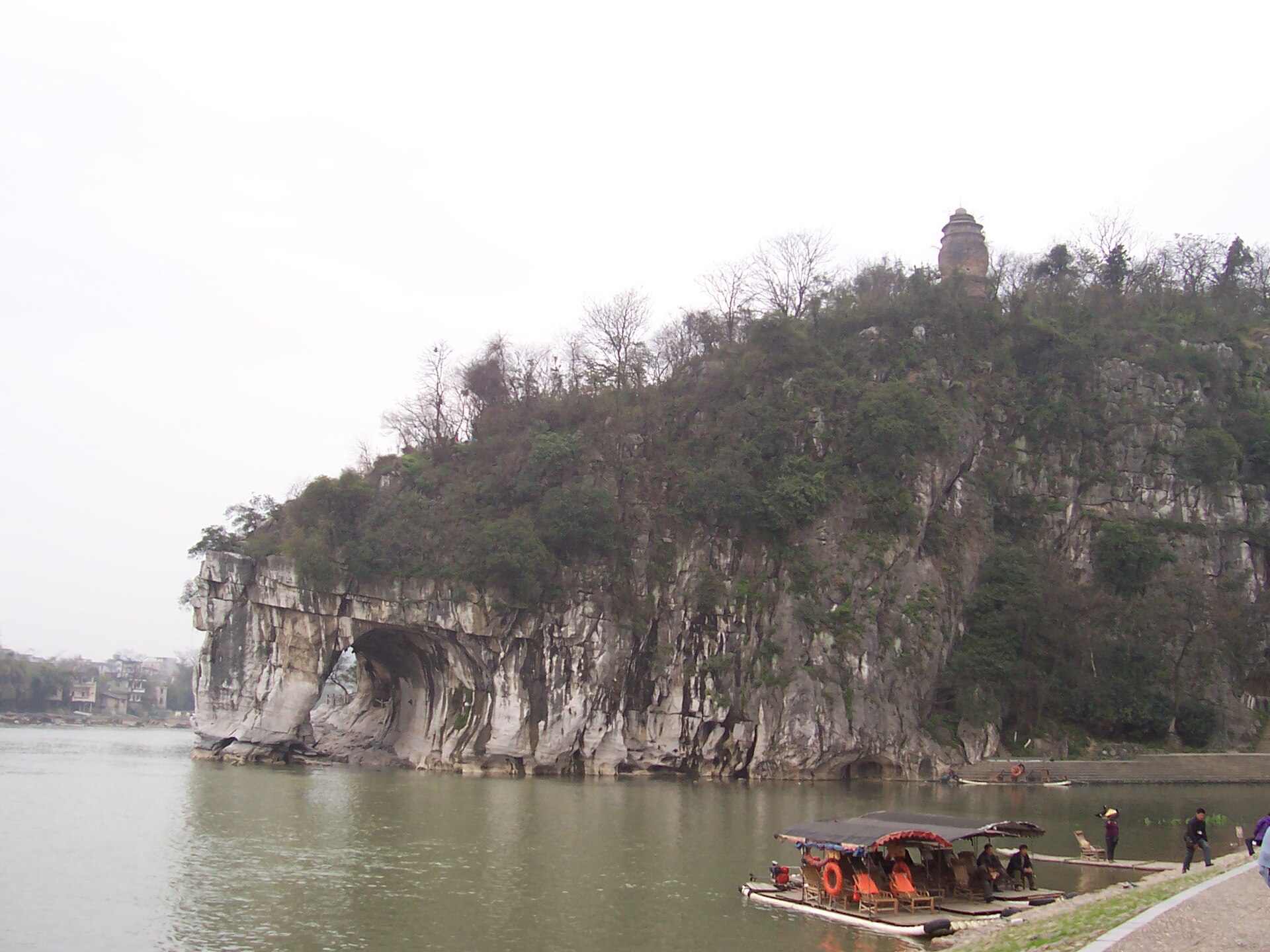
Start the first morning at Elephant Trunk Hill, the symbol of Guilin — a limestone hill shaped exactly like a giant elephant dipping its trunk into the Li River. The arch between the "trunk" and the body (Water Moon Cave) is what makes the elephant shape so unmistakable. Walk the riverside park, photograph it from several angles, and if you have the energy, climb to the top for a wide view over the city and river.
It is a good gentle opener: it sits in the heart of the city, close to hotels in the Two Rivers Four Lakes area, an easy walk or short DiDi away. Read the best angles and opening hours in the Elephant Trunk Hill guide.
In the afternoon, take a DiDi or taxi northwest of the city to the Reed Flute Cave — a limestone cave with a walking route of about 240 metres, packed with stalactites, stalagmites, pillars and curtains of rock, all lit with coloured LED light so it feels like walking through a film set. The highlight is the "Crystal Palace of the Dragon King", a vast chamber with a still pool that mirrors the whole cavern. The walk takes 50–60 minutes in a cool, steady temperature year-round.
The cave is named for the reeds at its mouth, once cut to make flutes. It is an ideal indoor activity if the afternoon turns hot or wet. Check details and entry slots in the Reed Flute Cave guide.
Close the first day with Guilin at its most beautiful after dark — the Two Rivers Four Lakes night cruise. This ring of water through the centre of the city links the Li River and the Taohua River with four lakes — Shan, Rong, Gui and Mulong. The boat glides past old bridges in many styles, illuminated trees along the banks and light shows the whole way, over about 60–90 minutes.
The stars of Shan Lake are the Sun and Moon Pagodas — a 41-metre golden pagoda (the tallest bronze pagoda in the world) paired with a 35-metre silver one, reflected beautifully on the water at night. If you would rather not cruise, walking the Shan Lake shore to see the lights and pagodas is free and almost as lovely. See the Two Rivers Four Lakes guide.
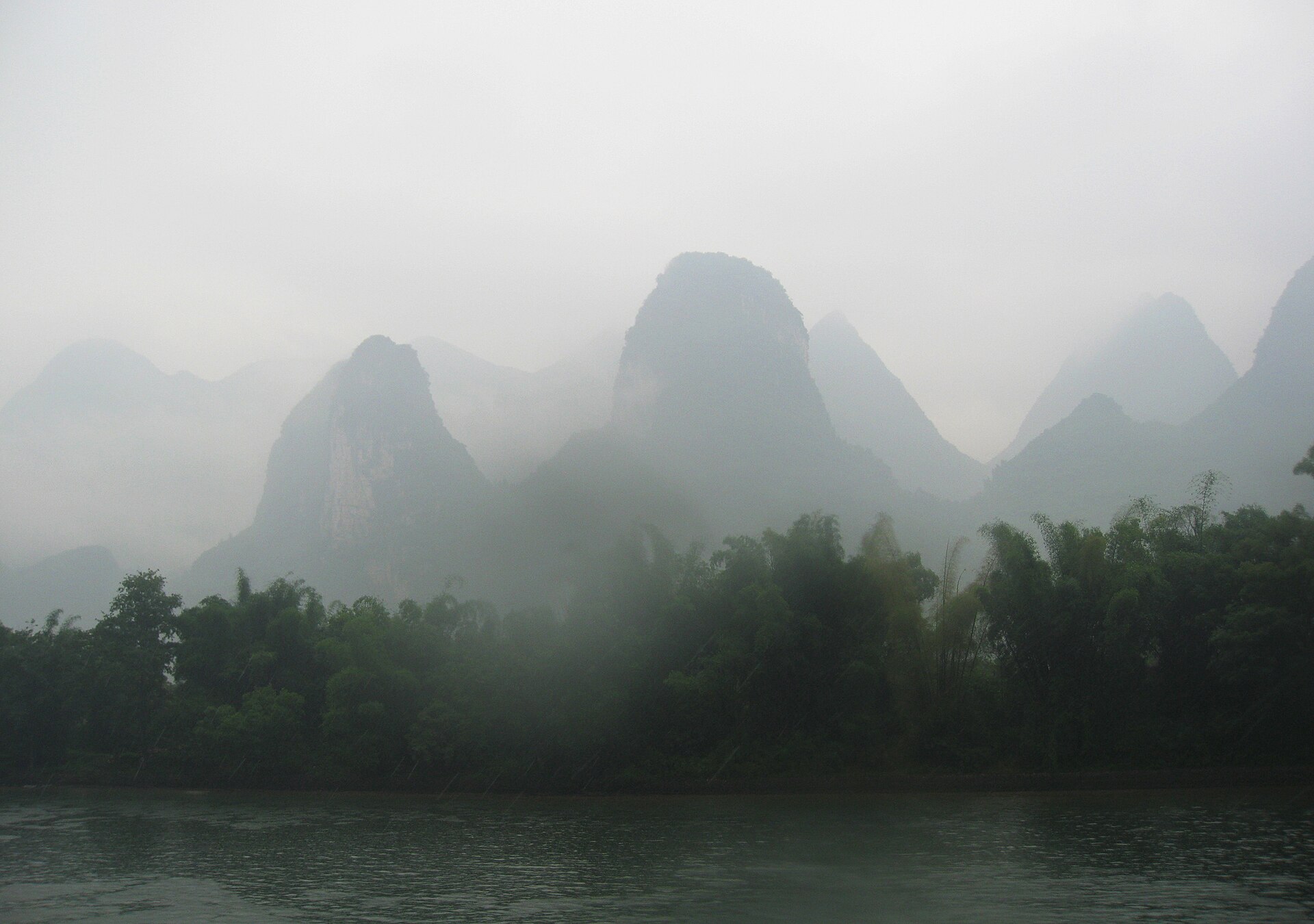
The highlight of the whole trip — a day on the water past karst peak after karst peak, fishing villages and the 20-yuan-note view, arriving in Yangshuo just in time for the evening on West Street.
It is an early start today, because the Li River cruise leaves mid-morning at around 09:30–10:00 from Mopanshan Pier, south of Guilin — roughly 40–60 minutes from the city centre. Most people book the cruise with a hotel pickup to the pier included, which is far easier than finding your own way. Confirm your pickup point and time the night before.
A 3-star cruise serves a Chinese lunch on board. It is nice to get a window seat, but really the peaks are beautiful on both sides in turn — head up to the deck and shoot freely the whole way.
This is what everyone comes to Guilin for. The boat runs 83 kilometres down the Li River over 4–5 hours, past oddly shaped limestone peaks one after another, water buffalo on the banks, fishermen on bamboo rafts, and little villages that look straight out of a Chinese ink painting. The most beautiful stretch is around Xingping — the spot that gives you the view printed on the 20-yuan note (have a ¥20 note ready to hold up against the real thing).
Shoot it all on the way. The boat docks at Yangshuo (Longtoushan wharf) in the afternoon, from where a short transfer takes you into Yangshuo town. See the full route in the Li River cruise guide.
Check into your Yangshuo hotel, then walk West Street — a pedestrian lane in the heart of Yangshuo that has been here for over 1,400 years. Quiet by day, it turns into the liveliest street in town after dark, lined with restaurants, bars, cafés, souvenir shops and neon, a mix of local spots and Western-style places. After a full day on the boat, an easy stroll here is just right.
For dinner, try beer fish (啤酒鱼), Yangshuo's signature dish — fresh river fish cooked with beer, tomato, chilli and spices, bold and savoury, served with steamed rice. See where to eat it in the Yangshuo beer fish guide, and what else is around the street in the West Street guide.
A bamboo raft on a clear river, a bike ride along the paddy fields, and the walk up to Xingping's classic photo spot — the day you get closest to Guilin's nature, before heading back to the city.
Start the last day gently on the Yulong River, a small tributary of the Li River in the Yangshuo countryside — clearer, calmer and far less crowded than the main river. Take a bamboo raft, poled slowly past low weirs beneath karst peaks that mirror on the still water. The popular stretch runs from Shui'edi through the paddy fields, taking about 40–90 minutes depending on the route, peaceful and painting-like the whole way.
After the raft, rent a bike or e-bike and ride along the Yulong River on small lanes past fields, villages and old stone arch bridges — the most fun and scenic way to explore the Yangshuo countryside. Rental shops are all over Yangshuo town. See routes and raft put-in points in the Yulong River guide.
This afternoon, head to Xingping, an old town on the Li River north of Yangshuo — the exact spot where the view on the 20-yuan note was taken. From Xingping town it is about a 20-minute walk along the riverside path to the viewpoint (free from the roadside), where holding up a ¥20 note against the real scene is the photo everyone wants. Xingping's old town also has ancient stone streets, old timber houses and a small wharf to wander.
For a closer angle you can take a bamboo raft or small boat from Xingping wharf out to the banknote view. Xingping old town is quieter and more charming than central Yangshuo. See how to reach the viewpoint in the Xingping old town guide.
This evening, head back to Guilin for your flight or a final night — two options. The bus from Yangshuo bus station to Guilin Railway Station in the city centre takes about 1.5 hours (~¥30–50), handy if your hotel is central. Or the high-speed train from Yangshuo Railway Station to Guilin North takes just ~24 minutes (~¥30) — but both Yangshuo and Guilin North stations sit outside their town centres, so allow another ~30 minutes to transfer into the city.
If you fly out the next day, sleep in Guilin tonight and head to the airport in the morning. Guilin Liangjiang International (KWL) is ~28 km southwest of the city: the airport bus (Line 1) is ~¥20 (~60 min), a taxi ~¥80–100, or a DiDi ~¥70–90.
This plan sleeps in Guilin on night one (the Two Rivers Four Lakes / Zhengyang Street area, central and walkable to Elephant Trunk Hill and the Sun-Moon Pagodas), then Yangshuo on night two (West Street or the Yulong River countryside). Prefer not to move? Stay in Guilin both nights and day-trip to Yangshuo. See options in the Top 10 Guilin hotels or the 6 luxury picks.
Guilin moves on roads and water — in town you use buses (¥1–2) (scan a QR in Alipay / WeChat) and taxis / DiDi (flagfall ~¥9–10, the easy default). To Yangshuo, take a bus, boat or high-speed train (Yangshuo → Guilin North ~24 min). In the countryside it is bikes / e-bikes and bamboo rafts. Use Amap or Apple Maps rather than Google Maps. See the high-speed rail guide if you are continuing to another city.
Link a Visa or Mastercard to Alipay (via its international mode) before you travel. Most shops in Guilin and Yangshuo accept only Alipay or WeChat Pay, and some take no cash at all — see the Alipay & WeChat Pay guide and the internet, VPN & eSIM guide to set up before you go.
| Item | Budget | Mid-range | Comfort |
|---|---|---|---|
| Hotel (per night) | ¥80–180 (~$11–25) |
¥250–500 (~$35–70) |
¥600–1,500+ (~$85–210+) |
| 3 meals | ¥60–110 (~$8–15) |
¥130–250 (~$18–35) |
¥280–500 (~$39–70) |
| Transport (road / boat / train) | ¥30–80 (~$4–11) |
¥60–150 (~$8–21) |
¥150–350 (~$21–49) |
| Tickets / activities | ¥30–110 (hill / cave) |
¥215–450 (Li River cruise + Yulong raft) |
¥450–800 (add show / tours) |
| Daily total (approx.) | ¥200–480 (~$28–67) |
¥655–1,350 (~$92–190) |
¥1,480–3,150+ (~$208–443+) |
Indicative rates at roughly ¥7 ≈ $1 USD · the full Li River cruise at ¥215 per person is the trip's single biggest cost · prices are approximate and vary by season — check before you go.