Home Guilin China Guilin Hotels About
Home  ›  China  ›  Guilin  ›  Longji Rice Terraces
🌾 Guilin Day Trip · Longji · 2026

A dragon's back
cloaked in rice, step by step

Two hours north of Guilin, the Longji terraces climb from the valley floor to the ridgeline in hundreds of curving steps — the Zhuang village of Ping'an and the Red Yao village of Dazhai, shifting through the seasons from mirror-water paddies to a sea of gold.

Why go to Longji

Fields worked by handfor seven centuries

If you have one spare day in Guilin, the Longji Rice Terraces (龙脊梯田) reward the two-hour drive out of the city. The name means "Dragon's Backbone," because the ridge the terraces cling to curves away like the spine of a dragon, and each step of paddy climbs to the summit like its scales. The Zhuang and Yao people here carved fields into slopes between roughly 300 and 1,100 metres from the Yuan dynasty onward, hundreds of years ago, and have farmed them by hand ever since.

Longji sits in Longsheng (龙胜) county north of Guilin, a single scenic area split across several villages. The two that draw the most visitors are Ping'an (平安), a Zhuang village, and Jinkeng/Dazhai (金坑/大寨), a Red Yao area — each with its own viewpoints, trails and feel. This guide covers both, plus the entry and cable-car fares, the seasons when the fields look their best, and how to actually get there. To plan the whole trip first, compare our Guilin day trips and things to do in Guilin.
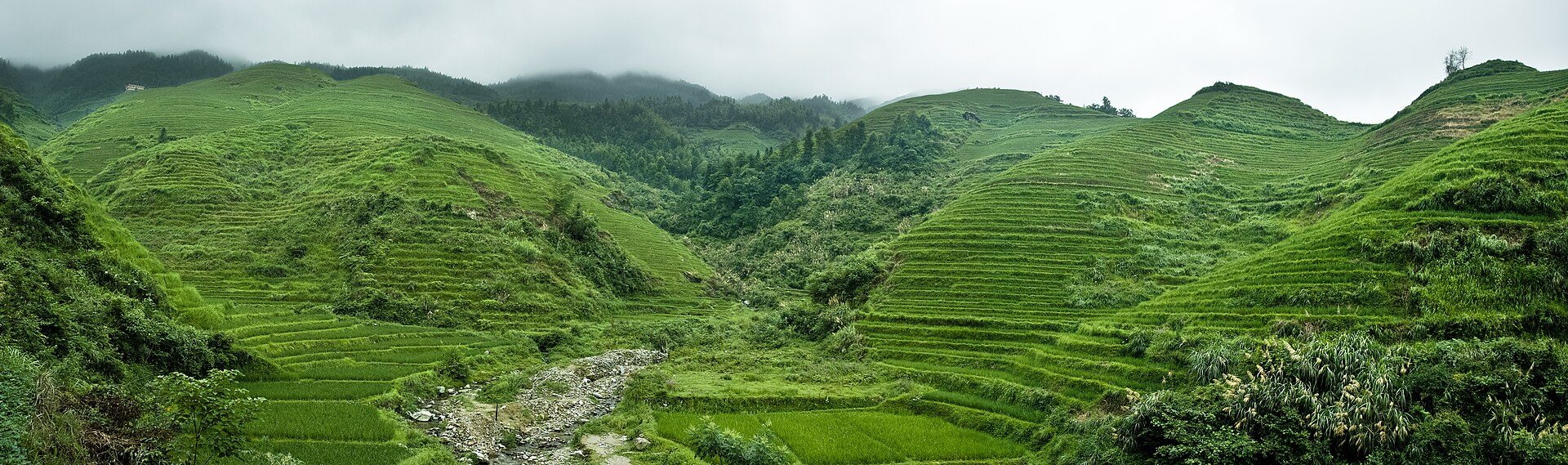
The Longji rice terraces climbing the hillside in stacked curves in Longsheng county, north of Guilin
The Longji "Dragon's Backbone" terraces — paddies stacked in hundreds of steps from the valley floor to the ridge
🚌
Getting there from Guilin
Guilin has no metro — reach Longji by bus from Qintan station, or a tour with transport · about 1.5–2.5 hr
See all day trips →
Two villages, two moods

Zhuang Ping'an vs Yao Dazhai

Choose by how much time you have, and whether you want a gentle stroll or a proper ridge-top hike.

Terraced fields in the Ping'an area of Longji, a Zhuang village on the Dragon's Backbone ridge 1
Ping'an (平安)
Zhuang village · easier access · short climb to the viewpoints

Ping'an is a Zhuang village that opened to visitors first, so it has the most developed cluster of restaurants, guesthouses and stone-paved paths. The advantage is that the viewpoints sit close to the village — a 30 to 60-minute walk uphill gets you there — which makes it ideal if you have half a day or would rather not hike hard.

There are two standout lookouts: "Seven Stars Around the Moon" (七星伴月), seven small domed paddies encircling one large round terrace like stars around the moon, and "Nine Dragons and Five Tigers" (九龙五虎), nine ridge-lines and five hillocks that read like dragons slipping down into the valley. Both are reachable on foot from the village.

Ethnic group: Zhuang
Viewpoints: Seven Stars Around the Moon · Nine Dragons and Five Tigers
Climb: about 30–60 min from the village (no cable car)
Best for: half a day · lighter walkers · families
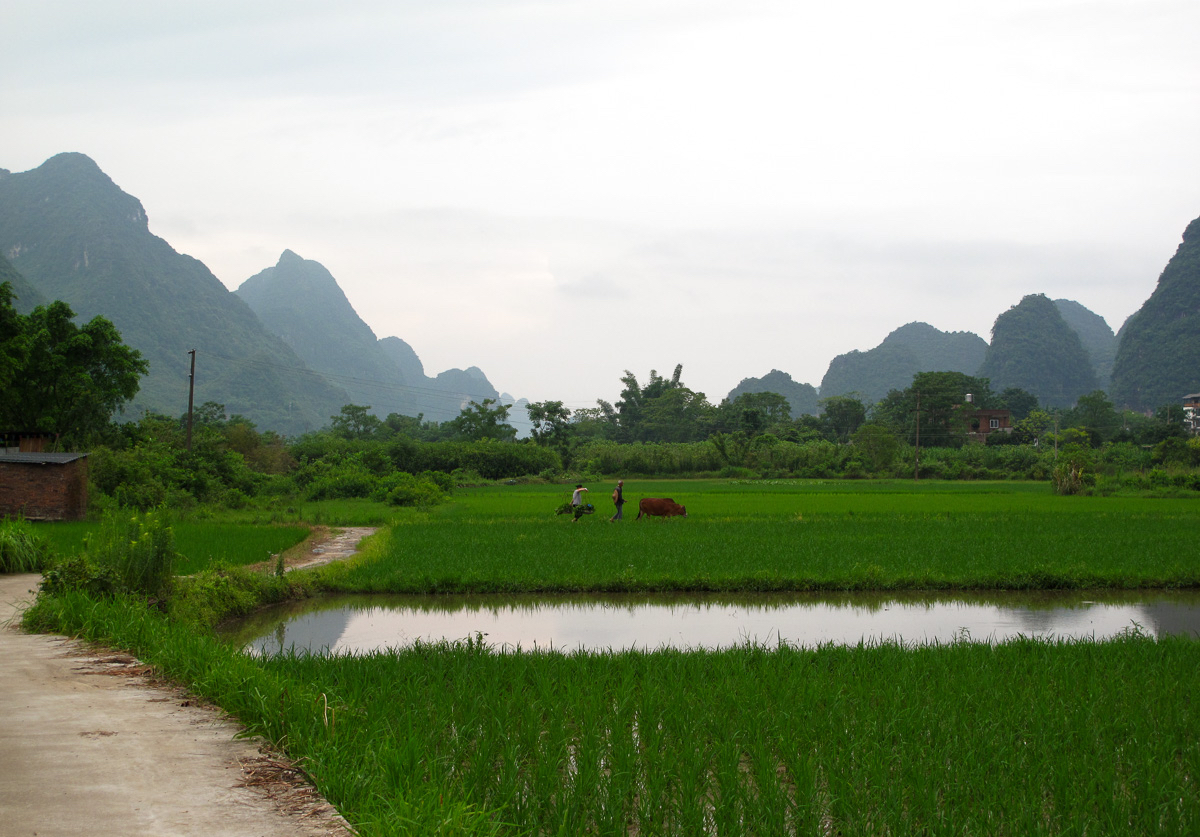
Karst hills and green fields near Guilin, similar in feel to the wide terraced views of the Dazhai area 2
Dazhai / Jinkeng (大寨/金坑)
Red Yao village · wider views · has a cable car

Dazhai is a Red Yao village, and its views are noticeably wider and grander than Ping'an's because the paddies climb higher and fan out across the slopes. Three main viewpoints line the ridge; the highest, "West Hill Music" (西山韶乐) at around 1,180 metres, looks out over terraces stacked as far as the eye can see.

Dazhai's trump card is its cable car up to Golden Buddha Peak (金佛顶) — if you would rather not hike, you can ride straight up to the top viewpoint. If you do like walking, the trail between the viewpoints here is gorgeous and can be followed all the way through to Ping'an in a day, the route serious hikers favour.

Ethnic group: Red Yao
Viewpoints: West Hill Music (highest, ~1,180 m) · Golden Buddha Peak · Thousand-layer terraces
Cable car: yes — up to Golden Buddha Peak, ~¥60–100 one way / ~¥100–110 return
Best for: a full day · hikers · serious photography · overnight stays
Tip: a shuttle links the Ping'an and Dazhai car parks in about 50 minutes, so with a full day you can take in both areas. With only half a day, pick one — Ping'an for ease, Dazhai for the bigger views and the cable car.
Fields that change colour

Which month shows you which Longji

Longji looks completely different through the year — match your visit to the picture you want to take home.

💧1
Mirror water
Roughly April–June · paddies flooded for planting

At the start of the growing season, farmers flood every step of paddy to plant the seedlings, and each one turns into a mirror reflecting the sky, the clouds and the shadow of the mountain. At sunrise or sunset the whole hillside glows like layered sheets of silver — for many people this is the most beautiful season to photograph.

When: roughly April–June (fullest water around mid-May–June)
Highlight: reflections at first light and sunset
🌱2
Green across the mountain
June–September · the young rice grows in

Once the seedlings take, every step turns a fresh, layered green across the whole mountain. The air up here is cooler than in the city, and morning mist often drapes along the ridge. It is a lovely season for anyone who loves greenery and crisp mountain air — though it is also the rainy season, so pack an umbrella and a rain jacket.

When: June–September
Highlight: vivid green, morning mist, cool air
🌾3
Gold before the harvest
Mid-September–early November · peak mid-Sept–early Oct

The season photographers wait for — the rice ripens to a deep gold right across the mountain before it is cut. Golden terraces stepping up against the sky, set off by the wooden houses of the hill villages, are the image most people picture when they think of Longji. The peak runs from about mid-September to early October, but crowds are heavy and guesthouses fill fast, so book your stay ahead.

When: mid-September–early November (peak mid-Sept–early Oct)
Highlight: gold fields before the cut — Longji's signature shot
❄️4
Bare winter fields
December–February · occasional snow

After the harvest the paddies sit bare and brown, with no water and no rice — generally not the season if you want colour in the fields. The upside is far fewer people and cheaper rooms, and in some years it turns cold enough for snow to dust the terraces white, a rare scene that a few photographers come specifically to catch.

When: December–February
Highlight: quiet, cheaper rooms · a chance of snow (not guaranteed)
A stop along the way

Huangluo long-hair village · the real Red Yao

On the way up to Longji, many people stop at Huangluo village (黄洛瑶寨), a Red Yao settlement known for "the longest hair in the world." Many of the women here grow their hair past one metre — the longest is around 1.7 metres — and by tradition they cut it only twice in their lives: once at 100 days old, and again at the coming-of-age ceremony at 18. They wash it with a local recipe of fermented rice water steeped with pomelo peel and herbs, never modern shampoo.

The village holds a Guinness World Record for the longest hair-combing chain, set when 256 Red Yao women lined up to comb the hair of the woman in front of them in a chain 456 metres long at the annual Long Hair Festival. On a normal day there is usually a hair-combing and dance performance, with a Yao-style welcome for visitors — a pleasant break from walking the terraces and a close look at hill-tribe culture. Most day tours fold this village into the itinerary.

Honestly: Huangluo is a fully tourism-oriented village, with performances run on a schedule and souvenirs for sale. If you are hoping for an untouched, off-the-radar place it can feel staged. But taken as a genuine, up-close look at the long-hair tradition, it is still worth the stop.
Planning the visit

How to get there · overnight · what to bring

Getting there from Guilin: Guilin has no metro, so reaching Longji means a bus, a taxi/Didi or a tour. The simplest option for independent travellers is a bus from Qintan (琴潭) bus station to the Longji junction, about 1.5 hours, with a combined fare of roughly ¥60 (about ฿300) including the in-park shuttle, then a transfer to the scenic-area shuttle up to the Ping'an or Dazhai car park. Alternatively, take a bus to Longsheng county first (about 1–1.5 hours), then a connecting bus into the villages for roughly another hour — about 2–2.5 hours from Guilin to Dazhai all told.

Entry and the cable car: park entry (covering both Ping'an and Dazhai) is about ¥80 in the low season (December–March) and around ¥100 in the high season (April–November), with children roughly half price. The Dazhai cable car up to Golden Buddha Peak is charged separately — about ¥60–100 one way, or ¥100–110 return. Prices can shift with the season, so confirm on the day.

Should you stay overnight? A quick photo visit works as a day trip, but if you want to see the fields at sunrise with the morning mist — when they look their best — it is worth spending a night in a hillside guesthouse. The villages have wooden Yao- and Zhuang-style guesthouses at a range of prices, so you can wake early and walk up to the viewpoint in time for first light without rushing the journey. In the high seasons (mirror water April–June, and the gold harvest September–October) rooms sell out fast, so book ahead.

What to bring: wear trainers or hiking shoes, as you will climb a fair amount of stone steps and slopes (especially in Ping'an, which has no cable car). It is cooler up on the ridge than in the city and the weather changes quickly, so pack a windproof or rain layer. Carry water and snacks, keep some small cash for the little shops, and if you have a large bag, porters will carry it up to the village for a fee (agree the price first). Above all, pay by Alipay or WeChat Pay, which are the main ways to pay — set them up before you travel.

Klook · Longji Day Tour

Longji day tours from Guilin — hotel pickup, no changing buses

Longji is far out and involves several transfers, so if you would rather skip the logistics, Klook runs day tours that include round-trip transport from your Guilin hotel, park entry, and usually a stop at the Huangluo long-hair village. Out in the morning, back by evening — ideal if you just want to walk the terraces without thinking about the journey.

See Longji tours on Klook →
Wherebest is a Klook affiliate partner — we may earn a commission when you book through our links, at no extra cost to you.
Frequently asked

FAQ · Longji Rice Terraces

How do you get to the Longji Rice Terraces from Guilin?
The easiest route for independent travellers is a bus from Guilin's Qintan (琴潭) bus station to the Longji junction, about 1.5 hours, with a combined fare of around ¥60 (about ฿300) including the in-park shuttle. From the junction you transfer to the scenic-area shuttle up to the Ping'an or Dazhai car park. The alternative is a bus to Longsheng county first (about 1–1.5 hours), then a connecting bus into the villages for roughly another hour, making about 2–2.5 hours from Guilin to Dazhai in total. To avoid changing vehicles, a day tour that includes round-trip transport is far simpler, because Guilin has no metro.
How much is entry and the cable car at the Longji Rice Terraces?
Entry to the scenic area (covering both Ping'an and Dazhai) is about ¥80 in the low season (December–March) and around ¥100 in the high season (April–November), with children around half price. The cable car in the Jinkeng/Dazhai area, which rises to Golden Buddha Peak (金佛顶), runs roughly ¥60–100 one way and about ¥100–110 return. The cable-car ticket is bought separately from the park entry fee, and prices can shift with the season.
Ping'an or Dazhai — which area should I choose?
Ping'an (平安) is a Zhuang village, easier to reach with a short climb to its viewpoints, and home to the "Seven Stars Around the Moon" and "Nine Dragons and Five Tigers" lookouts — good if you have half a day or do not want a long walk. Dazhai/Jinkeng (大寨/金坑) is a Red Yao area with wider, more dramatic views, three ridge-top viewpoints and a cable car up to Golden Buddha Peak, which suits hikers, keen photographers and anyone staying overnight. With a full day you can do both areas, as a shuttle links them in about 50 minutes.
When is the best time of year to visit the Longji terraces?
There are three distinct looks. The mirror-water season (roughly April–June) is when farmers flood the paddies to plant seedlings and every step reflects the sky like layered glass. The green season (June–September) covers the whole mountain in bright young rice. The gold season (mid-September–early November, peaking around mid-September–early October) is the ripe harvest, when photographers gather for the golden fields. Winter (December–February) leaves the paddies bare, with occasional snow some years, but is generally not recommended if you want colour in the fields.
What is the Huangluo long-hair village?
Huangluo (黄洛瑶寨) is a Red Yao village within the Longji area, about 55 km from central Guilin, famous for the world's longest hair. Many women grow their hair past one metre — the longest is around 1.7 metres — and by tradition cut it only twice in their lives, washing it with fermented rice water blended with pomelo peel and herbs rather than modern shampoo. The village set a Guinness World Record for the longest hair-combing chain, 456 metres formed by 256 women at the annual Long Hair Festival, and usually puts on a hair-combing and dance show for visitors.