11 dishes to try before you leave Guilin
Ordered by how distinctive they are — dishes that taste milder, fresher and more local here than anywhere else.
 1
1
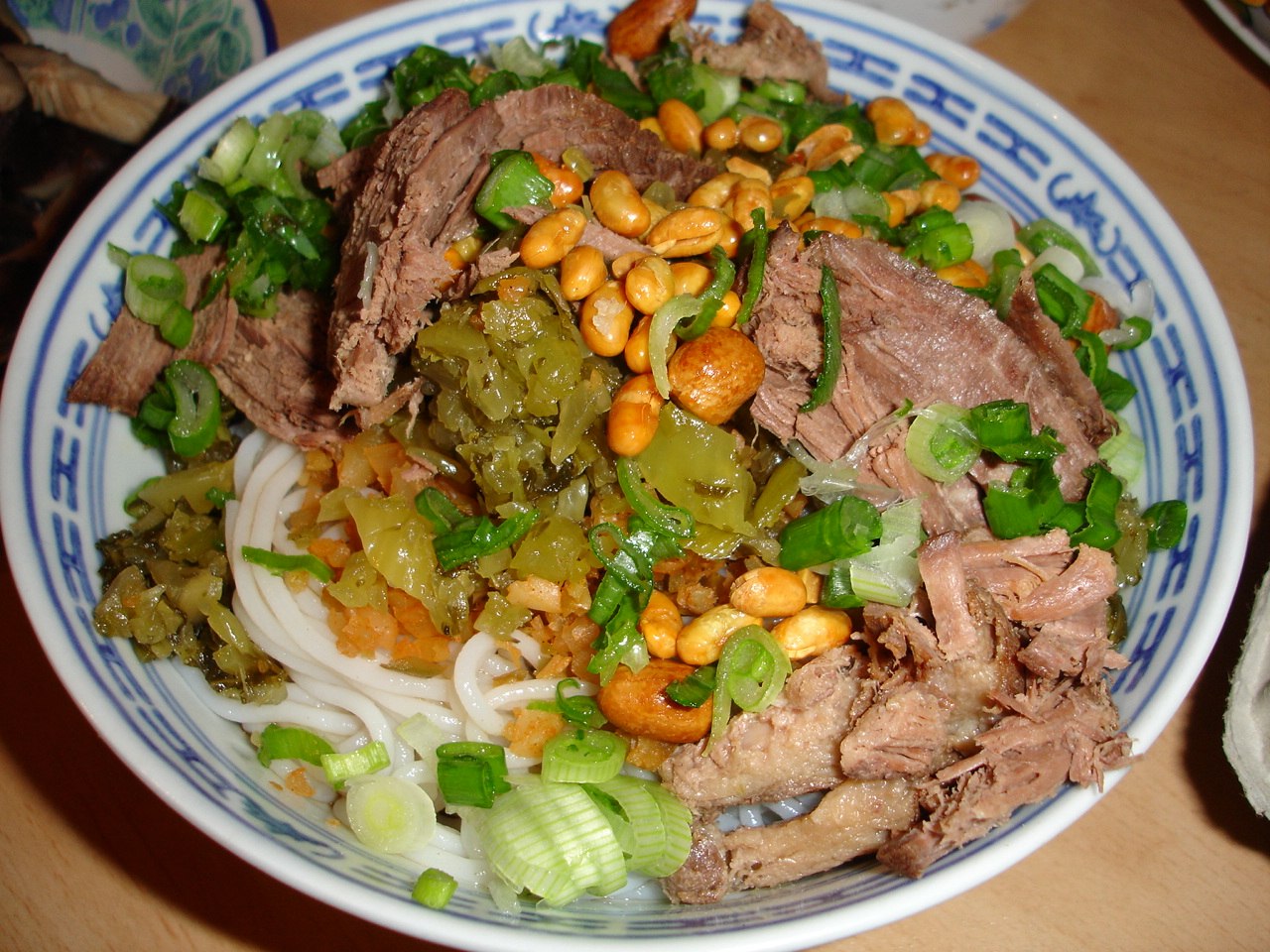
This is the dish the whole city revolves around — round rice noodles about the thickness of spaghetti, dressed in a dark braised gravy (卤水) simmered from more than 20 spices like pepper, cinnamon and dried tangerine peel. On top go crispy fried pork (锅烧), char siu, peanuts, fried soybeans and spring onion. The way to eat it is to toss it dry first so the gravy coats every strand, then ladle in as much free bone broth (骨头汤) as you like. There's chilli paste and pickles on the table to add yourself.
 2
2
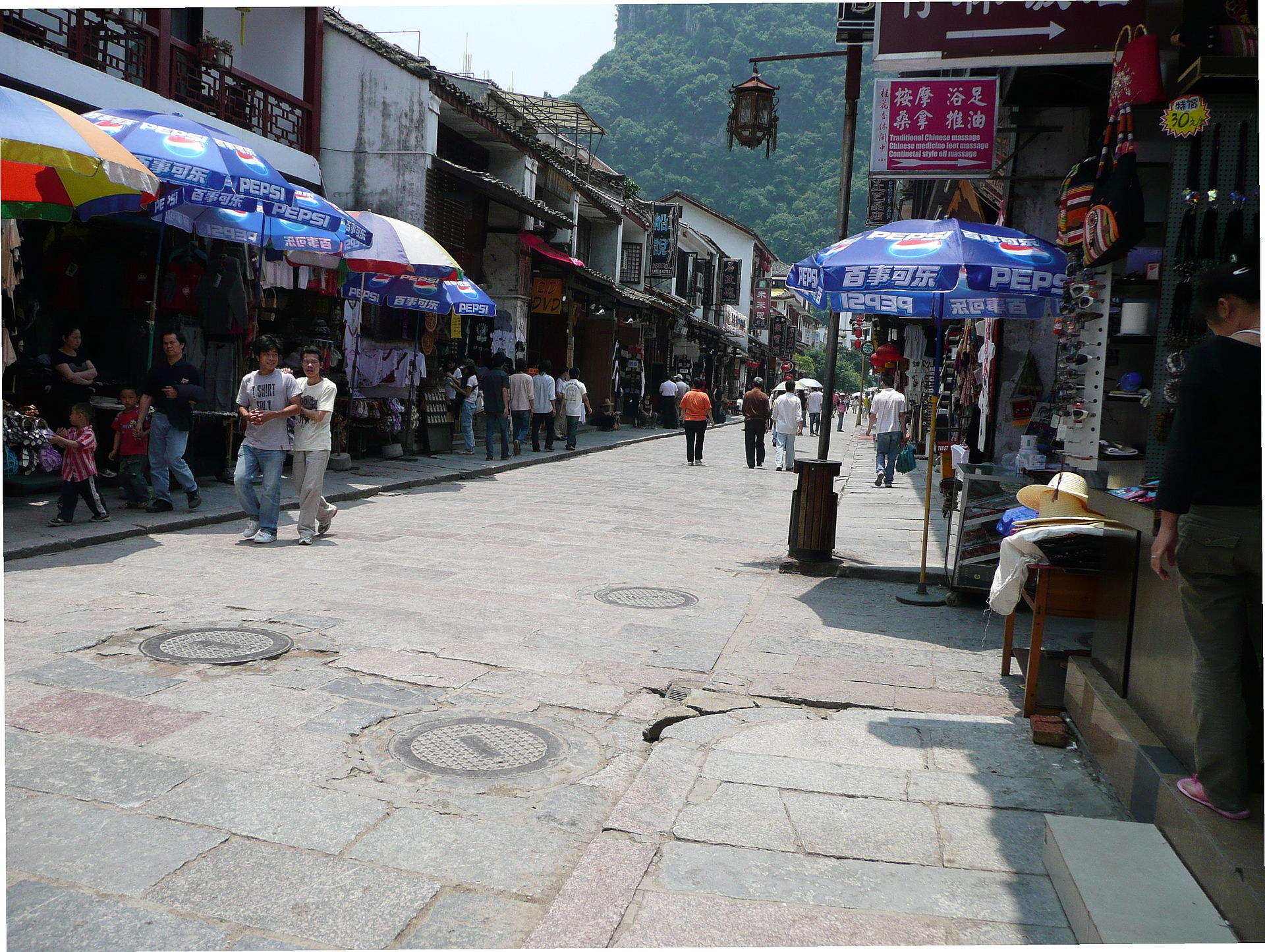
Yangshuo's most famous dish — a fresh carp from the Li River (漓江), around 1 to 1.5kg, pan-seared in camellia oil until the skin crisps, then braised with local beer, tomato, garlic, fresh chilli and pickled veg. The trick that sets it apart: the fish is cooked with its scales left on, and the long braise turns those scales into soft, tender layers. The flavour is sour-sweet and moderately spicy with a hint of beer's bitterness. It's a shared centrepiece, and it tastes best at a riverside restaurant or on West Street.
Not the sweet tea you're picturing — oil tea (打油茶) is a specialty of the Yao and Zhuang peoples of Guangxi. Tea leaves are fried with oil, ginger, garlic and peanuts, then pounded in an iron pot until broken down; hot water is added to make a green, savoury, faintly bitter broth. It's strained and poured over puffed rice, fried peanuts, dough bits and scallion. The first sip is bitter and astringent, then sweet on the finish. People in Gongcheng drink it as a real daily meal; it's UNESCO intangible cultural heritage, and custom says at least three bowls.
A must-have on any Guilin banquet table — fragrant taro from Lipu county (荔浦) sliced and layered with pork belly, packed face-down in a deep bowl, dressed in sauce and steamed until soft. The taro turns fluffy and nutty, the pork belly melts but never feels greasy, and the sweetness deepens with fermented bean curd and local Sanhua liquor (三花酒). Locals say "one bowl steaming, the whole neighbourhood smells it." It was once a tribute dish sent to the imperial court.
An essential night-market bite — stir-fried river snails (炒田螺) tossed with Thai basil, chilli, garlic and fermented black bean, punchy and aromatic; you suck the meat straight out of the shell between rounds of beer. The version Guangxi does especially well is stuffed snails (酿田螺), where the meat is dug out, minced with pork and water chestnut, and packed back into the shell — one of the famous "eighteen stuffed dishes" of Pingle county (平乐), a place said to "stuff anything you can imagine."
If beer fish is Yangshuo's bold version, Li River fish (漓江鱼) is the plain one that shows off the fish itself. Carp from the Li River is firm and sweet thanks to the clear, fast-flowing water, and it's steamed with soy, simmered in clear broth or lightly braised in beer. Some restaurants also do Li River shrimp (漓江虾), tiny ones fried crisp and eaten shell and all. This is the taste locals are proudest of — clean, fresh, barely seasoned, and a good pick if you want to skip the chilli.
A vegetarian noodle with a story: a century or so ago, a nun on Yueya Mountain near Elephant Trunk Hill made vegetarian noodles so good that later generations named the dish after her. It's thin noodles in a meat-free broth simmered from shiitake, bean sprouts and vegetables, with tofu, mushrooms and seasonal greens. The result is clear, light and mushroom-fragrant — completely meat-free but rounded enough that you never feel it's missing anything. A good choice for vegetarians or for giving your stomach a break from richer plates.
Guilin is the "city of osmanthus," and the flower runs through its sweets — osmanthus cake (桂花糕) is made from glutinous rice flour, honey, rock sugar and osmanthus, crystal-clear and soft with a faint floral scent. Osmanthus wine (桂花酒) is a rice wine infused with the flower, sweet and fragrant at around 15–20% ABV; Guilin has been making it for over 2,500 years. There's also osmanthus tea (桂花茶) and osmanthus honey, both popular things to take home.
Two snacks that sum up Guangxi nicely — water-chestnut cake (马蹄糕), steamed from water-chestnut flour into translucent, springy squares and drizzled with osmanthus honey, cool and refreshing, sold on Binjiang Road and at park gates. The other thing Guangxi people are hooked on is sour snacks (酸嘢) — seasonal fruit and vegetables pickled with vinegar, chilli, salt and ginger (mango, guava, cucumber), tangy, spicy and crisp, a great palate-cutter. There are dedicated stalls for them all over the city.
A nourishing dish Guangxi and Guilin do well — old duck stewed with ginkgo nuts (白果), simmered low and slow until the duck falls apart and the broth turns clear and sweet from the bones. The ginkgo nuts add a soft, faintly bitter note. Locals believe it's good for the lungs and warming, and it's mild and unspicy throughout. Order it to give your palate a rest between fiery plates, or on an evening when you want something light and warm.
Dinner in Guilin is most fun on the night-market stalls — glutinous rice balls (糍粑) the size of your fist, stuffed with meat gravy, pickles and crunchy bits; grilled skewers (烧烤) of meat, veg and mushrooms cooked fresh roadside; bamboo-tube rice (竹筒饭), sticky rice roasted in a bamboo tube with cured pork and corn (you'll find it around the Longji terraces); and freshly pressed sugar-cane juice. Graze your way along Zhengyang street, the East-West Lanes or the Bali street market — each item costs a few yuan, and you can eat your fill all evening without sitting down.