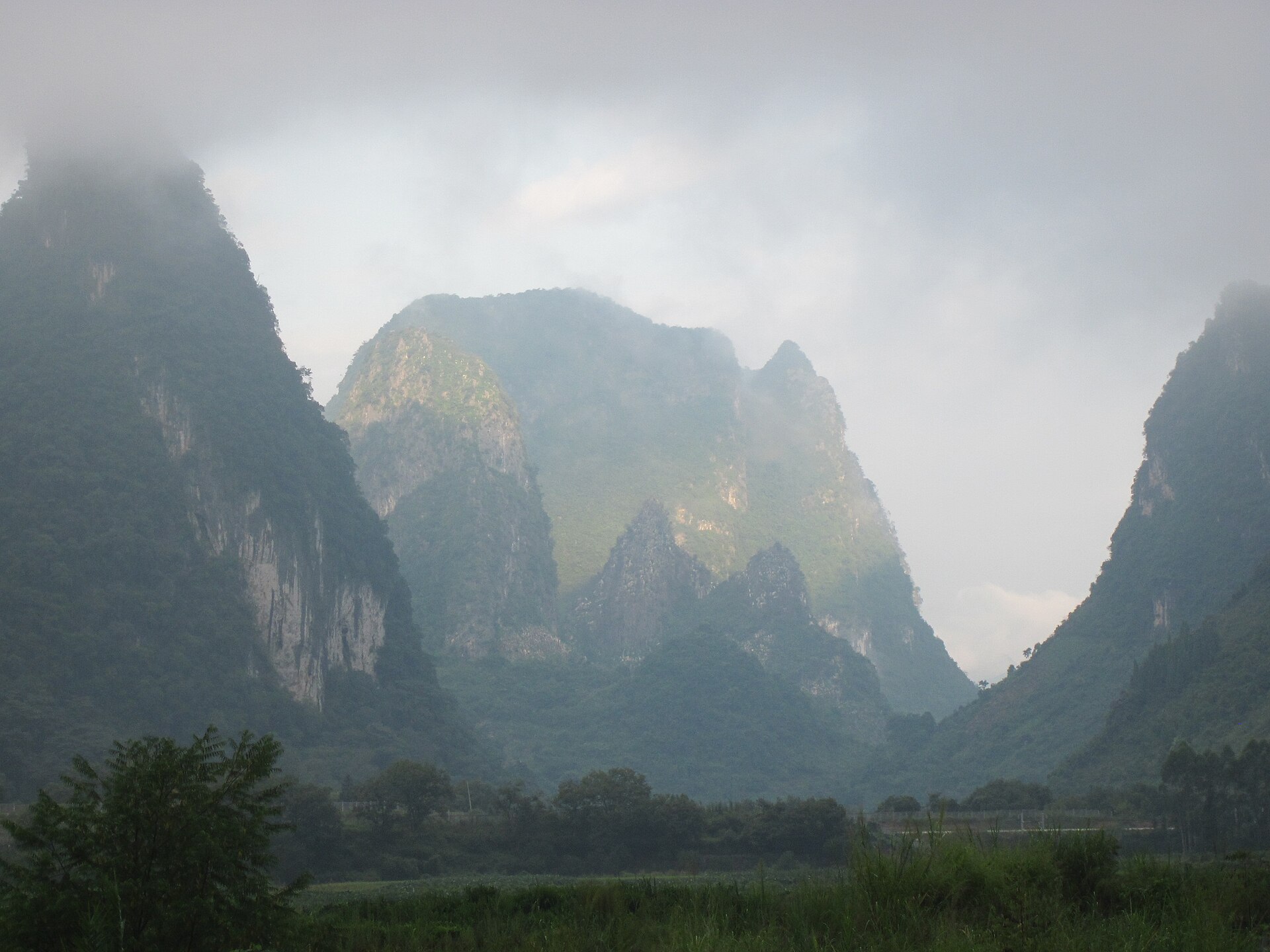
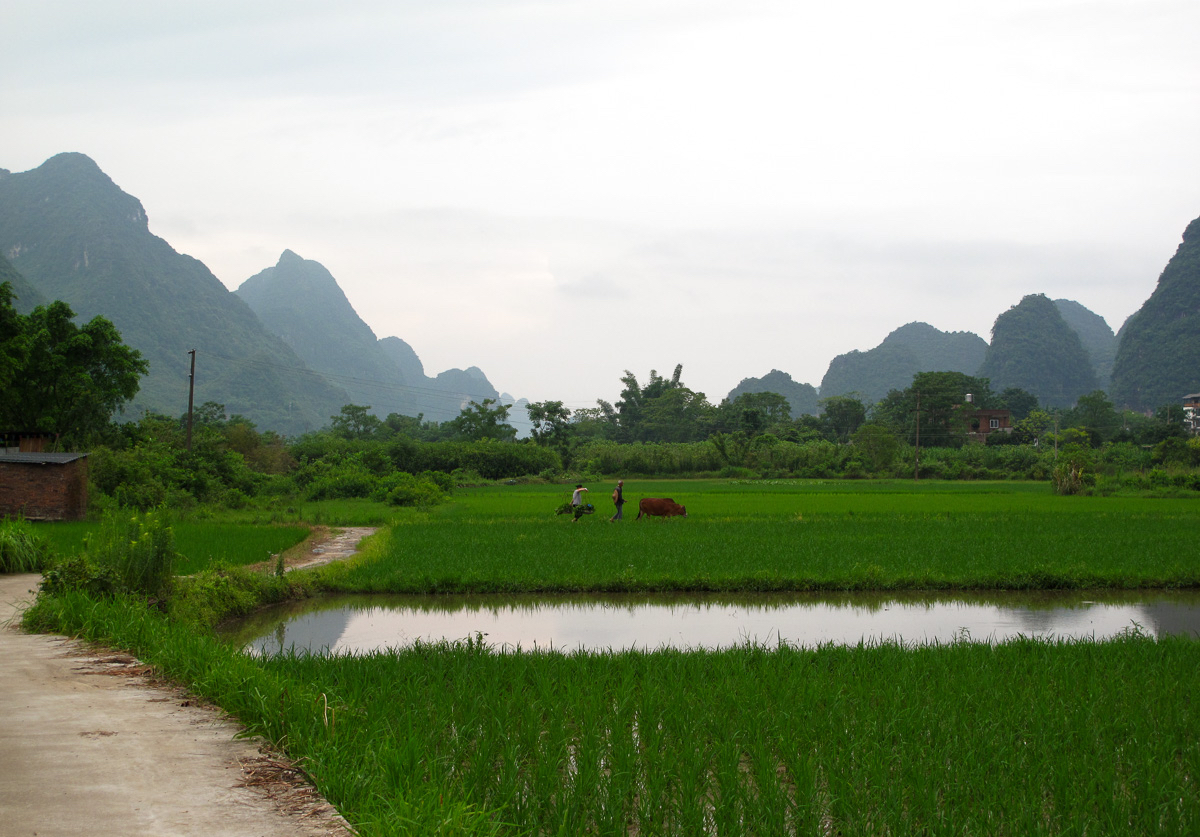
No engine noise — just the pole tapping the water as a small bamboo raft slides over low weirs, past green rice paddies and karst peaks mirrored in glassy water. This is the Yangshuo countryside in its slower, quieter form, away from the big Li River cruise.
Picture this: you are lying back on a small bamboo raft, feet trailing in the cool water, a boatman standing at the stern pushing you gently forward with a pole. On either side are rice paddies and karst peaks rising one by one, mirrored in water so still it looks like glass — no engine noise, no big tourist boats passing, just wind, birds and the sound of the river. That is the charm of the Yulong River.
The Yulong River (遇龙河) is a small river that flows parallel to the larger Li River through the countryside of Yangshuo County, about 8 kilometres from Yangshuo town and roughly 70 kilometres from Guilin. Because its karst-and-water scenery is every bit as lovely as its big sibling, only at a smaller, more intimate scale, people have nicknamed it the "Little Li River" (小漓江).
What makes the Yulong special is how rural it still feels — the rafts here are two-person bamboo rafts poled by hand, not motorboats. Along the way you pass rice paddies, water buffalo, old villages and centuries-old Ming-dynasty stone bridges. Come to raft, come to cycle the riverbank, or do both: it is one of the prettiest and most relaxing days of any Guilin trip.
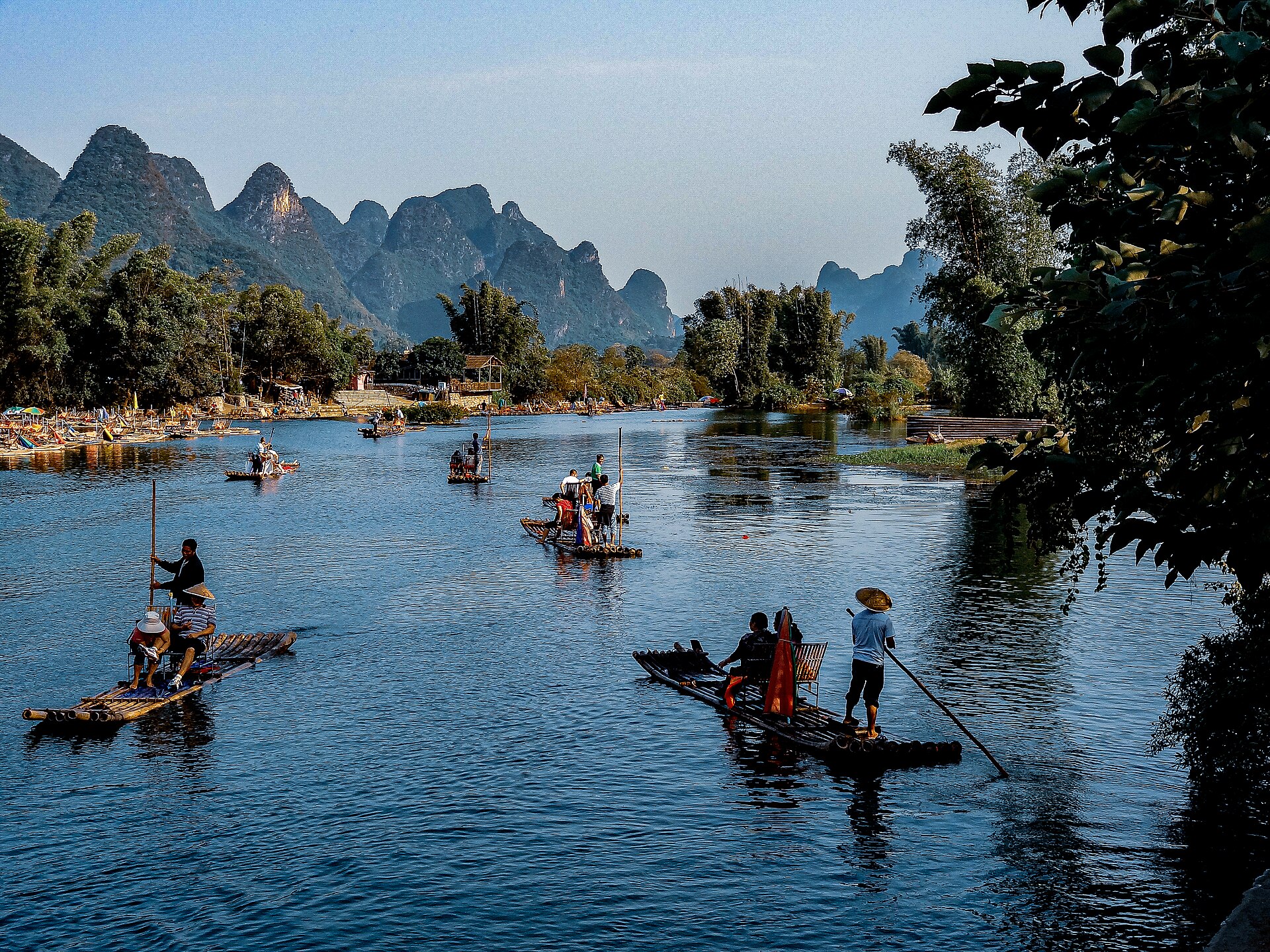
The Yulong River is split into several sections, each with its own docks and price. These are the runs people choose most.
The run most people choose, because it is compact without dragging on, at around ¥200 per raft. The scenery has it all — rice paddies, peaks, and a few weirs to slide over for fun. Good for families with kids, or anyone who wants to try rafting without giving up a whole morning.
A long run on the upper reach, the quietest and most peaceful, with open, wide views and karst peaks lined up beautifully. Around ¥280–320 per raft. Best for those who want to soak up the atmosphere fully and photograph without rushing. Jiuxian village at the end is an old village worth wandering on afterwards.
A long classic run that many call the most scenic, with several stepped weirs that drop the raft in a rhythm — livelier and more thrilling than the others. Around ¥280–320 per raft. If you want both the best views and a little mini-rollercoaster fun, this is the one.
The arched stone bridge the river is named after, built in 1412 during the Ming dynasty: 36 metres long, 4.2 metres wide and 9 metres high, the largest single-arch stone bridge in Guangxi, made entirely of stone without cement and standing for more than 600 years. It is both a popular embarkation dock and a lovely photo spot, paired with the equally old Fuli Bridge (富里桥) further along.
The clearest difference is how you move. The Li River cruise is a big motorised tourist boat running from Guilin to Yangshuo over about 4 to 5 hours, with grand, sweeping scenery like the view on the 20-yuan note. The Yulong River is a small bamboo raft poled by a boatman — no engine noise, no other boats passing to disturb you, quiet enough to hear the water lapping at the raft.
The other difference is scale and closeness. The Li gives you wide, grand views from a distance; the Yulong gives you close, personal, rural scenes — rice paddies, water buffalo, villagers, all within arm's reach. It is smaller and slower, but more relaxing and far closer to country life.
The easy answer is you don't have to choose, if you have the time. Many people take the Li River cruise from Guilin down to Yangshuo on one day, then keep the Yulong River for another day of rafting and easy cycling. The two feel different and complement each other nicely.
But if time is tight and you must pick one: want the grand, iconic Li River views and the 20-yuan-note scene → take the Li River cruise. Want to lie back over quiet fields, close to nature, with kids along, or want to cycle the countryside → choose the Yulong.
The other half of the Yulong's charm is on land. This river is one of the prettiest cycling routes in China — rent a bike or an e-bike from the West Street area in Yangshuo town and ride along the river past rice paddies, old villages and the foot of the peaks, stopping to photograph the ancient stone bridges whenever you like, no rush.
The route is fairly flat and shaded, suiting beginners and families alike. You can hop on a raft partway, or simply loop back. Late September to mid-November is the best weather (around 28°C, little rain) and the season when the paddies turn gold for harvest — so beautiful you'll be stopping for photos every couple of minutes.
Time it well and ride or raft in the late afternoon, then stay until sunset: warm golden light washes over the rice paddies and karst peaks, and the shadows of the peaks stretch long across the water. It is the quietest, loveliest moment of the Yangshuo day. Find an open spot above the fields or on an old bridge and wait as the sky slowly changes colour — it's well worth the extra hour.
The Yulong River is out in the Yangshuo countryside. There is no metro in Guilin or Yangshuo, so you get there by car, bike or tour — and starting from Yangshuo town is easiest.
Stay in Yangshuo town near West Street and cycle out to the river easily — or pick a mountain-view resort by the fields and wake up to the paddies.