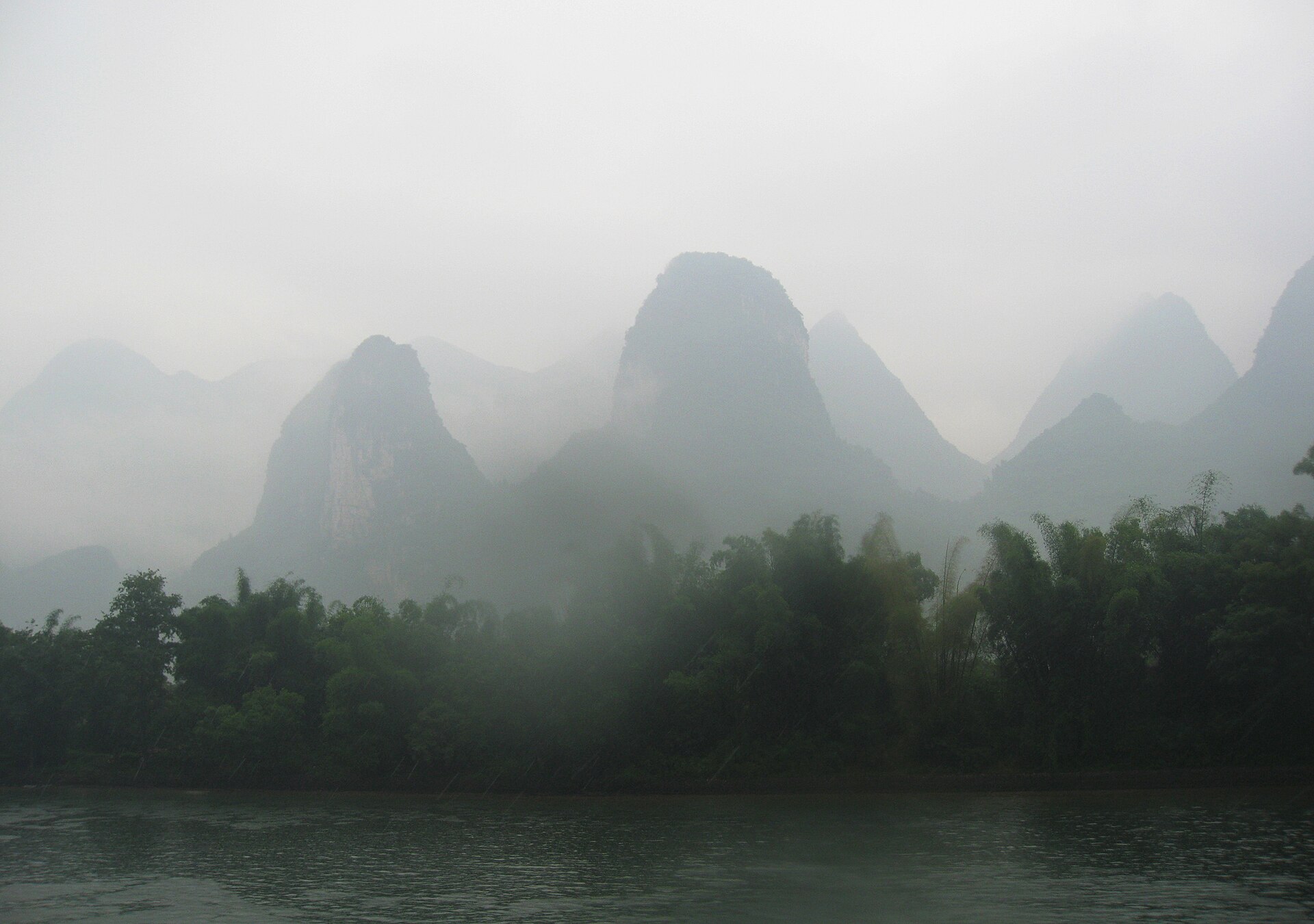
A quiet, slow riverside old town on the Li River — stone-paved Ming/Qing streets, the karst bend printed on the 20-yuan note, and early-morning bamboo rafts gliding under a thin layer of mist.
Pick up a 20-yuan note and turn it over — that row of karst peaks mirrored in still water isn't an artist's invention. It's Yellow Cloth Shoal (黄布倒影), a bend of the Li River right by Xingping, and you can walk out and stand at the exact same angle. It's only a 15–20 minute stroll from the old town.
Xingping (兴坪) is a small ancient town on the east bank of the Li River, about 40 minutes from Yangshuo town, with more than 1,300 years of history. It was the largest town on this stretch of river long before Yangshuo grew up. What remains today is a stone-paved old street, rows of Ming- and Qing-era shopfronts, and a run of peaks-and-water scenery that plenty of people call the prettiest on the whole Li River.
Xingping's real draw is how calm it is. If Yangshuo's West Street is all night-time buzz, Xingping is the opposite — slow, quiet, built around the landscape. It suits the kind of traveller who'd rather be on a raft at dawn watching the mist lift than chasing bar lights. The town and old street are free to enter; you only pay for the activities you choose.
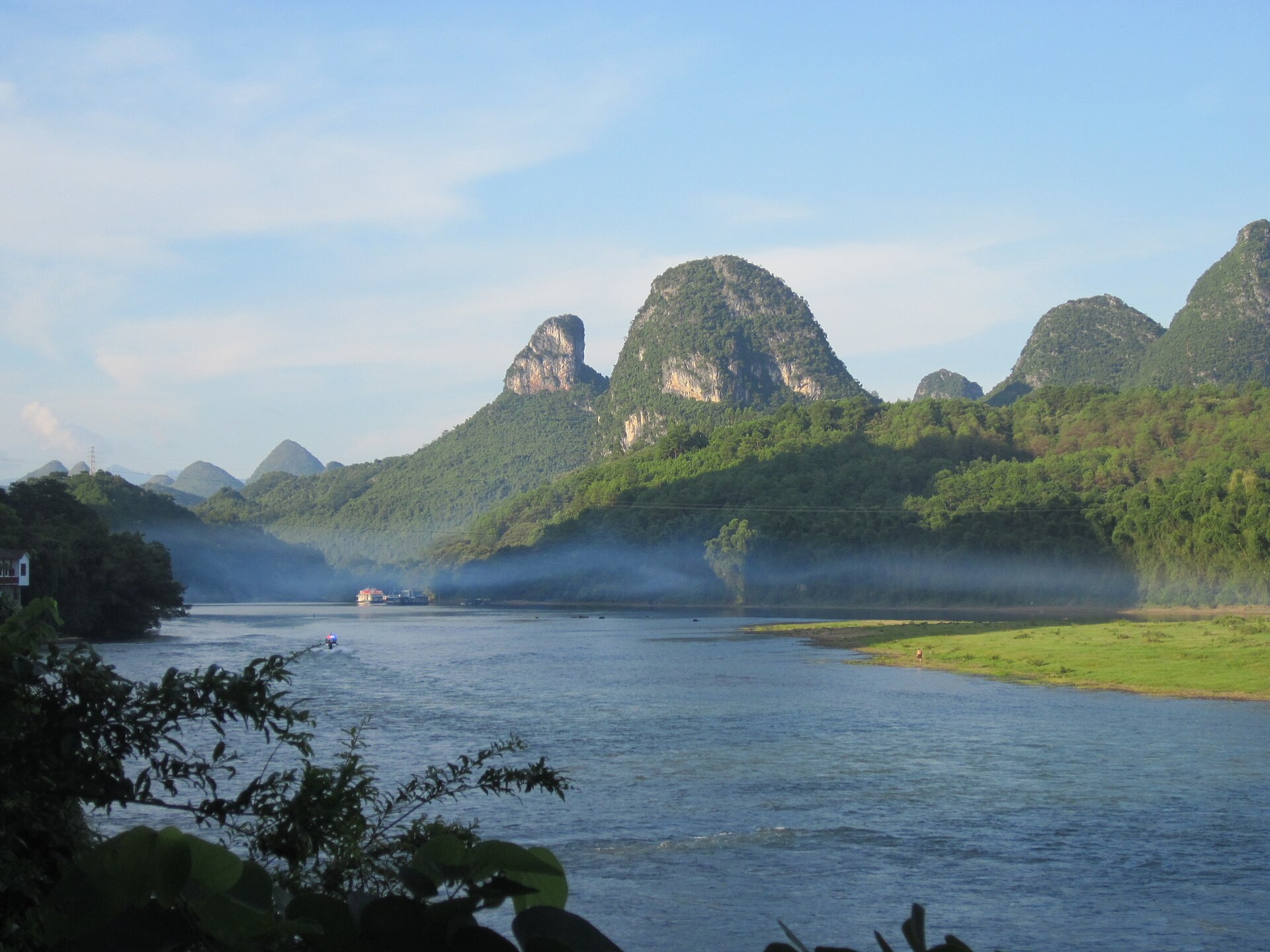
From the view on the banknote to a fishing village two world leaders once visited
The karst peaks reflected on the back of the 1999 20-yuan note come from this very bend of the river, near Dahebei village. Follow the crowd toward the pier and you'll reach a marked spot where you can hold the banknote up against the real thing. Early morning — still water, thin mist — gives the sharpest reflection.
A small hill right beside the old town. Climb it in about 30 minutes and the summit opens onto the Li River curving a full 90 degrees around its base — the best panorama in Xingping, and especially good at sunrise. The path is fairly steep, so wear trainers and carry water.
A motorised bamboo raft leaves Xingping Pier and drifts upstream to "Nine Horses" cliff, whose streaked rock face is said to resemble nine galloping horses — passing the 20-yuan Yellow Cloth Shoal view on the way before looping back. Reckon on about ¥150–220 per person (about ฿750–1,100). Always agree the price before you step on.
The town's main lane, paved in stone since old times, lined with timber-and-brick shophouses from the Ming and Qing dynasties. Today there are small cafés, souvenir shops and guesthouses tucked among them. An easy 20–30 minute wander — and far quieter than Yangshuo's West Street.
A riverside village built in the Ming dynasty, more than 500 years old — grey brick, black tile, horse-head firewalls and carved windows. It's nicknamed the "President Fishing Village" because Dr Sun Yat-sen visited in 1921 and former US President Bill Clinton came in 1998. You can still watch the traditional cormorant-fishing demonstration here.
Xingping is at its best in the early morning, around 06:00–08:00. The Li River is still glassy, a thin mist hangs over the water, and the early light softens the karst peaks. This is when the Yellow Cloth Shoal reflection is sharpest — before the breeze and the rafts start to ripple the surface later in the morning.
If you're visiting on a day trip from Yangshuo, set off early to catch this window. If you'd rather take it slow, stay a night in Xingping and you'll get both sunset from Laozhai Hill and sunrise over the river on the same trip.
A motorised bamboo raft leaves Xingping Pier for Nine Horses Mural Hill (九马画山) — roughly 5.5 km, about 1–1.5 hours there and back — passing the 20-yuan Yellow Cloth Shoal view along the way. You sit low to the water, close to the peaks, water buffalo and riverbank bamboo, in a way the big tour boats can't match. Expect about ¥150–220 per person (about ฿750–1,100) depending on the season and on bargaining.
This is exactly why so many people prefer the Xingping stretch to the long cruise — the raft sits near the surface and feels much closer to the landscape.
For the classic "20-yuan" view, walk from the old town toward the pier for about 15–20 minutes until you reach the marked spot where you can line it up against the banknote. If you'd rather have a higher angle that frames both the old town and the river bend, hike the Back Hill behind the town for about 20 minutes to its viewing platform.
The best panorama of all, though, is still the summit of Laozhai Hill, where the river curves right around the base of the peak. Get there before sunrise to catch the first warm light of the day.
Most people use Yangshuo as a base and ride out to Xingping for a half-day or full day — it's both the easiest and the cheapest way.
Xingping slots in perfectly with the Li River and the Yangshuo countryside — plan the rest here