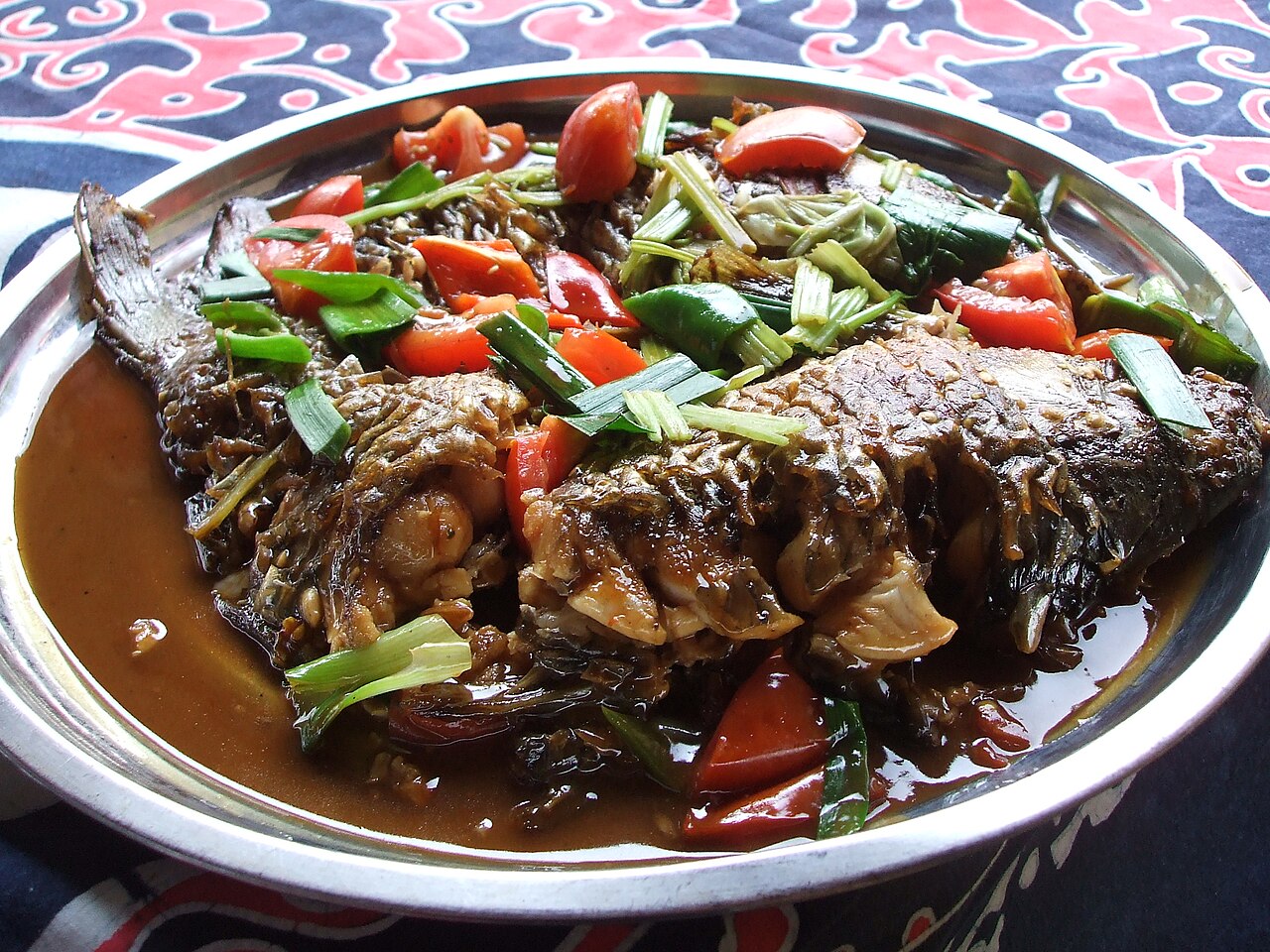
Fresh Li River carp fried with its scales on, then braised in a whole bottle of beer with tomato, garlic, green chilli and pickled veg — the dish that defines riverside Yangshuo, 65 km south of Guilin.
First, let's get the geography straight — beer fish (啤酒鱼) is not a Guilin-city dish. It belongs to Yangshuo (阳朔), a small riverside town about 65 km south of Guilin city, roughly a 1.5-hour drive. Most people cruise down the Li River or take a bus to spend a day in Yangshuo anyway, then end it with beer fish by the water — and that is exactly the right way to do it.
The dish is tied to Yangshuo because the main ingredient comes straight from here — fresh carp from the Li River (漓江), the same river that curves past the town's famous limestone peaks. Cooks keep live fish in a tank or pen by the door, weigh your pick in front of you, and cook it on the spot. That level of freshness is what sets Yangshuo's beer fish apart from versions sold in the bigger cities.
The flavour is a good introduction to Guangxi (广西) cooking — sour, sweet, savoury, beer-scented and mildly spicy from green chilli. It's not the numbing málà heat of neighbouring Sichuan, and it isn't Cantonese either; it's a home-style taste rounded out by tomato and pickled veg, the kind of thing you happily finish over a bowl of hot steamed rice.
It looks like a simple braised fish, but the magic hides in these four things — know them and you'll enjoy it a whole lot more.
1
It all starts with carp (鲤鱼) pulled fresh from the Li River, usually 1 to 1.5 kg. The flesh is firmer and sweeter than farmed freshwater fish because it grows in the clear, flowing water of one of China's most photographed rivers. Cooks pick a live fish, weigh it at the front of the shop, and cook it right away — that freshness is exactly why the dish is anchored to Yangshuo. Carp has fine bones by nature, so eat slowly; if you'd rather avoid them, ask whether they can use boneless mandarin fish (桂鱼) instead.

2
This is what sets traditional beer fish apart from any other braised fish — the scales are left on. The cook fries the fish whole in hot oil until the scales crisp up and curl, then braises it in beer so they soften into thin, edible layers that drink up the sauce. Locals treat eating the scales as a small treat that cautious visitors usually skip — but give it a go: it's a crisp texture that plays beautifully against the tender flesh underneath.
Once the skin is seared, the cook pours in a whole bottle of beer instead of water and simmers everything over medium heat until the liquid reduces into a thick sauce that soaks into the fish. The beer does three jobs — it cuts the muddy smell of river fish, lends a malty aroma, and adds a gentle sweetness that balances the soy. The yeast also helps keep the flesh tender. By the time it's reduced, the alcohol has cooked off and only the aroma and rounded flavour remain, which is exactly how the dish earns its plain-spoken name.
That thick red-brown sauce isn't beer alone — it comes from tomato, garlic, green chilli, ginger and pickled vegetables (often pickled long beans or Guangxi-style pickled greens). The tomato brings a rounded tang and that glossy colour, the green chilli a mild, fragrant heat rather than a fierce one, and the pickles add a quiet sourness that stops the dish feeling heavy. It all reduces with the fish into a sauce locals half-jokingly call a "rice killer," because once you spoon it over steamed rice you can't stop.
Almost every restaurant prices beer fish by the weight of the fish. Many keep live fish in a tank or pen — point at the one you want and they'll weigh it in front of you before cooking. A serving usually runs ¥68–128 (about ฿340–640) depending on size; a larger or premium fish may be charged per catty (about 500 g) at ¥98–148. Ask for the weight and the total before you commit, and there'll be no surprises when the bill comes.
One fish comfortably feeds 2–3 people because it arrives swimming in sauce. Two of you can share a smaller fish; a group of four should order a big one (or two) and add a couple of side dishes.
Beer fish has a bold, saucy flavour, so it pairs best with simple, mild things — hot steamed rice is the non-negotiable partner (for that sauce), followed by a plain stir-fried green like water spinach or a seasonal leafy vegetable to cut the richness. Some places offer steamed tofu or a spring-onion omelette as light side dishes.
For more local flavour, add stir-fried river snails (炒田螺) or Lipu taro with braised pork belly (荔浦芋扣肉), both home-style Guangxi dishes that go well with it — there's more in our guide to Guilin & Guangxi home cooking. And yes, a cold beer alongside the beer fish is a very good idea.
Most Yangshuo beer-fish restaurants take WeChat Pay and Alipay first; some accept cash in yuan, but almost none take foreign credit cards. Link a Visa or Mastercard to Alipay or WeChat before you travel and you're set.
Yangshuo is a tourist town, so many restaurants on West Street (西街) have picture menus and staff with some English. The simplest order of all is just to say "啤酒鱼" (pí jiǔ yú) and point at the size of fish you want — and the town's signature dish is on its way.
The names visitors and locals mention most in Yangshuo, from long-running chains to the riverside tables.
One of the names visitors and locals bring up most often when talking about Yangshuo beer fish, with several branches around town. The fresh Li River carp is braised in beer to a bold, well-rounded flavour, with a thick sauce that's made for rice. The staff are used to travellers and there are picture menus to point at, which makes it an easy first stop if you're in Yangshuo for the first time and want this dish without any guesswork.
Another beer-fish name with a following in Yangshuo ("大师傅" means master chef). Reviewers tend to praise the depth of the sauce and the freshness of the fish, and it lands on a lot of must-try lists for the town. The setting is local and unfussy rather than fancy — the focus is on getting the main dish right, the way the recipe intends.
Half the appeal of eating beer fish in Yangshuo is the setting — many restaurants sit right along the Li River or near the boat pier. Tucking into a hot, beer-braised fish with the limestone peaks reflected in the water at dusk is an experience you simply can't get in a big city. The fish here is often especially fresh because it comes from the river out front. Look for a place with a live fish tank or pen, then grab a table by the water for sunset.
If your schedule won't stretch to Yangshuo, Guilin city has plenty of Guangxi restaurants and beer-fish spots too, especially around Zhengyang pedestrian street (正阳步行街) and the central food area. The flavour is fine, but honestly the freshness of the fish and the riverside atmosphere can't match Yangshuo. If you have even half a day, it's worth going down to eat it at the source — and there's more city snacking in our Guilin street-food guide.