A 240-metre limestone cave northwest of Guilin, walked as a single loop of about an hour, past stone pillars and curtains of stalactites lit in shifting colour. The highlight is the Crystal Palace — a vast chamber where a still pool mirrors the rock and the light until it feels like an undersea palace.
Picture this: you step out of Guilin's heat into the mouth of a cave, and all at once the air cools, the noise drops away, and in front of you stands a forest of stone pillars as tall as buildings, the ceiling hung with thousands of stalactites — all bathed in blue, purple, green and orange light that keeps shifting. This is not a dark cave you have to torch your way through; it is more like an underground light stage that nature spent hundreds of thousands of years slowly shaping.
This is Reed Flute Cave (芦笛岩 Ludi Yan), a limestone cave about 240 metres long, cut into a hill on the northwestern edge of Guilin. The name comes from the reeds growing outside the entrance, which local people once cut and made into flutes. Inside, it is filled with stalactites, stalagmites, pillars and stone curtains, all built up drip by drip as water seeped through the limestone over more than a million years.
What sets it apart from an ordinary cave is the coloured lighting, which turns plain rock into a fantasy set, and the great chamber called the Crystal Palace (水晶宫), wide enough to hold a thousand people. Add more than 70 ancient ink inscriptions on the cave walls, left by travellers and poets going back to the Tang dynasty, and Reed Flute Cave becomes both a natural wonder and a slice of history in one place.
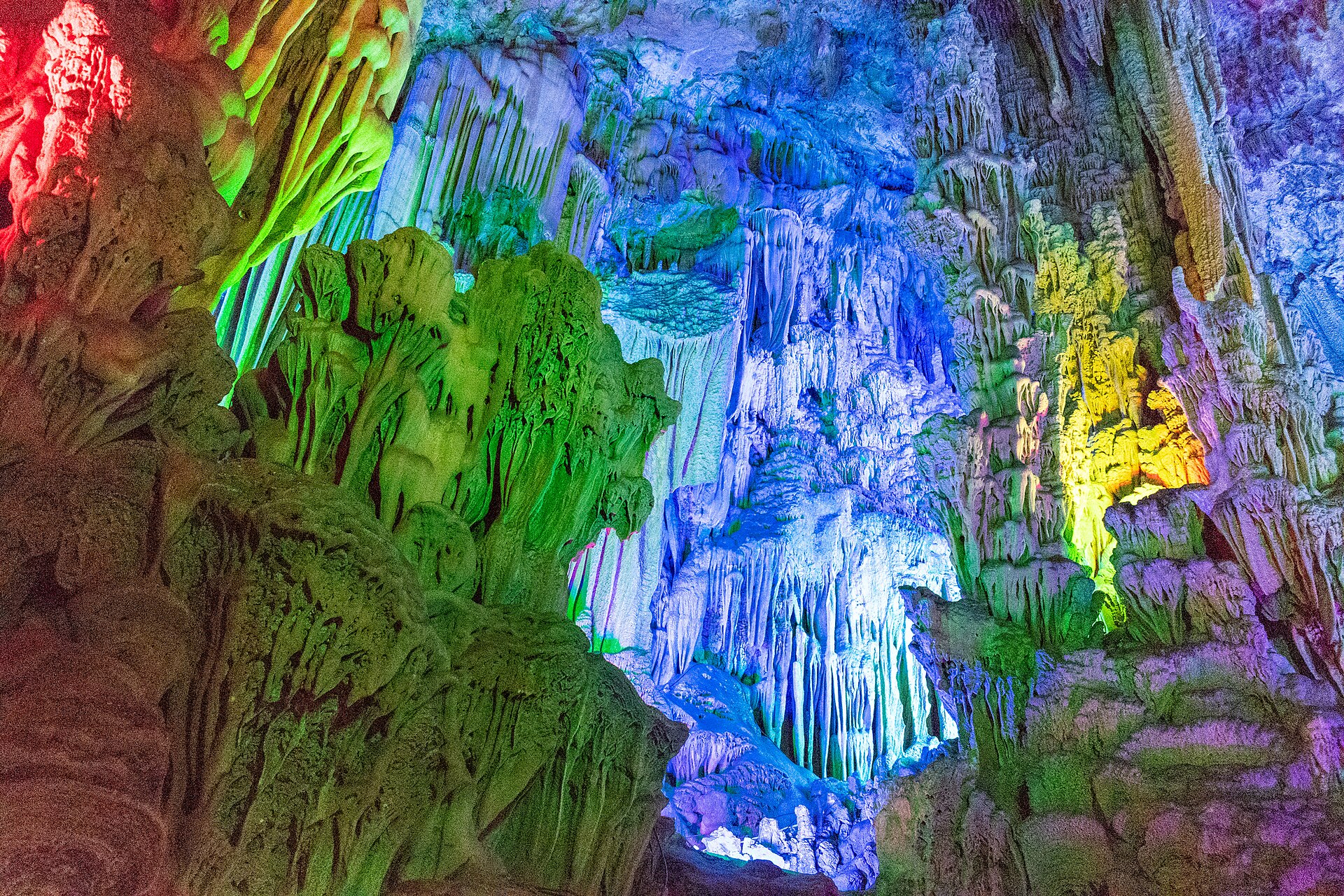
The route through the cave is a single loop that a guide leads you along, following the lighting from one highlight to the next — easy walking, no climbing.
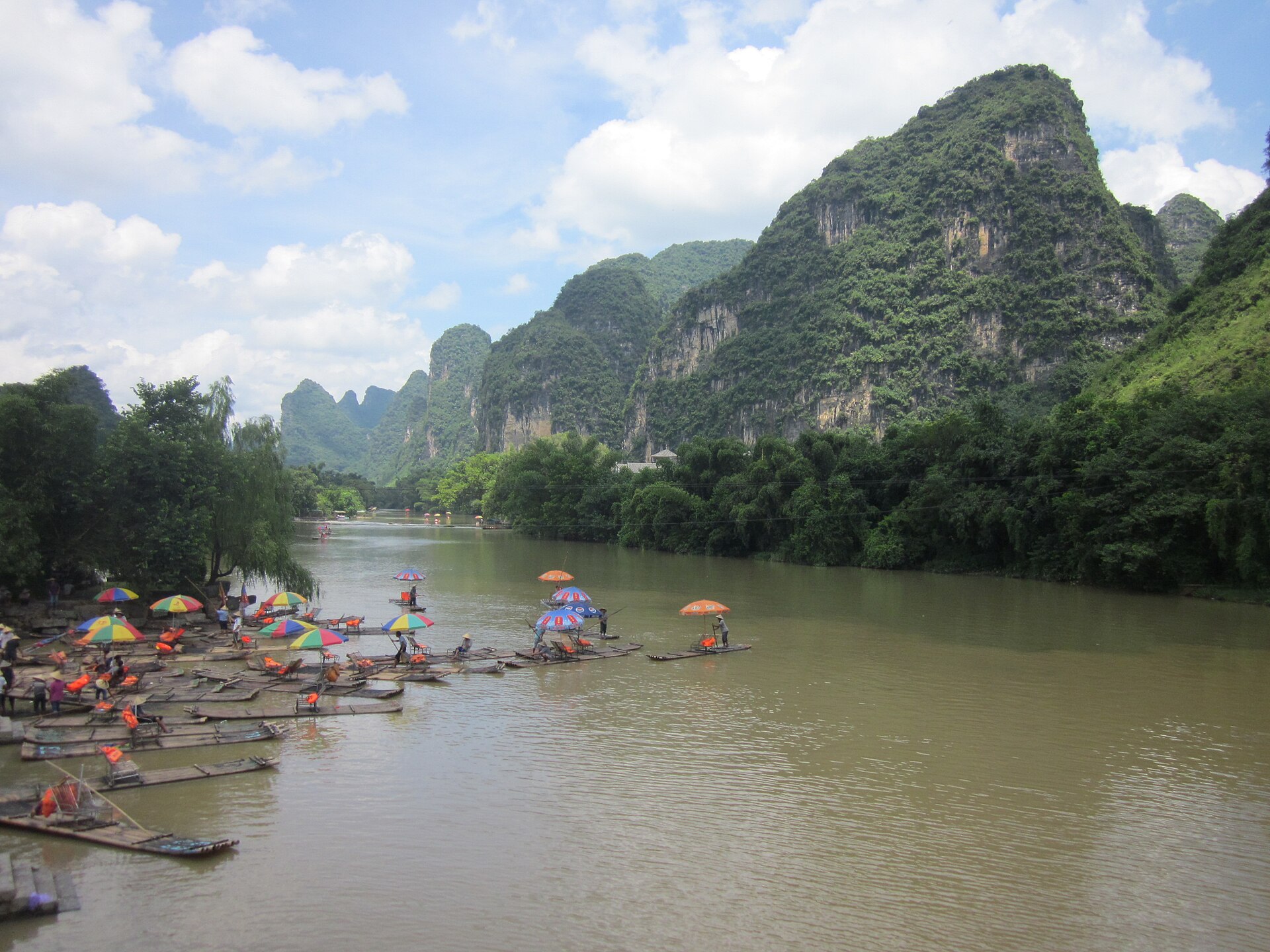
Before you head down, you pass the reeds that grow at the mouth of the cave — the source of the name, since people once cut them to make flutes. The moment you step inside, the temperature drops, and this is where many people stop for a photo before starting the route through the cave.
The middle of the cave is a thicket of oddly shaped pillars and stalactites, many named for what they resemble — a lion, a pagoda, a virgin forest, a frozen waterfall. The light keeps changing colour, so the same rock seems to change mood every time it shifts. This is a stretch to take slowly rather than rush.
This is the most beautiful spot and where people stop to photograph the most. The chamber opens out wide enough to hold around 1,000 people, its ceiling hung with stalactites like palace lanterns. A still pool below mirrors the rock and the coloured light back up in perfect symmetry, as if a second palace lay beneath the surface. The Crystal Palace was also a filming location for the 1986 TV series Journey to the West.
On the cave walls are more than 70 ink inscriptions left by poets and travellers of the past, most from the Tang and Song dynasties, with the oldest dating to 792 AD in the Tang. They are proof that people have been visiting this cave for over a thousand years — it is far from a newly opened attraction.
The cave is fairly dark and the coloured light keeps shifting, which makes a good photo harder than it looks. You are usually asked to turn off the flash to preserve the atmosphere and not disturb others — and honestly your photos come out better that way, because a flash wipes out the colour of the lighting entirely. A newer phone with a good night mode captures the cave's light far better; for sharper shots, try resting the phone on a railing or against a wall to hold it still.
The standout spot is the Crystal Palace, with its reflecting pool. Try to frame both the real rock above and its reflection in the water below — that gives you the symmetrical shot that is the signature image of this cave.
Reed Flute Cave is underground, so the temperature inside stays cool and steady all year — you can visit in any season. The most comfortable time for walking around Guilin all day, though, is April to October. It is a touch damper inside than out, so a light long-sleeved layer is handy.
On crowds — this is a popular tour stop, and early mornings and weekdays are quieter and easier to walk. The times to avoid are the Chinese public holidays, especially Golden Week in early October, National Day on 1 October, Labour Day on 1 May, and the week of Chinese New Year, when it gets so busy you end up queuing and shuffling along in a procession.
The visit follows a set route, a single loop in and out, and you can't deviate from it, for safety and to protect the cave. You generally walk together as a group, with a guide naming the rock formations along the way (mostly in Chinese). If you want to go slowly and take your time on photos, let the big tour group move ahead and follow behind — you'll get more space to yourself.
Parts of the path are slippery from the damp, so comfortable, non-slip shoes are your best bet, and watch for the low steps that appear here and there.
The cave is on the northwestern edge of the city, about 5 to 6 kilometres from the centre. Guilin has no metro, so getting there means a bus, a taxi or a DiDi.
Reed Flute Cave is out on the city's edge, so staying in the centre along the Li River or near the Zhongshan pedestrian street makes getting to everything easiest.