Yuexiu (越秀) is where Guangzhou began more than 2,000 years ago — a pedestrian street with ancient paving hidden under glass, a big park crowned by the Five Rams city symbol, a granite-Gothic cathedral, and old temples. It all sits within walking distance, with Metro Lines 1/2 to reach the rest of the city.
Picture walking down Guangzhou's busiest pedestrian street, then glancing at the ground in front of you — under a sheet of glass are layers of old road surface stacked era by era, from the Tang dynasty to a century ago. That is the appeal of Beijing Road (北京路) in Yuexiu district (越秀), the historic downtown core and the very spot where Guangzhou was founded under the Nanyue Kingdom over 2,000 years ago. The area gathers the old town, a shopping street, temples and museums into a single walkable radius.
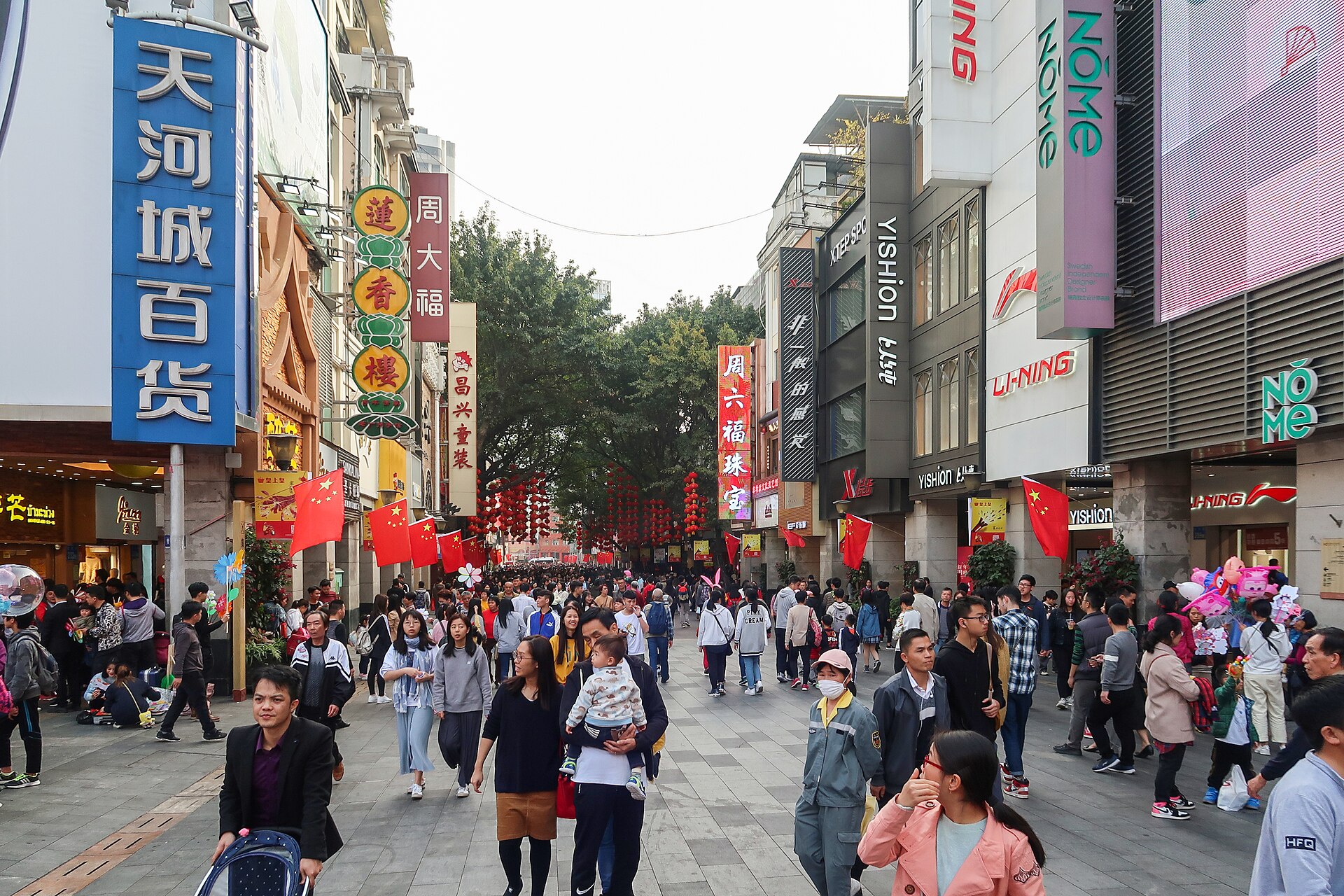
The spine of the area is the Beijing Road pedestrian street (北京路步行街), running about 1.4 km and lined with department stores, brand-name shops, old confectioners and teahouses. North of it lies Yuexiu Park (越秀公园), the largest park in the city, home to the Five Rams Statue (五羊石像) — Guangzhou's emblem. Close by are the Sun Yat-sen Memorial Hall, the granite Sacred Heart Cathedral and several old temples. The transport heart of it all is the Gongyuanqian (公园前) metro station on Lines 1 and 2, one of the city's big interchanges.
What makes the area genuinely useful is that Guangzhou is a city where the sights are spread across different corners — stay in the wrong place and you lose the day to taxis. Base yourself in Beijing Road / Yuexiu and you get the old town, the temples, real Cantonese food and a metro line to other districts, all in one spot. That is why we point travellers here when their trip is mostly about heritage and shopping.
The area hands you both at once — a modern shopping street to walk on, and 2,000-year-old Guangzhou visible right under your feet.
The appeal of Beijing Road / Yuexiu is that it is a living old town, not a museum. By day the pedestrian street is full of people shopping and snacking; by evening the lights come on and it gets busier still. Step off the main strip into the side lanes and you find old temples, a stone church and teahouses that have been open for a hundred years. The area suits travellers who want to soak up traditional Guangzhou rather than stare at skyscrapers.
The area is in the heart of the old town and sits on the Lines 1/2 metro interchange, so getting anywhere is easy. Whether you take Line 1 to Shamian Island or change lines for the Zhujiang New Town business district, you start from here. There is no need to stay far out just to keep transport simple.
If you like wandering among old things, the area is a treasure trove. Within walking distance you have the ancient road relic, the Nanyue King Museum, the Temple of the Six Banyan Trees, Guangxiao Temple, the stone cathedral, and Yuexiu Park with the Five Rams Statue — you can spend most of a day exploring the old town on foot.
The Beijing Road pedestrian street puts department stores, brand-name shops and food within walking distance of the hotels. By day there is dim sum and an endless run of Cantonese snacks; by night the lights and the crowds give it real energy. A late meal or a forgotten purchase is a few steps from your room.
For a first trip, the area is easy to walk and hard to get lost in. Gongyuanqian on Lines 1/2 reaches almost every major sight in the city. If you want to compare it with other areas before booking, read where to stay in Guangzhou and the Guangzhou first-timer's guide.
A pedestrian street about 1.4 km long that has been Guangzhou's commercial and cultural heart for over 2,000 years. The sides are malls and shops, but the unmissable bit is the glass-covered pit holding the Millennium Ancient Road in the middle of the street — below it are 11 stacked layers of road surface, from the Tang dynasty to the Republican era, around 2,200 years of paving. It is free to view and you can walk past it any time the street is open. Full detail at the complete Beijing Road guide.
Guangzhou's largest park, with hills, lakes and shade. The highlight is the Five Rams Statue, the city's emblem, carved from more than 130 pieces of granite and standing about 11 metres tall, built in 1960 — from the legend of five immortals on rams who brought rice to the city. The park also holds Zhenhai Tower (镇海楼), a 1380 fort that is now the Guangzhou Museum. The park is free and open 06:00-22:00; the museum costs ¥10 and opens 09:00-17:30. Take Line 2 to Yuexiu Park station. Full detail at the complete Yuexiu Park guide.
A Gothic Catholic cathedral built entirely from granite — walls, pillars and twin spires alike — which is why locals call it "Shishi" (石室, the Stone House). Completed in 1888, it is the largest Gothic church in southern China, and many people read it as a smaller cousin of Notre-Dame. It stands on Yide Road (一德路) on the old-town side of the Pearl River. Take Line 2 or 6 to Haizhu Square, Exit B2, and walk west; entry is free (hours differ on weekdays and weekends — check before you go). Full detail at the complete cathedral guide.
Two old temples in Yuexiu within walking distance of each other. The Temple of the Six Banyan Trees (Liurong Temple) is known for its nine-storey Flower Pagoda (花塔); entry is ¥5 (¥10 more to climb the pagoda), open 08:00-17:00. From Gongyuanqian station, take Exit I2 and walk about 8 minutes. Nearby, Guangxiao Temple is one of the oldest Buddhist temples in Guangzhou — quiet and shaded by huge old trees, a good place to rest after a morning of walking the city.
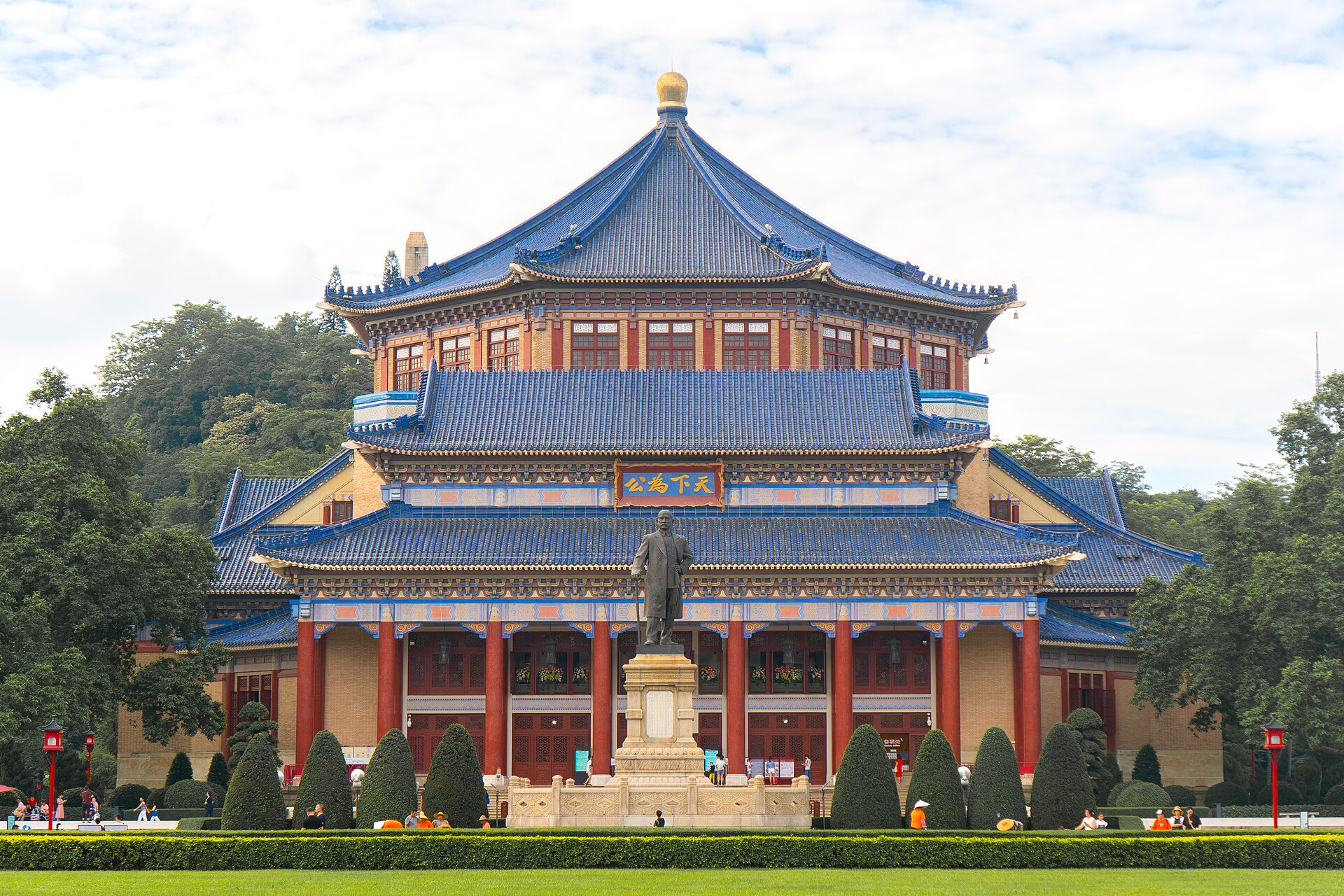
The Nanyue King Museum is built over the 2,000-year-old tomb of a Nanyue king uncovered in the middle of the city, displaying burial treasures such as a jade burial suit sewn with silk thread. The tomb exhibition area costs ¥10, open 09:00-17:30; take Line 2 to Yuexiu Park, Exit E. The Sun Yat-sen Memorial Hall is an octagonal building with a blue-tiled roof, one of the city's most photogenic landmarks; entry ¥10, open 09:00-17:30, on Line 2 at Sun Yat-Sen Memorial Hall station. Both sit in Yuexiu and pair into a single day.
Guangzhou is the home of Cantonese food, and Beijing Road is one of the best places to eat the full range — from historic teahouses to roadside snacks.
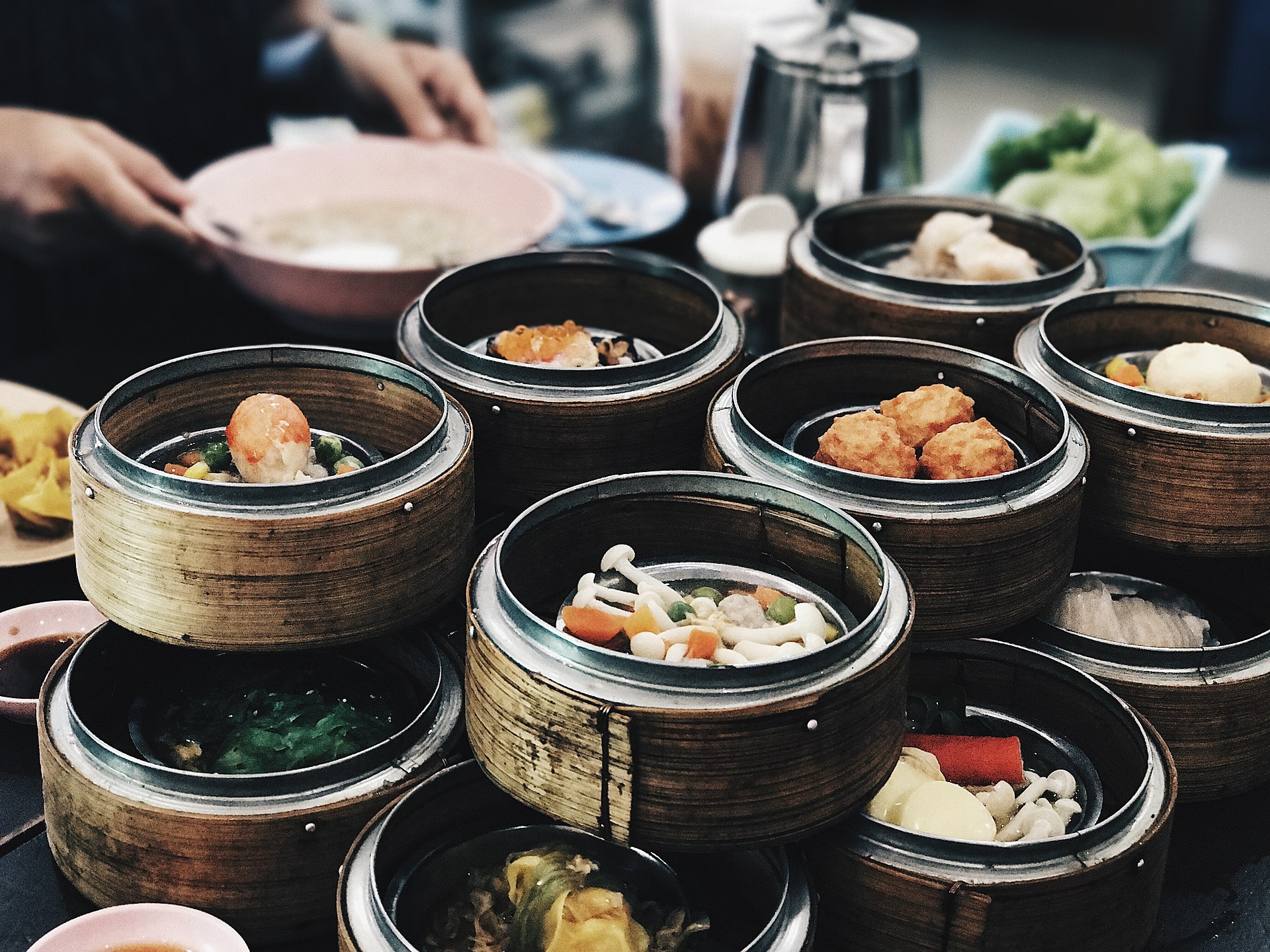
Dim sum and "yum cha" (tea with dim sum) are at the heart of Cantonese culture. Around Beijing Road there are legendary old teahouses such as Tao Tao Ju (陶陶居, founded 1880) and Dian Dou De (点都德) for a morning of dim sum the way Guangzhou locals do it — har gow, siu mai, steamed buns and cheung fun. A meal runs roughly ¥50-100 (~฿250-500) per person. More at the Guangzhou dim sum and yum cha guide.
Walk the pedestrian street and you will find an endless run of Cantonese snacks — cheung fun (steamed rice rolls), shrimp wontons, fish balls, and the famous double-skin milk dessert (双皮奶) done well at several long-established shops in the area. Snacks generally run ¥10-30 (~฿50-150) a plate, perfect for grazing as you shop. For what to try, see Guangzhou street food and the complete Guangzhou food guide.
This is a central base where you can walk to the old town and the shopping from the hotel door — with hotels at several price points near the metro.
The strongest argument for basing yourself in Beijing Road / Yuexiu is that you get a central location at a lighter price than the business district. Wake up to dim sum, spend the day walking the old town and temples, shop the pedestrian street in the evening, and the Lines 1/2 station at Gongyuanqian takes you to other districts or out to the airport and railway stations. If your trip is mostly about the old town and the food rather than skyscrapers, the area is good value and a lot of fun.
One thing worth knowing: the pedestrian street is busy and noisy at night. If you sleep lightly, pick a hotel with rooms set back into a lane or on a higher floor — you keep the good location but get a quieter night.
Or read the individual hotel reviews for properties on Beijing Road:
The heart of the area is Gongyuanqian station on Lines 1/2, a major interchange. Within the area, walking is easiest because the sights sit close together.
09:00 — Start at a historic teahouse in the area with a Guangzhou-style morning of dim sum and tea.
10:00 — Walk the Beijing Road pedestrian street, stopping at the ancient road under glass in the middle.
11:00 — Carry on to the Temple of the Six Banyan Trees (see the Flower Pagoda), then over to Guangxiao Temple nearby.
12:00 — Walk south to the riverside for the granite Sacred Heart Cathedral on Yide Road.
12:45 — Lunch on Cantonese snacks or cheung fun in the area.
Follow the half-day route above through the morning, then continue:
13:30 — Take Line 2 to Yuexiu Park station, walk into the park and photograph the Five Rams Statue.
14:30 — Climb Zhenhai Tower (the Guangzhou Museum) for 2,000 years of city history.
15:30 — Continue to the Nanyue King Museum for the royal tomb and the jade burial suit.
16:30 — Stop at the Sun Yat-sen Memorial Hall to photograph the octagonal blue-roofed building.
18:00 — Back to the Beijing Road pedestrian street for dinner and an evening walk under the lights.
Beijing Road / Yuexiu pairs in one trip with Shamian Island and the Chen Clan Ancestral Hall — see the full list at Guangzhou's top attractions and the complete Guangzhou city guide.