Home Guangzhou Must-Eat Dishes China About
Home  ›  China  ›  Guangzhou  ›  Street Food
China · Guangzhou Food Guide · 2026

Guangzhou Street Food
Where the Locals Actually Eat

There's a saying: "to eat, go to Guangzhou" (食在广州). But the best of it isn't on the famous pedestrian streets. This guide tells you which strips are the tourist front line, which back lanes the locals queue in, and exactly where to find the ¥5 cheung fun that beats every neon-signed restaurant.

Before You Go

The honest version of where to eat

Picture this: you step off the metro into the old Liwan district, turn down a narrow lane where every sign is in Chinese, and an auntie is ladling soy sauce over a sheet of silky rice noodle while the locals slurp fish-ball noodles on plastic stools. That's the Guangzhou the Cantonese-food capital owes you — not a neon-lit restaurant on a tourist drag.

Guangzhou has its famous pedestrian streets — Shangxiajiu and Beijing Road — and they're handsome and worth a wander. But here's the honest part: the food on those two main strips is built for visitors. Real Guangzhou eats in the Liwan back lanes — Xihua Road, Baohua Road — and on the Wenming Road dessert street. We'll take you through seven places and tell you the upside and the catch of each. For the dishes themselves first, read it alongside our Guangzhou must-eat dishes guide.

7 Food Destinations

Street by street, honest and current

From the main tourist drags to the back lanes where locals genuinely eat
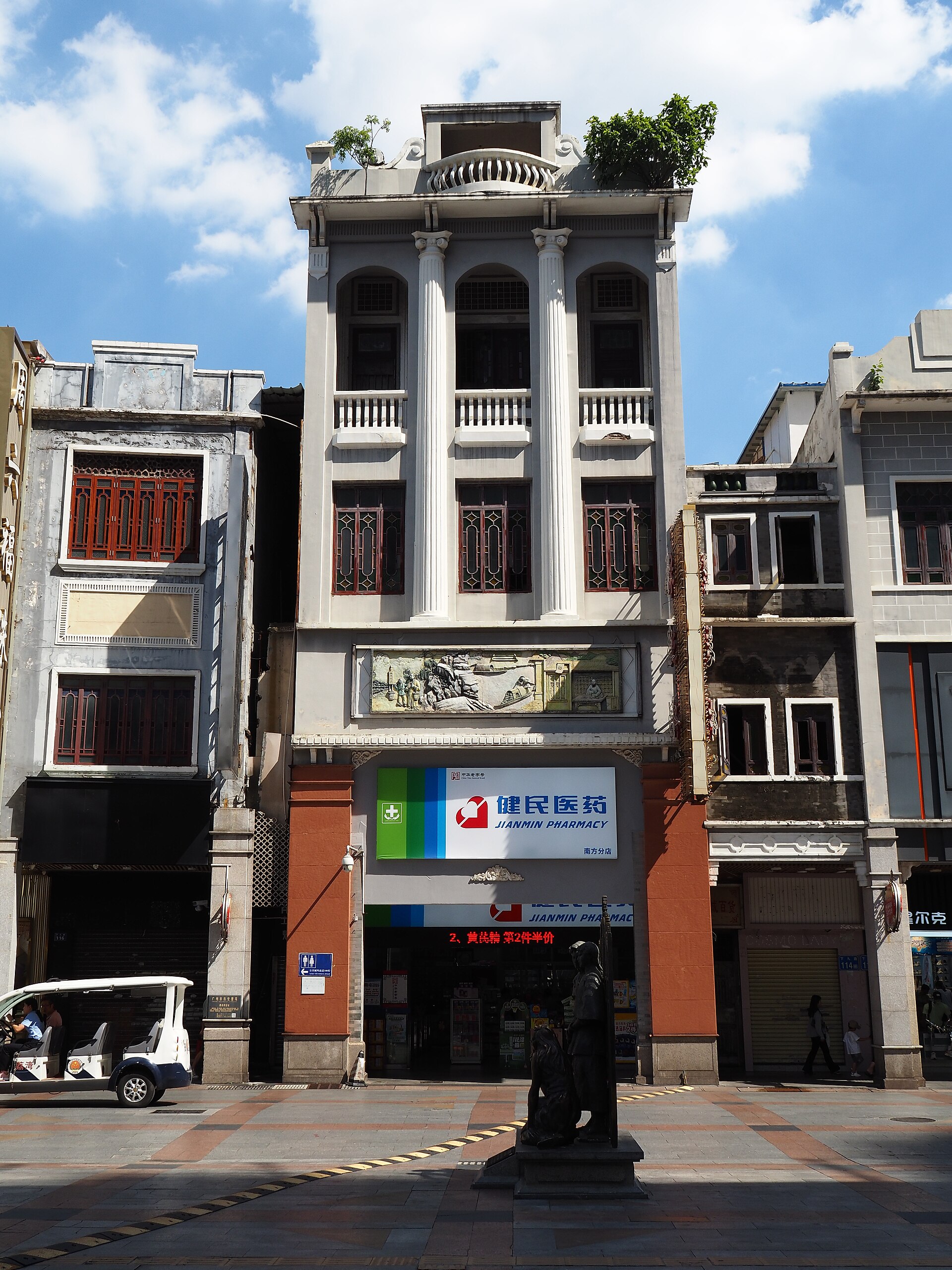
Qilou (騎樓) arcade buildings on Shangxiajiu Pedestrian Street in Liwan, Guangzhou — colonnaded Lingnan-meets-European facades with Chinese pharmacy signage 1
Main Pedestrian Street · Touristy
Shangxiajiu — The Arcade Icon
上下九 · Liwan District · Metro Line 1, Changshou Lu Station

This is Guangzhou's icon pedestrian street — opened in 1995 as China's first, running 1.2 km through the old Liwan district. Both sides are lined with qilou (騎樓), the arcaded shop-houses that fuse Lingnan architecture with European colonial influence, leaving covered walkways to stroll under. It's at its prettiest after dark, when neon signs and red lanterns light up together.

The street holds some genuine institutions: Tao Tao Ju (陶陶居), over a century old, famous for its har gow (shrimp dumplings) and pineapple buns; and Guangzhou Restaurant (广州酒家), the home of Wenchang chicken. Around them, walking-snack spots like Yin Ji fresh-shrimp cheung fun and Nanxin milk desserts are worth seeking out — but choose your stall carefully.
Metro: Line 1, Changshou Lu, Exit 1 · 5 min walk
Cost: ¥10–40 per snack (~฿50–200) · teahouses ¥60–150
Best time: 9 am (teahouses open) or after 5 pm (lights on)
Payment: WeChat Pay / Alipay / cash RMB
Heads up: The main street is a tourist zone and noticeably pricier than the Liwan lanes. Locals come more to photograph the architecture than to eat. The genuinely good food is in the side alleys — if you want better value, turn into nearby Xihua Road or Baohua Road (see 3–4).
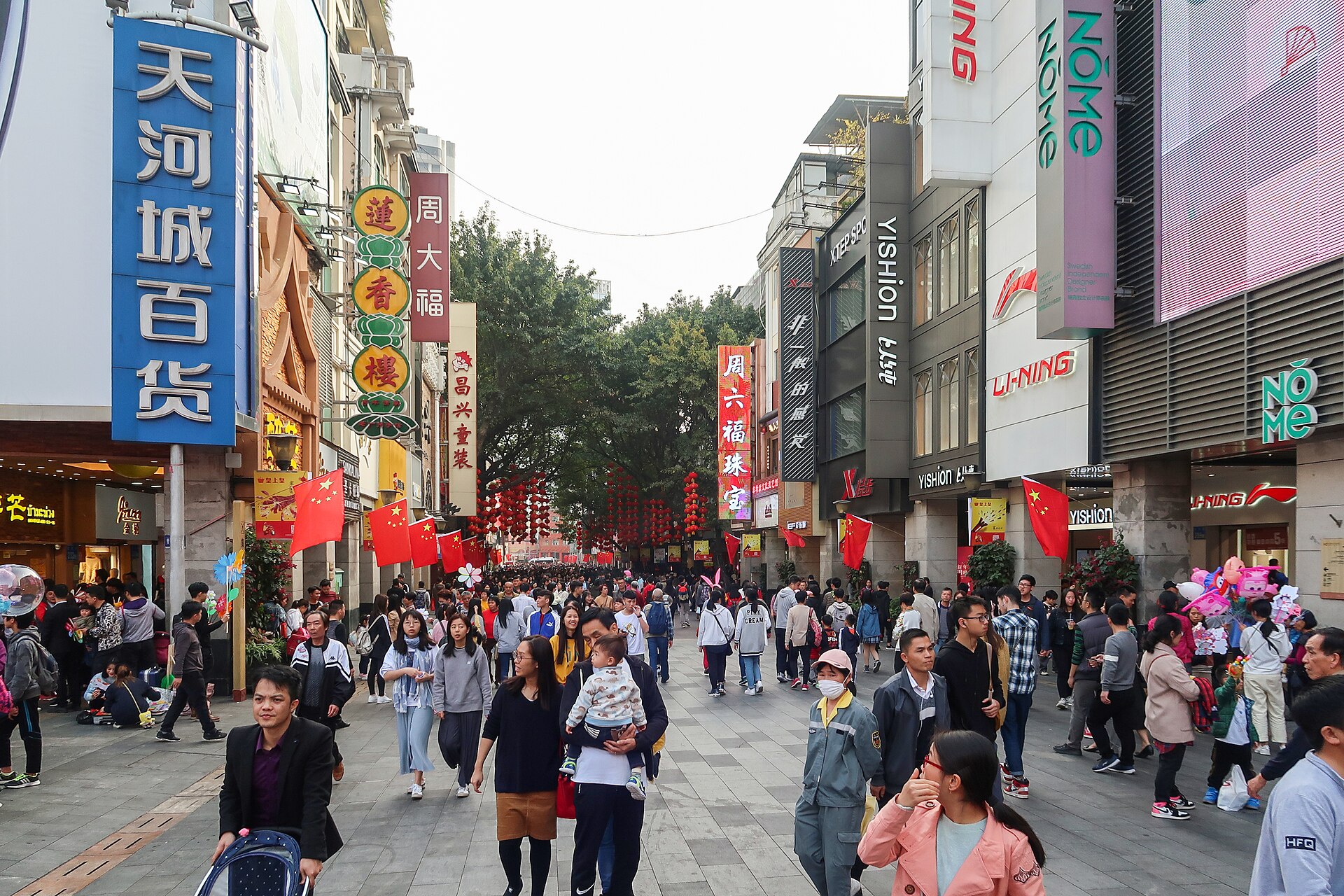
Beijing Road (北京路) Guangzhou — a busy pedestrian shopping street with red lanterns and flags overhead, Chinese department-store signs, and dense crowds 2
Pedestrian Street · 2,200 Years of History
Beijing Road — The Archaeological Street
北京路 · Yuexiu District · Metro Lines 1/2, Gongyuanqian, or Line 6, Beijing Lu

Beijing Road is Guangzhou's oldest commercial artery, trading since the Tang Dynasty. The thing everyone stops for is the archaeological glass floor set into the middle of the street — look down and you see eleven layers of ancient road surface stacked beneath you, from the Tang dynasty to the Republican era, 2,200 years of pavement underfoot. The street was pedestrianised in 1995 and runs about 1.5 km.

Walking snacks here lean classic-tourist: chestnuts roasting in woks of hot sand, fresh-pressed sugarcane juice, cheung fun and general Cantonese nibbles. The neon at night is genuinely lovely for a post-dinner stroll — but most of the food is chains and visitor-facing stalls rather than serious eating.

Metro: Lines 1/2 Gongyuanqian, or Line 6 Beijing Lu
Cost: ¥10–40 per walking snack (~฿50–200)
Best time: After 6 pm, when the neon comes on
Payment: All methods, including Visa/MC at larger shops
Straight talk: Beijing Road is great for a stroll, the glass-floor archaeology, and shopping — but if you came for serious street food, you'll be disappointed. The eating here is tourist-priced and tourist-aimed. See the history, then go eat for real in the Liwan lanes.
3
Where Locals Eat · Best Value ⭐
Xihua Road — The Living Food Museum
西华路 · Old Liwan · Metro Lines 1/8, Chen Clan Academy, Exit F

If you only get one eating session in Guangzhou, make it this one. Xihua Road is a 1.5 km food corridor that locals call a "living museum of flavours" — roughly 70% of the vendors have been trading for over 20 years, and several are listed as Guangzhou intangible cultural heritage. This is not a curated tourist street; it's where the neighbourhood eats every day.

What to hunt down: Niulao (牛佬) beef-offal soup — a broth simmered for hours over a coal fire, with crunchy tripe and tender intestine, eaten with sweet-sour pickled radish. Fang Ji (芳记) cheung fun — rice rolls filled with beef and pork, made to order, about ¥5 (~฿25), cash only. Fu Ji (富记) fish-ball noodles — bouncy fish balls, crisp fish skin, a clean sweet broth, around ¥10 (~฿50). And Tengyuan for pan-fried buns to pair with that offal soup.

Metro: Lines 1/8, Chen Clan Academy, Exit F · 5 min walk
Cost: ¥5–20 per item (~฿25–100) · ¥30–50 to graze full
Best time: 9–11 am (short queues) or late after 10 pm
Payment: WeChat Pay / cash (older shops often cash only)
Local's tip: Menus on Xihua Road are Chinese-only with no English. Use Google Translate's camera mode, or just point at what the person beside you is eating. A ¥40 feast here beats a ¥150 meal in the tourist zone hands down — and the queues at the famous stalls move fast.
4
Back Lanes · The Real Neighbourhood
Baohua Road & the Liwan Back Lanes
宝华路 · Liwan, near Shangxiajiu · Metro Line 1, Changshou Lu

Baohua Road and the lanes around it are the "backyard" of the Shangxiajiu district — a few minutes' walk off the main pedestrian street and into a different world, the one Guangzhou actually eats in. No neon laid on for tourists, just small shops that have been there a long time.

What to try around here: luobo niuza (萝卜牛杂) — beef offal and white radish stewed in a spiced broth, ordered by the cup, sauced and eaten hot on the move; it's the city's signature street snack. Jizai bing (鸡仔饼) — a crisp Cantonese pastry, sweet-savoury and rich with lard and sesame, the classic Liwan souvenir. Fish balls, fried or poached, on skewers for walking. And late at night, Baohua Road has Shahe rice-noodle (沙河粉) shops open into the small hours for the post-midnight hungry.

Metro: Line 1, Changshou Lu — walk on from Shangxiajiu
Cost: ¥8–25 per item (~฿40–125) · cheap and real
Best time: Afternoon, evening, and late night
Payment: Mostly WeChat Pay or cash
How to do it: There's no single check-in spot here — the charm is wandering into a lane, spotting something good, and pointing. If you're already at Shangxiajiu, set aside an hour to drift into Baohua Road. You'll get a completely different Guangzhou from the one on the main street.
5
Sugar-Water Street · Local Legend
Wenming Road — The Sugar-Water Street
文明路 · Yuexiu, near Beijing Road · Metro Line 6, Beijing Lu

Cantonese people treat dessert — tong sui (糖水, "sugar water") — as a way of life, and Wenming Road is Guangzhou's most famous dessert street. Qilou arcades on both sides are packed with dessert houses that have been open for decades.

The thing to order is shuang pi nai (双皮奶) — double-skin milk, a warm steamed buffalo-milk custard with the silky wobble of panna cotta. The famous shop is Baihua (百花甜品), which has four branches, two of them right at the Wenming Road junction; its egg-milk custard is the standout. Nanxin (南信牛奶甜品) is the other double-skin-milk institution. And if the crowds at the famous spots feel like too much, Zhenzhen (珍珍甜品) is calmer and consistently excellent — locals rate its fragrant coconut milk and taro balls.

Metro: Line 6, Beijing Lu, or walk on from Beijing Road
Cost: ¥10–20 per bowl (~฿50–100)
Best time: Evening through late night (dessert houses open late)
Payment: WeChat Pay / Alipay / cash
Local custom: Don't expect Western-style service — when it's busy you'll often share a table (搭台, da tai) with strangers. That's normal at Guangzhou's old dessert houses. Sit, order, eat, move on for the next person. Nearby you'll also find claypot-rice (煲仔饭) shops for something savoury before the sweet finish.
6
Night Market · Late-Night Eating
Taiping Night Market
太平夜市 · Liwan District · near Xihua Road

If Xihua Road is daytime Liwan, Taiping Night Market is its night shift — a late-eating market where locals pull up plastic stools on the pavement, order charcoal-grilled skewers (烧烤) and order cold beer, and the place hums well past sunset.

What lines the stalls: beef, chicken and offal on skewers grilling over charcoal; grilled oysters with garlic; deep-fried bits; charred greens; and an endless run of Cantonese nibbles. It's one of the best places to watch the old district's nightlife in action.

An honest caveat: Guangzhou's night markets get periodically reorganised, so stalls may shift location or change hours. Check recent reports or ask locals before making a dedicated trip. If Taiping is quiet, look for grill stalls in the lanes around Xihua Road and Baohua Road instead.
Metro: Lines 1/8, Chen Clan Academy, then walk into Liwan
Cost: ¥3–15 per skewer (~฿15–75) · ¥40–70 to fill up
Best time: After 8 pm, once the stalls get going
Payment: Mostly WeChat Pay or cash
Caveat: Night-market locations and hours change with city regulation — verify before you go. With late-night grills, pick the stall with a queue and fast turnover for the freshest food.
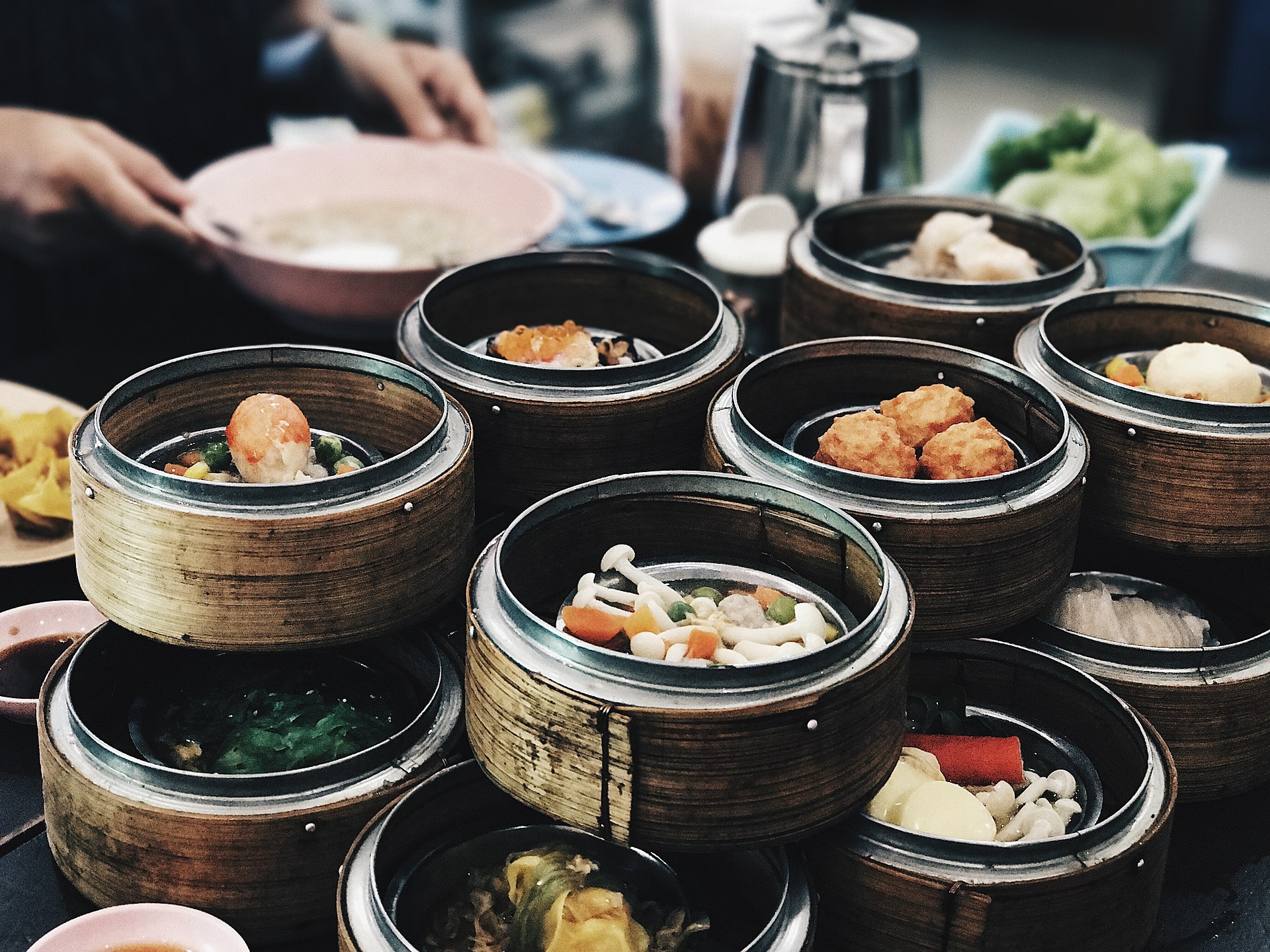
Cantonese dim sum in stacked bamboo steamer baskets — shrimp har gow, siu mai and steamed dishes on a Guangzhou teahouse table 7
Indoor · Air-Conditioned · All-Weather
Mall Food Halls — The Locals' Backup Plan
Tianhe · Taikoo Hui · K11

Guangzhou is hot and humid for most of the year, with rain that arrives without warning. The city's mall food halls aren't a tourist consolation prize — they're how Guangzhou actually eats when the weather won't cooperate.

Tianhe, the modern downtown core, has several big malls plugged straight into metro stations like Tianhe Sport Center and Shipaiqiao. Taikoo Hui and K11 hold food halls that gather Cantonese, Sichuan and good dim-sum restaurants under one air-conditioned roof, with seating. The upside: you can try dim sum without the hour-long queue of the legendary teahouses, and there are far more picture menus and English than in the lane shops — ideal for a rainy lunch.

Metro: Lines 1/3, Tianhe (Tianhe Sport Center / Shipaiqiao)
Cost: ¥40–150 per person (~฿200–750), depending on restaurant
Best time: Lunch on a rainy day, or afternoons to dodge queues
Payment: All methods, including Visa/MC
Local's tip: Food halls are perfect for an easy dim-sum sitting with picture menus and a break from the heat. Many Tianhe malls connect directly to metro stations — you can come up from underground without stepping into the sun or the rain.
Quick Tips

Know before you walk out the door

📱
Set up WeChat Pay before you leave the hotel
Since 2023, foreign visitors can link a Visa or Mastercard directly to WeChat Pay or Alipay. Do it before your first meal — small lane shops often don't take cards, and some old cheung fun stalls are cash only.
🌡
Hot and humid most of the year
Guangzhou is seriously hot and humid, especially April–September. Street eating at midday is uncomfortable. Go in the morning (9–11 am) or after 5 pm, and retreat to a mall food hall on rainy days.
🗣
Little English in the lanes
Most shops in the Liwan lanes have Chinese-only menus. Google Translate's camera mode (point at the menu) works well, as does showing a photo of what you want. Mall food halls usually have picture menus.
🕐
Weekdays beat weekends
Shangxiajiu and Beijing Road get hammered on weekend afternoons. Visit the Liwan lanes on a weekday morning or early evening for seats and shorter queues — same food, a fraction of the crowd.
🥢
Eat cheung fun straight off the steamer
Cheung fun (rice rolls) are best the moment they're steamed and doused in soy. On Xihua Road, Fang Ji makes them to order for about ¥5 — don't let them cool, the rice sheet turns gummy.
🧭
The old city is all walkable
Shangxiajiu, Baohua Road, Xihua Road, Beijing Road and Wenming Road all sit in the old Liwan–Yuexiu districts, close together. You can plan the whole circuit in one day, hopping short links on Metro Line 1.
Frequently Asked

Questions people ask before they eat

How much does street food cost in Guangzhou?
Surprisingly little if you know where to go. On Xihua Road and in the Liwan lanes, cheung fun is around ¥5 (~฿25), a bowl of fish-ball noodles ¥10 (~฿50), and a full grazing session ¥30–50 per person (~฿150–250). Desserts on Wenming Road run ¥10–20 a bowl (~฿50–100). Shangxiajiu and Beijing Road are pricier because they're tourist streets, but you can still find walking snacks in the ¥10–40 range (~฿50–200).
Do locals actually eat on Shangxiajiu and Beijing Road, or is it just for tourists?
Honestly, these two main pedestrian streets are fairly touristy. The food on the main drags is pricier and the quality is hit-or-miss. Guangzhou locals mostly come to photograph the qilou arcade architecture rather than to eat. For the genuinely good food, duck into the surrounding Liwan back lanes — Xihua Road and Baohua Road — where shops have been open 20 to 30 years and locals queue for real.
What should I try on Wenming Road dessert street?
Wenming Road is Guangzhou's sugar-water street (糖水街), lined with old dessert houses. The thing to order is shuang pi nai (双皮奶) — double-skin milk, a warm steamed buffalo-milk custard with the texture of panna cotta. The famous shops are Baihua (百花甜品) and Nanxin (南信牛奶甜品) at the Wenming Road junction — long but fast-moving queues. If you want to skip the chaos, Zhenzhen (珍珍甜品) is calmer and consistently well made. Expect to share a table with strangers.
Do I need cash in Guangzhou or does WeChat Pay work?
Most vendors accept WeChat Pay and Alipay, especially in markets and on food streets. Since 2023, foreign visitors can link a Visa or Mastercard directly to WeChat Pay or Alipay — set this up and test it before leaving your hotel. Cash RMB always works as a fallback, but some small lane shops, such as the old cheung fun stalls on Xihua Road, are cash only — keep small notes on you.
What is the best time of day to walk Guangzhou's food streets?
The Liwan lanes and Xihua Road are best in the morning, 9–11 am (shops just opening, short queues), or late at night after 9 pm (the local late-eating scene). Wenming Road's desserts pick up in the evening through late night. Shangxiajiu and Taiping Night Market look their best after 5 pm when the lights come on. Avoid weekend afternoons and Chinese national holidays (Spring Festival, Golden Week) when the streets are packed.
How do I get to the Liwan lanes (Xihua Road) from central Guangzhou?
Easy. Take the metro to Chen Clan Academy Station (陈家祠) on Line 1 or Line 8, leave via Exit F, and walk about 5 minutes to the start of Xihua Road. Shangxiajiu is one stop further at Changshou Lu (Line 1), and Beijing Road is at Gongyuanqian (Lines 1/2) or Beijing Lu (Line 6). All of it sits in the same old-city district — you can walk the whole circuit in a single day.
Klook

Guangzhou Food Walking Tours
with a local guide who knows the Liwan lanes

Skip the guesswork and the tourist traps. Local food tours cover the old Liwan district — fresh cheung fun from veteran stalls, slow-simmered beef-offal soup, the Shangxiajiu back alleys — with someone who knows which shopfront is the real deal. From around ¥150–300 per person (~฿750–1,500).

Browse Guangzhou Food Tours on Klook →
Wherebest is a Klook affiliate partner — we may earn a commission when you book through our links, at no extra cost to you.