If Chiang Mai has a heart, it is the walled square inside the moat — the Old City, where you walk from Tha Phae Gate to one ancient temple after another, past the Sunday Walking Street, lane cafés and small shops serving khao soi. Everything is within walking distance.
Picture a city drawn as a perfect square, ringed on all four sides by a water-filled moat, with stretches of old brick wall and original gates still standing here and there. Inside it are golden temple roofs, ancient chedis, and narrow lanes threaded with guesthouses and cafés. That is the Chiang Mai Old City, the walled area roughly 1.5 km on each side that has been the historical and cultural centre of the city since the Mangrai dynasty founded it in 1296 as the capital of the Lanna kingdom.
For visitors the heart of it is Tha Phae Gate on the eastern side, the restored gate everyone uses as a meeting point and reference. From there you walk in along Ratchadamnoen Road and reach Wat Chedi Luang, the huge partly-collapsed chedi in the centre, then Wat Phra Singh, the royal temple at the far end, and Wat Chiang Man, the oldest temple in Chiang Mai, to the north. All of them sit inside the walls and connect on foot over the course of a day.
Here is the appeal: you want a city you can step into and explore on foot, without spending the whole day in a car crossing town. The Chiang Mai Old City is the answer to that. It is small enough to walk, yet packed with enough temples, markets, cafés and khao soi shops to keep you busy for several days. This is the Chiang Mai you come to for history, slow coffee and an unhurried pace, in a district where almost everything is a short walk away.
The Old City does not trade on luxury; it trades on a slower rhythm — old temples, shaded lanes, small cafés and an evening market that is still alive. Step out and you can walk to almost everything.
The appeal of the Old City is a living historical centre that is genuinely easy to explore on foot. Turn out of one lane and you pass an old temple with monks on their alms round; walk a little further and there is a café in an old wooden house where the barista takes the coffee seriously; one lane over there is a khao soi shop with a queue out front. Come evening, several streets close to traffic and become a walking market. This is where Chiang Mai locals and travellers who like to stay a while actually live, not merely where they stop for a photo.
The Old City is the best starting point for a first trip, because almost everything you need to see is clustered inside the walls and reachable on foot. Land, base yourself in the Old City for a night or two, walk the temples, do a walking market, try khao soi, and save the day trips to Doi Suthep or an elephant sanctuary outside town for later. More at the Chiang Mai first-timer's guide.
If you have come specifically for temples and history, the Old City is exactly where you want to be. Inside the walls there are dozens of old temples, from the grand ones like Chedi Luang and Phra Singh to small, quiet temples down side lanes that are just as beautiful. You can walk temples all day because they are so close together — just remember to dress modestly and take your shoes off before entering a prayer hall.
The strength of staying inside the walls is that you wake up already in the middle of everything, and you can walk to breakfast or to a temple without calling a car. The Old City is dense with small, characterful guesthouses and boutiques at friendly prices, ideal for travellers who would rather explore on foot than ride. See the areas compared at where to stay in Chiang Mai.
During Yi Peng and Loy Krathong (around November, by the lunar calendar) the Old City is lit with lanterns across the whole district, and Tha Phae Gate and the temples become busy, much-photographed spots. If you are planning your trip around this, book a stay inside the Old City well ahead. Read the festival details at the Yi Peng Chiang Mai guide.
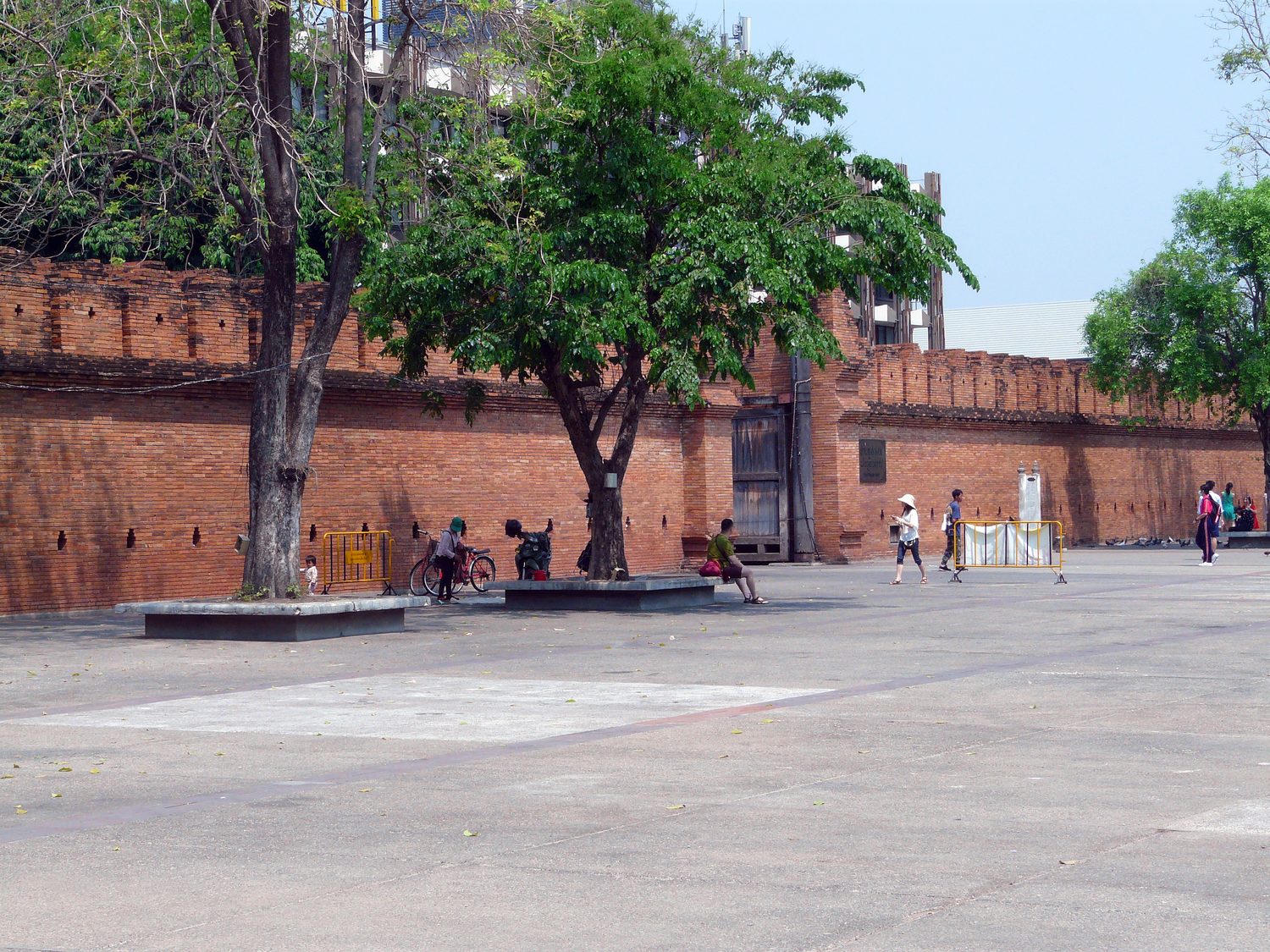
The restored eastern gate, the reference point and meeting spot everyone uses. The plaza in front is usually full of pigeons and people taking photos, and on Sunday evenings it is the starting point of the Walking Street. Free to wander, no entry fee. It works as the natural place to begin exploring the Old City because it is easy to find and sits right on the road that follows the moat.
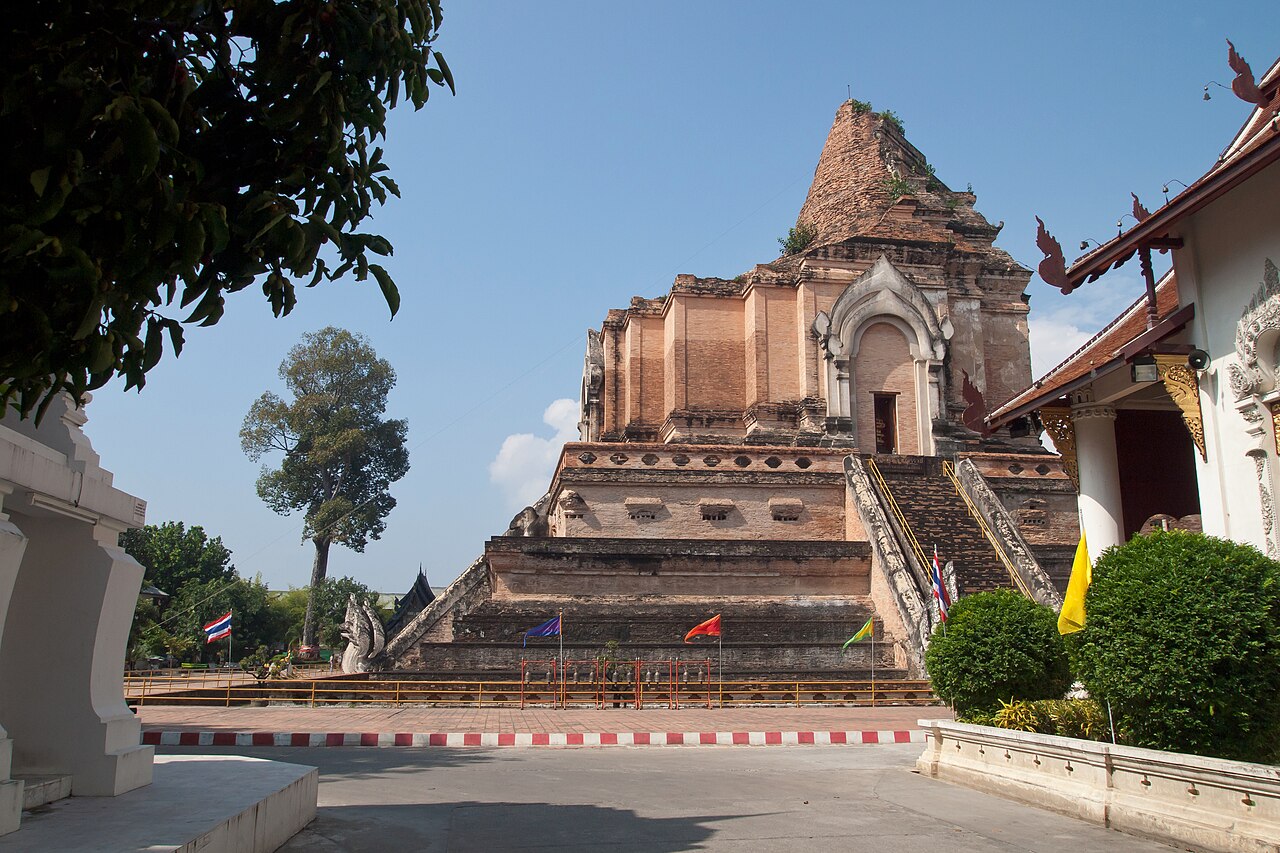
The temple in the centre of the Old City, built in the Lanna era with a once-towering chedi — it was the tallest structure in the city before the top was brought down by an earthquake long ago, leaving a massive base that still conveys its scale. Entry is around ฿40 for foreign visitors (locals are often not charged or pay less — check at the entrance). Open daily roughly 8:00–17:00. Read more at the Wat Chedi Luang guide.
The royal temple at the western end of Ratchadamnoen Road, known for its Lai Kham viharn with old mural paintings and Lanna woodcarving. It is one of the most beautiful and important temples in Chiang Mai. Entry runs around ฿20–40, open daily roughly 8:00–17:00. Dress modestly. More at the Wat Phra Singh guide.
The oldest temple in Chiang Mai, in the northern part of the Old City, built when King Mangrai founded the city. It is known for its elephant-buttressed chedi and old, revered Buddha images, and it is quieter and less crowded than the main temples — a good choice if you want to see a temple without the crush. Entry is free or by donation; open during the day.
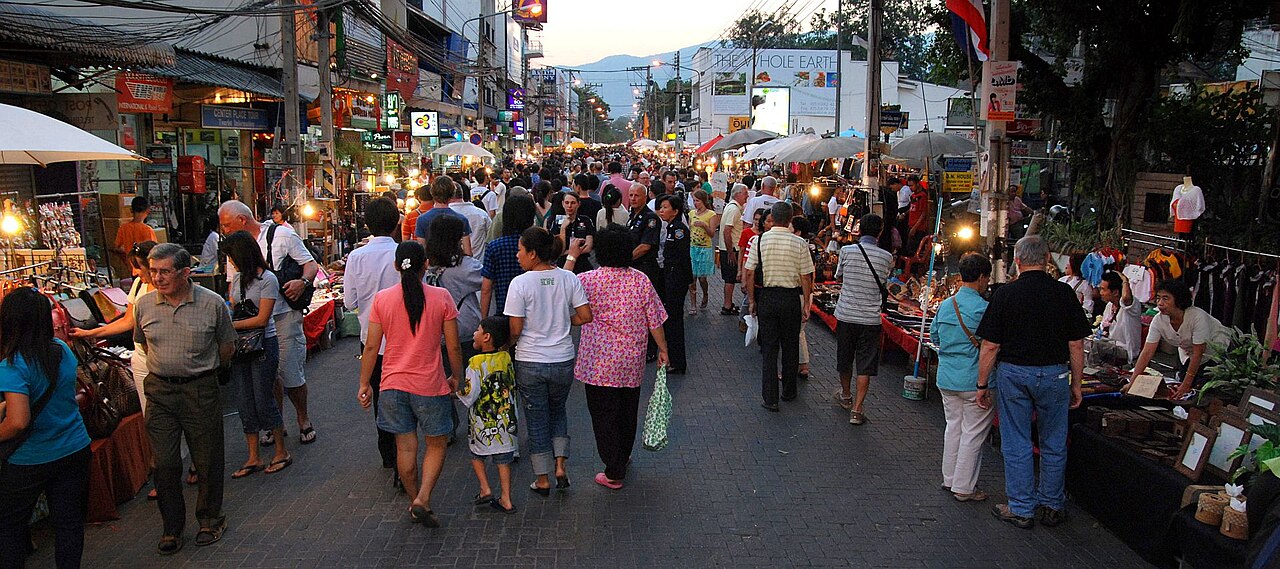
Every Sunday evening, Ratchadamnoen Road from Tha Phae Gate into the centre of the Old City closes to traffic and becomes the biggest walking market in Chiang Mai, with crafts, handmade goods, local food and street musicians. It runs roughly 16:00–22:00. To be straight about it, it gets very packed in the early evening — if you dislike crowds, go early or late. More at the Sunday Walking Street guide.
On Saturday evenings there is a second walking street on Wualai Road, just south of the walls, leaning toward silverware, lacquerware and the crafts of a long-established artisan community. It is a touch less crowded than the Sunday one and has a different feel, open roughly 16:00–22:00. Worth it if your stay covers the whole weekend so you can do both markets.
From old khao soi shops to cafés in wooden houses and food along the walking streets, the Old City is where you eat real northern Thai food and sip slow coffee, all within walking distance.
Khao soi is the dish to try most in Chiang Mai — egg noodles in a coconut-curry broth with crispy fried noodles on top, eaten with pickled greens and shallots. Good khao soi shops are found both inside and around the Old City, at roughly ฿50–80 a bowl. Beyond khao soi there is nam phrik num (green chilli dip), khaep mu (pork crackling), sai ua (northern sausage) and khanom chin nam ngiao to try. See the best spots at the Chiang Mai khao soi guide, and the wider picture at the Chiang Mai food guide.
Chiang Mai is a serious coffee city, and the Old City hides plenty of small cafés down its lanes and in old wooden houses — from roasters who care about northern hill-grown beans to relaxed spots good for working or resting your legs after a temple walk. Coffee typically runs ฿60–120 a cup. If you want a denser, more design-led café scene, the Nimman area outside the walls has more of it — see the Nimman guide.
On Saturday and Sunday evenings the walking markets are a moving street-food buffet — sai ua, khao soi, northern sweets and local desserts to sample one at a time for a few baht each. In the mornings, look for a fresh market near the Old City to try sticky rice and local breakfasts. It is the cheapest and most enjoyable way to eat. To plan a full day of eating and sightseeing, see the Chiang Mai first-timer's guide.
Chiang Mai's best walkable base for travellers who lead with temples and culture and want to walk to everything — guesthouses and small boutiques inside the walls at friendly prices.
The strongest argument for staying in the Old City is simple: you wake up already in the middle of everything, and you can walk to temples, markets and cafés without calling a car. Inside the walls there is a dense cluster of small, characterful guesthouses and boutiques, from budget rooms to lovely little hotels in old wooden houses. It suits travellers whose trip is built around temples and culture and who would rather explore on foot than ride.
The honest trade-off: the Old City is not the district for hip cafés, big malls or nightlife. If that is what you want, the Nimman area just outside the walls to the west suits you better, full of cafés, restaurants and a newer generation of bars. For a calmer, riverside feel you can choose the Ping River side instead. But if the heart of your trip is temples and walking the Old City, staying inside the walls is the most worthwhile choice.
Want the whole-city picture and the sights outside the walls too?
The best thing about the Old City is that it is small enough to explore entirely on foot — the main temples and markets are all within walking distance. Chiang Mai has no metro or Skytrain. Getting around comes down to walking, the red songthaew (shared truck), Grab, and rented motorbikes.
08:30 — Start at Tha Phae Gate, photograph the plaza in front, then walk in along Ratchadamnoen Road.
09:00 — Reach Wat Chedi Luang and see the great chedi in the centre (entry around ฿40).
10:00 — Continue to Wat Phra Singh at the end of Ratchadamnoen Road and see the Lai Kham viharn.
11:00 — A coffee break in a lane café, with northern hill-grown beans (฿60–120).
11:45 — Lunch: khao soi at a well-known shop in or around the Old City to round off the half day.
If your visit lands on a Saturday or Sunday, save the evening for a walking market — it is the most rewarding way to end the day:
08:30 — Walk the temples as in the half-day route above (Tha Phae → Chedi Luang → Phra Singh).
12:00 — Lunch: khao soi and northern Thai food.
13:30 — Visit Wat Chiang Man to the north, then wander quieter lanes and cafés.
15:30 — Rest at your stay or sit in a café to escape the afternoon heat.
16:30 — Start the Walking Street (Ratchadamnoen on Sunday / Wualai on Saturday) and eat market food for dinner.
Want a longer, multi-day plan? See the Chiang Mai two-day itinerary, or plan the whole trip with the complete Chiang Mai city guide.