You have one weekend and you want the things that make Chiang Mai what it is — the Old City temples and Doi Suthep on Day 1, a morning with elephants at an ethical sanctuary on Day 2, then the Walking Street to finish. This plan maps the route and the timing so forty-eight hours covers it without a wasted hour.
Chiang Mai has more to do than two days can hold. But if a weekend is all you have, a few things are non-negotiable — the Old City inside its moat with its centuries-old Lanna temples, Doi Suthep looking out over the whole valley, and a few hours with elephants at a camp that treats them well. This plan gives Day 1 to the Old City and Doi Suthep, and the morning of Day 2 to the elephants, before closing the evening with the Walking Street and northern food.
It is built for travellers who are short on time — a quick weekend, or a first taste of the city before coming back for longer. What this plan deliberately leaves out is the full-day trips: Doi Inthanon, the Bua Tong sticky waterfall, or Pai and Chiang Rai (each one fills most of a day). If you want those, extend to three days or four days, which leave a day for a trip out of town.
The single most useful thing to do before you arrive: book an ethical elephant sanctuary at least a day or two ahead (the good ones fill fast), and try to line Day 2 up with a Saturday or Sunday so you can walk the Walking Street in the evening. For where to sleep, choose the Old City or around Tha Phae Gate, within walking distance of the temples and the market. See the Chiang Mai hotels list.
Handle these three in advance and the trip runs smoothly from the moment you land.
Ethical camps (no riding, no shows) are popular and fill fast. Book at least one or two days ahead and pick one that clearly explains how it cares for the elephants and lets them roam in a herd. Most include hotel pickup. See the elephant sanctuary guide for where to go.
The big market nights are Sunday (Ratchadamnoen Road) and Saturday (Wualai Road). If your trip hits a weekend, plan Day 2's evening around the market. If not, the Night Bazaar runs every evening instead. See the Walking Street guide.
Chiang Mai has no metro or skytrain — you get around by red truck (songthaew, about ฿30–50 per person shared), Grab, or a rented scooter. Much of the Old City is walkable; for Doi Suthep and the elephant camp you charter a red truck or join a tour. See the Chiang Mai city guide.
Lanna temples inside the moat in the morning, the city laid out below from Doi Suthep in the afternoon, and Nimman cafés with dinner to close the day.
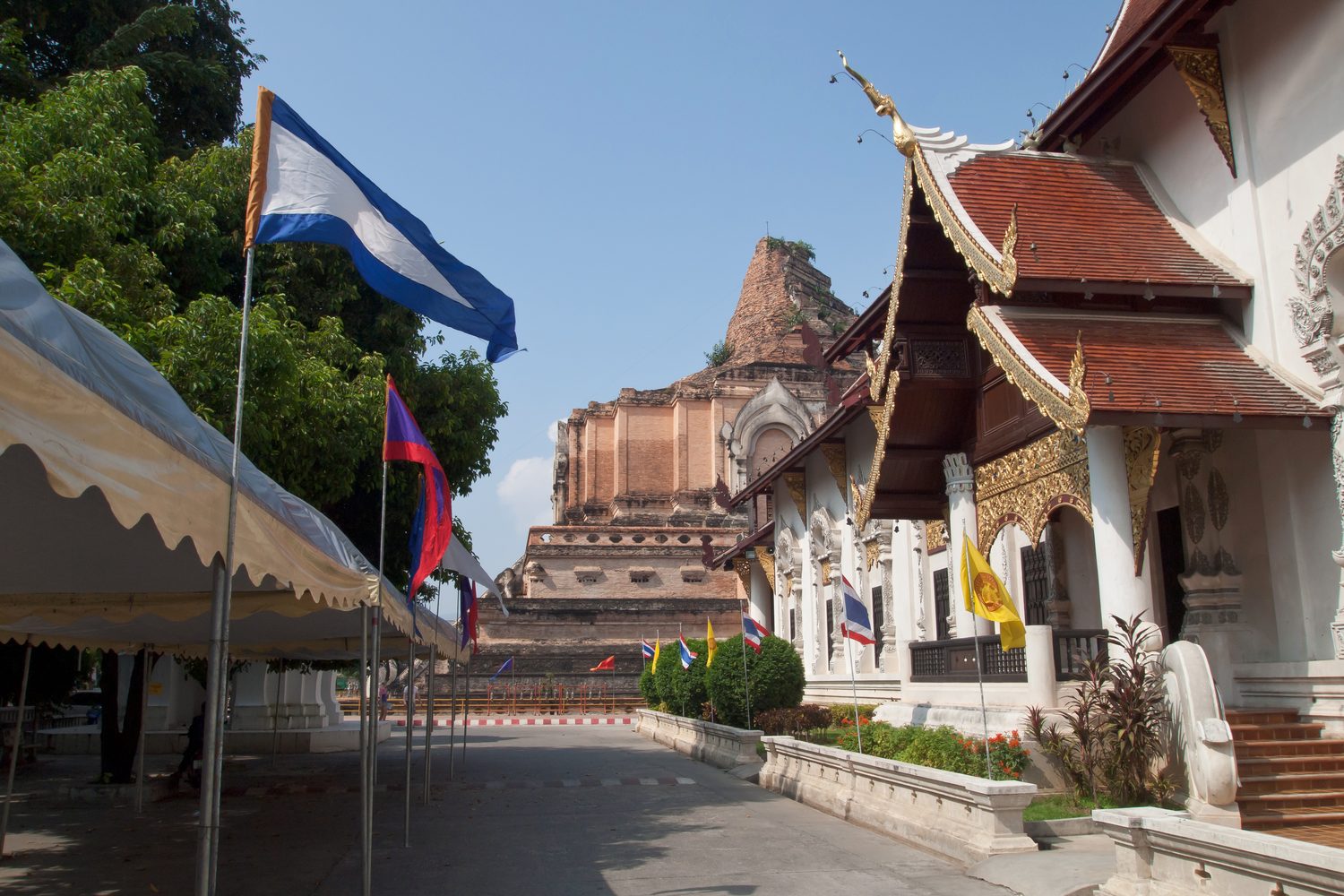
Start the morning easy inside the walled, moat-ringed Old City — the heart of Chiang Mai for more than 700 years. Begin at Wat Phra Singh, the city's principal Lanna temple, with its gilded Wihan Lai Kham hall and the revered Phra Singh Buddha. Spend about 45 minutes on the architecture and the murals, then walk on down Ratchadamnoen Road to Wat Chedi Luang, whose colossal brick chedi dates from the 15th century. Its upper section fell in an earthquake centuries ago, but what remains is still big enough to stop you in your tracks.
Smaller temples sit tucked down nearly every lane inside the moat, so dip into them as you go — the mood is quiet and shaded. Wander, take photos, and soak up the northern pace before lunch. Track down a bowl of khao soi, egg noodles in a coconut curry broth topped with crisp fried noodles — the dish of the north, and one to have at least once on this trip.
In the afternoon, head up the mountain to Wat Phra That Doi Suthep, the sacred temple that watches over the city from a ridge to the west, about 15 km from the moat. The drive up takes 30–40 minutes on a winding mountain road with fine views. At the base, climb the 306-step Naga staircase (or take the funicular if you'd rather) to the terrace and its golden chedi, gleaming in the afternoon sun.
The temple terrace has the best wide view of Chiang Mai — the whole city grid spread out below, with the airport in the distance. Come in the late afternoon before sunset and the low light sets the valley glowing. Walk the loop around the chedi, pay your respects, and take in the view for an hour or so before heading back down into town.
Close Day 1 in Nimman (Nimmanhaemin), the hip district next to Chiang Mai University packed with cafés, restaurants and design shops. If you still have energy in the early evening, drop into one of the Nimman cafés for a northern-roast coffee or an iced tea and rest your legs after the mountain. Chiang Mai is known for its hill-grown coffee and its good-looking cafés, so it's an easy place to sit a while.
Then find dinner around Nimman or the side lanes nearby — everything from northern Thai kitchens to casual rice-and-curry spots to international rooms. Walk it off along the Nimman sois, busy and bright under the evening lights, an easy way to end the first day before heading back to your hotel.
A half-day at an ethical elephant sanctuary in the morning, an afternoon to rest or have a massage, the Sunday Walking Street in the evening, and a northern Thai dinner to finish.
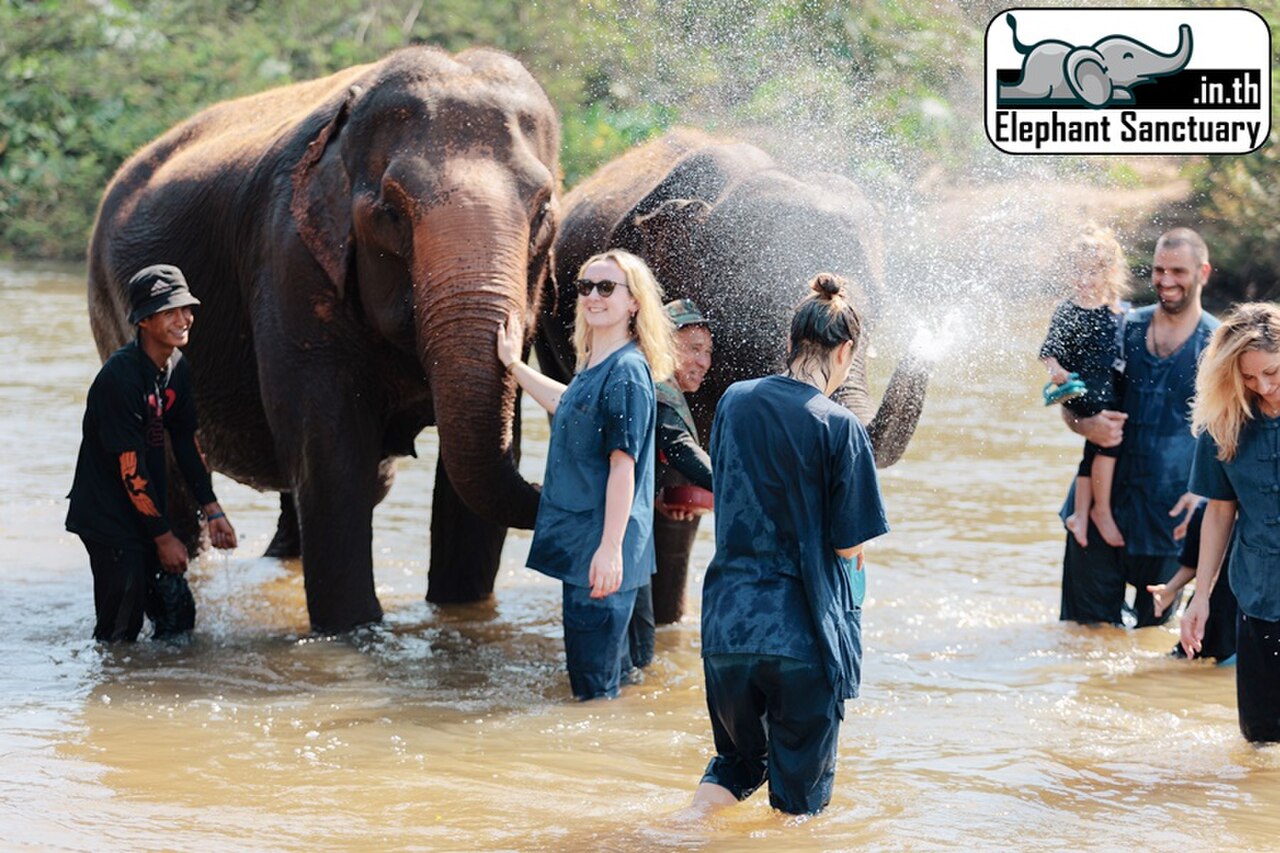
This morning has a single goal, done properly — time with elephants at a camp that cares for them well. Choose one with no riding and no shows, where the elephants roam freely in a herd. A morning half-day session is usually feeding the elephants, walking alongside them, and joining them for a mud bath or a river wash — close up, safely, and without harming the animals. Most sanctuaries are about 1 to 1.5 hours outside the city with morning hotel pickup, and the half-day groups generally get you back to town around midday or early afternoon.
Why a half-day? Because a 2-day plan needs the evening free for the Walking Street, so the morning half-day works better than a full-day visit — you get both the elephants and the market in one day. Pick a camp with a morning session that returns to the city by mid-afternoon.
Back from the sanctuary around midday or early afternoon, return to your hotel to shower and change, then take the afternoon easy. Chiang Mai is known for affordable massage and spa — an hour of Thai or foot massage is a good way to loosen up after a morning on your feet. Or, if you'd rather stay moving, drop into an Old City café for a coffee and a sit-down.
Save your energy for tonight, because the Walking Street means a lot of walking and a lot of eating. Keep the afternoon light so you're fresh for the market.
Close the trip with the best of Chiang Mai after dark — the Sunday Walking Street along Ratchadamnoen Road through the Old City, running from Tha Phae Gate into the moat. It's lined with craft and handmade goods, clothes, souvenirs and rows of northern food stalls on both sides. Graze, shop, and listen to the buskers — busy but unhurried. (If your trip lands on a Saturday instead, the Saturday Walking Street on Wualai Road is the smaller, easier-to-walk alternative.)
For dinner you can eat right there at the market, or stop at a northern Thai kitchen before or after the stroll — try a Lanna spread of sai ua (herb sausage), gaeng hang le (northern pork curry), nam prik num with crispy pork crackling, and sticky rice. It's the real taste of the north and a full way to end two days. If your trip doesn't hit a market night, the Night Bazaar runs every evening as an alternative.
These two days are already full, but if you're an early riser who walks fast, here is what you can slot in.
On Day 1, if you can wake early, start with a Nimman café and a cup of hill-grown coffee before heading into the Old City — an easy morning and a taste of the northern roast Chiang Mai is known for.
On any evening that isn't a market night, head to the street food around Chang Phueak Gate — the best of the city's after-dark eating, from khao soi to sai ua to small bites, all in one place.
For a deeper experience, a half-day Thai cooking class is well worth it — you make your own curry and khao soi. A good swap for the afternoon of Day 2.
For this plan, the Old City (inside the moat) or around Tha Phae Gate is the most practical base — walking distance to the temples and the Sunday Walking Street, with red trucks and Grab easy to flag down. Nimman is another good area if you're focused on cafés and evening dining. Mid-range hotels run about ฿900–2,000 per night. See the top Chiang Mai hotels.
Chiang Mai has no metro or skytrain — in town you use a red truck (a shared songthaew, about ฿30–50 per person; tell the driver your destination), Grab, or a rented scooter. Much of the Old City is comfortably walkable. For Doi Suthep and the elephant camp you charter a red truck or join a tour. More in the Chiang Mai city guide.
Pick an elephant camp with no riding and no shows that lets the elephants live freely — it supports proper animal care. Read the policy and the reviews before booking. See the list and what to ask in the elephant sanctuary guide.
| Category | Budget | Mid-range | Comfortable |
|---|---|---|---|
| Food (3 meals/day, incl. khao soi + northern dinner) | ฿250–400 (street food / markets) |
฿400–700 (restaurants + one northern dinner) |
฿700–1,500 (good restaurants + cafés) |
| Getting around town (red truck / Grab) | ฿150–250 (mostly shared red trucks) |
฿250–450 (red truck + Grab) |
฿500–900 (Grab / chartered vehicle) |
| Doi Suthep (transport + admission) | ฿150–250 (shared red truck + ฿30 entry) |
฿300–500 (chartered red truck, split) |
฿600–1,000 (Grab / private car) |
| Elephant sanctuary, half-day (incl. pickup) | ฿1,500–1,800 (half-day session) |
฿1,800–2,500 (ethical camp) |
฿2,500–3,500 (small group / premium) |
| Total for 2 days (est., hotel excl.) | ฿2,300–3,400 | ฿3,400–5,500 | ฿5,500–9,000+ |
Prices are estimates and vary by season and timing · Hotel not included (mid-range 3–4 star about ฿900–2,000/night) · Elephant cost varies by camp and group size · Figures are per person except where noted as chartered (split between your group).