Home Chiang Mai Thailand Chiang Mai Hotels About
Home  ›  Asia  ›  Thailand  ›  Chiang Mai  ›  Getting Around
Getting Around Chiang Mai · 2026

Getting around Chiang Mai
songthaews, Grab, scooters and walking the Old City

Chiang Mai has no metro or BTS, but getting around is easier than you'd think. The Old City is compact and walkable, the red songthaew covers the whole city for a few baht, Grab is easy with the price shown upfront, and a scooter is the most flexible option if you weigh the risks. Every choice compared, with real fares.

First things first

Chiang Mai has no metro — but getting around is easy

Planning your first trip to Chiang Mai and wondering how you'll get around town? Here's the first thing to know: Chiang Mai has no metro, subway or any urban rail. Getting around relies on road transport. Don't let that put you off, though — the city has plenty of options and none of them cost much. The key is that the Old City, where most of the sightseeing happens, is small and walkable, and for anywhere further out you have the red songthaew, Grab and scooters to suit your style and budget. Below we break down every method one by one, with rough fares and honest advice.

Songthaew
The red shared trucks (rot daeng)
Chiang Mai's everyday public transport

A converted red pickup with two bench seats in the back. They circulate the city with no fixed routes — flag one down, tell the driver your destination, and share the ride with other passengers. Cheap, and the way locals actually get around.

Fare: about ฿30–50 per person (shared, in town)
How to board: Flag from the roadside, state your stop
Best for: Trips within the city, tight budgets
Paying: Cash — carry small notes
Grab
Ride-hailing app (car + motorbike)
Price shown before you book

The ride-hailing app used across Thailand. Book a car or a motorbike, see the fare before you confirm, pin your destination in the app so there's no explaining directions, and pay by card or cash. Handy at night or in the rain, when flagging a songthaew is harder.

Fare: By distance, shown before you book
Types: GrabCar (car) · GrabBike (motorbike)
Best for: A confirmed price, no directions needed
Paying: Card or cash
The red songthaew (rot daeng)

How the songthaew works — flag it, name your stop, share the ride

Chiang Mai's everyday public transport — once you get the hang of it, it's cheap and easy.

🚐
Taking a shared songthaew
Flag it down → tell the driver → share with others

A songthaew has no set lines or stops like a bus — it simply circulates the city picking people up. Using one is easy: stand at the roadside and flag it down like a taxi. When it pulls over, tell the driver where you're going. If your destination lines up with the other passengers already on board, the driver takes you and heads off along the route, picking up and dropping off others on the way. The shared fare is about ฿30–50 per person for a ride within the city. When you want to get off, press the buzzer on the ceiling, then pay the driver as you step down. Carry cash and small notes, since drivers rarely have change for large bills.

about ฿30–50 / person Flag one anywhere in town Cash only
Best if: you're travelling within the city, want to keep costs down, and aren't in a rush. Less ideal if you need to arrive at an exact time, since the truck stops for other passengers along the way.
🤝
Chartering a songthaew (not shared)
Agree the price first · taken straight to your stop

If you'd rather the truck didn't pick up others, or you want to go straight to your destination, tell the driver you want to charter it and agree the price before you get in — every time. A chartered fare is higher than the shared one and depends on distance and time of day. Pinning down the number clearly upfront avoids any misunderstanding when you arrive. For somewhere further out, like Doi Suthep or a spot outside town, settle both the price and the stops in advance. This works well and is flexible if there are several of you, since splitting it brings the cost down.

Agree the price before boarding Direct, no other pickups Good value in a group
Watch out for: don't get in before you've agreed a chartered price — if it isn't clear, you may face a higher figure than expected when you arrive. Confirm the number, and if it feels too high, decline and flag the next one.
📱
Grab — cars and motorbikes
Price shown before you book · pin your destination

Grab is widely used in Chiang Mai and works just like the ride-hailing apps you already know. You can book a car (GrabCar) or a motorbike (GrabBike). The advantages: you see the fare before confirming, you pin your destination in the app rather than explaining the way, and you pay by card or cash. Fares depend on distance and time of day, rising a little when demand is high or when it's raining. GrabBike is cheaper and faster for one person without much luggage, and it's a great option at night or whenever flagging a songthaew is awkward. For short hops inside the Old City, though, a songthaew is usually still better value.

Fare shown upfront Pay by card or cash GrabBike is cheap and quick for one
One practical tip: download the Grab app and link a card before you travel. The moment you land in Chiang Mai you can book without worrying about the fare. Keep a SIM or eSIM with data on you too, so you can book from anywhere — read up on SIMs, cash and other essentials in our Chiang Mai first-timer guide.
Renting a scooter

Renting a scooter — the most flexible, but weigh the risks

Rental shops are everywhere and rates are cheap, but you need a licence, a helmet and to ride carefully.

A scooter is what many people choose because it's the most flexible way around — it reaches every side street, it's easy to park, and it rents cheaply by the day. But we want you to know the real risks before you decide, because motorbike accidents among visitors are common, especially among those who have never ridden before. Here's what to check before you take the bike.
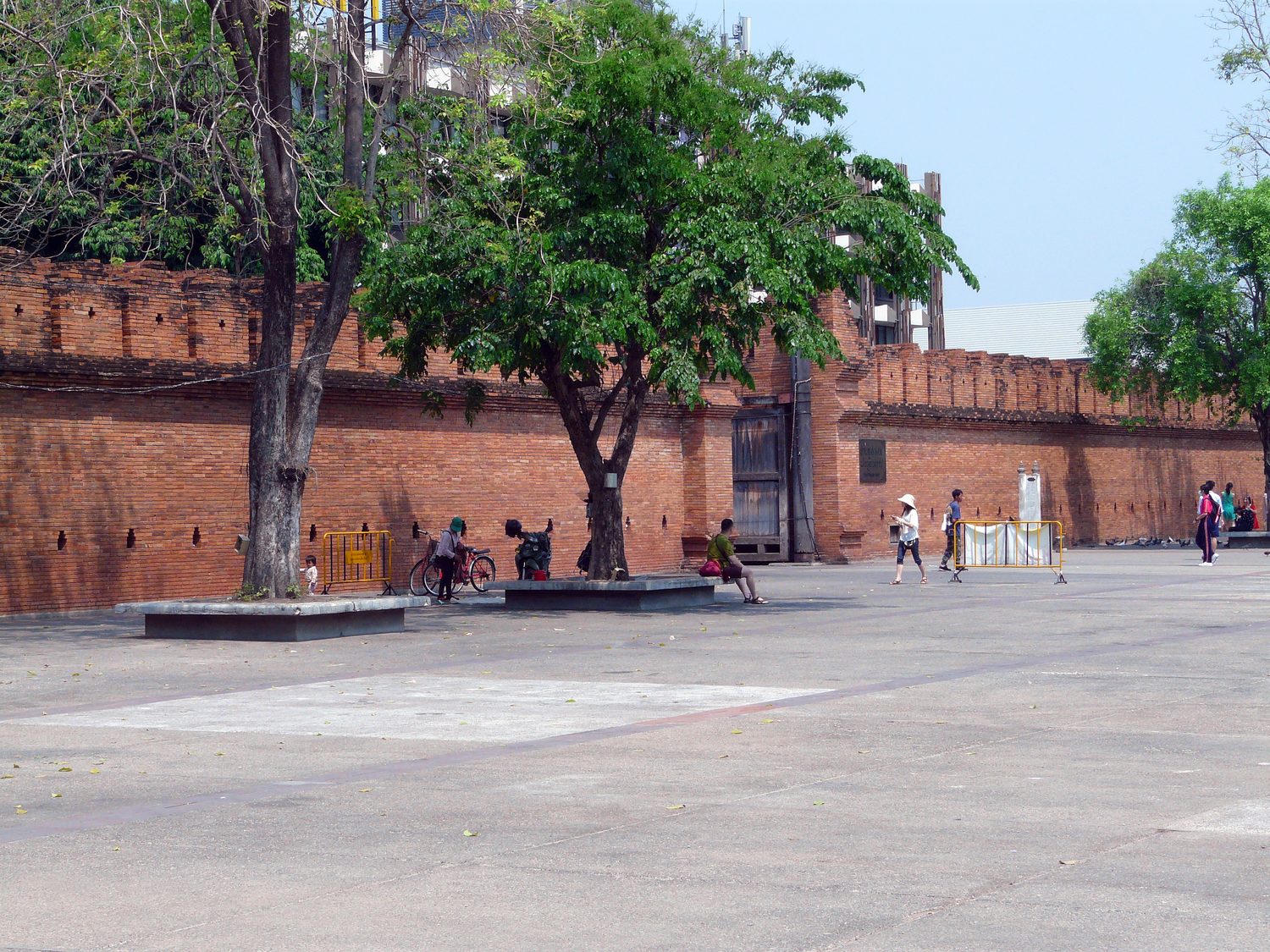
Tha Phae Gate in the Chiang Mai Old City, the usual starting point for exploring around the moat
Tha Phae Gate, the eastern gate of the Old City — an easy landmark when you're walking or naming a destination to a driver
Licence — required, and the right type

By law you need a motorcycle licence (a Thai licence or an International Driving Permit covering motorcycles). Police set up checkpoints often, and riding without the correct one means a fine.

You need: A motorcycle licence of the correct class
Helmet — every single time

Wear a helmet every time, rider and passenger both. It's the law, and it genuinely saves lives in a crash. Rental shops usually provide one — check it fits and the strap works.

Hard rule: No helmet = unsafe and illegal
Insurance — confirm it before renting

Ask exactly what the rental includes, and note this: personal travel insurance usually won't pay out if you ride without a valid licence. Read your policy's conditions first.

Check: What's covered · valid licence required
Condition — photograph it first

Check the brakes, tyres and lights, and photograph or film any existing scratches around the bike before you ride off, to avoid being charged for damage you didn't cause. Some shops ask to hold your passport — use a copy or a cash deposit instead if you can.

Do this first: Photograph the whole bike, keep it as proof
Straight talk: some city roads are busy, and the climb up to Doi Suthep is steep and winding. If you've never ridden a motorbike before, this isn't the place to learn — Grab or a songthaew is far safer. And if you do ride, go slowly, stay alert, and avoid riding at night or in the rain.
Walking and cycling

The Old City is walkable — and cycling is fun too

The Chiang Mai Old City is a square ringed by a moat and remnants of the old wall, roughly 1.5 km on each side. The main temples, cafes, restaurants and many places to stay all sit within walking distance of one another. So if you're staying in or near the Old City, you'll barely need a ride at all — you can explore on foot all day.

🚶
Walking the Old City

Walking is the best way to see the Old City, because so many of the temples and good spots sit side by side. Wander a little and you'll find photogenic corners everywhere. Aim for the morning or late afternoon when it's cooler, carry water and wear comfortable shoes — some pavements are uneven, so watch your step. Read walking routes and the unmissable stops in our Chiang Mai Old City guide, and see everything worth visiting in our Chiang Mai attractions guide.

Free, and good for you Old City ~1.5 km per side
🚲
Cycling

The flat Old City suits a relaxed cycle around. Plenty of rental shops and guesthouses hire bicycles by the day for very little, and an early-morning loop around the moat is a lovely way to start. The thing to watch is that the main roads are busy and rarely have bike lanes, so stick to the Old City or quieter sois and avoid the big arteries at rush hour. Wear a helmet if one is provided.

Cheap daily rental Avoid main roads when busy
Day trips out of town

For Doi Suthep and day trips — a car with driver is easiest

Many of Chiang Mai's best sights are outside the city and up in the mountains — Wat Phra That Doi Suthep, Doi Inthanon, the elephant sanctuaries. Reaching these is different from getting around town. Here are the options that actually work.

View over Chiang Mai with Doi Suthep mountain behind it, a popular day-trip destination
Chiang Mai with Doi Suthep behind it — most of the mountain sights mean a drive up
Hire a car with driver for the day

The easiest choice for day trips: you don't have to drive the steep mountain roads yourself, the driver knows the way, and you can stop at several places. The full-day rate is agreed in advance based on distance and how many stops you make. Great value split between a few people.

Best for: Multiple stops · groups · not wanting to drive
Shared songthaew to Doi Suthep

Songthaews wait near Chang Phueak Gate and at the foot of the mountain, running up to Wat Phra That Doi Suthep on a shared basis. Cheaper than chartering, but you wait for the truck to fill before it leaves. Agree the round-trip price clearly before you board.

Best for: Tight budgets · Doi Suthep only
Book a tour with pickup

Many sights, such as elephant sanctuaries or Doi Inthanon, come as tours with hotel pickup included — simple, and no transport to plan yourself. Good if you'd like it easy and with a guide. Check what's included before you book.

Best for: An easy day · a guide · pickup included
Grab for spots near the city

For places not far from the city, Grab works fine. But heading up the mountain or out to remote spots, cars can be hard to find — and there's no one waiting to bring you back. For mountain trips, a car with driver or a tour is the better call.

Limitation: Hard to get a ride back from remote spots
Planning a day trip: we've rounded up the popular destinations around Chiang Mai — Doi Suthep, Doi Inthanon, elephant sanctuaries and waterfalls — with how to reach each and the best time to go, in our Chiang Mai day trips guide. And if you're not sure when to come, read the best time to visit Chiang Mai (especially on the hazy burning season early in the year).
Frequently asked

FAQ · Getting around Chiang Mai

Does Chiang Mai have a metro, subway or BTS?
No. Chiang Mai has no metro, subway or any urban rail system. Getting around relies on road transport, and the main options are the red songthaew (shared red trucks), Grab cars and motorbikes, rented scooters, and walking around the compact Old City. The good news is that the Old City — where most of the sightseeing is — is small and easily walkable, and for anywhere further out a songthaew or Grab is cheap and easy.
How does the red songthaew (rot daeng) work, and how much does it cost?
A songthaew is a converted red pickup truck with two bench seats in the back. They circulate around the city with no fixed routes. To use one, flag it down from the roadside like a taxi and tell the driver where you're going. If your destination fits with the other passengers already on board, the driver takes you, dropping people off along the way. The shared fare is about ฿30–50 per person for a ride within the city. Press the buzzer when you want to get off and pay the driver as you step down. Carry cash and small notes, as drivers rarely have change for large bills.
Can I use Grab in Chiang Mai, and what does it cost?
Yes, Grab is widely used in Chiang Mai. You can book either a car (GrabCar) or a motorbike (GrabBike). The advantages are that you see the price before you book, you pin your destination in the app so there's no need to explain directions, and you can pay by card or cash. Fares depend on distance and time of day, rising a little when demand is high or when it's raining. GrabBike is cheaper and faster for one person without much luggage, while for short hops inside the Old City a songthaew is often better value.
Is renting a scooter in Chiang Mai safe, and do I need a licence?
A scooter is the most flexible way to get around and rental shops are everywhere, but weigh the risks honestly. By law you need a motorcycle licence (a Thai licence or an International Driving Permit covering motorcycles). Police set up checkpoints often, and riding without the correct licence means a fine — and, more importantly, your travel insurance usually won't cover you if you ride without a valid licence. Wear a helmet every time (it's the law and it genuinely saves lives), check the bike's condition, photograph any existing scratches before you take it, and confirm what insurance the rental includes. Some roads are busy and the climb up to Doi Suthep is steep, so if you've never ridden before, choose Grab or a songthaew instead.
Is the Chiang Mai Old City walkable?
Very. The Old City is a square ringed by a moat and remnants of the old wall, roughly 1.5 km on each side. The main temples, cafes, restaurants and many places to stay are all within walking distance of one another, so you can explore on foot all day without needing a ride. Walk in the morning or late afternoon when it's cooler, carry water and wear comfortable shoes. For anywhere beyond the Old City, such as the Nimman area or the Night Bazaar, flag a songthaew or book a Grab.
What's the best way to reach Doi Suthep or do a day trip out of the city?
For places outside the city — such as Wat Phra That Doi Suthep, Doi Inthanon or an elephant sanctuary — hiring a car with a driver for the day is the easiest choice: you don't have to drive the steep mountain roads yourself, the driver knows the way, and you can stop at several spots. The full-day rate is agreed in advance based on distance and how many stops you make. Alternatively, shared songthaews that wait near Chang Phueak Gate run up to Doi Suthep — cheaper, but you wait for the truck to fill first. Booking a tour with hotel pickup is another option. See our Chiang Mai day trips guide for the popular destinations and how to reach them.
Klook · Tours & Transfers

Chiang Mai day tours & transfers — book before you go

Sort out a Doi Suthep, Doi Inthanon or elephant-sanctuary tour, or a car with driver for the day, through Klook — no hunting for a ride or haggling over the fare.

Browse Chiang Mai tours & transfers on Klook →
Wherebest is an affiliate partner of Klook — we may earn a commission when you book through our links, at no extra cost to you.