Ranked by popularity — out to see the real thing
Ordered by how popular they are, with an honest note on which is half a day, a full day, or an overnight.
 1
1
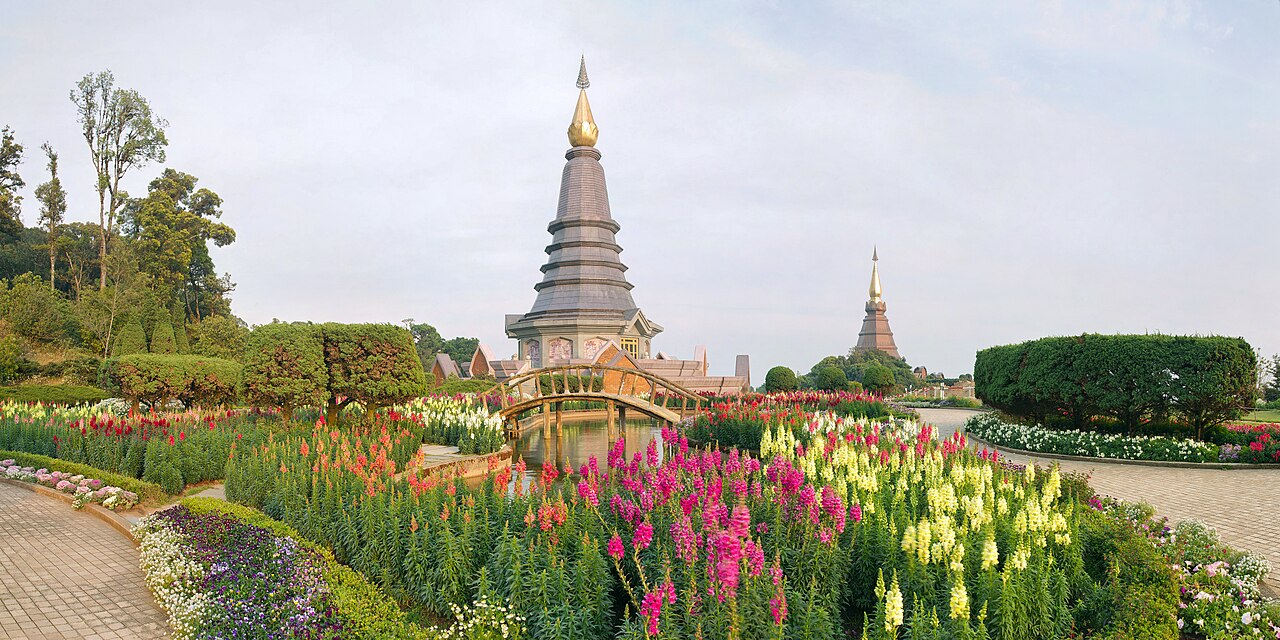
If we only had one day out of the city, this is where we'd go first. Doi Inthanon is the highest mountain in Thailand at 2,565 metres, the centrepiece of Doi Inthanon National Park. It stays cool all year, and on cool-season mornings the temperature drops near 0°C, sometimes leaving a frost on the grass.
The highlights are the twin royal pagodas — the King's and Queen's chedis in gold and lavender, ringed by cool-climate flower gardens — the summit with its Ang Ka boardwalk looping through damp, mossy cloud forest, the large Wachirathan waterfall, and the Karen villages and rice terraces at Mae Klang Luang. This is a full nature day, ideal if you want to escape the bustle of the city.
 2
2
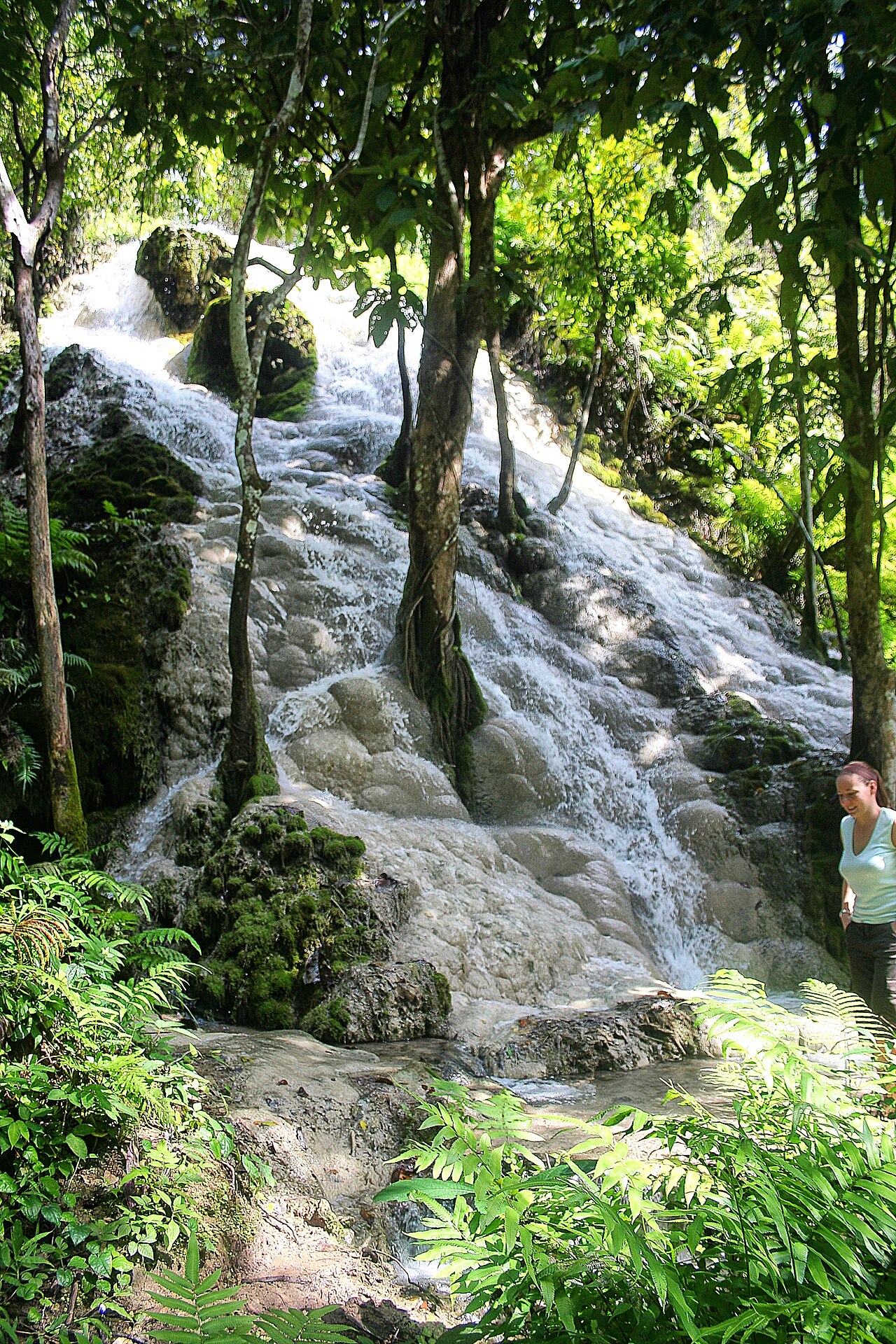
What makes this one unusual is that you can actually climb up the waterfall itself, barefoot. The face of the Bua Tong waterfall is limestone (calcium carbonate) with a rough, non-slip surface that grips your feet even with water running over it — kids and adults scramble up and down for fun. It's a rare experience, and the falls sit inside Si Lanna National Park north of the city.
Right next to it is the Chok Fitness mineral spring (the Seven-Colour Spring), a clear, cold pool of spring water bubbling up from underground that photographs beautifully — easy to pair with the waterfall on one trip. Many people combine this route with the Mae Taeng area, which has elephant camps and river rafting. Be honest with yourself on logistics: there's no public transport here, so you'll need to drive or join a tour.
 3
3
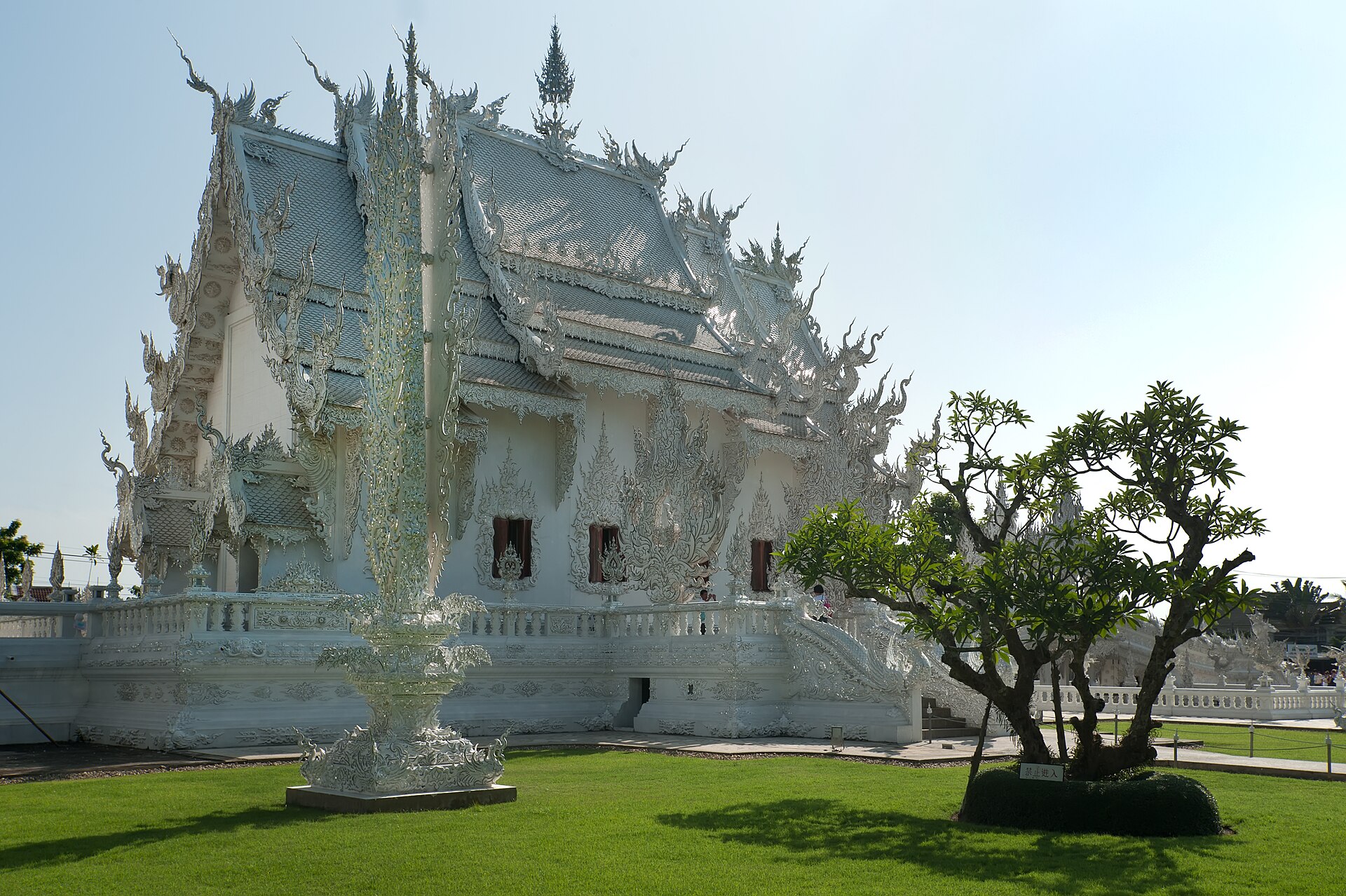
If you love art and temples unlike any other, Chiang Rai is worth the 3-hour drive. The three highlights are the White Temple (Wat Rong Khun), a dazzling all-white hall encrusted with mirrored glass by the artist Chalermchai Kositpipat, so striking it has become the symbol of Chiang Rai; the Blue Temple (Wat Rong Suea Ten), a deep-blue hall picked out in gold that is beautifully strange; and the Black House (Baan Dam Museum) by Thawan Duchanee, a cluster of dark wooden buildings full of art and curiosities.
The three sit on different sides of Chiang Rai town, but you can see all of them in a day with an early start. It is honestly a long day — if you'd rather take it slower, or add Doi Tung or the Golden Triangle, stay a night in Chiang Rai.
 4
4
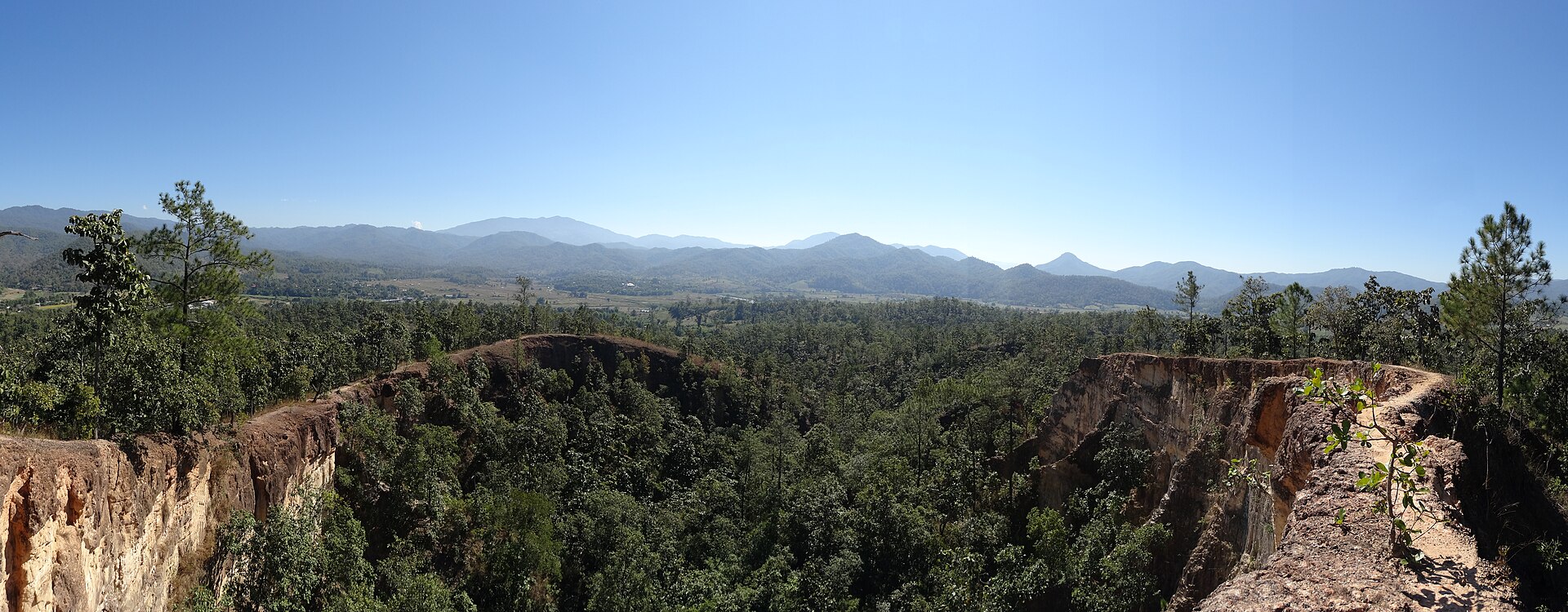
Pai is a small town set in a valley in Mae Hong Son province that has become a dream stop for the slow-travel crowd. Its charm is the heavy morning mist, the cafés out by the fields, the night walking street, and mountains all around. The highlights are Pai Canyon (Kong Lan), a set of narrow earthen ridges to walk for the sunset view; the Pai Memorial Bridge; Wat Phra That Mae Yen, looking out over the whole town; and the hot springs and waterfalls nearby.
Let me say it plainly: Pai is not a day trip. Route 1095 from Chiang Mai has 762 curves and takes about 3 hours, winding enough to make many people carsick. Stay at least one night to make the drive worth it. If you'd rather not drive, public minivans run daily from the Arcade station.
 5
5
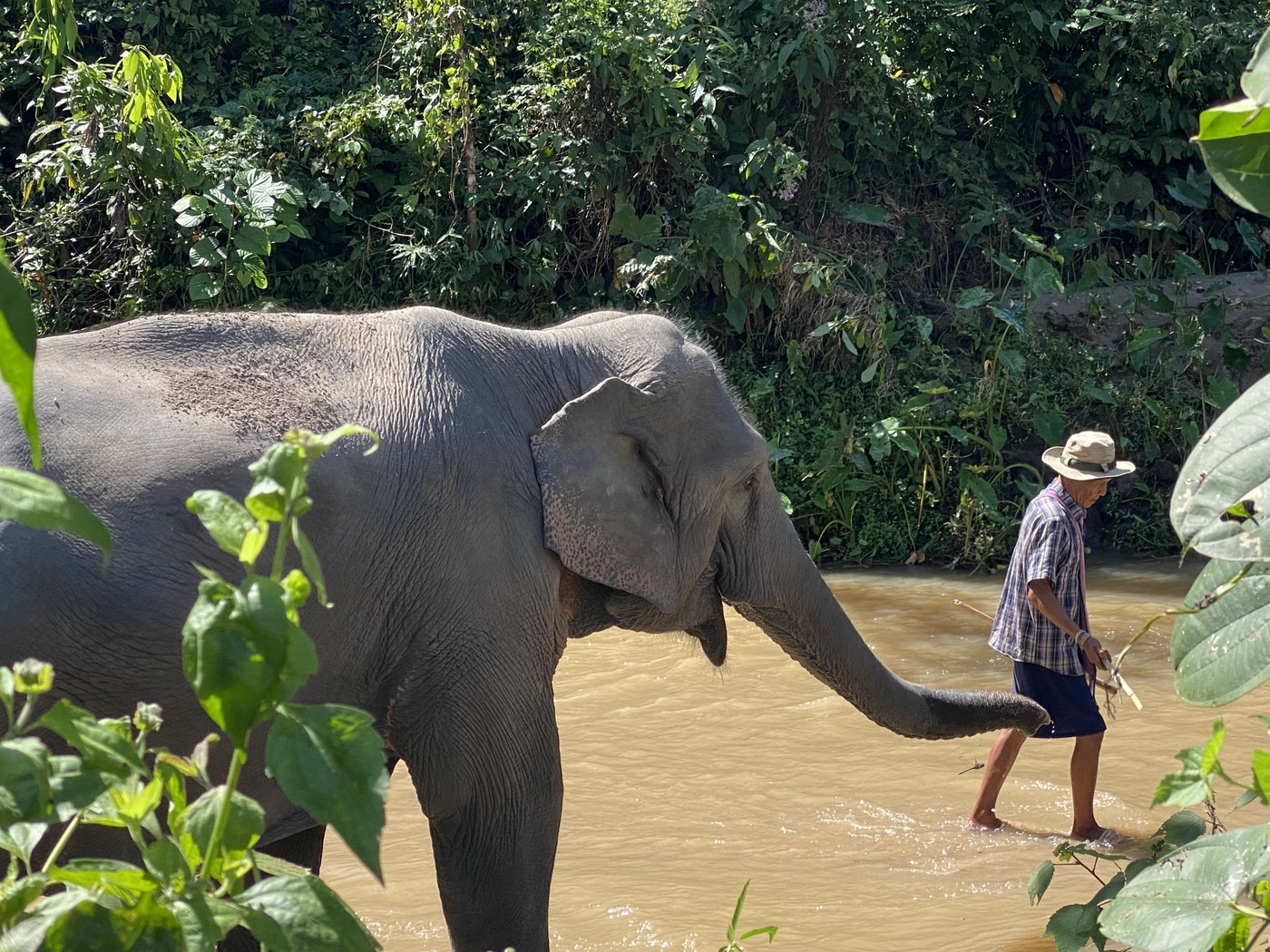
Time with elephants is one of the things people most want to do in Chiang Mai — but let's be straight about the ethics first. We only recommend places that keep their elephants with no riding, no shows and no bullhook, because riding and performance training harm elephants in body and mind. A good sanctuary lets you feed them, walk alongside them, share a mud bath and watch them live naturally — nothing more.
Most sanctuaries are spread across the Mae Taeng and Mae Wang valleys, about 1–1.5 hours from the city, with both half-day and full-day programmes. How to pick an ethical one: read reviews about the elephants' welfare, check that it clearly states no riding and no shows, and make sure the number of visitors per elephant isn't too high.
 6
6
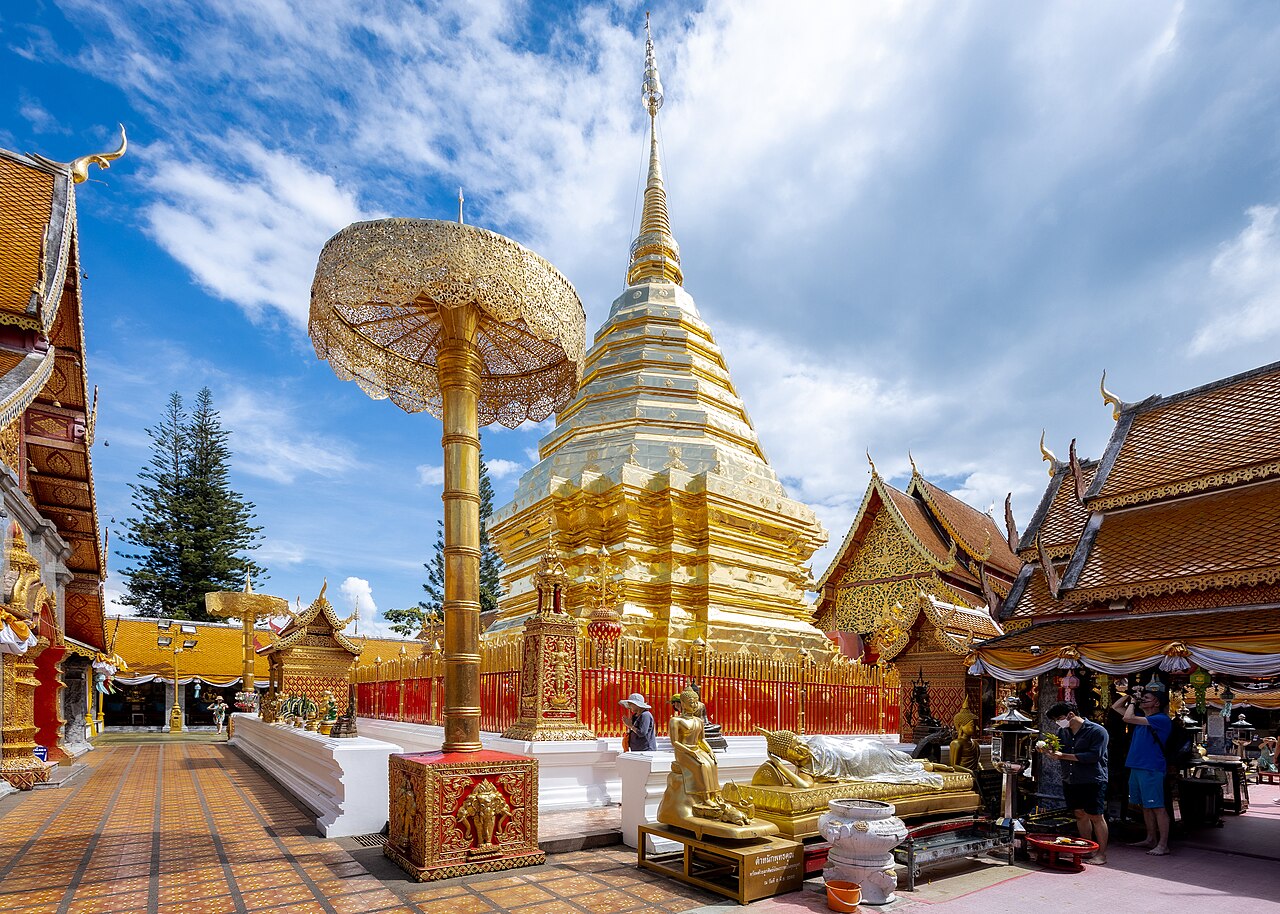
If you don't want to travel far, this is the closest trip of all. Doi Suthep sits on the mountain behind the city, just a 30–45 minute drive up. The highlight is Wat Phra That Doi Suthep, a golden Lanna chedi at 1,073 metres that looks down over the whole of Chiang Mai. You can reach it by the 306-step Naga staircase or by tram.
A little higher up is Bhubing Palace, with cool-climate flower gardens and fine views (open only at certain times — check before you go), and higher still the Hmong Doi Pui village, a Hmong community with an embroidery market and viewpoints. Together the three make an easy half-day you can do before lunch. Go by private car, Grab, or the red songthaew trucks that wait near Chang Phueak Gate and the Chiang Mai Zoo.