Home Chiang Mai Thailand Chiang Mai Hotels About
Home  ›  🌏 Asia  ›  🇹🇭 Thailand  ›  Chiang Mai  ›  First-Timer Guide
Chiang Mai First-Timer Guide · 2026

Your first trip to Chiang Mai
Everything you need, nothing you don't

An old walled city where you can temple-hop all morning, climb to Doi Suthep for the view by afternoon, and end the day over coffee in Nimman or wandering a walking street — all in one trip. This guide is built from verified facts and real visitor accounts to get you ready before you land.

Why start here

The Lanna capital that's the easiest first trip up north

If you want to see northern Thailand but aren't sure where to start, Chiang Mai is the place. It is the old capital of the Lanna kingdom, more than 700 years old, laid out as a square moat with ancient temples inside and green mountains all around. Here you can visit temples in the Old City in the morning, climb a mountain for the view in the afternoon, and eat a steaming bowl of khao soi at a long-running shop the same day.

Easy to get around — the airport is only about 4 km from the Old City; in town you have red songthaews, Grab and bicycles, and the compact Old City is very walkable. Safe and friendly — the Old City is fine to walk at night, locals are welcoming, and the cost of living is low. Plenty to do — Lanna temples, cafes, night markets, elephant sanctuaries, high mountains and bold northern food all sit close together in one easy-to-reach city.

A note on this guide: All prices, hours and logistics here are drawn from public sources and verified visitor accounts. Details change — check for the latest before you travel.
Trip planning

How many days do you need?

Three to four days is the comfortable answer — because Chiang Mai mixes in-town sights with day trips out of the city. The Old City and its temples are walkable in a day; Doi Suthep and the Nimman cafes take half a day to a full day; and you still want a day for an out-of-town trip such as an elephant sanctuary or Doi Inthanon. Two days covers the in-town highlights, but you won't have much time to head out of the city.

🗓️
2–3 Days — the essential Chiang Mai
The right answer for a short first visit

Day 1: walk the Old City inside the moat, visit Wat Chedi Luang and Wat Phra Singh, then Tha Phae Gate and a walking street in the evening. Day 2: head up to Doi Suthep in the morning, come back for coffee in Nimman, then a night market. Day 3: an elephant sanctuary or a half-day trip out of the city.

Full day-by-day plan: 2-day itinerary → · 3-day →
📆
4 Days — slower, with a day out
The version most people wish they had booked

Days 1–3 as above, at a slower pace. Day 4: a full day out of the city — your pick of Doi Inthanon, the highest peak in Thailand, the Bua Tong sticky waterfalls, or an ethical elephant sanctuary. Round off the trip with a northern dinner, ideally a khantoke spread.

Full day-by-day plan: 4-day itinerary →

Itineraries for every schedule: 1 day · 2 days · 3 days · 4 days

Before you fly

Best time to go & the smoky season

When to visit
The cool season is the clear winner

November to February: the season most visitors aim for — cool, comfortable weather and clear skies, ideal for climbing the mountains and being outdoors. April brings the lively Songkran festival, but it is hot and crowded. The rainy season (June to October) is greener and quieter than you might expect. Full breakdown at when to visit Chiang Mai →

Avoid: the smoky season — see the next box
The smoky season, Feb–Apr
Check the AQI before you book

From roughly February to April, the north enters its smoky season as agricultural fields and forests are burned. PM2.5 readings often climb high, the mountain views turn hazy, and some days the air stings. If you can plan around it, do; if you must come, check the AQI daily, pack a haze mask, and keep some indoor activities as a fallback. Best months at the Chiang Mai season guide →

Pack: a haze mask + an air-quality app on your phone
Getting to the city

From the airport to your hotel

One of the nice things about Chiang Mai is how close the airport is. Chiang Mai International Airport (CNX) sits only about 4 km from the Old City, around 10–15 minutes away, so you reach your hotel quickly after landing. The terminal has ATMs, SIM-card counters and a taxi desk, so there is no need to rush.

Airport metered-taxi desk
Easiest, with a fixed fare

The taxi desk is right by the arrivals exit: give your destination and take a ticket. The fare into the city is a fixed ฿150–200 depending on distance — handy with several bags or a late arrival. Alternatively, call a Grab (around ฿120–180), or use your hotel's shuttle if it offers one.

Full options with timings: airport transfer guide →
Red songthaew (budget)
Flag one outside, agree the price

If you're travelling light and want to save, walk out of the terminal and flag a red songthaew. Tell the driver your destination and agree the price before you get in — roughly ฿40–60 per person shared into the Old City (more to charter the whole truck). It's the cheapest, most local way in. See all in-city options at getting around Chiang Mai →

Full options with timings: airport transfer guide →
In the city

Getting around, SIM & paying for things

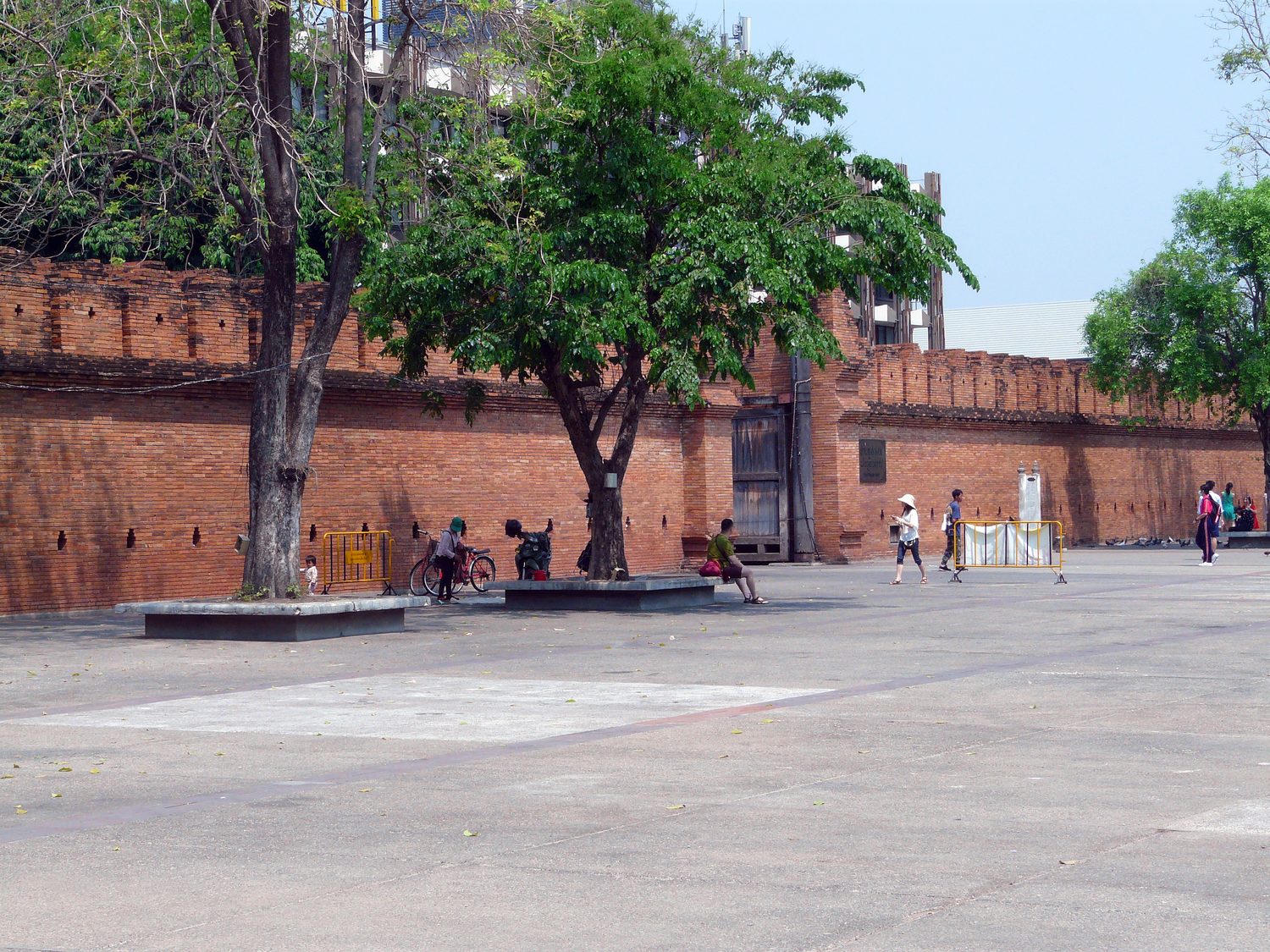
Tha Phae Gate and the Chiang Mai moat — the old brick city wall and open plaza where most Old City walks begin
Getting around town
Red songthaew · Grab · bicycle · on foot

There are several easy ways to get around Chiang Mai. The red songthaew (shared red truck) is the workhorse: flag one down, tell the driver your destination, and share the ride for about ฿30–50 per person. Grab offers both cars and motorbikes through the app. The Old City inside the moat is compact and very walkable, with the main temples close together, and you can rent a bicycle to potter around. For day trips, many people hire a car with a driver. Full guide at getting around Chiang Mai →

Renting a scooter: a licence and helmet are required — check the insurance and the bike's condition before you rent, and ride carefully
💳
SIM / eSIM and paying
Cash · PromptPay QR · credit card · ATMs

SIM / eSIM: buy a tourist SIM at the airport counters or a convenience store — multi-day data packages are inexpensive — or activate a Thai eSIM before you fly. Coverage is good in the city and around the mountains. Paying: most places take cash and PromptPay QR scanning; if you have a Thai bank account, PromptPay is very convenient. Hotels and malls accept credit cards. ATMs are everywhere, but withdrawing with a foreign card usually carries a fee of about ฿220 per transaction, so carry enough cash for markets and small shops.

Good to know: Google Maps works normally here — use Grab for ride-hailing
Temple etiquette

How to visit a temple the right way

Chiang Mai has hundreds of old Lanna temples, and dressing and behaving appropriately is the one thing first-timers should know before they go. Get it right and you can visit with ease and respect the place. See all the temple sights at Chiang Mai attractions →

Dress modestly — shoulders and knees
For men and women alike

Every temple asks you to cover your shoulders and knees — no sleeveless tops, vests, shorts or short skirts. Keep a light scarf in your bag just in case. Some larger temples such as Wat Phra That Doi Suthep lend a sarong at the entrance, but not all do, so it is safer to bring your own.

Tip: One scarf doubles as a shoulder cover and a wrap-around sarong
Take your shoes off at the hall
Look for the shoe rack by the door

Remove your shoes before entering any prayer hall or ordination hall — a rack or a pile of shoes by the door is the signal. You can keep your socks on if the floor is hot. Inside, speak quietly, silence your phone, and take your hat off as a sign of respect.

Tuck your feet, don't point them
How to sit inside a hall

When you sit inside a hall, tuck your feet behind you and never stretch out or point your feet toward the main Buddha image — it is considered rude. Don't climb on or point at the Buddha for photos, and keep the noise and horseplay out of the hall area.

Photos: Generally fine in open areas, but watch for no-photo signs first
Women should not touch monks
A custom worth knowing

By custom, women should not touch a monk or hand something directly to one. To make an offering, place it on a cloth or have a man pass it instead. If you pass a monk, give way and keep your manner composed. It is an etiquette observed across Thailand.

Merit-making: Use the donation boxes, or buy flowers and incense at the temple's service point
The highlights

Sights that first-timers shouldn't miss

Chiang Mai has more to see than any first trip can cover. The four below are the core, plus two more worth making time for. Full details at Chiang Mai attractions →

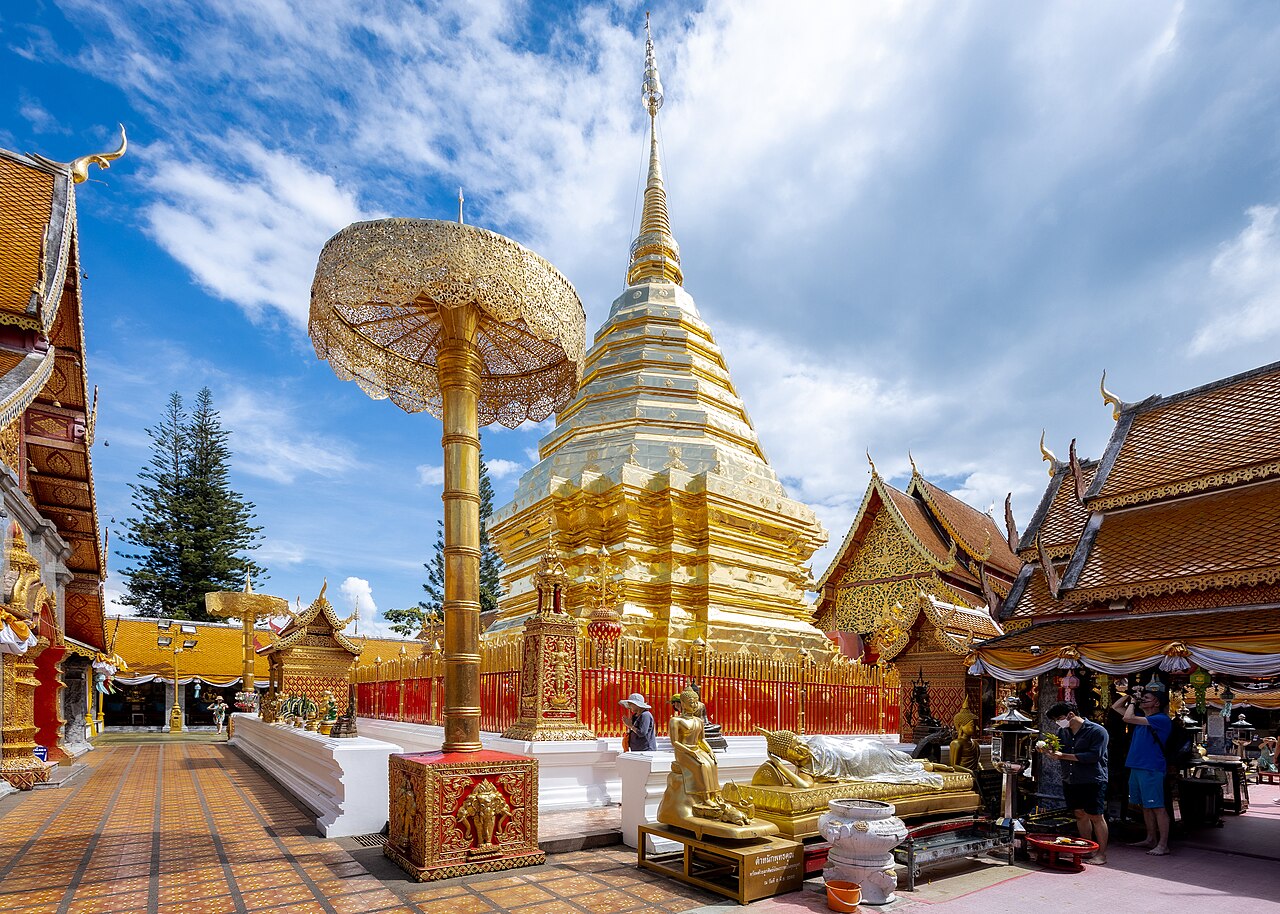
Wat Phra That Doi Suthep, Chiang Mai — the golden mountaintop chedi and Lanna umbrellas, with a panoramic view over the city
Golden mountaintop chedi · sweeping city views

The temple that watches over Chiang Mai, set high on Doi Suthep, with a golden Lanna chedi at the centre of a wide terrace and a view across the whole city. Reach it by the naga staircase or the funicular. Go in the clear morning for the best of it, and dress modestly — shoulders and knees covered.

Getting there: charter a red truck up the mountain / Grab / half-day tour
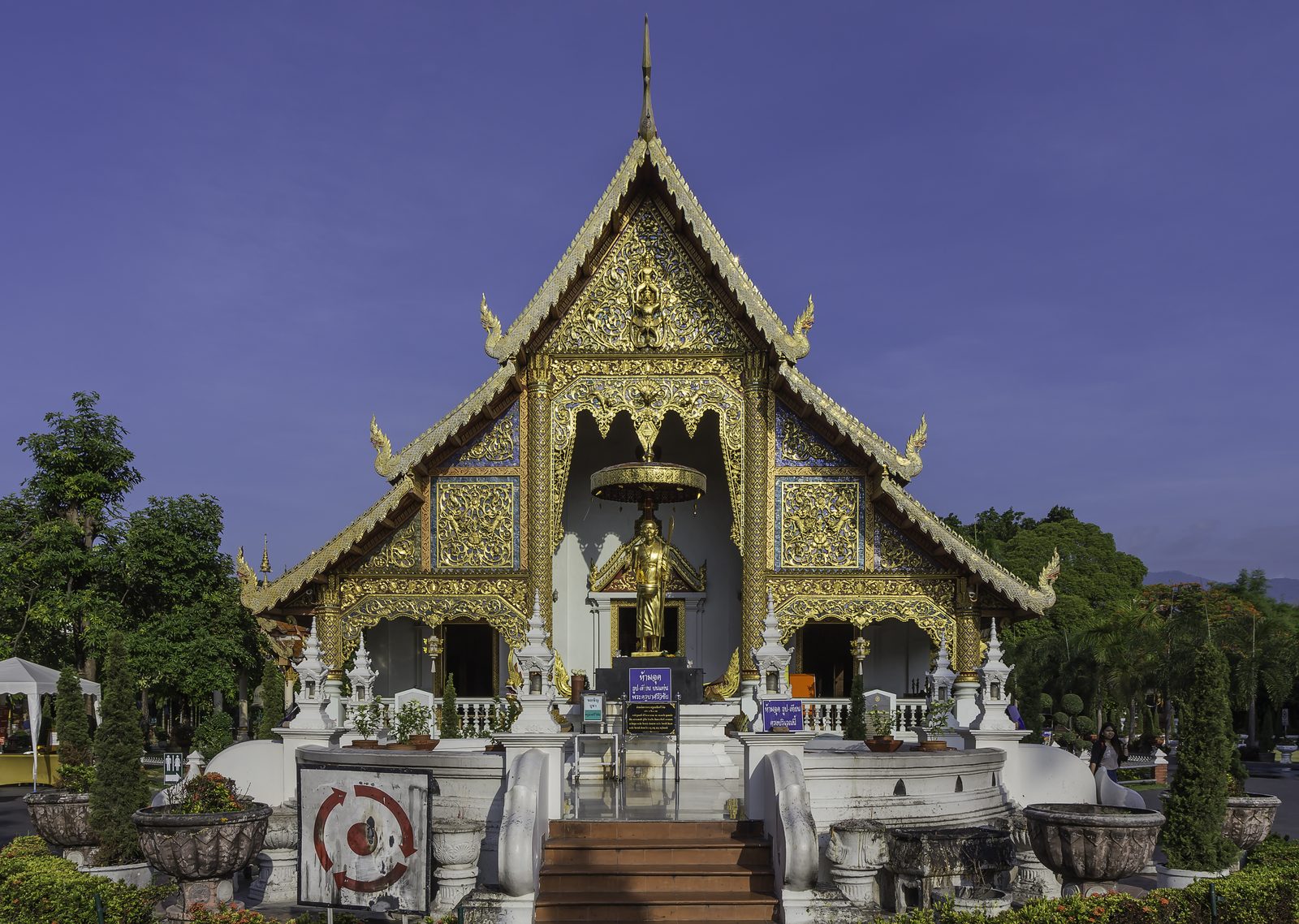
Wat Phra Singh, Chiang Mai — the gilded Lanna Lai Kham viharn with tiered roofs in the Old City
Wat Phra Singh · Wat Chedi Luang · all walkable

The heart of Chiang Mai is the square moat with its ancient Lanna temples inside. Wat Phra Singh has a beautiful Lai Kham viharn; Wat Chedi Luang has a vast ruined chedi. They are an easy walk apart in a single day, threaded with cafes and small shops in the lanes — ideal for slow wandering and soaking up the old-town feel.

Free / donation: Walk all day; a few temples charge a small entry fee
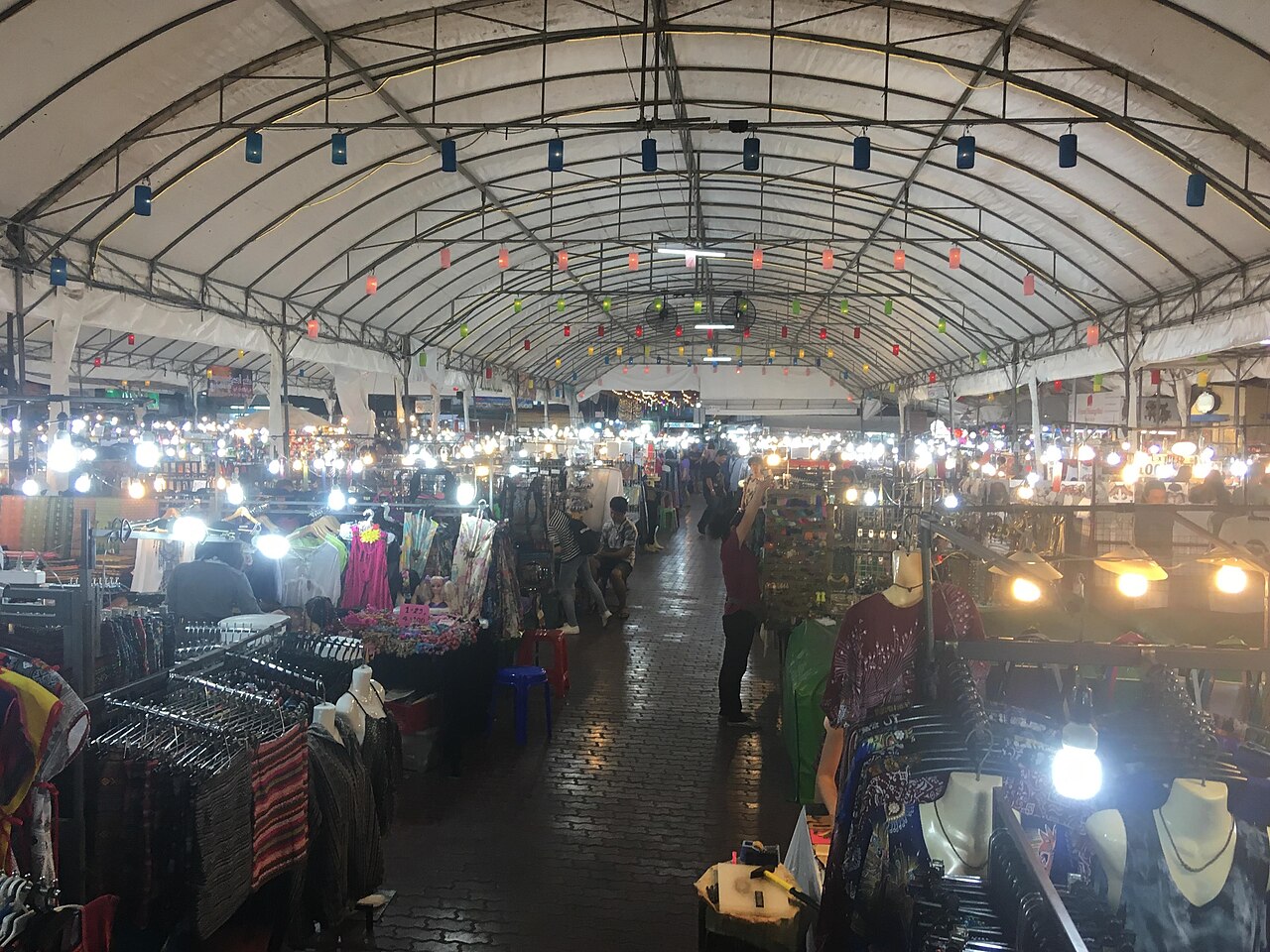
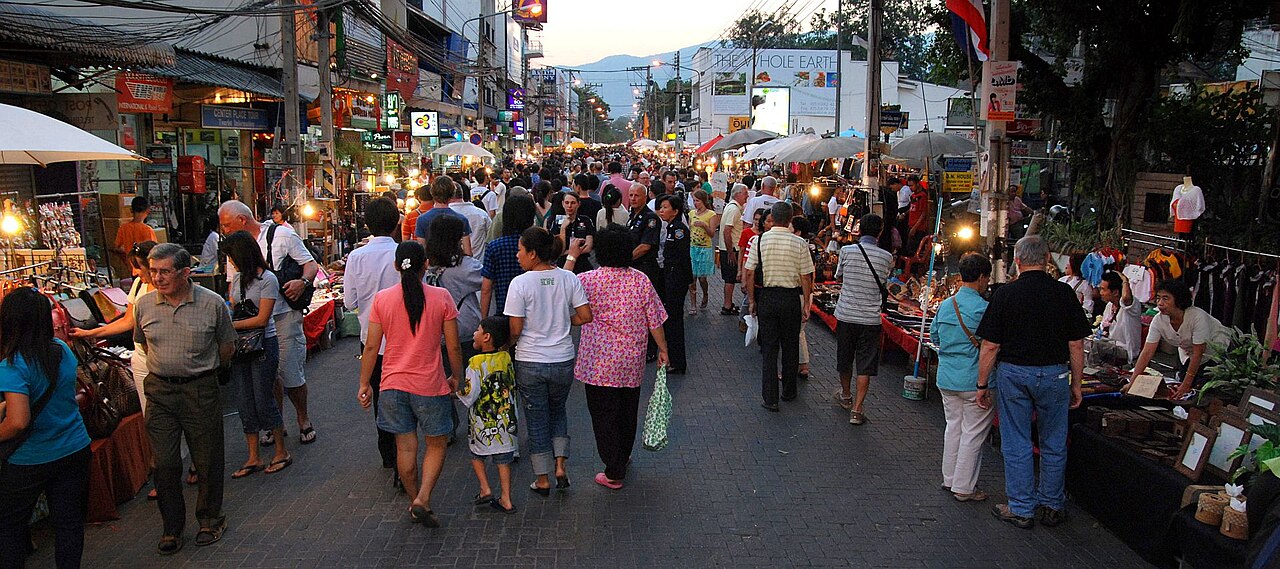
Chiang Mai Night Bazaar — market stalls and warm evening lights along Chang Klan Road
Souvenirs · food · Lanna handicrafts

Evenings in Chiang Mai come alive at the markets. The Night Bazaar on Chang Klan Road runs every night, selling souvenirs and crafts with a food zone alongside. The Saturday Walking Street on Wualai and the Sunday Walking Street on Tha Phae let you graze and shop for hours. Bargain politely.

When: Night Bazaar nightly · walking streets on Sat & Sun evenings
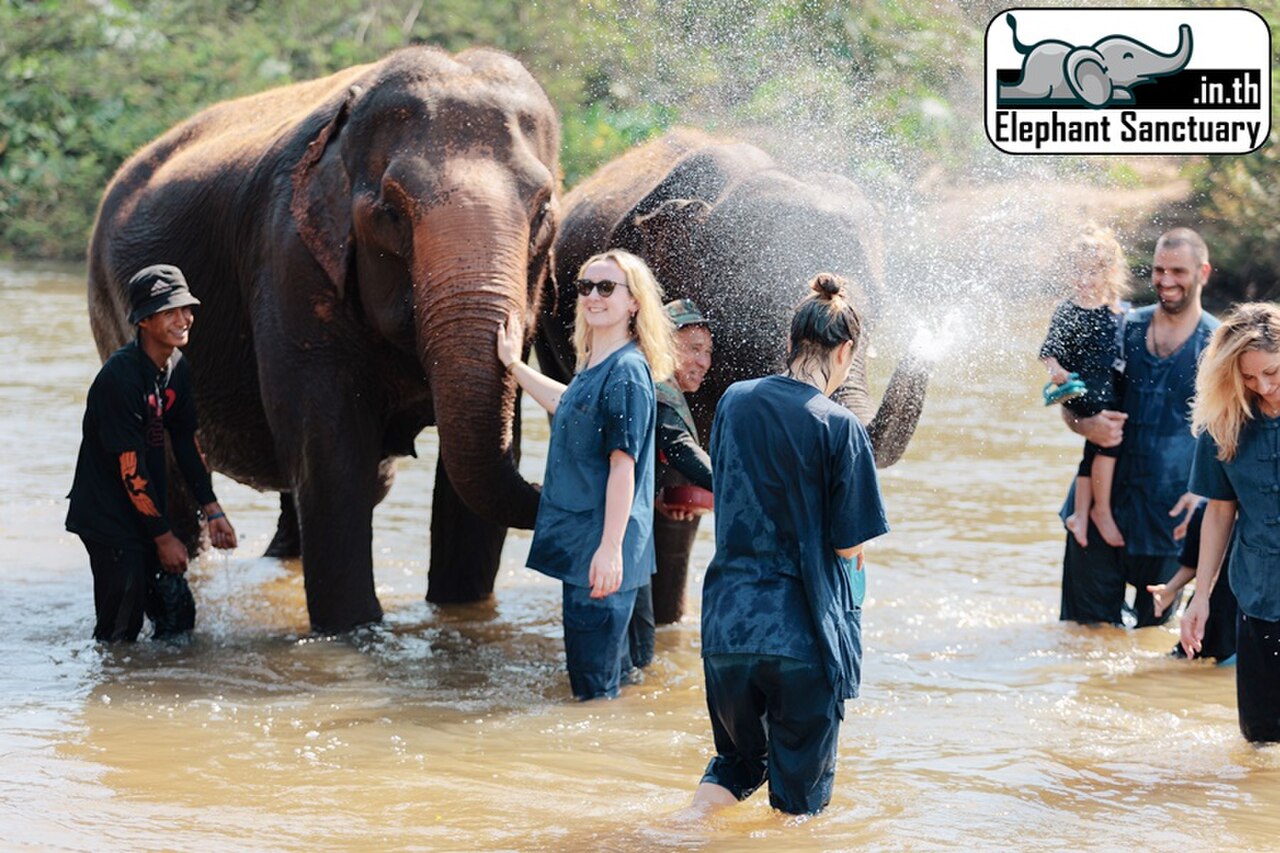
A Chiang Mai elephant sanctuary — elephants standing in a leafy natural setting at an ethically run camp outside the city
Feeding · bathing · half to full day

The most popular day trip out of town. Choose a sanctuary that cares for its elephants ethically — no riding, just feeding and spending time with the animals in a natural setting. Most include transport from the city and run half a day to a full day. Great for families and animal lovers; book ahead.

Getting there: transfers from the city included · book ahead
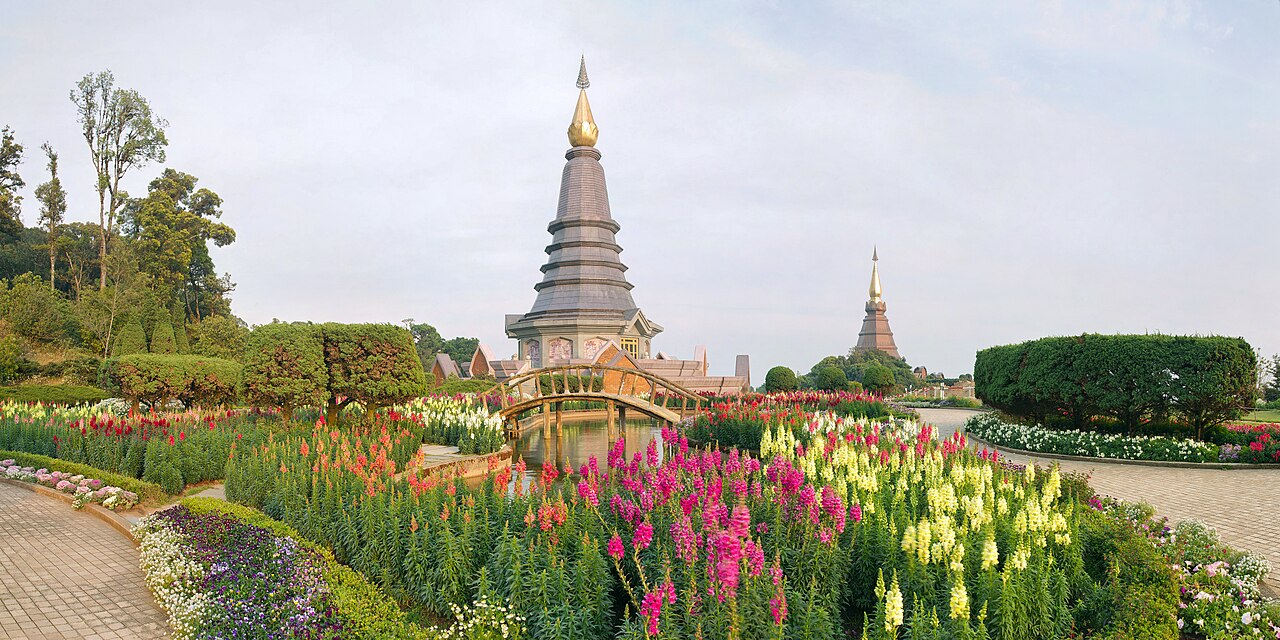
Doi Inthanon — the twin royal pagodas on Thailand's highest peak, set among gardens and drifting mist
Thailand's highest peak · cool all year

The highest mountain in Thailand, cool year-round, with twin royal pagodas, waterfalls, nature trails and a sea-of-mist viewpoint in the early morning. It's about 1.5–2 hours out of the city, ideal as a full-day trip on day three or four. Pack a warm layer — it gets genuinely chilly up top.

Getting there: hire a car with driver / full-day tour
Chiang Mai Sunday Walking Street — visitors browsing handicrafts and street food along Tha Phae in the evening
Cafes · design shops · cool souvenirs

Chiang Mai's hip district, packed with cafes, in-house coffee roasters, design-led restaurants and craft shops. It's the place to rest your feet over a coffee after a day of temples. It sits on the west side of the moat, and browsing the shops is half the fun — a favourite of locals and coffee-minded visitors alike.

Getting there: Grab / red truck · just west of the moat
Want the day trips sorted with no stress: half- and full-day trips to Doi Suthep, an elephant sanctuary or Doi Inthanon with transfers can be booked ahead. See Chiang Mai attractions → or the Doi Suthep guide →
What to eat

Northern food worth seeking out

Chiang Mai is a city of bold northern cooking — khao soi, herby sausage, young-chilli dip and night-market snacks, with flavours distinct to the Lanna north. Full guide at Chiang Mai food guide →

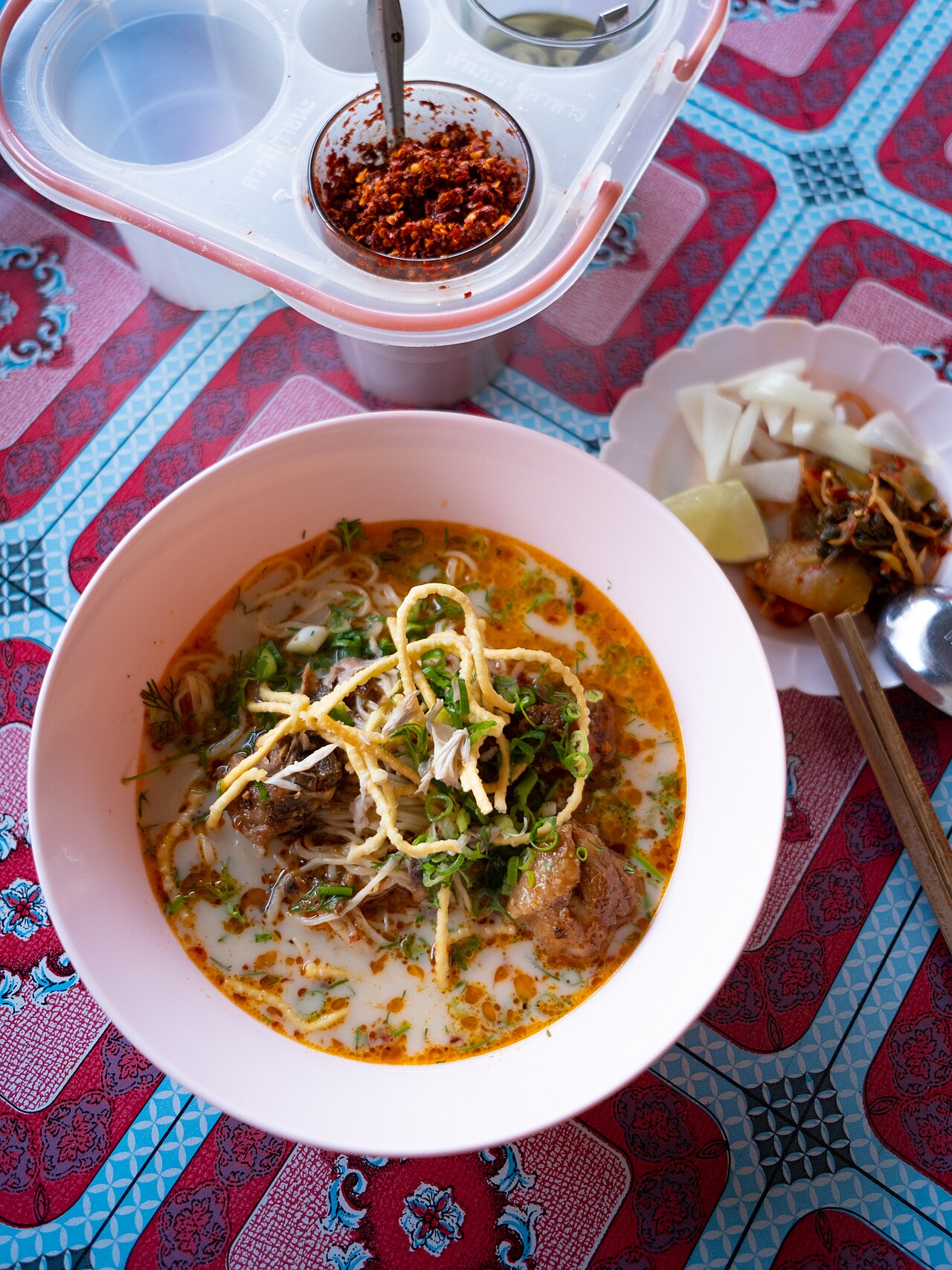
Chiang Mai khao soi — egg noodles in a rich yellow coconut curry broth topped with crisp fried noodles, served with pickled shallots and lime
Khao Soi
Noodles in coconut curry · the number-one must-eat

Every visitor says the same thing: do not miss khao soi. Egg noodles in a rich, mellow yellow coconut curry, topped with a tangle of crisp fried noodles, chicken or beef, and eaten with pickled shallots, mustard greens and a squeeze of lime. The famous shops around town are well worth seeking out.

Price: about ฿50–80 a bowl · see the khao soi guide →
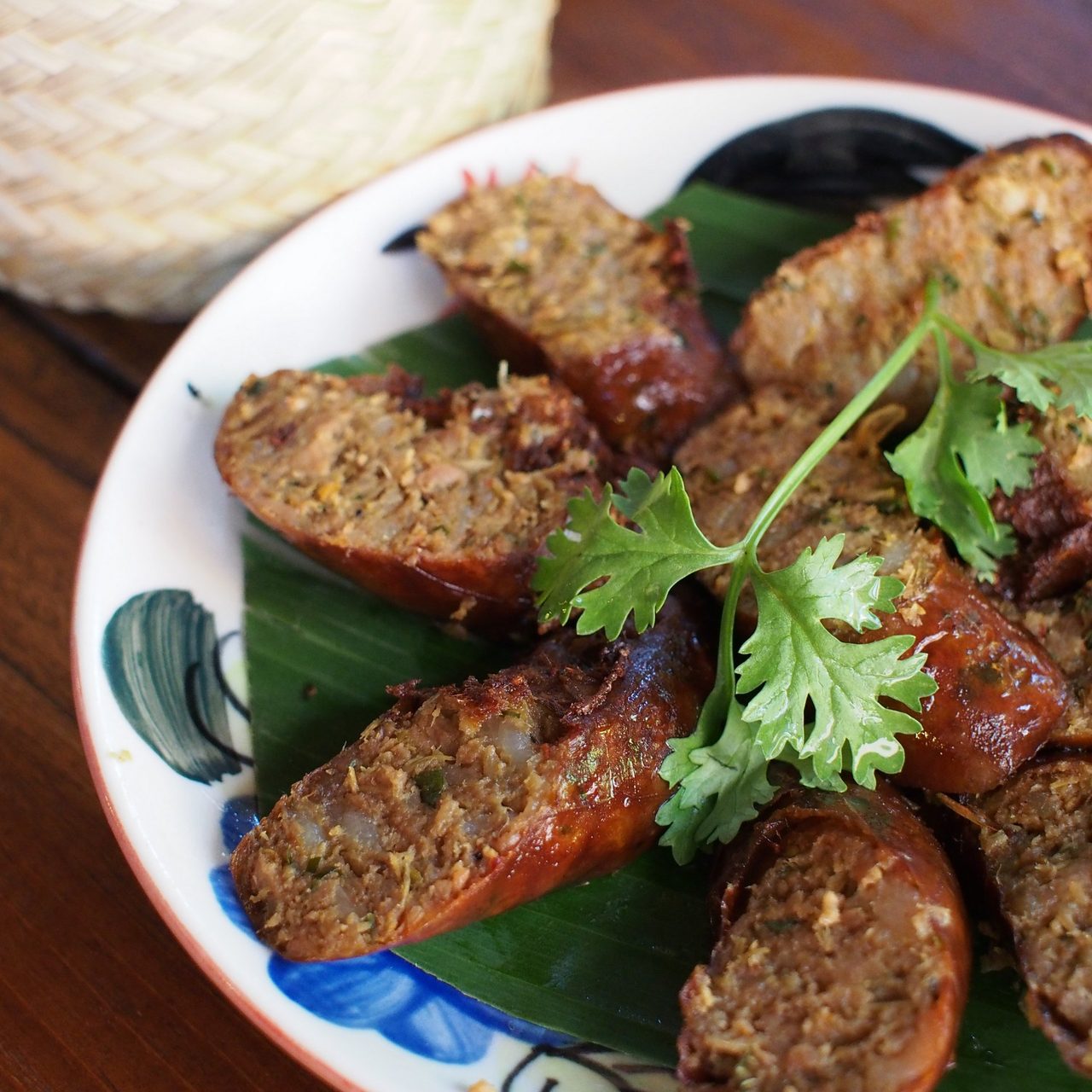
Chiang Mai sai ua — grilled herb-and-pork northern sausage sliced into pieces, reddish-brown and fragrant with curry paste
Sai Ua + Nam Prik Num
The northern spread, with sticky rice

The classic northern plate. Sai ua is a grilled pork sausage packed with curry paste and herbs, eaten with nam prik num, a dip of roasted young green chillies, served alongside hot sticky rice and fresh vegetables. It is cheap and easy to find at markets and northern restaurants all over town.

Price: about ฿20–60 · see the food guide →
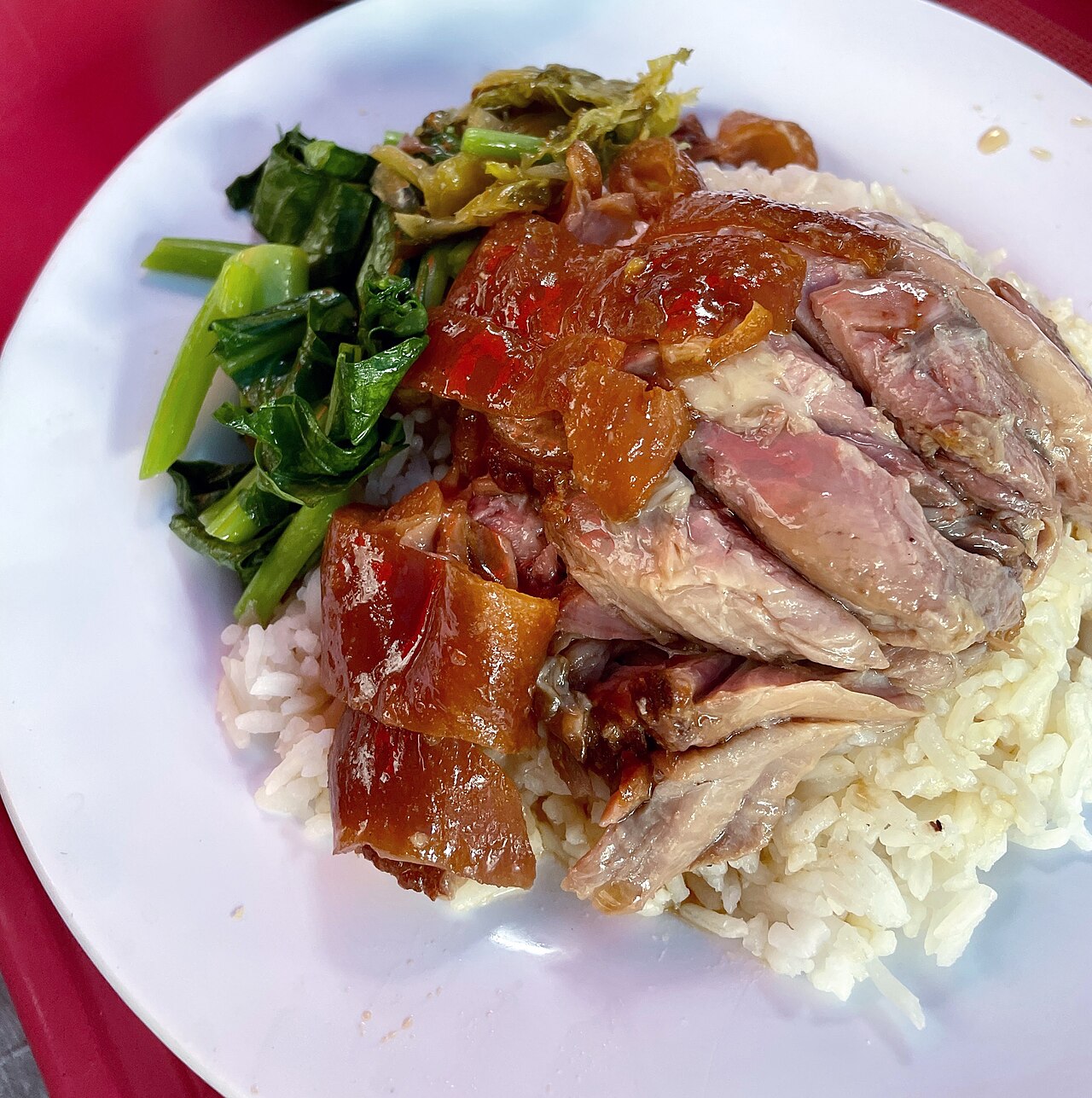
Chiang Mai khao kha moo — tender stewed pork leg over rice with a boiled egg and pickled greens, a popular one-plate meal
Khao Kha Moo + market eats
Filling one-plate meals

Simple, filling, good-value food is everywhere. Khao kha moo is tender stewed pork leg over rice with a boiled egg and pickled greens — the Chang Phueak Gate market has a famous evening stall. Add market snacks like crispy pork and grilled sausage, and you can graze your way happily through the night.

Price: about ฿40–70 · see the full food guide →
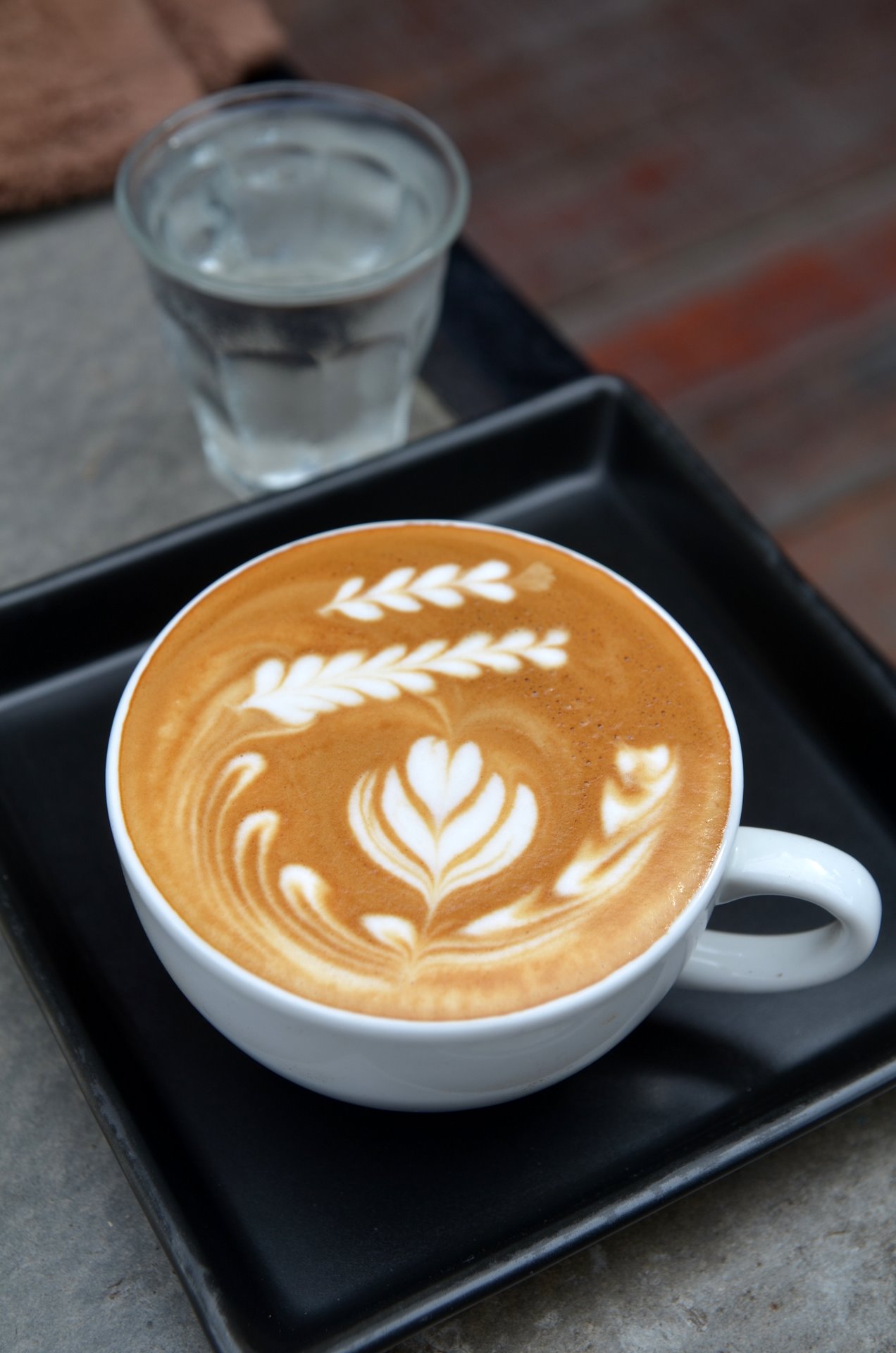
Chiang Mai latte art — a beautifully poured latte in a Nimman cafe, in a city known for highland coffee
Highland coffee + cafes
A coffee city · beans grown in the northern hills

Chiang Mai is a genuine coffee city, using beans grown in the northern highlands. In-house roasters are everywhere, especially around Nimman and in the Old City. Sitting down for a coffee to rest your feet after a day of temples is part of the routine here — order a hot or iced highland brew and take a break.

Price: about ฿60–120 a cup · easy to find around Nimman

More Chiang Mai food: khao soi guide → · night bazaar eats → · full food guide →

Talking to locals

A few basic Thai phrases

People in Chiang Mai are friendly and speak central Thai. A handful of basic phrases goes a long way and is appreciated. Add "khrap" (if you're male) or "kha" (if you're female) to the end of a phrase to make it more polite.

Phrase Pronunciation Meaning
Sawatdee sà-wàt-dii Hello (any time of day)
Khop khun khàwp-khun Thank you
Thao rai thâo-rài How much is it?
Aroi à-ràwy Delicious
Mai phet mâi phèt Not spicy (ordering food)
Hong nam yu nai hâwng-náam yùu nǎi Where is the toilet?

A small tip: a smile and a wai (the palms-together greeting) read as friendly, and bargaining at markets goes best with a smile and a polite tone. More sights and food at the complete Chiang Mai guide →

Good to know

What first-timers get wrong

Agree the fare before you ride
Songthaews and rentals

Red songthaews mostly don't run a meter, so tell the driver your destination and agree the price before getting in. In-town hops are usually around ฿30–50 per person shared. If you call a Grab, the price is shown clearly in the app already — easier for a first-timer still learning the going rates.

Tip: Ask your hotel for rough fares so you can negotiate with confidence
A scooter needs a licence
Helmet, insurance, and ride carefully

Plenty of people rent a scooter to explore Chiang Mai, but you need a valid licence, you must wear a helmet, and you should check the bike's condition and photograph any scratches before you take it. Confirm the insurance. The mountain roads are steep and winding — if you're not used to it, a red truck or Grab is the safer call.

Always carry some cash
Markets and small shops don't take cards

Even though PromptPay scanning is widespread, foreign visitors without a Thai account should carry cash, because markets, street stalls and songthaews take cash only. ATMs are everywhere, but a foreign-card withdrawal carries a fee of about ฿220 each time, so it's cheaper to take out larger amounts at once.

Tip: Bring some currency in advance, and keep small notes for little shops
Check the smoky season before booking
Feb–Apr air quality runs high

Many first-timers don't realise Chiang Mai has a smoky season from roughly February to April, when PM2.5 climbs and the mountain views turn hazy. If you can, pick the cool season (Nov–Feb) instead. If you do come then, pack a haze mask and check the AQI daily. Best months at the season guide →

Good window: November to February — cool and clear
Dress modestly for temples
Cover shoulders and knees, shoes off

Chiang Mai is a temple city, and arriving in unsuitable clothing can mean being asked to wait outside. Carry a light scarf, take your shoes off before entering a prayer hall, and keep your manner composed inside — small things that let you visit with ease and respect the place.

Mind your valuables in crowds
Night markets and busy sights

Chiang Mai is very safe, but in busy places like the Night Bazaar and the walking streets, look after your bag and valuables as you normally would. Keep your bag in front of you, don't leave your phone sitting on a table, and stay aware of your things as you squeeze through the market. That's all it takes to enjoy it worry-free.

Simple rule: Mind your valuables as you would in any big city
Before you go

Your first-trip checklist

Before you fly
Sort these before leaving home

☑ Pick your dates, avoiding the smoky season (check the best months)
☑ Book a hotel near the moat or Nimman
☑ Arrange a Thai SIM/eSIM, or buy one at the airport
☑ Bring cash, and set up PromptPay if you have a Thai account
☑ Pack modest clothing for temples and a light scarf

Once you land in Chiang Mai
Do these on day one

☑ Take a metered taxi / Grab / red songthaew into the city
☑ Activate your SIM and test data · withdraw backup cash
☑ Agree the songthaew fare before every ride
☑ Pack a haze mask if you've come in the smoky season
☑ Carry a scarf for temples · take your shoes off at the hall

Frequently asked

FAQ · before you go

How many days should I spend in Chiang Mai as a first-timer?
Three to four days is the sweet spot. The Old City and its temples are walkable in a day, Doi Suthep and the Nimman cafes take half a day to a full day, and you still want a day for an out-of-town trip such as an elephant sanctuary or Doi Inthanon. Two days will cover the in-town highlights, but you won't have much time to head out of the city. See the plans at 1 day · 3 days · 4 days
When is the best time to visit Chiang Mai, and when is the smoky season?
November to February is the best window: cool, comfortable weather and clear skies, the cool season most visitors aim for. The period to avoid is the smoky season, roughly February to April, when agricultural burning pushes air-quality readings high. If you must travel then, check the AQI daily and pack a haze mask. Details at when to visit Chiang Mai →
How do I pay in Chiang Mai, and do I need cash?
Most restaurants, markets and street stalls run on cash and PromptPay QR scanning. If you have a Thai bank account, PromptPay is very convenient. Foreign visitors should carry a reasonable amount of cash. Hotels and malls take credit cards, and ATMs are everywhere, but withdrawing with a foreign card usually carries a fee of about ฿220 per transaction, so take out larger amounts at once. Full guide at the complete Chiang Mai guide →
What should I know about dressing for temples in Chiang Mai?
Every temple asks for modest dress: shoulders and knees covered for both men and women. Remove your shoes before entering a prayer hall or ordination hall. Women should not touch monks. Sit with your feet tucked behind you and never point your feet at the main Buddha image. Carry a light scarf in case you are wearing sleeveless tops or shorts; some temples lend cover-ups at the entrance. See the Old City temples →
How do I get from Chiang Mai airport to the city?
Chiang Mai International Airport (CNX) is only about 4 km from the Old City, around 10–15 minutes away. The main options are the airport metered-taxi desk (a fixed fare of roughly ฿150–200 into the city), a Grab (around ฿120–180), a hotel shuttle, or walking out to flag a red songthaew. See the full details at the airport transfer guide →
Is Chiang Mai safe for solo travellers?
Chiang Mai is very safe for visitors. The Old City is comfortable to walk at night and locals are friendly. Just use normal sense: agree the fare before getting into a songthaew or check the price in Grab, only rent a scooter with a licence and always wear a helmet, check the bike's condition and insurance first, and keep an eye on valuables in crowded spots like the night markets. See getting around Chiang Mai →
Klook · Chiang Mai Activities

Book Chiang Mai tours and activities in advance — no waiting on the day

Doi Suthep tours, ethical elephant sanctuaries, Doi Inthanon day trips, northern cooking classes and transfers — book ahead on Klook and travel with less stress.

Browse Chiang Mai on Klook →
Wherebest is an affiliate partner of Klook — we may earn a commission when you book through our links, at no extra cost to you.