Home Beijing China Beijing Hotels About
Home  ›  China  ›  Beijing  ›  First-Timer Guide
Beijing First-Timer Guide · 2026

Your first trip to Beijing
Everything you need, nothing you don't

A capital where you can stand inside an emperor's palace in the morning, climb the longest structure in human history by afternoon, and end the day eating roast duck in a centuries-old hutong lane. This guide is built from verified facts and real visitor accounts to get you ready before you land.

Why start here

A 3,000-year-old capital you can read in one city

If you have never been to China and want to understand the country rather than just see it, Beijing is the place to start. This is a capital that has accumulated dynasties for three millennia, laid out as a series of concentric ring roads with the Forbidden City at the dead centre. Nowhere else lets you stand in an emperor's palace, climb the longest structure ever built by hand, and eat imperial-recipe roast duck inside the same day.

Easy to get around — over 20 metro lines reach almost every major sight; fares run ¥3–10 (~฿15–50) by distance, with English signage at every station. Genuinely safe — crime rates are low and the tourist districts are well-lit late into the night. Layered with history — in a single day you can move from the Forbidden City of the Ming and Qing dynasties to Tiananmen Square and on to the Temple of Heaven. No city packs centuries this densely.

A note on this guide: All prices, hours and logistics here are drawn from public sources and verified visitor accounts. Details change — check for the latest before you travel.
Trip planning

How many days do you need?

Four to five days is the comfortable answer — because Beijing's headline sights each eat half a day to a full day. The Forbidden City and Tiananmen take most of one day; the Great Wall needs a full day of its own; and you still have the Temple of Heaven, the hutongs and the Summer Palace to fit in. Three days covers the essentials, but you will be moving fast.

🗓️
3 Days — the essential Beijing
The right answer for a short first visit

Day 1: Tiananmen Square, the Forbidden City, then Jingshan Park for the sunset view over the palace rooftops. Day 2: the Great Wall at Mutianyu, a full day out and back (around two hours each way). Day 3: the Temple of Heaven in the morning, the Houhai hutongs in the afternoon, Peking duck for dinner.

Full day-by-day plan: 3-day itinerary →
📆
5 Days — every highlight, no rush
The version most people wish they had booked

Days 1–3 as above, at a slower pace. Day 4: the Summer Palace for half a day, then the Lama Temple and the 798 Art District. Day 5: a day trip to the Ming Tombs, a wilder stretch of wall such as Jinshanling, or simply slow shopping along Wangfujing.

Full day-by-day plan: 5-day itinerary →

Itineraries for every schedule: 1 day (layover) · 2 days · 3 days · 4 days · 5 days

Before you fly

Best time to go & visas

When to visit
Autumn is the clear winner

September to October: the season most regulars consider the best of the year — clear blue skies, cool comfortable temperatures and turning leaves, with the Great Wall at its most photogenic. April to May: mild and blossoming, with fewer crowds than summer. Summers are hot, humid and prone to rain; winters drop below freezing but bring quiet sights and lower prices. Full breakdown at when to visit China →

Avoid: National Day Golden Week (1–7 Oct) and Chinese New Year (Jan/Feb) — crowds peak and prices surge
Entry requirements
Visa-free for many nationalities — verify before booking

As of 2026, Thai passport holders enter China visa-free for up to 30 days for tourism. Travellers of other nationalities transiting to a third country may qualify for the 240-hour (10-day) visa-free transit scheme. Policy changes without much notice, so check the current rules at China visa-free entry guide → before committing to flights. Have your passport, a hotel booking and an onward ticket ready.

Passport validity: At least 6 months remaining is strongly recommended
Getting to the city

From the airport to your hotel

Beijing has two airports, and they sit on opposite sides of the city. PEK (Capital International) is to the northeast — the older, larger airport most airlines use. PKX (Daxing) is the vast starfish-shaped airport far to the south. Check which one your ticket lands at: they are a long way apart.

From PEK (Capital)
Northeast of the city, the older hub

Capital Airport Express: a flat ¥25 (~฿125) fare, reaching Dongzhimen station in about 20–25 minutes. Change there to Metro Line 2 for Wangfujing or Qianmen (a separate ticket is needed). Taxi: roughly ¥100–130 (~฿500–650) to the centre depending on traffic — practical if you have several bags or arrive late.

Full options with timings: airport transfer guide →
From PKX (Daxing)
Far to the south, the newer airport

Daxing Airport Express: ¥10–35 (~฿50–175) in ordinary class by distance, ¥50 in business class, reaching Caoqiao station (Lines 10/19) in about 20 minutes. High-speed rail links to Beijing West station fast. Taxi: ¥200–300 (~฿1,000–1,500) into the city — a longer ride than from PEK.

Full options with timings: airport transfer guide →
In the city

Getting around & paying for things

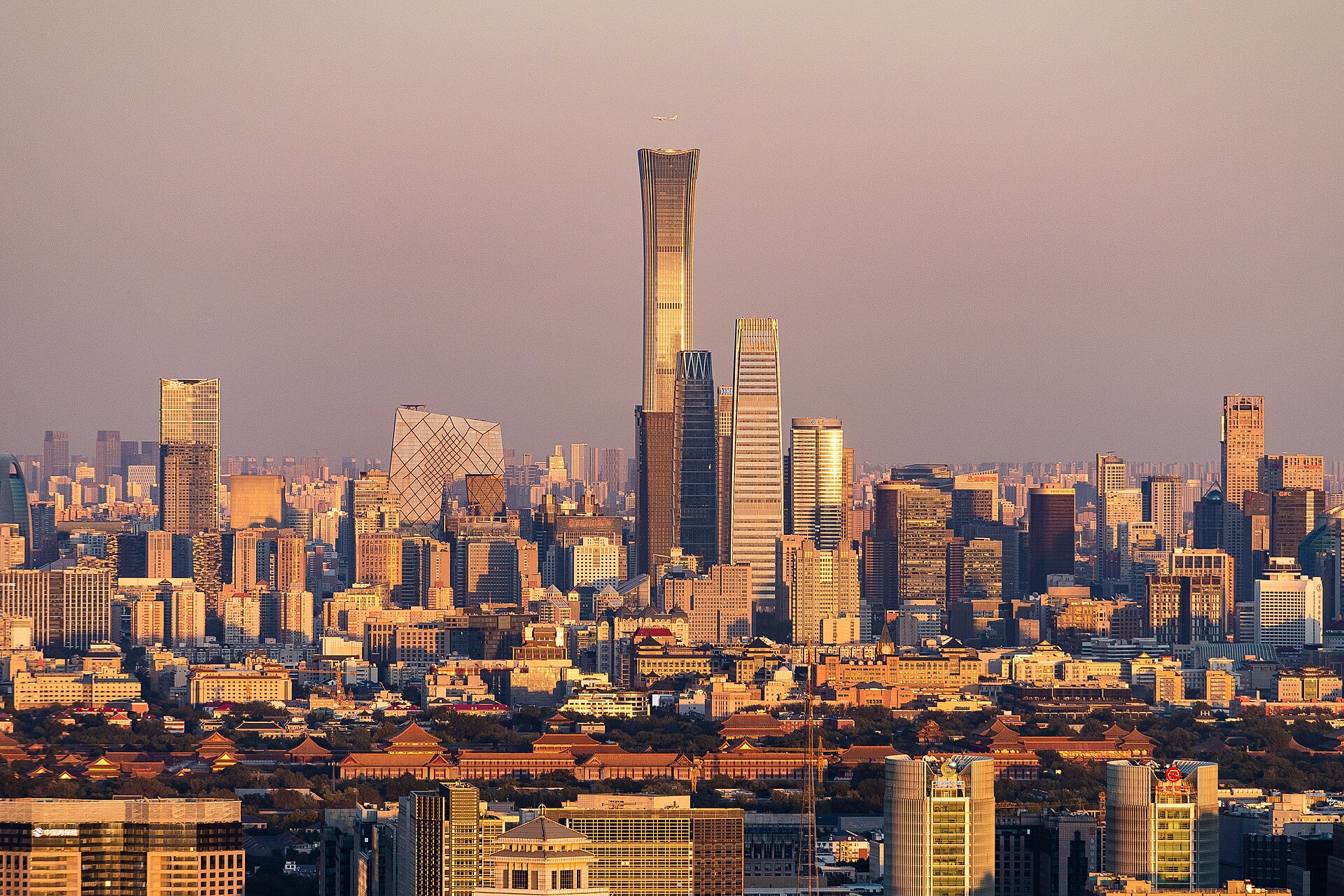
Beijing CBD skyline — modern skyscrapers across the central business district, served by a metro network of more than 20 lines
The Beijing Subway
20+ lines · English signs throughout · ¥3–10 per journey

The subway is the easiest way to move between sights. More than twenty lines, English signage at every station, distance-based fares from ¥3 (under 6 km) up to about ¥10 for longer trips. Key stations: Tiananmen East/West (Line 1) for the Forbidden City; Qianmen (Line 2); Yonghegong (Lines 2/5) for the Lama Temple; Wangfujing (Line 1) for shopping. Pay by scanning an Alipay or WeChat Pay QR code at the gate, or buy a single-journey ticket from the machine. Full guide at Beijing subway guide →

Navigation: Use Amap (Gaode Maps) or Apple Maps, and DiDi for ride-hailing — Google Maps does not work in China
💳
Paying for things
Alipay · WeChat Pay · credit card · cash backup

China runs primarily on Alipay and WeChat Pay. Hotels, department stores and supermarkets accept Visa and Mastercard. Street food stalls, small restaurants and hutong vendors use mobile payment — there is often no card reader at all. Set up the tourist version of Alipay before you leave home: it accepts foreign Visa and Mastercard cards and works immediately. Alternatively, withdraw yuan from a Bank of China or ICBC ATM on arrival as a backup. Full guide: paying in China →

Internet: Google / social media blocked without VPN — see VPN & eSIM guide →
Accommodation

Which area should you stay in?

Beijing is large and built in concentric ring roads. The trick is to stay central — inside the 2nd or 3rd ring, near a subway line. Knowing the areas before you book a hotel saves time every day of the trip. Full neighbourhood guide →

Wangfujing / near the Forbidden City
The area most first-timers want

Close to the Forbidden City, Tiananmen Square and the Wangfujing pedestrian street — you can walk to the biggest sights in minutes. Hotels here span every level, from budget to luxury, and the central position pays for itself in time saved.

Best for: First-timers who want to walk to the main sights
Qianmen / Qianmen Dajie
The restored old street below Tiananmen

A restored heritage street directly south of Tiananmen Square, within reach of the Temple of Heaven and the southern hutongs. Metro Lines 2 and 8 run through it. A good base for travellers who want a more traditional, old-Beijing atmosphere on the doorstep.

Best for: Old-Beijing atmosphere, walking-focused trips
Houhai / Gulou (the old hutongs)
Stay in a hutong lane by the lake

If you want to sleep in a traditional hutong courtyard hotel and wake up by Houhai Lake, this is the area. It is the most authentic old-Beijing experience, with bars and cafes lining the lanes and a lively evening scene — though courtyard rooms are often small and lifts are rare.

Best for: Couples, atmosphere-seekers, a one-of-a-kind stay
Sanlitun / CBD
Modern shopping, dining and nightlife

The business and lifestyle district to the east, home to international hotel brands, high-end malls, global restaurants and the city's nightlife. A little further from the historic sights, but well connected by metro. A good fit for repeat visitors or anyone wanting big-city comfort.

Best for: Shoppers, business visitors, modern-district fans
Near the railway stations
If you are connecting onward by train

If your trip continues by high-speed rail to Xi'an, Shanghai or elsewhere, staying near Beijing South or Beijing West station is the efficient choice. These areas are not as rich in sights as the centre, but they save real time on your departure day.

Best for: Multi-city trips, high-speed rail travellers
The highlights

Sights that first-timers shouldn't miss

Beijing has more to see than any first trip can cover. The "big four" below are the core, plus two more worth making time for. Full details at Beijing attractions →

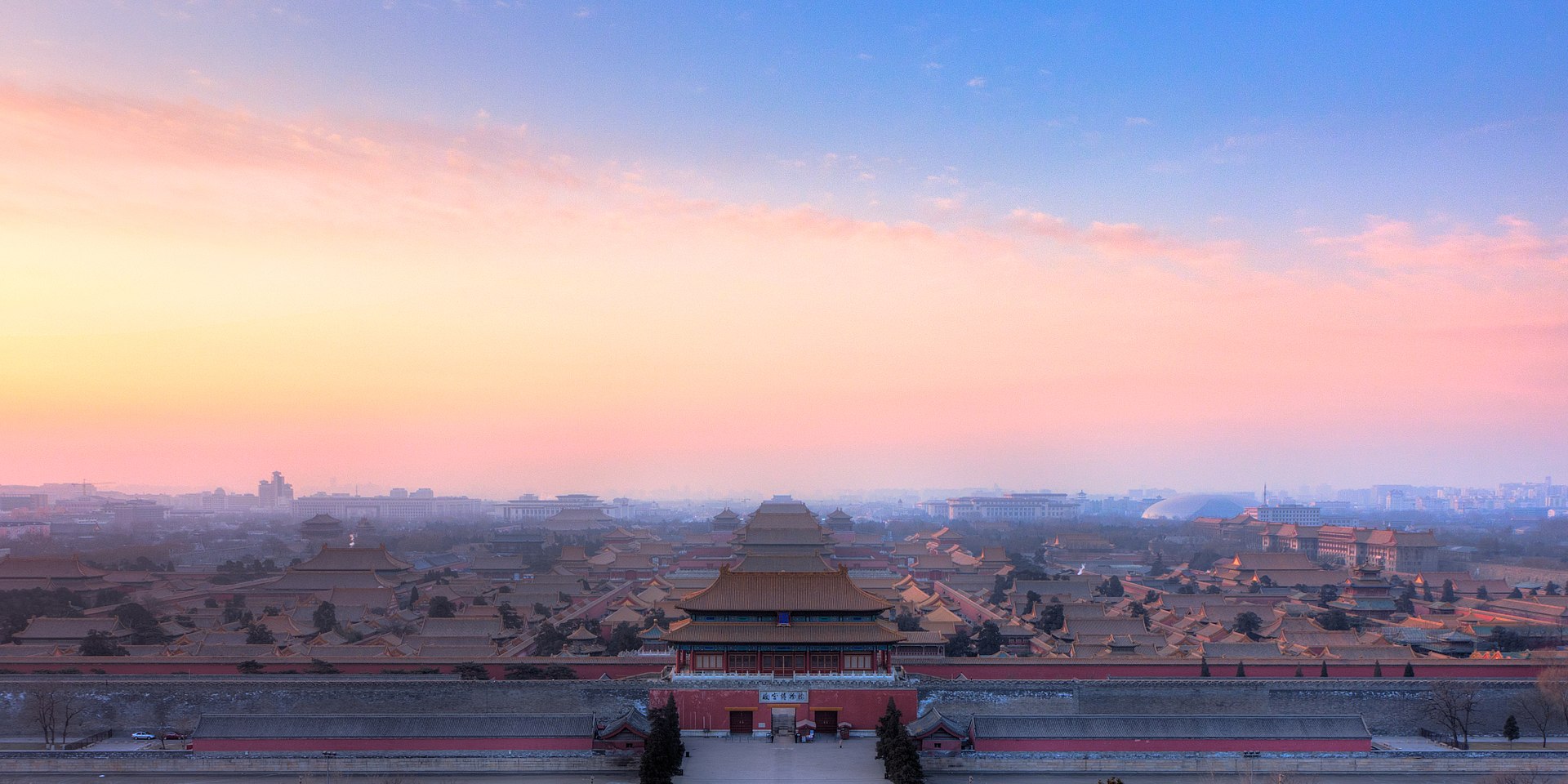
The Forbidden City, Beijing — golden tiled roofs and red walls of the Ming and Qing imperial palace
Tickets ~¥60 · closed Mondays · book ahead

The imperial palace of 24 emperors, with more than 9,000 rooms of red walls and golden roofs stretching as far as you can see. Walking it from south to north takes about half a day. Book your ticket online in advance and bring your passport to enter.

Metro: Tiananmen East/West, Line 1
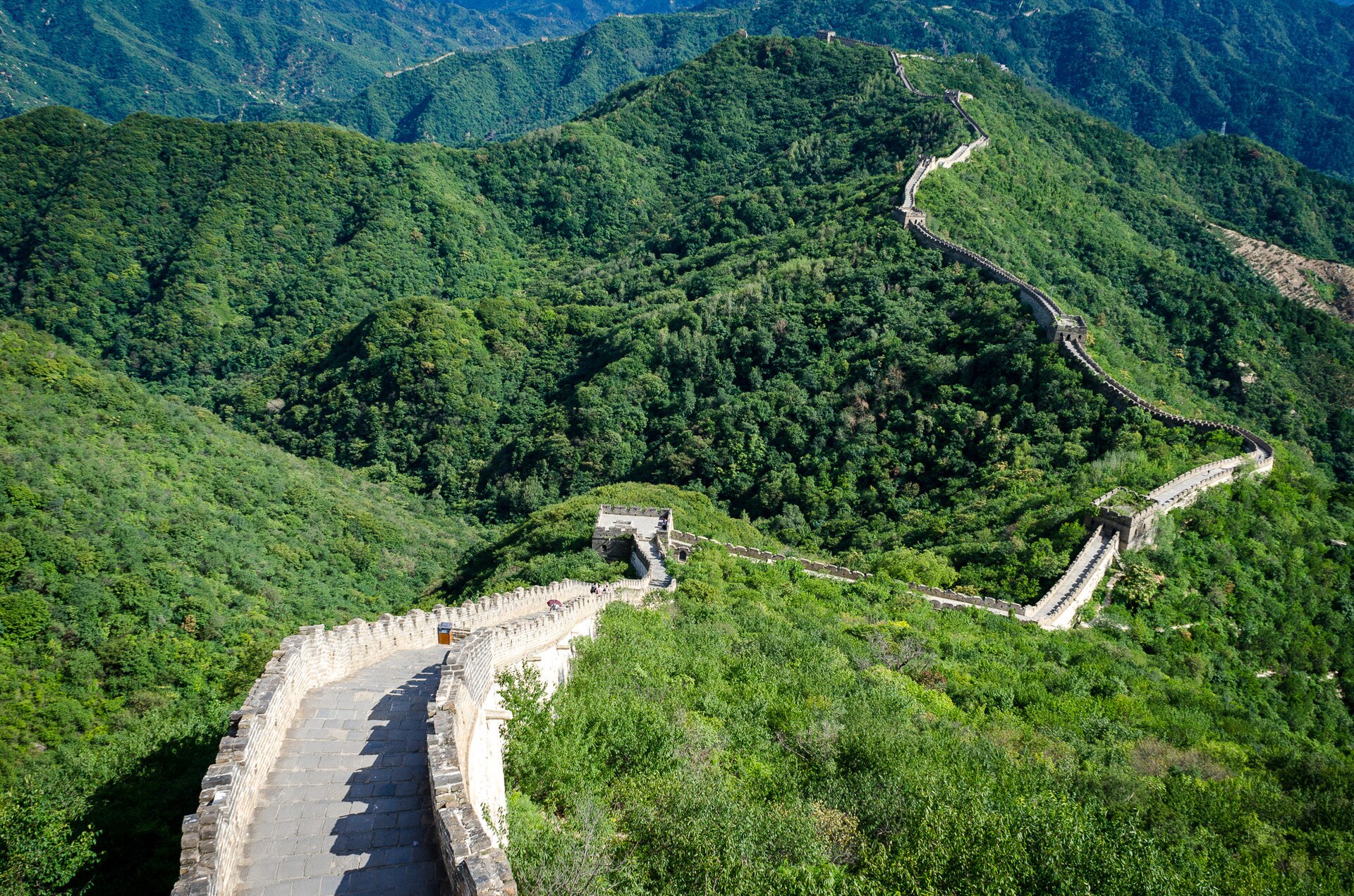
The Great Wall at Mutianyu — stone wall winding along forested ridgelines with watchtowers
Mutianyu/Badaling · a full day · cable cars available

The longest structure ever built by hand. The most popular sections near Beijing are Mutianyu (less crowded, with a cable car and toboggan) and Badaling (the closest and busiest). It is about two hours each way from the city, so set aside the whole day.

Getting there: half-day tour / D-line bus / private taxi
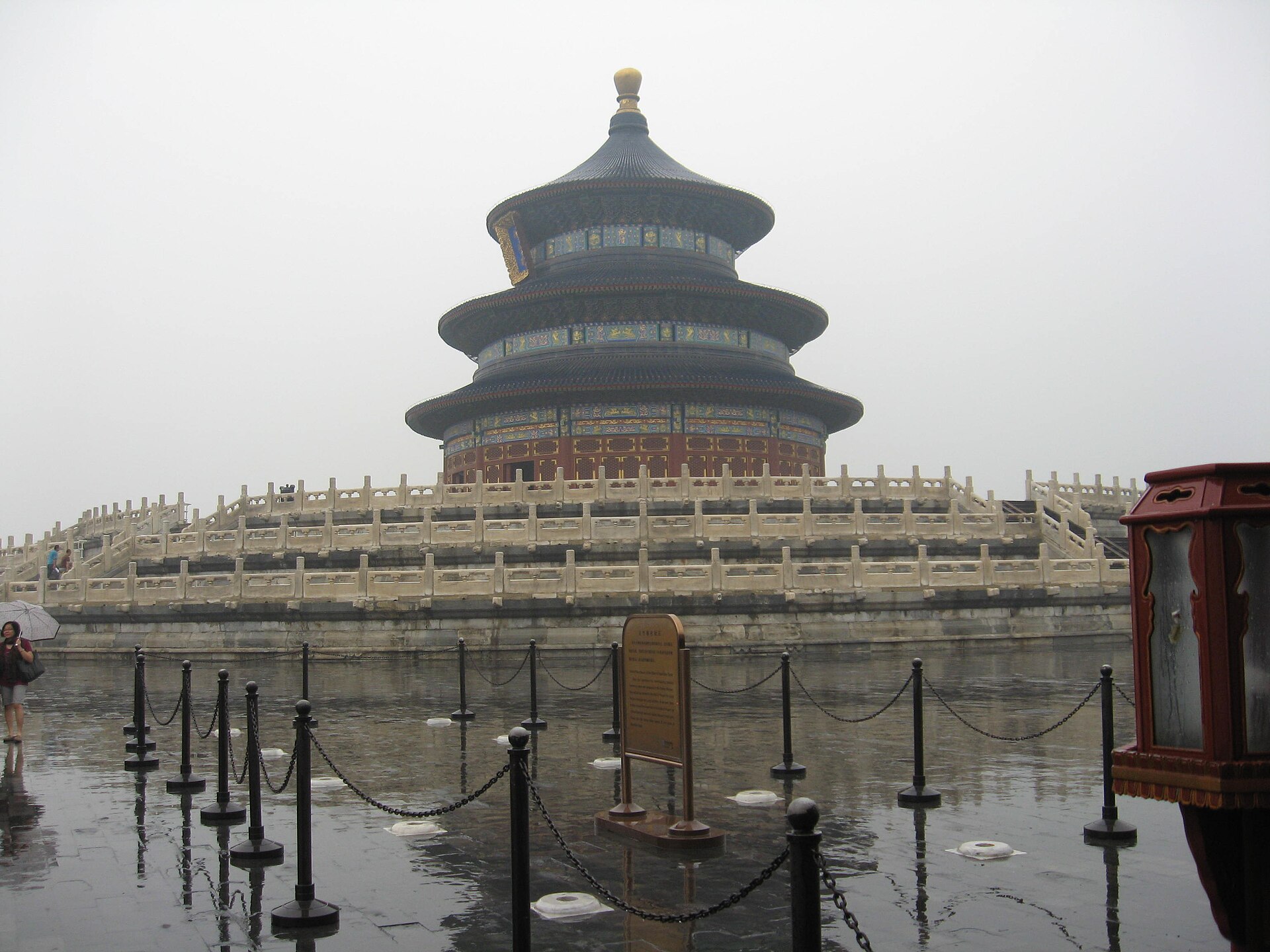
The Temple of Heaven, Beijing — the round triple-eaved blue-roofed Hall of Prayer on a white marble terrace
Tickets ~¥15–35 · go early for the locals

The altar where emperors once prayed for a good harvest. Its round, blue-roofed Hall of Prayer is one of Beijing's defining images. The surrounding park is huge — come early in the morning to see locals practising tai chi, dancing and singing opera, a scene you only get here.

Metro: Tiantan East Gate, Line 5
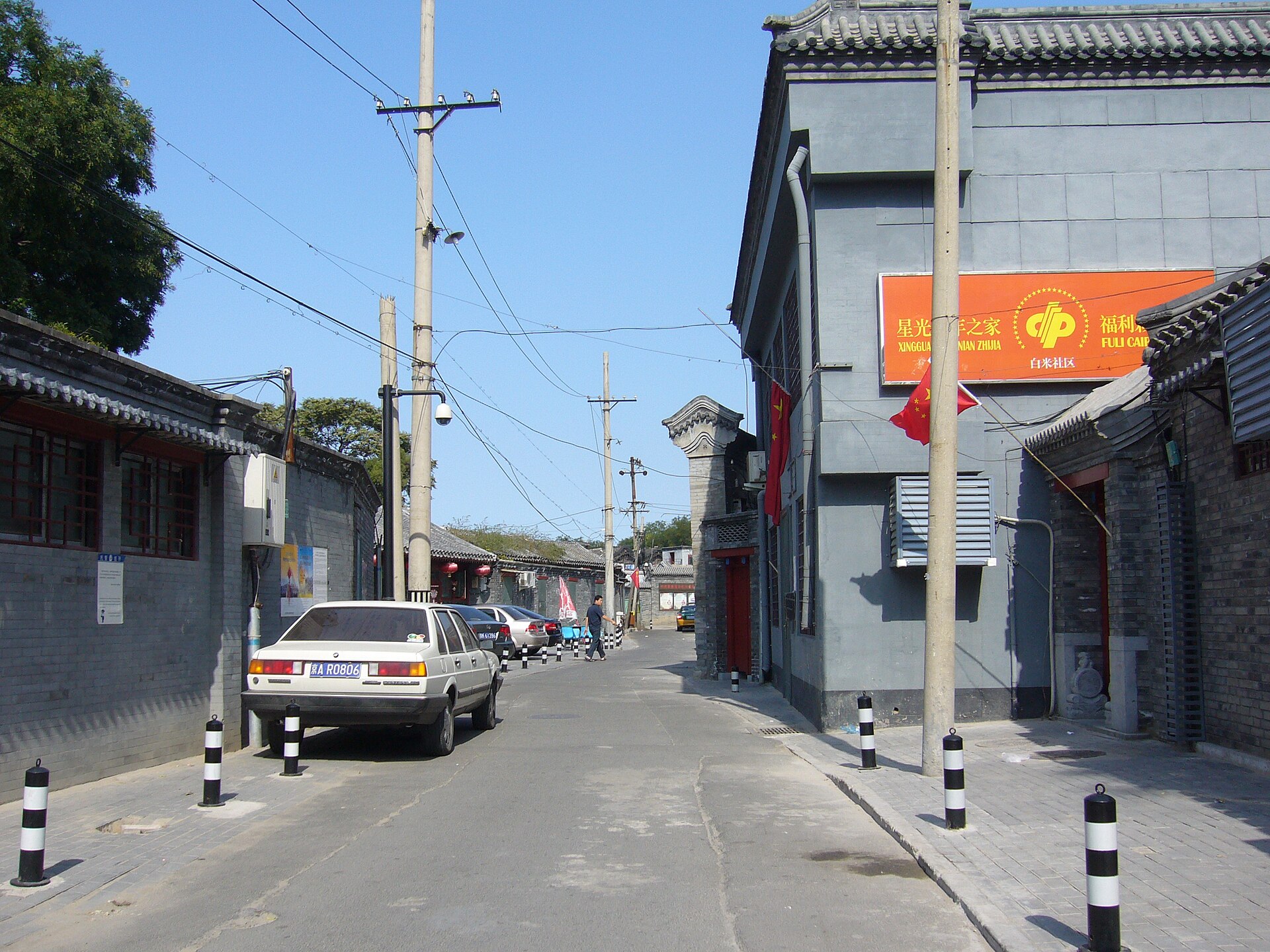
A Beijing hutong — narrow lane of traditional grey courtyard houses with bicycles parked along the wall
Free · open all hours · lively at night

The grey-walled courtyard lanes, centuries old, are the heart of traditional Beijing life. The Houhai and Nanluoguxiang areas are made for wandering, with cafes and bars lining the lakeside. Take a pedicab or simply get lost among the old courtyard homes.

Metro: Shichahai, Line 8 · Nanluoguxiang, Lines 6/8
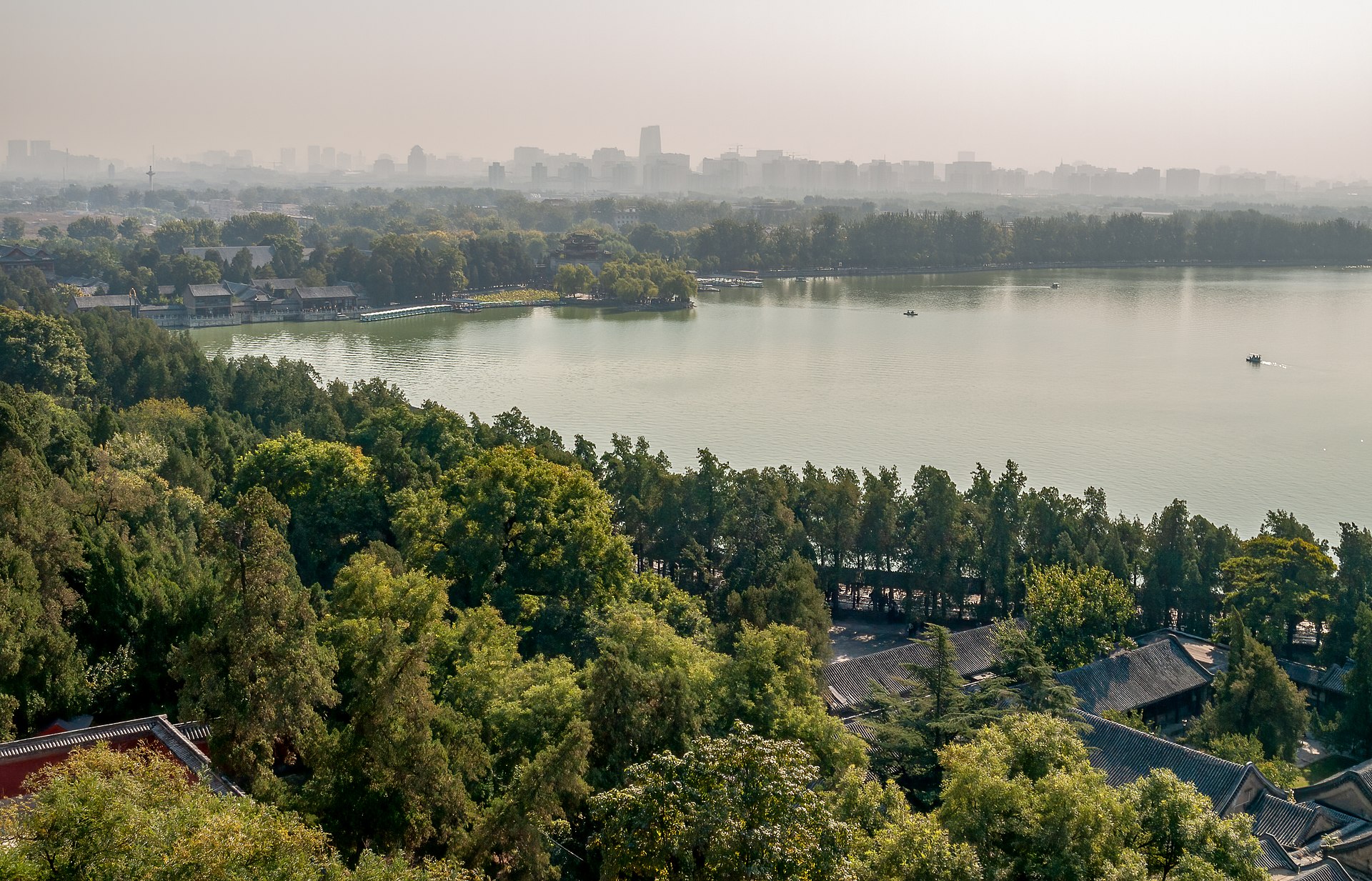
The Summer Palace, Beijing — the Long Corridor and tower by Kunming Lake in the Qing imperial garden
Tickets ~¥30–60 · allow half a day

The lakeside imperial garden beloved of Empress Dowager Cixi: the world's longest painted corridor, a temple-topped hill and a marble boat by Kunming Lake. It sits in the northwest suburbs, ideal for an afternoon on day four or five when you have time to spare.

Metro: Xiyuan, Line 4 · Beigongmen, Line 4
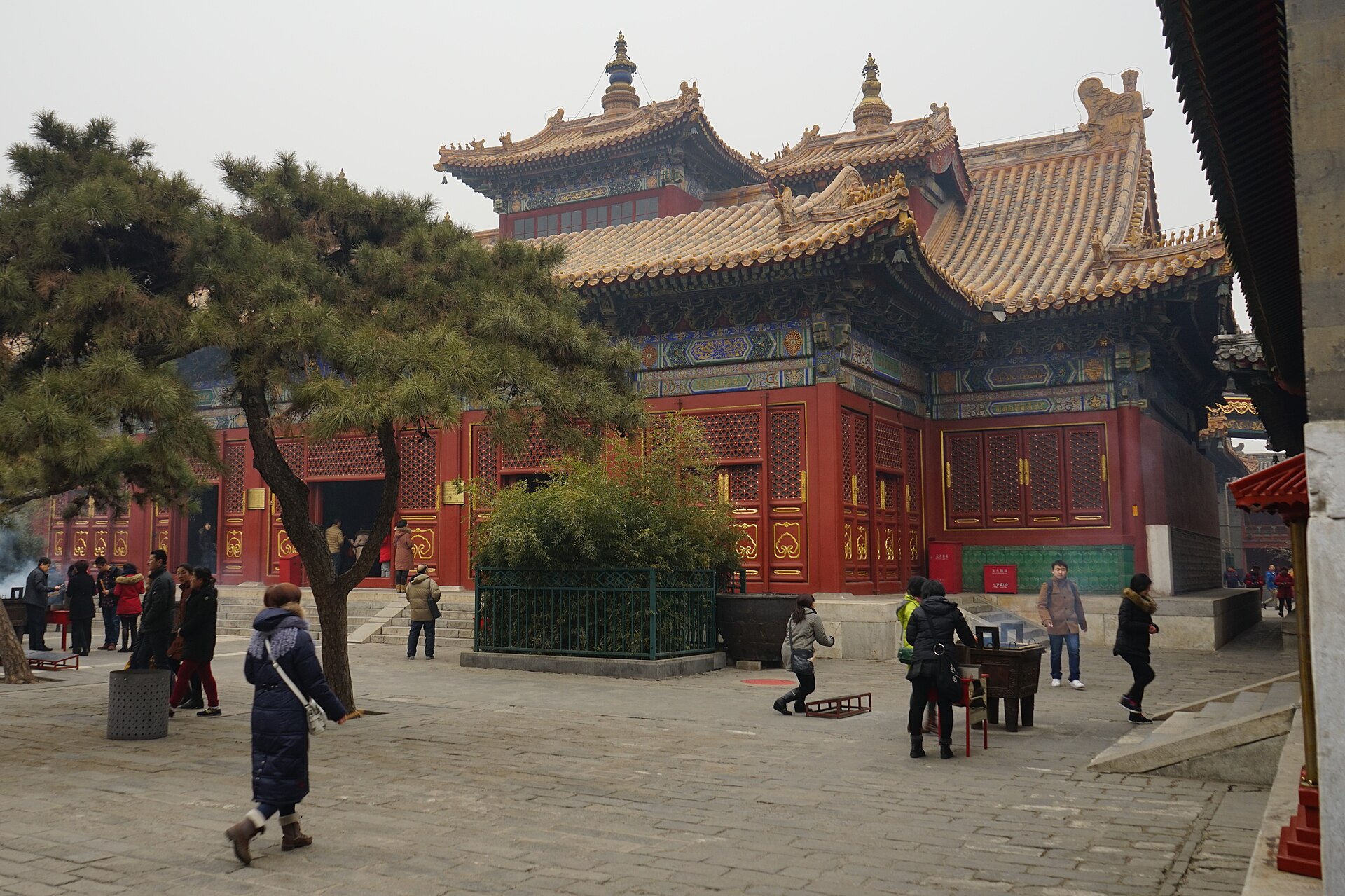
The Lama Temple, Beijing — Tibetan Buddhist halls with tiered golden roofs amid drifting incense smoke
Tickets ~¥25 · thick with incense

The most beautiful and revered Tibetan Buddhist temple in Beijing, home to an 18-metre Buddha carved from a single sandalwood trunk. Incense hangs heavy all day. A short walk away are the Confucius Temple and Guozijian, the old imperial college.

Metro: Yonghegong Lama Temple, Lines 2/5
Want the Wall sorted with no stress: half-day Mutianyu tours with transfers and cable-car tickets can be booked ahead. See the Great Wall guide → or day trips from Beijing →
What to eat

Beijing food worth seeking out

Beijing is a city of imperial-recipe roast duck, brass-pot mutton hotpot and hutong street food — bolder and saltier than southern Chinese cooking, heavy on spice and bean sauce. Full guide at Beijing food guide →

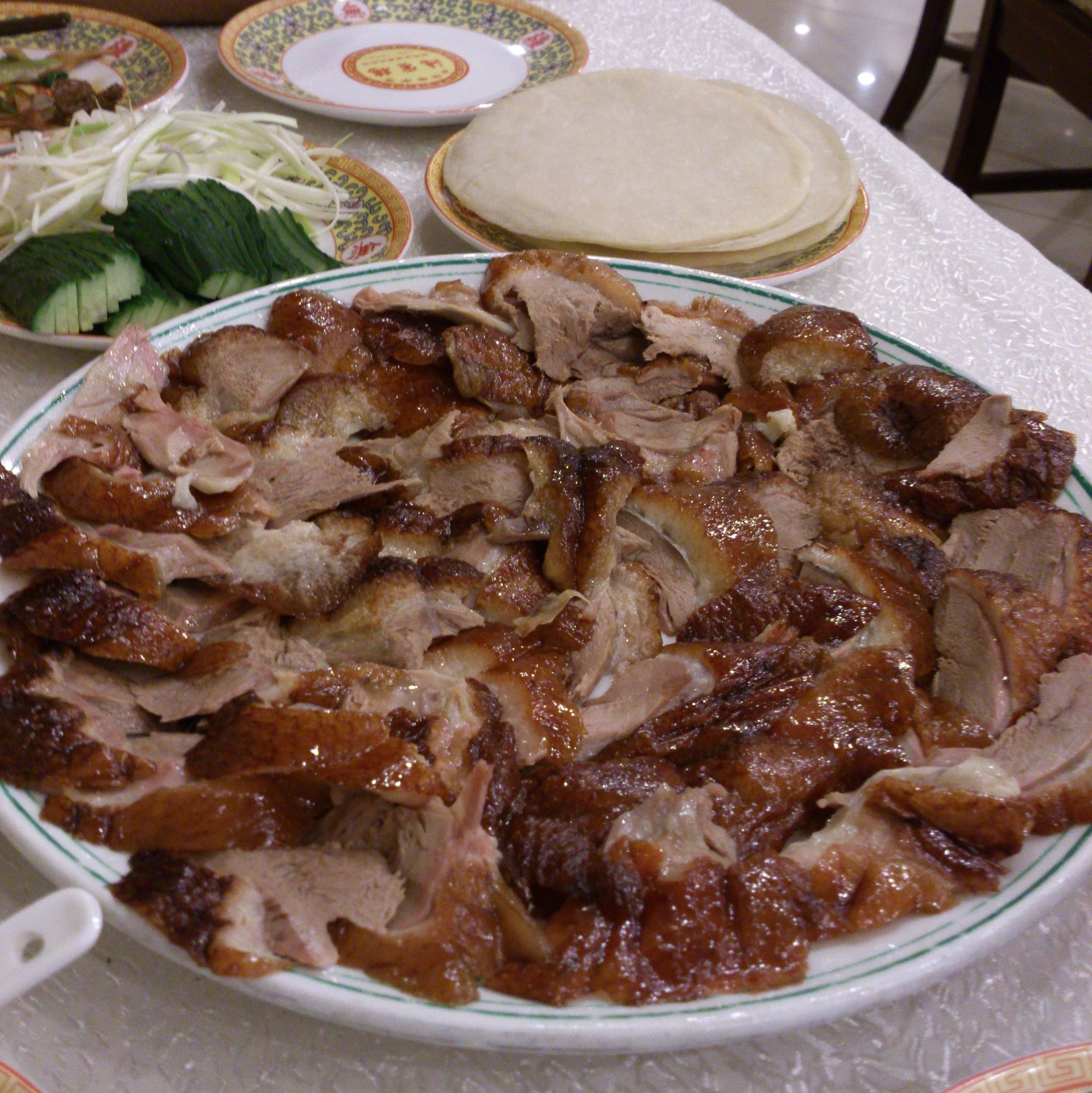
Peking duck — crisp golden-brown roast duck sliced thin, served with thin pancakes, spring onion and bean sauce
Peking Duck (北京烤鸭)
Crisp-skinned roast duck · the number-one must-eat

Every visitor says the same thing: do not miss the roast duck. Paper-crisp skin, tender meat, wrapped in thin pancakes with spring onion, cucumber and sweet bean sauce, and carved at your table. The famous houses — Quanjude and Da Dong among them — have been at it for over a century.

Price: ¥150–400 (~฿750–2,000) per duck · see Peking duck guide →
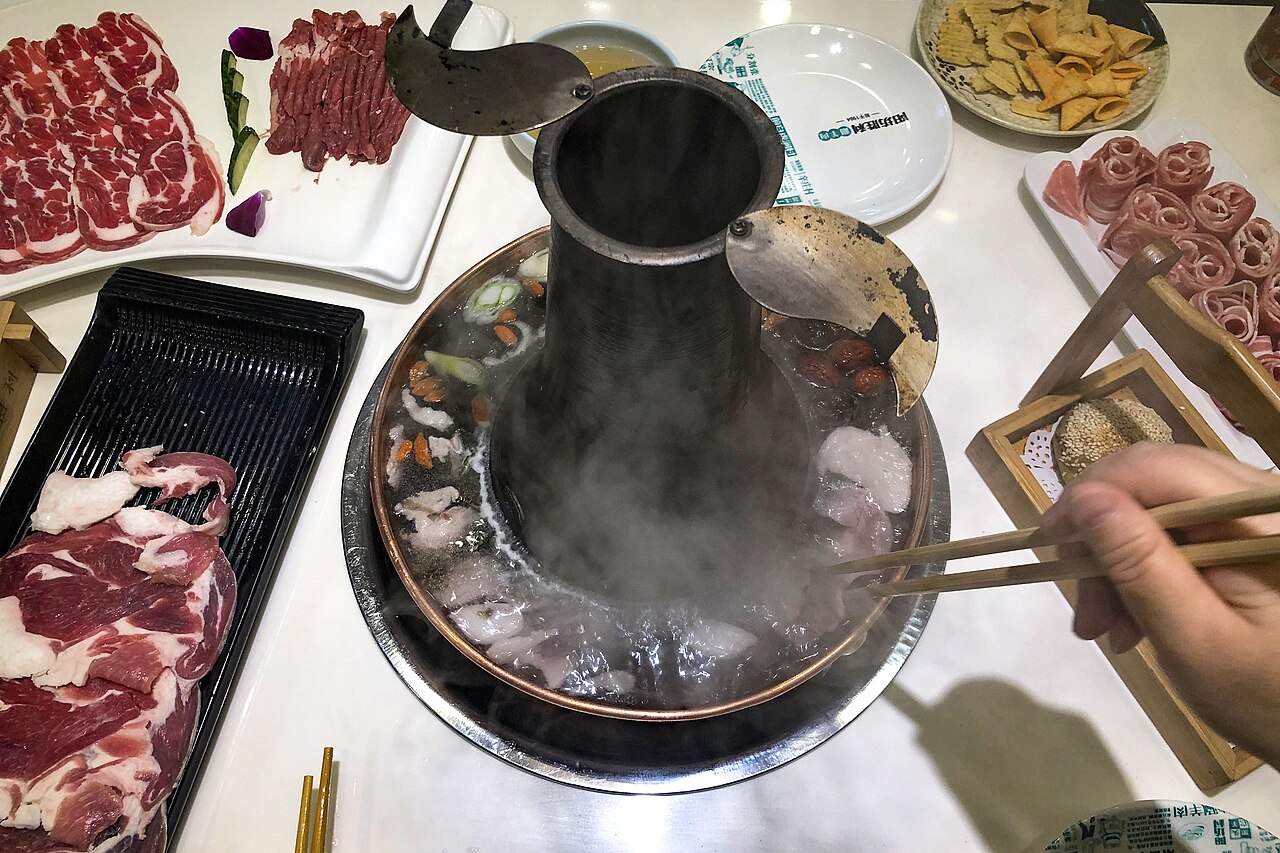
Beijing mutton hotpot — a brass pot of clear broth with thin-sliced lamb on a winter table
Mutton Hotpot (涮羊肉)
Brass-pot clear broth · Beijing's winter dish

In the cold months, Beijing-style mutton hotpot is pure comfort — a charcoal-fired brass pot of clear broth, thin slices of lamb dipped and eaten with sesame sauce. It is a world away from spicy Sichuan hotpot. Old houses like Donglaishun have been serving it for over a hundred years.

Price: ¥80–200 (~฿400–1,000) per person · see food guide →
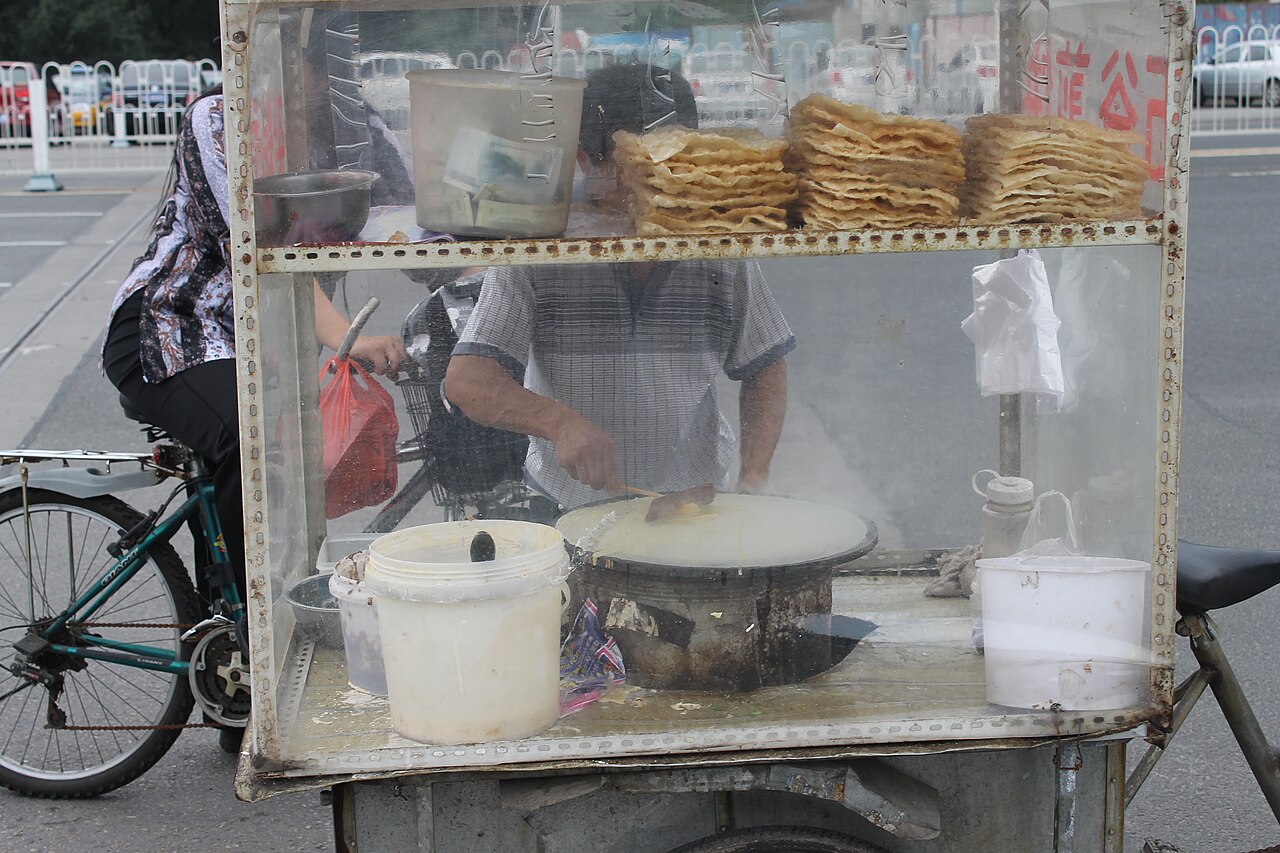
Beijing jianbing — a thin savoury egg crepe brushed with sauce and folded around a crisp cracker, street breakfast
Jianbing (煎饼)
Savoury egg crepe · the real Beijing breakfast

The city's favourite breakfast — a thin batter spread on a round griddle, cracked with an egg, brushed with sauce, scattered with coriander, wrapped around a crisp cracker and folded. Eaten hot off a street cart, it is filling and costs only a few yuan. Look for it in the hutongs in the morning.

Price: ¥6–15 (~฿30–75) · see Beijing street food →
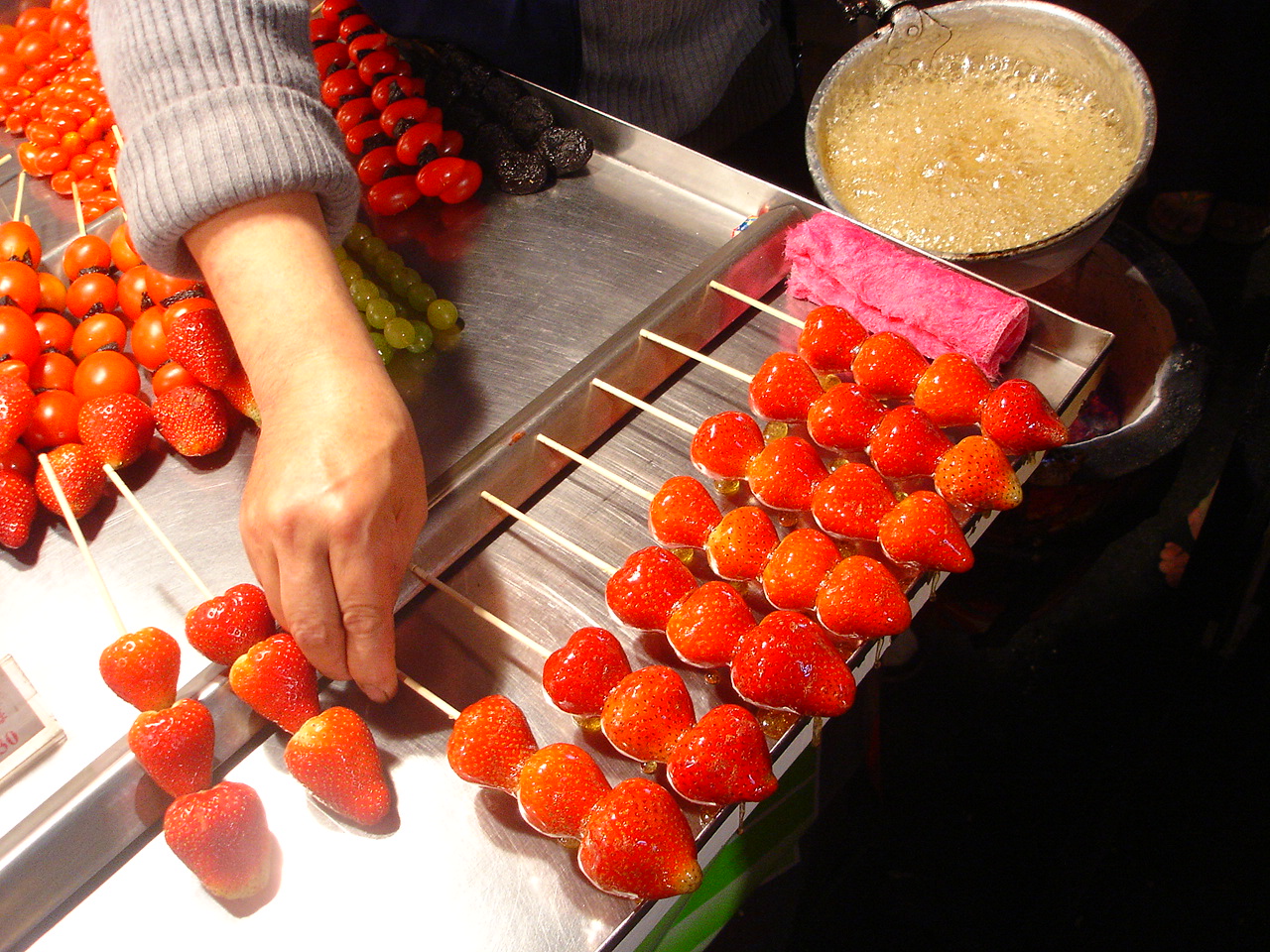
Beijing tanghulu — skewered red hawthorn fruits glazed in clear hard sugar, a glossy street snack
Tanghulu (糖葫芦)
Sugar-glazed fruit on a stick · a classic snack

Red hawthorn berries skewered and dipped in a clear, glassy sugar shell — tart inside, sweet and crunchy outside. This is Beijing's classic street snack, impossible to miss once you spot it, and easy to find around Wangfujing and the hutongs. Some stalls also do strawberry or grape versions.

Price: ¥10–20 (~฿50–100) per stick · common in tourist areas

More Beijing food: Peking duck guide → · street food → · full food guide →

Setting a budget

How much will it cost?

Beijing works on any budget — cheap accommodation is plentiful, the subway is very cheap and most sights cost little. Splurge on a luxury hotel or a famous duck house and the numbers climb, but they don't have to. Full breakdown at Beijing trip budget →

Level Hotel/night Food/day Total/day (rough)
Budget ¥150–300 (฿750–1,500) hostel or budget hotel ¥70–150 (฿350–750) ¥250–500 (~฿1,250–2,500)
Mid-range ¥400–800 (฿2,000–4,000) 3–4 star hotel ¥200–400 (฿1,000–2,000) ¥700–1,400 (~฿3,500–7,000)
Luxury ¥1,500–5,000+ (฿7,500–25,000+) ¥500–2,000+ (฿2,500–10,000+) ¥2,500–8,000+ (~฿12,500–40,000+)

Subway rides are ¥3–10 each. Most sight entry is ¥15–60; the Great Wall at Mutianyu is about ¥40 (cable car and transfer extra). A half-day Wall tour runs roughly ¥250–500. More at China budget guide →

Good to know

What first-timers get wrong

Carry your passport everywhere
Needed for sights and security checks

Beijing requires your actual passport (not a copy) to enter the Forbidden City, Tiananmen Square and many major sights, and to pass security checks at some metro stations. The Forbidden City's online ticket is tied to your passport number too. Keep it on you whenever you leave the hotel.

Tip: Photograph the photo page and keep it on your phone as a backup
Book the big sights in advance
The Forbidden City especially

The Forbidden City caps daily visitors and sells tickets online in advance only — in high season they sell out days ahead, so book early. It is closed on Mondays. Other sights such as the Temple of Heaven and the Summer Palace also use advance booking systems, so plan your days before you go.

Google / Facebook / LINE are blocked
Sort it before you leave home

China blocks all Google services (Maps, Gmail, Translate), Facebook, Instagram, LINE, YouTube and WhatsApp. Without a working VPN you are cut off. Set up a VPN on your phone before you leave, and download Amap (maps) and Baidu Translate as well. See the VPN & eSIM guide →

Substitutes: Amap for Google Maps · Apple Maps works · DiDi for taxis
Carry destinations in Chinese
Most taxi drivers don't read English

Metro stations and the airports have full English signage, but most Beijing taxi drivers cannot read English place names. Save your destinations in Chinese characters on your phone, or show the driver your screen in Amap or DiDi. Outside hotels, English is spoken less than in Shanghai.

Examples: Forbidden City = 故宫 · Tiananmen = 天安门 · Wangfujing = 王府井
Don't drink the tap water · avoid Golden Week
Bottled water; skip the long holidays

Tap water in Beijing is not drinkable — stick to bottled or boiled water; hotels usually provide a kettle. During National Day Golden Week (1–7 October) and Chinese New Year, the whole country travels at once: sights are packed, prices double or triple, and Forbidden City tickets vanish. Avoid these dates if you can.

Good windows: September to October (skip early Oct) / April to May
Watch for the tea house & art scam
Common in tourist areas

A friendly English-speaking stranger invites you to "taste tea" or "see an art exhibition," then steers you somewhere that ends in a huge bill. It turns up most often around Tiananmen Square and Wangfujing. If it happens, thank them and walk on. Beijing is very safe overall — this is just the one thing to watch.

Simple rule: A stranger inviting you somewhere unplanned — say thanks and keep walking
Before you go

Your first-trip checklist

Before you fly
Sort these before leaving home

☑ Check the current visa / visa-free rules (passport valid 6+ months)
☑ Set up a VPN and download Amap, Baidu Translate, DiDi
☑ Install the tourist version of Alipay, link a Visa/Mastercard
☑ Buy a China eSIM or arrange roaming
☑ Book your Forbidden City ticket online in advance

Links: Visa · VPN/eSIM · Payments
Once you land in Beijing
Do these on day one

☑ Take the Airport Express into the city (check whether you're at PEK or PKX)
☑ Add the metro pass inside Alipay/WeChat to scan straight through
☑ Withdraw ¥500–1,000 in cash as a backup
☑ Carry your passport at all times · drink bottled water
☑ Save your destinations in Chinese on your phone

Frequently asked

FAQ · before you go

How many days should I spend in Beijing as a first-timer?
Four to five days is the sweet spot. The Forbidden City and Tiananmen Square take most of a day; the Great Wall needs a full day of its own; and the Temple of Heaven, the hutongs and the Summer Palace are all worth your time. Three days will cover the main highlights, but it will feel rushed. See the plans at 1 day · 3 days · 5 days
Do Thai nationals need a visa for Beijing?
As of 2026, Thai passport holders enter China visa-free for up to 30 days for tourism. Travellers of other nationalities transiting to a third country may be able to use the 240-hour (10-day) visa-free transit scheme. Both arrangements can change, so verify the current rules with the Chinese embassy or the China visa-free entry guide → before booking.
What if I don't have Alipay or WeChat Pay in Beijing?
Large hotels and stores accept Visa and Mastercard, but small restaurants, market stalls and hutong street vendors typically take mobile payment only. Set up the tourist version of Alipay before you leave home (it accepts foreign cards), or withdraw Chinese yuan from an ATM as a backup. Full guide at paying in China →
Does Google Maps work in Beijing?
Google Maps and all Google services, plus Facebook, LINE and Instagram, do not work in China without a VPN. Download Amap (Gaode Maps) before you leave, or use Apple Maps (which works in China), and DiDi for ride-hailing. For VPN and eSIM, see the VPN & eSIM guide →
What is the best month to visit Beijing?
Autumn (September to October) is the best: clear skies, cool comfortable weather and turning leaves. Spring (April to May) is the next best. Avoid National Day Golden Week (1–7 October) and Chinese New Year, when crowds peak and prices surge. Summers are hot and humid; winters are very cold but quiet and cheaper. Details at when to visit China →
Is Beijing safe for solo travellers?
Beijing is very safe for solo travellers. Crime rates are low, the metro has English signs, and walking the main areas like Wangfujing or Houhai at night is not a concern. Just watch for the tea house and art scam (a stranger inviting you to taste tea or see art, ending in a huge bill) around Tiananmen and Wangfujing — and carry your passport, which you need to enter sights and pass security checks.
Klook · Beijing Activities

Book Beijing tickets and tours in advance — skip the queues

Mutianyu Great Wall tours, cable-car tickets, Forbidden City entry, acrobatics and kung fu shows — book ahead on Klook and arrive without the stress of sold-out queues.

Browse Beijing on Klook →
Wherebest is an affiliate partner of Klook — we may earn a commission when you book through our links, at no extra cost to you.