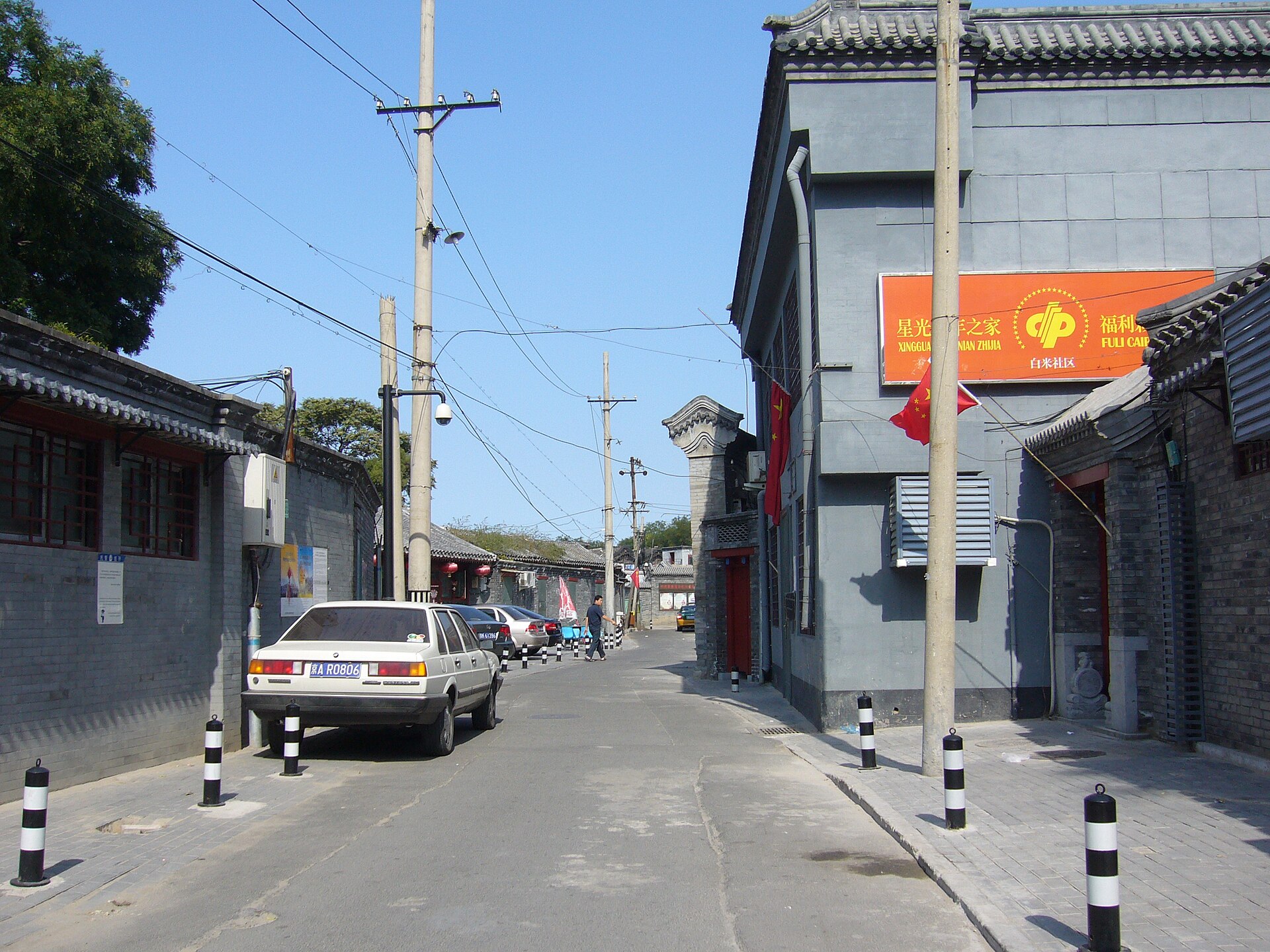
Where Ming and Qing emperors came once a year to pray to heaven for a good harvest — a three-tiered hall with a deep-blue roof, built entirely of wood without a single nail, at the heart of a 267-hectare imperial park.
Picture an early morning in Beijing: you walk in through the East Gate, past stands of old cypress trees, and hear Peking opera drifting from a circle of retirees singing together. A little further on, someone is moving through slow tai chi; another is writing huge Chinese characters on the stone path with a brush dipped in water; in a far corner, a group keeps a feathered shuttlecock in the air with their feet. Then the path rises, and the deep-blue, three-tiered roof of the Hall of Prayer for Good Harvests lifts itself above a white marble terrace.
That is the Temple of Heaven (天坛 Tiāntán) — a complex of altars and prayer halls where the emperors of the Ming and Qing dynasties performed the winter-solstice rites, praying to heaven for an abundant harvest. It was built in 1406–1420 under the Yongle Emperor, the same era as the Forbidden City, and has been a UNESCO World Heritage Site since 1998.
What many visitors do not realise is that the temple is more than its halls: it stands in an imperial park of about 267 hectares — larger than the Forbidden City itself. Roughly three-quarters of visitors come simply for the park, because every morning Beijingers come here to live their daily lives. That makes the Temple of Heaven both an ancient monument and a genuinely living public park at the same time.
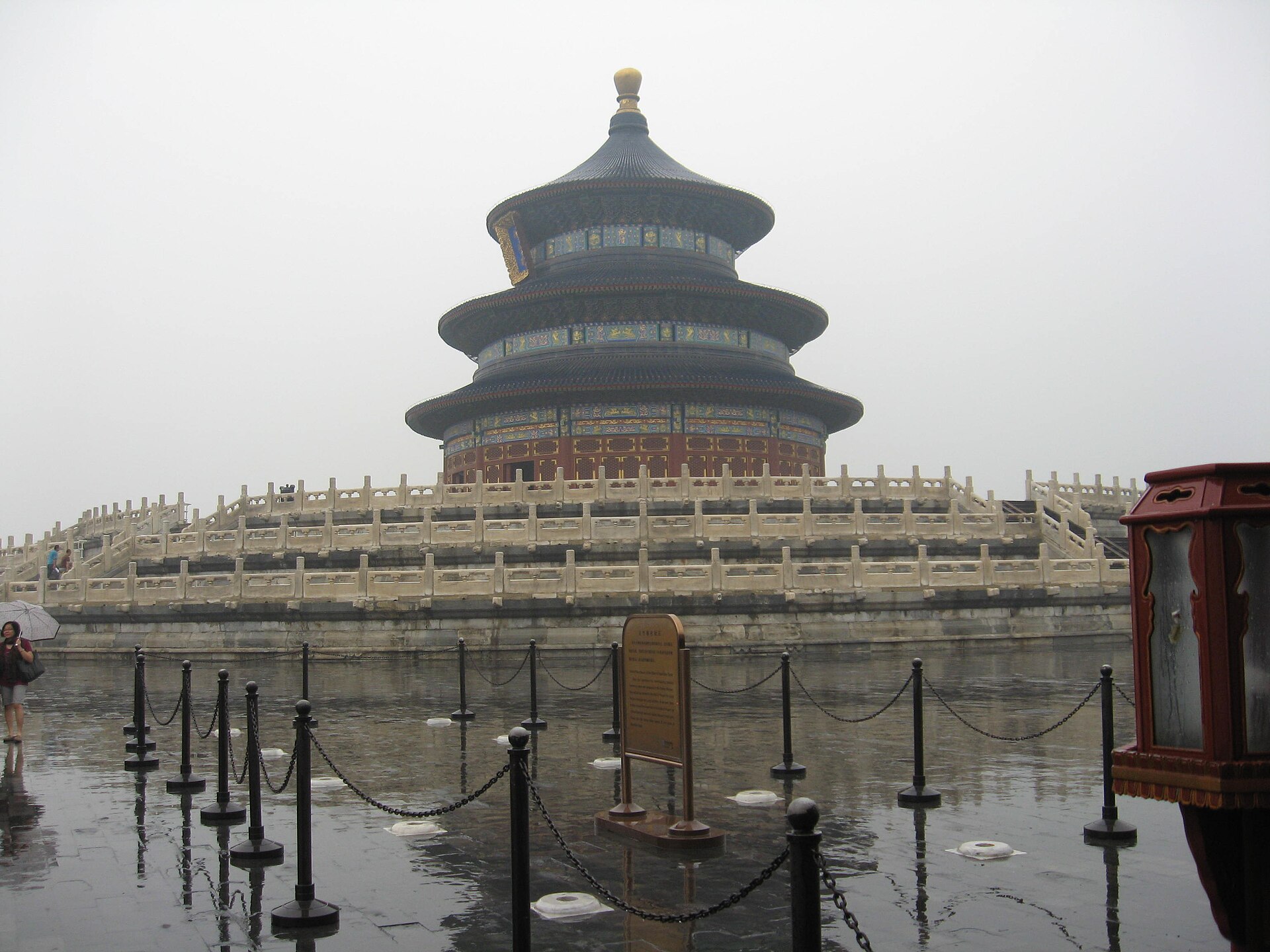
Walk the central axis from south to north — the same route the emperor followed during the rites.
The star of the temple and one of the defining images of Beijing: a three-tiered circular hall with a deep-blue glazed-tile roof topped by a gold finial, raised on a triple white-marble terrace. The remarkable part is that it is built entirely of wood using traditional Chinese interlocking joinery — no nails, no glue. The interior pillars are grouped to carry meaning: the four seasons, the twelve months and the twelve two-hour periods of the day.
A smaller single-roofed circular hall that once stored the sacred tablets used in the heaven-worship ceremony between rites. Sitting at the centre of its own round courtyard, it looks like a scaled-down version of the Hall of Prayer — and photographs just as well.
The circular wall enclosing the Imperial Vault of Heaven is famous for its acoustics. The story goes that two people standing at opposite points of the wall can hear each other speak softly, the sound travelling along its curved surface. It is a favourite spot to test — though when the crowds are thick, the chatter tends to drown the effect.
An open-air, three-tiered circular altar of white marble at the southern end of the axis — the actual spot where the emperor performed the winter-solstice sacrifice to heaven. Stand on the round 'Heart of Heaven' stone at the centre of the top tier and speak: many visitors find their voice echoes back at them, amplified by the surrounding marble.
The park is large, and wandering at random is both tiring and means you miss the sequence the place was designed around. The best route is to follow the central axis from south to north — start at the Circular Mound Altar, climb to the Imperial Vault of Heaven and Echo Wall, cross the raised Danbi Bridge, and finish at the Hall of Prayer for Good Harvests as your final highlight. This is the same order the emperor processed through during the actual ceremony.
If you enter via the East Gate (closest to Subway Line 5), you will reach the Hall of Prayer first. You can either loop down to the Circular Mound Altar in the south and walk back up, or simply see the Hall of Prayer first and work your way south — both work fine.
The thing most visitors miss is the morning life of the park. Around 7 to 8 am, Beijingers come out to practise tai chi, dance, sing in choirs and perform Peking opera, write water-calligraphy on the stone paving, kick the jianzi shuttlecock and play cards in groups. This is the real Beijing, the part no tour bus delivers — and it is also when the crowds are thinnest, so the halls photograph far better than they do mid-morning.
The most comfortable seasons are spring and autumn. Summer is hot, and the open marble altars have almost no shade, so bring a hat and water if you come then.
There are two tickets, and it pays to understand them before you buy. The through-ticket (联票) costs roughly ¥34 in high season (April–October) and ¥28 in low season, and covers the park plus all the major monuments (the Hall of Prayer, the Circular Mound Altar and the Echo Wall). The park-only ticket is about ¥15 / ¥10 and lets you walk the grounds but not enter the halls.
If you have come to see the Hall of Prayer up close — which is the main reason most people are here — buy the through-ticket. You can get it at the gate machines or through the park's official WeChat mini-program, and remember to bring your passport.
The easiest way is Subway Line 5, which drops you right at the East Gate.
All of these sit in the central-southern part of the city and connect easily by subway.