Home Beijing China Beijing Hotels About
Home  ›  Asia  ›  China  ›  Beijing  ›  3-Day Itinerary
🗓️ Beijing Itinerary · 3 Days · 2026

3 Days in Beijing —
From the imperial axis to the Wall

Walk the city's central axis through the Forbidden City on day one, climb a watchtower-studded ridge of the Great Wall on day two, and cycle the lanes around Houhai lake on day three — three days laid out to show you both the old dynasty and the city that still breathes around it.

Why 3 days

Beijing is bigger than it looks — plan it or burn the day on the metro

Beijing is the city first-timers most often misjudge. The Forbidden City alone eats half a day; the Great Wall needs a full one; and the distances between sights are far larger than they appear on a map. Get the sequence wrong and you spend most of your time riding the metro across town instead of standing still on Jingshan hill, watching the last light slide off the golden roofs of the Forbidden City.

This plan is built for a first visit to Beijing. Day one stays within walking range of the central axis (palace, Tiananmen, Jingshan); day two gives the Great Wall a full day to itself; and day three keeps you in old Beijing — the Temple of Heaven, the Lama Temple and the Houhai hutongs, where people still cycle the lanes for real. Every leg runs on the metro (except the Great Wall day, which needs a transfer by road). For the full list of sights, see our Beijing attractions guide.

Want more time? Add the Summer Palace, Universal Beijing and an out-of-city excursion using our Beijing day-trips guide.

Before you go

Three things to sort out before you land

Nothing derails a Beijing trip faster than missing the Forbidden City ticket window or being unable to pay for anything all day. Handle these three at home and the trip runs smoothly from the start.

🎟️
Book the Forbidden City early

Tickets release exactly 7 days ahead at around 8:00 PM Beijing time via the WeChat mini-program or official site, and they sell out fast. Set an alarm and book the moment they open. Use your real passport number when booking and carry that passport to the gate. Closed every Monday.

📱
Set up Alipay / WeChat Pay

Link a foreign Visa or Mastercard to Alipay (international version) before you leave home. Most Beijing shops accept QR payment only — some take no cash at all — and you can scan to pay metro fares too. See our Alipay & WeChat Pay setup guide.

🗺️
Download Amap + a VPN

For maps inside China, Amap (Gaode) or Apple Maps are far more accurate. Google Maps, LINE and Instagram need a VPN, which you must download and pay for before arrival — most VPN websites are blocked inside China.

Day One

The Imperial Heart of Dongcheng

One of the largest public squares on earth, a palace of nearly a thousand buildings, and golden roofs seen from a hilltop at sunset — a day spent entirely within walking range.
01
Day 1
Tiananmen · Forbidden City · Jingshan Park
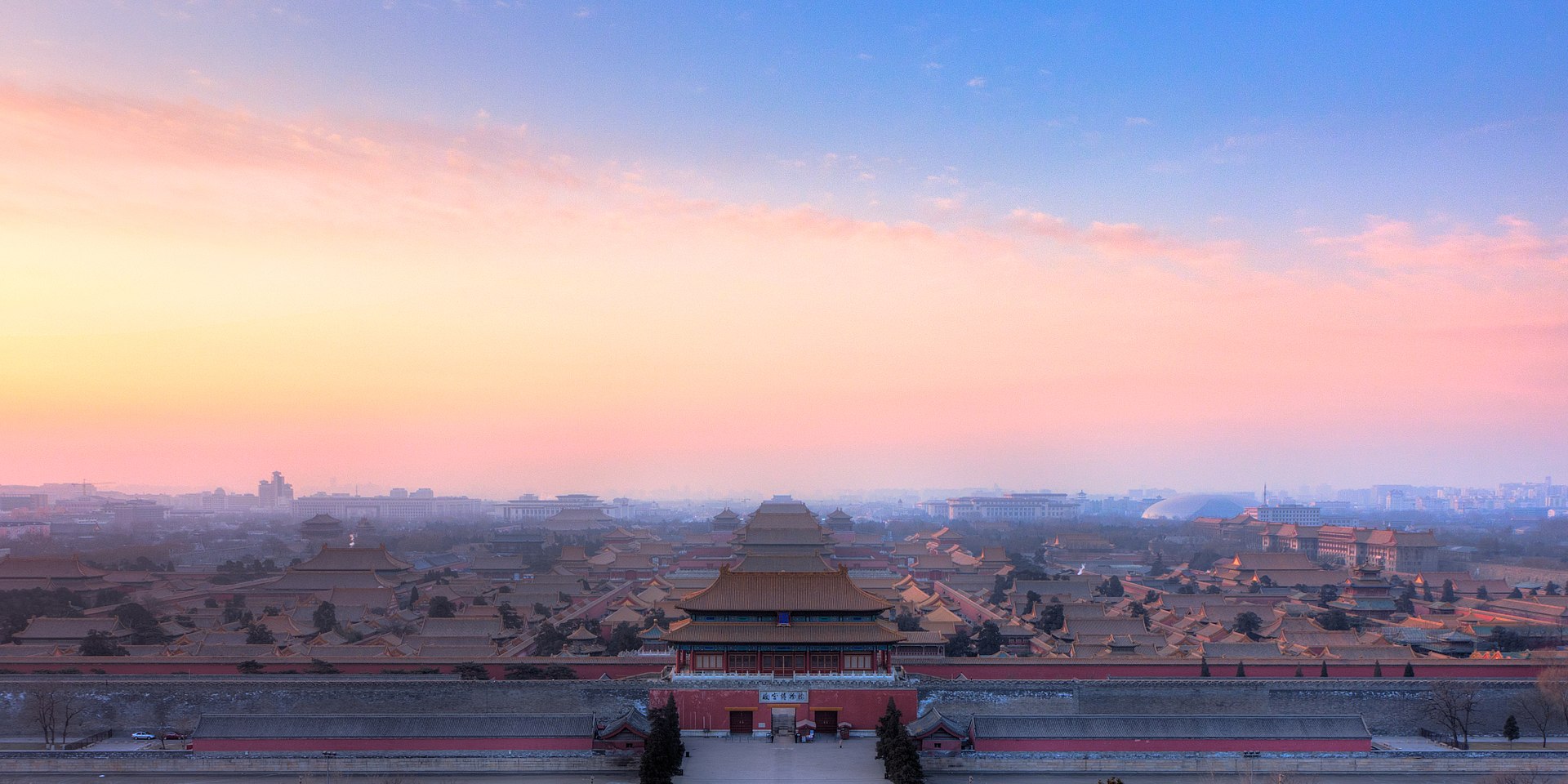
The Forbidden City Beijing — sweeping golden-tiled roofs and red walls along the central palace axis
Morning · ~3.5 hours
Tiananmen Square (天安门广场) + enter via the Meridian Gate

Start early at Tiananmen Square. Security here is strict — you'll pass a passport scan and a bag check, so carry your physical passport at all times and allow a little queuing time. Stand in the middle and take it in: the portrait of Mao above Tiananmen Gate to the north, the Monument to the People's Heroes, and the Great Hall of the People flanking the square.

Then pass through Tiananmen Gate into the Forbidden City, entering through the southern Meridian Gate (午门). Walk the central axis past the great courtyards and the three throne halls, through the imperial garden, and out through the northern Gate of Divine Prowess (神武门). The walk is longer than it looks — budget a comfortable 2.5 to 3 hours. For the central-axis route and the rooms not to miss, read our Forbidden City guide.

Metro: Line 1 to Tiananmen East/West · or Line 2 to Qianmen and walk north
Forbidden City ticket: ¥60 high season (Apr–Oct) · ¥40 winter (Nov–Mar) · book 7 days ahead via WeChat · closed Mondays
Hours: 08:30–17:00 (last entry 16:00) in high season · closes 30 min earlier in winter
Important: the palace is one-way from south to north — once you exit the Gate of Divine Prowess you cannot re-enter. Plan to see everything in a single pass. The north gate then sits directly across the road from Jingshan.
Afternoon · ~2 hours
Jingshan Park (景山公园) for the view down the axis

Step out of the palace's north gate and cross the road to Jingshan Park, an artificial hill built from the earth dug out of the palace moat. The climb to the Wanchun Pavilion at the summit takes 10 to 15 minutes — and rewards you with the best view in Beijing. Below you, the golden roofs of the Forbidden City line up along a perfect central axis, with the modern skyline behind. Late afternoon into early evening gives the softest light for photos.

Walk: from the Gate of Divine Prowess, cross the road to the entrance, ~3 minutes
Ticket: ¥2 (~$0.30 USD) · open roughly 06:30–21:00 (check seasonally)
Best for the view: late afternoon to sunset — climb before the light fades to catch both the daytime view and the golden hour
Evening · ~2.5 hours
Wangfujing or Qianmen + your first Peking duck

Come down from Jingshan and take a short metro ride or taxi to Wangfujing (王府井), the central pedestrian shopping street, or to Qianmen and Dashilan (前门 · 大栅栏), a restored old-style street with a heritage tram. Both make easy spots for a first dinner. Night one in Beijing calls for Peking duck — well-known names include Siji Minfu (四季民福), which has a branch with a palace view, and the historic Quanjude (全聚德). Book ahead if you're going at peak times. For more recommendations, see our Peking duck guide.
Metro (Wangfujing): Line 1 to Wangfujing station
Peking duck: ~¥150–300 per person (a half or whole duck shared) · popular spots have long queues — reserve ahead
Back to your hotel: Lines 1, 2 and 5 cover the whole Dongcheng district
Day Two

The Great Wall — a full day

A wall running along the mountain ridge, a cable car up and a toboggan down, and an early start to beat the crowds — the one day you leave the city, and worth every minute.

02
Day 2
The Mutianyu Great Wall (慕田峪长城)
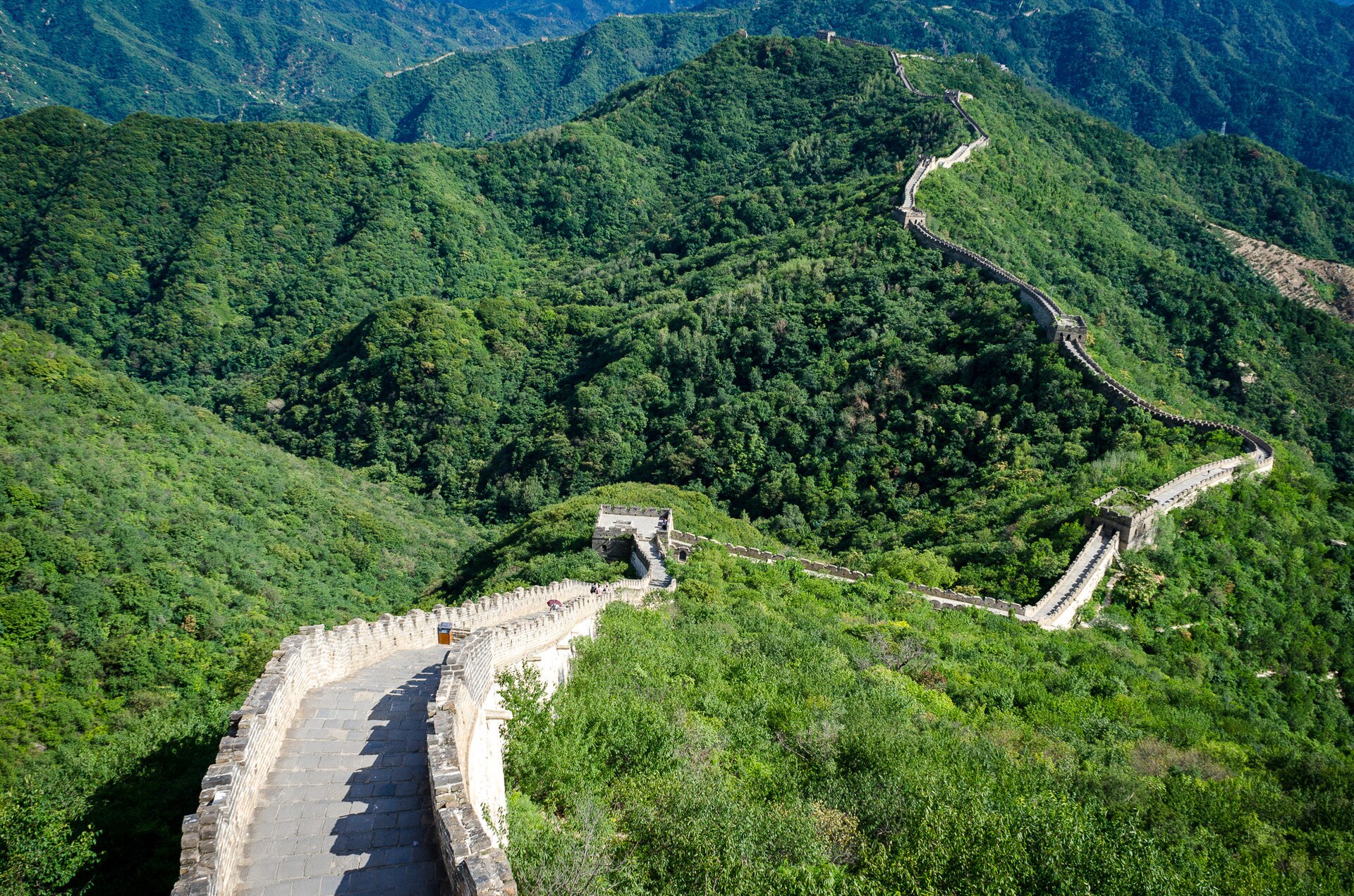
The Great Wall near Beijing — stone ramparts winding along a green mountain ridge with watchtowers at intervals
Early start · the whole day
Getting to Mutianyu — leave as early as you can

Give the Great Wall the entire day, and for a first visit choose the Mutianyu section: the views rival Badaling but the crowds are far thinner, the wall is framed by green hills, and there's a fun cable car up plus a toboggan down. The key move is to leave the city as early as possible (before 8 am) to beat both the traffic and the mid-morning crush on the ramparts. It's around 1.5 to 2 hours from central Beijing each way.

There are several ways to go — a private car or chartered day-trip, a public bus plus the local shuttle, or a half- or full-day tour with round-trip transfers (the easiest option for first-timers). Compare every transport method, ticket price and alternative wall section in our full Great Wall guide.

Mutianyu entrance: ¥45 (~$6 USD) + the in-park shuttle bus, charged separately
Cable car: round trip ~¥120 · chairlift-up + toboggan-down combo ~¥140
Cable car / toboggan hours: roughly 08:00–17:00 (16 Mar–15 Nov) · check seasonally
Tip: take the cable car up to save your energy for walking the wall, then ride the toboggan — a metal-track slide down the hillside — back down, about 5 minutes and easy on the knees. Children under 1.2 m ride free. Booking tickets ahead via Klook cuts your queue time.
Afternoon · on the wall
Walk the ramparts between watchtowers

The Mutianyu section has a long string of watchtowers, with a broad, well-restored walking surface that's easier underfoot than many other stretches. Walking between Tower 6 and Tower 10 gives you the best views without overdoing it, though a few sections are steep enough to get your legs working. Bring water, a hat and sunscreen — there's little shade up on the ridge. Two to three hours is about right for exploring.

Bring: water, a hat, sunscreen, comfortable walking shoes
Lunch: restaurants near the park entrance · tourist prices, budget ¥80–150 per person
Best window: morning to early afternoon, for good light before the crowds build
Evening · optional
Back in the city + the Olympic Park lit up (if you have the energy)

You'll be back in town by early evening. If you still have energy and your hotel is on the north side, swing by the Olympic Park to see the Bird's Nest stadium and the Water Cube lit up after dark — both are striking, and walking around the outside is free. But if the wall has worn you out, heading straight back to rest and saving your legs for day three is no failure at all: this is the most physical day of the trip.

Metro (Olympic Park): Line 8 to Olympic Sports Center or Olympic Green
Bird's Nest / Water Cube: free to view from outside · interior tickets are extra (check ahead)
Dinner: something simple near your hotel · take the evening easy
Day Three

Old Beijing — temples, parks and lanes

A prayer terrace where emperors once petitioned heaven, incense in a Tibetan temple, and a bicycle through the lanes by the lake — the day Beijing turns into a living city.

03
Day 3
Temple of Heaven · Lama Temple · Houhai hutongs · Sanlitun
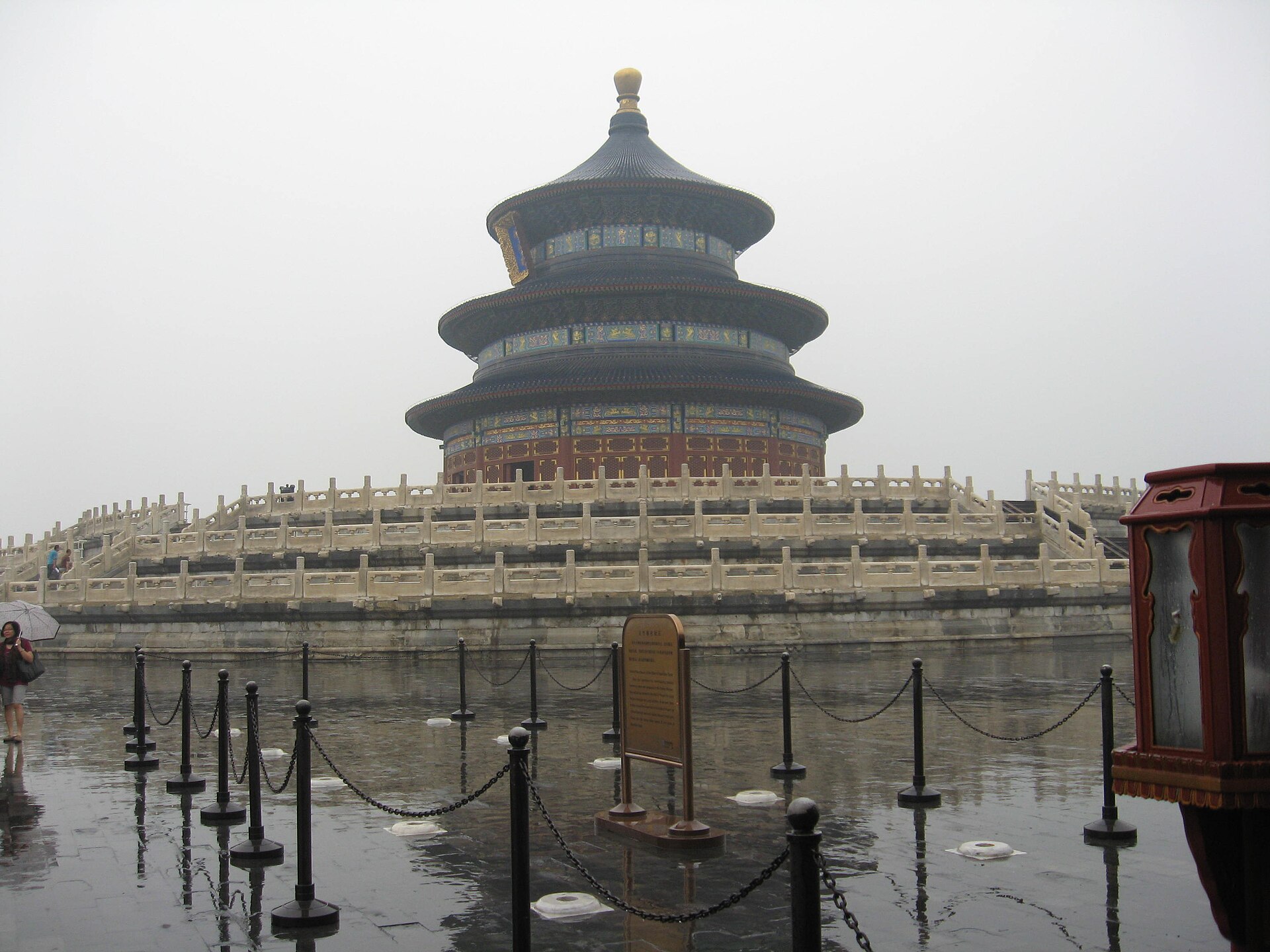
The Temple of Heaven Beijing — circular triple-eaved blue-roofed Hall of Prayer on a white marble terrace
Morning · ~2.5 hours
Temple of Heaven (天坛) + park life

Begin the morning at the Temple of Heaven, the park where Ming and Qing emperors once performed rites to pray heaven for a good harvest. The headline is the Hall of Prayer for Good Harvests, a circular triple-eaved wooden building with a deep blue roof, built without a single nail. But the other half of the magic is the morning park life — locals come to dance, practise tai chi, play chess and sing opera. Spend a little while wandering the grounds and you'll see why this is far more than a monument.

Metro: Line 5 to Tiantan Dongmen (East Gate)
Tickets: park entry ¥15 · through-ticket ¥34 includes the Hall of Prayer · the park opens early; the monuments stop admitting visitors around 16:30 (check ahead)
Best time: early morning, for the fullest park-life atmosphere
Afternoon · ~3.5 hours
Lama Temple (雍和宫) + the Houhai / Gulou hutongs

Take the metro north to the Lama Temple (Yonghegong), a beautiful, still-active Tibetan Buddhist temple thick with incense. Its highlight is an 18-metre statue of the Maitreya Buddha carved from a single trunk of sandalwood. If you're interested, the quiet Confucius Temple a short walk away makes a peaceful companion stop.

In the late afternoon, head for the Houhai (后海) and Gulou (鼓楼) hutongs — the old lanes where Beijingers still live. Rent a bicycle and cycle the lanes around Houhai lake, past the Drum and Bell Towers and down the hip Nanluoguxiang (南锣鼓巷) alley, full of cafés and snacks. It's the other side of Beijing — not skyscrapers, not palaces. Read more in our Houhai hutong guide.

Metro (Lama Temple): Lines 2/5 to Yonghegong Lama Temple · Lama Temple: ~¥25 · book a time slot via WeChat · open 09:00–17:00 (high season)
Metro (Houhai / Gulou): Line 8 to Shichahai or Gulou Dajie
Bike hire: public share bikes scan-to-pay from about ¥1.5 per 30 min · cycling by the lake is lovely in the cool of the day
Evening · Last night
Sanlitun or lakeside Houhai — your farewell dinner

Your last night offers two moods. For something modern, with international restaurants and rooftop bars, head to Sanlitun (三里屯), Beijing's liveliest eat-drink-shop district. For a gentler, more atmospheric finish, stay on at the Houhai lakeside, where waterfront restaurants and bars switch on their lights after dark — an old-meets-contemporary mood that's hard to beat. For more restaurant ideas, see our Beijing food guide.

Dinner budget: ¥100–250 per person · Sanlitun or Houhai
Metro (Sanlitun): Line 10 to Tuanjiehu and walk, or a short taxi / DiDi
To the airport: for PEK (Capital) → the Airport Express, ~25 min · for PKX (Daxing) → the Daxing Airport Express line (allow extra time)
✈️
Want more time?
Add the Summer Palace, Universal Beijing and an out-of-city day trip
See Beijing day trips →
Practical info

Where to Stay · Getting Around · Budget

🏨
Where to Stay

For this itinerary, Wangfujing or Dongcheng around the palace is the most practical base — walking distance to Tiananmen, with metro Lines 1, 2 and 5 reaching everything. Mid-range hotels run ¥300–600 per night; for old-city character, try a courtyard guesthouse in the hutongs. Browse top Beijing hotels and hotels near the Forbidden City.

🚇
Getting Around

The metro handles everything inside the city — fares start at ¥3 by distance, paid by scanning a QR in Alipay or WeChat Pay at the gate, or with a Yikatong card. Every station has a bag check, so allow a little buffer. The Great Wall day needs a road transfer out of town (a tour or chartered car is easiest). For maps, use Amap or Apple Maps.

👨‍👩‍👧
With kids / a slower pace

Beijing involves a lot of walking. With small children or older travellers, cut the stops per day — day one might be just the palace plus Jingshan, skipping the long evening walk; on the wall, take the cable car both up and down (no steep stairs); and keep day three to the Temple of Heaven plus an easy Houhai cycle. Carry water and snacks throughout.

Budget breakdown

Estimated cost per person per day

Category Budget Mid-range Comfortable
Hotel (per night) ¥100–200
(hostel / guesthouse)
¥300–600
(3–4 star)
¥700–1,500+
(4–5 star)
Food (3 meals) ¥70–120
(local canteens)
¥120–250
(mix of local & casual)
¥300–600
(restaurants + duck)
Metro + transport ¥10–20 ¥15–40 ¥40–100
(+ occasional taxi)
Admission tickets ¥40–70
(palace + Temple of Heaven)
¥100–200
(+ through-ticket + Lama Temple)
¥150–300
(+ premium / guide)
Total per day (est.) ¥220–410
(~$30–57 USD)
¥535–1,090
(~$74–151 USD)
¥1,190–2,500+
(~$165–347+ USD)

Exchange rate used: ¥1 ≈ $0.14 USD · Prices are estimates and may vary by season · the Great Wall day adds transport and cable-car costs on top of this table.

Frequently asked questions

FAQ · 3-Day Beijing Itinerary

Is 3 days enough for Beijing?
Three days comfortably covers all the main highlights — the Forbidden City, Tiananmen Square, the Great Wall, the Temple of Heaven, the Lama Temple and the Houhai hutongs — provided you plan well and give the Great Wall its own full day (Day 2). What you have to skip is the Summer Palace, Universal Beijing and longer trips out of the city. If you want those, extend to five days for a much more relaxed pace — see our Beijing day-trips guide.
Do I need to book Forbidden City tickets in advance?
Yes, absolutely. The Forbidden City sells a daily-capped, timed ticket (morning or afternoon session) through its official WeChat mini-program or website (bookingticket.dpm.org.cn). Tickets are released exactly 7 days ahead at around 8:00 PM Beijing time and routinely sell out fast. You must enter your real passport number when booking and carry that same passport to show at the gate. The price is ¥60 in high season (April–October) or ¥40 in winter (November–March), and the palace is closed every Monday — read the booking steps and walking route in our Forbidden City guide.
Which Great Wall section should I visit — Mutianyu or Badaling?
For a first visit, Mutianyu beats Badaling: the views are just as good, the crowds are thinner, and it has a fun cable car up and a toboggan slide down. Leave the city as early as you can to beat both traffic and the mid-morning crowds. Entrance is ¥45, with a round-trip cable car at roughly ¥120, or a chairlift-up plus toboggan-down combo at about ¥140. The journey from central Beijing takes around 1.5 to 2 hours each way. See our full Great Wall guide for every transport option and ticket detail.
Is the Beijing metro easy to use, and how do you pay?
It is straightforward — all station signs are bilingual and fares start at ¥3 by distance. The easiest way to pay is to scan a QR code in Alipay or WeChat Pay at the turnstile (set this up before you travel), or buy a Yikatong transit card from a station machine. Every station has a quick bag-security check, so leave a little buffer time. For maps, use Amap (Gaode) or Apple Maps, which work natively; Google Maps requires a VPN inside China. See our Alipay & WeChat Pay guide for setup.
What is a realistic budget for 3 days in Beijing?
A mid-range budget runs roughly ¥700–1,100 per person per day, covering a 3-star or 4-star hotel (¥300–600 per night), three meals (¥120–250), metro fares (¥15–40) and entry tickets. The Great Wall day costs more than the others because you add transport, entrance and the cable car on top. Budget travellers staying in hostels and eating at local canteens can get by on ¥350–500 per day.
Which neighbourhood should a first-time visitor stay in?
Wangfujing or the wider Dongcheng district, around the Forbidden City, is the most practical base for a first trip — you can walk to the palace and Tiananmen Square, with metro Lines 1, 2 and 5 reaching everything else. For old-city character, a courtyard guesthouse in the hutongs is a lovely option; for nightlife and international dining, Sanlitun is convenient. See our top Beijing hotels and the Forbidden City area roundup for specific picks.