Every stop in detail with subway and tips
Start the day at Tiananmen Square around 8:30 am — the largest public square on earth at 44 hectares. Stand in the middle and you are surrounded by the icons of modern China: the Tiananmen Gate with its portrait of Chairman Mao to the north, the Monument to the People's Heroes, the Chairman Mao Memorial Hall, and the Great Hall of the People flanking the sides. The morning light is soft and the crowds are thinner than later in the day — the best window for photos before you walk through to the palace.
One thing to know before you arrive: there is a strict security check here. Always carry your physical passport (it is scanned to enter the square), and at busy times you may need to register online in advance. Build in a little queue time for the checkpoint, especially in the morning and on weekends.
Continue north into the Forbidden City through the Meridian Gate (午门), which is the only entrance. This was the imperial palace of two dynasties, the Ming and the Qing, for more than 600 years — 980 buildings across 72 hectares, the largest palace complex in the world. Follow the central axis from south to north and you pass the great ceremonial halls in sequence: the Hall of Supreme Harmony, the Hall of Central Harmony, the Hall of Preserving Harmony, then into the Inner Court and the imperial garden.
How to do it with limited time: stick mainly to the central axis (the headline courtyards everyone comes to see), then dip into the side wings only if time allows. Exit through the Gate of Divine Prowess (神武门) at the north end — which puts you directly opposite Jingshan Park, so you never have to backtrack. For a hall-by-hall walking route and the history of each throne room, read the full Forbidden City guide.
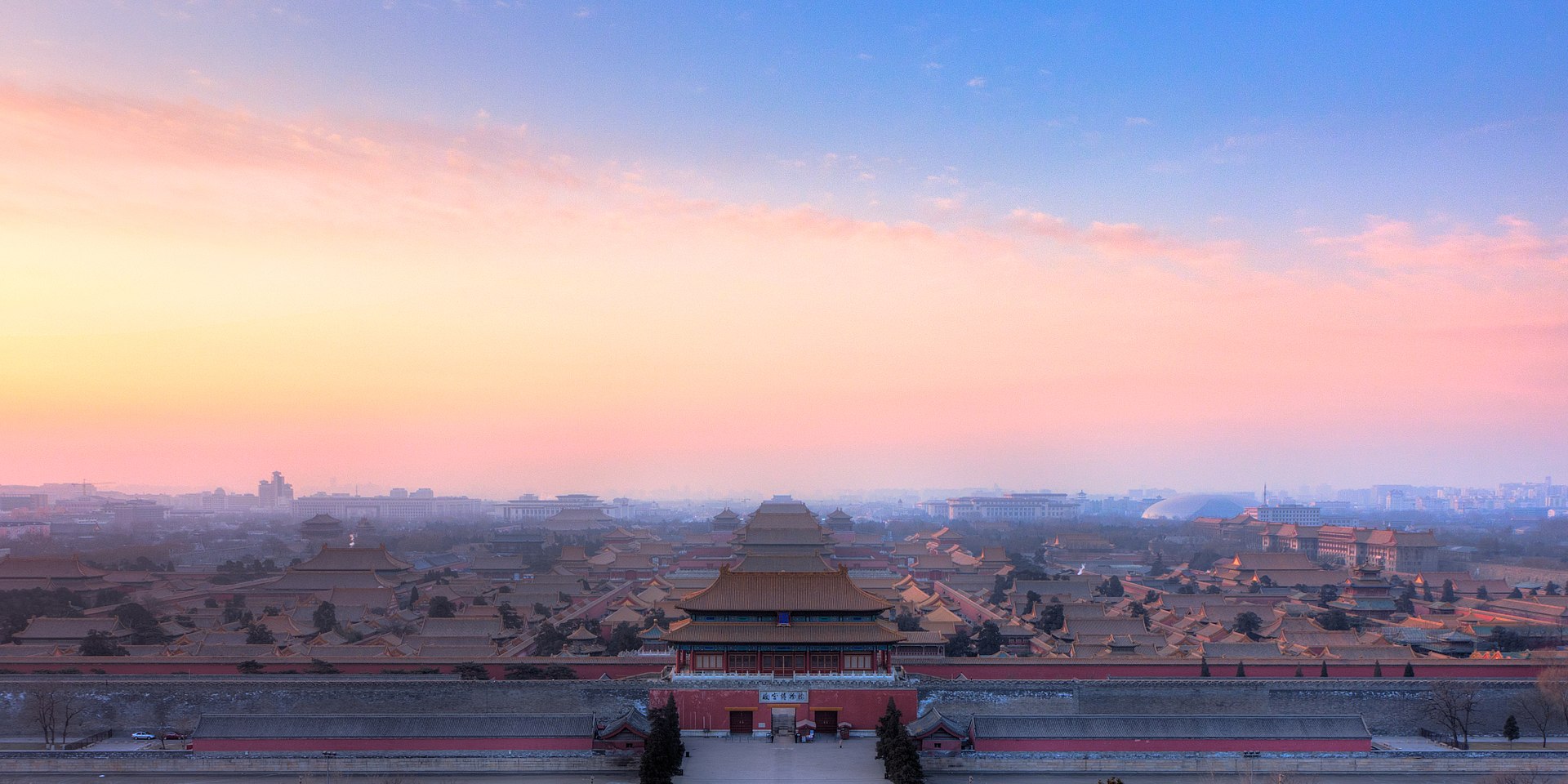
Cross the road from the Gate of Divine Prowess and you are at Jingshan Park — an artificial hill built from the earth dug out of the palace moat. Climb to the top (it is not high, about 10–15 minutes) for the view many people call the best in Beijing: looking down over the entire sweep of golden palace roofs lined up along the central axis, set against the modern city beyond. It is the single image that explains the whole layout of the old imperial capital in one frame.
Come down from the hill and find lunch — the Jingshan area and the streets toward Wangfujing have plenty of local Chinese restaurants, from noodle and dumpling shops to comfortable mall sit-downs. If you want to save your appetite for Peking duck tonight, keep this meal light.
Choose this if you love classical Chinese architecture and wide, quiet parkland. Take the subway south to the Temple of Heaven — the emperors' altar complex for the worship of heaven, over 600 years old. The highlight is the round, triple-eaved Hall of Prayer for Good Harvests (祈年殿) with its deep-blue tiled roof, one of Beijing's defining images, built entirely of wood without a single nail. Around it spreads an old cypress park where Beijingers come to exercise, practise tai chi and play chess — real daily life threaded through an ancient monument.
Choose this if you want a Beijing that is still breathing, not just a monument. Head to the Houhai hutongs — a network of old lanes (hutongs) where people still genuinely live, with square courtyard houses (siheyuan) behind red doors. Cycle the lanes or take a pedicab tour; around Houhai Lake there are cafes and waterside bars, and in the evening the lights come on beautifully. Close by are the Drum and Bell Towers (鼓楼/钟楼), which once kept time for the whole city — climb up for a view over a sea of grey hutong rooftops.
Close the day with roast Peking duck — you cannot come to Beijing and skip it. Crisp, deep-brown skin and tender meat, sliced thin and wrapped in a paper-thin pancake with spring onion, cucumber and sweet bean sauce. The names people mention most often are Da Dong, the modern style with notably crisp, lean skin, and Quanjude, the old house running since 1864. Both have branches around Wangfujing and Qianmen, and both are worth a dinner booking in advance — they get busy.
If you want a stroll before or after the meal, Wangfujing (王府井) is the central pedestrian shopping street, while Qianmen (前门), just south of Tiananmen, is a restored old-style street with a running tram, heritage snack shops and souvenirs. Pick whichever sits closer to the duck restaurant you have booked. More options in the Beijing food guide.
- The Great Wall — it needs its own day. It sits 70–80 km outside the city, 1.5–2 hours each way; you genuinely cannot fit it alongside the palace.
- The Summer Palace (Yiheyuan) — a stunning lakeside imperial garden, but it is huge (needs half a day) and sits far to the northwest of the central axis.
- 798 Art District — a brilliant contemporary art quarter, but it is out to the northeast and adds transit plus several hours of gallery-walking.
- The Lama Temple (Yonghegong) and the Temple of Heaven together — pick just one in a single day; doing both makes the afternoon too tight and tiring.