A lake in the heart of the old city — willows and birdsong by day, a string of lantern-lit bars reflected in the water by night — wrapped in the densest, most atmospheric hutong alleys left in Beijing. Free to wander, easy to cycle.
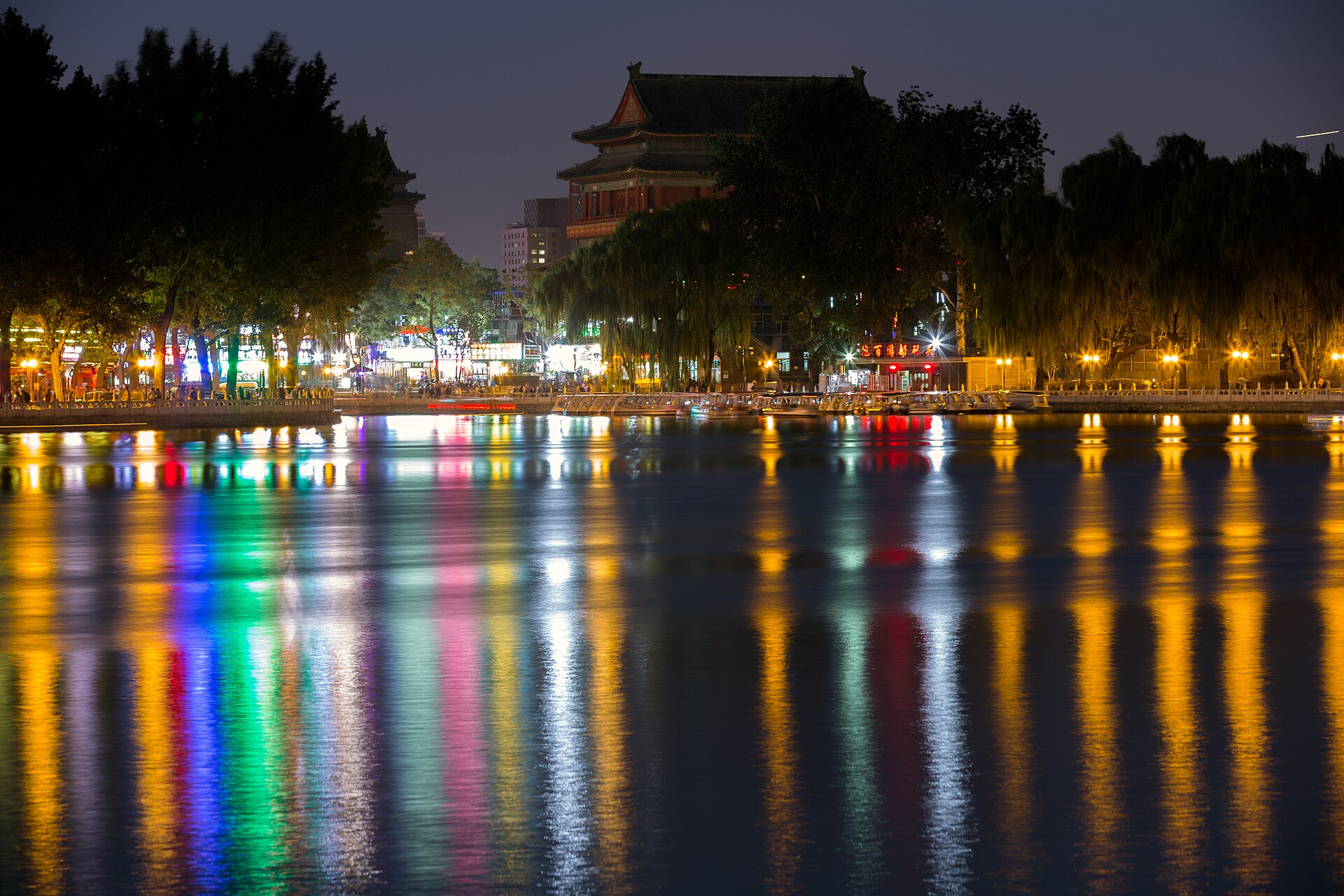
Picture this: you step out of a narrow, dim grey-brick lane and the lake opens up in front of you all at once. It is about six in the evening, the sky still a deep blue, willow branches trailing onto the water. A retired Beijinger walks home carrying a birdcage; across the lake the bar lights are flickering on one by one, throwing long red, green and yellow streaks across the still surface. Further off, the dark silhouette of the Drum Tower cuts against the sky. It is an ordinary city evening that somehow you do not forget.
This is Houhai (后海) — the largest of three linked lakes known together as Shichahai (什刹海): Qianhai, Houhai and Xihai, sitting just a few kilometres northwest of the Forbidden City. By day it is a quiet stretch of water with old courtyard homes and willow trees; by night the southern and eastern shores turn into one of the busiest bar and live-music streets in the city.
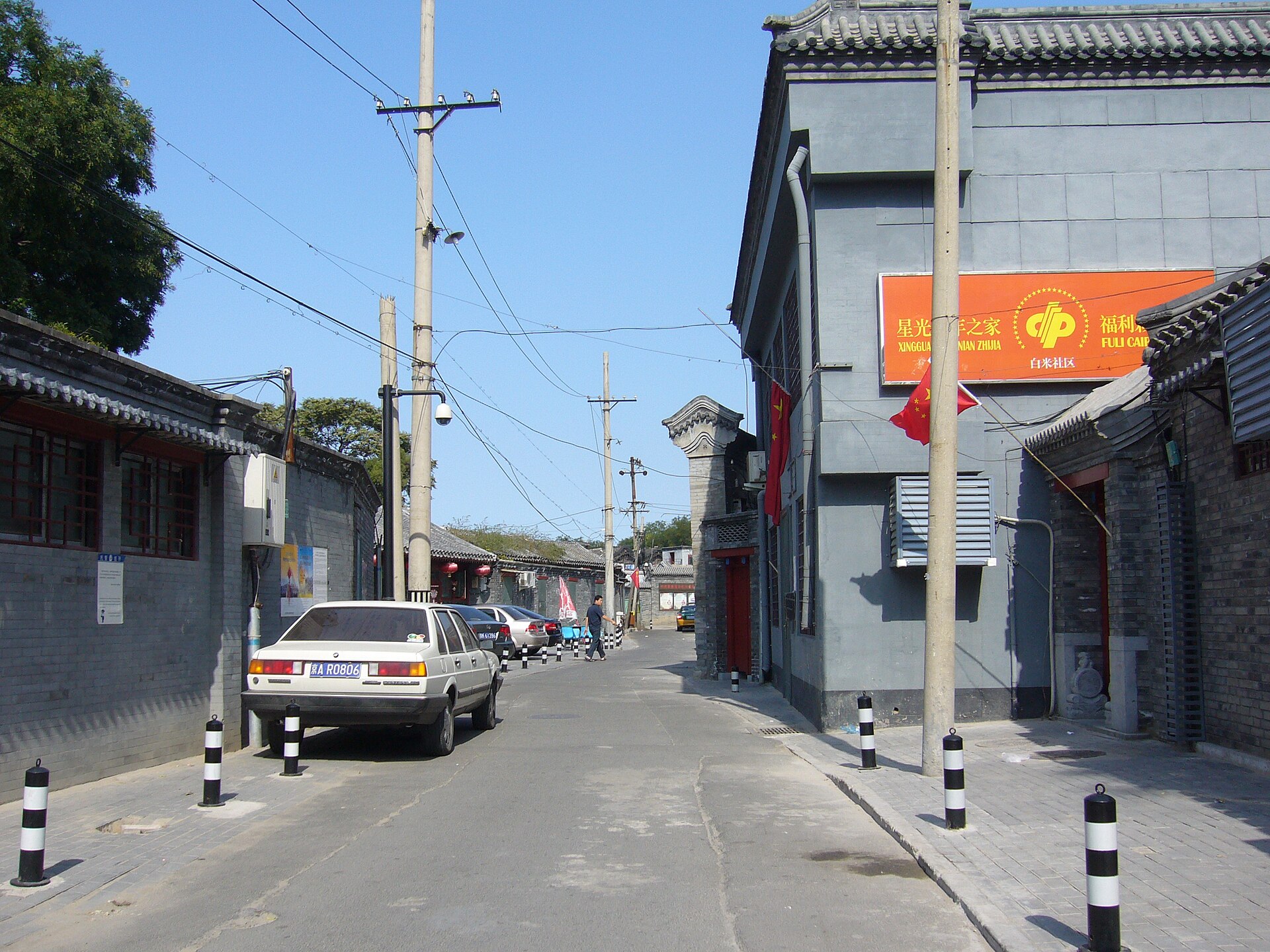
And wrapped all around the lakes are the hutongs (胡同) — the narrow grey-brick alleys of old Beijing, lined with siheyuan (四合院), the classic courtyard houses built around a central yard on four sides. The Shichahai and Drum Tower area has the densest, most genuinely atmospheric surviving network of them in the city. What sets this place apart from every other Beijing sight is simple: the lanes and the lakeside are free, with no queue and no closing time — and this is somewhere people genuinely live, not just a backdrop for photos.
All within walking distance, around the lake and through the hutongs.
The Drum Tower and Bell Tower stand at the northern edge of the area. Climb the steep stairs of the Drum Tower and you get an elevated view over a "sea of grey rooftops" — the hutongs stretching out as far as you can see. It is one of the few spots where you can still take in old Beijing from above. There is a small admission ticket; check hours and prices before you go.
The largest and best-preserved aristocratic courtyard mansion in Beijing, once home to Heshen, a powerful Qing-dynasty official. It combines residential halls with several beautiful classical Chinese garden courtyards. Admission is around ¥20 (~฿100), open roughly 08:30–17:00 (last entry early-to-mid afternoon). It sits on the south-western side of Houhai — check the latest ticket details before going.
Beijing's most famous restored hutong, packed with shops and street snacks. It is worth it for a first taste of the atmosphere, but to be honest it is very commercial and very busy. The real charm is hidden in the small side lanes branching off it — duck into one of those and you will find a quieter, more genuine Beijing within a minute or two.
A short, old diagonal lane near the Drum Tower whose name means "Skewed Tobacco-Pouch Street," after the pipe shops that once lined it. Today it is a string of small shops selling souvenirs, tea and snacks, and it runs neatly from the Drum Tower down toward Houhai. It is a quick walk with plenty of old-Beijing character — without the crush of Nanluoguxiang.
After sunset, the southern and eastern shores of the lake become a row of bars, most with live music. Some have decks projecting over the water. It is lively, but there are quieter corners too where you can nurse a drink and watch the lights ripple across the lake. Drink prices vary by venue — check the menu first, and note that places with live bands may have a minimum charge.
The best way to feel the hutongs is to walk slowly or cycle, turning off into the small lanes on a whim — looking at siheyuan gateways, stone steps, the trees poking over the walls. The lanes twist and connect like a maze; getting a little lost is part of the fun, not a problem. Rent a bike in the area, or unlock a shared bike with your phone.
For an easy start, walk from the Drum Tower through Yandai Xiejie down to Houhai, then loop around the lake. Along the way you will pass old houses, small cafés and a steady run of photo spots by the water.
In the warmer months — roughly spring through early autumn — you can hire a rowing boat or pedal-boat on Houhai and see the area from the middle of the water, a completely different angle, especially as the shoreline lights come on in the early evening. In deep winter, when the lake freezes solid, locals come out to skate and push wooden ice-chairs across it, a fixture of the season — an experience you can only have in the cold months.
Boat-hire and ice-activity prices vary by season and operator, so ask and agree the price before you start, every time.
The best images here tend to come from the narrow lanes, where the low afternoon sun rakes across the grey brick, and from the lakeside at dusk, around 6 to 7 pm, when the sky still holds its blue but the bar lights have come on and laid coloured streaks across the still water. On a calm, windless evening the surface turns to glass and you get the full reflection.
Another favourite angle is from the small stone bridge that separates Qianhai from Houhai, looking toward the Drum Tower once the lights are up — water, bridge and the silhouette of the old tower all in one frame.
Metro is the easiest option — several stations ring the area, so pick the one nearest where you want to start walking.
The real charm of this area is sleeping in an old Chinese courtyard house in the lanes — wake up and you are already in old Beijing.