You have one weekend and you want to see the two things that make Beijing what it is — the Forbidden City on Day 1, the Great Wall on Day 2. This plan maps the route and the timing so forty-eight hours covers both without a wasted hour.
Beijing is genuinely too big to see in two days. But if a weekend is all you have, two things are non-negotiable — the imperial city at the heart of the capital, and the Great Wall on the ridgelines beyond it. This plan gives all of Day 1 to the historic core and all of Day 2 to the wall, because the wall needs a half-day of travel each way; a half-day visit is never worth the journey.
It is built for travellers who are short on time — a quick weekend, a long layover, or a first taste of the city before committing to more. Day 1 runs entirely on the subway; Day 2 offers both a public-bus route and an organised tour. What this plan deliberately leaves out: the Temple of Heaven, the Summer Palace, the Lama Temple and Universal Beijing — each one is a half-day to full-day in its own right. If you want those, extend to three days or five days.
The single most useful thing to do before you arrive: book your Forbidden City ticket the moment the window opens (7 days ahead at 20:00 Beijing time), and plan Day 1 so it does not fall on a Monday, when the palace is closed. For where to sleep, choose Wangfujing or Qianmen — both are walking distance from the square. See the where-to-stay guide.
Handle these three in advance and the trip runs smoothly from the moment you step off the plane.
The Forbidden City caps daily visitors and tickets sell out fast. They release 7 days in advance at 20:00 Beijing time via the official Palace Museum account on WeChat or its website, booked with your passport number. It is closed every Monday — plan Day 1 to avoid one.
Set up Alipay (linked to a Visa or Mastercard) before you leave. Most shops and the subway take QR payment only. If you'll need Google, WhatsApp or Instagram during the trip, install a VPN while you are still home. See the Alipay setup guide.
Day 2 is the Great Wall. Allow roughly 3–4 hours of round-trip travel to Mutianyu and start early to beat the crowds and the traffic home. Wear comfortable shoes; bring water and sun protection. See the Great Wall guide to plan the route.
One of the world's largest public squares in the morning, a 600-year-old palace of some 980 buildings, golden roofs from Jingshan Hill at sunset, and one Peking duck dinner to close the day.
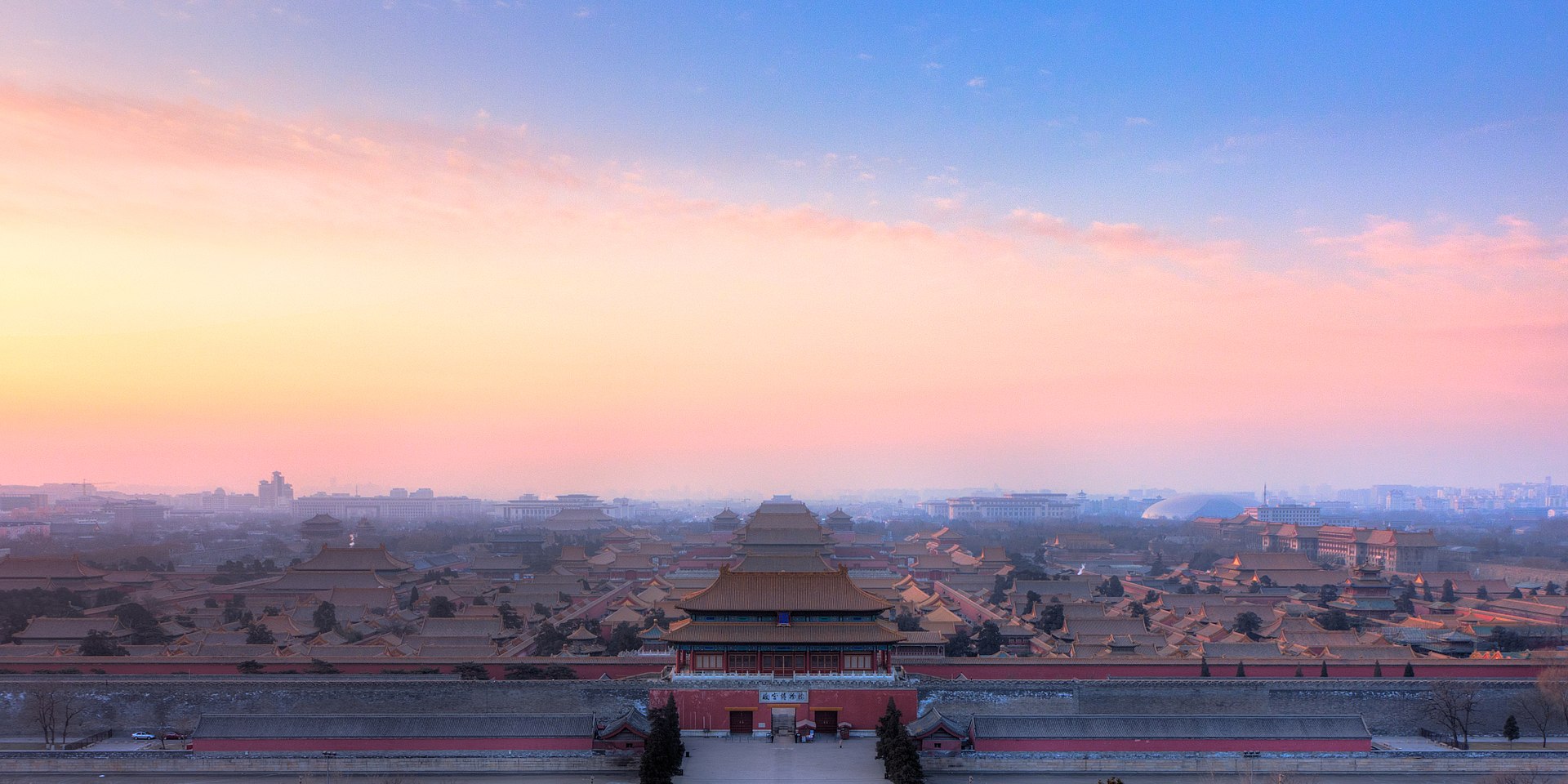
Leave the hotel early — aim to reach Tiananmen Square (天安门广场) before 8:30 am. It is one of the largest city-centre squares on earth: Tiananmen Gate with its portrait of Mao on one side, the Monument to the People's Heroes and Chairman Mao's mausoleum on the other. Spend 30–45 minutes taking it in. (You'll pass through a security check, so carry your actual passport at all times.)
From there, walk straight into the Forbidden City — entry is through the Meridian Gate (午门, Wumen) on the south side only. This Ming and Qing imperial palace was completed in 1420 and holds around 980 buildings strung along one immense central axis: golden tiled roofs, red walls, courtyard after courtyard. Walk the axis from south to north and allow a relaxed 2.5–3 hours. Note that you exit through the Gate of Divine Prowess (神武门) on the north side — there is no re-entry once you leave, so pace yourself accordingly.
After exiting the palace's north gate, grab lunch nearby — the hutong lanes around here have noodle shops and casual spots. Then cross the road to Jingshan Park, which sits directly opposite the north gate. This artificial hill was built centuries ago from the earth dug out of the palace moat; the climb to the summit pavilion takes under 15 minutes.
The top of Jingshan is the best view of the Forbidden City in Beijing — you look straight down the central axis at the entire sweep of golden roofs receding into the distance. Time it for late afternoon, just before sunset, when the low light sets the whole palace glowing. Spend 45–60 minutes up here photographing and taking it in.
If you still have energy and daylight, wander into the hutong (胡同) lanes to the north — the old grey-brick courtyard alleys that are the original fabric of Beijing life. Or save them for tonight on the way to Houhai.
Close Day 1 with the meal people fly to Beijing for — Peking duck (北京烤鸭), the crisp, paper-thin skin carved at your table and wrapped in thin pancakes with spring onion, cucumber and sweet bean sauce. Take the subway to Wangfujing or Qianmen, both of which have duck restaurants from century-old institutions to modern rooms at every price point (¥100–350 per person for a duck shared between you). See the Peking duck guide for where to go.
Afterwards, walk it off along the Wangfujing pedestrian street or Qianmen Street, both lined with shops and old-style architecture and lively under the evening lights — an easy way to end the first day.
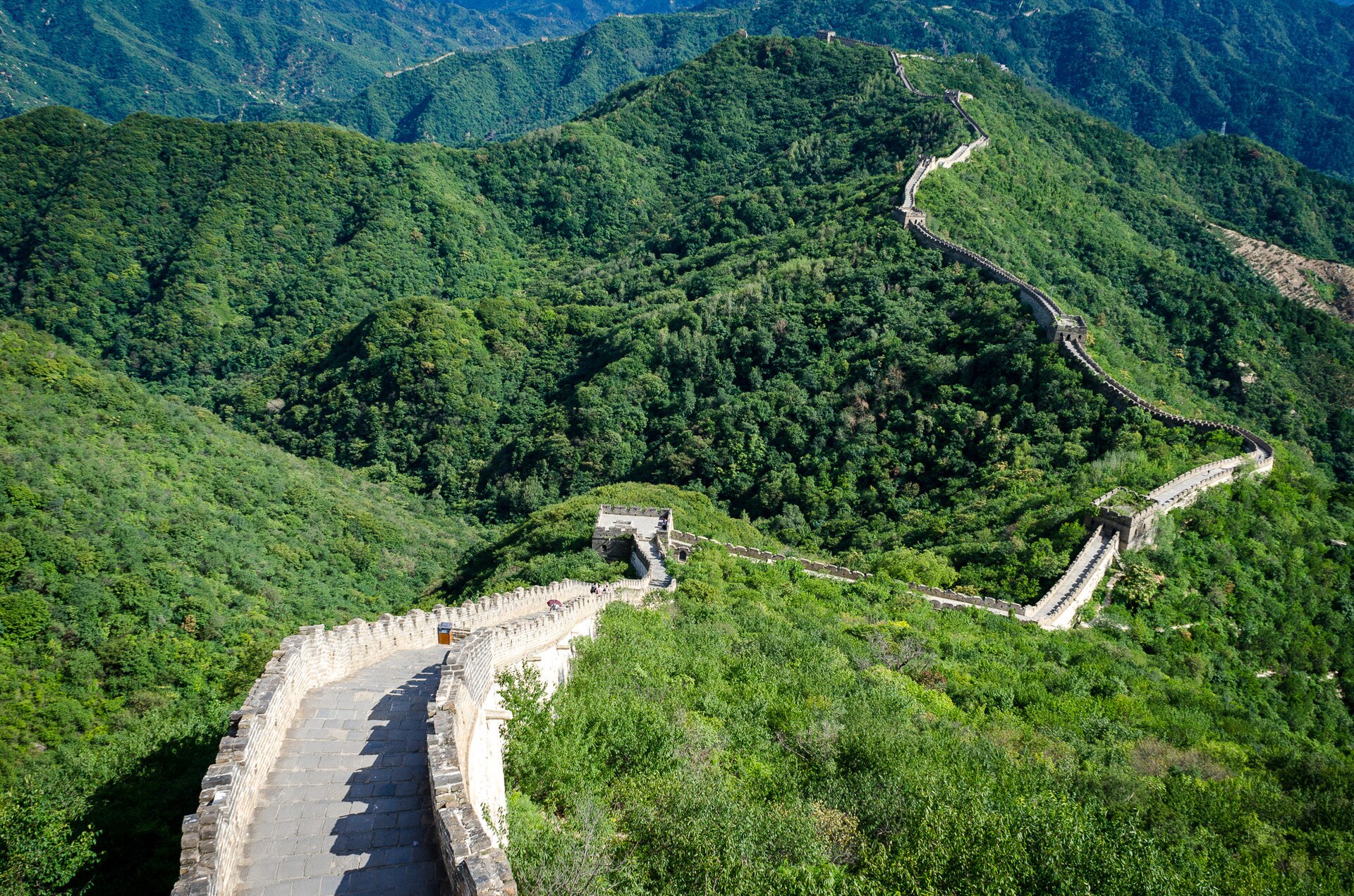
Start early to beat the crowds, ride the cable car up the restored wall, walk the ridgeline for the photographs, slide back down by toboggan, and finish the evening at Houhai lake.
Today has a single goal — the Great Wall — done properly. For a one-day visit we recommend Mutianyu, about 70 km from the city. The wall here is fully restored, with watchtowers strung handsomely along the ridge; it is easy to walk, not punishingly steep, and far less crowded than Badaling. Starting early is the key — reaching the wall before midday means an emptier wall and a head start on the traffic home.
To get up, take either the cable car or the chairlift. Spend 1.5–2 hours walking the wall and taking it in, then the most fun part of the day: the toboggan down — a metal-track sled you ride back down from the wall at your own speed. Kids and adults love it equally.
After coming down, have lunch near the base of Mutianyu (there are Chinese restaurants and cafés near the entrance), then head back into the city through the afternoon. Allow extra time for traffic on the way home, especially on weekends. If you came by tour, the driver returns you to a city drop-off point in the late afternoon or early evening. Get back to the hotel, freshen up and change before heading out for dinner.
Close the trip with a nighttime mood that is the complete opposite of the daytime — if you want old Beijing at an easy pace, head to Houhai, a city-centre lake ringed by hutong lanes and waterside bars, the lights reflecting off the water. Walk the loop, sip a drink by the lake, or rent a pedal boat. It's a relaxed way to finish.
If you'd rather a contemporary city vibe, try Sanlitun — Beijing's most modern eating, drinking and shopping district, lined with international restaurants, bars and malls. Good for a proper dinner or a closing drink. Find more ideas in the Beijing attractions guide.
These two days are already full, but if you're an early riser who walks fast, here is what you can slot in.
On Day 1, if you can wake early, visit the Temple of Heaven at 7:00–8:00 am to watch local residents practising tai chi, dancing and singing in the park — the real morning atmosphere — then take the subway on to Tiananmen (Line 5 to Tiantandongmen).
After coming down from Jingshan on Day 1, walk on into the hutong around Nanluoguxiang to the north — old grey-brick courtyard alleys, small cafés and snack stalls. You can see a slice of original Beijing life in under an hour.
If you finish the palace ahead of schedule, drop into the Wangfujing pedestrian street in the afternoon — shopping, snacks and small food lanes — before heading up Jingshan in the evening. No rushing needed, but it adds one more stop.
For this plan, Wangfujing or Qianmen is the most practical base — walking distance to the square and the Forbidden City, on Subway Lines 1 and 2, with Peking duck restaurants all around. Mid-range hotels run ¥400–700 per night. If you're taking the bus to the wall on Day 2, staying near Dongzhimen saves morning time. See the neighbourhood guide or browse top-rated hotels.
The subway covers all of Day 1 — Line 1 runs through Tiananmen and Wangfujing, Line 2 through Qianmen, Line 8 to Houhai. Fares ¥3–7 per trip, paid by scanning Alipay or WeChat Pay QR at the gate. All station signs are bilingual. For the wall you'll need a bus or tour (see Day 2). See the Beijing city guide for more on transport.
Set up Alipay (international version, linked to a foreign Visa or Mastercard) before you leave home. Most Beijing shops, restaurants and subway gates accept Alipay or WeChat Pay only — some do not take cash at all. See the Alipay & WeChat Pay setup guide for step-by-step instructions.
| Category | Budget | Mid-range | Comfortable |
|---|---|---|---|
| Hotel (1 night) | ¥150–300 (hostel / guesthouse) |
¥400–700 (3–4 star) |
¥800–2,000+ (4–5 star) |
| Food (3 meals/day, incl. duck) | ¥100–150 (local spots) |
¥150–350 (mix + one duck dinner) |
¥350–700 (restaurants + cafés) |
| Transport (subway + wall) | ¥60–90 (public bus to wall) |
¥350–550 (one-day tour) |
¥600–1,000 (private car + taxis) |
| Admission (full 2-day trip) | ¥100 (palace ¥60 + Jingshan ¥2 + wall ¥40) |
¥200–230 (+ cable car/toboggan ¥100–120) |
¥250–300 (+ extra galleries/activities) |
| Total for 2 days (est.) | ¥820–1,330 (~$113–183 USD) |
¥1,650–2,830 (~$228–390 USD) |
¥3,200–6,700+ (~$441–924+ USD) |
Exchange rate used: ¥1 ≈ $0.138 USD · Hotel cost counted as 1 night · Prices are estimates and vary by season · Wall cost varies widely by transport method (public bus vs tour vs private car).