Out in the morning, back for dinner
Ranked best-first — the Great Wall is the one trip you should not miss.
 1
1
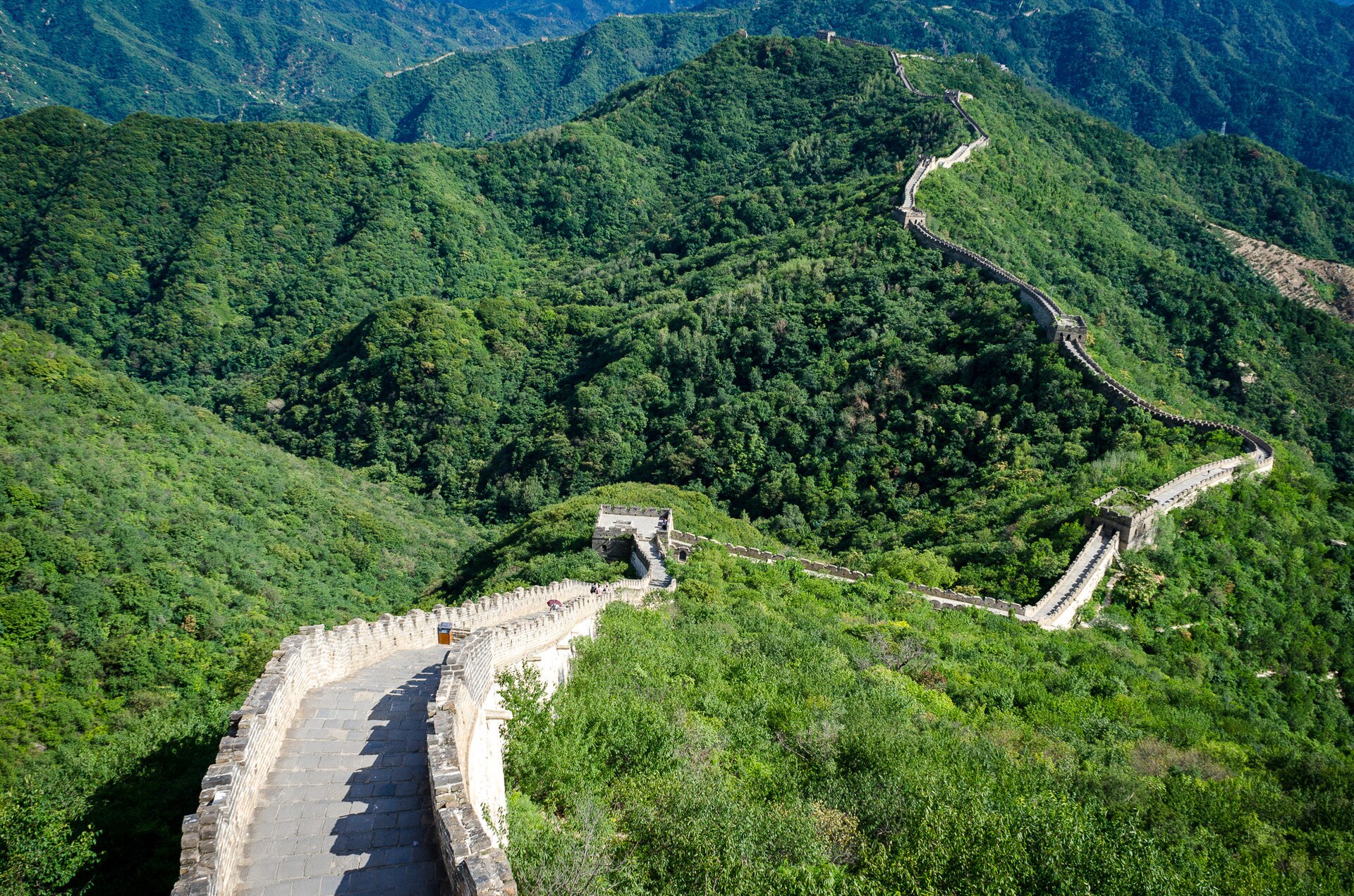
If you do one thing from Beijing, do this. The Great Wall is the reason travellers fly across the planet to reach this city — a line of stone rising and falling along the mountain ridges as far as you can see — and each section offers a distinctly different experience. Mutianyu is the best choice for most people: a cable car carries you up, a toboggan run brings you down, the views are superb and the crowds are thinner than at Badaling. Badaling is the easiest to reach because it now has its own high-speed-rail station (Badaling Changcheng), about an hour from Beijing North — but it is also the most crowded section of all.
For travellers who want a wilder, hikeable wall, Jinshanling and Simatai remain largely original and can be walked for long stretches. Jiankou is unrestored "wild wall" — beautiful, broken and steep — and strictly for experienced hikers only. Tickets and cable-car fares vary by section, so allow a full day and read our complete Great Wall guide before deciding where to go.
Picture boarding a train at Beijing South in the late morning and, half an hour later, walking a street lined with hundred-year-old European buildings. That is Tianjin — an old treaty port that once held foreign concessions from several Western nations, and which still feels entirely unlike Beijing as a result: French, Italian and British architecture in whole neighbourhoods rather than scattered fragments.
Start with the Five Great Avenues (五大道), a leafy district of grand Western-style villas, and the Italian-Style Street, which feels like a corner of Europe transplanted whole. The most photogenic landmark is the Tianjin Eye — a ferris wheel built directly into a bridge over the river, which exists nowhere else in the world. Round it off at Ancient Culture Street and the curious "Porcelain House", a building covered in millions of pieces of antique porcelain. Tianjin is the easiest DIY trip on this list — no tour needed.
When the Qing emperors wanted to escape the Beijing heat, they travelled north to the Chengde Mountain Resort (避暑山庄) — an immense walled imperial park that served as a second summer capital. Lakes, grasslands, wooded hills and scattered pavilions spread across an area so large you could walk all day and not see all of it. It is a UNESCO World Heritage Site and the largest surviving imperial garden in China.
Beyond the resort walls stand the Eight Outer Temples, built in Tibetan and Mongolian architectural styles. The most famous is Putuo Zongcheng ("the Little Potala"), a half-scale evocation of the Potala Palace in Lhasa — its white walls climbing the hillside in a way that genuinely stops you in your tracks.
Honestly, Chengde is big, and it works better as an overnight. But energetic travellers who leave at dawn can manage it as a long day. The high-speed rail from Beijing takes roughly 1.5 hours (check current times and fares before you go — the timetable changes often).
North of Beijing, in a valley chosen with meticulous attention to geomancy, lie the Thirteen Ming Tombs (明十三陵 Shisanling) — the burial place of thirteen Ming-dynasty emperors. The whole site is wide, wooded and quiet in the way an imperial necropolis should be.
The most photographed highlight is the Sacred Way (神道) — a long approach road flanked by life-size stone sculptures of animals (camels, elephants, lions, horses and mythical beasts) alternating with stone officials and generals. Walking it beneath the old trees feels like stepping back in time. The tomb you can enter most deeply is Dingling (定陵), whose excavated underground chambers are open to visitors.
The great advantage here is location: the tombs sit in the same direction as the Badaling Great Wall, about 1 to 1.5 hours from the city, so most day tours pair the wall in the morning with the Sacred Way in the afternoon — the most time-efficient combination of the lot.
Imagine a southern-Chinese canal town — old stone lanes, dark-tiled houses, boats drifting along the water — but with the Great Wall rising up the mountain ridge behind it as a backdrop. That is Gubei Water Town (古北水镇), a re-created canal town at the foot of the Simatai Great Wall, about 2 hours northeast of Beijing.
What sets it apart from other water towns is climbing the night-lit Simatai wall after dark — one of very few wall sections in China open at night. As the lights trace the towers up the ridge, the view is something you simply cannot see anywhere else. The town also has a cable car up to the wall, canal-side restaurants and atmospheric guesthouses.
One honest caveat: this is a polished, purpose-built resort and a fair drive away — not an original village. But if you want a canal-town atmosphere paired with the wall by night in a single trip, it earns its place. Combine it with an evening climb of Simatai for the best of it.