One of the wonders of the world sits barely an hour and a half from Beijing — but the Wall has several sections, and the wrong choice can mean nothing but tour-bus crowds. This guide compares all five, with directions, ticket prices and how to find space.
Here is the thing most people only discover when they start planning: the "Great Wall" near Beijing is not one spot but several distinct sections, each a different distance from the city and each with a completely different character. Some are fully restored, smooth to walk, with cable cars; others are raw, overgrown stretches built for hiking and nothing else. Choosing the section that matches how you like to travel is the single most important decision of this trip — more than tickets or timing.
Honestly, most people who come back saying "the Great Wall was as crowded as a shopping mall" went to Badaling on a holiday weekend. Shift just a few dozen kilometres over to Mutianyu and the experience changes entirely — equally beautiful Wall, a fraction of the people, an easier walk, and a toboggan run back down for good measure.
This guide walks through the five main sections you can reach from Beijing in a day (or with an overnight), laying out clearly which one suits whom, how to get there and what it costs, then closing with the practical detail on season and crowd-avoidance — so that the day you actually stand on the Wall is the one that counts.
Read each one, then ask yourself what you actually want — comfortable and well-equipped, or raw and quiet.
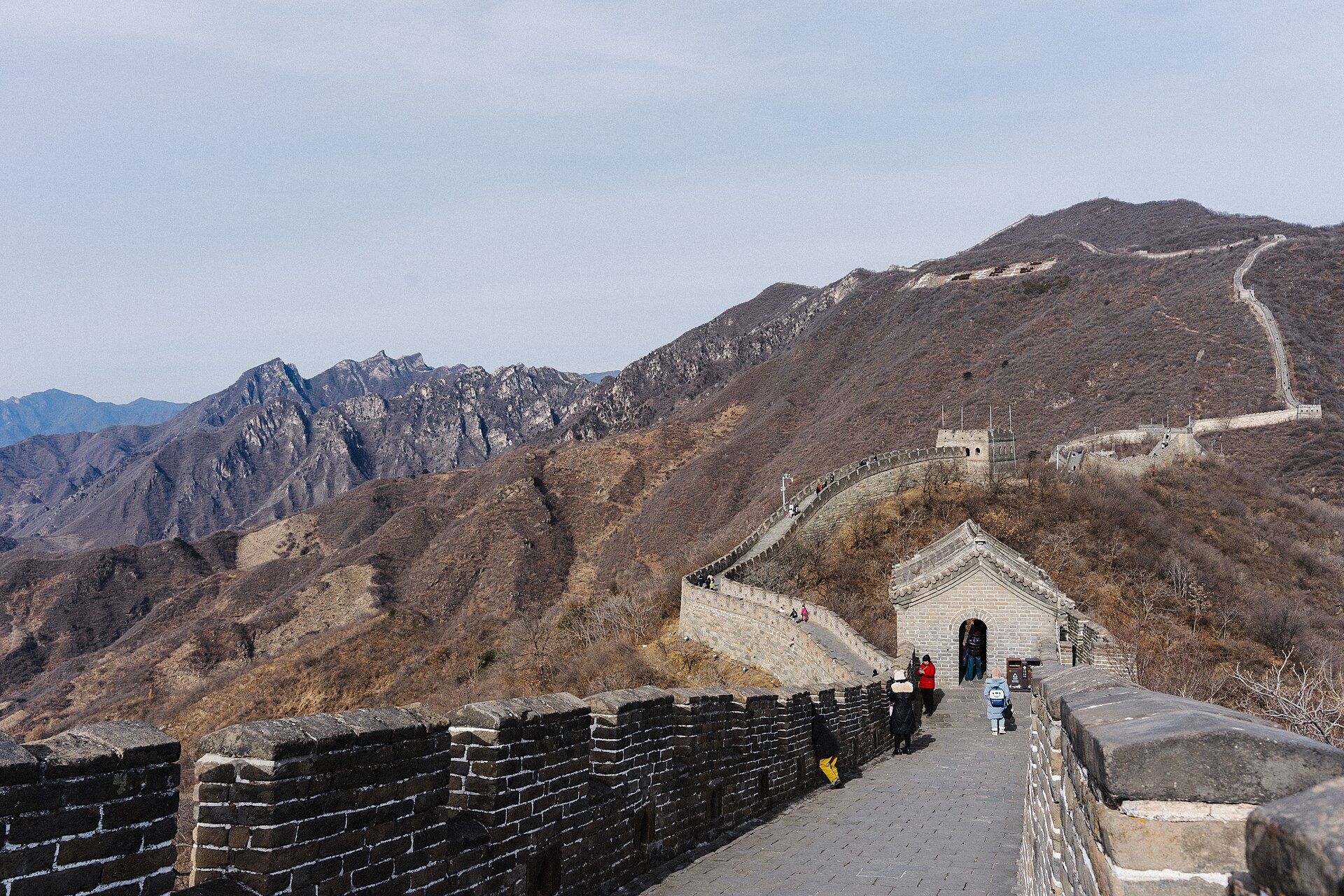
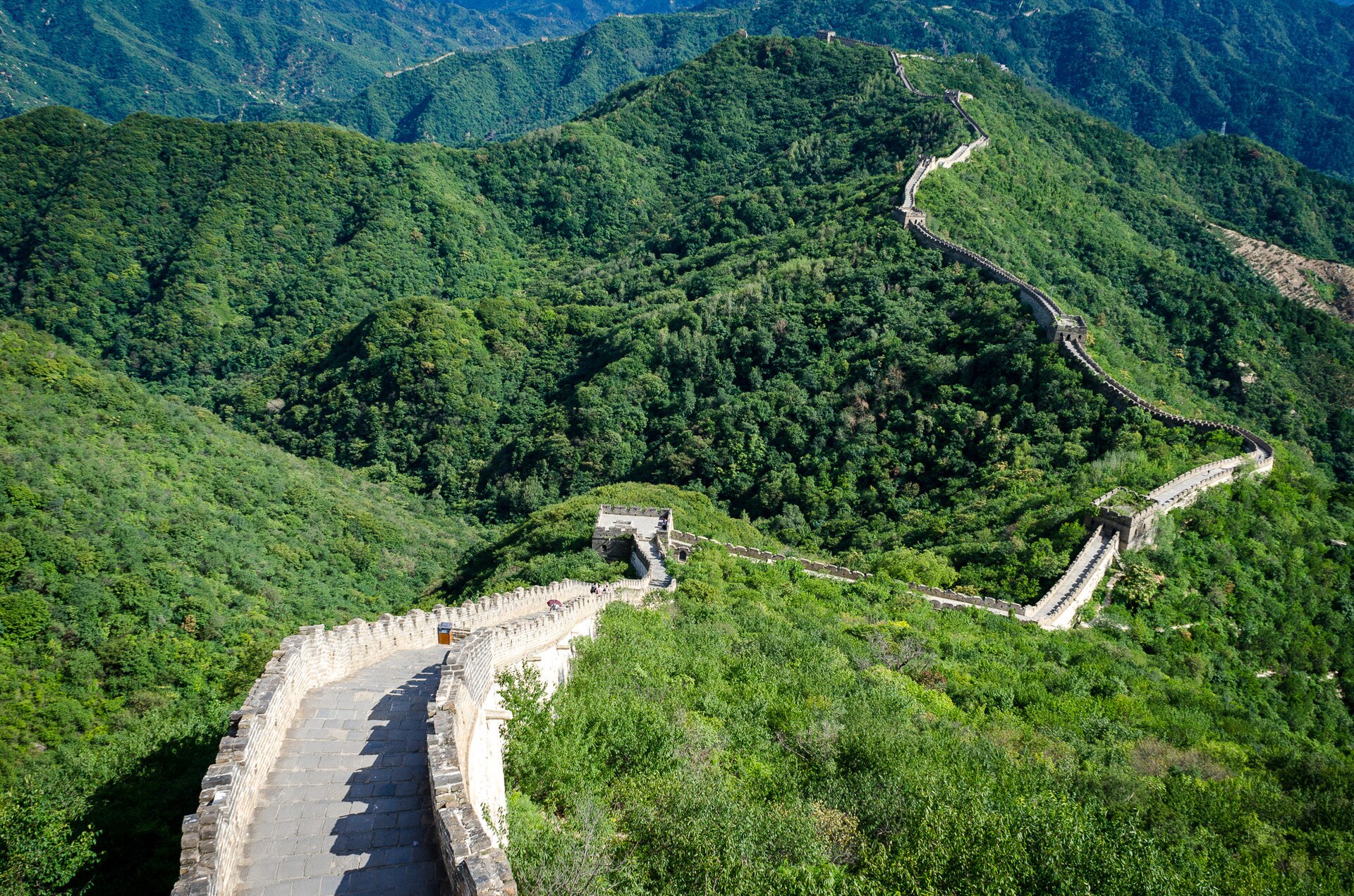
The best all-round choice for a first visit. This stretch is fully restored, its watchtowers lined neatly along the ridge, and the walking is comfortable rather than punishing. It has both a cable car and a chairlift up, and — the highlight for many — a toboggan (alpine slide) that runs back down the mountain on a metal track at a speed you control yourself; children love it. Crucially, there are far fewer hawkers here than at Badaling, and the whole place feels relaxed.
The most famous section and the easiest to reach by public transport — it has both the S2 suburban train and a high-speed rail link, which is precisely why the tour buses pour in here. The upside is a broad, dramatic stretch of Wall, a cable car and full infrastructure; it makes sense if you have no car, want minimal connections and do not mind crowds. But on a weekend or during Golden Week, expect a wall-to-wall sea of people — barely walkable, very hard to photograph. If you do come here, come on a weekday at the very first opening, nothing later.
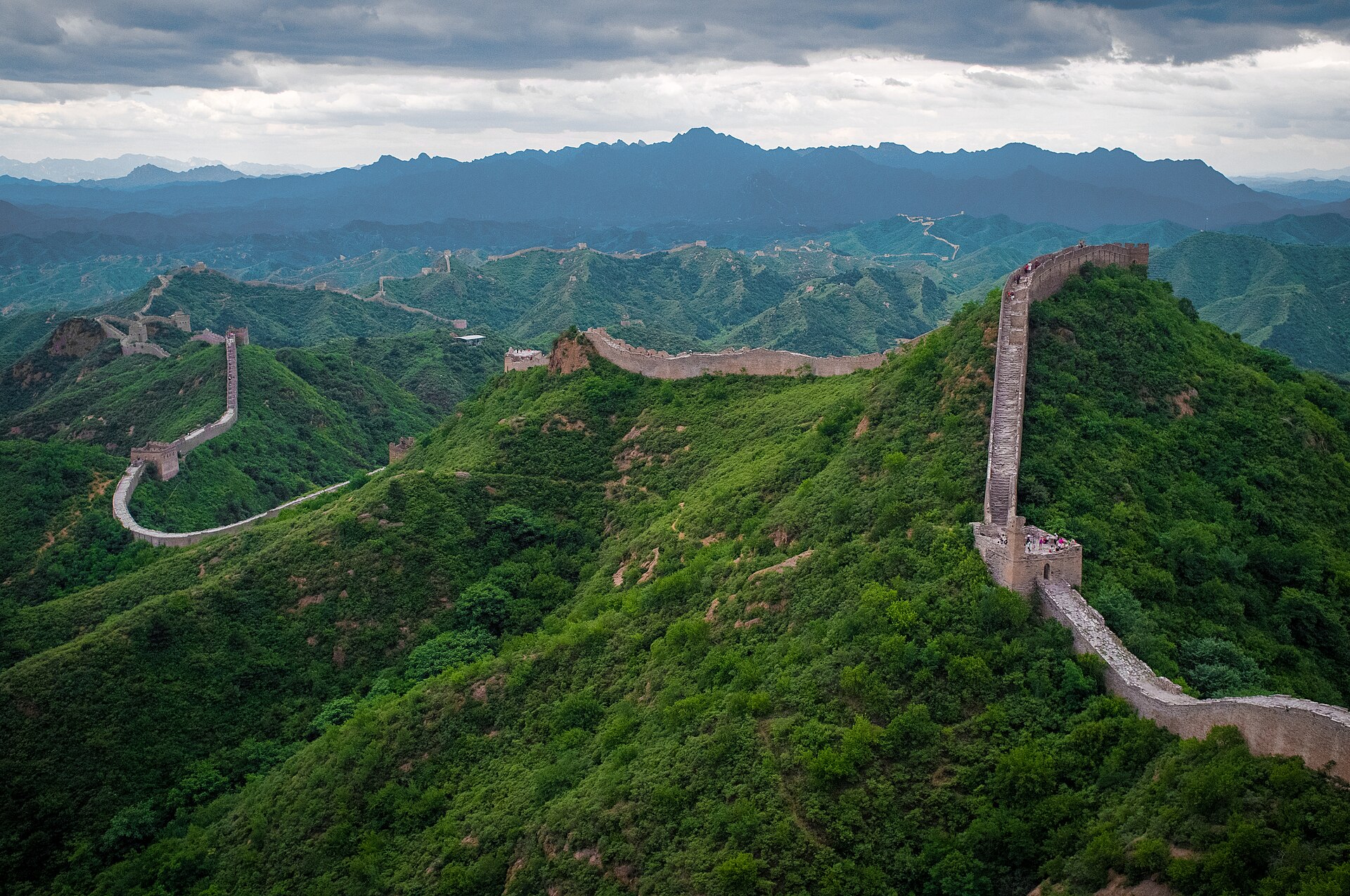
If you are coming for the photographs and the atmosphere, this is the answer. Jinshanling is a part-restored, part-wild section that snakes along a long ridge as far as the eye can see, with more than 60 watchtowers and hiking routes ranging from 2 to 10 kilometres so you can pick your effort level. It draws far fewer people than Badaling or Mutianyu, which means open Wall in your frame with no crowds in the way. A cable car helps with part of the climb (often closed in low season). The trade-off is the distance — roughly 2 to 2.5 hours by car — and no convenient public transport, so a private car or a tour suits it best.
A different proposition from every other section, because it comes paired with Gubei Water Town — a recreated canal town below the Wall, with hotels, restaurants and waterways to wander. The Simatai Wall itself is still wild, steep and demanding. The real draw is that it is the only section open at night with the Wall illuminated; the night session starts around 5.30 pm (later in summer). Stay at a hotel inside Gubei Water Town and you get a discounted Great Wall ticket — which makes this ideal if you want to spend one night out of the city and see the Wall both by day and after dark.
This is the wild Wall for real — unrestored, not an official tourist site, with no ticket booth, no railings and no facilities of any kind. It runs along a knife-edge ridge with cliffs on both sides; some stretches are nearly 80 degrees, almost vertical, requiring both hands and feet. The classic route hikes from Jiankou out to Mutianyu. The photographs are the most spectacular and raw of any section — but the genuine risk is high.
Three main options, from easiest to cheapest — choose by section and budget.
If you are short on time or would rather not wrestle with connections, an organised day tour is the most comfortable way. It runs door to door from the city straight to the section, with no guessing at routes or worrying about the last bus back. Many tours include the entrance fee and cable car, and they can reach the far sections like Jinshanling and Simatai that public transport barely serves. Book ahead through Klook.
Mutianyu: Take Bus 916 Express from Dongzhimen to Huairou Beidajie (怀柔北大街), about 70–90 minutes, ¥12 with a Yikatong card (around ¥24 cash, ~฿60–120). Then transfer to a local minibus — H23 or H24 — for the final 20 minutes to the ticket office, ¥3–5.
Badaling: The easiest of all to reach — take the S2 suburban train from Huangtudian (around ¥6–8, ~฿30–40, roughly 1 hour) or Bus 877 from Deshengmen (¥12 cash / ¥6 card, running 6 am–12.30 pm). For speed, there is also a high-speed train to Badaling station (second class around ¥16–28).
The middle ground between a tour and DIY is hiring a car with a driver for the round trip. It works well for a group of three or four — split between you it is reasonable per head — and it gives you full control of the timing, whether that means leaving early to beat the crowds or lingering for photographs. It also reaches the far sections like Jinshanling without any transfers. Ask your hotel, or book through a travel platform that offers a car with driver.
Approximate 2026 prices · ¥1 ≈ ฿5 · cable car, shuttle and night-tour fees change often — confirm on site or before booking.
| Section | Entry (approx.) | Cable car / extras | Hours (approx.) |
|---|---|---|---|
| Mutianyu | ¥40 (~฿200) | On-site shuttle ¥15 return · cable car ¥100 one-way / ¥140 return · toboggan ¥100 one-way, or chairlift-up + toboggan-down combo ¥140 return | ~8 am–5 pm (seasonal) |
| Badaling | ¥40 low / ¥45 high (~฿200–225) | Cable car / cog rail available, priced separately — check on site | Open daily (check before you go) |
| Jinshanling | ¥65 (Apr–Oct) / ¥55 low (~฿275–325) | Cable car ~¥80 return / ¥40 one-way (often closed in low season) | Main gate ~4 am–6.30 pm |
| Simatai + Gubei | Combined ticket with Gubei Water Town | Night cable car ~¥160 return · special ~¥120 if you stay inside Gubei Water Town (includes Wall entry + cable car) | Night session starts ~5.30 pm |
| Jiankou | Wild section, no ticket booth | No cable car or facilities · main cost is a guide / private car | Accessible all day (at your own risk) |
The best window is autumn, late September to early November: cool, comfortable air, clear skies, and the hillsides around the Wall turning gold and copper — the most beautiful it gets all year. Next best is spring (April–May), when the green returns and the weather is mild. Summer (June–August) is lush but hot and humid, tiring to walk; winter (December–February) is bitterly cold but can be spectacular under snow, provided you dress for it and check whether the cable car and section are open.
Dodge these two periods if you possibly can — Golden Week (1–7 October), China's National Day holiday, and the May Day holiday (roughly 1–5 May). The whole country travels then, and every section, Badaling especially, is packed to the point of being barely walkable; accommodation costs more and books out fast. If you genuinely cannot avoid those dates, choose a far section like Jinshanling, which stays much quieter.
Three simple rules that change the day entirely. One: arrive as early as opening. Most tour coaches reach the Wall around 10–11 am; if you are up on the battlements before then, you get it almost to yourself. Two: go on a weekday. The difference from a Saturday is stark. Three: choose Mutianyu or Jinshanling over Badaling — this matters most, because Badaling absorbs almost all the tour traffic, leaving the other sections far more room to breathe.
Waking to the Wall before the coaches arrive — or seeing it floodlit at Simatai — is genuinely worth it.
If you have the time, staying near the Wall for a night turns the trip from a "photo stop" into real time spent with it. You can be up on the battlements at first light before the crowds, watch the early sun rake across the ridge, and — if you choose Gubei Water Town — see the floodlit Wall at Simatai after dark too.