Home Beijing China Beijing Hotels About
Home  ›  China  ›  Beijing  ›  Attractions
Beijing Attractions · 2026

What to see in Beijing
From the Forbidden City to the Great Wall

A capital that keeps its dynasties behind red-and-gold walls, hides a quieter life in its hutong lanes, and lets glass towers twist into the sky out east. Beijing is the one place where you can walk from an emperor's throne onto a 600-year-old wall in a single trip.

Why come here

A capital that keeps its whole history

Beijing is a city that makes you feel small — not lost, just dwarfed. Everything here was built on a scale beyond human size. The walls of the Forbidden City run to the horizon; Tiananmen Square is so vast that people become specks on it; and the Great Wall climbs over ridgelines further than the eye can follow. This was the centre of one of the largest empires the world has known, and you still feel it in every roofline, every gate, every paving stone.

Then you turn off the imperial axis into a hutong and meet the other Beijing — narrow grey lanes where old men play chess on the kerb, kids cycle past, and the smell of roast duck drifts from a corner shop. Out in Chaoyang, abandoned factories have become the 798 art galleries, and the 2008 Olympic venues still light up every evening. Beijing plays with time effortlessly: in a single day you can step out of the Ming dynasty and into contemporary art. We picked the 12 sights that tell this city best — with honest advice on when to go, what to pay, and what to skip.

The highlights

12 sights worth your time

Ordered outward from the heart of the city — not just photo stops, but places that genuinely tell Beijing's story.
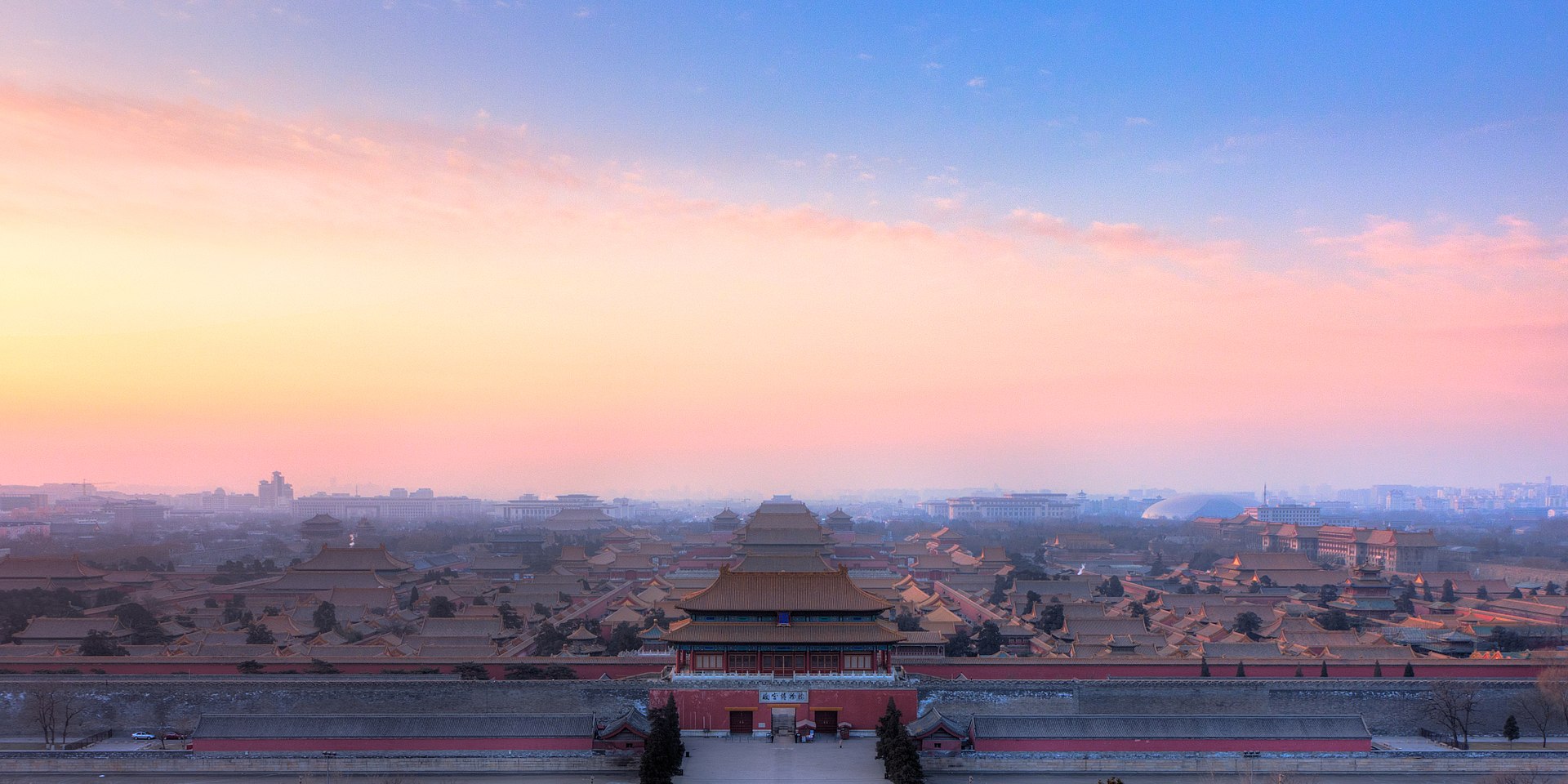
The Forbidden City, Beijing — golden-tiled roofs stretching to the horizon, seen from the Jingshan Park hill at sunrise 1
The Forbidden City (故宫 Gugong)
Imperial palace · the world's largest · 9,000 rooms

Picture this: you walk through a red gate and a vast stone courtyard opens up — then another courtyard, another gate, another throne hall, repeating until you understand why they called it "forbidden." This was home to 24 emperors across the 500 years of the Ming and Qing dynasties, with nearly 9,000 rooms. The golden roof tiles were a colour reserved for the emperor alone. Walking from the Meridian Gate in the south to the north gate takes at least three hours — and that's before you stop to see the treasures in the gallery halls.
Metro: Tiananmen East (Line 1); enter at the Meridian Gate to the south
Tickets: ¥60 (~฿300) peak / ¥40 (~฿200) off-season · open 8.30am–5pm · closed Mondays
Important: book online 7 days ahead only (no gate sales) · bring your physical passport
Tip: The palace runs one way — in at the south, out at the Gate of Divine Might in the north. Cross the road and you're at Jingshan Park: climb it for the view back over those golden roofs.
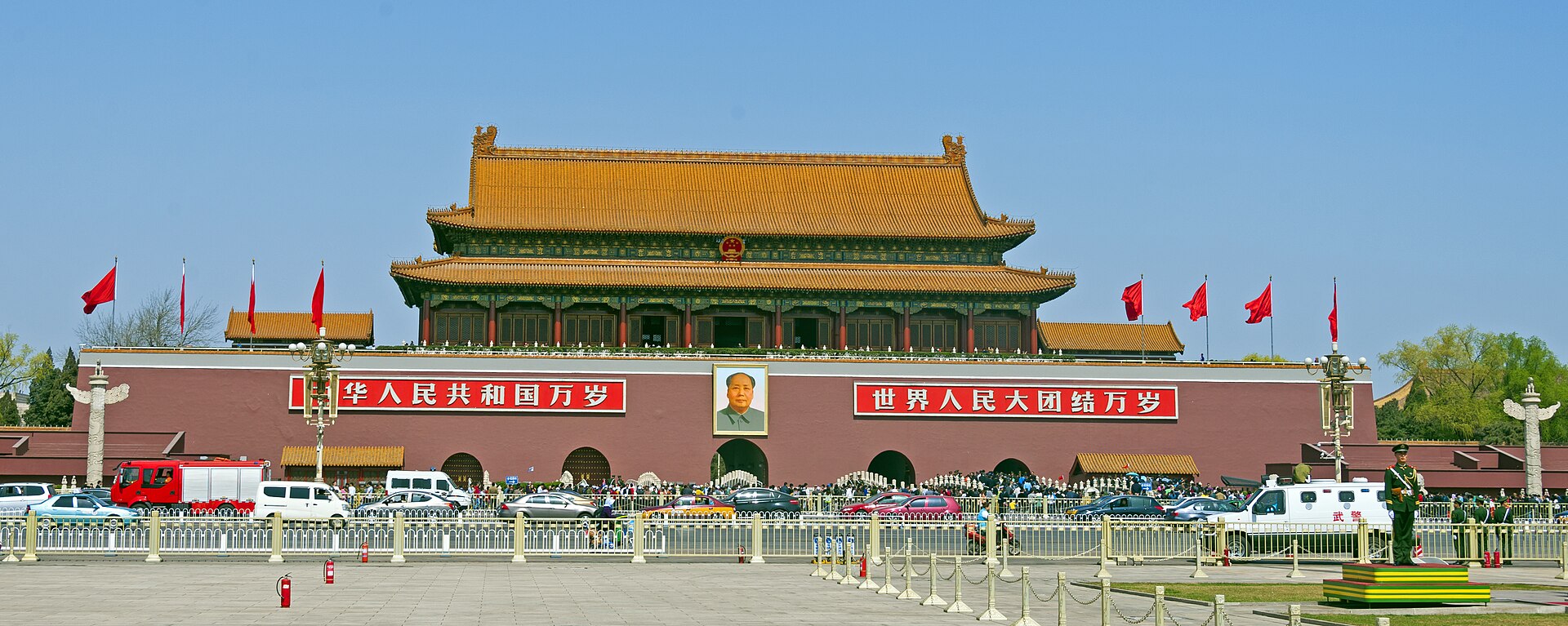
The Tiananmen Gate, Beijing — golden imperial roof, the Mao portrait and red flags above the red wall facing the square 2
Tiananmen Square (天安门广场)
The world's largest city-centre square · 44 hectares

The moment you stand in the middle of Tiananmen Square, the scale hits you — 44 hectares, room for a million people. To the north is the Tiananmen Gate with its Mao portrait and golden imperial roof; to the south, the Mao Mausoleum; on either side, the National Museum and the Great Hall of the People. It's the political heart of China and the place every visitor checks in before crossing the road into the Forbidden City. The highlight is the dawn flag-raising ceremony: soldiers march out to raise the flag with the first light of the day.
Metro: Tiananmen East/West (Line 1) or Qianmen (Line 2), where security lines tend to be shorter
Best time: the flag-raising at sunrise (timing shifts with the season — check before you go)
Free: free to enter, but reserve via WeChat at least a day ahead + bring your passport
Tip: To see the flag-raising you must book the specific flag-raising slot — a standard morning ticket only lets you in after the ceremony has finished. Arrive at least 45 minutes early to clear two or three X-ray checks.
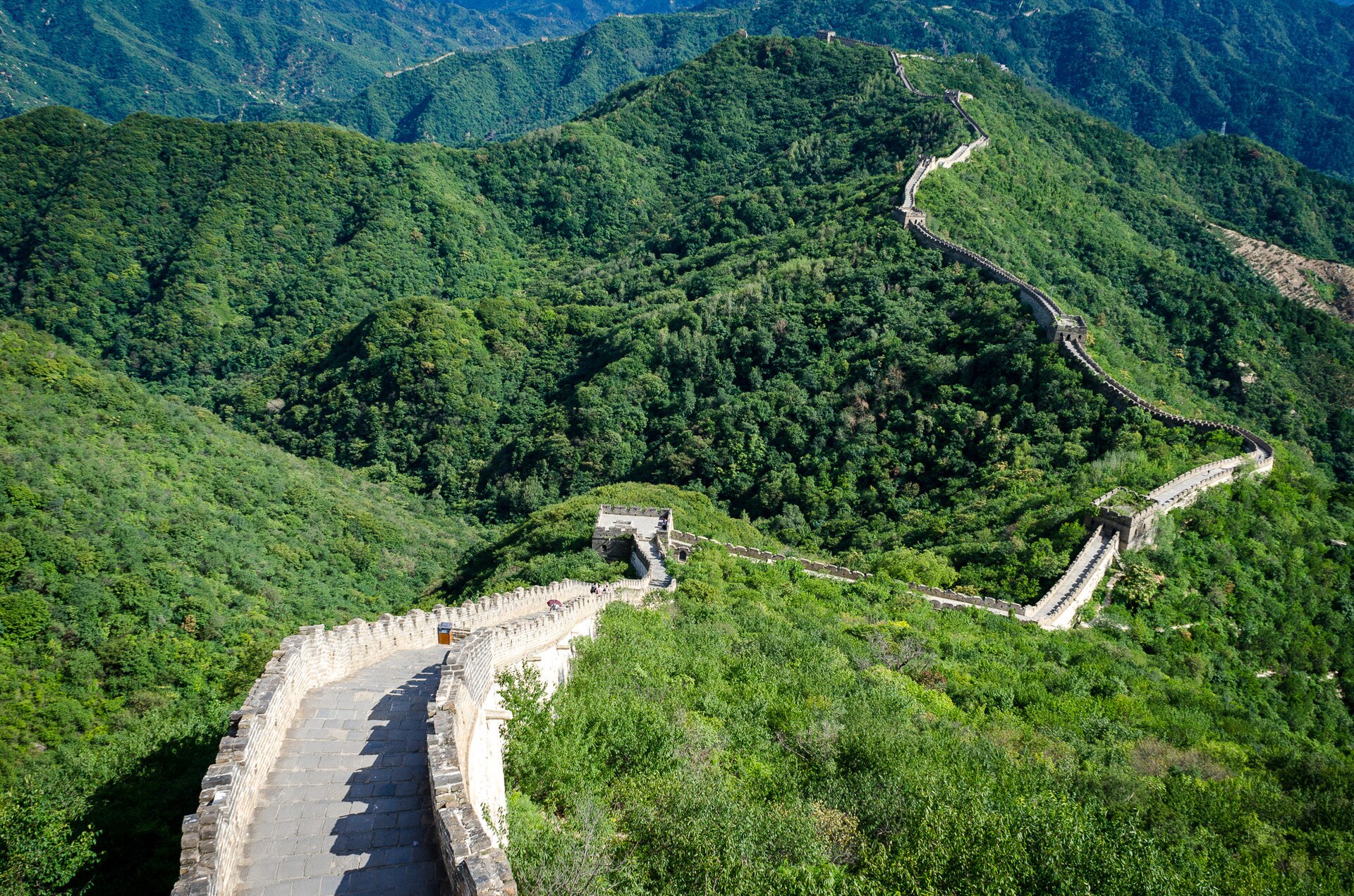
The Great Wall at Mutianyu near Beijing — stone wall winding over forested green ridges, watchtowers in a line 3
The Great Wall (长城 Changcheng)
Mutianyu / Badaling · a day trip from Beijing

No photo really prepares you — not until you stand on the wall and watch it ride over the ridgelines until it disappears. Two sections are popular from Beijing. Mutianyu is the best for a first visit: around 60–70% fewer crowds than Badaling, beautiful forested-mountain scenery, a cable car up and a toboggan run down. Badaling is the most famous and the easiest to reach — a 30-minute high-speed train from Beijing North station. Either way it's a full-day trip. Go early to catch the wall in soft light before the crowds.
Mutianyu: ¥45 (~฿225) admission · ¥140 return cable car · bus 916 from Dongzhimen, then a local bus
Badaling: ¥40 (~฿200) admission · 30-min high-speed train from Beijing North
Time needed: a full day · avoid Chinese public holidays (3–5× the crowds)
Tip: Public transport to Mutianyu means several changes — to save time, a tour with hotel pick-up is easiest. See our full Great Wall guide → and hotels near the Wall if you want to stay overnight for sunrise.
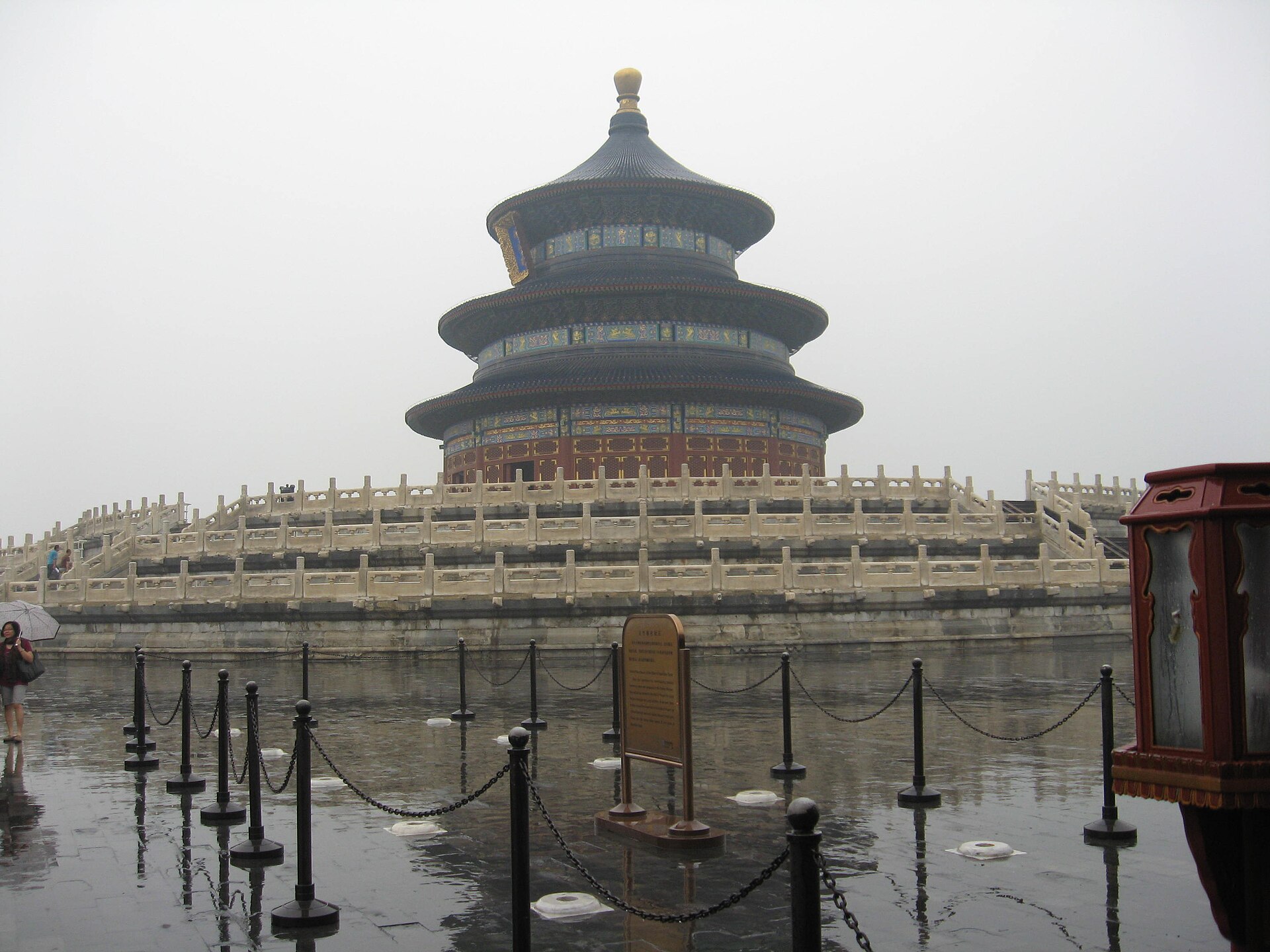
The Temple of Heaven, Beijing — the round triple-eaved blue-roofed Hall of Prayer for Good Harvests on its white marble terrace 4
Temple of Heaven (天坛 Tiantan)
Ming-dynasty altar of heaven · UNESCO World Heritage

The round, triple-eaved blue Hall of Prayer for Good Harvests is one of those images of China that everyone has seen — built in 1420 without a single nail. Emperors came here once a year to pray to heaven for a good harvest. But what makes the Temple of Heaven special isn't only the architecture — it's the park around it. Every morning, older Beijingers gather to do tai chi, dance, sing opera, play chess and practise the flute. It's a slice of real city life you rarely get to see. Come early and walk slowly through the park, and you'll come away with far more than a photo of the hall.
Metro: Tiantan Dongmen (Line 5), Exit A — right at the East Gate
Tickets: ¥15 (~฿75) park / ¥34 (~฿170) through-ticket with the halls · off-season ¥10/¥28
Best time: early morning 6.30–9am for local life in the park · park opens 6am
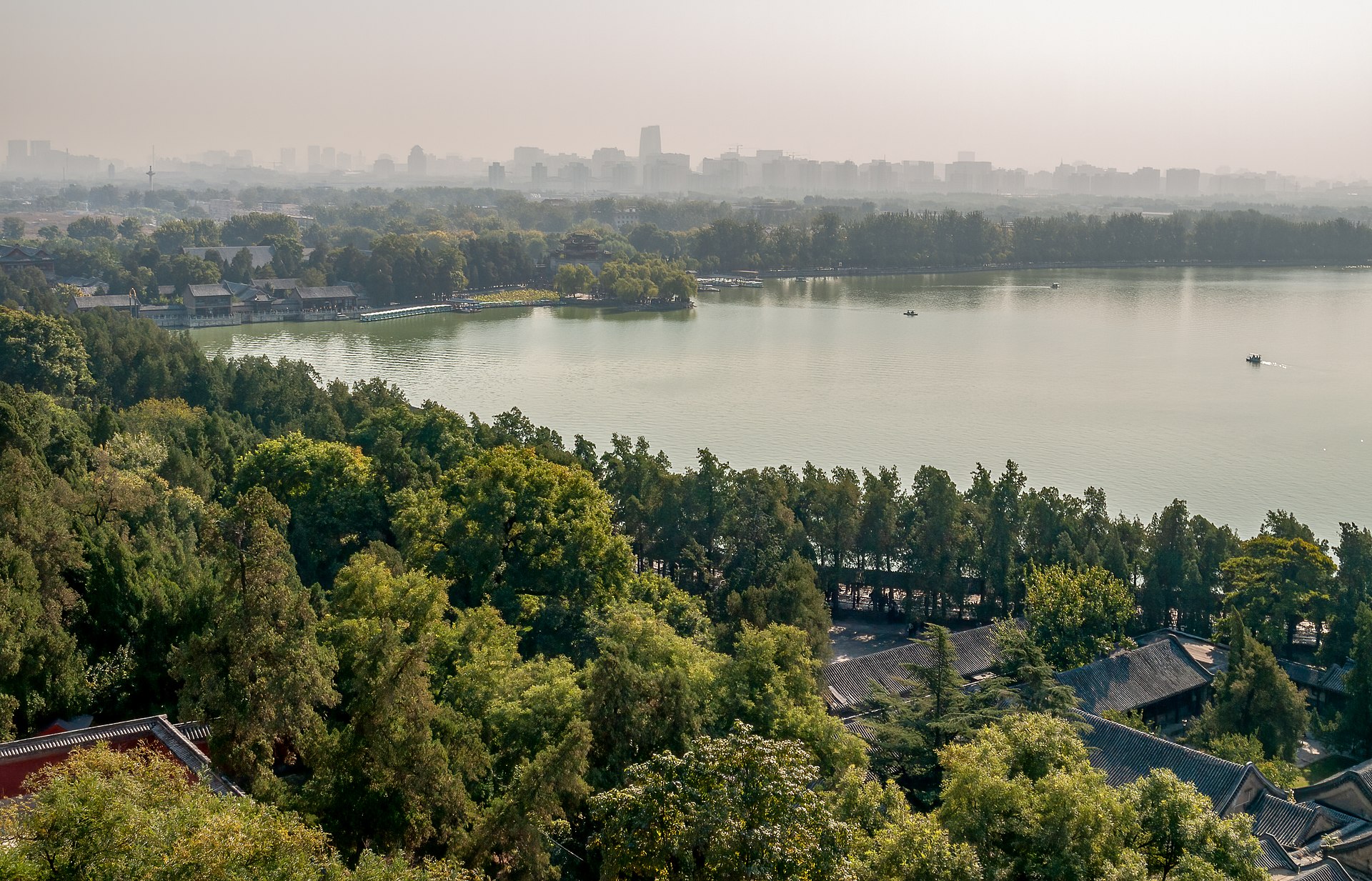
The Summer Palace, Beijing — the broad expanse of Kunming Lake and green parkland seen from Longevity Hill 5
Summer Palace (颐和园 Yiheyuan)
Kunming Lake · the Long Corridor · UNESCO garden

Some gardens are so big they need half a day to walk. The Summer Palace is where the Qing court escaped the city's heat. Its heart is Kunming Lake, dug entirely by hand, which fills three-quarters of the grounds. Along the shore runs the Long Corridor — a covered walkway 728 metres long, with more than 14,000 paintings on its beams, none repeated. Climb Longevity Hill to the Buddhist temple, then come down for a dragon-boat ride across the lake. It's a far more relaxing day than sightseeing in the city.
Metro: Beigongmen (Line 4), Exit D, for the North Gate — the closest entrance
Tickets: ¥30 (~฿150) park / ¥60 (~฿300) through-ticket · off-season ¥20/¥50
Time needed: half a day to a full day · opens 6.30am (peak season)
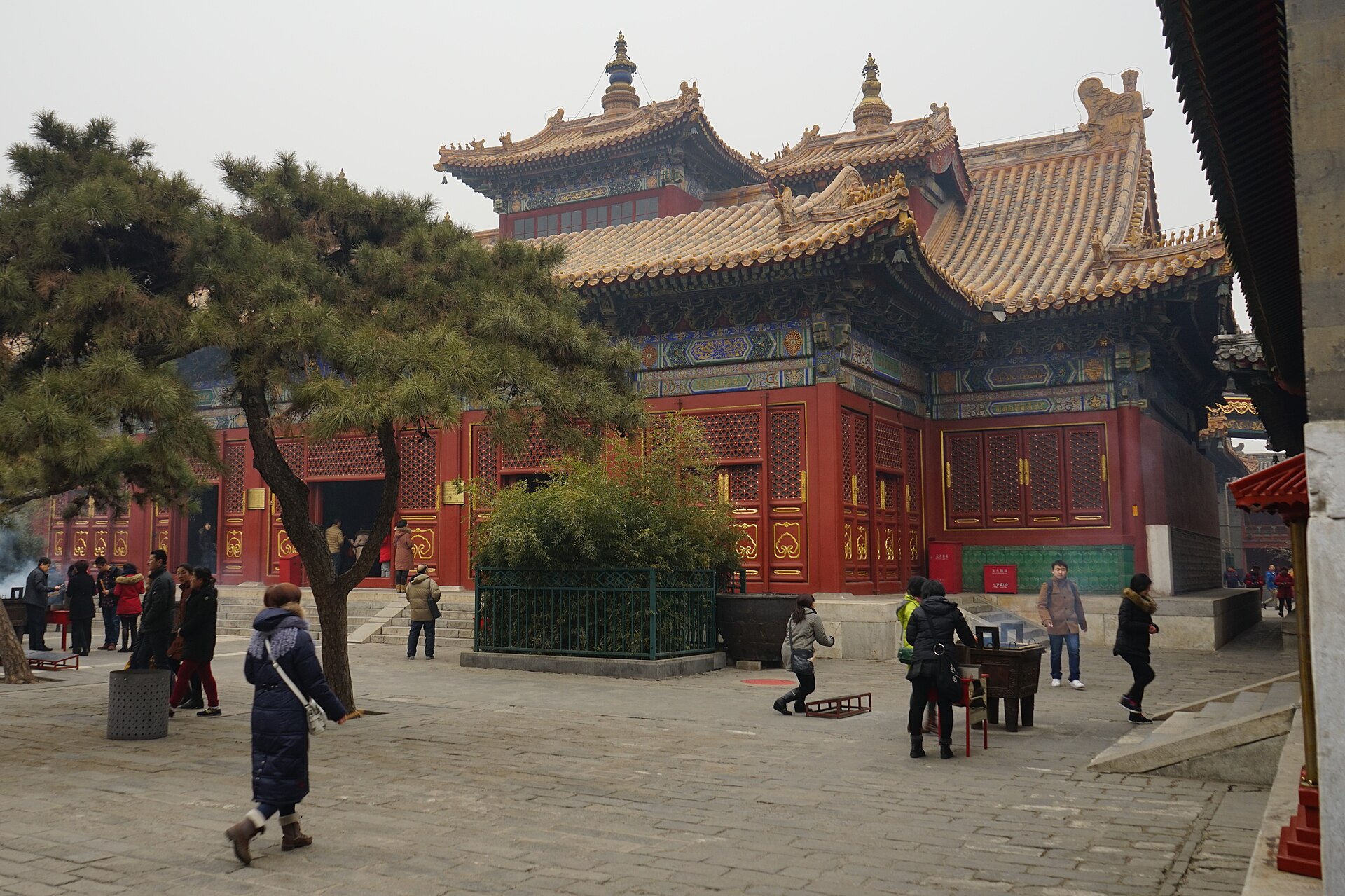
The Lama Temple (Yonghegong), Beijing — golden imperial roofs, red walls, incense burners and worshippers in the temple courtyard 6
Lama Temple (雍和宫 Yonghegong)
Tibetan Buddhist temple · 18m sandalwood Maitreya

The Lama Temple is the largest and most alive Tibetan Buddhist temple in Beijing — once the residence of a prince who later became the Yongzheng Emperor. When he took the throne, the palace was converted into a temple. The highlight is in the rearmost hall: an 18-metre statue of the Maitreya Buddha carved from a single white sandalwood trunk (with another 8 metres below ground), which earned it a Guinness record. This is a temple where Beijingers come to pray seriously for success in study and work — incense smoke rises all day, and the air is thick with it.
Metro: Yonghegong Lama Temple (Lines 2/5), under a 5-minute walk out
Tickets: ¥25 (~฿125) · open 9am–5pm (last entry 4.30pm) · book a time slot ahead
Note: you can't bring your own incense — the temple gives one free bundle at the gate, lit outdoors only
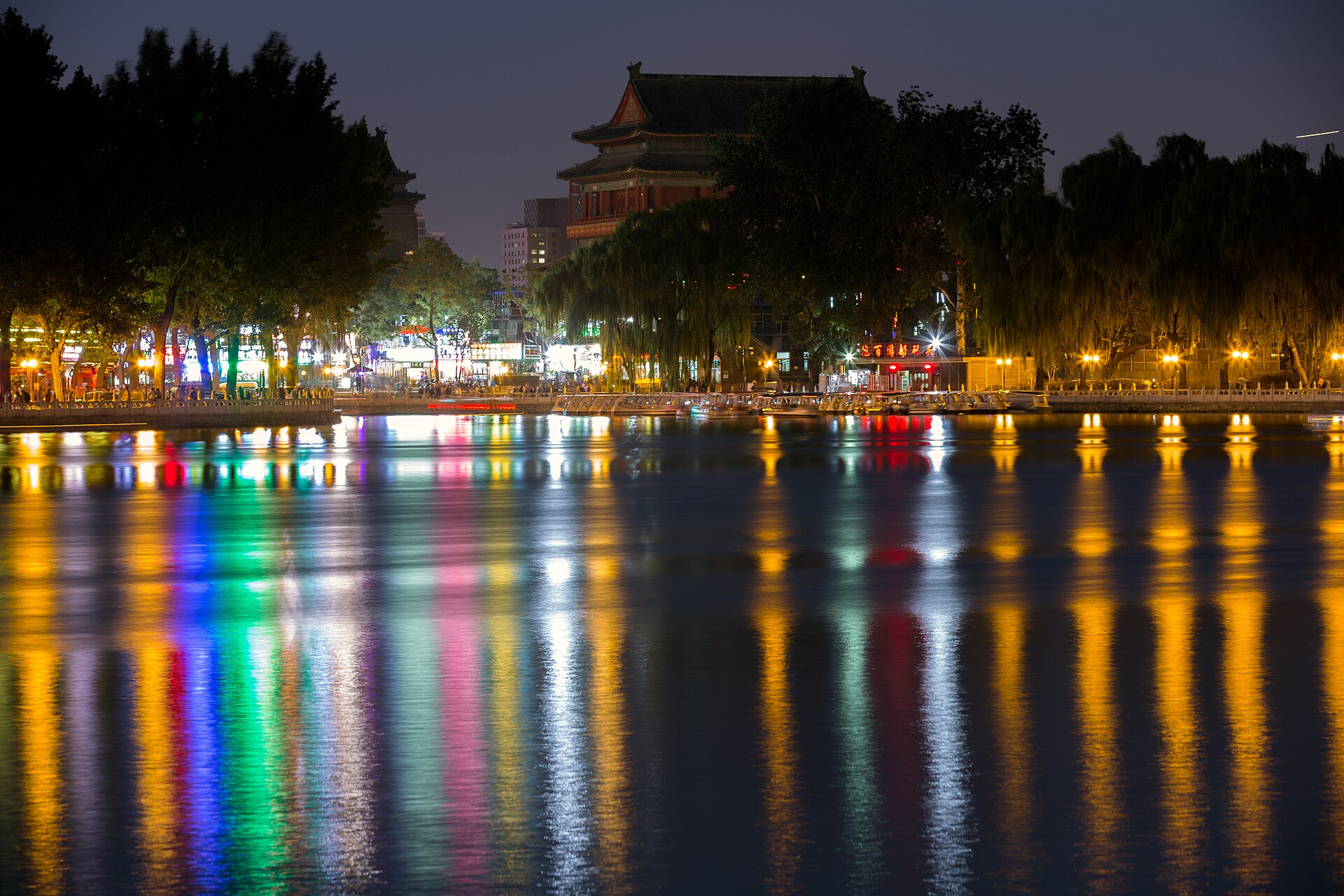
Houhai Lake, Beijing at night — the Drum Tower silhouette mirrored in the water, colourful lakeside bar lights reflecting on the surface 7
Hutongs & Houhai (胡同 / 后海)
Old lanes · a lake · evening bars by the water

If the Forbidden City is the Beijing of emperors, the hutongs are the Beijing of everyone else — narrow lanes of square courtyard homes (siheyuan) packed together, a way of life that's lasted centuries. Walk Nanluoguxiang, now a street of cafés and quirky shops, or the quieter lanes around the Drum and Bell Towers (Gulou), then end up at Houhai — a lake in the middle of the city where people row boats and cycle the shore by day. After dark the lakeside bars switch on their lights and live music, the colours pooling beautifully on the water. A rickshaw tour with a local driver makes a fine way to see the lanes.

Metro: Shichahai (Line 8) for Houhai · Nanluoguxiang (Lines 6/8) for the café lane
Best time: late afternoon for the lanes, then stay into the evening for the Houhai bar lights
Free: free to wander · a hutong rickshaw tour runs about ¥80–180 a ride (agree the price first)
🎨8
798 Art District (798艺术区)
Contemporary art · old factories · galleries, cafés

After a few days of palaces and temples, 798 is a welcome change of pace. It began as a disused 1950s East-German-style military factory complex; artists slowly moved in to set up studios, and it grew into the largest contemporary-art district in China. Today it's full of galleries, outdoor installations, robot sculptures, design bookshops, stylish cafés and art-souvenir stores. The steel steam pipes still run overhead and old slogans still mark the brick walls. You can easily spend a whole afternoon wandering and shooting photos. Most galleries are free to enter (some special exhibitions charge a small fee).

Metro: Gaojiayuan (Lines 12/14), Exit A/B, a 5-minute walk
Open: most galleries 10am–6pm (cafés and restaurants stay open later)
Free: entry and most galleries are free · some special exhibitions charge ¥30–80
⛰️9
Jingshan Park (景山公园)
The best panorama over the Forbidden City roofs · ¥2

This is the best-value stop in Beijing — a ¥2 ticket that buys the finest view in the city. Jingshan is an artificial hill, built from the earth dug out of the Forbidden City's moat, sitting directly to the north. It's about a 10-minute climb to the pavilion at the top (Wanchun Pavilion); turn back to the south and the entire sea of golden Forbidden City roofs lines up below you. It's the view that finally makes the scale of the palace make sense — something you can never see from inside it. Come in the late afternoon and the roofs turn molten gold before sunset.

Metro: step out of the Forbidden City's north gate and cross the road to the south entrance
Tickets: ¥2 (~฿10) · ¥10 during exhibitions · open 6.30am–9pm (peak season)
Best time: late afternoon before sunset, when the palace roofs glow gold
Tip: Pair it with the Forbidden City in one day — tour the palace in the morning, leave by the north gate, climb Jingshan for the view in the late afternoon. Perfect timing.
🏯10
Beihai Park (北海公园)
Imperial lake · White Pagoda · one of China's oldest gardens

Beihai Park sits right beside the Forbidden City to the west, one of the oldest imperial gardens in China at over 1,000 years old. Its heart is a wide lake with a small island in the middle (Jade Flower Island), crowned by a Tibetan-style White Pagoda that stands out on the skyline — a familiar sight for Beijingers. Hire a rowing boat out to the middle of the lake to look back at the pagoda against the city, or walk the shore past pavilions, flower gardens and the colourful glazed-ceramic Nine-Dragon Wall. It's a relaxed park where locals genuinely come to unwind, not just a tourist stop.
Metro: Beihai North (Line 6) · about a 15-minute walk from the Forbidden City
Tickets: ¥10 (~฿50) park (peak) / ¥5 off-season · White Pagoda island +¥10
Best time: afternoon, to hire a rowing boat on the lake · open 6am–10pm (Jun–Aug)
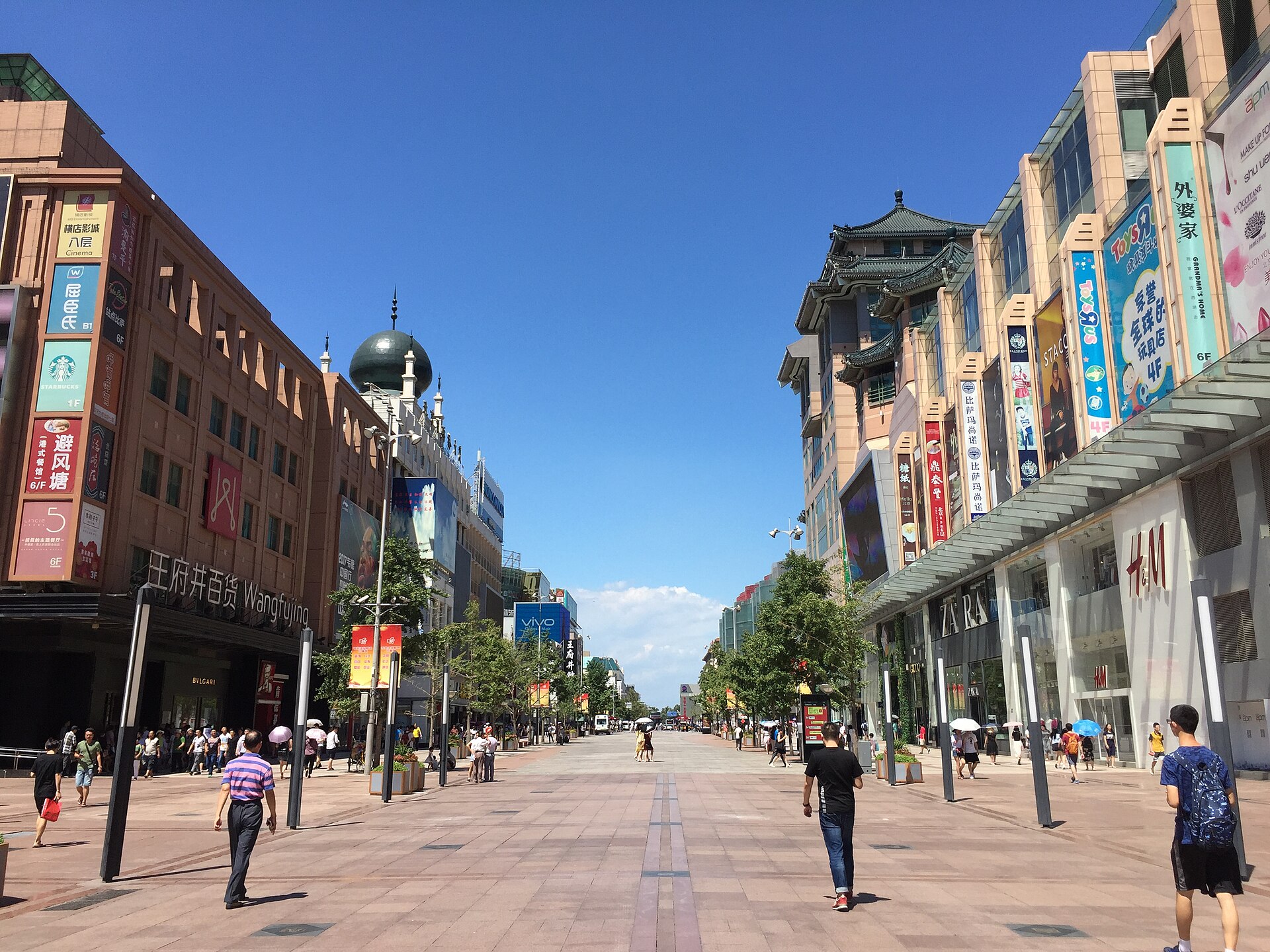
Wangfujing Street, Beijing — a wide stone-paved pedestrian street, department stores on both sides, a mosque dome to the left, clear sky 11
Wangfujing (王府井)
Central shopping street · snack lanes

Wangfujing is Beijing's best-known pedestrian shopping street, a short walk from the Forbidden City. The wide stone-paved avenue is lined with department stores, brand shops, the Foreign Languages Bookstore and old Beijing sweet shops. To be honest, the Wangfujing Snack Street that was once famous for unusual street food has been scaled right down since the city's urban tidy-up, and now leans more towards souvenirs and crafts. Many of the traditional food vendors have moved to nearby Gui Jie and Xianyukou streets instead — so if you're here to eat seriously, head to those two.
Metro: Wangfujing (Line 1); follow the signs to the pedestrian street
Best time: evening — the signs light up, stores stay open late, the street comes alive
Free: free to wander · stores open roughly 10am–10pm
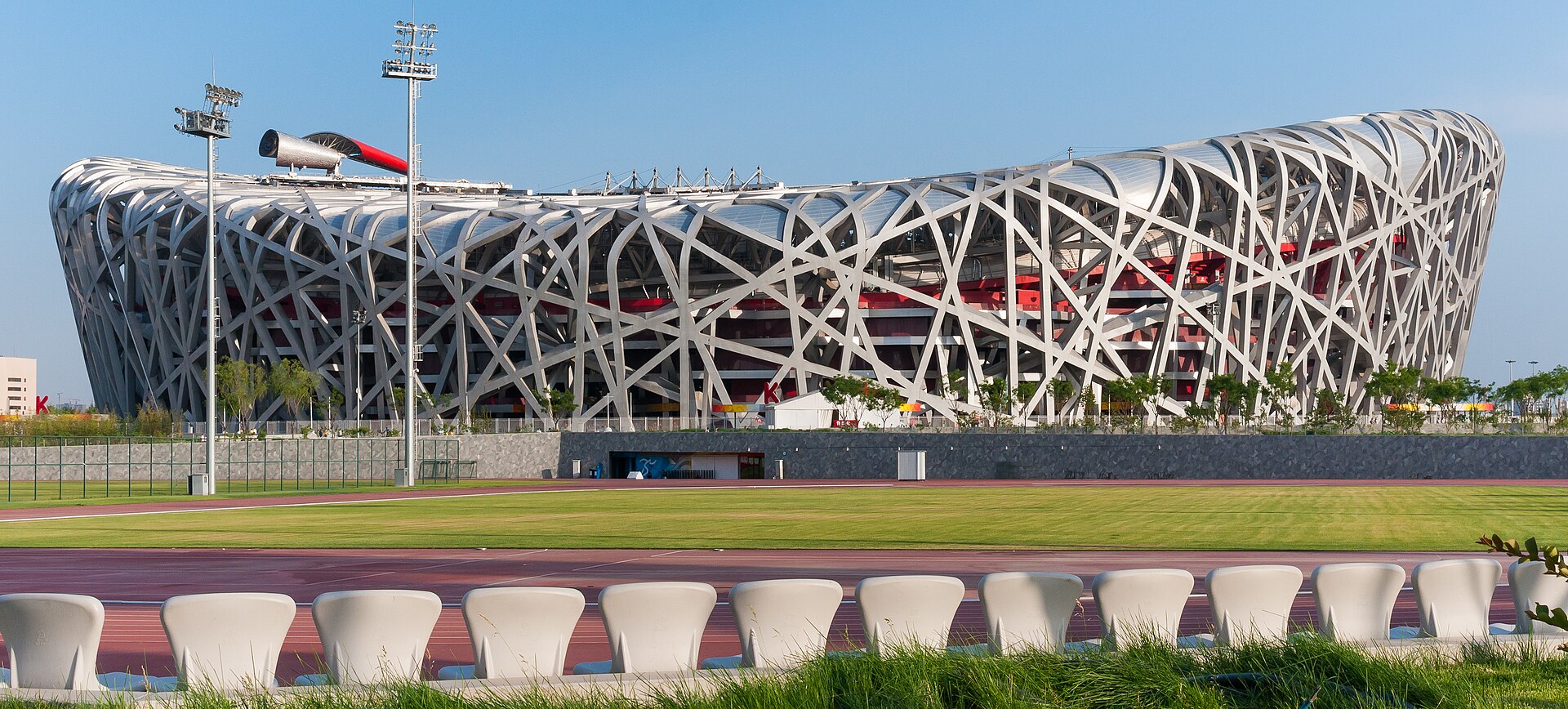
The Bird's Nest, Beijing — the National Stadium's woven steel lattice frame, the red running track, in the Olympic Park 12
Olympic Park: Bird's Nest & Water Cube (鸟巢/水立方)
The 2008 venues · lit up beautifully at night

The Olympic Park in the north of the city is the legacy of the 2008 Summer Games (and the 2022 Winter Games). The Bird's Nest (National Stadium), with its lattice of woven steel, is the piece of architecture everyone remembers. The Water Cube next to it — once the swimming venue — is now an indoor water park, its blue bubble-wrap walls shifting colour at night. The wide plaza is made for walking and photos. It's at its best at dusk, when both buildings light up: the Bird's Nest glowing orange-gold, the Water Cube an electric sea-blue. You can go up the observation deck inside the Bird's Nest for a high view over the city.

Metro: Olympic Sports Center or Olympic Green (Line 8) — straight out onto the plaza
Tickets: free to walk the park · Bird's Nest interior ~¥40 · Water Cube water park separate
Best time: dusk to evening, when both buildings light up
Planning your visit

How to fit it all in

Beijing is huge, but the main sights cluster into zones you can cover in a day at a time.

The Central Axis
Suggested Day 1 · Metro Line 1

Tiananmen Square, the Forbidden City and Jingshan Park line up due north–south. You can walk straight through them in a single day: start at the square in the morning, enter the palace at the south gate and leave at the north, then climb Jingshan for the view in the afternoon. It's the best-value day and the one that tells the city's story most clearly.

Time needed: a full day · Important: book both the square and the palace ahead
Temples, gardens & lanes (north-east)
Suggested Day 3 · Metro Lines 2/5/8

The Lama Temple, the Nanluoguxiang hutong, the Drum and Bell Towers and Houhai cluster in the north-east. Start with the Lama Temple in the morning, walk the hutong lanes in the afternoon, then finish at Houhai in the evening for the lakeside bar lights — all linked by a few metro stops.

Time needed: one day · Metro: Lines 2/5/6/8
The Great Wall (out of town)
Suggested Day 2 · tour / high-speed rail

Mutianyu is about 70km out and needs a full day. For Badaling, the 30-minute high-speed train from Beijing North is the easiest option. Go early to catch the wall while it's still quiet, and you'll be back in the city by evening.

Time needed: a full day · See: the Great Wall guide
Summer Palace + art
Suggested Days 4–5 · Metro Lines 4 / 8

The Summer Palace is out to the north-west (Line 4, Beigongmen) and needs half a day to a full day. The 798 Art District and the Olympic Park are over in Chaoyang to the north — combine them on another day: 798 in the afternoon, then the Olympic Park for the lights at dusk.

Time needed: 1–2 days · Metro: Lines 4 / 8 / 12 / 14
Frequently asked

FAQ · before you set out

How many days do you need in Beijing?
Four to five days cover the main highlights comfortably: Day 1, Tiananmen Square, the Forbidden City and Jingshan Park; Day 2, a full day at the Great Wall (Mutianyu); Day 3, the Temple of Heaven, the hutongs, Houhai and Wangfujing; Day 4, the Summer Palace and the Lama Temple; Day 5, the 798 Art District and the Olympic Park. With less time, three days still cover the Forbidden City, the Great Wall and the Temple of Heaven. See more in our full Beijing guide →
Do you need to book Forbidden City tickets in advance, and how much do they cost?
You must book online in advance — the Forbidden City does not sell tickets at the gate. Tickets are released 7 days ahead through the official site (bookingticket.dpm.org.cn) or the WeChat Mini Program. Admission is ¥60 (~฿300) in peak season (1 April–31 October) and ¥40 (~฿200) off-season (1 November–31 March), capped at 40,000 visitors a day. It's closed on Mondays (except public holidays). Bring your physical passport for the gate check.
When should you visit the Great Wall near Beijing — Mutianyu or Badaling?
For a first visit, choose Mutianyu: roughly 60–70% fewer crowds than Badaling, lovely forested-mountain scenery, a cable car up and a toboggan run down. Admission is ¥45 (~฿225) and a return cable-car ticket is ¥140. Badaling is the most famous and the easiest to reach — a 30-minute high-speed train from Beijing North station, ¥40 admission. Avoid Chinese public holidays at both, when visitor numbers jump 3–5 times. See our full Great Wall guide →
Is Tiananmen Square free, and what do you need to bring?
It's free, but you must reserve a slot in advance through the official WeChat Mini Program (Tiananmen Square Visit Reservation) at least a day ahead. You register with your passport number on a strict real-name system — a single typo means rejection at the gate, so bring your physical passport. Expect two or three layers of X-ray and ID checks. To see the dawn flag-raising ceremony you need to book the specific flag-raising slot. Metro: Line 1 to Tiananmen East/West.
How much is the Temple of Heaven and when is the best time to go?
Park-only admission is ¥15 (~฿75) in peak season, or ¥34 (~฿170) for the through-ticket that includes the main altar halls; off-season prices drop to ¥10/¥28. Early morning is the best time — Beijing locals fill the park doing tai chi, dancing, singing opera and playing chess, a slice of real city life you won't see elsewhere. The park opens at 6am. Take Metro Line 5 to Tiantan Dongmen, Exit A, right at the East Gate.
How easy is it to get around Beijing by metro?
Very easy. Beijing's subway has more than 20 lines covering almost every major attraction. Fares are ¥3–7 per journey. Key stations: Tiananmen East (Line 1) for the Forbidden City; Tiantan Dongmen (Line 5) for the Temple of Heaven; Beigongmen (Line 4) for the Summer Palace; Yonghegong (Lines 2/5) for the Lama Temple; Shichahai (Line 8) for Houhai. Pay by scanning Alipay or WeChat Pay at the gates — see how to set it up in our China travel guide →
Klook · Beijing tours

Beijing tours — local guides take you everywhere, no queueing

A Mutianyu Great Wall tour with hotel pick-up, a Forbidden City ticket with a guide, a hutong rickshaw tour — book ahead on Klook and skip the risk of gate tickets selling out.

See Beijing tours on Klook →
Wherebest is a Klook affiliate partner — we may earn a commission when you book through our links, at no extra cost to you.