The Grand Palace and Bangkok's most beautiful temples lined up in one neighbourhood, Khao San Road and the riverside Phra Athit lane along the Chao Phraya, and old streets that reward a wander. This is the most atmospheric old Bangkok — but there's one thing to know first: the core of the old town has no BTS.
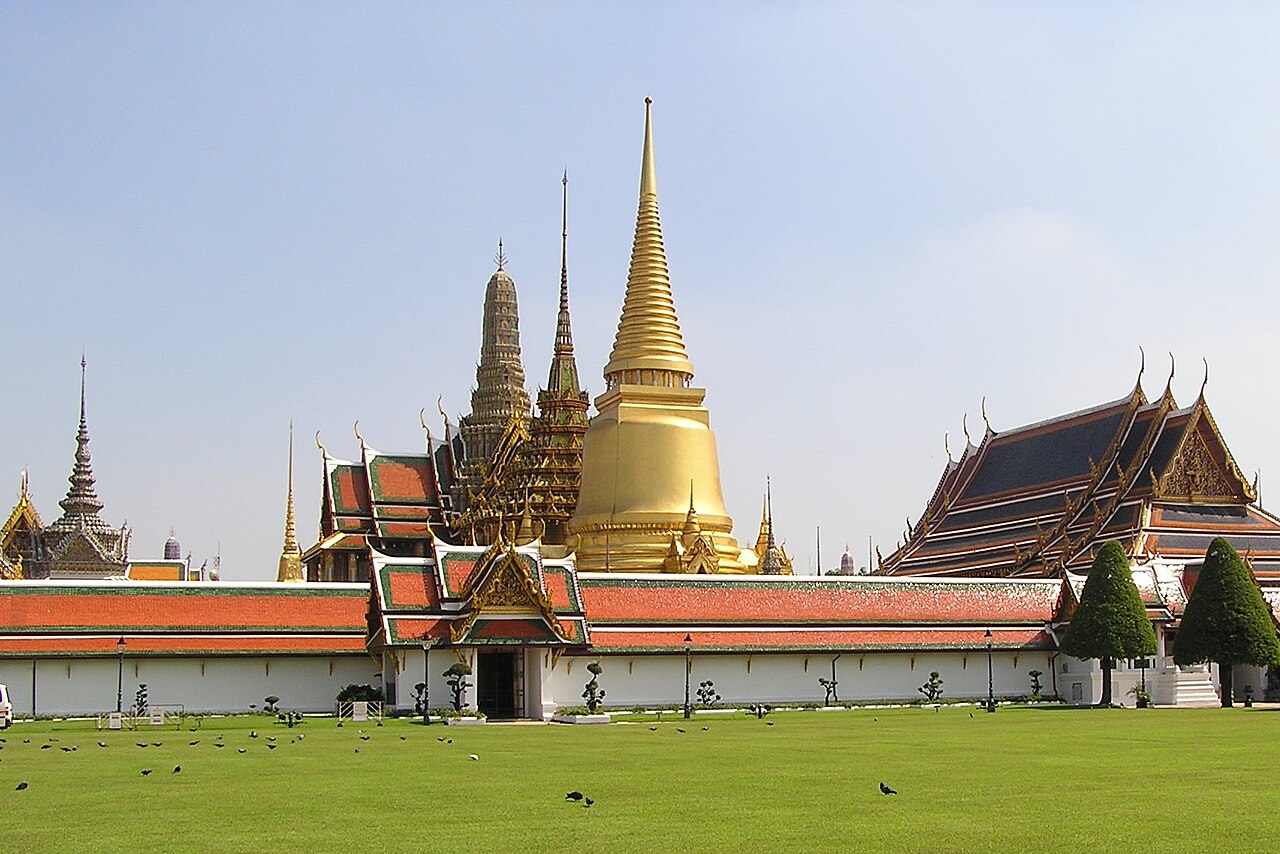
Picture stepping out of your guesthouse in the morning to see the golden spires of the Grand Palace rising over a white wall, a monk on his alms round, a tuk-tuk waiting at the corner, and the smell of grilled pork skewers drifting from a cart. That is Rattanakosin, Bangkok's old royal town — the district that gathers the Grand Palace, Wat Phra Kaew, Wat Pho and Wat Arun within walking distance of one another, on the east bank of the Chao Phraya River.
The heart of the district is the Grand Palace, built when Bangkok was founded in 1782. Around it runs a grid of old streets and lanes laid out in the early Rattanakosin era; old shophouses, temple-supply stalls and wooden riverside houses still sit among the temples. At the northern, riverside edge are Khao San Road and Phra Athit Road, which grew into Thailand's most famous backpacker strip. Part of the area is still home to Bangkok families who have lived here for generations.
What makes Rattanakosin worth more than a quick temple stop is how it layers things together. One street will be busy with people and stalls; the next lane falls almost silent, with just a temple bell and neighbours chatting by their doorways. We'll be honest: the appeal here isn't a single checkpoint, it's seeing the temples, the river and old-town life all packed into one area. Plan to spend more time than the map suggests.
Rattanakosin is not a museum district arranged for viewing. It is a place where people still live — monks on their alms rounds, real merit-making at the temples — and that is the appeal you can't get from a new mall district.
What makes the area so good to walk is how different adjacent corners can be. Khao San Road will be dense with stalls and travellers from all over the world, but step out to the Phra Athit side by the river and everything goes quiet at once — cafés in old buildings, benches by the water, and locals coming to sit in the cool of the evening. You can feel that you are in a place where life actually happens, rather than a constructed scene.
This is the number-one reason people come to Rattanakosin. The Grand Palace, Wat Phra Kaew, Wat Pho and Wat Arun are in one area, chained together on foot and by boat. Staying nearby means you can be inside the temples before the crowds and before the heat, which is worth a lot. Mornings are quietest and have the best light. We cover all the temples in the Bangkok attractions guide.
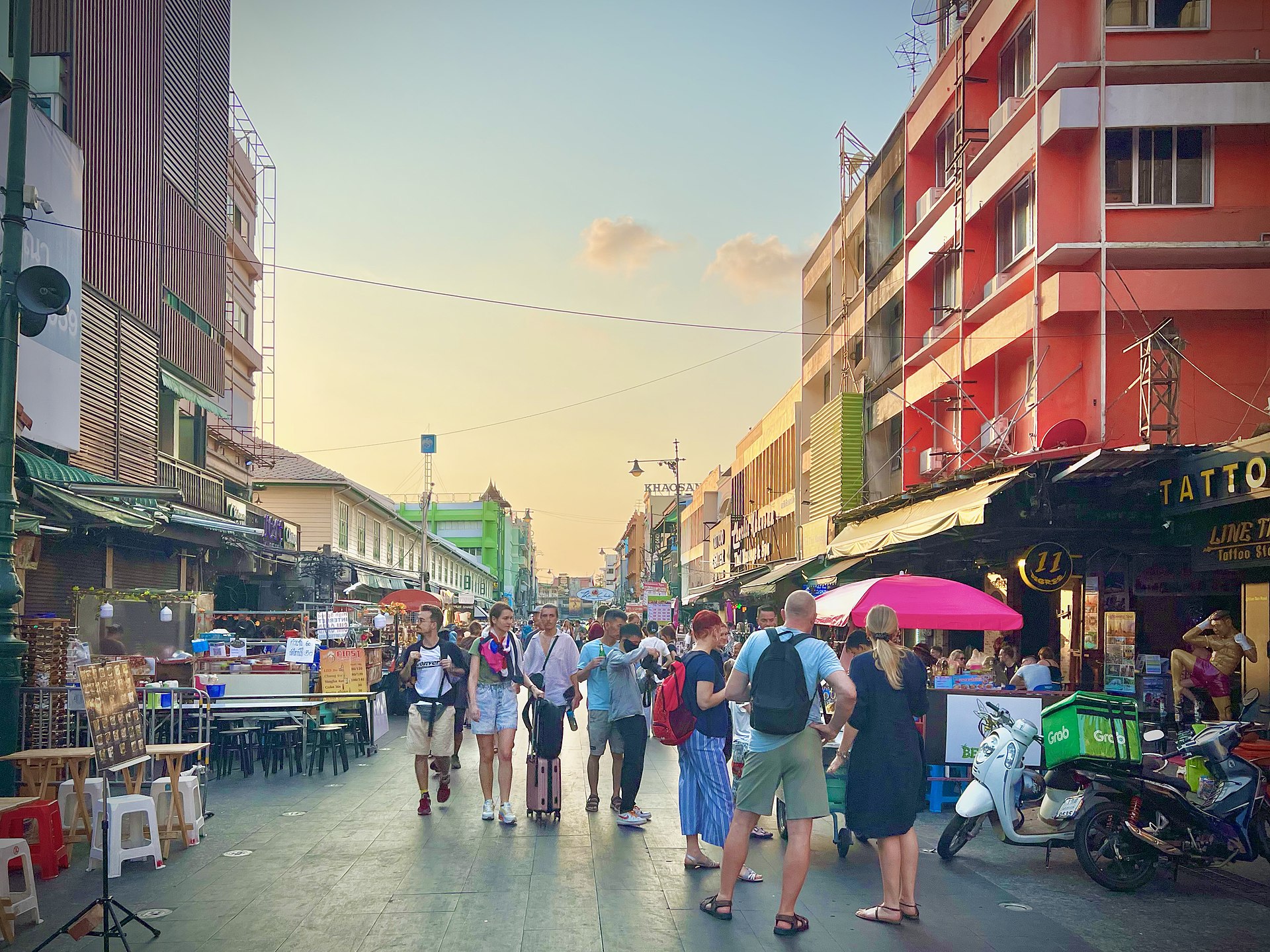
Khao San Road and the neighbouring Soi Rambuttri are packed with budget guesthouses, bars, made-to-order food, pad thai carts and travellers from every corner of the world. After dark the area becomes a loud, lively pedestrian street. For the full picture of Khao San, we've written a separate Khao San Road guide.
Beyond the backpacker hostels, the area has small hotels with character in old buildings and wooden riverside houses that give you the feel of old Bangkok. Wake up to a temple or the river, then step straight out into the old town. No chain hotel over in Siam can give you that. But we'll flag the genuine trade-off — getting around without rail — honestly in the where-to-stay section below.
The Chao Phraya borders the area, a few minutes' walk down from the Grand Palace to Tha Tien or Phra Athit pier. In the late afternoon the light on Wat Arun across the water is beautiful; locals come to sit by the river, and the express boats still pass, giving you the city from the water. For how to ride the river boats well and read the flag colours, see the Chao Phraya boat guide.
There is more to Rattanakosin than the Grand Palace. Pick the spots that match what you're after and you'll have a far better time than following the map alone.
The heart of the area and of the whole city, built when the capital was founded in 1782. Inside is Wat Phra Kaew, home of the Emerald Buddha, royal halls, and a Ramakien mural that runs the length of the cloister. This is where almost every Bangkok trip starts. We'll be honest: it's crowded and hot. The trick is to arrive before the 08:30 opening, and dress modestly with shoulders and knees covered or you won't be let in. Ignore anyone outside the gate who tells you "the palace is closed today" to steer you elsewhere — it's open daily. Admission and hours — check before you go.
Just south of the Grand Palace, a few minutes on foot. The highlight is the Reclining Buddha, a gilded figure more than 45 metres long with mother-of-pearl inlaid soles. Wat Pho is also the home of traditional Thai massage and has a massage school in the grounds. It's shaded by rows of stupas and big trees, and a little less crowded than the Grand Palace, so it's easier to wander. We cover it in the Wat Pho guide. Admission and hours — check before you go.
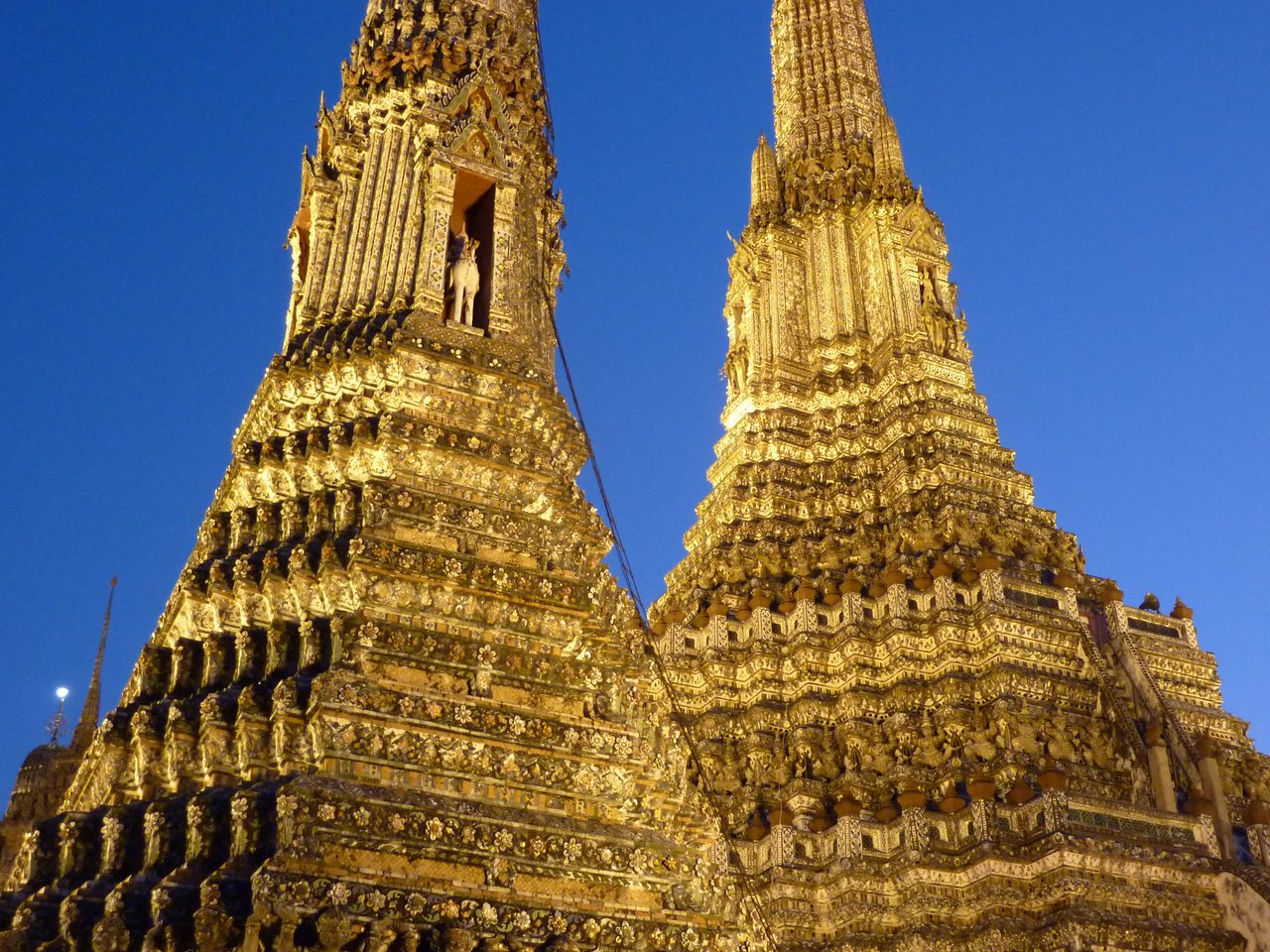
The riverside temple with the tall prang, on the bank opposite Rattanakosin. Cross from Tha Tien pier on the ferry, about ฿5. The central prang is decorated with porcelain and seashell fragments, and you can climb part of the way up. It's at its best at two times: in the morning when the sun lights the prang, and at sunset behind it. Many people photograph Wat Arun beautifully from the Tha Tien side in the evening without even crossing over. More in the Wat Arun guide.
Thailand's most famous traveller street. By day it's a strip of food and souvenir stalls and budget stays; after dark it becomes a pedestrian street full of bars, live music, pad thai carts and travellers from all over. If it's your first time in Bangkok and you want to see this scene once, this is it. The neighbouring Soi Rambuttri is a touch quieter and more relaxed. The full rundown is in the Khao San Road guide. We'll say it plainly: it's loud late at night — if you want to sleep, lean toward the Phra Athit side.
Rattanakosin is a good museum district for ducking out of the afternoon heat. Museum Siam (near MRT Sanam Chai) tells the story of Thai identity in a fun, air-conditioned way. The Bangkok National Museum holds some of the country's most important artefacts, and the Rattanakosin Exhibition Hall on Ratchadamnoen Avenue tells the story of old Bangkok. All are within a short walk or quick taxi of one another, and they're ideal for the part of the afternoon when walking in the open is too much. Admission and hours — check before you go.
South of Rattanakosin Island, the old town runs on into Yaowarat, Bangkok's historic Chinatown. Walk down from Wat Pho toward Pak Khlong Talat (the flower market) and the Memorial Bridge and you reach the edge of Yaowarat, which has the city's best street food and late-night eating. It pairs naturally — temples by day, Yaowarat by night. More in the Yaowarat guide and the Yaowarat food guide.
The area runs from a few-baht street stall, to a decades-old Michelin street-food shop, to a café in an old building and a bar by the river.
The charm of eating in Rattanakosin is the old shops that have been going for decades. This area and the adjoining Yaowarat hold several Michelin-listed street-food places — like Thip Samai pad thai near Maha Chai Road, and Jay Fai, famous for crab omelette and drunken noodles (expect a long queue, so plan for it). Most roadside dishes run just a few tens of baht a plate. For the standout shops worth seeking out, see the Bangkok street food guide and the Michelin street food guide.
Phra Athit Road and the lanes around Khao San hold cafés in old buildings and bars more relaxed than Khao San itself; coffee typically runs about ฿60–120. Many face the river or hide inside old wooden houses. After dark there's everything from live-music bars on Soi Rambuttri to riverside spots where you sit in the evening breeze. For a livelier night, head into Khao San; for quiet and a river view, the Phra Athit side. For cafés citywide, see the Bangkok café guide.
This is the most atmospheric old-town base in Bangkok — but it comes with a real trade-off on getting around that we want to be honest about before you hit book.
The case for staying in Rattanakosin is atmosphere and a central old-town location. You can be inside the Grand Palace or Wat Pho before the crowds, walk to the river, and take the Chao Phraya boat down to ICONSIAM or Asiatique. The area runs from cheap backpacker stays around Khao San to small hotels with character in old riverside buildings — a wider price range, and generally better value, than Siam or Sukhumvit.
But here is the honest trade-off: the core of the area has no BTS. The nearest rail is MRT Sanam Chai, which is walkable to Wat Pho but still some way from Khao San. Getting to shopping districts like Siam or Sukhumvit means a taxi, a boat or a transfer. And Khao San Road is loud at night — if you're travelling with kids or want quiet, choose the Phra Athit side or a soi set further back, and read the reviews carefully on noise. If you can accept getting around without rail, the old-town atmosphere you get in return is well worth it, especially if this trip is built around the temples and palace.
Or read more on how to get around and explore this area:
The first thing to know: the core of Rattanakosin Island has no BTS. The nearest rail is MRT Sanam Chai, and the prettier, more enjoyable route in is the Chao Phraya express boat. Within the area, walking is best, since the temples and palace are close together. Fares run roughly ฿17–62 on BTS/MRT, about ฿16 on the express boat, and about ฿5 on the cross-river ferry — always check prices before you go.
08:30 — Start at the Grand Palace and Wat Phra Kaew (arrive before opening to beat the crowds and the heat); dress modestly with shoulders and knees covered.
10:00 — Walk on to Wat Pho for the giant Reclining Buddha, a few minutes from the palace.
11:00 — Take the cross-river ferry from Tha Tien to Wat Arun on the far bank (about ฿5).
11:45 — Back on the Tha Tien side, find a riverside café or food spot for a break before you head off.
Follow the half-day route through the morning, then continue:
13:00 — Lunch in the area — an old shop or a Michelin street-food place near Maha Chai Road.
14:00 — Escape the afternoon heat at Museum Siam or the Bangkok National Museum (air-conditioned).
15:30 — Wander Khao San Road and Soi Rambuttri for the scene and a snack.
17:00 — Head to the Phra Athit riverside for a café by the water and the evening light on Wat Arun.
18:30 — Finish with dinner in Yaowarat next door, the city's best late-night street food.
To keep going outside the city, read Day Trips from Bangkok. Plan the whole trip at the complete Bangkok city guide, or see the Bangkok 1-day itinerary.