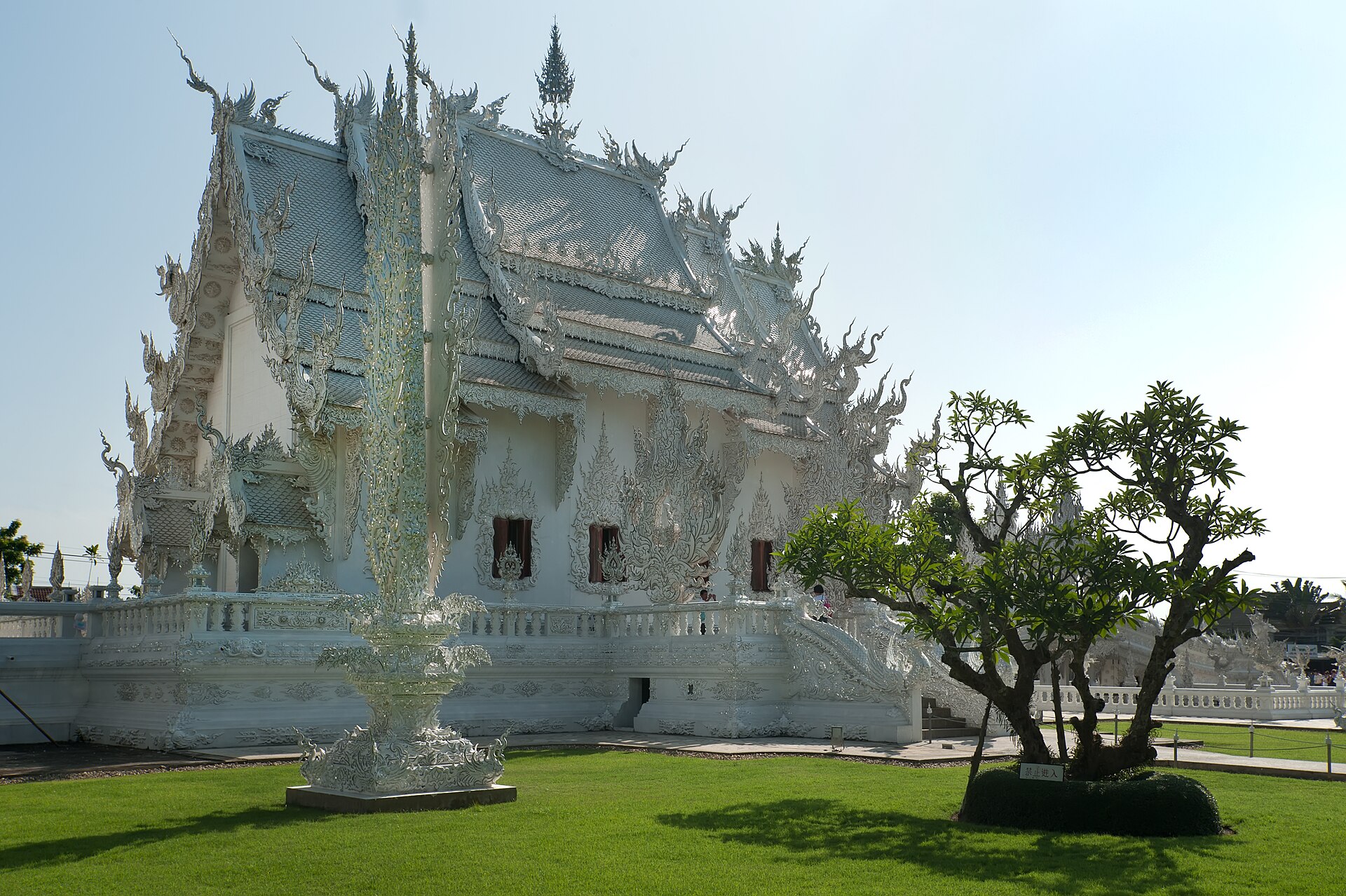
Baan Dam (the Black House Museum) is the artist estate and open-air museum of Thawan Duchanee, north of Chiang Rai city — over 40 dark teak pavilions spread across the grounds, filled with bones, horns, hides and carvings. It is the 'dark' side most people pair with the White Temple's 'light', and another art landmark you should not miss in Chiang Rai.
Let us be honest: a lot of people hear the name "Baan Dam" — the Black House — and assume it is a black temple to match the White Temple. It is something quite different. Baan Dam (the Black House Museum) is not a temple but an artist estate and open-air museum built by Thawan Duchanee, one of Thailand's National Artists. Picture a plot of more than 100 acres north of Chiang Rai city, scattered with over 40 dark teak pavilions. Each one is a work of art that Thawan Duchanee slowly built and filled over more than 40 years.
What makes Baan Dam unlike anywhere else is what sits inside — animal bones, buffalo and deer horns, crocodile and snake hides, ivory and wood carvings, laid out on long tables, wooden chairs and across the black pavilion floors. Some pavilions feel like ritual halls; others are small single rooms. Walking from one to the next, the mood keeps shifting. The overall effect is raw, dark and unsettling, yet strangely compelling — not the pretty kind of beauty you get at the White Temple, but a different kind that makes you think.
Locals like to say Chiang Rai has two artistic poles that balance each other. Wat Rong Khun (the White Temple) by Chalermchai Kositpipat is the 'light/yang' side, about heaven and release; Baan Dam by Thawan Duchanee is the 'dark/yin' side, about death, desire and the hard truths of life. Visit both in one day and you see two sides of Chiang Rai that answer each other neatly — start with the overview at the full Chiang Rai attractions guide.
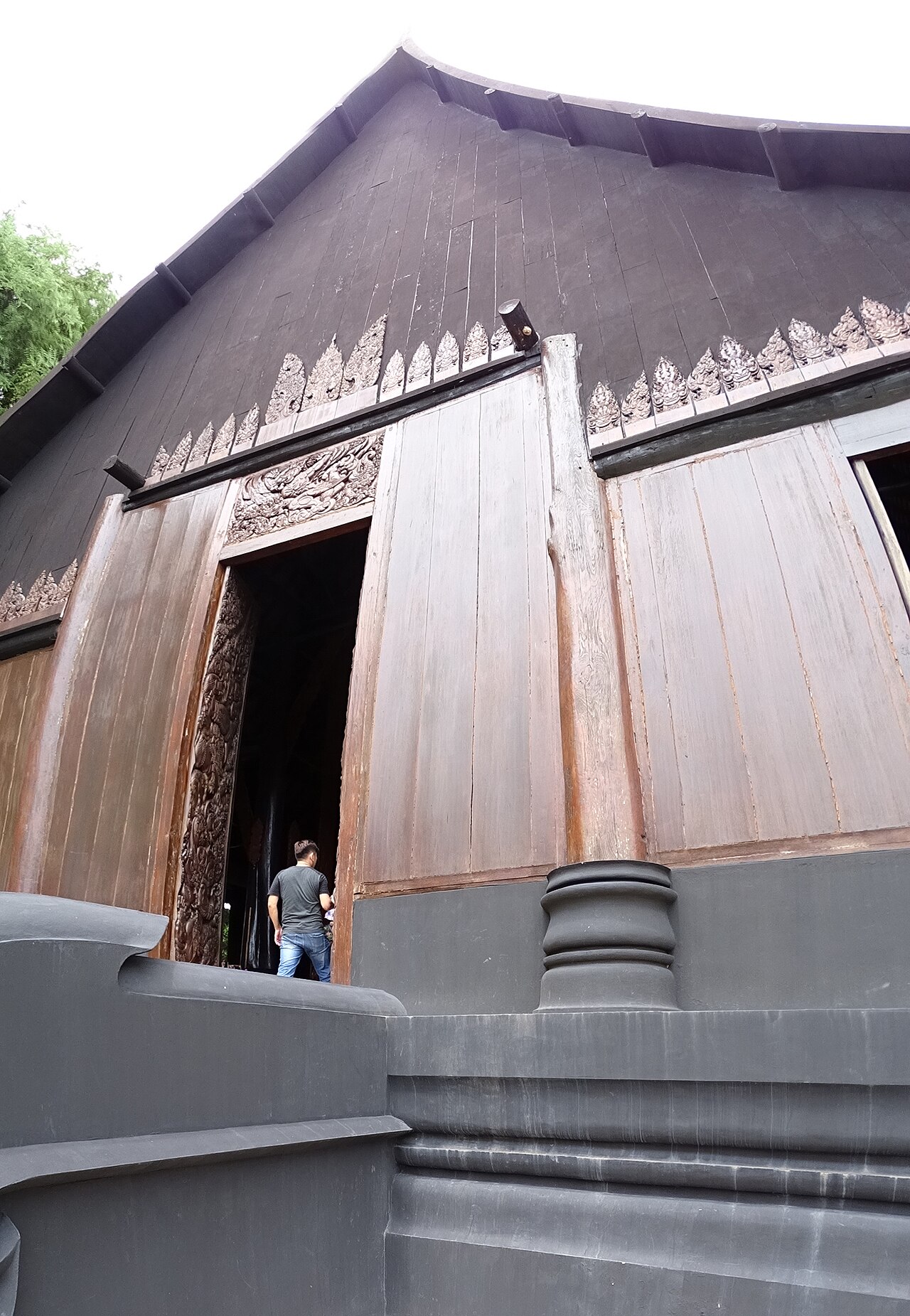
This is not a sugary, photo-only attraction — it is art that makes you think about life and death. Walk slowly, take one pavilion at a time, and let it sink in.
The appeal of Baan Dam is that it does not feel like an ordinary attraction. Once you step through the gate you meet dark wooden pavilions lined up across a wide lawn — some you can enter, others you view from outside. Inside are long wooden tables, hide-covered chairs, and bones and horns arranged like a stage set. Walking from one pavilion to the next is like shifting moods over and over. Some people come out saying it felt a little eerie; others come out amazed at the craftsmanship and the thinking behind it — it is the kind of place people leave feeling differently about, and that is exactly what makes it memorable.
If you love looking at art and Lanna architecture, Baan Dam is a place you can linger in. Each teak pavilion is a detailed piece of design and carving, paired with a collection Thawan Duchanee spent his whole life gathering. Pair it with Wat Rong Khun and Wat Rong Suea Ten and you see three Chiang Rai artists' styles in one day.
If you have seen plenty of pretty temples and want something that breaks the pattern, Baan Dam is the answer, because it is raw, dark and thought-provoking. It is not a place for soft, sweet photos but one that asks you to stop, look and interpret — good for anyone who wants their Chiang Rai trip to have a deeper, more memorable corner.
To be straight with you, many pieces in the collection are real — bones, horns and hides — so the overall feel is raw and unsettling for some people. Small children or anyone who dislikes that mood may find it uncomfortable. If you bring children, explain first that it is art, and choose to walk only the pavilions you are comfortable with.
Baan Dam is north, the White Temple is south, and the Blue Temple is in town, so most people fit the three into one day by rented car or tour, because they sit in different directions. Order them well and you cover the loop comfortably — see a full plan in the Chiang Rai 2-day itinerary.
The standout of Baan Dam is the large teak pavilion at the centre of the grounds, an open hall set with a long wooden table, hide chairs, and big collection pieces such as horns and bones arranged like a scene. The gable and the doorways are finely carved in Lanna style, and it is the spot many people stand at longest, feeling both the scale and a certain solemn weight at once. Walk around it slowly and study the woodwork, and you will see the skill Thawan Duchanee put into it.
The heart of what makes Baan Dam singular is the collection Thawan Duchanee gathered over a lifetime — animal bones, buffalo and deer horns, crocodile and snake hides, ivory, shells and wood carvings, placed throughout the pavilions. Some pieces are real and raw enough to make you flinch; others are beautiful craft. Together they speak to death, desire and the truths of life as the artist saw them — walk gently, do not touch or sit on the work, and check the no-photography signs in some pavilions before you lift a camera.
Beyond the main hall are smaller teak pavilions scattered across the lawn, more than 40 in all. Some have unusual shapes, like sculptures you can step inside; others are small rooms holding a particular part of the collection. Walking from one to the next brings a new mood each time, like exploring an open-air village of art — allow about 1 to 1.5 hours to see it all, because the grounds are large and there is plenty to take in.
Baan Dam sits on more than 100 acres, and between the pavilions are lawns and big trees that keep the walk from feeling cramped. In the cool season (November to February) the weather is good, the skies clear and the outdoor walking comfortable. In the burning season (February to April) it is hot and hazy, so the walk is harder — always bring an umbrella, a hat and water, and avoid the midday lunch closure when the sun is strongest. Read the season detail in the best time to visit Chiang Rai.
Baan Dam is not a temple but an artist estate. A little preparation makes the visit smoother and keeps you from missing the hours.
Entry is around ฿80 per person, with young children usually free. It opens daily roughly 09:00 to 17:00 and often closes for lunch from about 12:00 to 13:00. Prices and hours can change, so check before you go. The ticket booth is at the front, and it is best to carry small-denomination cash, as some points still do not take QR payment. Allow about 1 to 1.5 hours to walk through, because the grounds are large and the pavilions are spread out. If you are moving on to another sight the same day, time your visit to avoid the lunch closure.
Because Baan Dam is not a temple, it is less strict about covering shoulders and knees than Wat Rong Khun. Still, dress neatly and come ready to walk outdoors — bring an umbrella or hat, sunglasses and water. Some pavilions can be entered, others are viewed from outside; walk gently and do not touch or sit on the art and the collections, and check whether a pavilion has a no-photography sign. Many pieces are real, such as bones and hides, so if you bring small children, explain beforehand that it is art so they are not startled.
Knowing the idea behind it makes the walk far richer. Thawan Duchanee meant Baan Dam to speak to death, desire and the raw side of life. The black, the bones and the horns are not meant to frighten you but to make you reflect on what is true. That is why people call Baan Dam the 'dark/yin' side that pairs with the White Temple's 'light/yang' — walk it with an open mind and you will find a different kind of beauty from the pretty temples elsewhere.
Baan Dam is in Nang Lae, about 10 to 11 km north of Chiang Rai city centre (roughly a 15 to 20 minute drive). Chiang Rai has no train and no metro or city rail, so all travel is by road — drive yourself with a rented car or scooter, take a Grab, a songthaew, or join a tour. Always agree the price with a tuk-tuk or taxi before you get in.
Baan Dam is one of Chiang Rai's three art landmarks. Pair it with the White Temple and the Blue Temple, or carry on to the tea hills and mountains.
The most classic route for Chiang Rai visitors is to do the White Temple, the Blue Temple and Baan Dam in one day. Start early at Wat Rong Khun (the White Temple) in the south while the crowds are thin, stop at Wat Rong Suea Ten (the Blue Temple) in town, then finish at Baan Dam in the north in the afternoon. The three sit in different directions, so a car or tour is smoothest — see a route that works at the Chiang Rai 2-day itinerary.
Since Baan Dam is already north of the city, from here you can drive on north to Singha Park (Boon Rawd Farm), a vast tea farm and parkland, or a little farther to Doi Tung and the Mae Fah Luang Villa, a royal project on a cool mountain. And if you have the time, the Golden Triangle and Chiang Saen on the Mekong are also in the north — see all the options at Chiang Rai day trips.