Home Chiang Rai Thailand Chiang Rai Hotels About
Home  ›  Asia  ›  Thailand  ›  Chiang Rai  ›  Getting Around
🚕 Chiang Rai Transport Guide · 2026

Getting Around Chiang Rai
No Train, No Metro — Easier Than You'd Think

Chiang Rai has no train and no metro — but the small centre around the Clock Tower and Night Bazaar is walkable, backed up by songthaew blue trucks, tuk-tuks, Grab and rented scooters. The one thing to plan from the start: the famous temples and the hills sit outside the city on steep roads, so a car with driver is the easiest way.

Before you go

A small valley town with no metro — and that's fine

If you've travelled in Bangkok or Chiang Mai and grown used to hopping on a skytrain or having plenty of rides to choose from, here's the first thing to know: Chiang Rai has no BTS/MRT metro and no railway reaching the city. This small town in the far-northern hills moves at a slower, easier pace and runs mostly on wheels along the road. It sounds like a hassle, but it's easier than you'd think once you know what to use and when.

The good news is that central Chiang Rai is small and walkable. The Clock Tower, the Night Bazaar and the shops and restaurants downtown sit close together, easily reached on foot day or night. When you want to go further, there's the songthaew blue trucks, tuk-tuks and Grab to call, and those who want to be self-sufficient can rent a scooter to ride around town. Getting around here costs far less than the islands or Bangkok — you just need to know the trick of agreeing fares.

But there's one thing to grasp from the start: the things that made Chiang Rai famous mostly sit outside the city. Wat Rong Khun (the White Temple) is about 13 km south of town, while Doi Tung, Doi Mae Salong, the Golden Triangle and Phu Chi Fa are hours away up in the hills, on winding, steep roads with no public transport tying it all together. This guide walks through every way to move around — from walking the centre to songthaew, tuk-tuks, Grab, scooters and chartering a car into the hills — then helps you plan your trips before you even leave the hotel.

Your main option in town

Walking, songthaew and tuk-tuks — getting around the centre

The centre is small enough to walk; for longer hops, use a songthaew or tuk-tuk — and always agree the fare first, plainly.

In a town with no metro and no train, the best stand-in for tourists in the centre is simply walking. Central Chiang Rai is more compact than you'd expect — the Clock Tower (with its nightly light-and-sound show), the Night Bazaar, the in-town temples and most restaurants are within walking distance of each other. When you go further out, lean on the songthaew blue trucks, tuk-tuks or Grab.

🚐
Songthaew (blue trucks)
SONGTHAEW · converted pickups with two bench seats

A songthaew is a converted pickup with two bench seats in the back, and Chiang Rai's are mostly blue trucks running some routes around town and out to nearby districts. Ride a regular route and the per-person fare is very cheap, but to be taken to a specific spot or to charter the whole truck, you agree a price first.

The honest truth: there are no clear route signs like a big-city bus, and no fixed timetable. Ask the driver or have your hotel tell you the route before you board. It suits a tight budget when you're not in a rush; if you want to be on time and comfortable, a Grab or tuk-tuk is simpler.

Fare: very cheap per person on a route · charter means agreeing a price
Pay with: mostly cash — keep small notes handy
Tip: ask the route and fare before you board, every time
🛺
Tuk-tuk — always agree the fare first
TUK-TUK · no meter, you bargain

Chiang Rai tuk-tuks wait around the Clock Tower, the Night Bazaar and the bus station, and suit short hops around town when you're carrying things or heading back to your room late. There's no meter, so you agree the fare before you get in, every time. A short ride around town usually runs about ฿60–150 depending on distance and how you bargain.

Straight up: if you don't ask the price first, you'll often be overcharged. Say your destination clearly, ask the fare, then get in. If it feels too high, walk to the next one or open Grab to compare. Most drivers are friendly, but the price comes down purely to what you agree.

Rough fare: short rides around town ~฿60–150
Pay with: cash (some take transfer / QR scan)
The iron rule: agree the fare before you board — every time
How to agree a fare without being taken for a ride: chartered tuk-tuks and songthaew have no meter, so before you get in, state your destination clearly, ask the fare, and if it's far off what Grab quotes (which you see before you book), bargain or pick another. Travelling as a group and splitting the cost usually works out well — budget for in-town rides in advance. See our full Chiang Rai trip budget.
Ride-hailing

Grab in Chiang Rai — it works, but cars are scarce

Grab works in Chiang Rai for both cars and motorbikes. The upside is you see the fare before you book and pay in the app — no haggling with the driver. For visitors who'd rather not gamble on a tuk-tuk price, it's the most reassuring way to go. But there are limits worth knowing first.

📱
Grab Car

A private car hailed in the app with the price shown upfront — handy with luggage or late at night, but fewer cars than the big cities, so waits happen.

🏍️
Grab Bike

A motorbike taxi in the app — cheap and quick for one person on a short hop, helmet provided, easier to find in town than out of it.

💳
Pay in-app

Link a card or pay cash — paying in the app is easy, no change needed, and you see the total clearly before you book.

Buffer time

Cars are limited; some out-of-town spots or times get no match. Leave a buffer and keep a backup ride number or ask your hotel to call one.

Honestly, Grab in Chiang Rai is great for transparent pricing, but don't expect a car on tap the way you'd get in Bangkok. In town during the day it's usually easy to hail; late at night or out at far-flung spots you may have to wait. The smart move is to keep options open — Grab as your main, tuk-tuks/songthaew as backup, and the hotel reception always able to call a ride. For sights outside the city and up in the hills, chartering a car with driver works out better. See our guide to getting to Chiang Rai.

Other options

Renting a scooter and chartering a car into the hills

🛵
Rented scooter
SCOOTER · nimble in town, but ride carefully

Scooters are easy to rent in Chiang Rai, with several shops at about ฿200–300 a day, and they're great for pottering around town and nearby at your own pace, with no waiting for a ride. They're far nimbler if you can ride and are confident on Thai roads.

The honest truth: wear a helmet every time and carry a valid licence (an International Driving Permit or a motorcycle licence), because there are checkpoints and insurance gets complicated without one. Most importantly, the roads up to Doi Tung, Doi Mae Salong and Phu Chi Fa are steep and very winding, and slippery in the rain — beginners shouldn't ride them.
Price: ~฿200–300/day (deposit / passport held)
Must have: a helmet + a valid licence
Mind: steep mountain roads to Doi Tung / Mae Salong / Phu Chi Fa
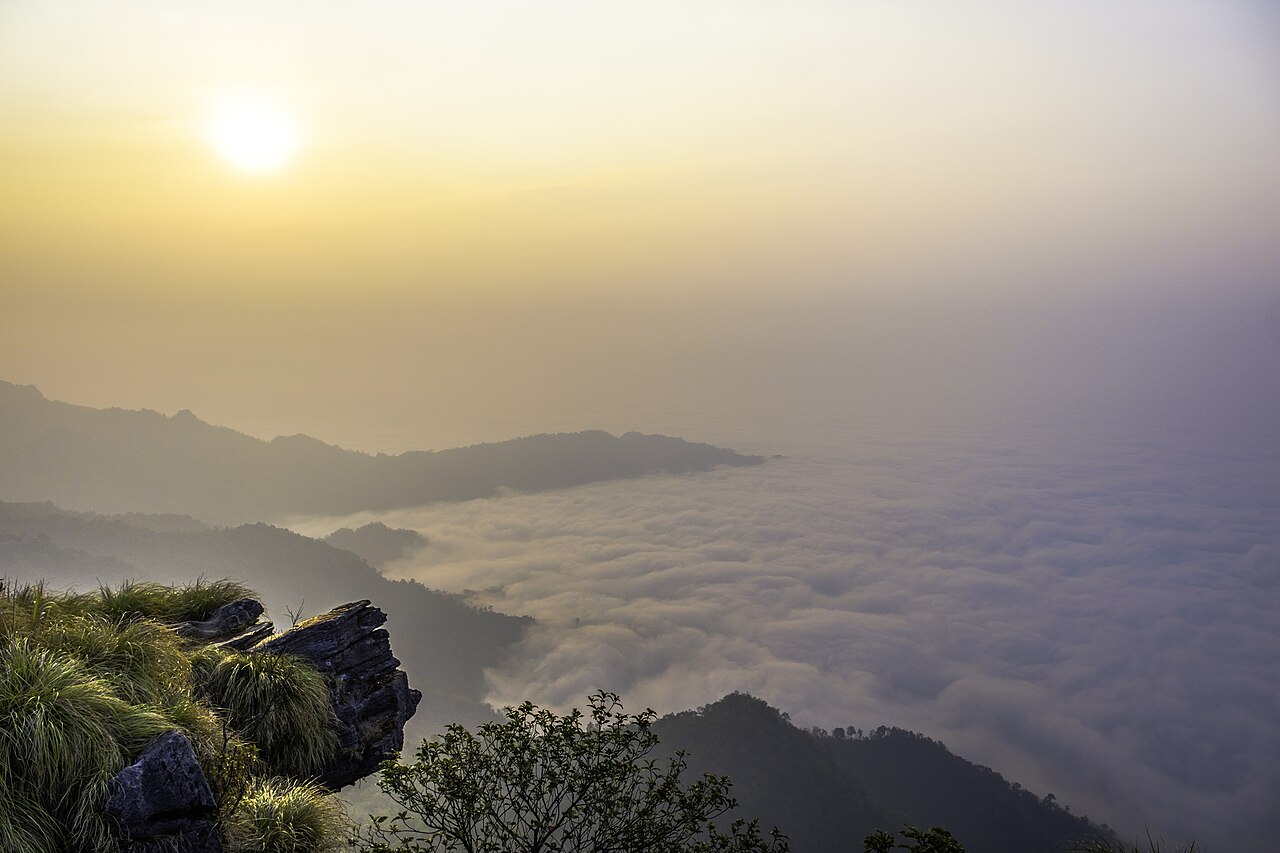
The sea of mist at Phu Chi Fa, Chiang Rai — sunrise over a cloud sea from a clifftop, a hilltop destination on steep, winding roads best reached with a car and driver Car / tour
Car with driver
CAR + DRIVER · temples + the hills

Many out-of-town sights are easiest and best value with a half- or full-day car and driver, or a tour — especially to do all three temples (Wat Rong Khun, Wat Rong Suea Ten and the Black House) in a day. No gambling on a ride, no driving yourself, and the local driver knows the way.

For Doi Tung, Doi Mae Salong, the Golden Triangle and Phu Chi Fa, which are far out on steep mountain roads, a charter or tour is the easiest and safest option. If you want the Phu Chi Fa sea of mist before dawn in the cool season, stay nearby for a night and head out early.

Three temples: half/full-day car or a tour — easiest
Hills / Phu Chi Fa: steep roads — a charter/tour is safer
Book via: Klook · your hotel · tour desks in town
Day tours can be booked online: if you'd rather not deal with arranging rides, the White Temple–Blue Temple–Black House tour, the Golden Triangle–Chiang Saen tour, a Doi Tung tour and the pre-dawn Phu Chi Fa tour can all be booked ahead on Klook (search Chiang Rai). Most include hotel pickup in town — handy if you don't have a vehicle — just check they depart from central Chiang Rai.
The most important thing about Chiang Rai

The temples and the hills — far out, plan your trips

This is what sets Chiang Rai apart from the big cities, and it's worth understanding before you plan the trip.

If you remember one thing from this page, make it this: central Chiang Rai is small and walkable, but the big highlights are outside the city. Downtown there's the Clock Tower, the Night Bazaar and a couple of temples within walking or tuk-tuk range — but Wat Rong Khun (the White Temple) that everyone comes to photograph is about 13 km south, and Doi Tung, the Golden Triangle, Doi Mae Salong and Phu Chi Fa are hours away up in the hills. There's no public transport tying it all together.

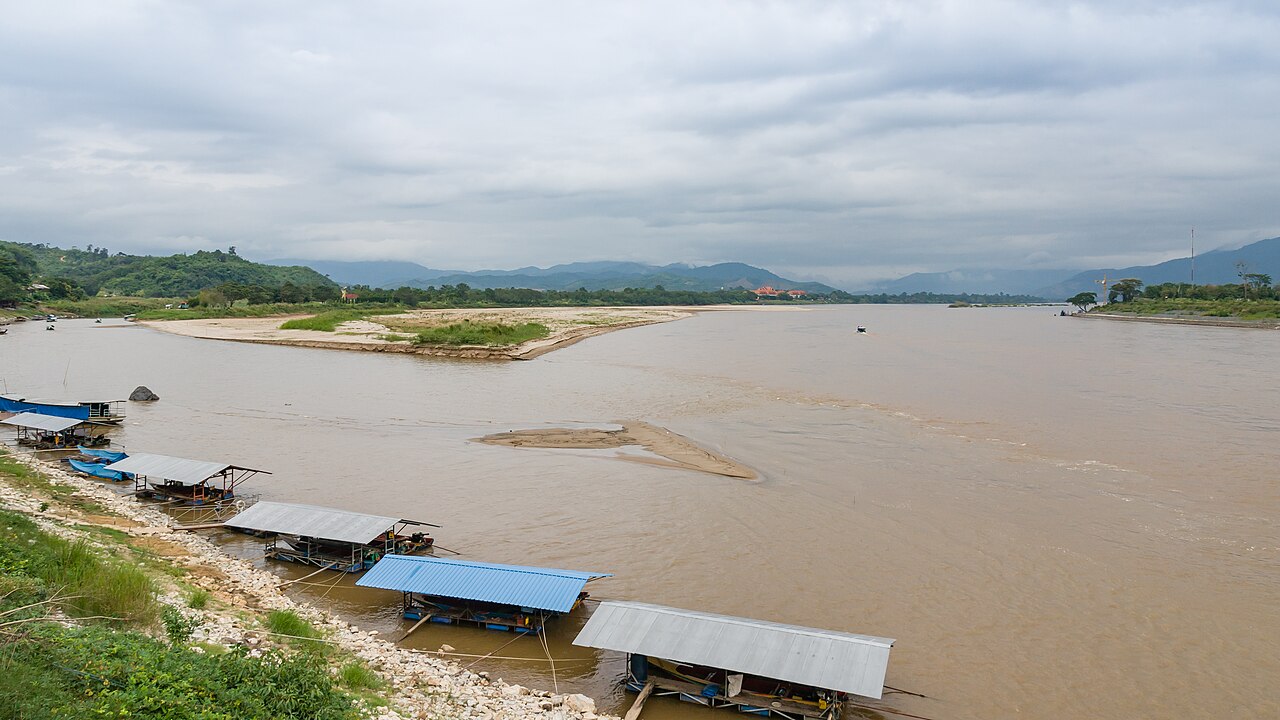
The Golden Triangle (Sop Ruak), Chiang Rai — the Mekong where Thailand, Laos and Myanmar meet, with long-tail boats along the bank, out of town to the north and reached by a separate ride
The Golden Triangle (Sop Ruak) on the Mekong — where Thailand, Laos and Myanmar meet, about 60 km north: a ~1.5-hour ride, easiest by charter or tour.
Distance + travel time

How far each place is from central Chiang Rai

Destination Distance + time How to get there
Central Chiang Rai In town · walk / songthaew / tuk-tuk / Grab Clock Tower · Night Bazaar · Blue Temple · Black House
Wat Rong Khun (White Temple) ~13 km south · ~20–30 min Songthaew · Grab · charter / tour
Singha Park / Choui Fong tea ~12–25 km west · ~25–45 min Charter / tour (Grab limited)
Golden Triangle / Chiang Saen ~60 km north · ~1.5 hr Charter / tour · some buses
Doi Tung / Doi Mae Salong ~45–70 km · steep, winding mountain road Charter / tour (easiest and safest)
Phu Chi Fa ~100 km east · ~2.5–3 hr mountain road Charter / tour + 1 overnight (pre-dawn mist)
How to plan without wasting time: don't expect to cover the temples, the Golden Triangle and the hills in a single day — the rides alone will eat it. Most people split it into day one for the three temples in and around town plus the Night Bazaar · then the Golden Triangle–Chiang Saen or Doi Tung · and another day for Singha Park–tea country or Phu Chi Fa, and watch the timing too, since in the burning season (Feb–Apr, worst in March) visibility from the viewpoints drops in the haze. See our Chiang Rai 3-day itinerary and where to stay in Chiang Rai.
Maps and apps

Which app to navigate Chiang Rai with

This is easier than in many countries: in Chiang Rai, Google Maps works fully — maps, driving directions and place search. Most sights are pinned, unlike places where you'd need a local app. Just get your data sorted and you can navigate easily. But two apps make a Chiang Rai trip run even smoother.

🗺️
Google Maps
your main navigation — works fully in Chiang Rai

Google Maps is accurate in Chiang Rai for driving and scooter directions, travel times to the temples and the hills, and saving spots in advance. Main sights like Wat Rong Khun, the Golden Triangle and Phu Chi Fa are pinned with reviews. Get data running with a SIM or eSIM, since many sights sit outside the city and you'll be navigating.

Tip: download an offline map in case the signal is weak up in the hills
📲
Grab
hail a ride + see the fare upfront

Use Grab to hail cars and motorbikes in Chiang Rai, with the price shown before you book and payment in the app — ideal when you don't want to bargain with a tuk-tuk. But there are fewer cars than in the big cities, so at some times you'll wait or get no match. Keeping a few backups makes life easier.

Note: easier to hail in town by day than out of town or late at night

Want data ready the moment you land at Mae Fah Luang airport? Buy an eSIM before you travel and switch it on right away — no time wasted hunting for a SIM at the airport. See packages and setup in our Thailand eSIM and SIM guide.

Wat Rong Khun (the White Temple), Chiang Rai — an all-white temple studded with mirror glass by Chalermchai Kositpipat, about 13 km south of the city
Wat Rong Khun (the White Temple) — the landmark people come to Chiang Rai for, about 13 km south of town: reach it by songthaew, Grab or a chartered car.
The real tip

Do two things before you set out and Chiang Rai gets easy

If we had to boil it down to two points: one — install Grab and get your data running (SIM or eSIM) before you head out. In town during the day, hailing a Grab is easy, you pay in the app, and there's no bargaining; keep tuk-tuks and songthaew as a backup for when Grab is short of cars, and just walk around the Clock Tower and Night Bazaar, which sit close together.

Two — plan your out-of-town temple visits and trips into the hills before you travel. These sit far out on steep mountain roads, so a car with driver or a tour booked ahead saves time and is safer than gambling on a ride at each spot — especially in the cool season, when crowds are bigger and chartered cars book up fast.

For first-timers in Chiang Rai: most people fly into Mae Fah Luang–Chiang Rai Airport (CEI) and get into town by taxi/Grab/hotel transfer (there's been no airport bus since Aug 2024 — agree the fare first), or come overland by bus from Chiang Mai — there's no train to Chiang Rai. See every way to reach town in our getting to Chiang Rai guide, and start planning at our Chiang Rai first-timer guide.
Frequently asked questions

FAQ · Getting around Chiang Rai

Does Chiang Rai have a train or a metro?
No. Chiang Rai has no BTS/MRT metro and no railway into the city. Thailand's Northern Line ends at Chiang Mai, so to come by rail you take the train to Chiang Mai, then a bus or van on to Chiang Rai (about 3 hours). Getting around Chiang Rai itself runs on the road: the centre around the Clock Tower and Night Bazaar is walkable, backed up by songthaew blue trucks, tuk-tuks, Grab, rented scooters, and a car with driver for the out-of-town temples and the hills. See our getting to Chiang Rai guide.
How much do tuk-tuks and songthaew cost in Chiang Rai, and do I have to bargain?
Neither has a meter, so you agree the fare before you get in — every time, plainly. A short tuk-tuk hop around town usually runs about ฿60–150 depending on distance and how you bargain. Songthaew blue trucks run some routes around town and out to nearby districts; per-person fares are cheaper if you ride a regular route, but chartering the whole truck means agreeing a price. Be clear about your destination, always ask the fare first, and if it feels too high, walk to the next one or check Grab to compare.
Can I use Grab in Chiang Rai?
Yes. Grab works in Chiang Rai for both cars and motorbikes. The upside is you see the price before you book and pay in the app with no haggling. The honest catch is that there are far fewer cars than in Chiang Mai or Bangkok, so at some times or out-of-town spots you may wait a while or get no car. Leave a time buffer and keep a backup — a tuk-tuk/songthaew number or asking your hotel to call one. For far-out sights and the hills, chartering a car is usually more convenient than Grab.
Is renting a scooter in Chiang Rai safe?
It's rentable and handy for getting around town and nearby, with several shops at about ฿200–300 a day. But ride sensibly: wear a helmet every time and carry a valid International Driving Permit or motorcycle licence, because there are checkpoints and your insurance won't cover you without one. Most importantly, the roads up to Doi Tung, Doi Mae Salong and Phu Chi Fa are steep and very winding, and slippery in the rain — beginners shouldn't ride them. For those mountain routes, a car with driver or a tour is far safer. See our day trips from Chiang Rai guide.
How should I get to the White and Blue temples and up into the hills?
Wat Rong Khun (the White Temple) is about 13 km south of the city — reachable by songthaew, Grab or a chartered car. Wat Rong Suea Ten (the Blue Temple) and the Black House (Baan Dam) are closer to the centre. But to do all three in a day, the most time-efficient option is a half- or full-day car with driver, or a tour. For Doi Tung, Doi Mae Salong, the Golden Triangle and Phu Chi Fa, which are far out on steep mountain roads, a charter or tour is the easiest and safest way. See our day trips from Chiang Rai guide.
Do Google Maps and Grab work in Chiang Rai?
Yes. Google Maps works fully in Chiang Rai — maps, driving directions and place search — unlike in mainland China, and Grab works normally for hailing a ride and seeing the fare upfront. Get your data sorted with a SIM or eSIM before you go, since many sights sit outside the city and you'll be navigating. See packages in our Thailand eSIM guide.