Ranked by popularity — out of the city and up the mountains
Ordered by how popular they are, with an honest note on which is half a day, a full day or an overnight, which needs a car, and a dry-season haze warning for the mountain viewpoints.
 1
1
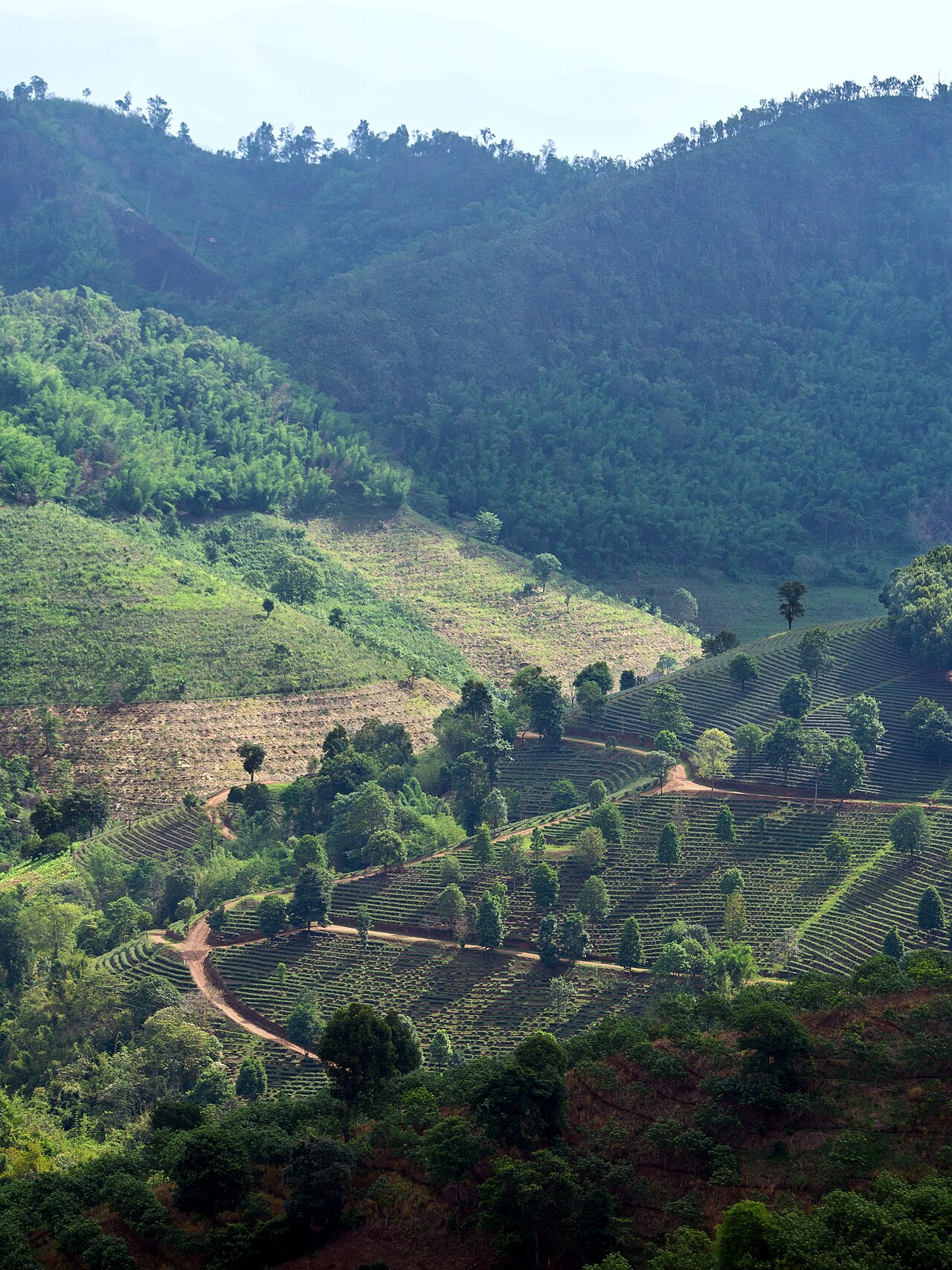
If you want a slice of China without leaving the country, Doi Mae Salong is it — a mountain village settled by the descendants of Chinese Nationalist (Kuomintang) 93rd Division soldiers who fled Yunnan after 1949, came through Burma, settled here, and were later granted Thai citizenship. To this day the people on the mountain speak Yunnanese Chinese, eat Yunnanese food, and farm high-quality oolong tea across the hillsides. The village's official name is Santikhiri.
The highlights are walking the tea plantations and tasting fresh oolong at the tea houses, the morning market with its mantou buns and braised pork, climbing to the Phra Boromathat Chedi Srinagarindra on the summit for the best view, and visiting General Tuan's mausoleum. Come in late December to January and the wild Himalayan cherry blossom turns the whole mountain pink. Around the hills are Akha and Lahu villages too.
 2
2
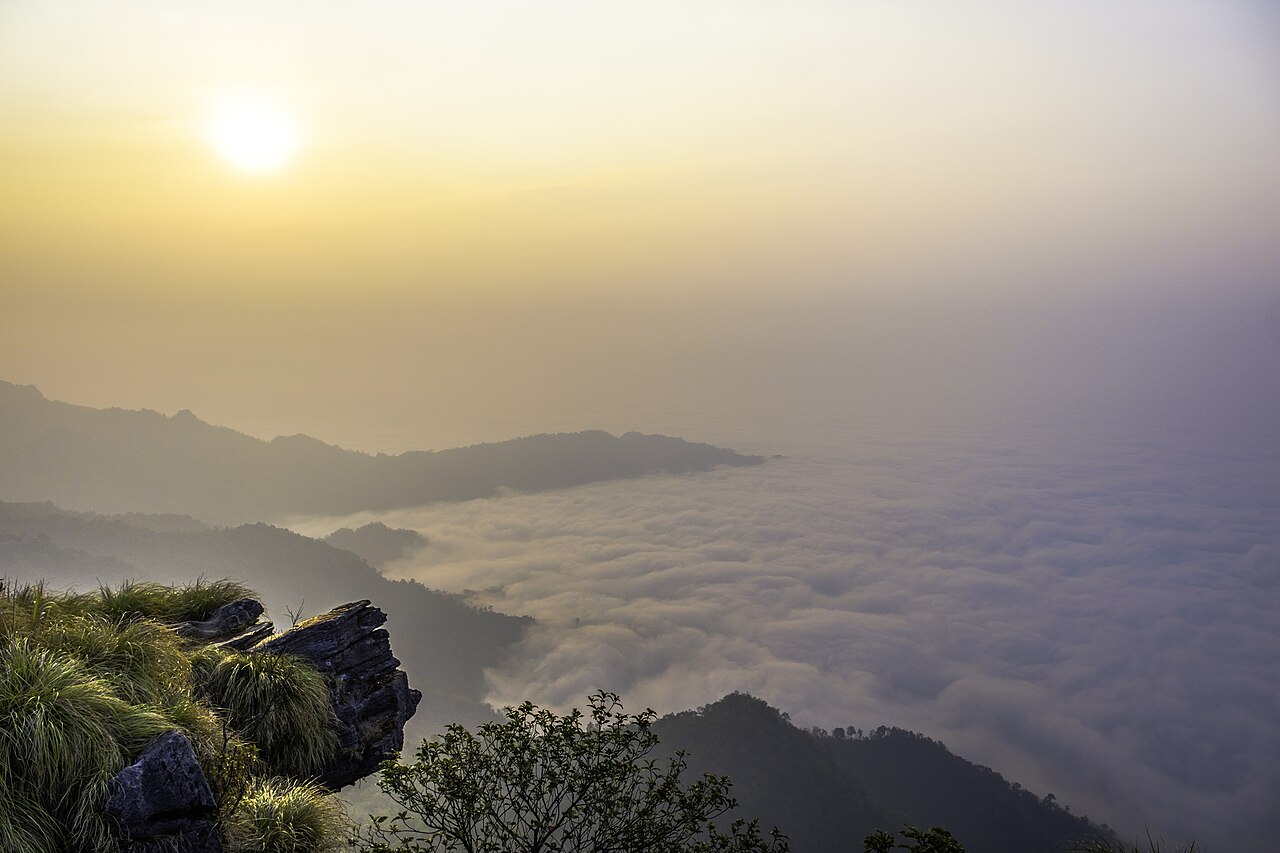
This is the sea of mist a lot of people dream about — Phu Chi Fa is a rocky cliff that juts out toward the Lao border, about 1,628 metres up, and before the sun rises a white sea of cloud fills the valley below it. When the sun breaks over the ridge, orange-gold light pours across the whole cliff face. It is genuinely worth the early start.
Honestly, almost everyone stays a night at a resort or guesthouse near the base of Phu Chi Fa, because you need to be up around 4–5 am, drive to the car park, then walk about 760 metres uphill (roughly 20–30 minutes) to reach the viewpoint in time for sunrise. The route from Chiang Rai goes through Thoeng on winding mountain roads, with no direct bus, so you drive, hire a car with a driver, or join a tour. If you're up there, swing by nearby Doi Pha Tang, another sea-of-mist viewpoint.
The point where Thailand, Laos and Myanmar meet on the Mekong is Sop Ruak, in Chiang Saen district. From the viewpoint you can see all three countries at once, with a big golden Buddha enshrined by the river, and you can take a longtail boat on the Mekong to see the three banks. Some tours include a brief stop at Don Sao market on the Lao side — be straight about it, you have to check the border paperwork and formalities with the operator first; it isn't a casual walk across.
For the region's opium history, the Hall of Opium is a large, well-told museum, or there's the smaller House of Opium near the viewpoint. Then head on to the ancient town of Chiang Saen, with its old city walls, Wat Chedi Luang and the riverside Wat Pa Sak. It works as either a half day or a full day, and it's the ideal pick if you have just one spare day.
Doi Tung is a lovely story — a mountain once stripped bare for opium and slash-and-burn that was turned around by a royal project into reforested slopes growing coffee and macadamia, which became the Doi Tung brand you'll see around Thailand. The highlights are the Doi Tung Royal Villa, the Princess Mother's Swiss-Lanna timber residence, and the Mae Fah Luang Garden, planted with cool-climate flowers that bloom in shifting colours through the year.
Climb to Wat Phra That Doi Tung, the old twin chedi on an open summit, then stop at the Doi Tung café for an arabica grown on the mountain with a view of the hills. Around the slopes are Akha and other hill-tribe villages who benefit from the project. The road up is winding, so bring your own car or take a tour — it pairs neatly with the Golden Triangle on the same route.
If you want to escape the bustle and be among quiet forest close to town, Khun Korn Waterfall is the answer — a single ribbon of water dropping about 70 metres off a cliff, the tallest waterfall in Chiang Rai, in Khun Korn Forest Park, part of Lam Nam Kok National Park.
The charm is in the walk in — from the car park it's roughly a 1.4-kilometre walk (about 30–40 minutes each way) through bamboo and forest, a gently uphill forest trail that most people manage, shaded and cool. At the falls a curtain of cold spray hits you. The last stretch close to the water is over slippery rock, so wear trainers with good grip. There's no direct public transport — most people rent a motorbike and ride out, or charter a songthaew there and back.
If you want an easy trip close to town that doesn't involve much walking, drop by a hot spring. The nearest is Pong Phra Bat Hot Spring in Ban Du, about 11 kilometres north of the city — Grab gets you there, and it has foot-soaking pools and affordable private bath rooms. If you're driving the Chiang Mai–Chiang Rai road (Highway 118), you'll pass Mae Khachan Hot Spring, with pools that boil at nearly 100°C — hot enough to cook an egg — a popular rest stop on the way.
Around Chiang Rai's mountains are Akha, Lahu and Karen villages, especially near Mae Salong, Doi Tung and Mae Chan. Honestly, the good way to visit is with a guide or community tour where the money reaches the villagers — buy food, crafts, tea and coffee in the village, and always ask before photographing anyone. Avoid the staged 'long-neck tour' villages that turn people into a paid exhibit; choose an experience where you genuinely talk and pay the community directly. It's far more worthwhile.