Home Chiang Rai Thailand Chiang Rai Hotels About
Home  ›  Asia  ›  Thailand  ›  Chiang Rai  ›  Best Time to Visit
Chiang Rai Seasonal Guide · 2026

Best time to visit Chiang Rai
an honest season-by-season guide

Chiang Rai is Thailand's far-northern mountain province — surreal temples, high ridges, tea estates and a famous sea of mist — and each season feels distinct. Winter is clearest and the air is at its cleanest; the rains turn everything green and quiet; and February to April is the burning season, when haze swallows the views. This guide tells you straight which month gets you the Chiang Rai you came for.

The short answer
The best window is November–February (avoid the burning season, Feb–Apr)

If you can only pick one month, pick December or January. Days are a comfortable 28–31°C, mornings and evenings cool to 14–20°C, skies are clear — and, crucially, this is when the air is at its cleanest of the year, before the burning season arrives. It is the time for the White Temple (Wat Rong Khun) and Blue Temple (Wat Rong Suea Ten), climbing Doi Tung, walking the tea hills and waiting for the dawn sea of mist at Phu Chi Fa. It is high season, so crowds are larger and prices rise — book ahead.

The honest catch: February to April is the burning season, the north's haze period, with March the worst. PM2.5 spikes hard — Chiang Rai has posted March averages over 100 µg/m³, with the AQI frequently above 150 — skies turn hazy, the mountain views vanish into the smoke, and it heats to around 40°C. Sensitive travellers, young children and older visitors should avoid it. The rainy season (May–October) has upsides many don't expect: clean air, green hills, thin crowds and low prices, with October the sweet spot, when the rains ease and the waterfalls are still full.

The northern seasons

What each season actually feels like

The weather, what it delivers, and what you are trading for it — told straight, including the dust.
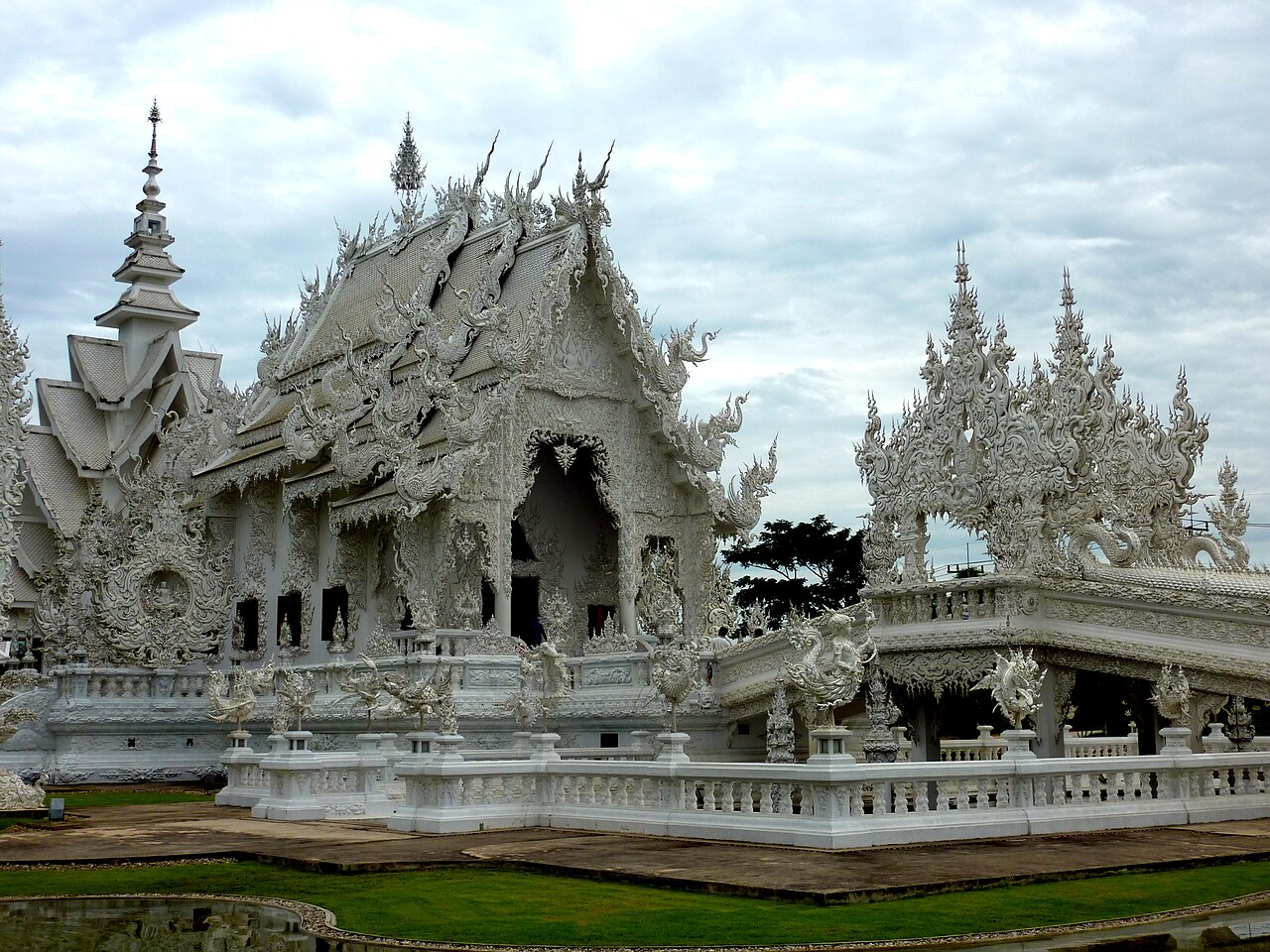
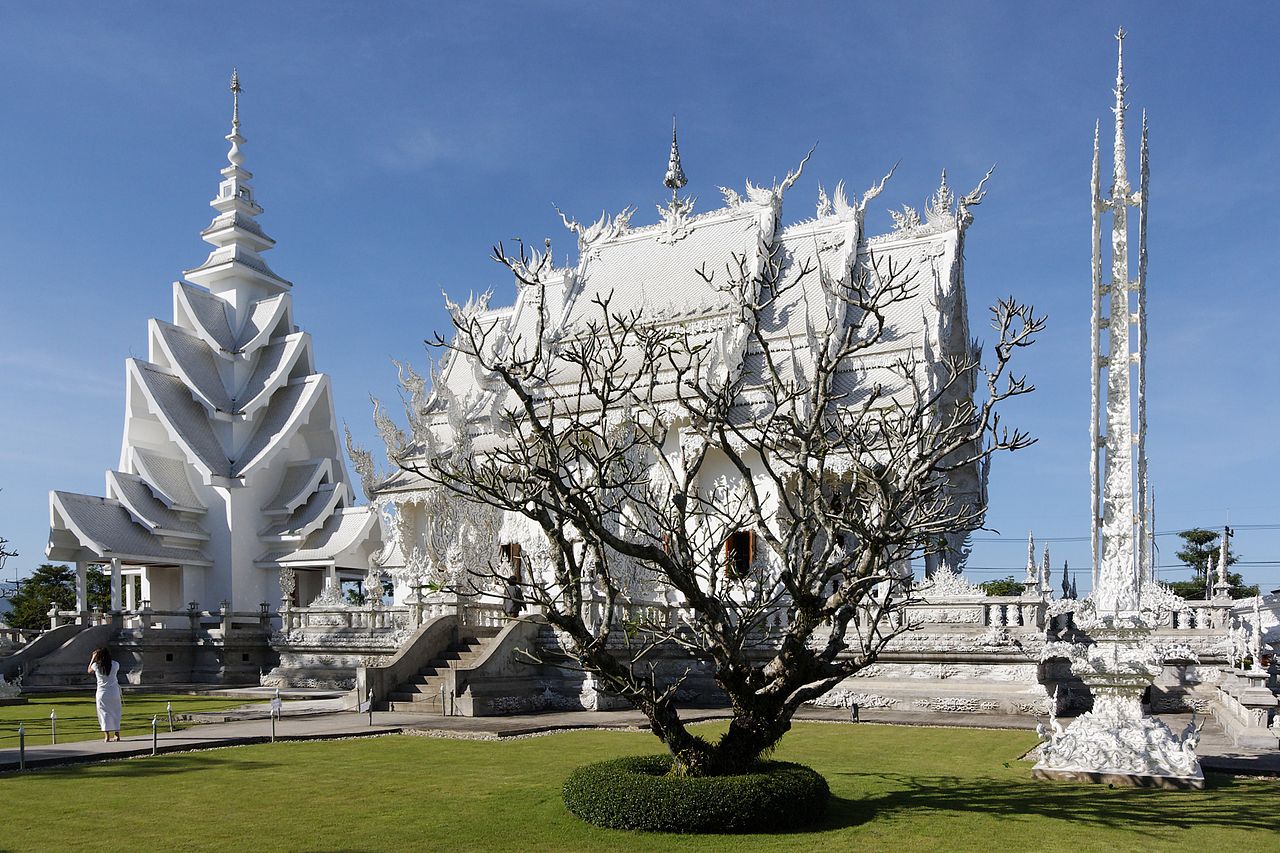
Wat Rong Khun, the White Temple in Chiang Rai, brilliant white against a clear winter sky White Temple · Cool season The best
Cool season
November – February · 14–31°C

This is Chiang Rai at its finest. Days are a comfortable 28–31°C, mornings and evenings cool to 14–20°C, the skies are clear — and, most importantly, the air is at its cleanest of the year before the burning season arrives. The White Temple gleams against blue sky, the Blue Temple is at its most vivid, and the mountain views are sharp. You can be out exploring all day without flagging.

November coincides with the Loy Krathong / Yi Peng festival, and the atmosphere is lovely, while December and January are the peak of the cool, clear weather. Note that the mountains — Doi Tung, Doi Mae Salong and Phu Chi Fa — are far colder, dropping to 5–10°C on some days. This is the only season the Phu Chi Fa sea of mist appears reliably and at its best.
Temperature: 14–31°C in town (5–10°C up the mountains)
Air / dust: Clear skies, cleanest air of the year; almost no rain
Crowds: High — peaks over the New Year holiday
Hotel prices: Highest of the year over New Year
December–January is the ideal: clear skies, clean air and the best sea of mist at Phu Chi Fa. Pack a proper warm jacket for the mountains, and book accommodation one to two months ahead.
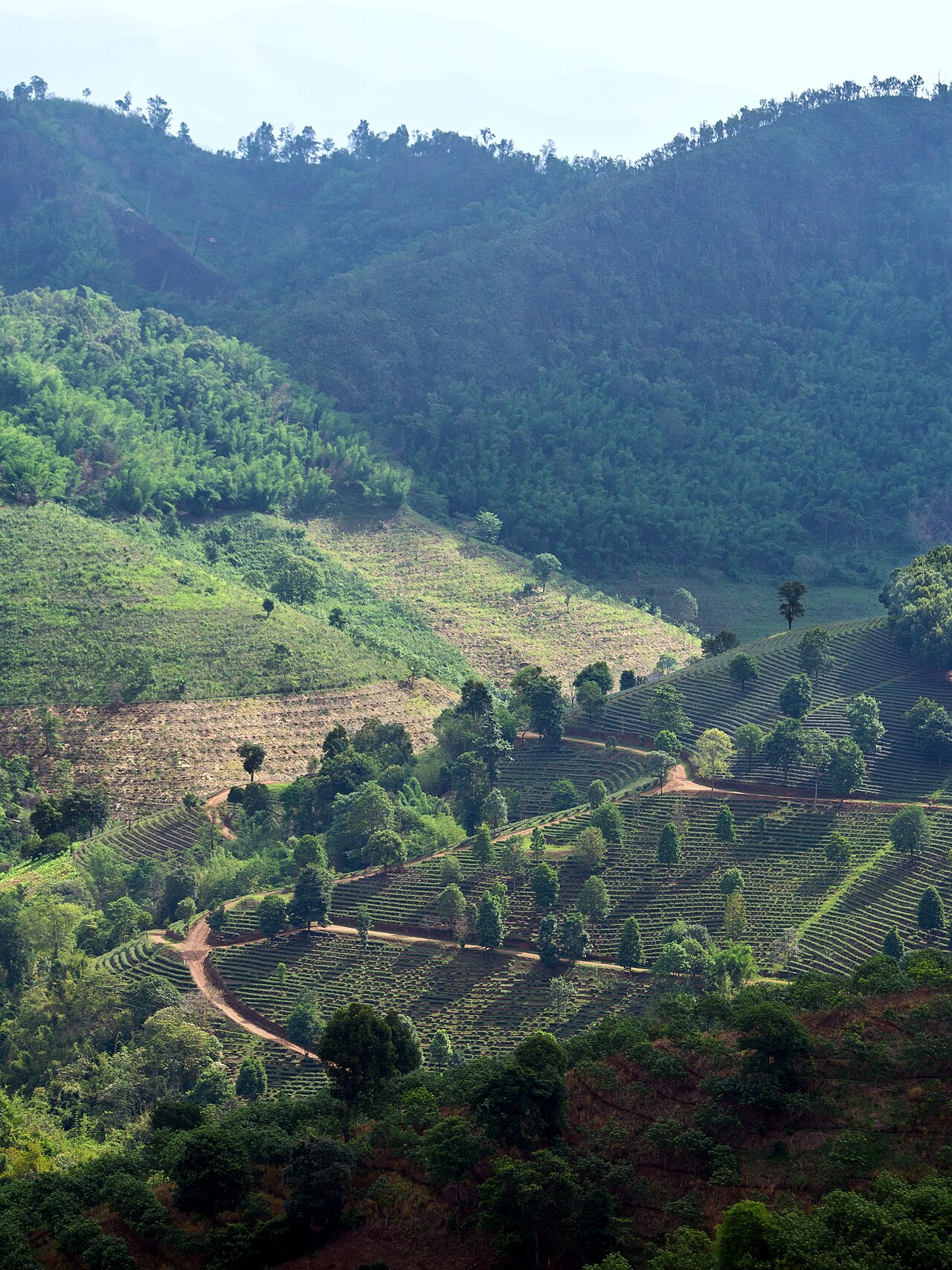
Mountain and hillside-farm view near Chiang Rai with skies hazed over during the burning season Mountain view · Burning season Avoid
Burning season
February – April · 18–40°C

This needs saying plainly, no sugar-coating. From late February to April — with March the worst — agricultural and forest burning across northern Thailand and neighbouring countries pushes PM2.5 sharply up. Chiang Rai has posted March averages over 100 µg/m³, with the AQI frequently above 150. Skies are hazy all day, the mountain views, the sea of mist and even the temples lose their colour to the smoke, and temperatures climb to around 40°C.

Honestly, anyone with dust sensitivities, allergies or asthma — and young children and older travellers — should avoid this window. If you must go (for Songkran, say), bring an N95 mask, check the daily air quality, skip strenuous outdoor activity, and lean towards indoor sights or air-conditioned cafés.

Temperature: 18–40°C (April is hottest)
Air / dust: Very high PM2.5; March often over 100, AQI above 150
Crowds: Thinner, except around Songkran
Hotel prices: Mid, rising over Songkran
The mountain views and sea of mist all but disappear into the haze — if you're coming for nature photography, avoid March–April, and check the air quality on an app like IQAir or AirVisual before planning each day.
Bright green tea plantations and open fields at Singha Park, Chiang Rai, in the rainy season Singha Park · Rainy season Good · quiet
Rainy season
May – October · 23–33°C

Chiang Rai's rainy season has upsides many travellers don't expect — the air is at its cleanest because the rain washes out the dust, the mountains and rice fields are green, the tea plantations at Singha Park and Choui Fong are lush, waterfalls such as Khun Korn run full, crowds are thin and prices clearly drop. Most rain falls in bursts in the afternoon or at night, not all day, so you can plan around the mornings easily.

The most comfortable, best-value month is October — the rains are easing, the air is turning cool, the waterfalls are still full, the hills are green, and prices stay low before high season. The one thing to watch: the mountain roads up Doi Tung, Doi Mae Salong and Phu Chi Fa get slippery and foggy when it rains, so drive slowly and allow extra time.
Temperature: 23–33°C (humid, but not searingly hot)
Air / dust: Cleanest; rain clears the dust, skies sharp after showers
Crowds: Low — this is the off season
Hotel prices: Lowest of the year (outside public holidays)
October is the sweet spot — rains easing, air turning cool, waterfalls full, hills green and prices still low. Ideal if you want to dodge both the dust and the crowds.
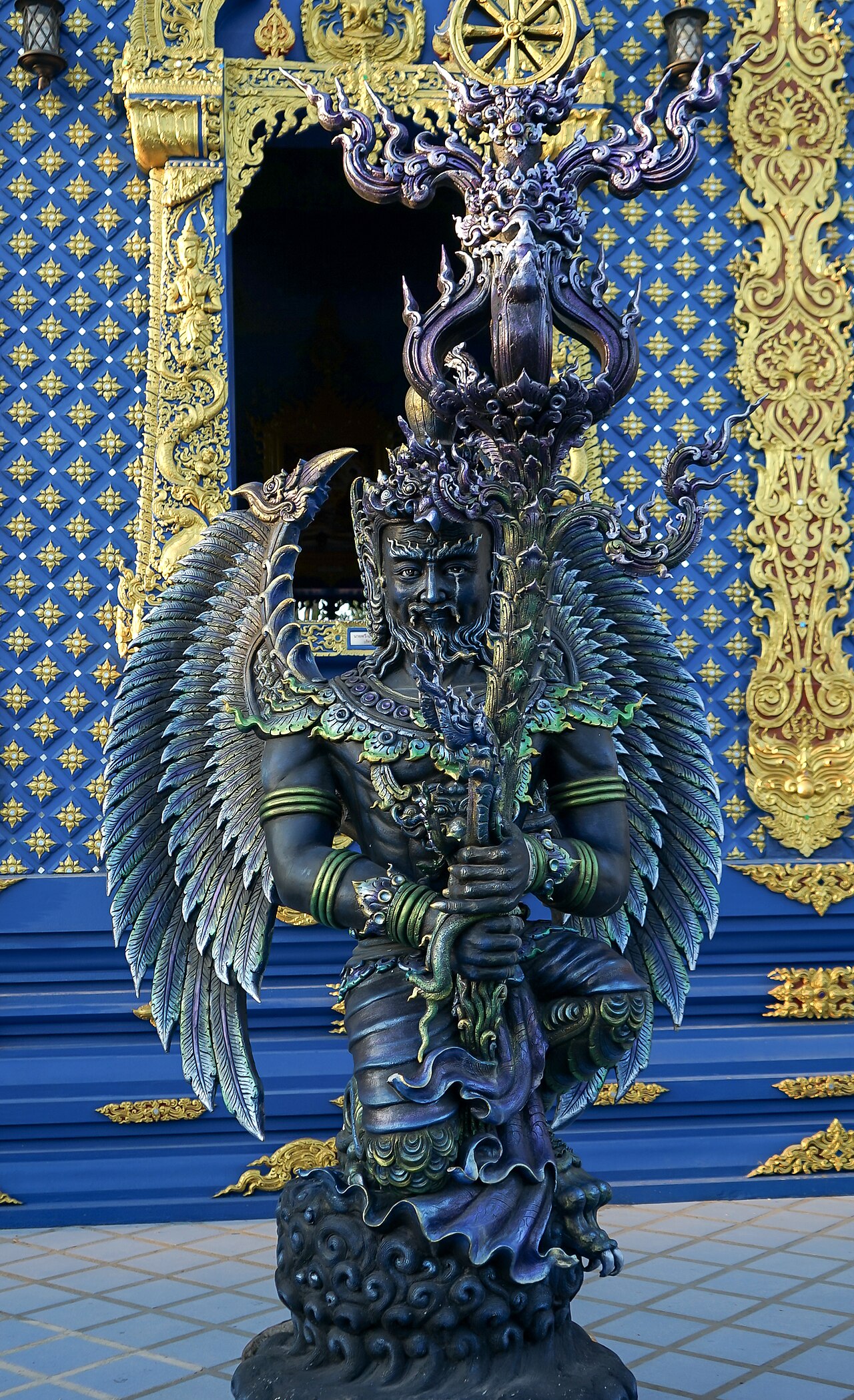
Wat Rong Suea Ten, the Blue Temple in Chiang Rai, glowing sapphire blue in the evening Blue Temple · Evening Year-round
Temples, town and the sea of mist
In-town temples year-round · sea of mist cool season only

The White Temple, Blue Temple, Baan Dam (the Black House) and Wat Phra Kaew can be visited year-round — they're in-town sights that don't depend much on the season. The town centre around the Clock Tower and Night Bazaar is walkable every evening. That said, the sharpest views and best skies are still the cool season; in the burning season the temples stay open but the light and sky turn dull with haze.

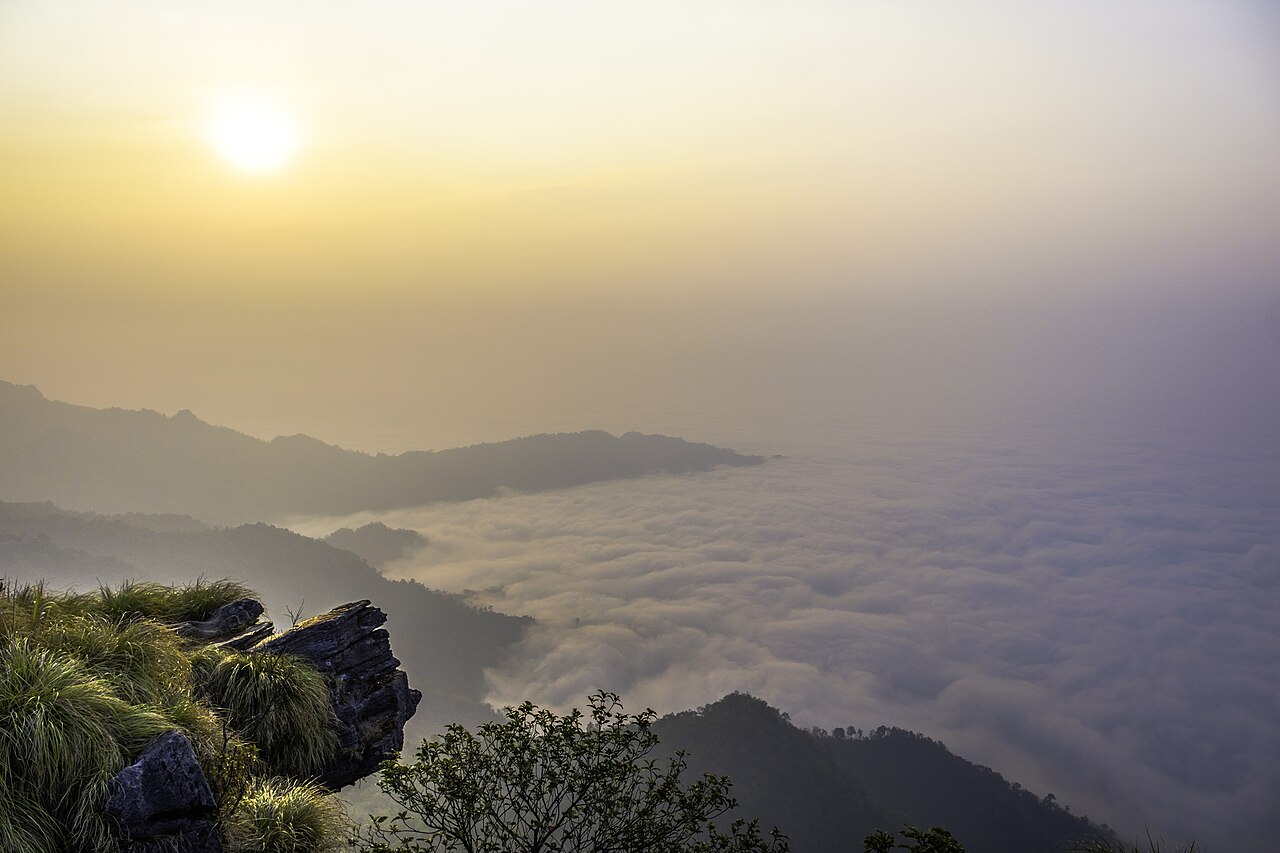
The sea of mist at Phu Chi Fa, by contrast, is strictly a cool-season thing, roughly November to February. You climb up before dawn to catch the sunrise over the mist; December and January show it most often. The summit is very cold then, with strong wind, so a warm jacket is essential.
In-town temples: Year-round; dress modestly
Phu Chi Fa sea of mist: Cool season only, Nov–Feb
Festivals: Loy Krathong / Yi Peng in Nov · Songkran in Apr
Best time of day: Morning and evening, soft light, fewer people
Hit the temples early to dodge both the heat and the crowds — the White Temple fills up after 10am, while the Blue Temple looks its best in the evening light once the lights come on.
Month by month

Chiang Rai every month at a glance

Temperature, dust/rain, crowds and the verdict — in one table for easy comparison.

Month Temperature Dust / Rain Crowds Verdict
January 14–29°C Clean air High (peak season) Cool, clear, cleanest air · best sea of mist · the best
February 15–32°C Dust building Moderate Still cool, but haze starts late in the month · check the AQI
March 18–36°C Worst dust (PM2.5 >100) Low Burning season peak · hazy, views gone · sensitive travellers avoid
April 22–40°C Heavy dust + heat High (Songkran) Hottest, still hazy · Songkran 13–15 brings crowds
May 23–34°C Rain begins, air clears Low Rain washes out the dust, greening up · quiet, low prices
June 23–33°C Moderate rain Low Green and clean · showers in bursts afternoon–evening
July 23–32°C Moderate–heavy rain Low Humid, very green · waterfalls full · low prices
August 23–32°C Heavy rain Low Wettest of the rainy months · keep an indoor backup plan
September 23–32°C Heavy rain Low Still wet but greenest · mountain roads slick, take care
October 21–31°C Rains easing, clean Moderate The sweet spot · rains easing, waterfalls full, prices still low
November 17–30°C Clean air Moderate Cooling, clear · Loy Krathong / Yi Peng · sea of mist begins
December 14–28°C Clean air High (New Year) Coolest, clear, cleanest air · lovely sea of mist · the best

Figures are typical monthly high–low ranges drawn from multi-year climate and air-quality data; any given year may differ, especially in the burning season when dust swings with the wind and the fires. Check the forecast and the daily PM2.5 reading before you travel.

When to avoid

Three windows to plan around before you book

The things people don't realise before booking — especially the dust the social-media photos rarely show.

Feb
Apr
The burning season — the big one
Late February–April · March is the worst

This is when northern Thailand and neighbouring countries burn off in the open and PM2.5 spikes hard. Chiang Rai has posted March averages over 100 µg/m³, with the AQI frequently above 150 — into the genuinely unhealthy range. Skies are hazy all day, the mountain views, the sea of mist and the temples lose their colour to the smoke, and it heats to around 40°C. Honestly, anyone with dust sensitivities, allergies or asthma, plus young children and older travellers, should avoid this window. If you must go, bring an N95 mask, check the daily air quality, and lean towards indoor sights.

13–15
Apr
Songkran
13–15 April every year · falls squarely in the burning season

The Thai New Year is fun and lively, with water fights across town — but it falls right in the burning season. It is the hottest stretch of the year and the dust is still heavy, travel is busy, accommodation fills, and prices jump 30–60%. Many places up in the hills and at the viewpoints are still hazed over. If you want to join the water festival it can be great, but you'll be trading for the dust and the heat — book accommodation one to two months ahead. See the full festival rundown in our Songkran guide.

Late
Dec
The New Year holiday
Late December–early January · the peak of high season

Over New Year the weather is excellent and the skies are at their clearest, and Thai travellers head north en masse for the sea of mist and the cool air. Chiang Rai is a top destination, so the best places in town and up the mountains fill fast, prices hit their annual peak, and the roads up Phu Chi Fa and the ridges clog before dawn. It's far from off-limits, but if you want better prices and fewer people, shift to mid-January, or to October–November instead — and if you do go over New Year, book several weeks ahead.

Worth knowing about

Seasonal moments that add to the trip

These are reasons to time your visit, not reasons to avoid it.

Dec
Jan
The Phu Chi Fa Sea of Mist (and the high mountains)
Cool season, Nov–Feb · Chiang Rai's signature shot

On cool-season mornings, Phu Chi Fa and many of the ridge viewpoints have a white sea of mist drifting below your feet, and waiting for the sun to rise over it is the scene most travellers come for. December and January show it most often and at its best. The summit is very cold then, around 5–15°C, with strong wind, so you climb up before dawn and pack a warm jacket. The mist is strictly a cool-season thing — the burning season barely has any, and the sky is veiled by haze. See our Chiang Rai day trips

Nov
Feb
Tea estates and the mountain flower season
Cool season into early year · Doi Tung, Singha Park, Choui Fong, Mae Salong

The cool season is when the Mae Fah Luang Garden on Doi Tung fills with cool-climate flowers, and the tea plantations at Choui Fong and Singha Park are lush. The cool, comfortable air is right for walking the estates, sipping tea and tasting the Doi Chang and Doi Tung arabica coffee. Up at Doi Mae Salong you get the Yunnanese-Chinese hill-village feel alongside terraced tea gardens. The sun is gentle and the skies are clear — the best time of year for a mountain day. See our full Singha Park guide

Nov
Loy Krathong / Yi Peng
November · date shifts each year with the lunar calendar

The November full moon brings Loy Krathong, known in the north as Yi Peng, with floats set adrift on the Kok River, sky lanterns released, and lantern decorations across town. It lands at the start of high season, when the air is turning cool and the skies are clearing — a lovely atmosphere, though it draws crowds, so book ahead. This month is good value because you get both the festival and fine weather before New Year prices climb. See our Loy Krathong / Yi Peng guide

Packing by season

What to bring for each season

Not exhaustive — just the things that actually matter for Chiang Rai.

Cool season
November – February
  • A proper warm jacket — essential if you'll head up Doi Tung, Mae Salong or wait for the Phu Chi Fa mist
  • Layering pieces — town days are mild but mornings and evenings are cool
  • A hat and gloves — the mountain summits are windy and drop to 5–10°C
  • Sunscreen — the morning sun on the mountains is strong even when it's cold
  • Camera or charged phone — the sea of mist and the temples are at their best now
Burning season
February – April
  • An N95 mask — the single most important item; PM2.5 runs high
  • An air-quality app — IQAir or AirVisual, checked before you head out each day
  • Any personal or allergy medication — for anyone sensitive to dust
  • Breathable clothing — April climbs to around 40°C
  • Water and sunscreen — the air is hot and dry
Rainy season
May – October
  • A compact umbrella and rain jacket — showers come in bursts afternoon and evening
  • Grippy footwear — waterfall paths and mountain roads get slippery
  • A dry bag for phone and documents — sudden heavy downpours happen
  • Insect repellent — mosquitoes are common by the rivers and in the countryside
  • Quick-dry clothing — high humidity means thick fabrics dry slowly
Late rains, early cool
October (the sweet spot)
  • Light layers — mornings and evenings start to cool while days stay mild
  • A backup umbrella — late-season showers still pop up now and then
  • Good walking shoes — waterfalls full and hills green, ideal for all-day walking
  • A camera — clear post-rain skies and vivid green tea plantations
  • A windproof layer — early-morning mountain trips start to feel breezy
The city every season

Chiang Rai has something to see year-round

Whatever month you arrive, this city of art and mountains always has something worth seeing — but the cool season is when it looks, and breathes, its best.

Wat Rong Khun, Chiang Rai — the bridge over reaching hands and the brilliant white ubosot
Wat Rong Suea Ten, Chiang Rai — sapphire-blue tones with the white Buddha
Mountain and hillside-farm views around Chiang Rai — a popular day-trip viewpoint
Frequently asked

FAQ · Before you book

When is the best time to visit Chiang Rai?
November to February is the best window: comfortable weather with daytime highs around 28–31°C, cool nights of 14–20°C, clear skies and the cleanest air of the year. It's the time for the White Temple and Blue Temple, climbing Doi Tung, and the Phu Chi Fa sea of mist. If you can only pick one month, choose December or January, when the weather is at its best and skies clearest — but it's high season, so book accommodation ahead. For the wider picture, see our best time to visit Thailand guide.
When is the burning season in Chiang Rai, and should you avoid it?
The burning season runs roughly February to April, with March the worst. Agricultural and forest burning across northern Thailand and neighbouring countries drives PM2.5 sharply up — Chiang Rai has posted March averages over 100 µg/m³, with the AQI frequently above 150. Skies turn hazy, the mountain and sea-of-mist views disappear into the smoke, and it heats to around 40°C. Honestly, anyone with dust sensitivities, allergies or asthma, plus young children and older travellers, should avoid it. If you must go, bring an N95 mask and check the daily air quality before any outdoor activity. Map out a trip with our Chiang Rai 3-day itinerary.
What is the rainy season like in Chiang Rai?
The rainy season (May–October) has upsides many travellers don't expect. The air is at its cleanest because the rain washes out the dust, the mountains and rice fields are green, waterfalls such as Khun Korn run full, crowds are thin and accommodation is cheaper. Most rain falls in bursts in the afternoon or at night rather than all day. The best-value month is October, when the rains are easing, the air is turning cool, the waterfalls are still full and prices remain low before high season. Pack an umbrella and a rain jacket, keep an indoor backup plan, and watch for slippery mountain roads if you drive. Browse options at our Chiang Rai hotel guide.
When can you see the sea of mist at Phu Chi Fa?
The sea of mist at Phu Chi Fa is strictly a cool-season thing, roughly November to February, when the cool air and humidity are right. You climb up before dawn to catch the sun rising over the mist. December and January are when it appears most often and looks best; the summit is very cold then, around 5–15°C, so a warm jacket is essential. During the burning season (March–April) there is almost no mist and the sky is veiled by haze; the rainy season brings occasional post-rain mist but it is unreliable. The road up is steep and winding, so a capable vehicle or a hired driver is wise. See how to get around in our getting around Chiang Rai guide.
When should you avoid visiting Chiang Rai?
Avoid the burning season, February–April (March worst), if you are sensitive to dust or want clear mountain views, and avoid Songkran (13–15 April) and the New Year holiday if you'd rather not face heavy crowds and surging room prices. Songkran is fun but falls squarely in the burning season, with heat and heavy haze. If your dates can't shift, book accommodation one to two months ahead and prepare for the dust. See how to reach the city in our getting to Chiang Rai guide.
Is Chiang Rai actually cold? Do you need warm clothes?
In Chiang Rai town the cool season (Nov–Feb) is mild by day, around 28–31°C, but evenings and early mornings drop to 14–20°C. Up on the mountains — Doi Tung, Doi Mae Salong and Phu Chi Fa — it is far colder, dropping to 5–10°C on some days, with strong wind. If you plan to head up the mountains or wait for the dawn sea of mist, you'll need a proper warm jacket, a hat and gloves. In town a light long-sleeve layer is enough. Honestly, a lot of people underestimate how cold the high ground gets. See the bigger picture in our full Chiang Rai city guide.
Klook · Tours & Activities

Book Chiang Rai activities in advance — skip the queue, not the experience

White Temple, Blue Temple and Black House tours, Golden Triangle and Chiang Saen trips, Doi Tung and Mae Fah Luang tours, tea-plantation and hill-tribe treks, and airport transfers — book through Klook before you arrive and pay less than at the gate.

Browse Chiang Rai Activities on Klook →
Wherebest is an affiliate partner of Klook — we may earn a commission when you book through our links, at no extra cost to you.