Paid and free — don't miss the good stuff
From the pillar forest and the sky lift to the glass bridge, a lake, a cave and a show — with price ranges and how to get there.
 1
1
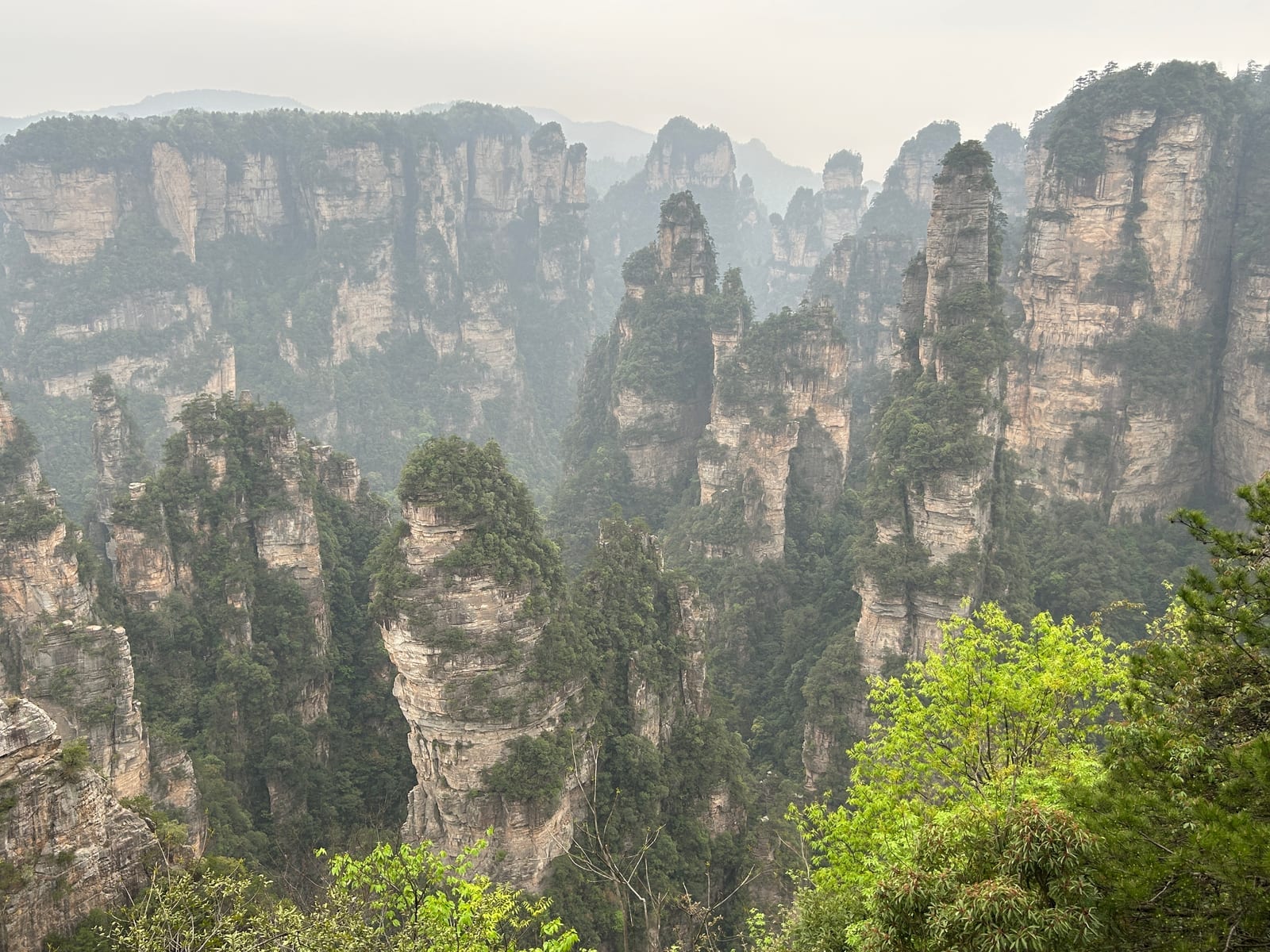
If you only do one thing in Zhangjiajie, most people say make it this. The National Forest Park (the Wulingyuan area) is the number-one highlight of the trip — a forest of thousands of quartz-sandstone pillars rising out of the valleys. The most famous spot is Yuanjiajie, with viewing platforms over a whole sea of pillars, including the "Avatar Hallelujah" pillar the film's makers photographed. Free green shuttle buses (included in the ticket) connect every zone inside, and the morning viewpoints are at their best while the mist still hangs. The area is enormous, so allow two full days and base in Wulingyuan. The ticket is valid for four days. Book ahead on Klook.
Book tickets on Klook → Read more: we have a full Zhangjiajie National Forest Park guide — which gate to use, which zones to walk, and how to plan two days.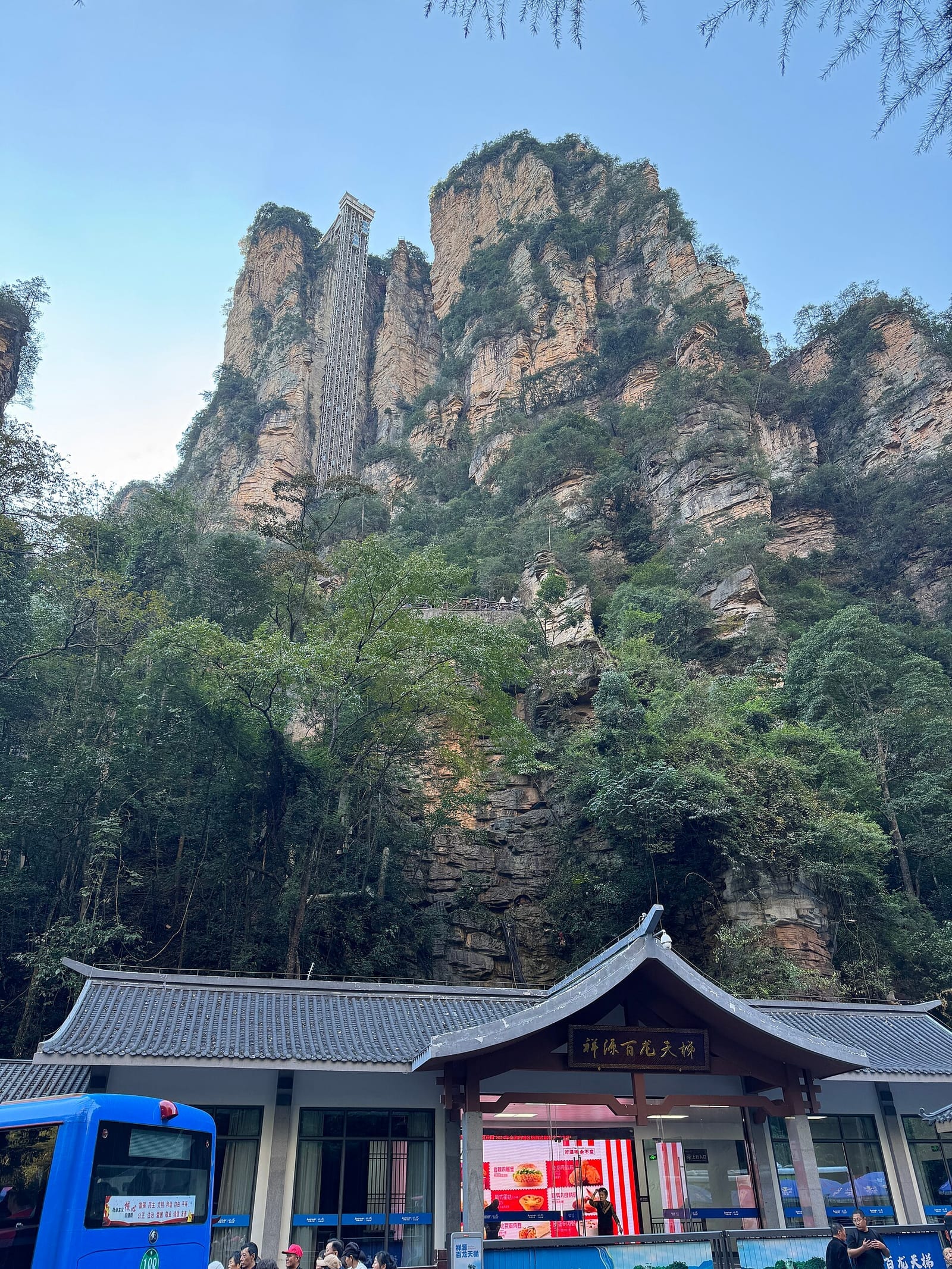 2
2
Inside the pillar forest is a star attraction: the Bailong Elevator, an outdoor glass lift bolted straight to a sandstone cliff, rising 326 metres and recorded as the tallest and fastest outdoor lift in the world. It carries you from the forest floor to the top in about 1–2 minutes. The goosebump moment is the last 50 metres, when the lift clears the cliff and the whole pillar forest opens out in front of you. It is the quickest, easiest way up to the Yuanjiajie zone (the Avatar pillars), with no hours-long climb. The queue is very long in high season and late afternoon, so go early, or ride up and walk down to skip it. The lift fee is separate from park entry.
Read more: the Bailong Elevator guide — quieter times, ride up or down, and how to skip the queue.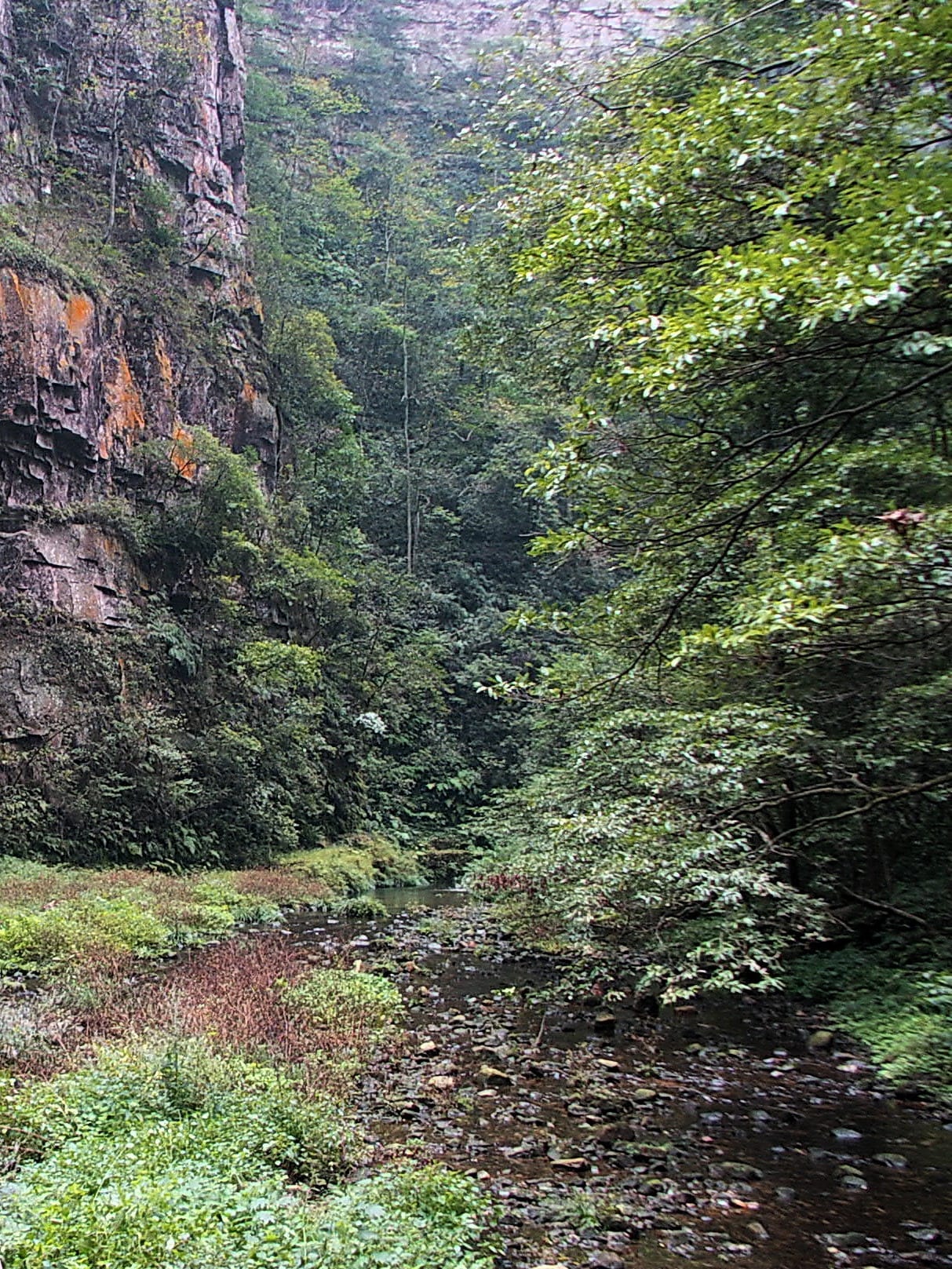 3
3
If you want to see Zhangjiajie from the bottom too (not just from the viewpoints), the Golden Whip Stream is the best walk to do it. It is a flat path running about 7.5 km along a clear stream on the valley floor, beneath towering sandstone pillars. Either side is lush green forest, small waterfalls and wild monkeys playing on the rocks. The path is level and easy — no climbing — so kids and older travellers can manage it, and there are several photo spots that appeared in Avatar along the way. Walking the whole route takes about 2–3 hours, or you can do half and turn off to the Bailong Elevator base. It is included in the park ticket, with nothing more to pay.
Read more: the Golden Whip Stream guide — which direction to walk, the photo spots, and tips for the monkeys.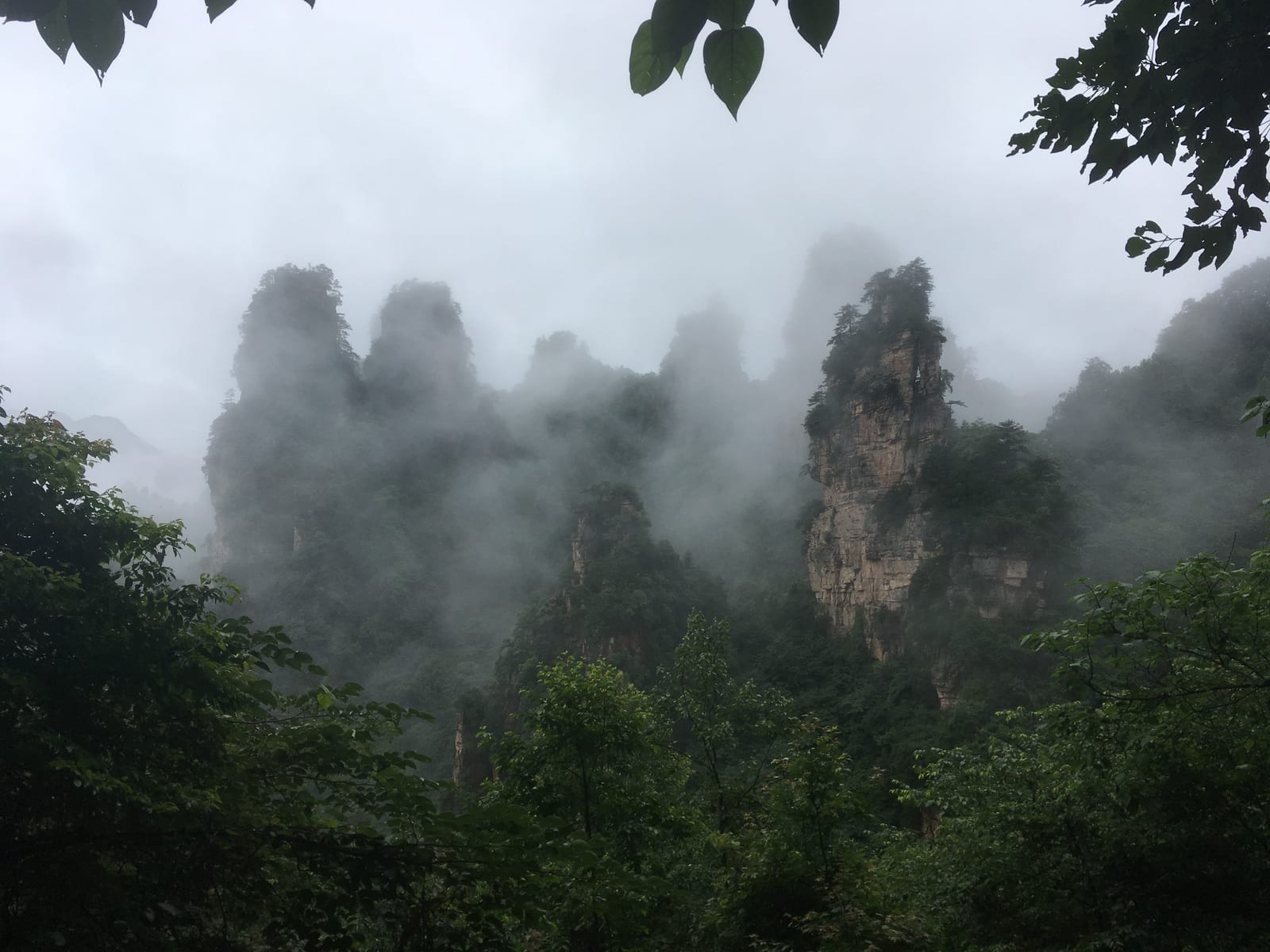 4
4
The most famous image of Zhangjiajie — thousands of pillars rising above a white sea of cloud — is mostly shot from Tianzi Mountain. It is a high summit in the Wulingyuan area with several viewpoints, like the "He Long Park" terrace and the "Number-One Garden under Heaven", looking out over the pillar forest as far as the eye can see. On overcast days or just after rain, mist drifts between the pillars until the whole scene looks like a Chinese painting (a blazing sunny day gives you no mist). You can reach it by the Tianzi cable car or on foot, and it connects to the Yuanjiajie zone. The cable car fee is separate from park entry. For the mist, go up at first light before the sun burns it off.
Read more: the Tianzi Mountain guide — which viewpoints are best, when the mist comes, and how to get up.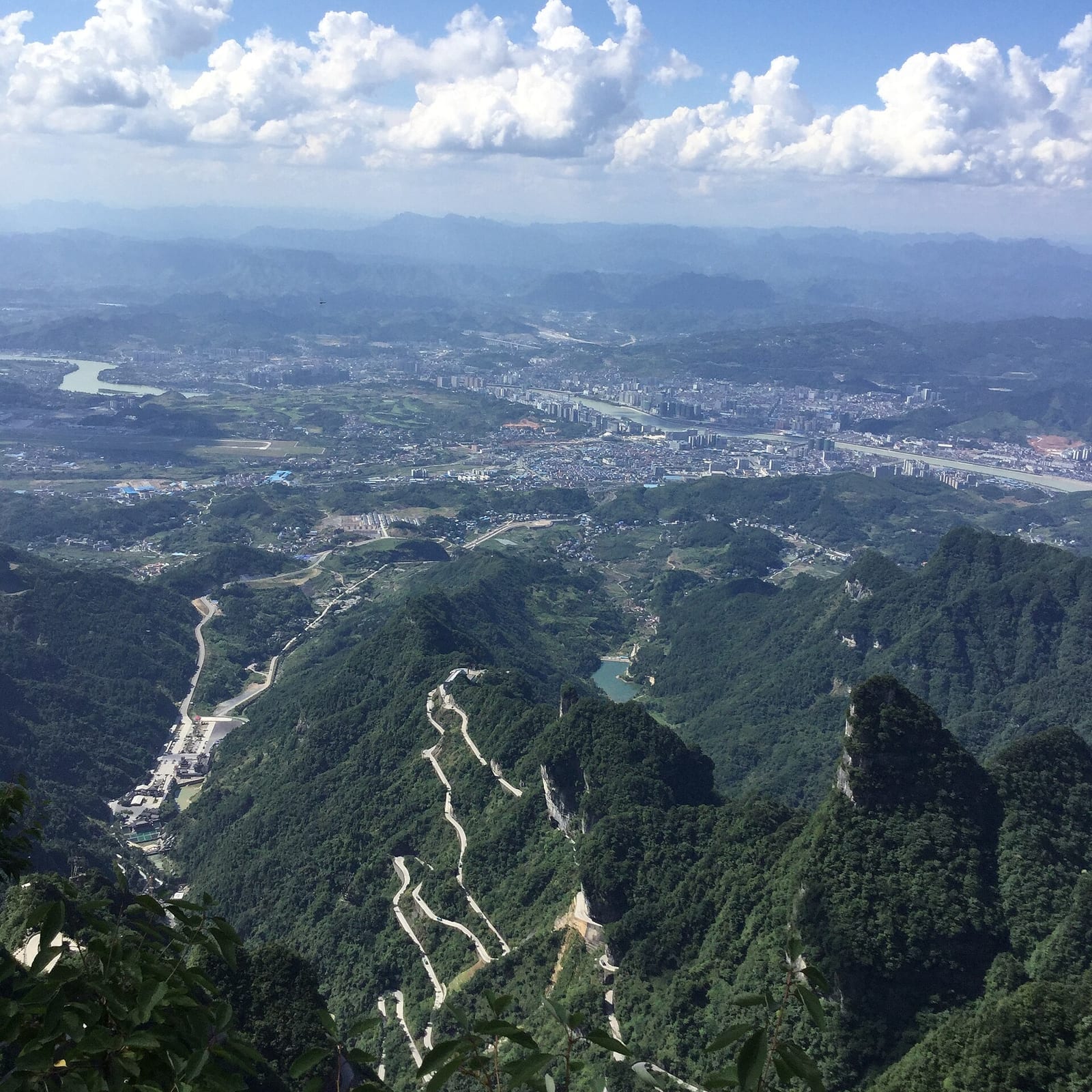 5
5
Unlike the pillar forest, Tianmen Mountain (Heaven's Gate) is right beside Zhangjiajie city, and it makes a day packed with thrills. It starts with a roughly 7.5 km cable car (one of the longest in the world) floating up from the city centre to the summit, over the 99 hairpin bends of the road snaking up the mountain. At the top you walk a narrow "glass skywalk" fixed to the cliff face, with the city dropping away under your feet, then descend 999 steps to the "Heaven's Gate" — a giant natural arch punched right through the mountain. The Tianmen ticket includes the cable car, the glass walk and the lower shuttle, and the visit takes a half to a full day. Book ahead on Klook.
Book tickets on Klook → Read more: the Tianmen Mountain guide — which way to go up, how to book the cable car, and the best order to walk it.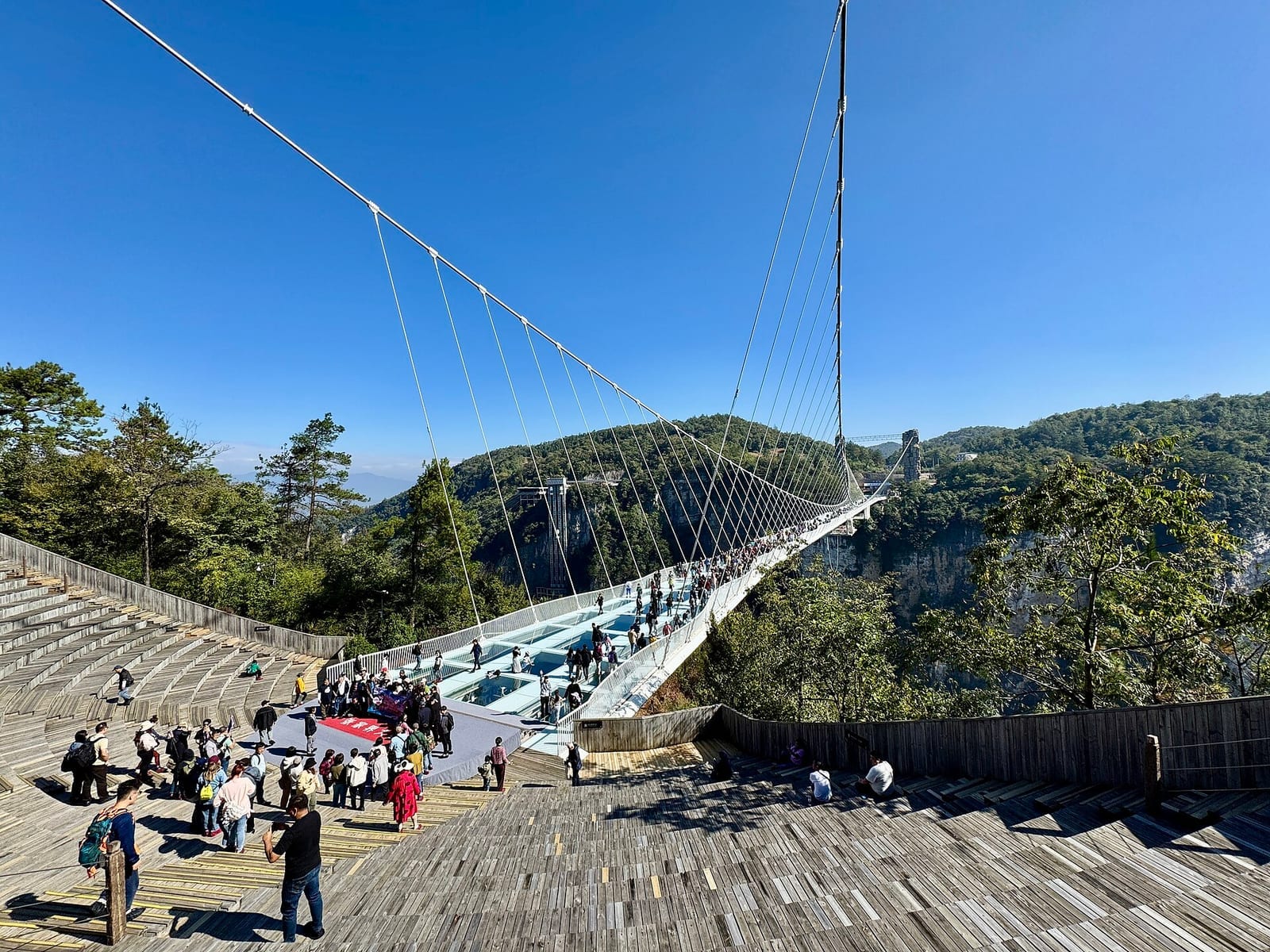 6
6
For anyone who loves a spine-tingle, the Zhangjiajie glass bridge is the real thing. It is a clear glass bridge over 400 metres long, spanning the Zhangjiajie Grand Canyon some 300 metres deep. You walk the whole span and look straight down through the glass to the canyon floor below. When it opened it was the longest and highest glass bridge in the world. It is in a separate area from the pillar forest, about 15–30 km from Wulingyuan. Tickets come in a few forms — the glass bridge alone, or a combined ticket that includes walking down into the Grand Canyon below (a boat ride and waterfalls). If you are afraid of heights, walk slowly and hold the rail. The bridge can close in rain or strong wind, so check before you go. Book ahead on Klook.
Book tickets on Klook → Read more: the Grand Canyon Glass Bridge guide — which ticket is best value, quieter times, and how to get there.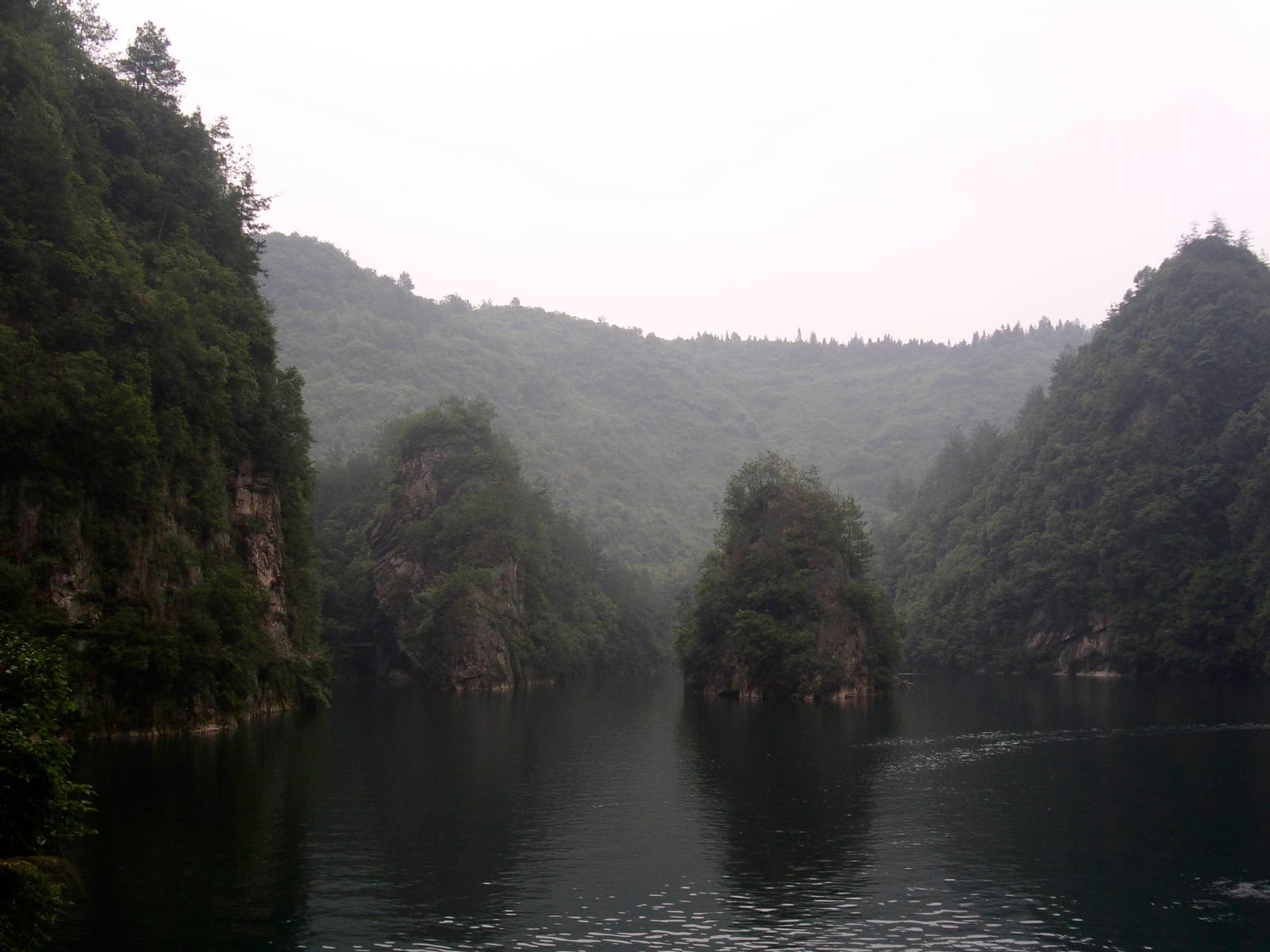 7
7
After several days hiking the pillar forest, Baofeng Lake is a relaxed rest for the legs that turns out prettier than you expect. It is an emerald-green lake sitting on top of a mountain (not in a valley), ringed by sandstone pillars and green forest. The boat ride runs about 30–40 minutes along pillars mirrored in the still water, and along the way local Tujia and Miao villagers stand and sing folk songs back and forth from boats and the cliffside — a little surprise people love. The water is clear enough to mirror the hills perfectly. It is in the Wulingyuan area, near the pillar forest, and pairs easily with the Yellow Dragon Cave in one day. The ticket includes the boat ride; the in-area shuttle costs a little extra.
Read more: the Baofeng Lake guide — boat times, the viewpoints, and how to pair it with the Yellow Dragon Cave.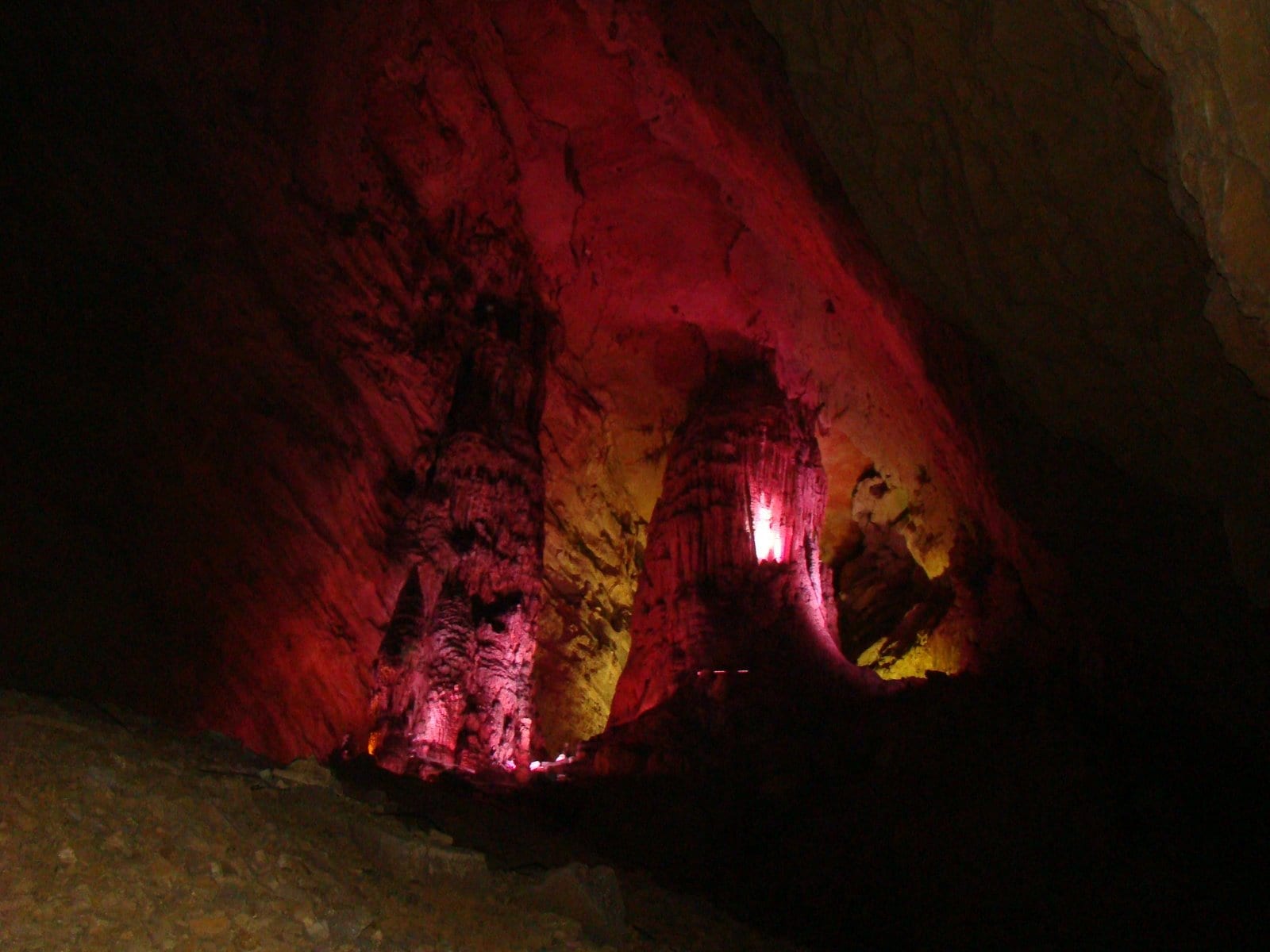 8
8
On a rainy day, or when you want an indoor activity, the Yellow Dragon Cave is a good option. It is a vast limestone cave in the Wulingyuan area, said to be among the largest in China. Inside it splits into several levels, with chambers as tall as a cathedral, stalagmites tens of metres high, and the highlight — an "underground river" you can actually boat along inside the cave. A path lit in many colours leads past the formations until it looks cinematic, and the cave stays cool and comfortable all year. The whole visit takes about 1.5–2 hours. It is near Baofeng Lake, so the two pair easily in one day. Buy tickets on site or book through a tour.
Read more: the Yellow Dragon Cave guide — the boat section, the photo spots, and how to get there.If you come in summer and want something exciting, rafting the Mengdong River (Maoyan River) is what locals call "the number-one drifting in China". It is a long river, about 47 km, in the Xiangxi area, roughly 80 km from Zhangjiajie city. It mixes fast white-water stretches where the raft shoots over rapids with calm sections where you float and take in the mountains, waterfalls and green gorges on either side. The run lasts about 2.5–3 hours, and you will get thoroughly wet (bring a change of clothes and a dry bag). It opens only in summer, roughly June to October, when the water is high and the air is warm; it closes in winter. Most people go on a day tour with transfers from Zhangjiajie.
Read more: the Zhangjiajie day trips guide — rafting, Fenghuang and the spots you can reach out of town in a day.After a day in the mountains, the Zhangjiajie evening that people come home talking about is "Charming Xiangxi" — a culture show of the Tujia and Miao, the region's native peoples, staged in a large theatre near Wulingyuan. It comes in two halves: an indoor part telling local legends, with Miao drumming, the "crying marriage" wedding ritual, and Maogus masked dance; and an outdoor part of daring Xiangxi stunts and a bonfire song-and-dance carnival. It is a big light, colour and sound spectacle, a good way to close the day and understand the local culture at the same time. The main show starts around 7:30 pm nightly, so it pays to book ahead on Klook or through your hotel.
Book tickets on Klook → Read more: the Zhangjiajie attractions guide — the full overview of sights and activities in town.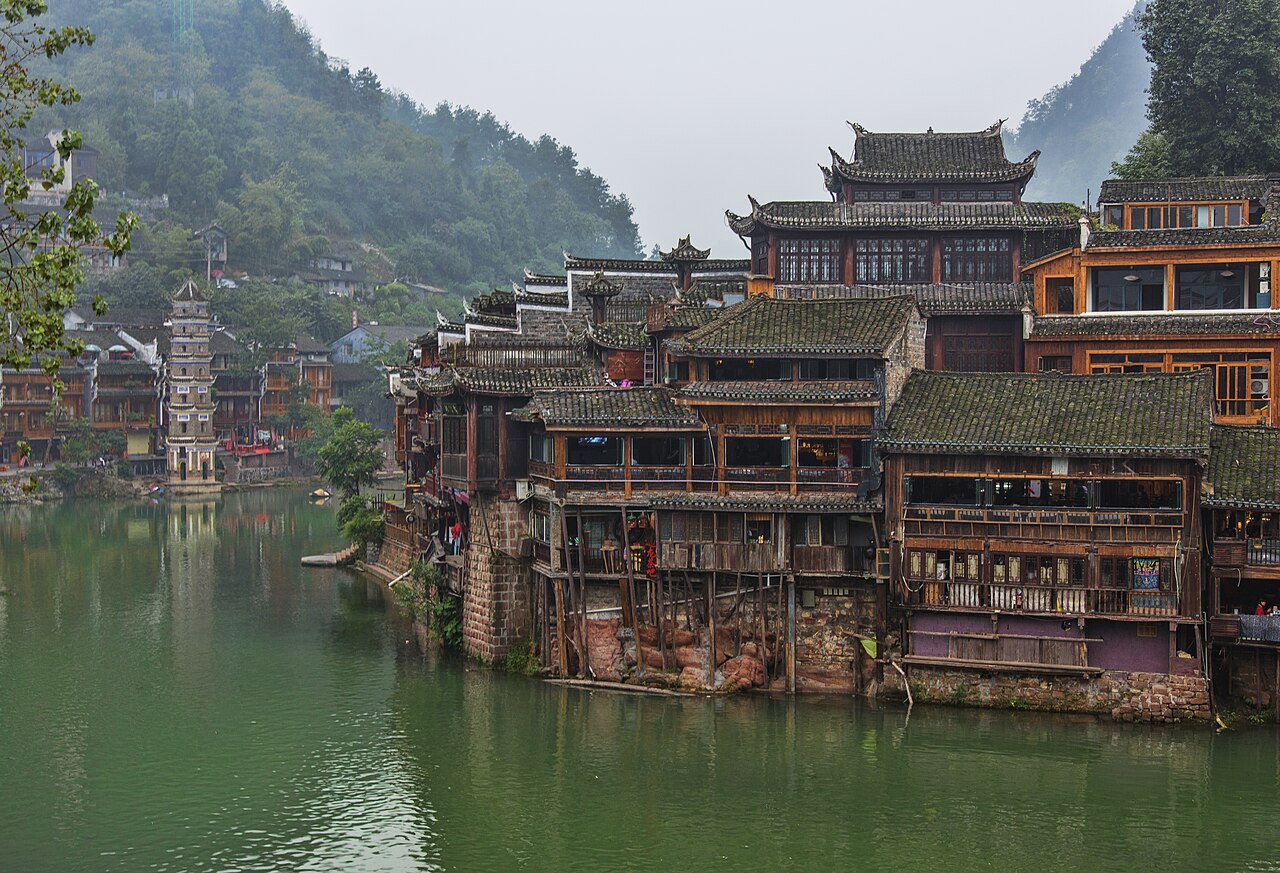 11
11
If you have a spare day, Fenghuang ancient town is a day trip that more than earns its keep. It is a 400-year-old town on the Tuojiang River, where old "diaojiaolou" stilt houses stand on posts over the water along both banks, and it is often called the most beautiful ancient town in China. It sits about 200 km south of Zhangjiajie. You can get there by high-speed train from Zhangjiajie West station to Fenghuang Gucheng station in about an hour, or by direct bus or tour coach in about 3–4 hours. By day you walk the old stone streets, cross the stepping-stone bridges and take a dragon boat on the river; by night comes the real highlight — the lights on the wooden houses reflecting in the river, lovely enough to stay a night for. Walking the old town is free (some historic houses charge a combined-ticket fee).
Read more: the Zhangjiajie day trips guide — Fenghuang, the train, and how to plan an overnight.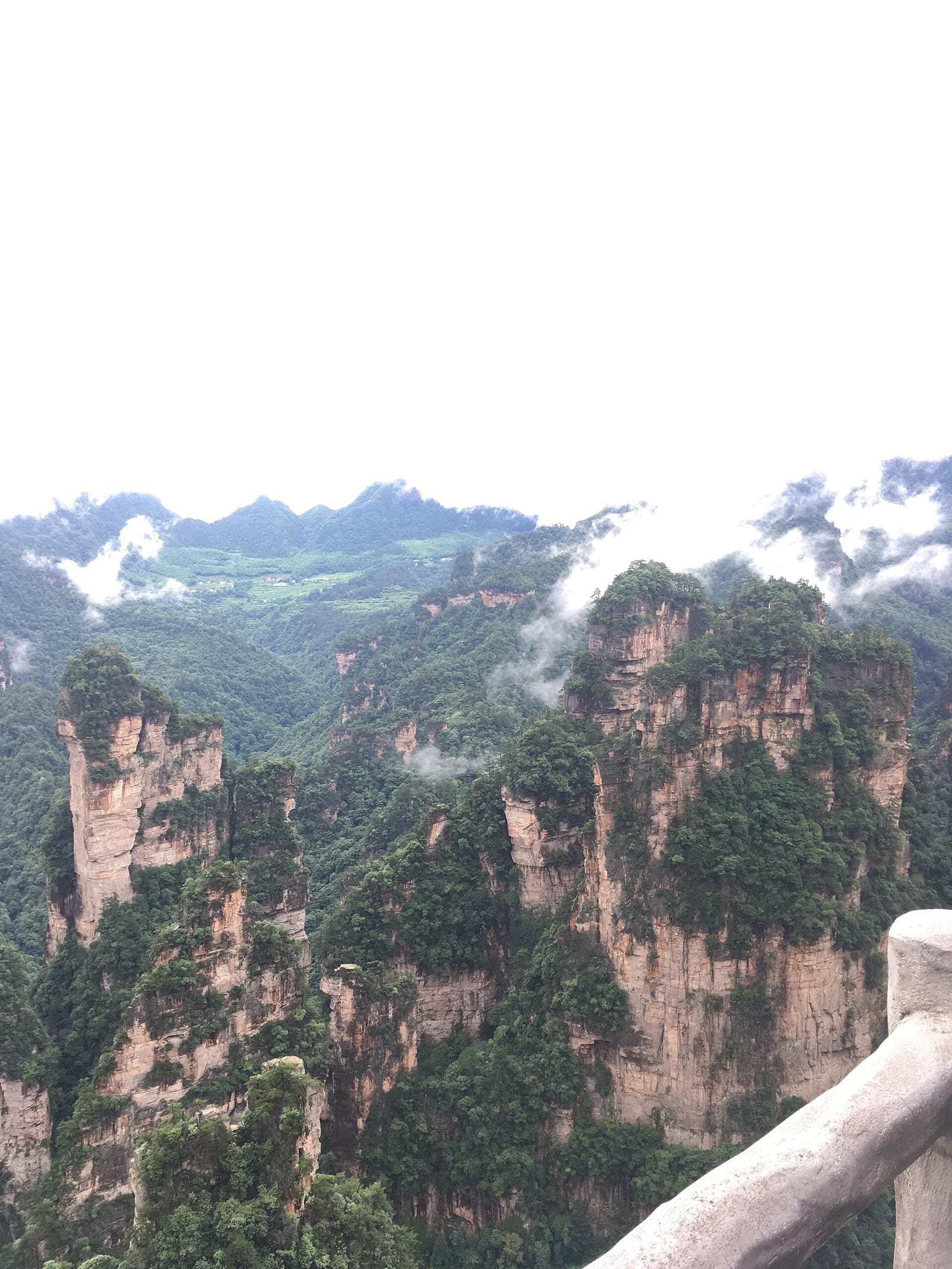 12
12
Wulingyuan town is the best base for the pillar forest, because it sits right by the park gate — a short walk or ride to the entrance. By day you head into the park on the free green shuttle buses that connect every zone (included in your park ticket), but back in the evening this small town has its own charm. Walk the pedestrian street and night market, sample Tujia food like cured smoked meat, herbal hotpot and "three-pot rice" (sanxiaguo), and stroll along the Suoxi River running through the centre. It is quieter and more relaxed than Zhangjiajie city, and ideal if you want to wake early and beat the crowds into the park. It is free to wander; you pay only for what you eat and buy.
Read more: the Zhangjiajie food guide — three-pot rice, Tujia dishes and the local food to try.