A fishing village 40 years ago, today a tech megacity of soaring towers, city-scale theme parks and a 14-minute train to Hong Kong. This guide is built from verified facts and real visitor accounts to get you ready before you land.
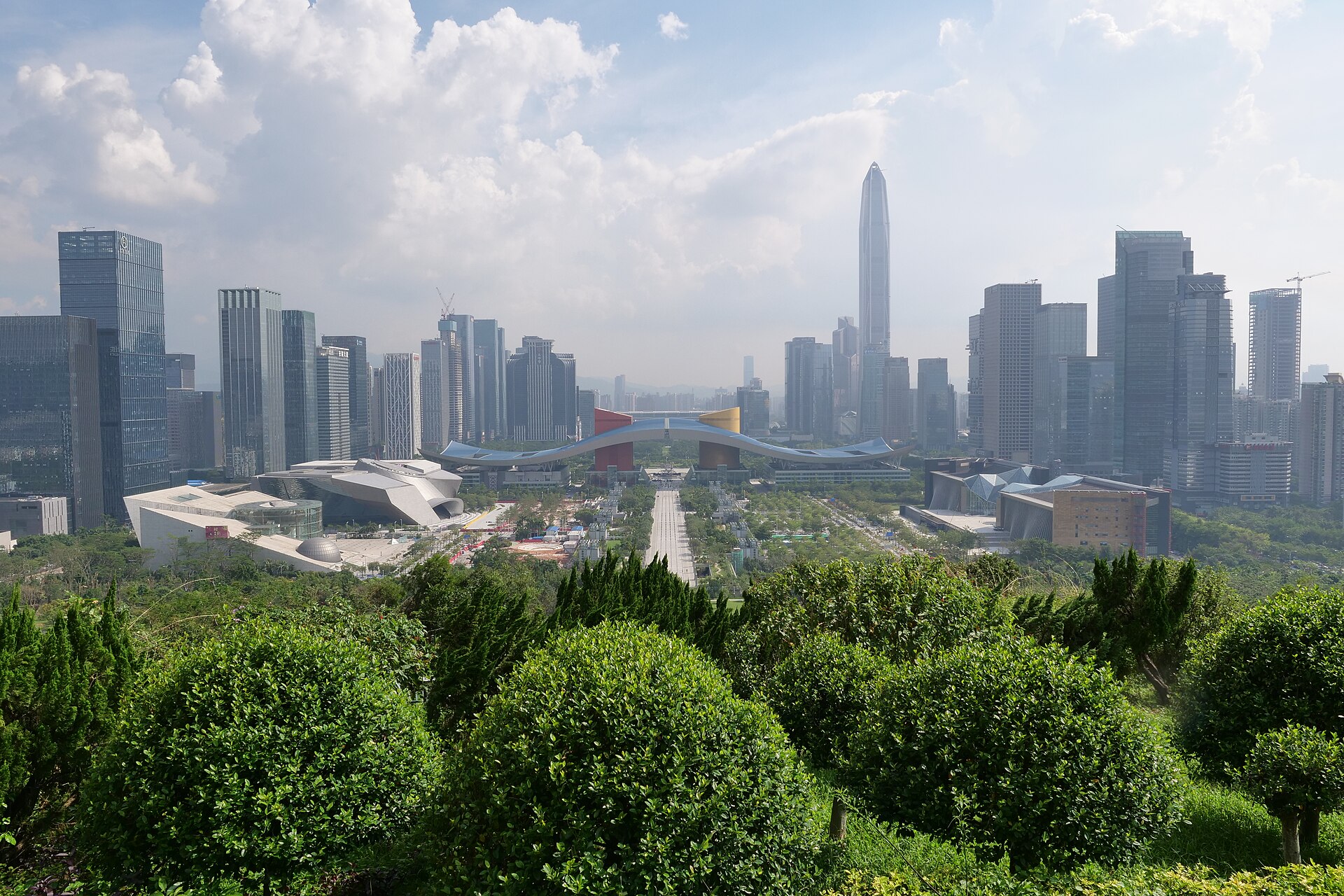
No city tells the story of modern China better than Shenzhen. In 1980 it became the country's first Special Economic Zone (SEZ) — a small fishing town on the Hong Kong border. Today it is a tech city of more than 17 million people, home to Tencent, Huawei, DJI and BYD. It is young, modern, neatly planned, and charged with an energy you won't find in China's older cities.
Easy to get around — the Shenzhen Metro runs around 17 lines over 500+ km, one of the largest systems on earth; fares are ¥2–15 (~฿10–75) per ride, with English signs throughout. On Hong Kong's doorstep — high-speed rail from Futian station reaches West Kowloon in just 14 minutes, so you can base yourself in Shenzhen and do Hong Kong as a day trip (you'll need a visa that lets you re-enter the mainland). Close to home — roughly a three-hour direct flight from Bangkok, much nearer than Beijing or Shanghai.
Two to three days covers the main highlights without rushing: the Window of the World and Splendid China theme parks, the OCT-LOFT art district, Sea World in Shekou, Shenzhen Bay Park, and the Ping An Finance Center. Five days lets you move at an easier pace, add Dameisha beach or Wutong Mountain, and take the 14-minute train across to Hong Kong for a day.
Day 1: The Window of the World, the Splendid China miniature park, then OCT-LOFT for cafes and art in the evening. Day 2: Sea World in Shekou and a walk along Shenzhen Bay Park. Day 3: Up the Ping An Finance Center for the view, shopping in Futian — or a day trip to Hong Kong.
Days 1–3 as above, at a slower pace. Day 4: A day trip to Hong Kong by high-speed rail (14 minutes from Futian, separate border control — bring a visa that lets you re-enter China) or Guangzhou (30–45 minutes). Day 5: Dameisha beach for sea air, or Wutong Mountain for the city's best summit views, plus Happy Valley for families.
Itineraries for every schedule: 1 day (layover) · 2 days · 3 days · 4 days · 5 days
October to December and March to April are Shenzhen's best windows — dry, comfortable and clear, around 18–26°C, fine for walking all day. December to February is mild (12–20°C) but can turn grey and damp. Summer (May–Sep) is hot and very humid, with heavy rain and typhoon season from July to September. Full monthly breakdown at when to visit China →
Since 1 March 2024, Thailand and China have a permanent mutual visa-free arrangement. Thai ordinary passport holders enter China for tourism, business or family visits and stay up to 30 days per trip (and no more than 90 days in any 180 days) without applying in advance. Check the current rules at China visa-free entry guide → before committing to flights.
Flights from Bangkok land at Bao'an International Airport (SZX — 深圳宝安国际机场), about 32 km north-west of Futian in Bao'an district. If you arrive by high-speed rail from another city, you will most likely come into Shenzhen North (Shenzhenbei), the city's largest rail hub.
Metro Line 11 (airport express): the fastest and best value at ¥7 (~฿35), running from the airport into Futian and Nanshan in about 30–40 minutes, with a business-class car (¥21) if you have bags. Metro Line 1 (Luobao) reaches the Luohu district. Taxi / DiDi: ~¥100–130 (~฿500–650) to Futian, about 50 minutes; ¥80–100 to Nanshan — best with several bags. There are also ferries from the airport and Shekou to Hong Kong and Macau.
Futian station (deep under the CBD) is the headline stop — Hong Kong (West Kowloon) is just ~14 minutes away, Guangzhou South 30–45 minutes. Shenzhen North (Longhua) is the national HSR hub for trains to Beijing and Shanghai. The Luohu and Futian land borders also cross into Hong Kong by metro. Book through Trip.com or the official 12306 app.
The metro is how you move around this vast, spread-out city. Around 17 lines over 500+ km, English signage, fares ¥2–15 (~฿10–75). Key lines: Line 1 for the Window of the World, OCT and Huaqiangbei; the Line 11 airport express; Line 2 for Sea World in Shekou. With sights spread across Futian, Luohu, Nanshan and Bao'an, allow 30–60 minutes to cross town. Pay by scanning an Alipay or WeChat Pay QR code at the gate, or buy a Shenzhen Tong (深圳通) card. Full guide at Shenzhen metro guide →
Shenzhen is one of the most cashless cities anywhere — most places run on Alipay and WeChat Pay. Hotels and large department stores accept Visa and Mastercard. Local restaurants, noodle shops and market stalls often have no card reader at all. Set up the tourist version of Alipay before you leave home: it accepts foreign Visa and Mastercard and works immediately. Alternatively, withdraw yuan from a Bank of China or ICBC ATM on arrival as a backup. Full guide: paying in China →
Shenzhen is large and spread across several districts. Choosing the right one before you book a hotel saves time every day of the trip. See our top 10 Shenzhen hotels for every budget →
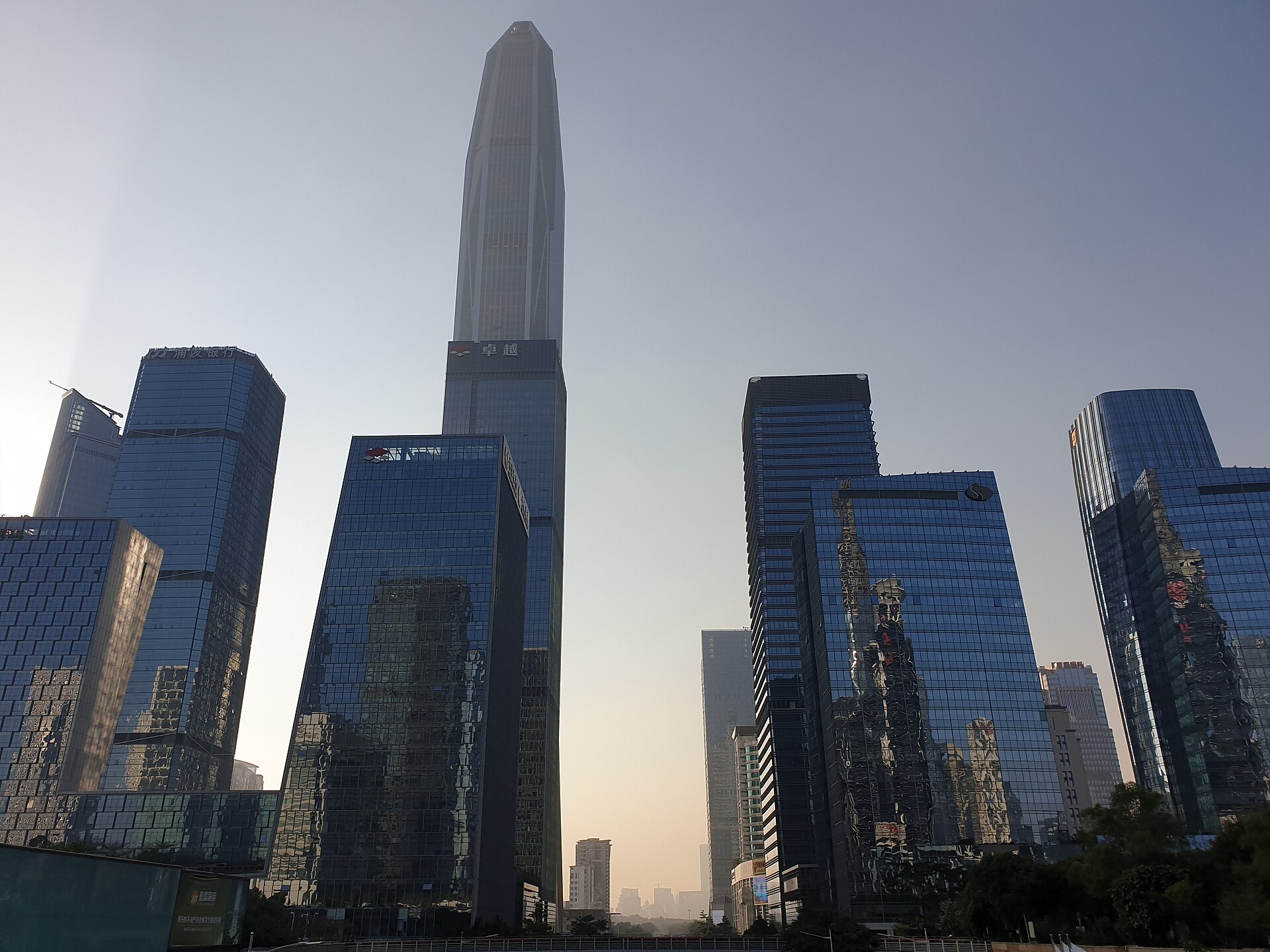
The heart of the business district, with the soaring Ping An tower, Lianhuashan Park and a major metro hub. You can walk to the Futian Hong Kong border and the high-speed rail station. It is the most practical base for a first visit: central to everything and smooth to get around.
The original city centre, with the Dongmen shopping streets, the KK100 tower, and the Luohu border crossing straight into Hong Kong by MTR. Plenty of well-priced and mid-range hotels here — the best-value base for shoppers and for anyone crossing to Hong Kong often.
The tech district in the west, home to the Window of the World, Splendid China and Happy Valley theme parks, the OCT-LOFT art district, Sea World in Shekou, and Shenzhen Bay Park. Luxury hotels such as the Four Seasons and Conrad cluster here. Modern, with a good atmosphere.
Staying near Bao'an airport is handy for early or late flights, and it's the site of the new international convention centre. Line 11 gets you into the city quickly. The choice for late arrivals, early departures, or anyone attending a trade show.
Shenzhen has more attractions than most visitors can cover in a single trip. These six are the core — the places that best explain the city. Full details at Shenzhen attractions → or day trips around the city →
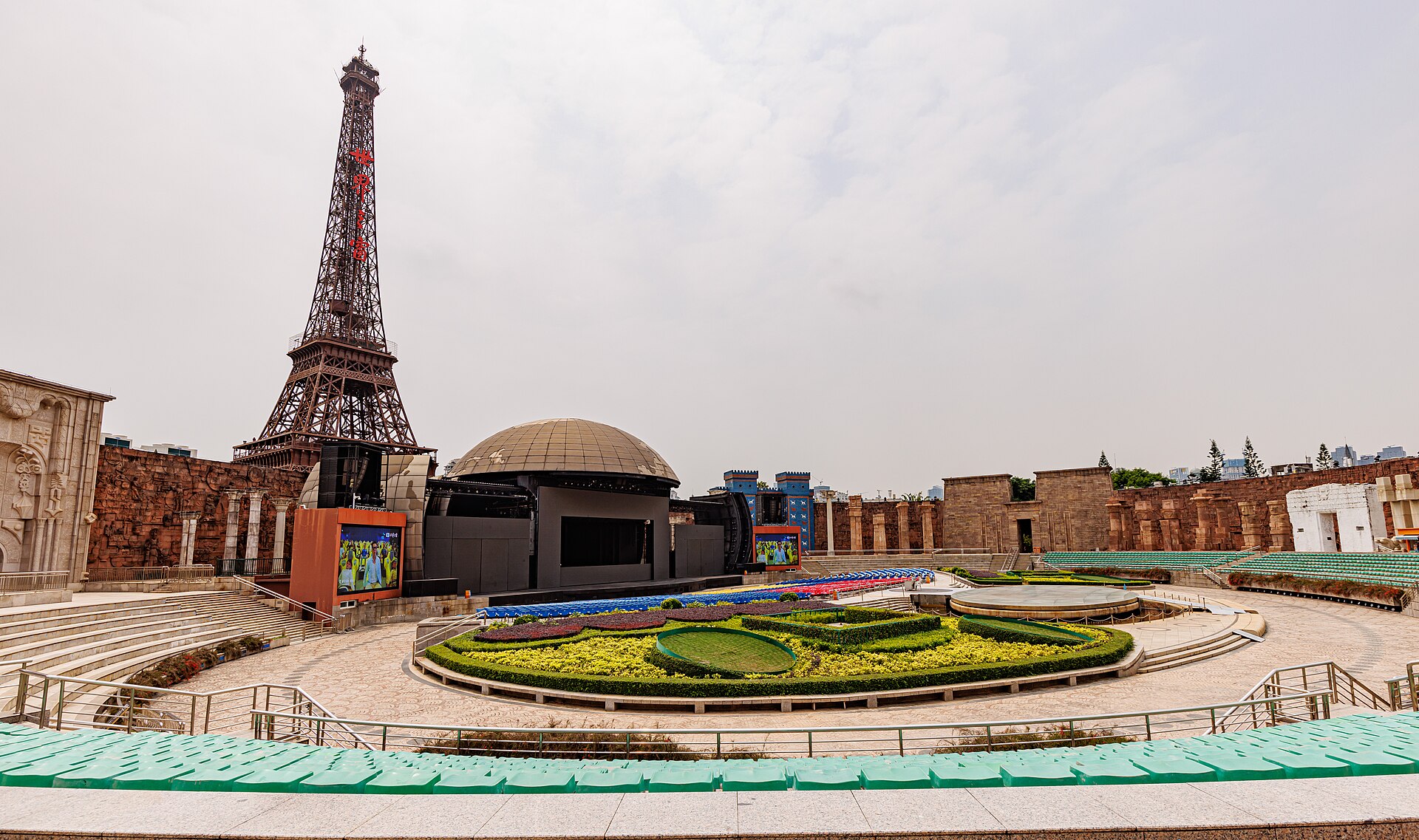
A theme park gathering the world's famous landmarks in miniature in one place — the Eiffel Tower, the Pyramids, the Taj Mahal, Tower Bridge — with shows and rides alongside. Fun and photogenic for a full day, and a hit with families and first-timers.
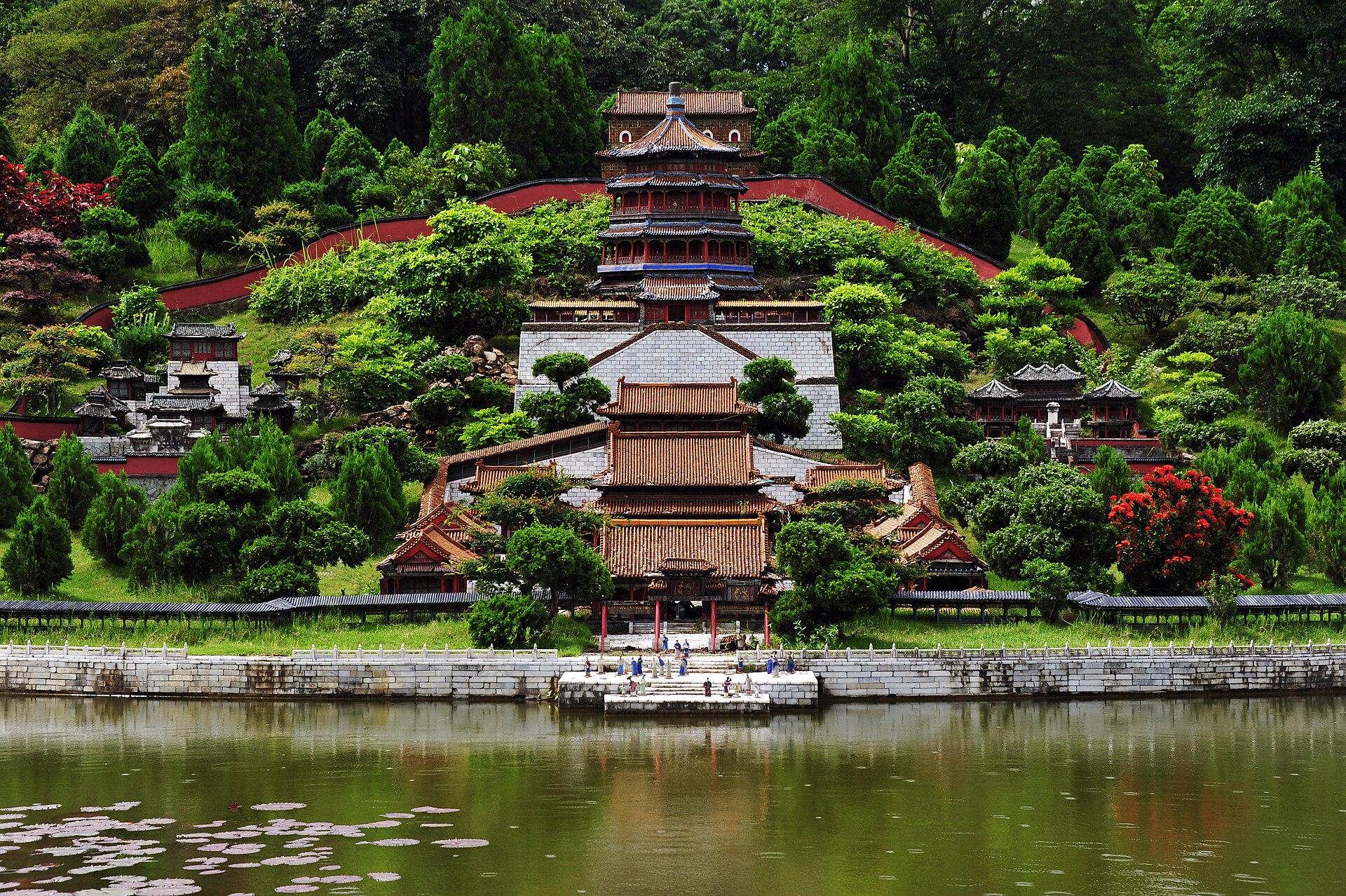
A miniature park that shrinks China's great sights — the Great Wall, the Terracotta Army, the Forbidden City — into one place, with an ethnic-culture village staging folk performances. You can walk the whole country in half a day.
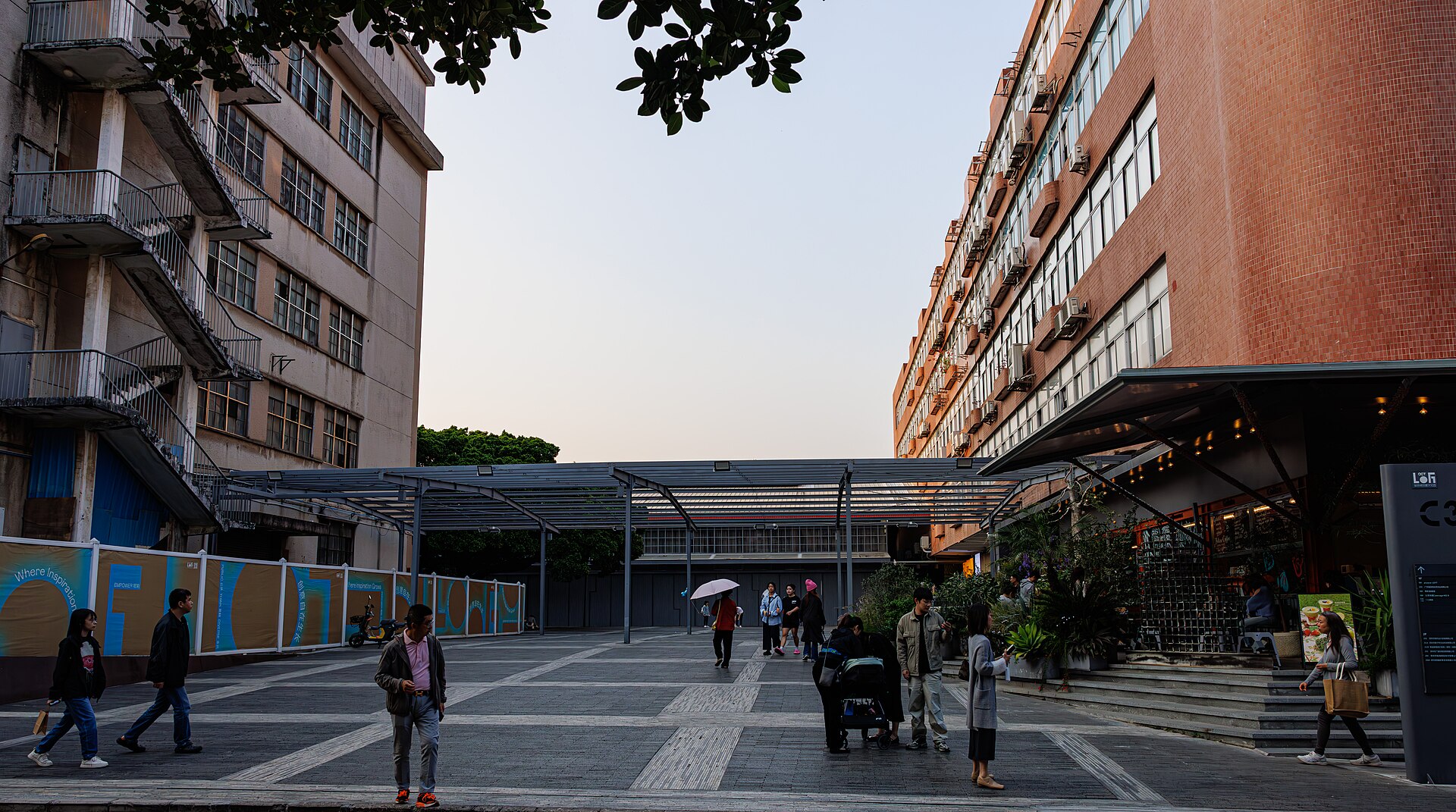
A 1980s factory complex reborn as a creative quarter — galleries, design bookshops, cafes and street art. It has the relaxed feel of a hip neighbourhood in any big city, lovely for a wander and photos, especially in the late afternoon.
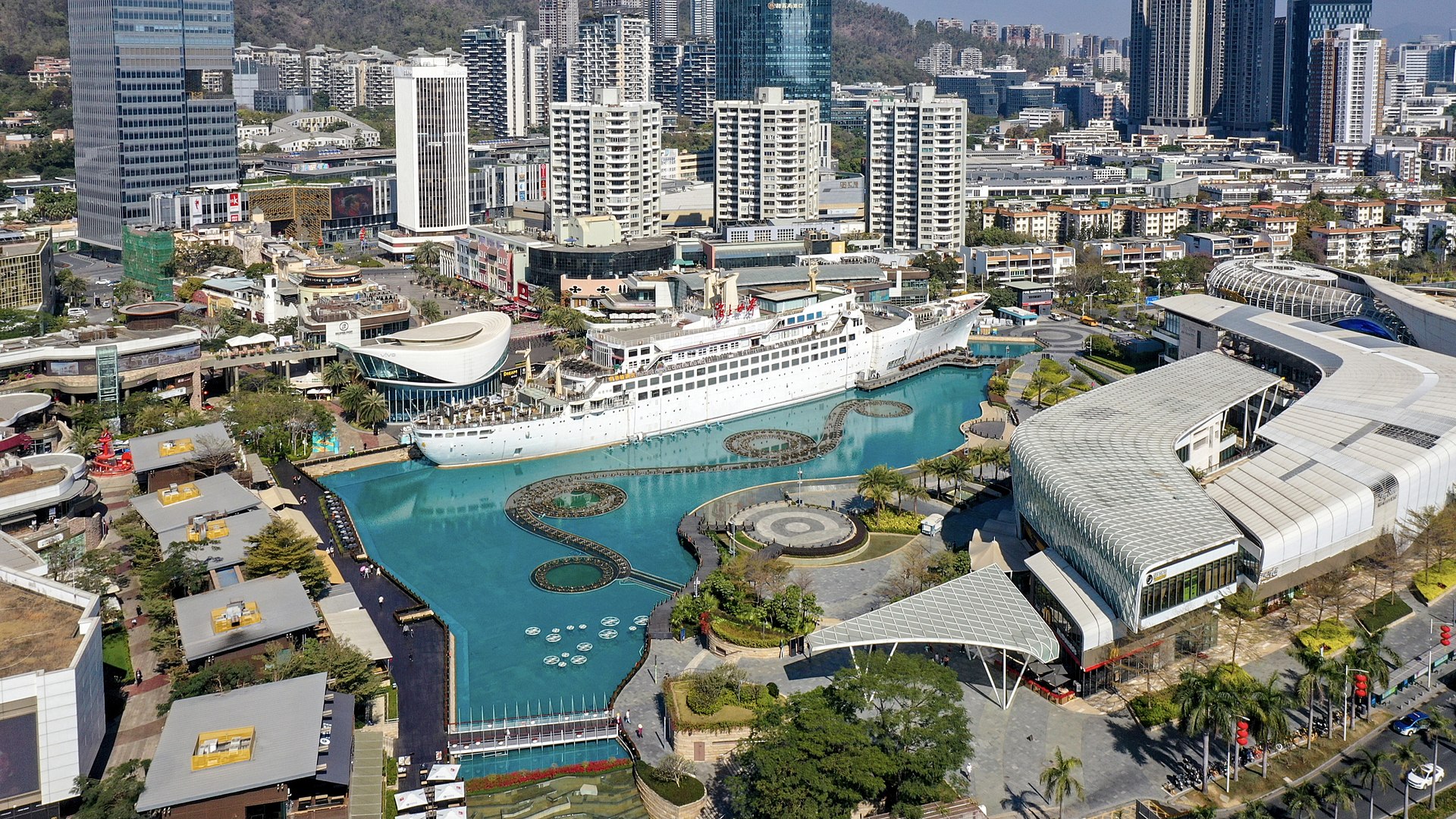
A waterfront dining quarter in Shekou, built around the old Minghua ship moored at its centre, ringed by international restaurants and bars with a musical fountain after dark. A favourite hangout for Shenzhen's expat crowd, lovely around sunset.
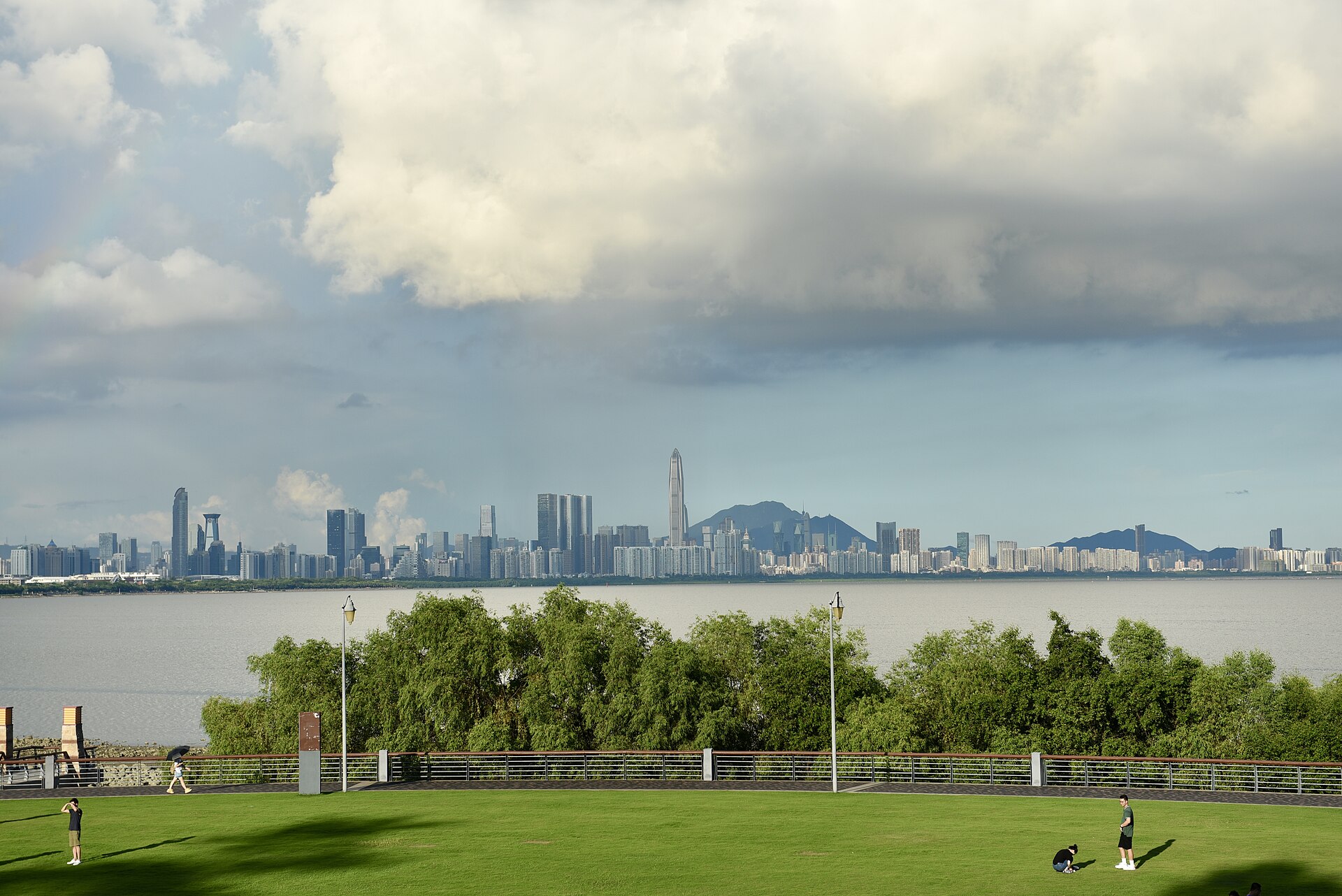
A long waterfront park running along the bay with views across to Hong Kong, a promenade and cycle path by the water, winter birdwatching, and fine sunsets. Locals come here to exercise and relax — wide-open and breezy after the city.
Shenzhen's tallest tower at ~599 metres, with the "Free Sky" observation deck on the 116th floor looking over the whole city and across to Hong Kong on a clear day. The single view that best captures the modern city — go just before sunset for both the daytime panorama and the lights.
Shenzhen is a city of arrivals from across China, and its food reflects that — classic Cantonese dim sum and roast meats sit alongside Chaoshan (Teochew) cooking, Hakka dishes, and street food from every province. Full guide: Shenzhen food guide →
Right next to Guangdong and Hong Kong, Shenzhen takes its tea-and-dumplings culture seriously. Har gow (prawn), siu mai, char siu bao: order a tableful and keep the tea topped up. It makes a fine first breakfast or brunch, from mall restaurants to old-school tea houses.
Glossy red char siu, crisp-skinned pork belly, and roast goose and duck hanging in the window — a classic Cantonese sight, and Shenzhen has plenty of good shops. Served over rice or with noodles, the flavours are deep and the technique a serious craft.
A large Chaoshan community means this cuisine is easy to find and very good. The stars are the fresh-beef hotpot (cuts sliced to order), bouncy beef balls, braised goose, and Teochew congee. Clean flavours that put the ingredients first — another local highlight.
Because everyone comes from somewhere, Shenzhen has street food from every region — Lanzhou noodles, mala, and Hakka dishes such as salt-baked chicken and stuffed tofu. The Huaqiangbei area and mall food courts are good first stops if you want to sample several things.
More food resources: Hakka cuisine → · cafe guide → · full food guide →
Shenzhen works for almost any budget. Accommodation runs from hostels to five stars, the metro is cheap, and several sights are free (OCT-LOFT, Sea World and Shenzhen Bay Park don't charge) — the theme-park tickets and observation decks are the paid items. Local restaurants are superb value, while the luxury hotels and high-end dining can climb as far as you like. Full breakdown: Shenzhen trip budget guide →
| Level | Accommodation/night | Food/day | Approx. total/day |
|---|---|---|---|
| Budget | ¥180–350 (~฿900–1,750) hostel or budget hotel | ¥70–140 (~฿350–700) | ¥300–550 (~฿1,500–2,750) |
| Mid-range | ¥450–900 (~฿2,250–4,500) 3–4 star hotel | ¥180–400 (~฿900–2,000) | ¥700–1,400 (~฿3,500–7,000) |
| Luxury | ¥1,400–4,500+ (~฿7,000–22,500+) | ¥500–1,800+ (~฿2,500–9,000+) | ¥2,400–7,500+ (~฿12,000–37,500+) |
Metro fares of ¥2–15 per trip add very little to the daily total. Many sights are free (OCT-LOFT, Sea World, Shenzhen Bay Park, Dameisha beach), with the Window of the World / Splendid China / Happy Valley theme parks and the Ping An Free Sky deck the main paid items. More detail at China travel budget guide →
Google Maps, Gmail, Translate, YouTube, Facebook, Instagram, WhatsApp and LINE all stop working the moment you connect to a Chinese SIM or network, unless you have a working VPN. Set it up on your phone at home — configuring a VPN from inside China is harder. Download Amap (Gaode Maps) for navigation — it works without a VPN and has English. For the internet itself, see VPN and eSIM guide →
Local restaurants, noodle shops, dessert stalls and market vendors often have no card terminal at all — mobile payment (Alipay or WeChat Pay) is the only option, and this tech city is about as cashless as it gets. The tourist version of Alipay accepts foreign Visa and Mastercard and takes a few minutes to set up. Alternatively, withdraw ¥500–1,000 from an ATM on arrival for small purchases.
Shenzhen is huge and its sights are scattered across Futian, Luohu, Nanshan and Bao'an. Trying to do the east and the west of the city in one day leaves you stuck on the metro for hours. Plan by zone — an OCT/Nanshan day, then a Futian day — and always allow 30–60 minutes to cross town.
Shenzhen's appeal is how easy Hong Kong is — but remember it counts as leaving the mainland. Thai nationals enter Hong Kong visa-free for 30 days, but returning to China is a fresh entry. Choose the crossing that suits you (14-minute high-speed rail from Futian, or the cheaper-but-slower MTR via Luohu/Futian) and allow time at immigration on both sides when it's busy.
Shenzhen is a theme-park city. During long national holidays (Chinese New Year, Golden Week on 1–7 October, Labour Day) the whole country descends on the Window of the World, Happy Valley and Splendid China, queues get very long, and hotel prices rise. Avoid these dates if you can — or, if not, book theme-park tickets ahead and arrive at opening.
Shenzhen sits on the coast in China's far south. Summer (May–Sep) is hot and very humid, with heavy rain and a typhoon season (Jul–Sep) that can close theme parks or ferries at short notice. Walking outdoors all day will wear you down — bring an umbrella, breathable clothes, and always have an indoor backup (a mall, a museum, the OCT-LOFT cafes).