Bamboo baskets stacked three high, a fresh pot of tea, round tables filling up on a weekend morning — Shenzhen may be a young city, but it sits in Guangdong, so "going for yum cha" over morning dim sum is a ritual people here have always done, easy and unhurried.
Shenzhen grew out of fishing villages after the Special Economic Zone was created in 1979, and today its people come from every province in China — so much so that locals often say "Shenzhen has no native dish of its own". But one thing is woven into the city's roots: Cantonese food. Shenzhen sits in Guangdong, right next to Hong Kong, and the culture of yum cha (饮茶) — morning tea, called 早茶 (zǎochá) in Mandarin — travelled here with Cantonese and Hong Kong families.
The word dim sum (点心, diǎnxīn) means "to touch the heart" — small plates meant to be eaten a little at a time between sips of tea, never a single dish to fill you in one go. Yum cha translates literally as "drink tea", but it really means a social breakfast: you sit down at a tea house, order a pot of tea, then keep the baskets coming and talk for a while. In Shenzhen it is usually a weekend meal, the kind three generations of a family settle in for together.
The heart of the meal fits in four Cantonese characters: 一盅两件 (yī zhōng liǎng jiàn) — "one pot of tea, two baskets of dim sum". No rush. You order the tea you like (pu'er, chrysanthemum, or tieguanyin), then work through the baskets one at a time. Good news for visitors: plenty of Hong Kongers now cross the border to eat yum cha on the Shenzhen side, because the quality is comparable and the prices are far kinder.
Start with the classics every tea house carries — order these seven and you've tasted the heart of Cantonese yum cha in Shenzhen.
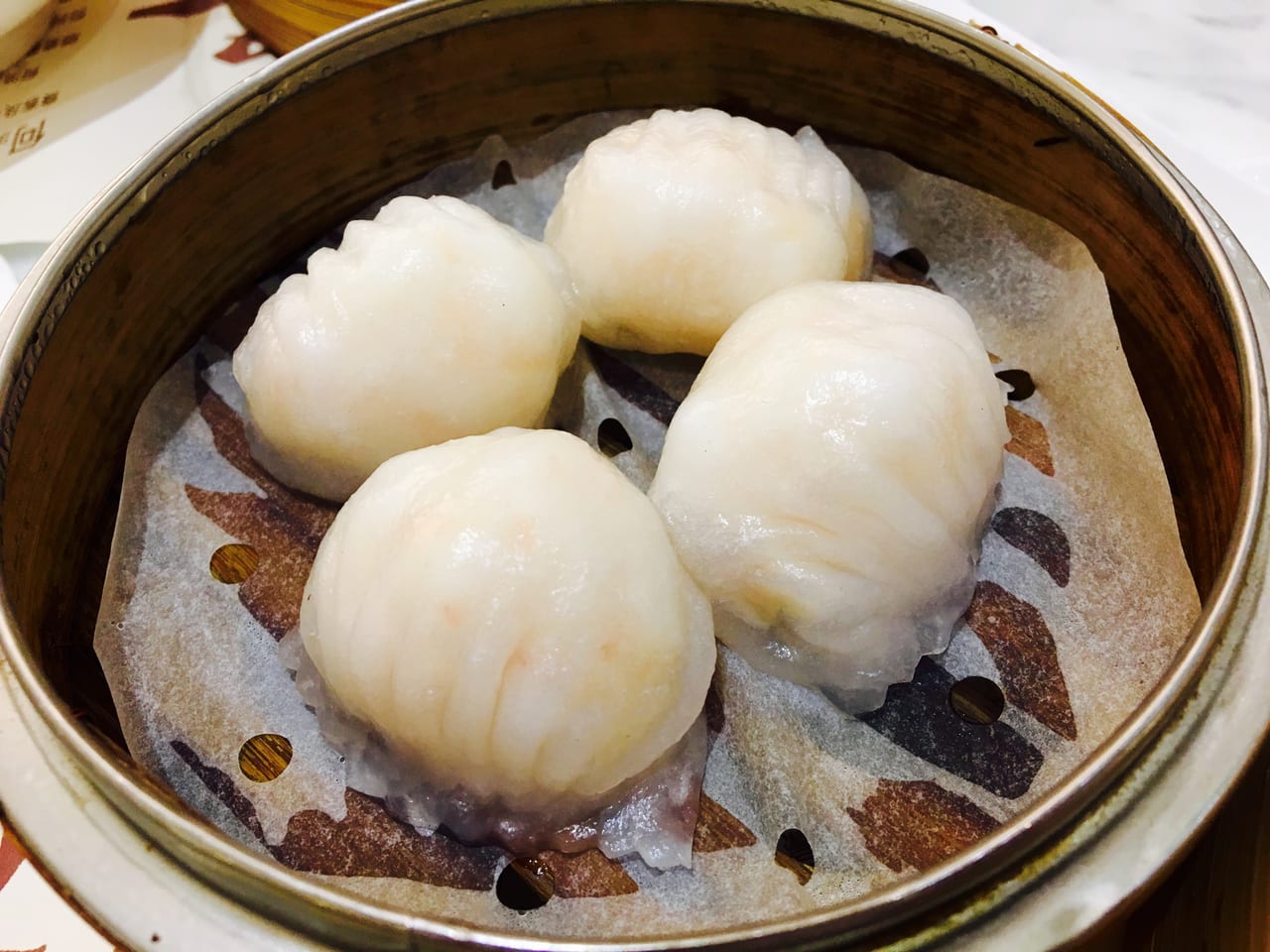
1
This is the dish locals use to judge whether a tea house really knows what it's doing. The wrapper is made from wheat starch and tapioca, kneaded until it turns translucent enough to show the pink shrimp inside, then pleated into the classic twelve folds. The filling should be whole, snappy shrimp, never a paste. The skin has to be thin enough to lift with chopsticks without tearing, yet not collapse into mush. Good Shenzhen tea houses turn out har gow to Hong Kong standard — if a kitchen's version has thick skin or tired shrimp, that's your cue to eat elsewhere.
Cantonese siu mai look a little different from the version you may know — wrapped in a thin, pale-yellow skin left open at the top, with a filling of minced pork mixed with chopped shrimp. Some kitchens crown them with orange flying-fish roe or grated carrot for colour. The filling is firm and bouncy, naturally sweet from the pork and shrimp, releasing a little juice when you bite in. It's the constant companion to har gow — Cantonese diners pair the two so often that "har gow siu mai" rolls off the tongue as a single phrase. An easy opener that suits everyone.
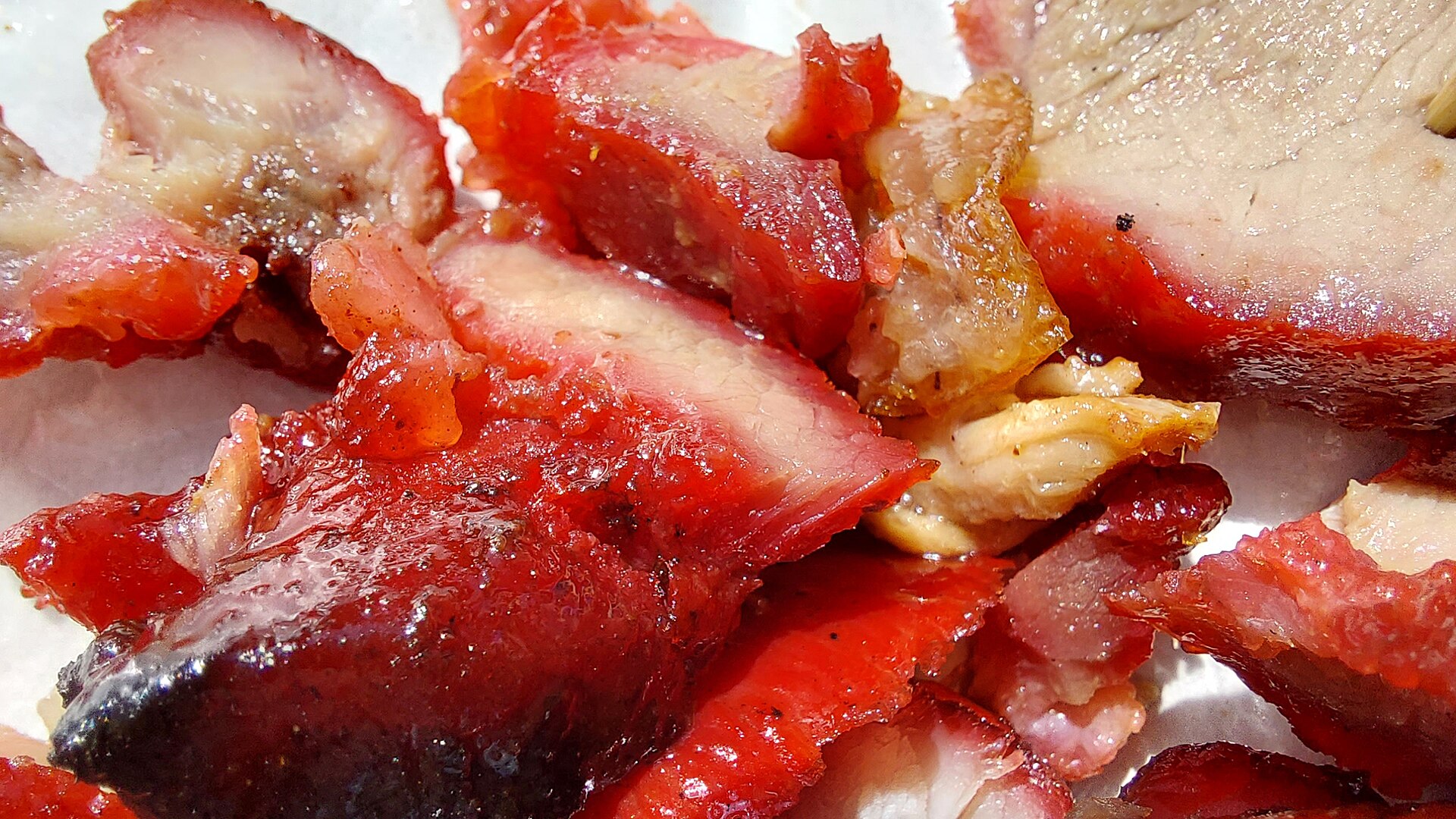
3
The charm of a Cantonese barbecue-pork bun is in the burst — the steamed dough rises until the top splits open into three petals like a blooming flower, flashing the red pork inside. The filling is char siu (honey-glazed barbecue pork), diced and tossed in a thick, sweet-savoury, slightly sticky sauce. The dough is soft and chewy, the filling juicy, and the first bite gives you both the sweetness of the glaze and the smokiness of the roast. Kids love it and adults order it every single time. Some places also do a baked version (叉烧餐包) with a glossy golden-brown crust. For the full roast-meat story, read our Shenzhen roast-meats guide.
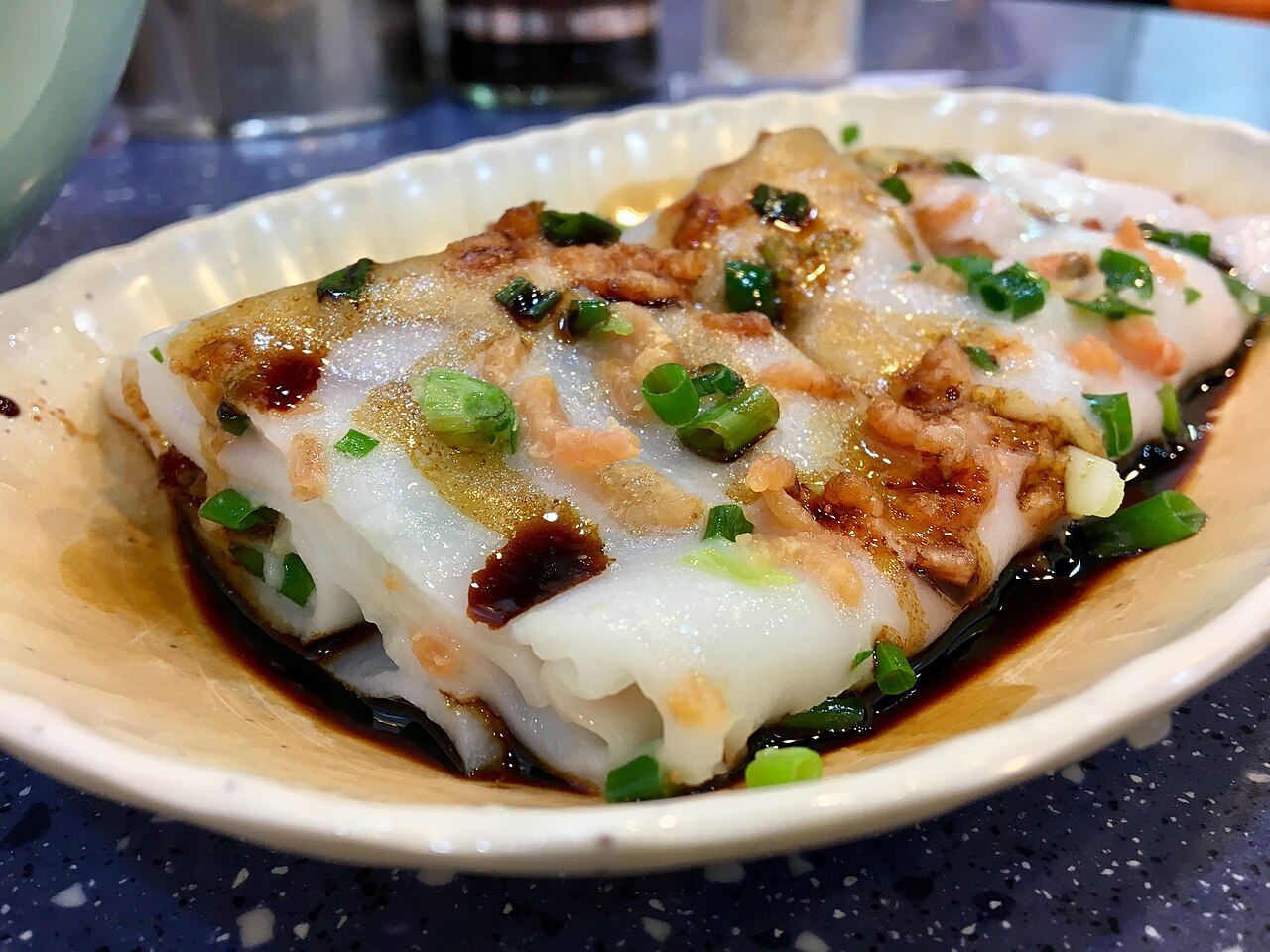
4
Cheung fun is a thin, silky sheet of steamed rice-flour batter rolled around a filling and bathed in Guangdong's special lightly sweetened soy sauce. The favourite fillings are shrimp (虾肠), char siu (叉烧肠) or beef (牛肉肠). The rice sheet is so soft and slippery it almost melts in your mouth, and the thin sweet soy cuts against the filling perfectly. In Shenzhen you'll find both the tea-house version and the fresh "rolled" style (拉肠粉) made to order at street stalls in the morning — the batter steamed on a tray and scraped off piping hot. It's something Cantonese people eat for breakfast almost every day.
The Cantonese egg tart is the most classic way to end a yum cha meal — the shell comes in two styles, some kitchens using flaky puff pastry and others a crumblier shortcrust, with a smooth golden egg custard inside that isn't too sweet, served warm from the oven and fragrant with egg and butter. Because Shenzhen is right next to Hong Kong, the Hong Kong-style egg tart here is excellent, and plenty of people buy a box to take home. Bite into one while it's still warm and the custard has that soft, just-set wobble.
Don't pull a face just yet — chicken feet, poetically called "phoenix claws" (凤爪) in Cantonese, are one of the dishes locals love most at the yum cha table. The feet are deep-fried first, then steamed for a long time in a sauce of fermented black beans, garlic and chilli until the skin and tendons turn soft enough to slip off the bone easily. The flavour is salty-sweet with a gentle kick. Sucking the tender meat off the small bones is a skill Cantonese diners master as children. Order a basket and you'll understand why it has stayed a perennial favourite.
The dish everyone films for social media — liu sha bao is a soft steamed bun filled with a custard of salted egg yolk, sugar and butter. Pull it apart or bite into it while it's still hot and the thick golden centre pours out like falling sand (流沙 literally means "flowing sand"). The taste is a sweet-rich-salty combination that lands perfectly in a single mouthful. It's a hugely popular treat that nearly every Shenzhen tea house carries. One word of warning — the centre is seriously hot, so always take a small first bite or you'll scald your mouth.
As soon as you sit down, the staff will ask which tea you'd like — there are several to choose from: pu'er (普洱), dark and good for digestion, perfect with richer bites · chrysanthemum (菊花), light and refreshing · tieguanyin (铁观音), a floral oolong · or shou mei / jasmine (香片). The tea comes in a large pot and you can top it up with hot water endlessly. Some places add a small per-person tea-and-seating charge (茶位费), which is completely normal.
Ordering dim sum these days is mostly done with an order slip (点心纸) — you tick the number of baskets you want and hand it over. Some places have a WeChat menu you scan and order from yourself. Start with three or four baskets, then order more once they're gone, so everything arrives hot and fresh rather than all at once.
Group size: two people, four or five baskets is about right · four people, eight to ten and then top up as you go · Cost per head: a typical yum cha meal is ¥50–120 (about ฿250–600) · upscale hotel restaurants run ¥150–280 (about ฿750–1,400).
Here's the custom that makes you look like a regular straight away: when someone pours your tea, curl your index and middle fingers and tap their tips gently on the table two or three times to say thank you, without stopping the conversation or saying anything out loud. The story goes that the Qianlong emperor once travelled in disguise and poured tea for his attendants — unable to kneel and bow without giving away who he was, an attendant bent his fingers to mimic a kneeling bow on the table. It has been etiquette ever since.
One more thing worth knowing: if you'd like the staff to refill the pot with hot water, tilt the lid open and rest it on the rim (Cantonese 揭盖, kit goi). It's the universal signal in a Cantonese tea house for "the pot's empty, please top it up" — no need to call out over the noise.
Almost every Shenzhen tea house takes WeChat Pay and Alipay first. A few older places still take cash in yuan, but foreign credit cards usually won't work (except inside big hotels). The easiest approach is to download Alipay or WeChat before your trip and link a Visa/Mastercard through their tourist mode. See our China travel guide for how to set that up.
Many popular places don't have a full English menu, but the dim sum order slip usually has pictures or Chinese names with prices. Point at a picture or say the name of the dish you want (for example 虾饺 har gow · 烧卖 siu mai · 肠粉 cheung fun) — staff understand easily and are usually happy to help.
Shenzhen doesn't have the century-old tea houses Guangzhou does, but Luohu and Futian are dotted with good Cantonese morning-tea spots — from value chains to upscale hotel dining rooms.
Luohu is Shenzhen's oldest district, right up against the border crossing into Hong Kong, which makes it the part of town where Cantonese-Hong Kong culture runs deepest. There's a wide choice of Cantonese tea houses here — familiar chains and older spots tucked down lanes alike. Several sit within walking distance of the Luohu crossing, so it's ideal if you've come over from Hong Kong for the day and want a late-morning yum cha before browsing the markets.
Futian is Shenzhen's new downtown, a high-rise business district, and yum cha here skews a bit smarter — you'll find Chinese restaurants inside five-star hotels serving morning tea on weekends, plus good Cantonese chains in the big malls. The setting is clean and comfortable, menus often come with pictures, and it suits anyone who wants a relaxed, well-served yum cha experience, especially if you're already staying nearby.
If you'd rather not gamble on finding a spot yourself, these Cantonese chains are the safe, easy-to-find option in malls across Shenzhen — Fanlou (蘩楼), decorated like an old Lingnan tea house with birdcage lamps, known for its har gow and cheung fun, with branches in both Huaqiangbei (Futian) and Luohu · Daoxiang (稻香), a Cantonese chain from Hong Kong with a wide dim sum range, bouncy fresh shrimp and weekday morning-tea deals · Dim Dou Dak (点都德), the value dim sum chain that made its name in Guangzhou, lively and with several Shenzhen branches. Check reviews and opening hours in the Dianping (大众点评) app before you go.
Over the last few years it has become genuinely popular for Hong Kongers to cross the border and eat — yum cha included — on the Shenzhen side, because the Cantonese food roots are the same, the quality is comparable, and the prices are noticeably kinder than in Hong Kong. If you're already travelling in Hong Kong and hold a China visa (or qualify for visa-free entry under the current rules), consider taking the train across at Lo Wu or the Futian Checkpoint for a late-morning yum cha on the Shenzhen side, then browsing Dongmen market afterward. It makes for a rewarding, fun day trip. See our China travel guide for visa and border-crossing details.