Walk and graze — one area at a time
From the main pedestrian street to the residential night markets where locals actually eat
 1
1
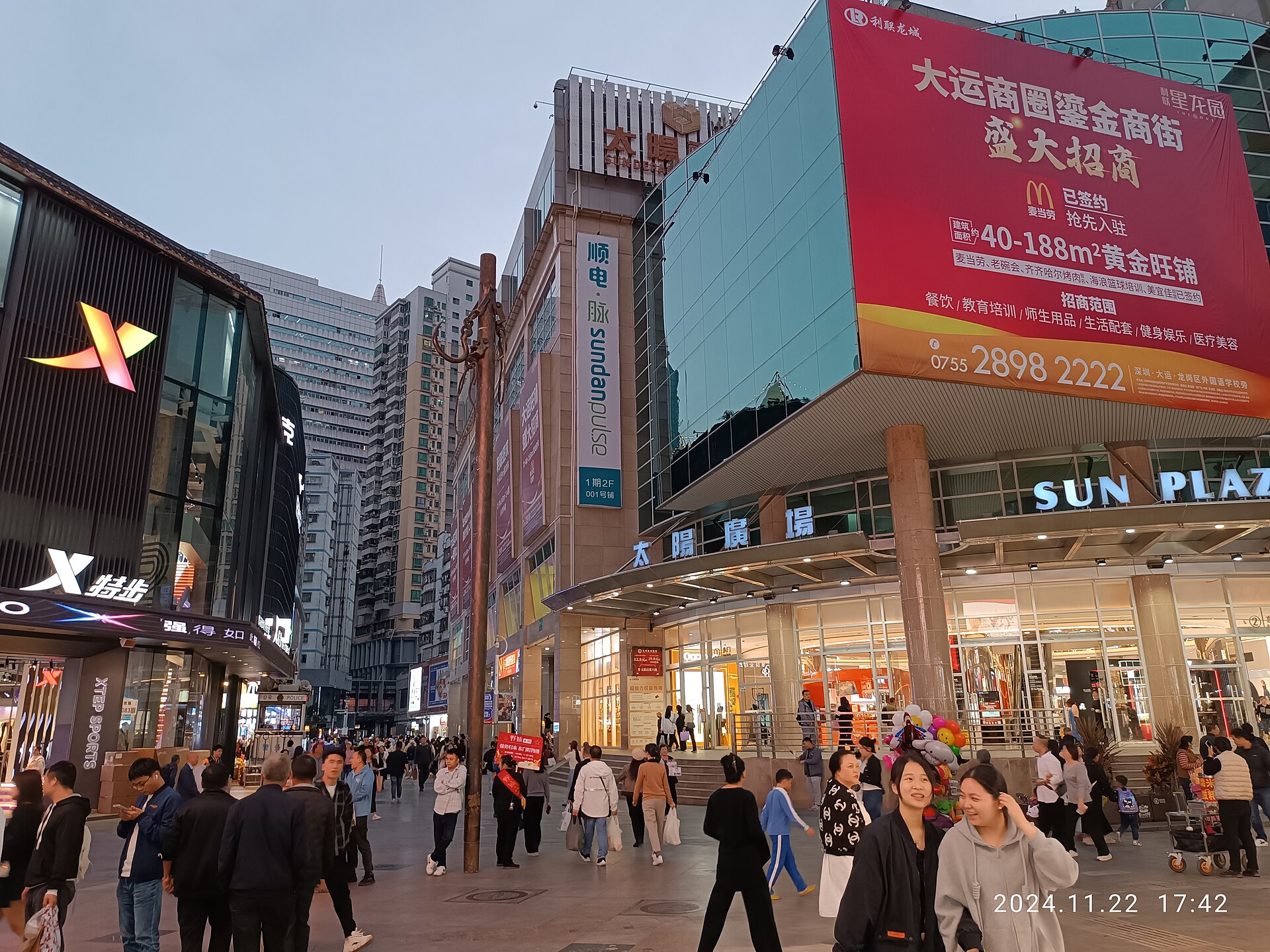
Let's be honest: this is Shenzhen's icon pedestrian street — the "Laojie" (老街, old street) zone that has been a trading hub since the Ming dynasty. It's a web of interlinked lanes packed with clothing, phones and walking snacks. The magic is in the evening, when the lights come on, the neon glows, and grill smoke drifts in from every direction.
What to grab: grilled octopus tentacles (章鱼须), charred and smoky on a stick, around ~¥15 (~฿75) · takoyaki (章鱼小丸子), 6 pieces ~¥15 · Peking duck wraps with crisp skin and tender meat · egg waffles (鸡蛋仔), crisp outside, soft and gooey inside · plus braised beef offal, snail noodles, fried chicken, and a warm ginger-milk pudding to finish.
 2
2
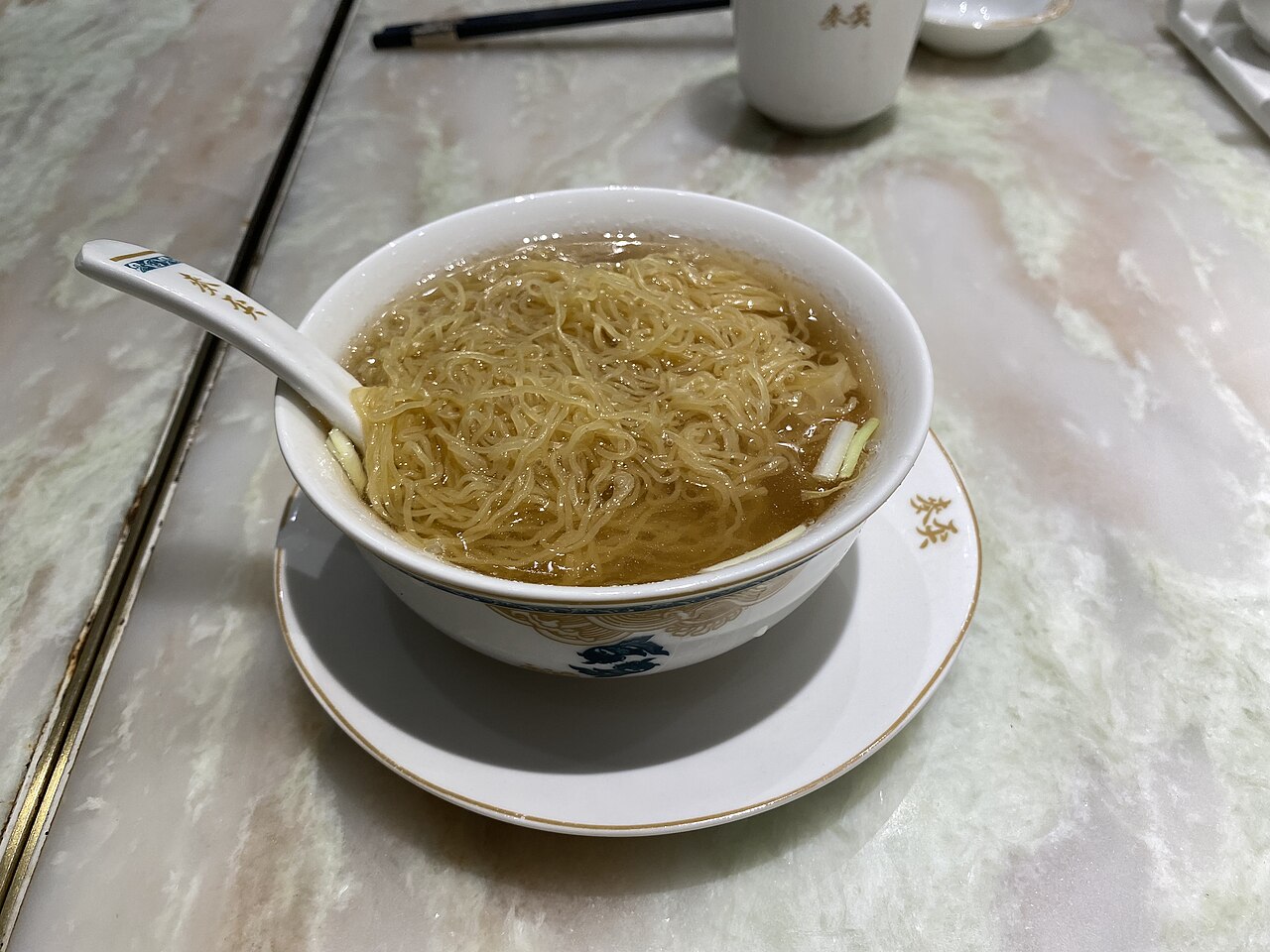
Huaqiangbei is known as the world's largest electronics market, but between the buildings selling chips and charging cables it hides food courts and little shops from every Chinese region — Futian is one of Shenzhen's densest catering hubs, and the people who work the market eat here every day. This is the Shenzhen "melting pot" in its most approachable form.
What to hunt down: Chaoshan rice rolls (肠粉) drenched in hot soy · Lao Wang's beef noodles (老王), hand-pulled in a no-frills shop where locals queue, about ~¥25 (~฿125) a bowl · Sichuan noodles · Guilin rice noodles · roujiamo (the Xi'an "Chinese burger") · fiery Hunan dishes · and Chaoshan beef hotpot in the same blocks. Budget about ¥100 (~฿500) and you'll eat very well.
If you only have time for one night market, make it this one. Xixiang is one of Shenzhen's biggest street-food strips, running about one kilometre with nearly 100 stalls and going for 18 years. This isn't a street set up for tourists — it's where Bao'an comes out to eat late, and you can fill up for under ¥50 a head.
What to hunt down: grilled oysters (烤生蚝), 6 for ~¥20 (~฿100) under fragrant fried garlic · oyster omelette (蚝烙), the crisp-edged Chaoshan classic · A-Qiang beef offal (牛杂), where the sauce has simmered for two decades · Sichuan bobo-chicken skewers at about ~¥1 each (~฿5) · Wuhan hot-dry noodles · grilled sweet-potato sheets · a big bowl of clam noodle soup ~¥20 · and viral durian cheese cakes.
If Xixiang is the main night market, Fanshen and Shangchuan are the deeper "back of house" — markets tucked into residential lanes that tourists barely know, but where Bao'an has eaten for years. No neon to court anyone, just small stalls that have kept the same stove going for two decades.
Fanshen (翻身) is a hundred-metre food strip hidden in a residential block, known for old-school Cantonese (Guangfu) late-night snacks · Shangchuan (上川) tucks into Bao'an's alleys, big on charcoal smoke, bubbling woks, fierce raw-marinated seafood, and high-heat wok-fried beef ho fun (干炒牛河) that carries real wok breath. Both are the Shenzhen locals eat without sharing it with a tourist's camera.
 5
5
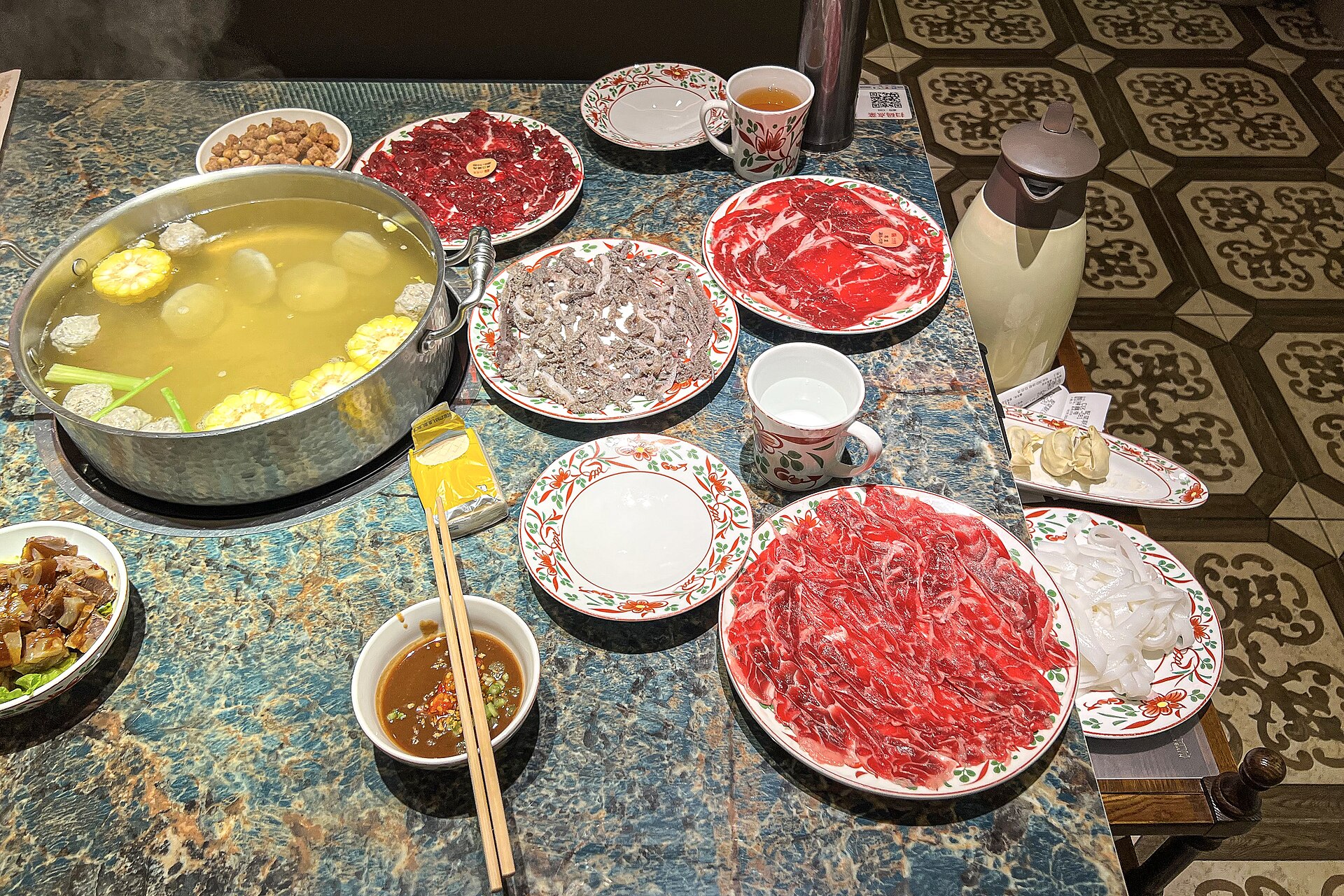
The Teochew (Chaoshan) are Shenzhen's largest community, and the dish they're proudest of is fresh beef hotpot — not the fiery málà hotpot of Sichuan or Chongqing, but a clear beef-bone broth built to show off the meat itself. The beef is never frozen, hand-sliced thin and brought to the table fresh.
The whole ritual is in the named cuts — diaolong (吊龙) · chibing (匙柄) · sanhuazhi (三花趾), each with its own texture · you dunk them for seconds, not minutes (fresh beef cooks fast) and dip in sand-tea sauce (沙茶酱), a fragrant peanut-based dip. Finish with the city's beloved bouncy Chaoshan beef balls, and on a lighter night try the Teochew clay-pot seafood congee (砂锅粥) that runs late.
Walk a few steps in Shenzhen and you'll pass a bubble-tea shop — it's a young city, and crucially the two most famous Chinese tea brands were both born in Guangdong. HEYTEA (喜茶) started in Jiangmen, Guangdong in 2012 and is now headquartered in Shenzhen's Nanshan District, famous for its cheese-foam tea (芝士茶) and fresh-fruit teas · Nayuki (奈雪的茶) was founded right here in Shenzhen in 2015, pairing tea with fresh-baked bread in airy, café-style stores.
Cups run ¥15–25 (~฿75–125). Try a signature like grape cheese-foam tea or a brown-sugar bubble milk tea — the perfect cool-down between grazing stops and a great fit for Shenzhen's heat. Order ahead in the brand's WeChat mini-program to skip the queue.
 7
7
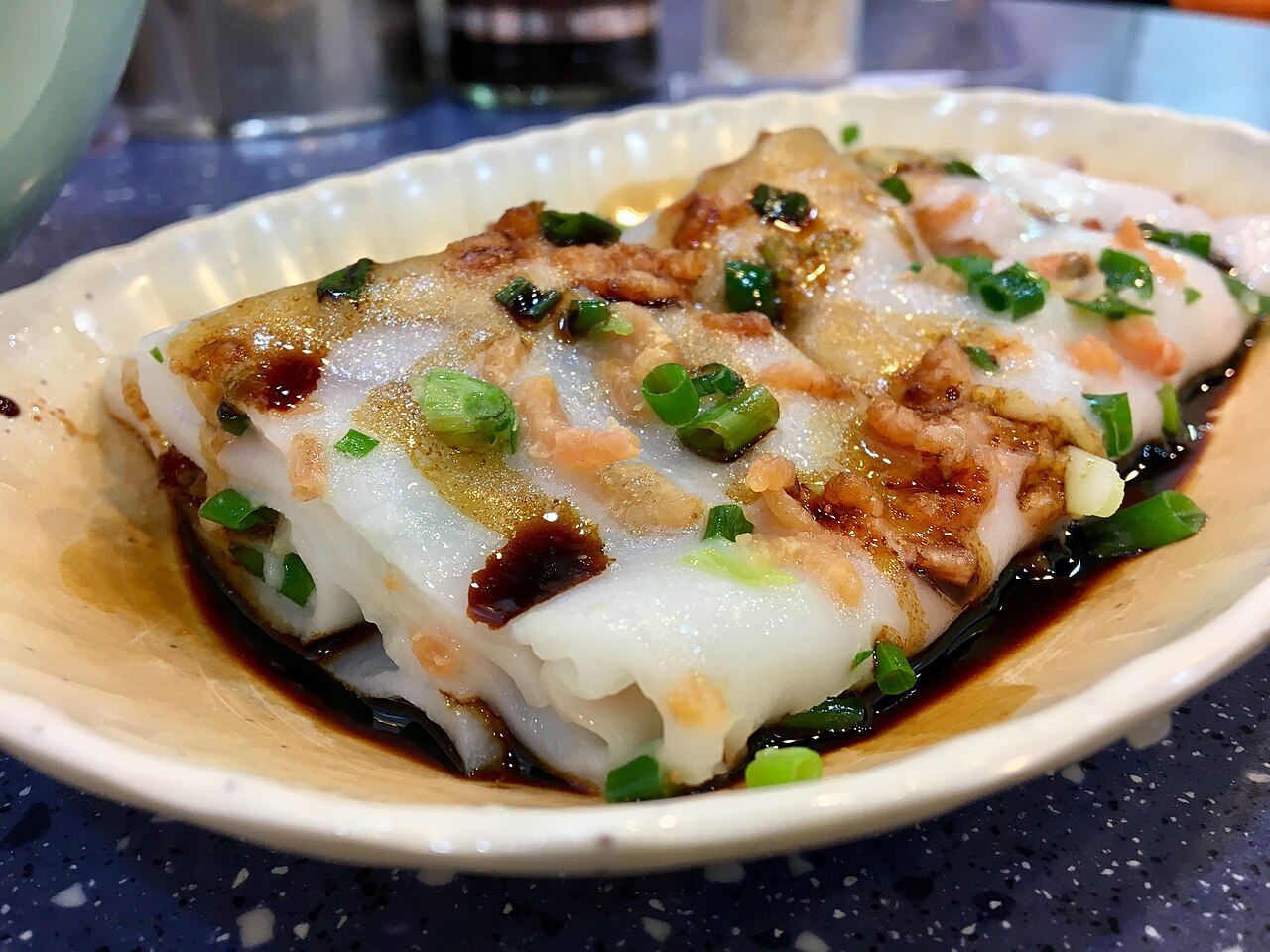
Shenzhen is hot and humid most of the year and rain can roll in at any time, so mall food halls are what locals genuinely use when the weather doesn't cooperate — not just a tourist option. And because Shenzhen is a new, modern mall city, its food halls gather regional stalls from all over China in air-conditioned comfort.
Futian has Coco Park and MixC (万象城) · Nanshan has several big malls plugged straight into metro stations — food halls that put Cantonese, Chaoshan, Sichuan, Hunan and good dim sum stalls together in one place, with air-con and seating. The upside is sampling several regions without baking in the heat, plus picture/English menus that the lane stalls don't have. Ideal for a rainy lunch.