Three drink scenes tell this city's whole story — Hong Kong milk tea in cha chaan teng cafés carried over from next door, the new-wave bubble tea of HEYTEA and Nayuki that were actually born here, and the specialty coffee that the young tech crowd takes very seriously in the old factories of OCT-LOFT.
Shenzhen doesn't have one signature local drink, because it grew from fishing villages into a megacity of around 17 million people in just about 40 years. People here came from every corner of China and brought their own food cultures with them. But to tell the city's drink story properly, you have to talk about three clear scenes — and each one belongs to a different chapter of Shenzhen.
The first scene is the oldest and cheapest — the Hong Kong-style cha chaan teng 茶餐厅, because Hong Kong sits right next door. Silk-smooth milk tea strained through a cloth bag, pineapple buns with cold butter, egg tarts and baked pork-chop rice are the everyday food and drink Shenzheners have known for years. The second scene is the city's quiet point of pride — the new-wave bubble tea of HEYTEA (喜茶) and Nayuki (奈雪), both founded and grown here before they spread around the world.
The third scene only boomed in the last few years — specialty coffee, taken seriously by a young crowd of tech and design workers. Cafés that roast their own beans and obsess over pour-over have sprung up in old factories turned creative districts like OCT-LOFT, and in the harbour district of Shekou. To be honest, the cha chaan teng is the cheap everyday classic, while specialty coffee is the pricier newcomer — but all three live in one city, and you can easily try the lot in a single day.
Cha chaan teng, the all-day HK-style café-diner — silk-smooth milk tea, pineapple buns, egg tarts. The cheapest food and drink in the city.
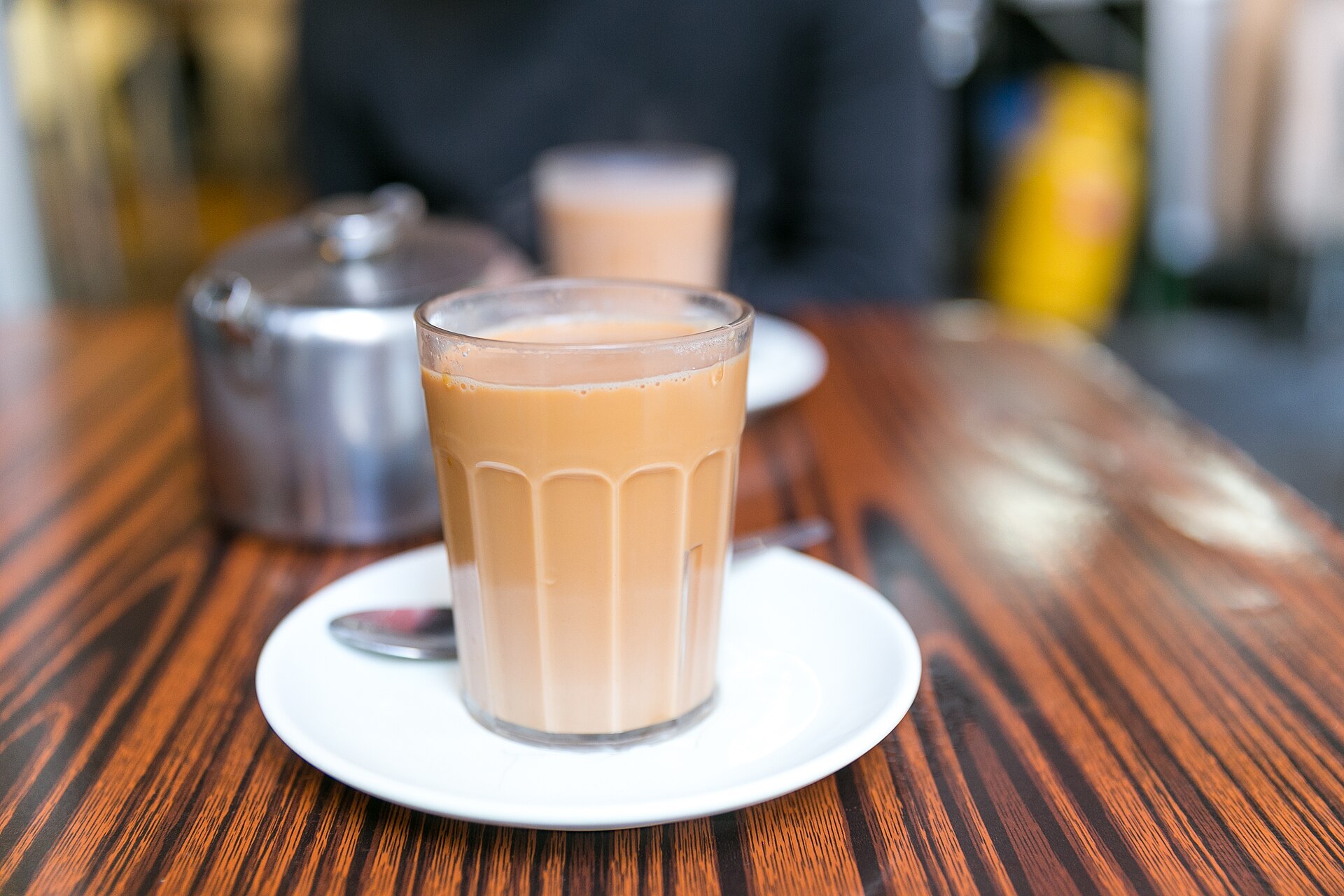
Hong Kong milk tea (港式奶茶) — strained through a cloth bag that looks like a stocking, hence the name "silk-stocking tea". Strong tea meets condensed milk just right.
The heart of every cha chaan teng — a blend of black teas brewed strong and strained through a fine cloth bag stained brown over time, which is why it's nicknamed "silk-stocking tea". The repeated straining gives it an unusually silky texture, then evaporated milk turns it rich, sweet and creamy in perfect balance. Order it hot or iced. It's a taste Shenzheners and Hong Kongers have loved for generations — if you try one cha chaan teng drink, start here.
A drink that sounds odd but works beautifully — coffee blended with milk tea in one glass. The name 鸳鸯 means "Mandarin ducks", birds that mate for life, a nod to two things that pair perfectly. The bitterness of coffee meets the sweet creaminess of milk tea, giving you a drink that's both bracing and smooth. It's the old Cantonese and Hong Kong way of drinking coffee before the specialty wave arrived. If you want to understand how people here drank coffee back in the day, order a yuanyang.
The thing everyone orders with their milk tea — a soft bun with a crackly golden top that resembles a pineapple skin (hence the name, though there's no pineapple inside). It's split open and a thick slab of cold butter slid in; the bun's warmth starts melting the butter while it stays cool in the middle. The first bite gives you crisp top, soft crumb and rich cold butter all at once — so good it's a Hong Kong national snack. With hot milk tea, it's the perfect afternoon.
The Hong Kong egg tart looks simple but is hard to do well — the shell comes two ways, a flaky puff pastry that shatters in layers, or a firmer shortcrust like a cookie. Inside is a golden egg custard, silky-smooth and lightly sweet, baked until the top is glassy and even. Eaten warm, fresh from the oven, it's superb. It's the classic sweet partner to tea, and every cha chaan teng and Hong Kong bakery has them.
When you want more than a snack, order this — egg fried rice topped with a fried pork chop, smothered in tomato sauce and baked under a layer of cheese until golden and bubbling. It's a hearty, good-value one-plate meal in the Hong Kong style. The tangy-sweet tomato sauce cuts through the richness of the cheese and fried pork. Shenzheners eat it as a quick lunch or dinner at a cha chaan teng — pair it with an iced milk tea and you've got a full meal for under a hundred yuan.
Homely dishes that cha chaan teng do so well they've become signatures — instant noodles of the 出前一丁 brand, blanched and served with a fried egg and ham or braised beef (it sounds basic, but people genuinely order it), and "sai do si" (西多士), Hong Kong French toast stuffed with peanut butter, deep-fried golden, then drizzled with syrup and topped with a pat of butter — sweet and rich to the max. Eat them with a yuanyang or an iced milk tea for a proper Hong Kong-style afternoon, the kind Shenzheners have as a matter of course.
新茶饮, the new-style tea that changed the game — cheese-foam tea, fresh-fruit tea. China's two biggest brands are both Cantonese and grew up in Shenzhen.
Here's something many people don't know: the new-wave bubble tea sweeping the world right now actually started around here. HEYTEA (喜茶) was founded in 2012 by Nie Yunchen, then just 19 years old, starting from a small alley in Guangdong before moving its headquarters to Shenzhen's Nanshan District. It was the first to invent "cheese-foam tea" (芝士茶), crowning tea with a salty whipped cheese topping that became a new industry standard. Nayuki (奈雪的茶) was founded in 2014 in Shenzhen by a husband-and-wife team, focusing on premium fresh-fruit teas with a new flavour almost every week. Both brands are a source of local pride — come to Shenzhen and you drink from the source.
The drink that made HEYTEA famous — cold green or oolong tea crowned with a whipped cheese foam that's faintly salty-sweet, floating on top. You drink it by tilting the cup so the cheese foam and tea mingle in one sip, getting the freshness of the tea and the rich saltiness of the cheese cutting against each other in balance. It sounds strange, but one sip explains why it reshaped tea across the whole country. HEYTEA offers many flavours, from classic oolong to seasonal specials.
Tea with real pieces of fresh fruit dropped in — strawberry, grape, mango, lychee in season — mixed with tea and sometimes a cheese foam too. Nayuki is known for this because it sources premium-grade fruit and rotates flavours almost weekly. A single cup gives you fruit pulp, natural sweetness and the fragrance of tea all at once, and it photographs well. It's a new-style tea that feels fresher than the old sugary milk teas.
The classic bubble milk tea is still here, but the new-wave brands do it better — freshly brewed tea, real milk instead of creamer, and tapioca pearls boiled fresh so they're perfectly chewy. Some shops do "brown-sugar pearls" (黑糖珍珠), pearls tossed in brown sugar until they streak down the cup in caramel ribbons, sweet with a hint of burnt fragrance. You can adjust the sweetness and ice levels. It's the choice for anyone who wants the familiar sweet-creamy milk tea over a cheese-foam top.
If HEYTEA and Nayuki are the premium end, China also has budget bubble-tea chains on nearly every street corner. Mixue (蜜雪冰城) sells teas and ice cream starting at just ¥4–8, shockingly cheap. ChaPanda (茶百道) and others sit in the middle, decent quality at an easy price. If you just want a cold bubble tea to sip while you wander without paying a premium, these chains are the answer — and you'll spot their signs all over Shenzhen.
A young tech city that takes coffee seriously — old factories turned creative districts, and sea-view cafés out at Shekou.
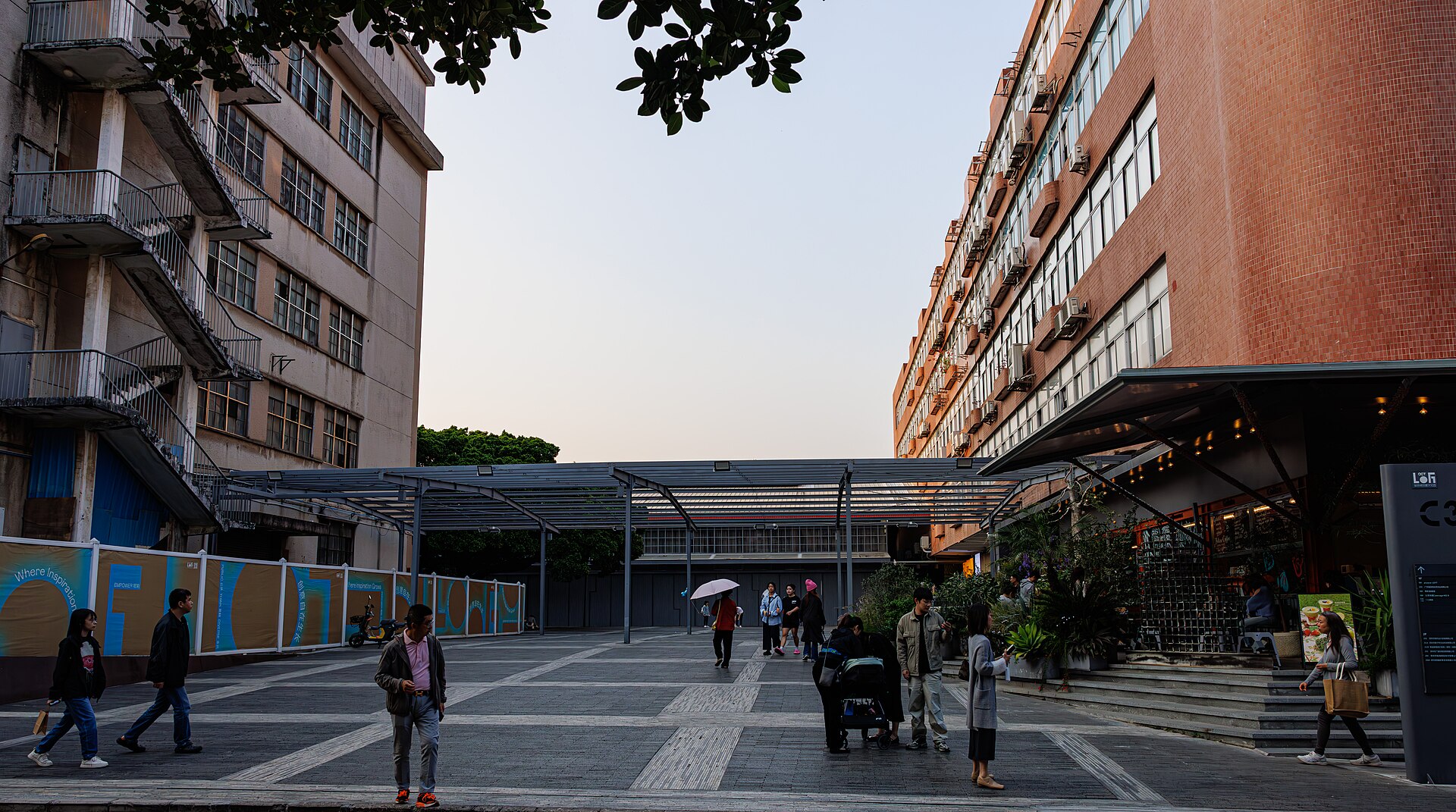
OCT-LOFT (华侨城创意园) — a 1980s factory complex turned café-and-design district, the spot Shenzhen's coffee lovers talk about most.
Shenzhen is the fastest-growing city in China, full of young migrants from across the country working in tech and design. That crowd is fussy about coffee, which is why the specialty scene here is young but serious and very lively. Its heart is OCT-LOFT (华侨城创意园) in Nanshan District — a 1980s factory complex turned creative district, packed with design studios, galleries, bookshops and several independent cafés on a single block. Walk a few steps and you hit a new one. Coffee quality runs high because the regulars are designers and creatives who know what they're drinking.
The other area coffee people seek out is Shekou (蛇口), the southern harbour district with a large expat community — home to sea-view cafés and good roasters like Akimbo and physical coffee lab, which has outdoor seating looking over Shekou Port, a chilled vibe and a thoughtful music selection. Along Shenzhen Bay, design cafés with bay views are dotted through the parks and waterfront towers, perfect for a coffee at sunset. A cup in these areas runs about ¥28–45 — dearer than milk tea or bubble tea, but it's serious coffee in genuinely good-looking rooms.
From old factories to budget chains — Shenzhen has coffee at every level.
The heart of Shenzhen's coffee scene — cafés in old factories turned creative districts, with exposed brick, high ceilings and an industrial feel that's become a working spot for designers. Old Heaven Books is a café inside a bookstore-and-vinyl shop with good coffee and a character all its own, while All Day Roasting Company does single-origin in a clean, minimal space. Several cafés share one block, so you can wander between them at leisure.
The Shekou harbour district has a big expat community and a more relaxed coffee scene than OCT-LOFT — Akimbo is a roaster with a main store near Shekou Port and a newer branch by OCT, while physical coffee lab has outdoor seating overlooking the port, a chilled vibe and a well-chosen soundtrack, ideal for a long, unhurried afternoon. Good coffee, open views, a district completely apart from the rush of the inner city.
In the city centre around Futian and along Shenzhen Bay, you'll find modern cafés in upscale malls and office towers — sleek design, cold air-con, ideal for working or escaping Shenzhen's near-year-round heat. Big malls like MixC and One Avenue have roasters and big-name café brands scattered through them. Some cafés on Shenzhen Bay have terraces with water views and the Hong Kong skyline across the way. Convenient, with good coffee, if you don't want to travel out to Nanshan.
If you just want a quick coffee before heading out, local Chinese chains are the cheapest option. Luckin Coffee has branches on nearly every corner — order through the app and collect, with prices from ¥10 after discounts. Manner is known for a good-value oat milk latte, while M Stand has the smartest design of the bunch. These chains are far cheaper than independent specialty cafés, and good enough for a morning coffee before you set off.
Places with a real reputation in the creative districts and the city's coffee scene — not just photo spots.
Old Heaven Books is a name coffee lovers and book lovers in Shenzhen both know well. Sitting in OCT-LOFT, it's an independent bookshop with curated titles, rare vinyl records and a café corner that makes genuinely good coffee. The atmosphere is quiet, with occasional live music and talks, and it's a meeting point for the city's art and design crowd. Sit with a coffee, browse a book, listen to a record spin — an experience a chain café can't give you.
Akimbo is one of the roasters coffee people in Shenzhen recommend to each other. It has a main store near Shekou Port and has expanded with a newer branch near OCT, and it's serious about its beans and roasting, with both pour-over and espresso drinks for anyone who wants a great cup and a chat with the barista about the beans. It's a place for people who care about the coffee itself more than just the setting, and a fine representative of the Shekou side of the specialty scene.
physical coffee lab is a café in the Shekou area known for its outdoor seating overlooking Shekou Port, a relaxed vibe and a carefully chosen soundtrack — ideal for a long, unhurried afternoon. The coffee is well made and the view is wide open. It's a good example of the Shekou cafés that sell both the coffee and the waterfront atmosphere, a world away from the air-conditioned cafés inside city-centre towers.
HEYTEA is the new-wave tea brand born out of Guangdong and headquartered in Shenzhen. It was the first to invent cheese-foam tea, reshaping tea across the country. Its flagship branches in major malls are often beautifully designed with menu items unique to each location. Come to Shenzhen and you drink from the source of a wave that went global. You can order ahead through the WeChat mini-program to skip the queue — try the classic oolong with cheese foam, or a seasonal flavour.
Nayuki was founded in Shenzhen in 2014 and positions itself as a premium bubble tea with stores roomier and more comfortable than the average chain. Its signature is fresh-fruit tea made with good-grade fruit and a new flavour nearly every week, and many branches also sell freshly baked bread to go with the tea. The bright, airy rooms suit sitting down to chat or work. It's another brand the city is proud of — in Shenzhen, try it against HEYTEA and see which style you prefer.
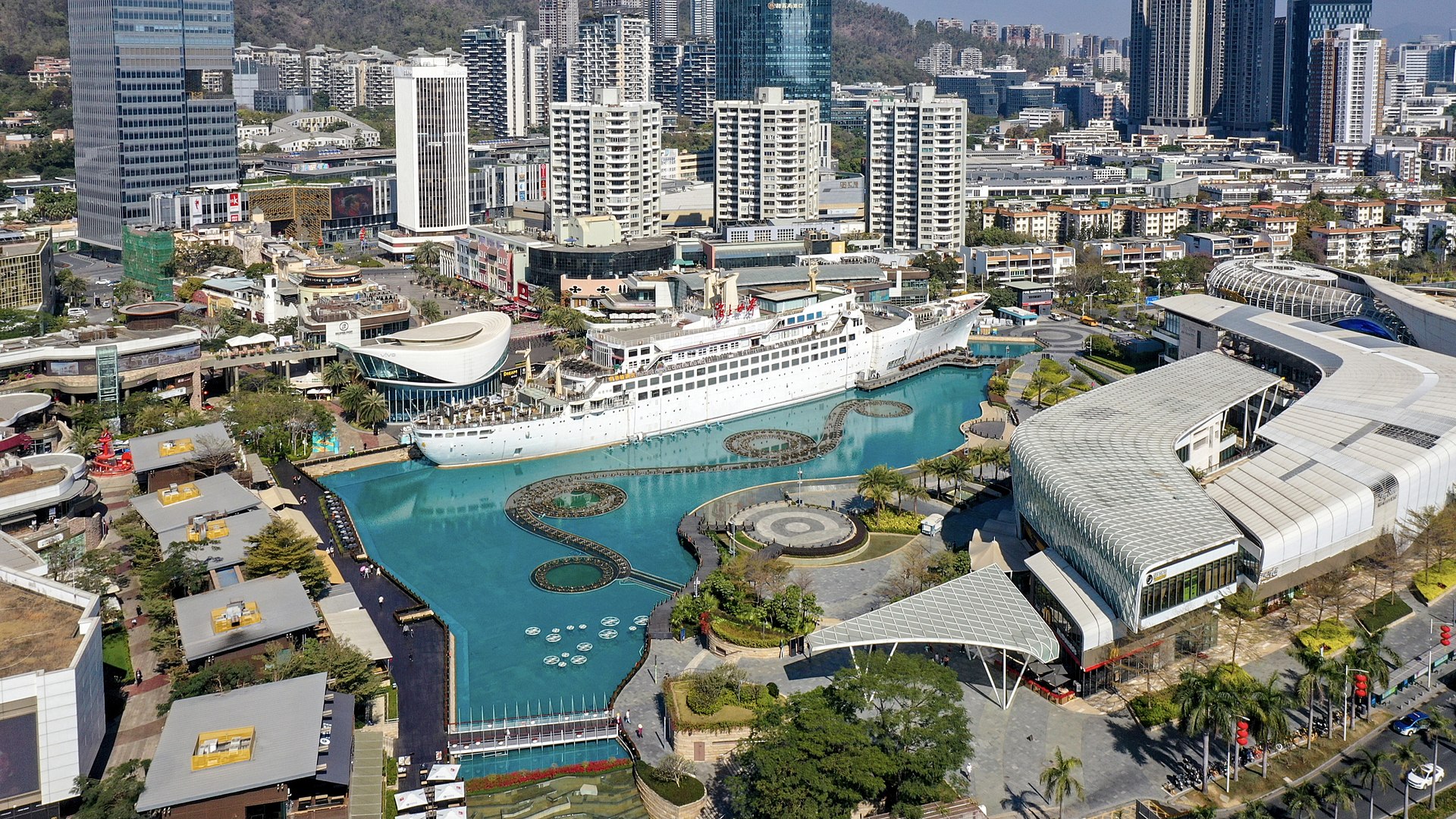
Sea World plaza in Shekou — the Minghua cruise ship sits in a fountain pool ringed by cafés and restaurants, a harbour coffee scene more relaxed than the inner city.
If you only have one day — pick one from each scene, and you'll understand this city.
Order a hot Hong Kong milk tea with a pineapple bun and cold butter at a 茶餐厅 — rich, sweet-creamy tea strained silky-smooth, with a bun that's crisp on top, soft inside, the cold butter just starting to melt in the middle. It's a proper Hong Kong afternoon for under forty yuan, a familiar taste Shenzheners have known for years, and a fine way into the first scene.
If you're in Shenzhen, you have to try the cheese-foam tea from HEYTEA, which was born and raised here — cold tea topped with a whipped cheese foam that's salty-sweet, sipped with the cup tilted so they mix in one go, the freshness of the tea against the rich saltiness of the cheese in balance. It's the innovation that reshaped tea across China, drunk from the brand that invented it in this very city — a taste of bubble-tea history.
On a weekday afternoon, go and sit with a pour-over at a café in OCT-LOFT — exposed brick, high ceilings, the smell of fresh-roasted coffee and creative workers all around. Pick a single-origin bean for the barista to brew and you get a clean cup with depth, plus the creative-district setting that's the heart of Shenzhen's coffee scene. It's the priciest scene, but it's serious coffee in genuinely good-looking rooms.
For a more relaxed vibe than the inner city, sit at a harbour-view café in Shekou — outdoor seats watching the ships come and go, chilled music, a soft sea breeze. Order a latte and settle in for a long afternoon. It's a corner completely apart from the rush of megacity Shenzhen, and a district the city's expats love to spend their days off in. A fine way to close the day, with a coffee by the water.
Shenzhen is a Chinese city that runs almost entirely cashless — cha chaan teng, bubble-tea chains and small cafés alike often take only WeChat Pay and Alipay, don't accept foreign cards, and some won't take cash. Before you travel, set up Alipay and link a Visa/Mastercard via its international mode (which works for tourists · see our China payment guide).
The best times differ by scene — cha chaan teng are open all day, good for breakfast, an afternoon or a late bite, while big bubble-tea brands in malls often have long queues in the afternoon and at weekends, so ordering ahead via the WeChat mini-program helps. Specialty cafés at OCT-LOFT and Shekou are best on a weekday afternoon, quieter and nicer; on weekends these areas, OCT-LOFT especially, get very busy.
The three main areas sit in different zones — cha chaan teng are easy to find citywide, especially in Luohu by the border, while the specialty coffee scene clusters in Nanshan District to the west (OCT-LOFT and Shekou), so allow metro travel time. And if you'll want a VPN for general internet use in China, set it up before you travel — see our China Internet & VPN guide.
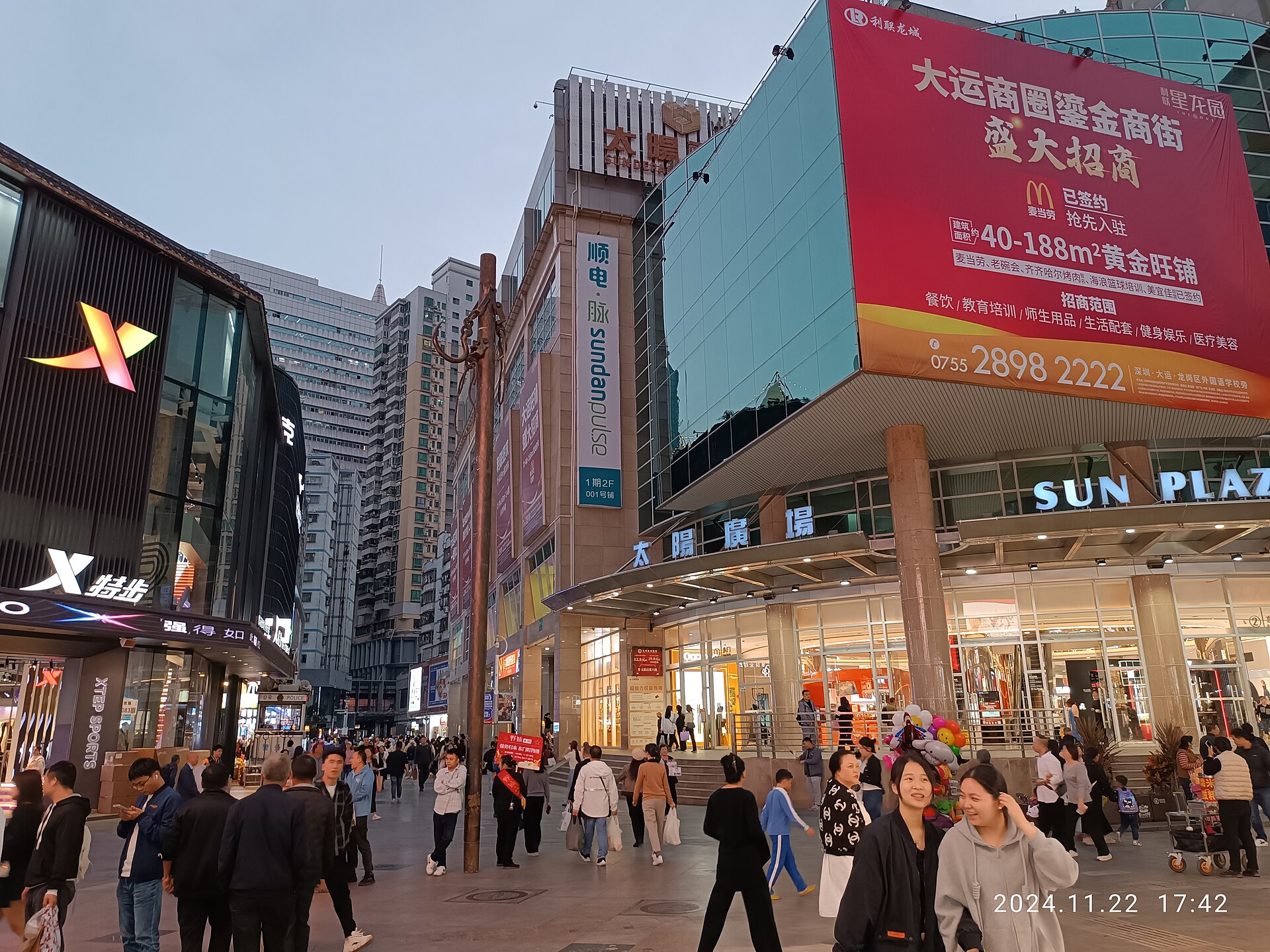
Dongmen pedestrian street in Luohu — a shopping-and-snacks zone where you'll find a bubble-tea shop and a cha chaan teng on every corner.
Basing yourself in Futian or Nanshan puts you within easy reach of the cafés, tea shops and creative districts.