Home Shenzhen China Shenzhen Hotels About
Home  ›  China  ›  Shenzhen  ›  Food Guide
Shenzhen Food Guide · 2026

What to eat in Shenzhen
11 dishes of a migrant city

Ask a Shenzhener what the local dish is and you'll get a telling answer — there really isn't one. Forty years ago this was a fishing village; today it's a city of 17 million from all over China. The base is Cantonese, but above it sit Chaoshan beef hotpot, Hakka salt-baked chicken, and the new-wave tea brands born right here.

Why eat here

A city that pools all of China on a Cantonese base

Shenzhen (深圳) is one of China's youngest cities. In 1979 it was still a small fishing settlement on the Hong Kong border, before the government named it a Special Economic Zone and young people from every province poured in to work, turning it into a megacity of 17 million within a few decades. The result: there's no single "Shenzhen dish" to point to — instead you get every regional cuisine in China, cooked by people who grew up with it. Want Sichuan málà, Xi'an hand-pulled noodles, northeastern barbecue, northern steamed buns? They're all here, in one city.

But to tell Shenzhen properly, start with the Cantonese base (粤菜), because the city sits in Guangdong — morning dim sum and tea (早茶), roast meats hanging in shop windows (烧腊), soups simmered for hours (老火汤), and the everyday congee-noodle-rice-roll trio. Layered on top are the two big communities that give Shenzhen its own signature: Chaoshan (Teochew, 潮汕) — fresh hand-sliced beef hotpot, braised goose, oyster omelette — and the Hakka (客家), the original locals before the SEZ, famous for salt-baked chicken and stuffed tofu. Finish with the Hong Kong influence next door (cha chaan teng, milk tea) and the tea-and-coffee scene of a young city. We picked 11 dishes and categories that tell the fullest story.

The essential dishes

11 things to eat before you leave Shenzhen

Starting from the city's Cantonese base, moving through Chaoshan and Hakka, and finishing with the tea and cafes of a young city.
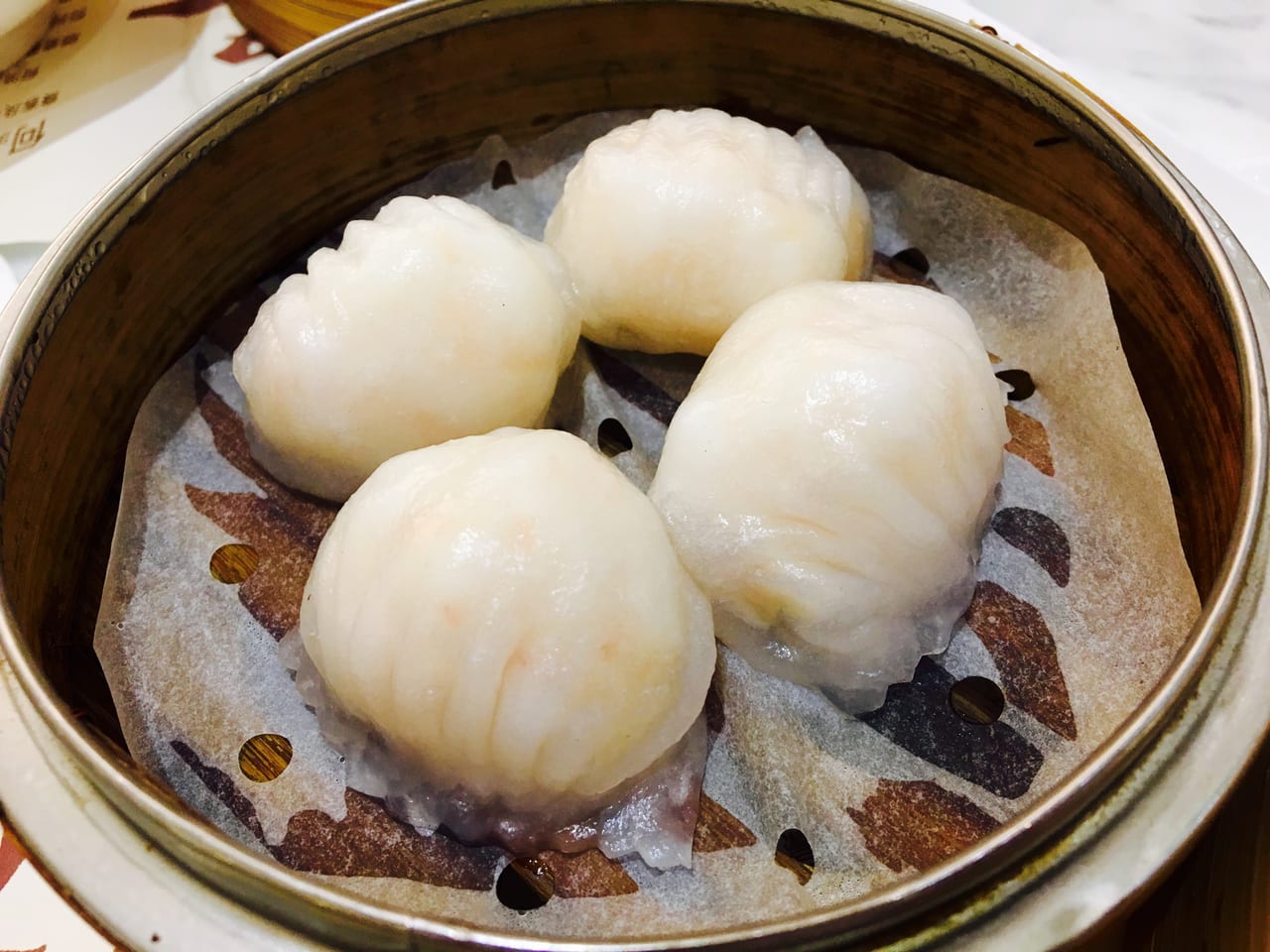
Har gow, Cantonese shrimp dumplings in a bamboo steamer with translucent wrappers showing the pink shrimp inside 1
Dim sum & morning tea
早茶 · 点心 · the city's Cantonese base

Before the other traditions, understand Shenzhen's Cantonese base — and that means zao cha (早茶), morning tea with dim sum. You pick a pot of tea first (pu'er, oolong or chrysanthemum), then order basket by basket: har gow with translucent skins, pork-and-shrimp siu mai, fluffy char siu bao, egg tarts crisp outside and soft within, chicken feet in black-bean sauce. One small custom — when someone pours your tea, tap two fingers on the table to say thanks. In Shenzhen you'll find both air-conditioned dim sum halls inside the malls of Futian and Luohu, and old-school Cantonese places.
Where: Dim sum halls in Futian (福田) / Luohu (罗湖) malls · traditional Cantonese restaurants citywide
Price: ¥60–130 / person (฿300–650) for four to six baskets plus tea
Tip: Arrive before 9am or after 1.30pm to skip the longest queues
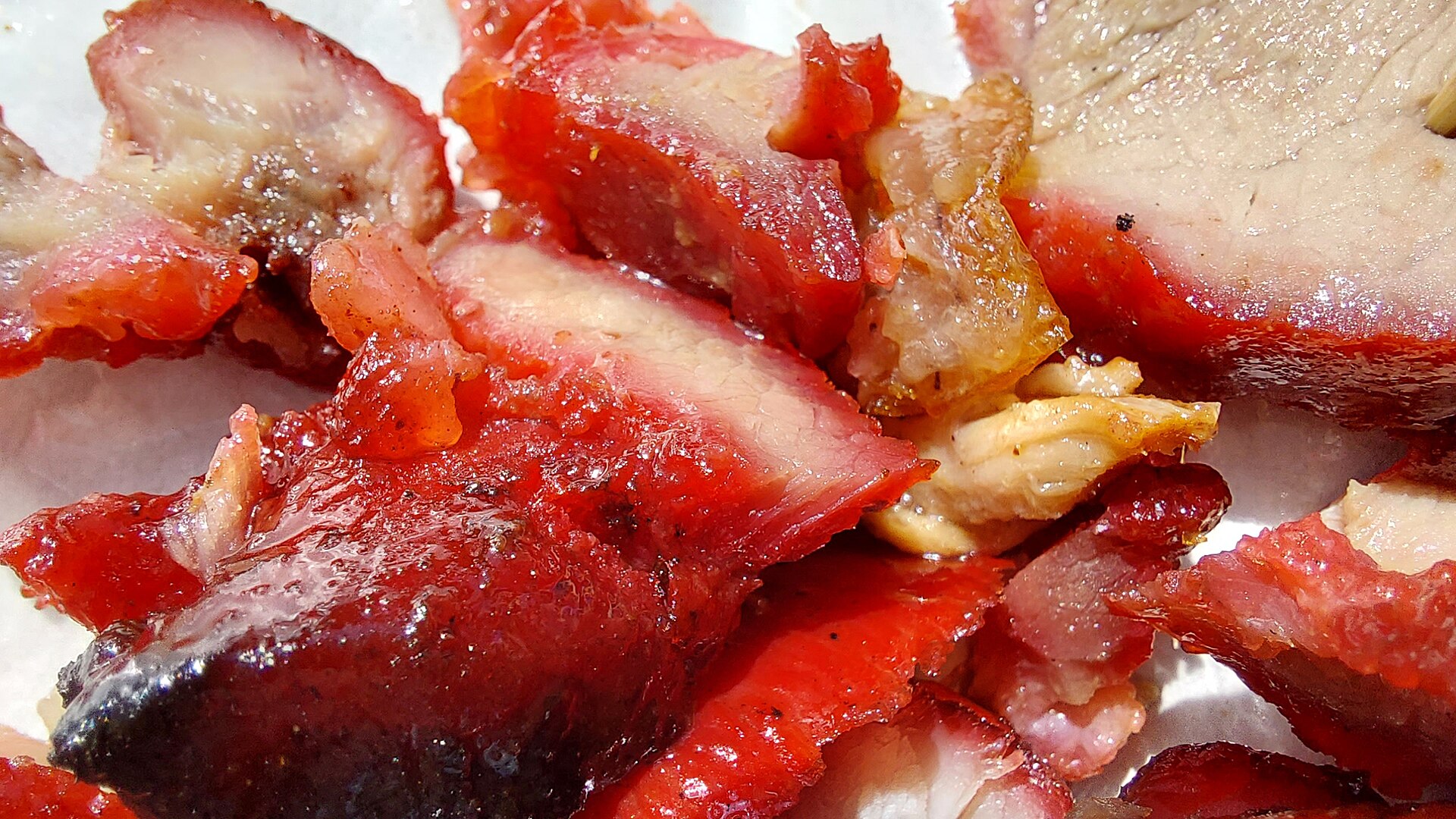
Cantonese char siu pork with dark caramelised glossy edges, sliced over rice with sweet-savoury sauce 2
Cantonese roast meats (siu laap)
烧腊 · char siu, roast goose, soy chicken over rice

Walk past a siu laap (烧腊) shop in Shenzhen and you'll stop to look — roast goose with lacquered red skin, honey char siu with caramelised edges, crackling roast pork belly and soy-sauce chicken hung in a row. Order it sliced over hot rice with sweet-savoury sauce and blanched greens — the classic working lunch here. Good char siu uses a fattier cut (半肥瘦), roasted until the edges caramelise but the inside stays juicy; roast goose carries a thin layer of fat under the skin that melts in the mouth. It's authentic Cantonese eating you'll find on every corner.

Where: Siu laap (烧腊) shops citywide · roast-meat rice shops in Luohu / Futian
Price: ¥25–48 / over rice (฿125–240)
Tip: Order the "three-meat rice" (三拼饭) to get char siu, goose and roast pork on one plate
🍲3
Slow-boiled soup
老火汤 · the broth that takes hours

To understand Cantonese eating (and Shenzhen on that base), understand lao huo tang — soup gently simmered for two to four hours from pork bones, chicken or beef, with Chinese herbs and seasonal ingredients like lotus root, carrot, goji berries, dried figs or winter melon. People here drink soup before a meal and treat it as everyday medicine, balancing the body's "hot and cold". A good one is clear but deep-flavoured from long cooking, not from seasoning powder. Almost every Cantonese restaurant offers a "soup of the day" (例汤) that changes daily.
Where: Cantonese restaurants citywide (order 例汤, soup of the day) · dedicated soup shops 老火汤
Price: ¥18–48 / bowl (฿90–240)
Tip: Ask the server what today's soup is — it changes daily with the ingredients
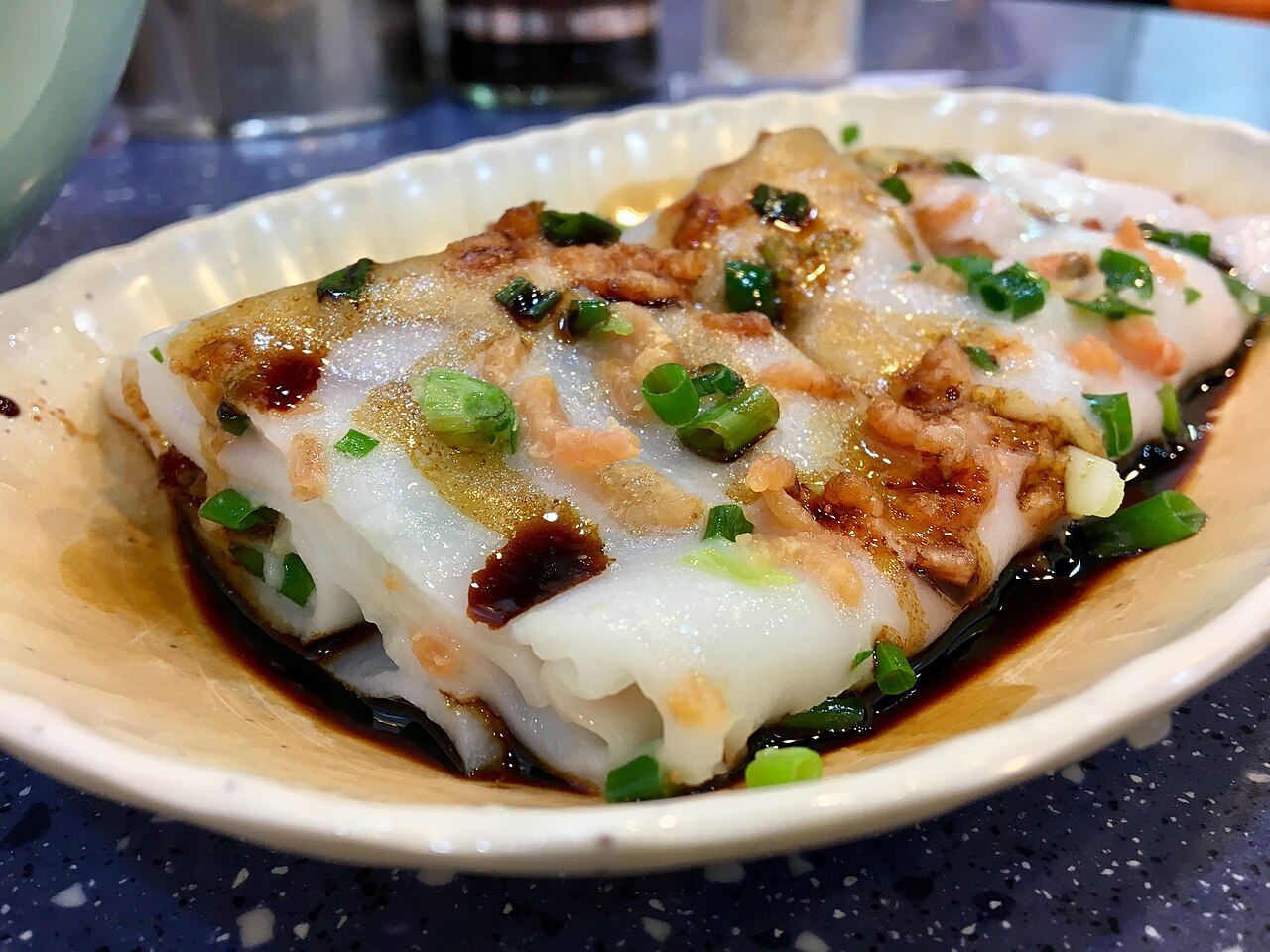
Cantonese cheung fun, silky white rice rolls filled and folded, drizzled with dark sweet soy and topped with spring onion 4
Congee, rice rolls & noodles
粥粉面 · the everyday Cantonese trio

"Zhou-fen-mian" (粥粉面) are the three pillars of everyday Cantonese eating, found on every corner in Shenzhen — congee boiled until the rice breaks down into a creamy purée, studded with fresh shrimp, thin fish slices or minced pork; cheung fun (肠粉), rice batter steamed fresh into silky sheets, filled with shrimp or char siu and drizzled with the shop's own sweet soy, so smooth you barely chew; and wonton noodle (云吞面), springy egg noodles over whole-shrimp wontons in a clear broth. All cost a few yuan, fill you up, and cost little — the everyday food of this city.
Where: Morning stalls and congee shops citywide · cheung fun shops in markets and residential areas
Price: ¥10–28 / plate or bowl (฿50–140)
When: Breakfast 6.30–11am is best — cheung fun is made fresh and hot
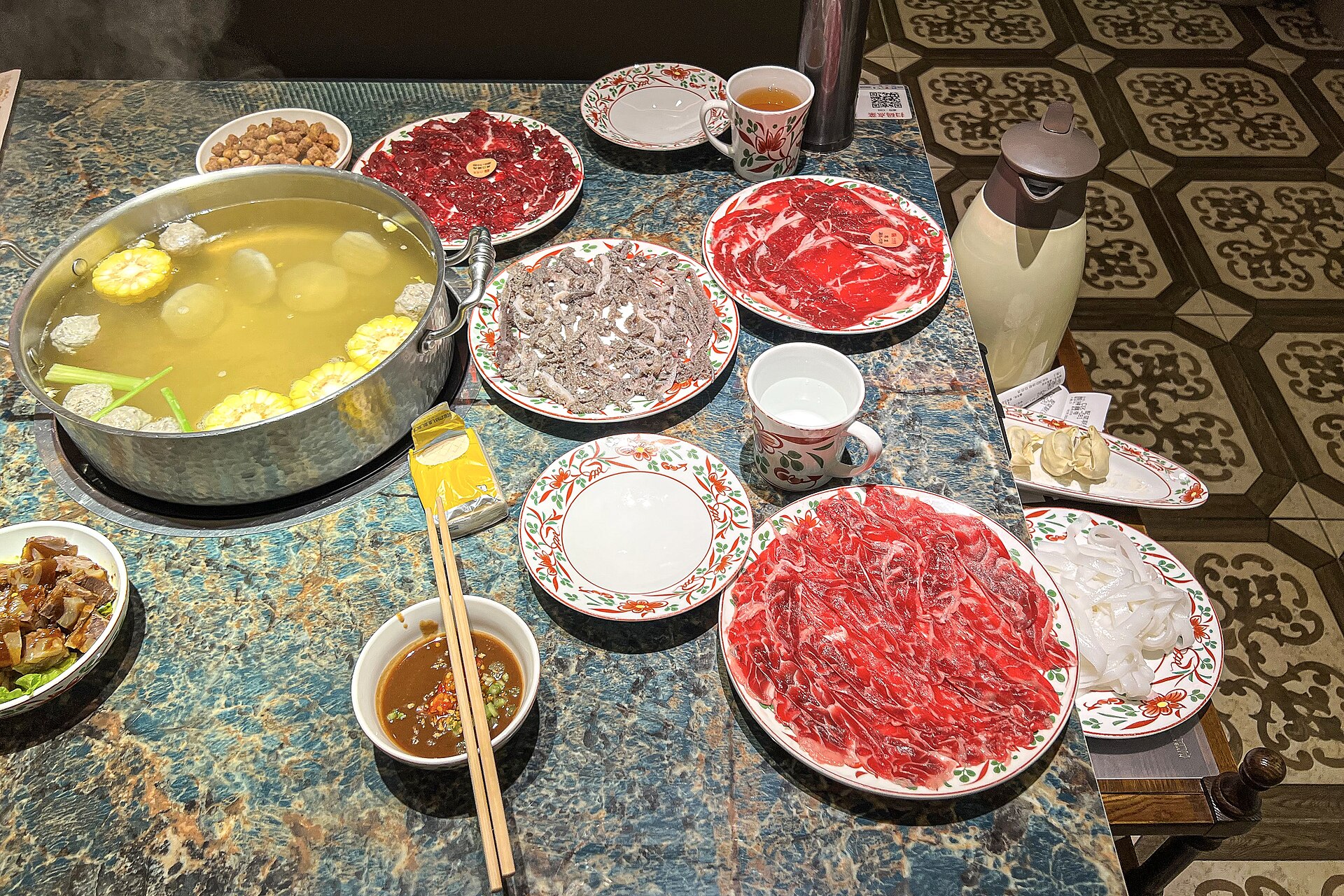
Chaoshan beef hotpot, fresh thinly sliced beef on a plate beside a pot of clear simmering beef-bone broth 5
Chaoshan beef hotpot
潮汕牛肉火锅 · fresh hand-sliced beef, seconds in clear broth

This is a dish Shenzhen does well because of its large Chaoshan community — and it's nothing like Sichuan málà hotpot. The broth is a clear beef-bone soup, not spicy. The heart of it is fresh, never-frozen beef hand-sliced into cuts that each have a name — diaolong (吊龙), tender from along the spine; chibing (匙柄), with a touch of fat; sanhuazhi (三花趾), bouncy and firm. You dunk each slice in the boiling broth for just a few seconds (not minutes!), and the moment it changes colour you lift it out and dip it in sand-tea sauce (沙茶酱). Freshness, the sweetness of the beef and the texture are the stars. Finish with hand-pounded springy beef balls.
Where: Chaoshan beef hotpot (潮汕牛肉火锅) restaurants citywide · concentrated in Bao'an and Longgang
Price: ¥120–220 / person (฿600–1,100), as it uses good fresh beef
Tip: Dunk 4–5 seconds at a time and dip in sand-tea sauce — never overcook it
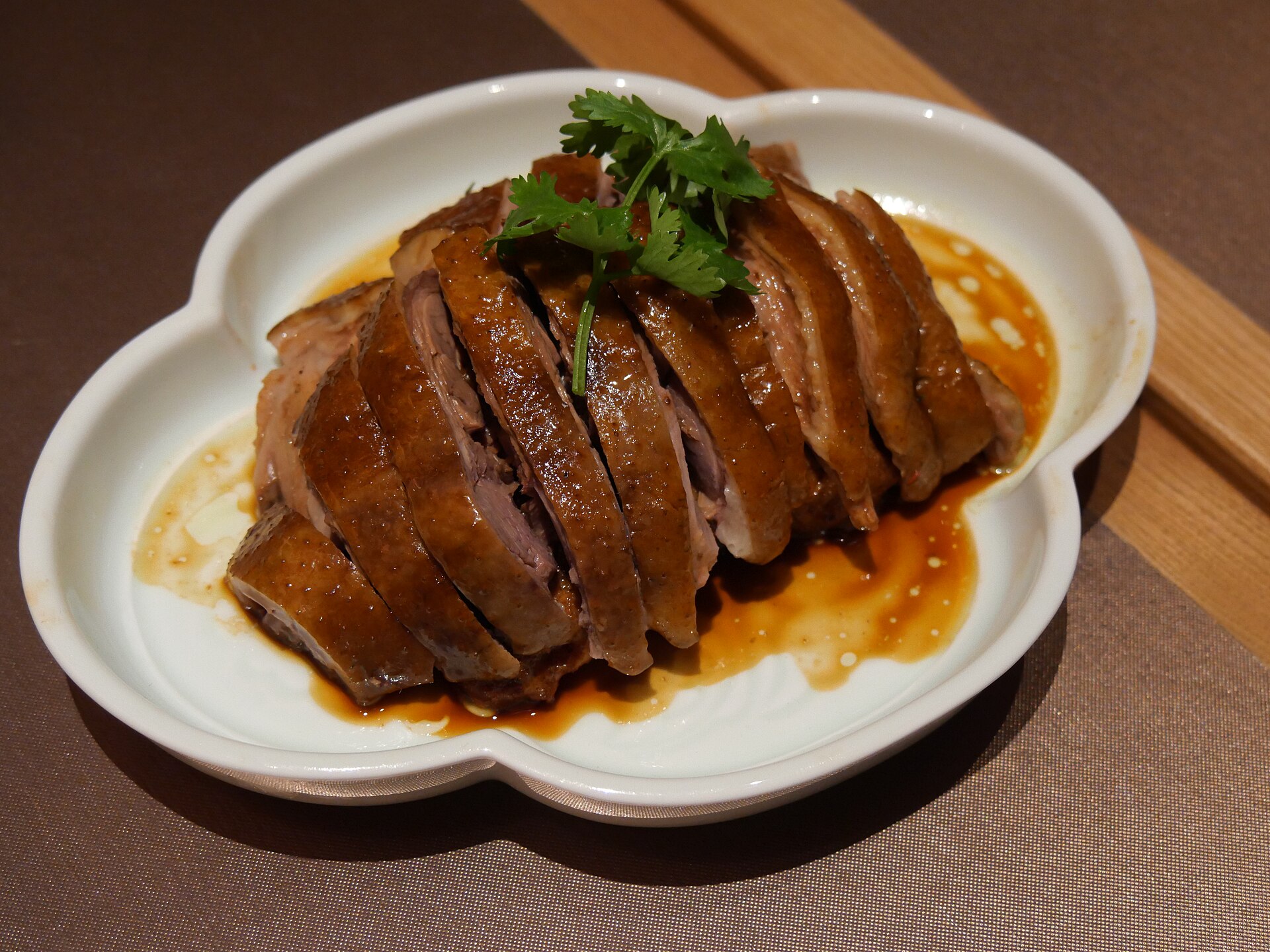
Chaoshan braised goose, sliced and arranged on a flower-shaped plate with dark master-stock glaze 6
Chaoshan braised goose
卤鹅 · goose simmered in fragrant master stock

Another unmissable Chaoshan dish — lou ngo (卤鹅), a big breed of goose (狮头鹅, the "lion-head goose") simmered in a master stock of dozens of Chinese spices: star anise, cinnamon, clove, soy sauce and rock sugar, until the flavour soaks right through. It's chopped and served cool or warm, glazed with the braising liquid and dipped in garlic-vinegar (蒜泥醋) to cut the richness. The cuts Chaoshan people prize most are the goose liver and head. Chaoshan restaurants and dedicated braised-goose shops in Shenzhen do this beautifully — because actual Chaoshan people are cooking it.
Where: Chaoshan braised-goose shops (潮汕卤鹅) · Teochew restaurants in Bao'an / Luohu
Price: ¥38–78 / plate (฿190–390) · goose liver costs more
Try also: Braised goose liver (鹅肝) — silky and rich, hard to find elsewhere
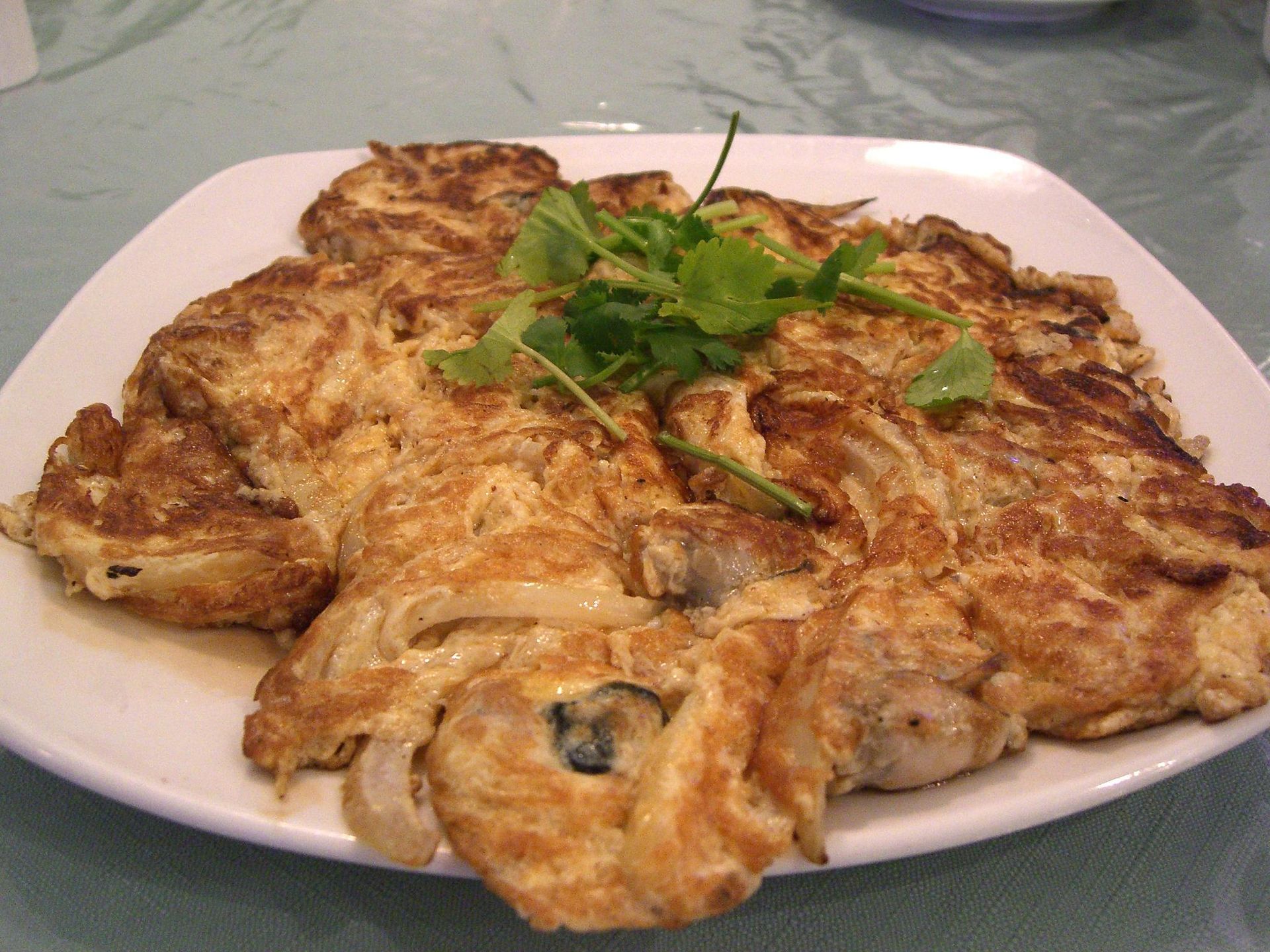
Oyster omelette, a golden crisp egg-and-starch pancake studded with plump oysters and topped with coriander 7
Oyster omelette
蚝烙 · crisp edges, soft centre, plump oysters

If you've had oyster omelette in Southeast Asia, this is the Chaoshan original — hao luo (蚝烙), a batter of sweet-potato starch and egg fried in a hot pan with fresh oysters, cooked until the edges char crisp while the middle stays soft and chewy, finished with spring onion and coriander. It's served hot with a chilli dip (辣椒酱) or chilli fish sauce. The trick at a good Chaoshan shop is plump, genuinely fresh oysters and a batter thin enough to crisp rather than turn gummy. It's an afternoon snack or beer dish you'll find at Teochew restaurants and food-street stalls like Dongmen.
Where: Chaoshan restaurants · food stalls around Dongmen (东门) · food courts citywide
Price: ¥18–45 / plate (฿90–225) depending on the oysters
With: Teochew chilli dip and a pot of hot Chinese tea to cut the richness
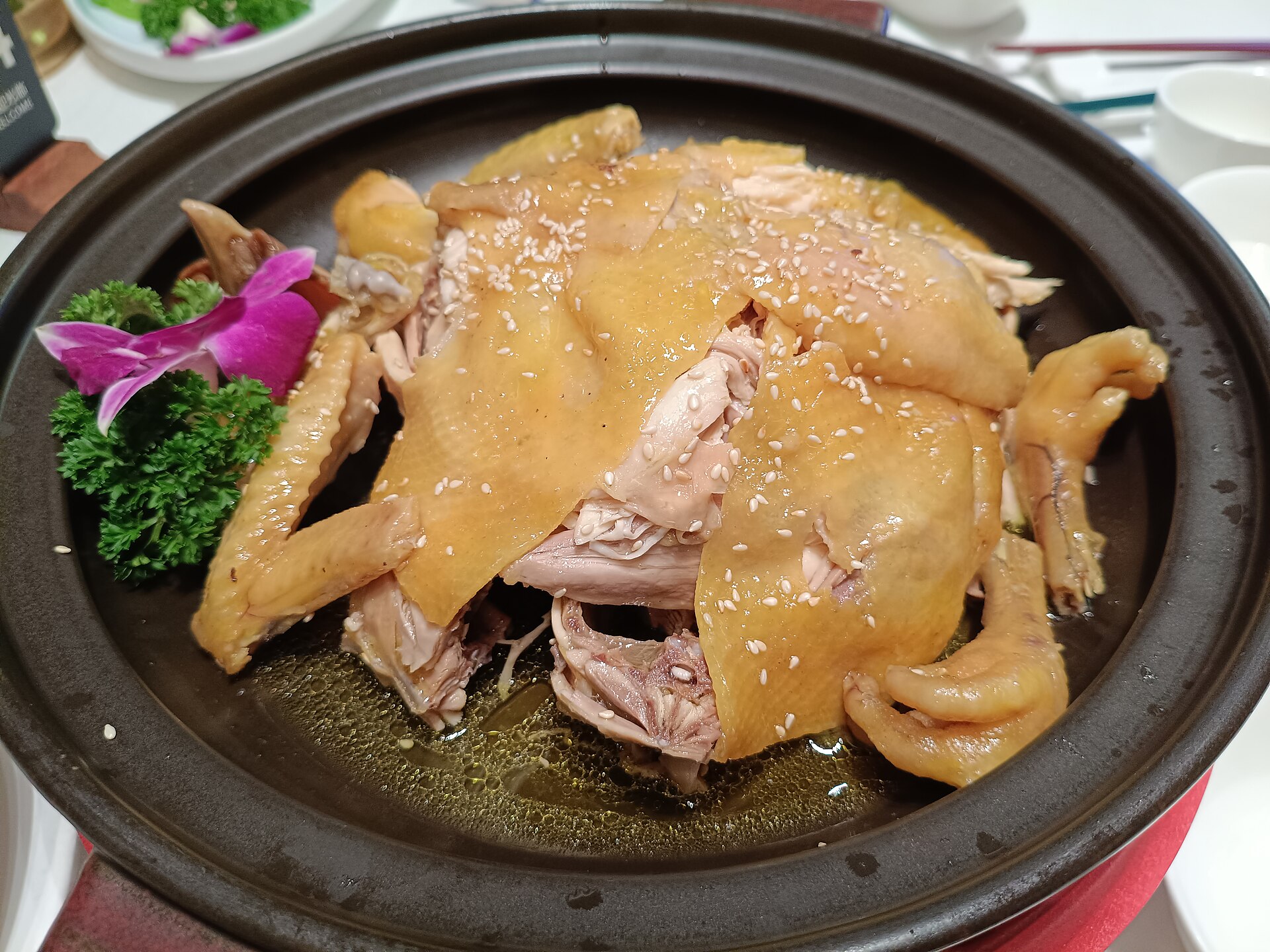
Hakka salt-baked chicken, a whole chopped bird in a clay dish with glossy golden skin sprinkled with sesame 8
Hakka salt-baked chicken
盐焗鸡 · a whole bird baked in hot salt

On to the Hakka, the original locals here before the SEZ — and their flagship dish, yan ju ji (盐焗鸡), salt-baked chicken. A whole bird is rubbed with salt, ginger and Chinese herbs, wrapped, and buried in scorching-hot rock salt to bake slowly. The result is meat that's tender and juicy right to the bone, with glossy golden skin scented faintly of salt and herbs. It's torn into pieces and eaten with salt-and-pepper dip or ginger sauce. The pleasure is in its simplicity — no sauce to mask anything, just the clean sweetness of a good free-range bird and the scent of salt. Find it at Hakka and many Cantonese restaurants.
Where: Hakka restaurants (客家菜馆) in Longgang / Bao'an · Cantonese restaurants citywide
Price: ¥45–88 / half (฿225–440)
With: Salt-and-pepper dip, or ginger-scallion sauce
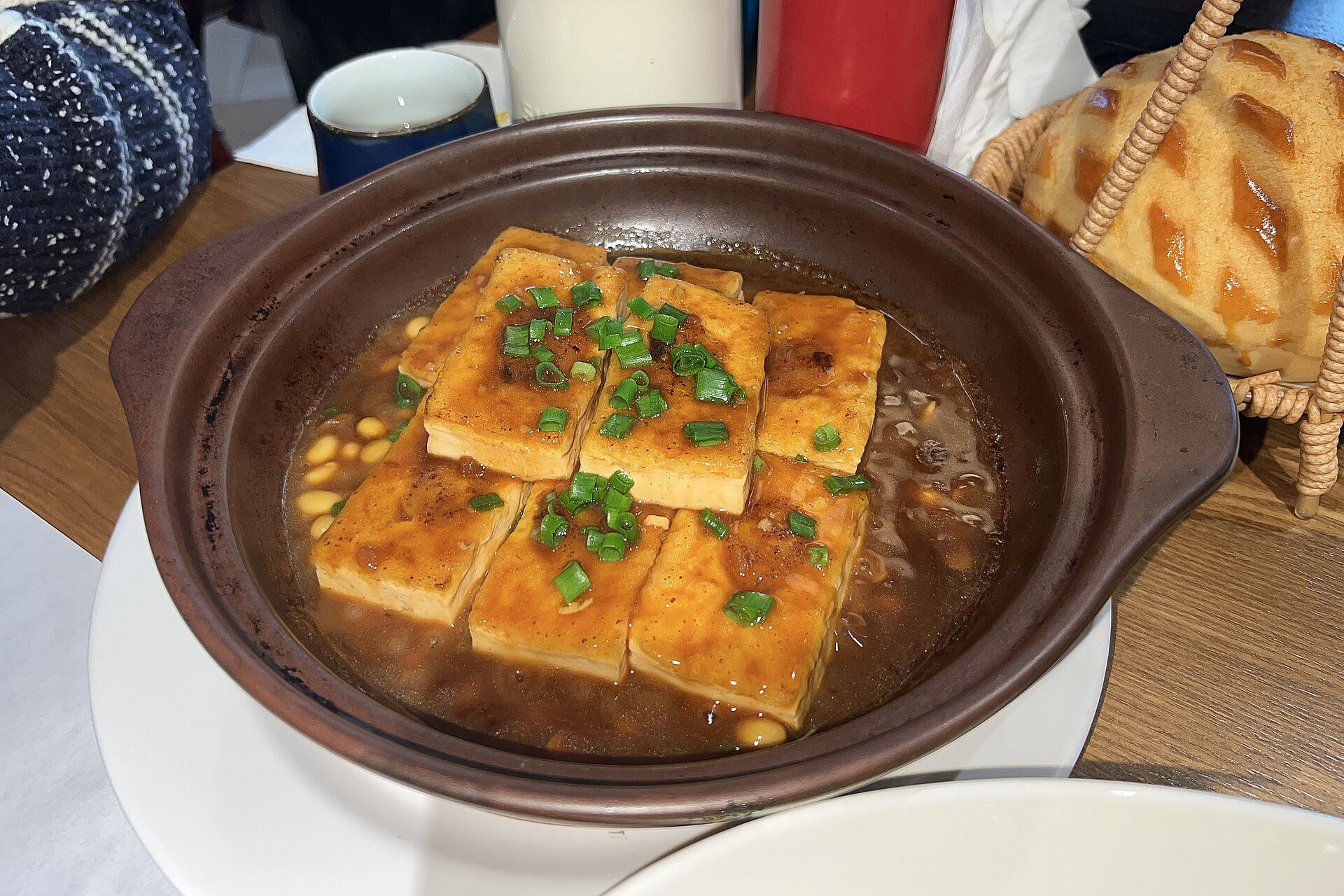
Hakka stuffed tofu, golden tofu blocks arranged in a clay pot with a savoury sauce and chopped spring onion 9
Hakka stuffed tofu
酿豆腐 · tofu stuffed with seasoned pork

Another Hakka classic — niang dou fu (酿豆腐), stuffed tofu. The story goes that the Hakka migrated south from the wheat-eating north, where they ate dumplings; arriving in rice country with no flour for wrappers, they stuffed the pork filling into tofu instead. Soft tofu is filled with seasoned minced pork, pan-fried until golden, then braised in a clay pot with sauce until the flavour soaks through. The pork stays juicy, the tofu soft, the sauce rounded — it's homely, comforting cooking that's lovely over rice. You'll find it at Hakka restaurants and plenty of everyday Cantonese places across Shenzhen.
Where: Hakka restaurants (客家菜) · everyday Cantonese restaurants citywide
Price: ¥28–55 / dish (฿140–275)
Try also: Pork belly with preserved mustard greens (梅菜扣肉), another Hakka highlight on the same menu
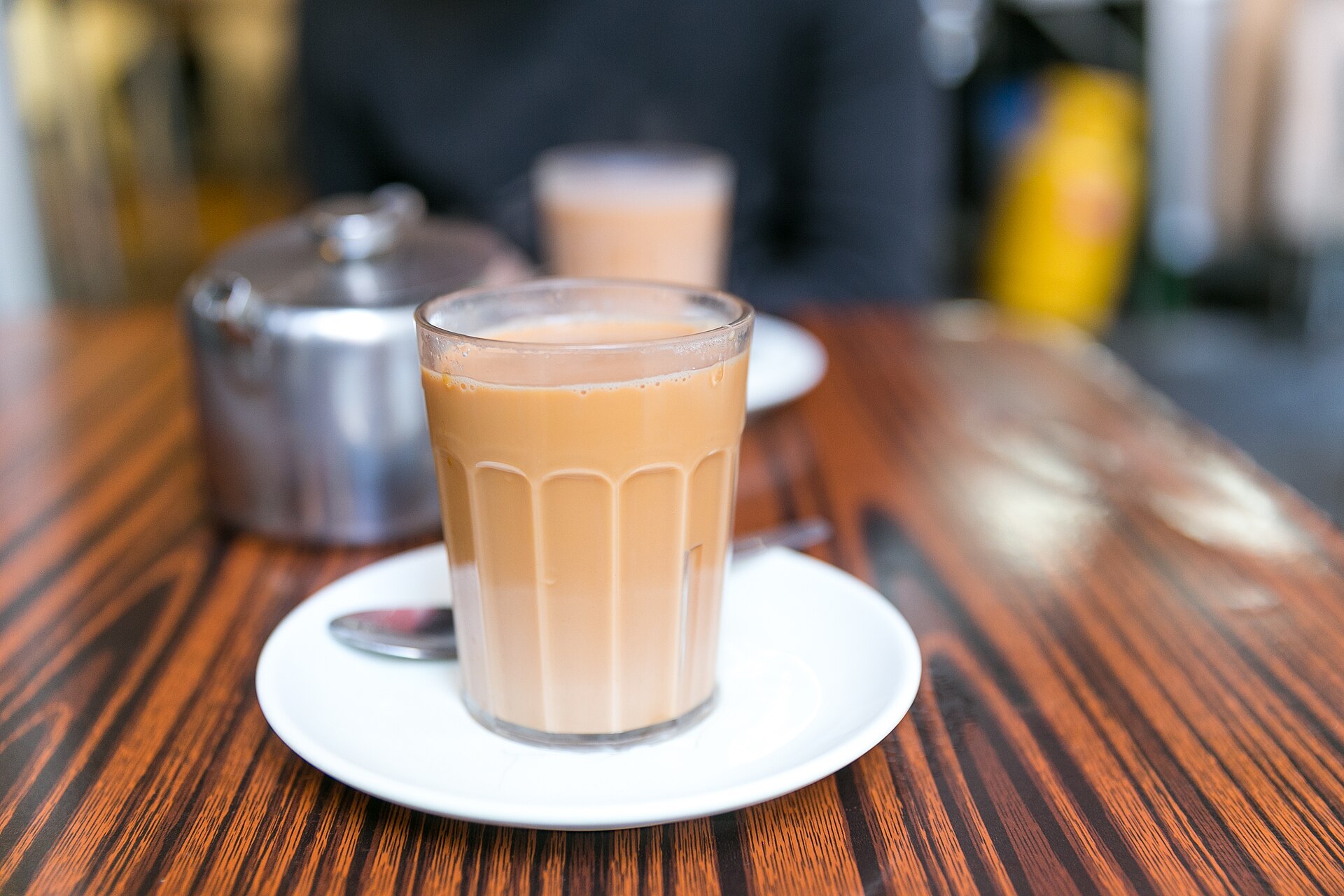
Hong Kong-style milk tea in a glass on a saucer beside a metal pot on a wooden cafe table 10
Cha chaan teng & HK milk tea
茶餐厅 · 港式奶茶 · the Hong Kong cafe next door

Shenzhen is just across the border from Hong Kong, so Hong Kong food has seeped right in — above all the cha chaan teng (茶餐厅), the Hong Kong-style cafe that serves everything fast and cheap. The star is Hong Kong milk tea (港式奶茶), strained through a cloth bag until silky (nicknamed "silk-stocking" tea), strong and aromatic against evaporated milk, hot or iced. Pair it with a pineapple bun (菠萝包), crisp and sweet on top, an egg tart (蛋挞), or baked pork-chop rice (焗猪扒饭). For Hong Kong's coffee-tea blend, order a yuanyang (鸳鸯), coffee mixed with milk tea. It's the easy, cheap meal Shenzheners eat every day.

Where: Cha chaan teng (茶餐厅) in malls and residential areas citywide
Price: Milk tea ¥12–22 (฿60–110) · set meals ¥30–55 (฿150–275)
Try also: Yuanyang (鸳鸯), coffee-and-milk-tea · pineapple bun with cold butter
🧋11
New-wave bubble tea
新茶饮 · HEYTEA 喜茶 · Nayuki 奈雪 — born in Guangdong

Shenzhen is a young tech city with bubble-tea shops and specialty coffee on nearly every corner — and the fun part is that two of the new-wave tea brands (新茶饮) famous across China were born in Guangdong. HEYTEA (喜茶) started in Jiangmen in 2012 (originally Royal Tea, 皇茶) and later moved its headquarters to Nanshan District in Shenzhen; Nayuki (奈雪的茶) was founded directly in Shenzhen in 2015. Both pushed Chinese tea upmarket with quality leaf, fresh fruit and a cap of cheese foam (芝士). Try a cheese-foam fruit tea or a brown-sugar boba milk tea at a flagship store — it's the taste of this young city right now.

Where: HEYTEA / Nayuki flagships in Futian / Nanshan malls · bubble-tea shops citywide
Price: ¥15–32 / cup (฿75–160)
Tip: Cheese-foam fruit tea (芝士茶) or brown-sugar boba milk tea
Go deeper on each tradition

Want more detail? We have a separate guide for each

The 11 above are the overview — when you're ready to eat your way through, pick the deep-dive guide for each tradition below.

The traditions · which area

Know who does what before you head out

Shenzhen is huge — knowing which community each tradition comes from, and which districts they cluster in, makes planning a meal much easier.

The Cantonese base (粤菜)
Citywide · strongest in Futian 福田 / Luohu 罗湖

The city's roots, since it sits in Guangdong — morning dim sum, siu laap roast meats, slow-boiled soups, and the congee-noodle-rice-roll trio, found on every corner. Everything from air-conditioned halls in the business districts to morning stalls in the residential areas. It's the safe place to start if it's your first visit.

Best for: Dim sum · roast meats · cheung fun · soups · When: Morning to evening
The Chaoshan tradition (潮汕)
Large Chaoshan community · restaurants citywide · Bao'an 宝安

Shenzhen has a big Chaoshan population, so the restaurants for fresh hand-sliced beef hotpot, braised goose, oyster omelette, beef balls and seafood clay-pot congee (砂锅粥) are skilled and authentic. Clear broths, fresh flavours, no chilli heat — if you love quality beef and seafood, this is the city's highlight you shouldn't miss.

Best for: Beef hotpot · braised goose · oyster omelette · clay-pot congee · When: Lunch–dinner
The Hakka tradition (客家)
The original locals · Longgang 龙岗 / Bao'an 宝安

The Hakka were the original locals before the SEZ — the old villages of Longgang and Bao'an were Hakka. The food is homely and hearty, rustic and full-flavoured: salt-baked chicken, stuffed tofu, pork belly with preserved greens. Look for it at Hakka restaurants (客家菜馆) in these two districts, or many Cantonese places that carry it on the menu.

Best for: Salt-baked chicken · stuffed tofu · preserved-greens pork · When: Lunch–dinner
Hong Kong + the young city
Across the HK border · cafes around Nanshan 南山 / OCT-LOFT

Shenzhen is just across the border from Hong Kong, so cha chaan teng (茶餐厅), HK milk tea, pineapple buns and egg tarts are everywhere. Layered on top is the new-wave tea scene (HEYTEA / Nayuki, both born in Guangdong) and the specialty coffee of creative quarters like OCT-LOFT and Shekou. Good for a cold drink and a sit-down.

Best for: HK milk tea · bubble tea · specialty coffee · When: All day
Frequently asked

FAQ · what people ask before they head out to eat

What is Shenzhen's native dish?
Shenzhen has almost no single "native dish" to point to. In 1979 it was still fishing villages before it was named a Special Economic Zone and grew into a migrant city of around 17 million people from every Chinese province within a few decades. The base is Cantonese cooking (because it sits in Guangdong), but the real story is that the whole city pools cuisines from across China, cooked by people who actually grew up with them. The two strongest non-Cantonese traditions are Chaoshan (Teochew) and Hakka — the Hakka being the original locals before the SEZ — alongside a strong Hong Kong influence next door and a young-city tea-and-coffee scene.
How much does a meal cost in Shenzhen?
Shenzhen works at every budget. A street snack or an oyster omelette is ¥10–30 (฿50–150). Cheung fun or congee is ¥10–25 (฿50–125). A morning yum cha session is around ¥60–130 per person (฿300–650). Roast meats over rice are ¥25–48 a plate (฿125–240). Chaoshan beef hotpot is around ¥120–220 per person (฿600–1,100) because it uses good fresh beef. Hakka salt-baked chicken is ¥45–88 for a half (฿225–440). HK milk tea is ¥12–22 a glass (฿60–110), and HEYTEA or Nayuki bubble tea is ¥15–32 a cup (฿75–160).
How is Chaoshan beef hotpot different from Sichuan or Chongqing hotpot?
They're opposites. Sichuan and Chongqing hotpot is a red, fiery, numbing málà broth. Chaoshan beef hotpot (潮汕牛肉火锅) uses a clear beef-bone broth that isn't spicy at all. The heart of it is fresh, never-frozen beef hand-sliced into cuts with their own names — diaolong (吊龙), chibing (匙柄), sanhuazhi (三花趾) — dunked in the boiling broth for just seconds, not minutes, then dipped in sand-tea sauce (沙茶酱). Freshness and texture are the stars, not heat. Shenzhen has a lot of these restaurants because it has a large Chaoshan community. Read more in the Chaoshan food guide.
Where can I find Hakka food in Shenzhen?
The Hakka were the original locals here long before the SEZ — the old villages of Bao'an (宝安) and Longgang (龙岗) districts were Hakka. The signature dishes are salt-baked chicken (盐焗鸡), a whole bird baked in hot salt until the skin turns glossy and golden; stuffed tofu (酿豆腐), tofu stuffed with seasoned pork; and pork belly with preserved mustard greens (梅菜扣肉) — hearty, rustic countryside cooking. Look for Hakka restaurants (客家菜馆) in Longgang and Bao'an, or many general Cantonese restaurants that carry salt-baked chicken and stuffed tofu on the menu. See the Hakka cuisine guide.
What do HEYTEA and Nayuki have to do with Shenzhen?
Both are new-wave tea brands (新茶饮) born in Guangdong. HEYTEA (喜茶) started in Jiangmen in 2012 (originally called Royal Tea, 皇茶) and later moved its headquarters to Nanshan District in Shenzhen. Nayuki (奈雪的茶) was founded directly in Shenzhen in 2015. Both pushed Chinese tea upmarket with quality leaf, fresh fruit and cheese-foam toppings. Shenzhen is a young city with bubble-tea shops and specialty coffee on nearly every corner, so dropping into a flagship store is part of the experience here. Read more in the cafe and bubble-tea guide.
Where are Shenzhen's street-food areas?
The classic area is Dongmen Pedestrian Street (东门, Luohu), packed with food shops and stalls — grilled squid, roasted oysters, stinky tofu, Chaoshan beef balls and Teochew rice noodles. Honestly, Dongmen is touristy and very crowded, but the ground-floor stalls still draw plenty of locals. Another is Huaqiangbei (华强北, Futian), the electronics market with food courts and food lanes tucked behind it, plus markets and shops around Bao'an where working locals actually eat. Most street snacks run ¥10–35 (฿50–175). See the Shenzhen street-food guide.
Klook · Food tour

Shenzhen Food Tour — eat at the right places, with someone who knows

A Shenzhen food tour with a local guide takes you through dim sum, roast meats, Chaoshan beef hotpot, oyster omelette and new-wave tea — real food, no language barrier, and no guessing which place is good in a city this diverse.

See Shenzhen food tours on Klook →
Wherebest is a Klook affiliate partner — we may earn a commission when you book through our links, at no extra cost to you.