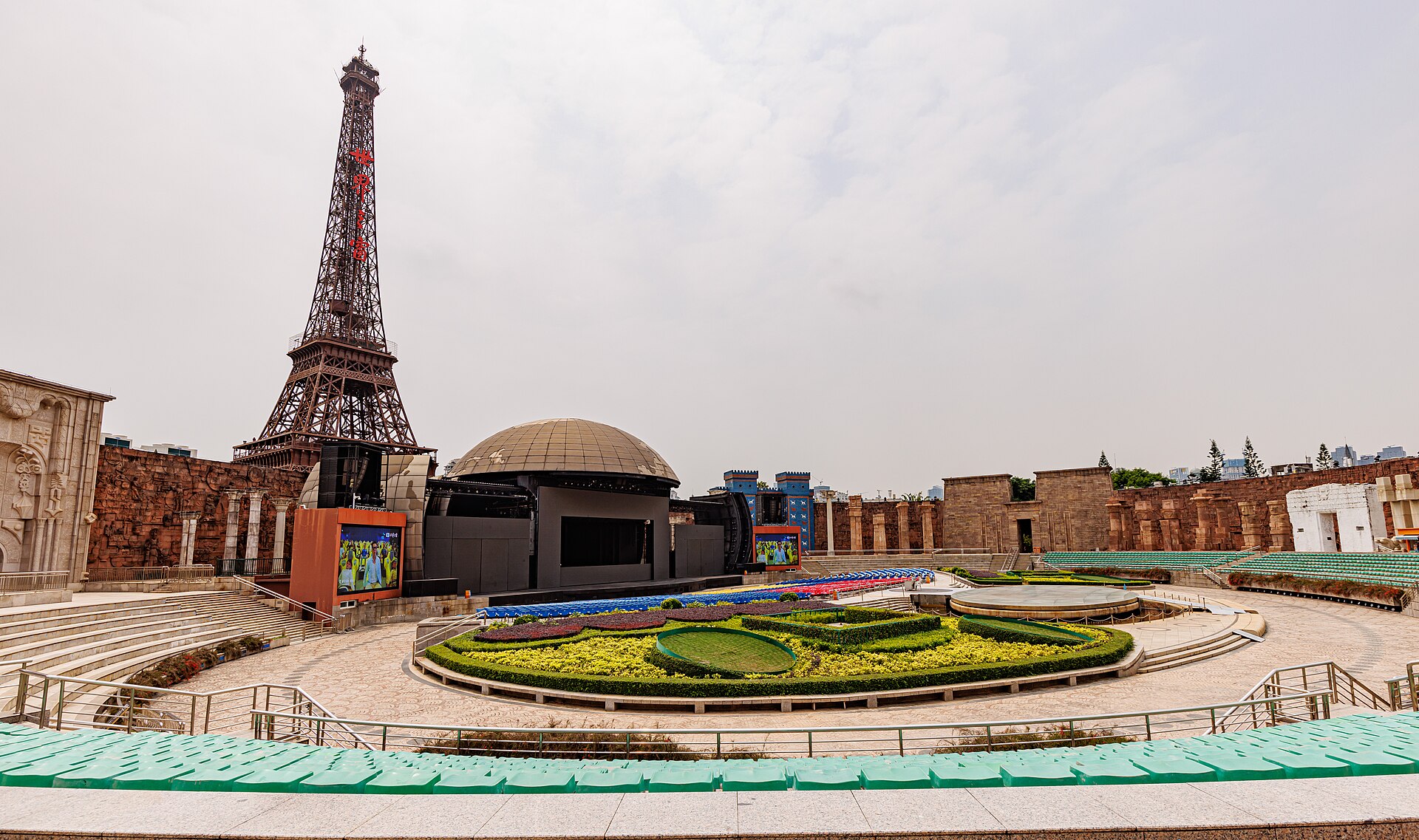
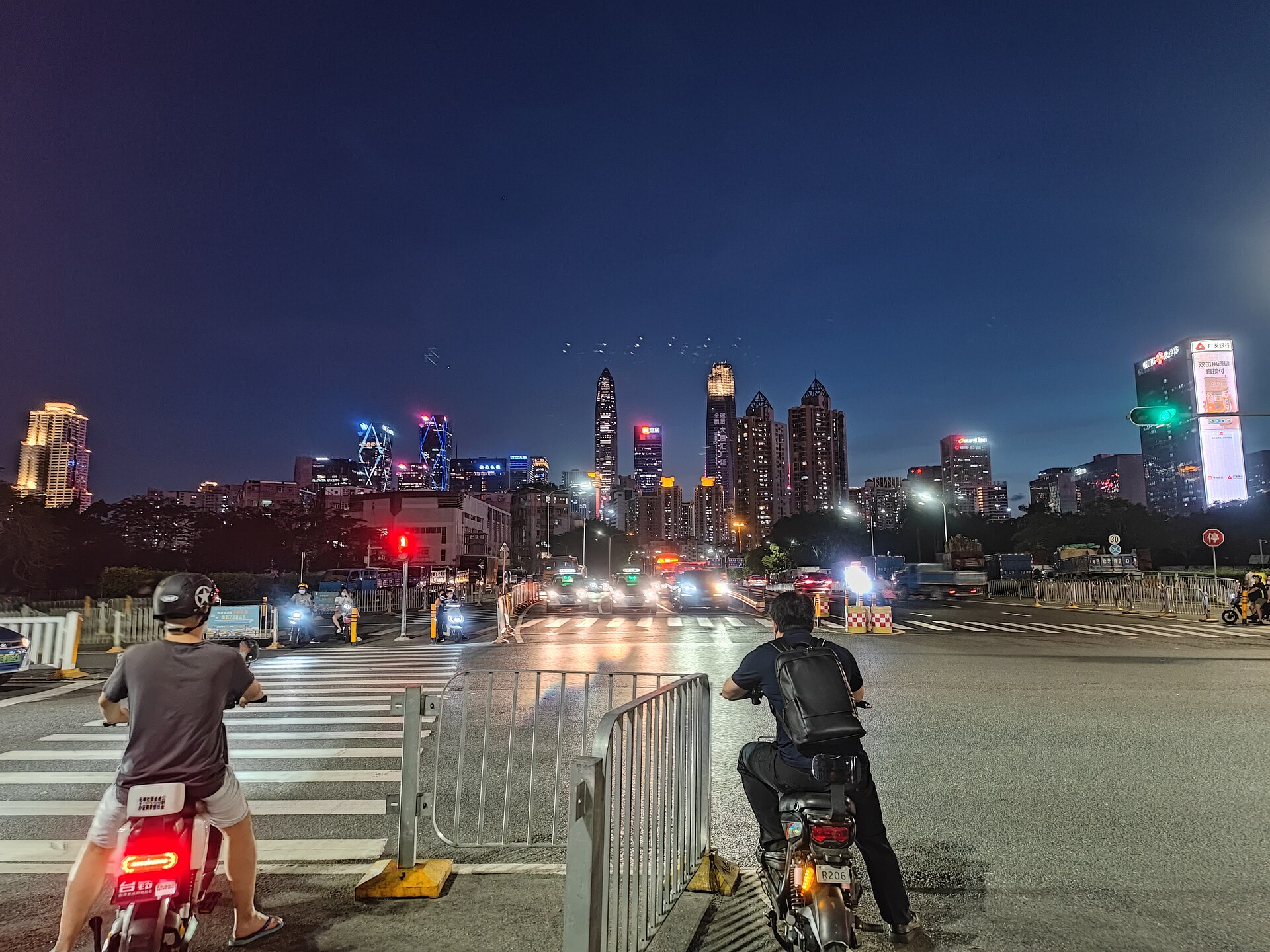
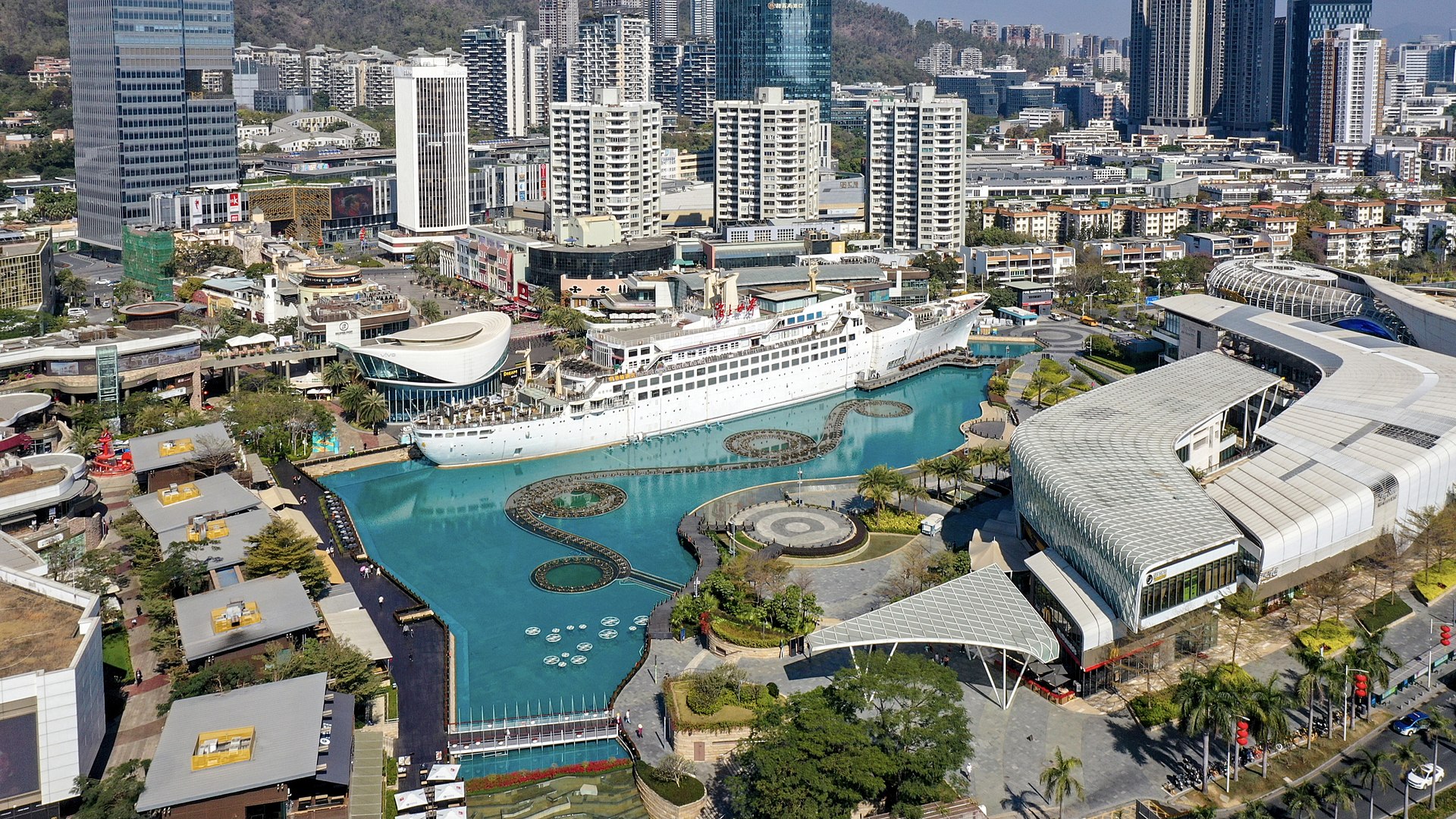
A 17-line metro reaches almost everywhere — Line 11 runs express from the airport to Futian, Line 1 takes you to Window of the World, Line 2 to Sea World in Shekou. The city is genuinely vast, but once you know which line each sight sits on, it's easier than it looks.
Shenzhen is one of China's youngest and fastest-growing megacities, home to more than 17 million people, and it moves them on one of the largest metro systems on the planet. The network now runs about 17 lines across more than 600 kilometres, reaching everywhere a visitor wants to go — from Bao'an Airport in the west, down to the Futian CBD, across to the old town in Luohu, and out to the theme parks and seafront on the Nanshan side.
The good news for visitors: every station has English signage, ticket machines have English menus, and Alipay QR gets you through the gate with no ticket at all. Two things to know up front — every entrance has a bag X-ray security check, so budget a couple of extra minutes; and Shenzhen is a long city laid out east to west, so a trip from Futian over to Nanshan can take 30–60 minutes. Group sights in the same zone on the same day and you'll save real time.
This guide covers every way to get around the city: the fast, cheap metro, the Line 11 airport express that skips most stops, metered taxis, DiDi for when you have luggage, plus buses and the map app that actually works in China. A little preparation, and the whole trip runs smoothly.
Your first choice for virtually every journey. Clean trains, English signage throughout, and distance-based fares of ¥2–15 — most central rides ¥3–7.
Hours are roughly 06:30 to 23:00, though this varies by line and terminus — last trains on the longer lines leave well before closing, so check before a late night out. Fares run on distance: most rides within the inner city cost ¥3–7, and a long cross-town run such as the airport to Futian can reach ¥7–9. The system is huge and interchanges are easy, but because the city is so spread out, crossing from one side to the other still eats up time.
| Line | Route | Key stops |
|---|---|---|
| Line 1 (the western spine) | Luohu ↔ Nanshan (to Airport East) | Window of the World · Splendid China · Hi-Tech Park · OCT |
| Lines 2 / 12 | Link the CBD to Shekou in the southwest | Sea World (Shekou) · Civic Center · OCT-LOFT (near Qiaocheng East) |
| Line 11 (airport express) | Bao'an Airport ↔ Futian (few stops) | Airport · Bao'an Center · Houhai · Civic Center · Futian |
| Line 9 | Links Futian to the southwest | Shenzhen Bay Park · Hongshuwan · Shawei |
| Lines 1 / 3 | Into central Futian and Luohu | Convention & Exhibition Center · Dongmen (Luohu) · Civic Center |
| Line 5 (the loop) | Curves around the city linking many districts | Shenzhen North station (HSR) · Houhai · numerous interchanges |
If you've just landed at Bao'an Airport (SZX) in the west of the city, Line 11 (purple) is the fastest way in. It's an express metro line that stops at far fewer stations, running straight into the Futian CBD, with a First-Class car offering wider seats for a small surcharge. From the airport to Civic Center in Futian takes about 45–55 minutes and costs roughly ¥7–10 — a fraction of a taxi.
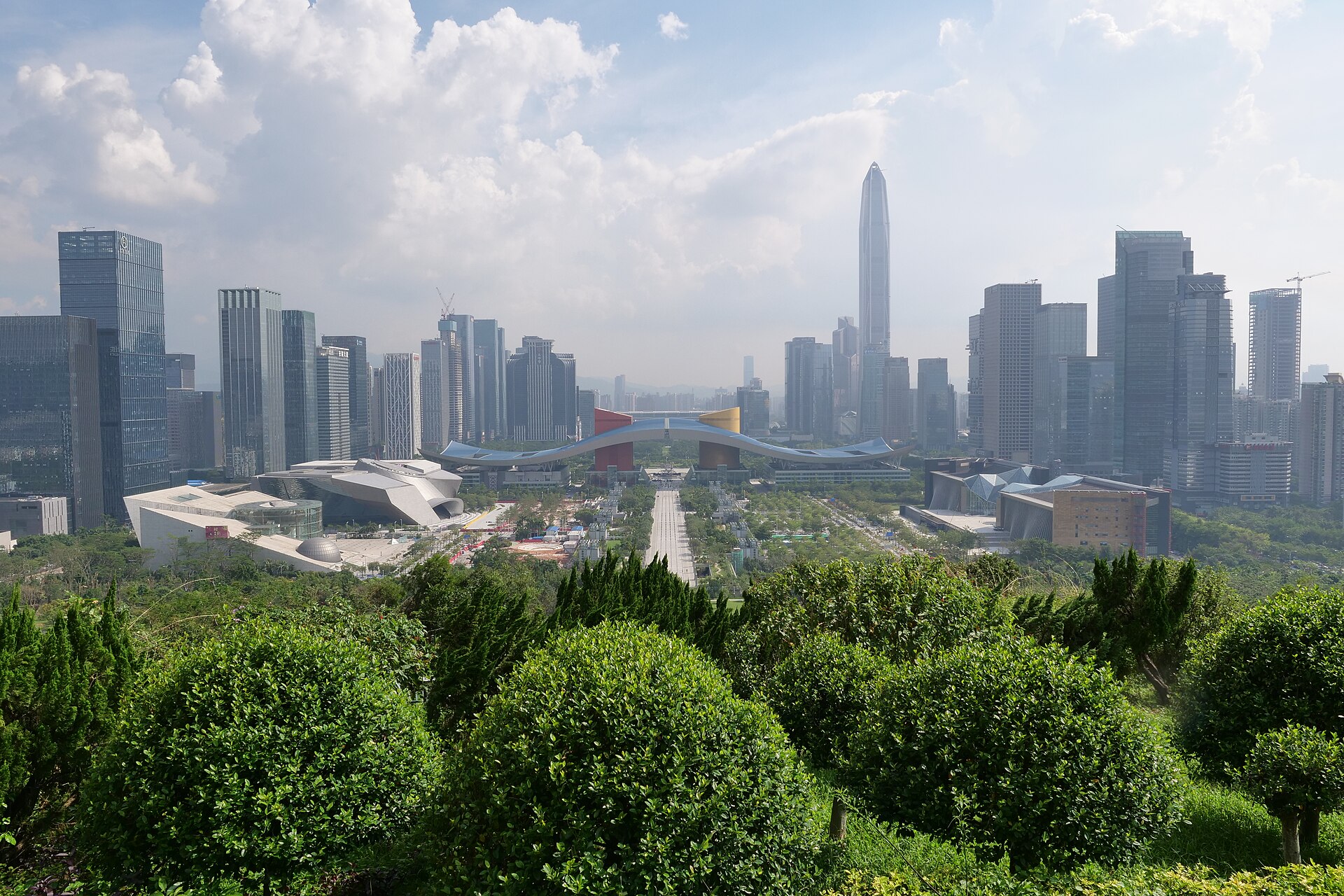
For sightseeing, the rule is simple: the top sights sit on just a handful of lines. Line 1 carries you to Window of the World and Splendid China on the Nanshan side; Line 2/12 reaches Sea World in Shekou on the waterfront; Line 9 serves Shenzhen Bay Park; and the Ping An Free Sky tower and the old Dongmen quarter sit around Futian–Luohu on Lines 1/3.
Easiest for visitors. Open Alipay, tap Transport, choose Shenzhen, generate the Shenzhen Metro Pass, scan at the gate. No token, no card. Set this up at home.
Same concept via a mini-program. Open WeChat, find the Shenzhen Metro mini-program, scan at the gate. Works on all lines.
Buy from machines inside every station. English menus, takes coins and notes. A good fallback if Alipay isn't set up yet.
The 深圳通 card is rechargeable and works on the metro and buses. Tap in and out; cumulative discounts apply. Buy at station windows.
Honest summary: Alipay is worth setting up even if the metro is your only reason, because it also handles taxis, DiDi, dim sum restaurants, and nearly every shop in the city. A 2026 bonus: most gates now accept contactless tap-to-pay with Visa and Mastercard, so even if Alipay isn't ready you can still tap a card to ride. Full setup steps in the Alipay & WeChat Pay guide.
Shenzhen's taxis are metered, with a flag-fall of around ¥10–11 for the first 2 km, then roughly ¥2.6 per km after that, with a 20–30% surcharge late at night (23:00–05:00). Fares climb in traffic because of waiting charges, but overall they're cheap next to Hong Kong across the border.
The one tip that makes taxis actually work: have your destination written in Chinese characters. Most drivers speak little or no English. A hotel business card, or a Google Translate screenshot of the address in Chinese, sorts it every time.
DiDi is the dominant ride-hail app in China, with an English-language interface. Type your destination in English; the app locates it and shows a fare estimate before you confirm. Payment links directly to Alipay, and the base fare (around ¥11) sits right around a taxi flag-fall.
DiDi is the right call when the metro has closed for the night, when you have luggage, when a cross-town route needs multiple line changes, or simply when it's too hot to walk far from the station. You can hail one from the DiDi app, or from a mini-program inside Alipay or WeChat — no separate app needed if you'd rather not.
Shenzhen's bus network covers hundreds of routes, reaching the side streets of each district that the metro doesn't. Fares are around ¥2 per journey, payable by Shenzhen Tong card or exact cash.
Honest note: bus stop signs, route numbers and timetables are almost entirely in Chinese. For most visitors, the metro is a much easier first choice. Buses make sense for specific neighbourhoods off the rail network, and they work well when combined with Amap (Gaode), which has accurate Shenzhen bus data in its transit directions.
Cross-town / cross-border
Shenzhen is the gateway to Hong Kong. Futian station, deep under the CBD, runs high-speed trains to Hong Kong West Kowloon in about 14 minutes, while Shenzhen North in the north is the main HSR hub for the rest of China.
You can also cross into Hong Kong overland at the Luohu and Futian border checkpoints, picking up the Hong Kong metro on the other side. Bring your passport and check your China visa for re-entry — see the China high-speed rail guide.
This matters more than people expect. Google Maps' public transit data for mainland China is unreliable — even with a VPN, route guidance for the metro and buses is frequently wrong or simply absent. In a city this large, with hundreds of stations, you really want an accurate planner. Two apps give real-time transit directions without any workaround:
Amap has accurate, live data for every metro line, bus route, and intercity train in China. You can search destinations in English; the transit planner gives step-by-step directions including which exit to use. Download it from the App Store or Play Store before you arrive — no VPN required to use it.
Apple Maps in China uses Amap's data as its backend, which means its transit directions for the Shenzhen metro are accurate. If you have an iPhone, this is the path of least resistance — no extra app needed, no VPN, and it integrates with your existing Maps workflow.
If you want LINE, Instagram, Gmail or full Google Maps while in China, you'll need a VPN installed and tested before you fly — most VPN websites are blocked once you're inside the country. See the full breakdown at the China internet, VPN and eSIM guide.
If there's one preparation that makes a difference, it's this: open Alipay, link your Visa or Mastercard through the international mode, then tap Transport and select Shenzhen before you leave home. When you land at Bao'an Airport and walk up to the metro gate, you tap the phone and walk straight through — no queuing at a token machine, no hunting for the right screen while tired and jet-lagged.
One more practical note: pick a hotel that matches your plan, because Shenzhen is so spread out. If you're mainly doing the theme-park-and-seafront side, stay around Nanshan; if you're focused on shopping and crossing into Hong Kong, Futian or Luohu saves more time. See the guide to which area to stay in, and try to avoid peak hours — 08:00–09:30 and 18:00–19:30 — especially with luggage.