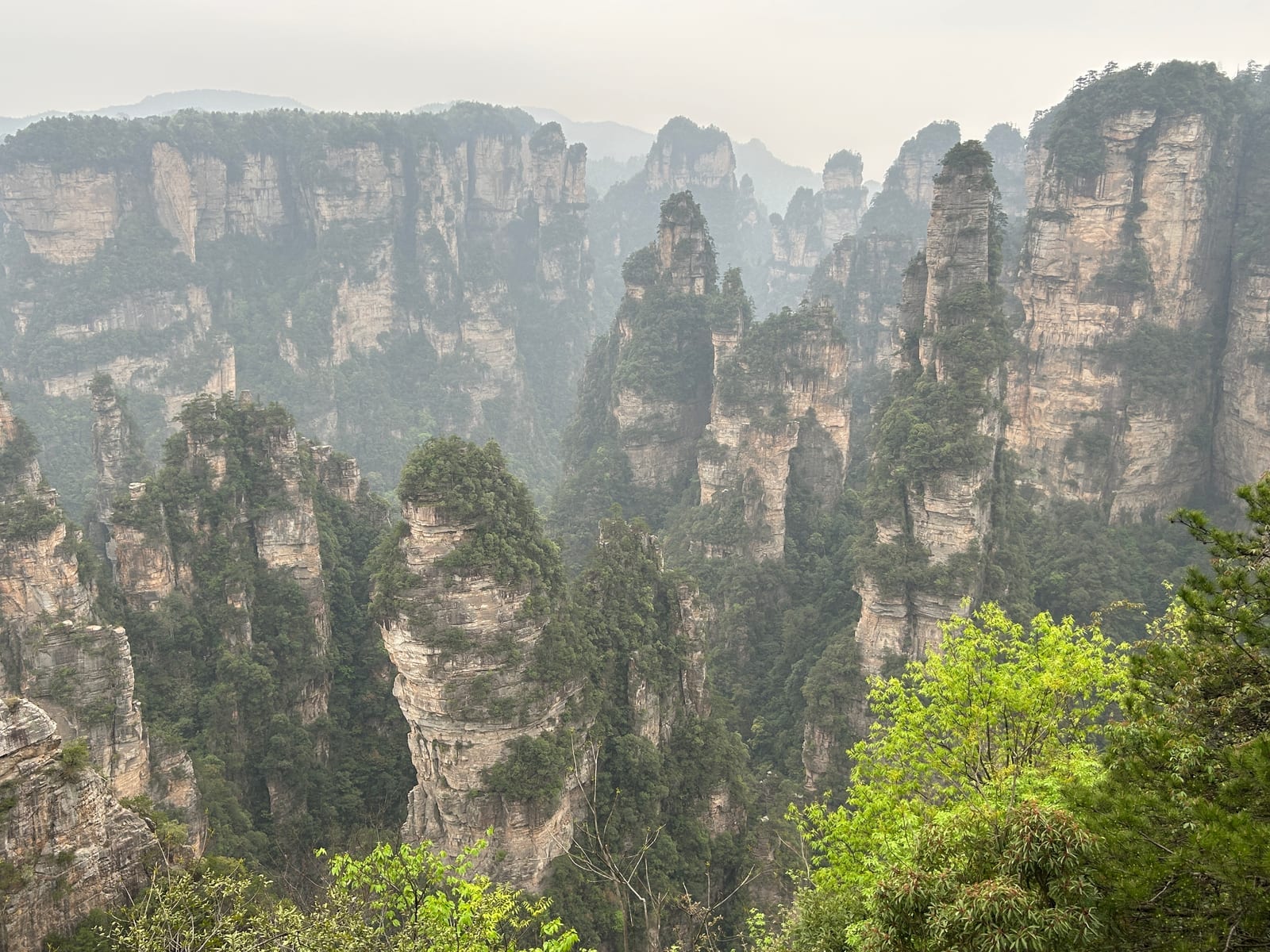
If Zhangjiajie is the land of the sandstone pillars from the film Avatar, Wulingyuan is the small town where you stay right by the park gate — a few minutes' walk to the entrance, in early for mist on the peaks, up the Bailong glass Elevator, along the Golden Whip Stream, then back for an evening on Xibu Street by the Suoxi River.
A lot of people planning Zhangjiajie aren't sure where to actually stay. The answer is simple: Zhangjiajie has two main zones — Zhangjiajie city, which has the airport, the rail stations and the Tianmen Mountain cable car, and Wulingyuan (武陵源), a small town right by the gate of Zhangjiajie National Forest Park, about 33 km northeast of the city, roughly an hour by road. And if you're coming for the pillars from the film Avatar, this is the zone to stay in, because they're inside the forest you enter through the Wulingyuan gate.
There are just a few things to know in Wulingyuan — the town is the park gateway, a short walk or drive from the entrance, and once inside you can reach Yuanjiajie (袁家界) with its Hallelujah pillars, Tianzi Mountain (天子山) with its sea-of-pillars views, the Golden Whip Stream (金鞭溪) flat streamside walk, the Bailong Elevator (百龙天梯) that lifts you up a cliff in minutes, and the Yangjiajie area. The town itself has Xibu Street (溪布街), a strip of bars and snacks along the Suoxi River, a few small supermarkets and restaurants — a quieter mountain-town feel than Zhangjiajie city.
Picture a place where you leave your hotel and are in the park within a few minutes, up at a viewpoint for mist on the pillars at dawn before the day-trip coaches arrive, out all day, then back in the evening for river fish along Xibu Street — Wulingyuan does all of it. That is why we suggest at least two nights here, then moving into the city or stopping at Tianmen on the way out, rather than day-tripping in from the city.
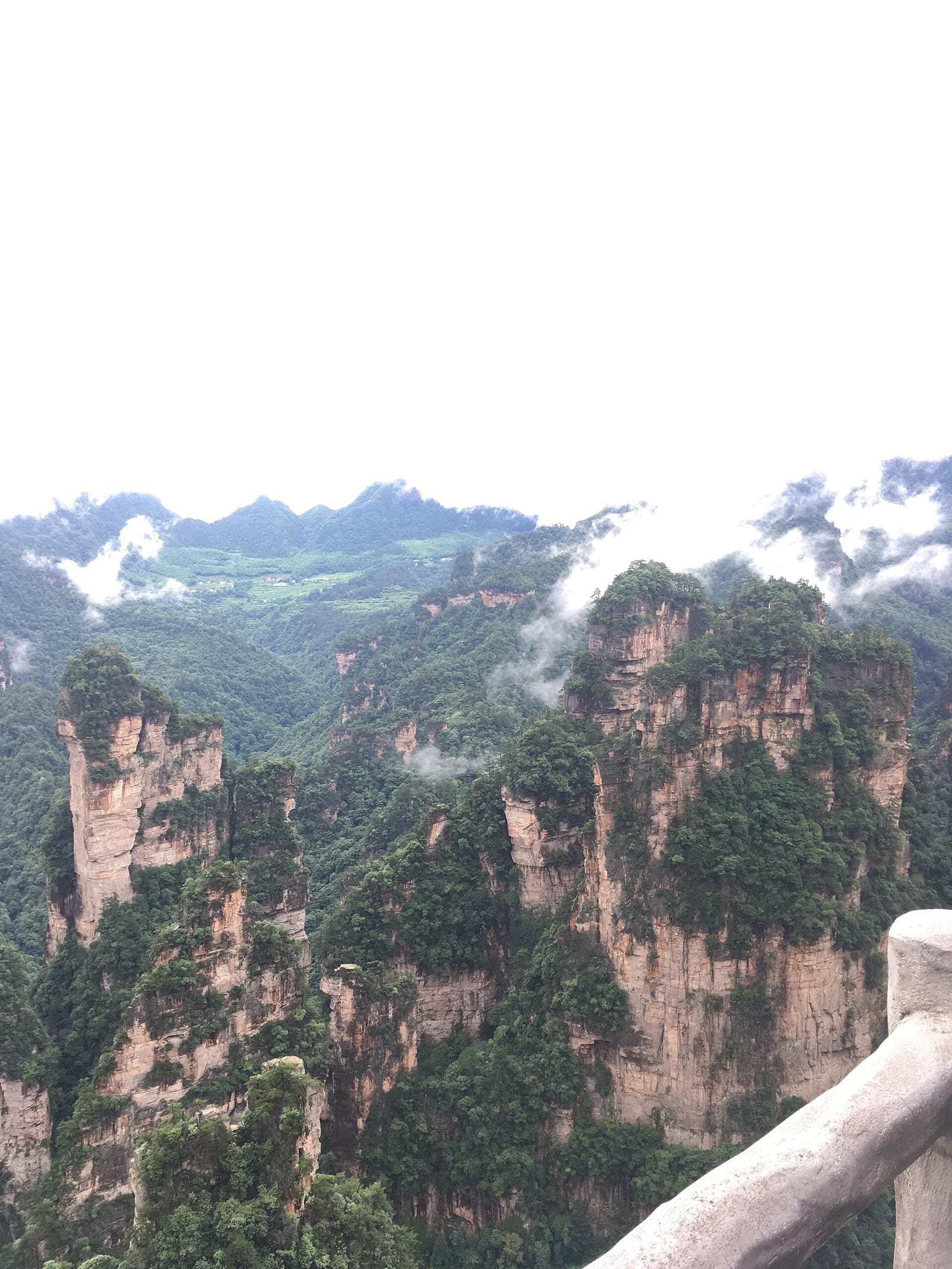
Wulingyuan feels like a small mountain town — a few minutes from the park gate, with Xibu Street by the river for an evening out, and noticeably quieter than Zhangjiajie city.
The appeal of Wulingyuan is that it is the base closest to the park. In the morning you walk out of your hotel and straight into the gate, with no hour-long drive in from the city every day. When you come back in the evening there is Xibu Street for river fish, a beer and live music along the Suoxi River — pick your pace. There is no metro here and you don't need one: the shuttle handles the park, and in town everything is close enough to walk or grab a DiDi.
This is what Wulingyuan was made for — if your main goal is the Hallelujah pillars at Yuanjiajie and the sea of pillars at Tianzi Mountain, staying right by the gate means you get into the park earliest and have the whole day inside, with no time lost on a round trip from the city.
The mist that makes Zhangjiajie look like a painting tends to come in the morning and after rain. Staying in the park or right by the gate lets you be up at a viewpoint before the day-trip coaches arrive late morning, catching the pillars rising out of a sea of cloud — the angle only early visitors get to see.
If you like a night-time stroll and a riverside table, Xibu Street (溪布街) is your spot. After dark the whole street lights up, lined with restaurants, bars and souvenir shops along the Suoxi River — it's where travellers gather after a day in the park. Stay near Xibu Street and you can walk straight to it.
Wulingyuan has upper-tier hotels near the park gate to choose from — Pullman Zhangjiajie and Hilton Garden Inn Wulingyuan among them — where you sleep in comfort and still walk or take a short ride into the park. If you want an easy mountain trip without roughing it but still close to nature, this side is the answer.
If you only have time for one thing in the Zhangjiajie park, make it Yuanjiajie, a clifftop plateau where sandstone pillars rise hundreds of metres into the air. The most famous of them is the Hallelujah pillar, which inspired the floating mountains in the film Avatar. You reach the top by the Bailong Elevator or by cable car, then follow the clifftop paths to see the pillars from several angles. This is the image of Zhangjiajie that the world knows. Read more: the full Zhangjiajie forest park guide
An outdoor glass lift fixed to a sandstone cliff about 300 metres high, carrying you from the valley floor up to the Yuanjiajie plateau in a few minutes. On the way up you watch the pillars line up through the glass — a shortcut that lets anyone who doesn't want a long climb get up to the views at the top with ease. The park ticket includes a one-way ride on the Bailong Elevator; a second ride costs extra. In high season it gets busy and there can be a queue. Read more: the Bailong Elevator guide
The northern zone of the park, known for its wide views. The viewpoints on Tianzi Mountain look out over thousands of pillars standing like a stone sea, and on a misty day it looks like a Chinese ink painting. You get up by the Tianzi cableway (a one-way ride is included in the park ticket), and famous viewpoints such as He Long Park and Tianzige connect on foot — an easy half to full day that's well worth it. Read more: the Tianzi Mountain guide
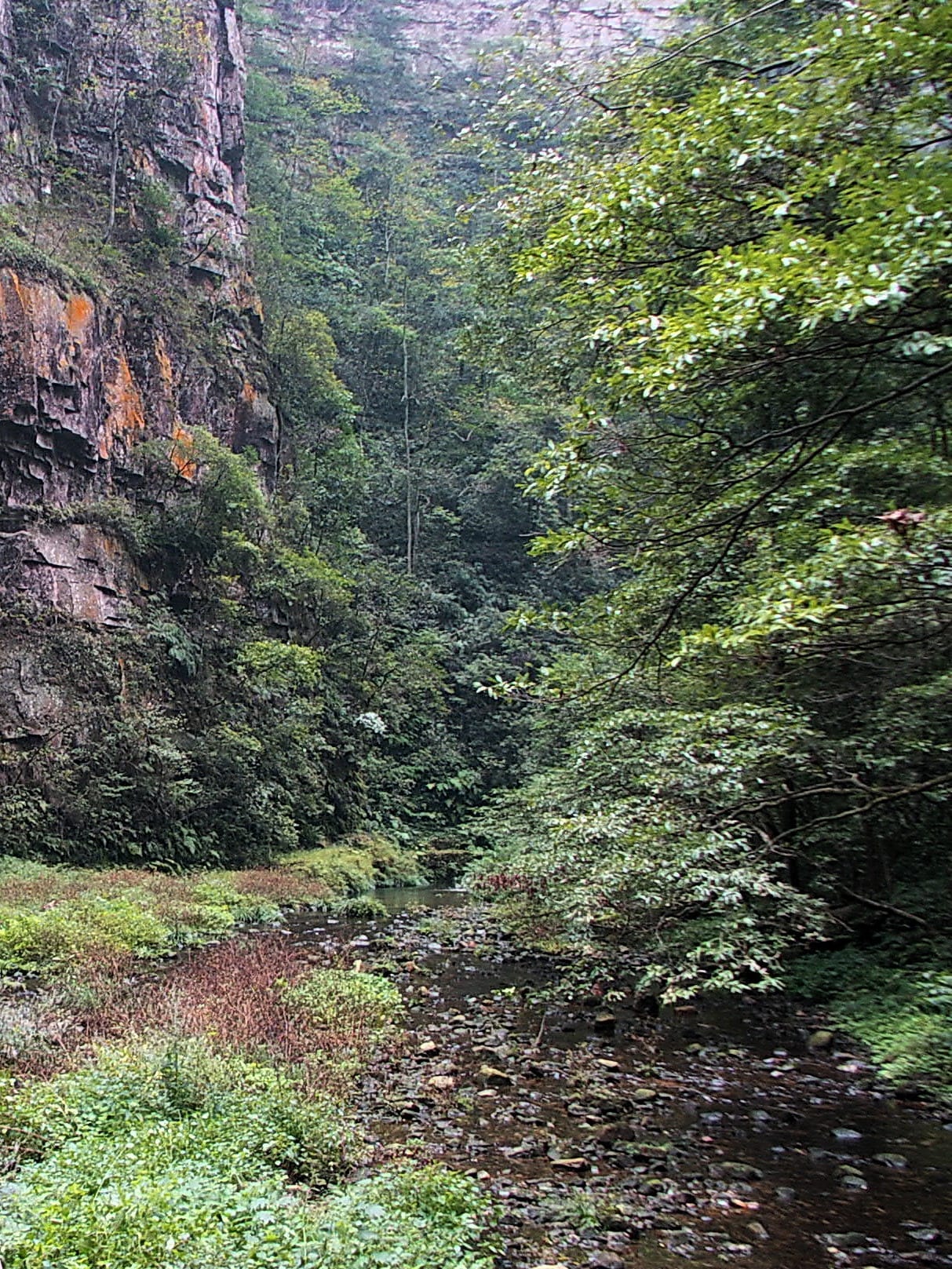
If you climbed a lot the day before, the Golden Whip Stream is a good way to rest your legs. It's a flat walk of about 7 kilometres beside a clear stream, lined with pillars and green forest — an easy stroll past landmarks like the Golden Whip Rock, with wild macaques that come down to the trail. It suits families and anyone who doesn't want much climbing, and you can do the whole route or half of it depending on energy. Read more: the Golden Whip Stream guide
Outside the forest park, there's also the Zhangjiajie Grand Canyon Glass Bridge in a separate area, about 15–30 km from Wulingyuan. It's a glass bridge spanning a deep gorge, where you walk on a clear glass floor looking straight down to the canyon bottom. It's a popular day trip many people add on after the park, and you need to book the ticket and a timed walking slot in advance, as numbers per session are limited. For the wider picture of the area, see Zhangjiajie attractions
Wulingyuan is a fun mountain-town place to eat — bold local dishes like the three-treasure pot and Tujia cooking, Xibu Street along the Suoxi River as the main eat-and-drink strip, and local river-fish restaurants.
If you eat one thing in Zhangjiajie, make it the three-treasure pot (三下锅), a local dish that stir-fries three ingredients together in a single pot, Hunan-style and full-on spicy, a big meal with rice. You'll find it all over Wulingyuan, especially around Xibu Street. A pot (good for 2–3 people) is about ¥60–120 (around ฿300–600), depending on size and the restaurant. Read more: the Zhangjiajie food guide
Xibu Street in the evening is Wulingyuan's main place to eat and drink, running along the Suoxi River with local restaurants, river-fish places, cafés and bars with live music. Have dinner after a day in the park or a beer and a band in the cool of the evening — it's a lively traveller strip after sunset. Dinner is around ¥50–120 (around ฿250–600) a head depending on the place, ideal for a relaxed night after a full day of walking.
Zhangjiajie is the home of the Tujia (土家) people, so the local food has country dishes like smoked meat, mountain vegetables and river fish, leaning spicy and sour in the Hunan style. Find a local restaurant in Wulingyuan for lunch before the park or dinner after — it costs less than in the tourist core, around ¥40–100 (around ฿200–500) a head. For more ideas on local dishes, browse the Zhangjiajie food guide as you plan your meals.
Wulingyuan has two main areas to stay — near the park gate if you want to be in the park earliest, and near Xibu Street if you want to walk to dinner and bars in the evening.
Choosing where to stay in Wulingyuan comes down to your kind of trip — if you want to be at the park gate earliest and pop back at midday, stay in the area near the gate; some hotels sit just a few hundred metres from it, so you can leave your room and be in the park within 5–10 minutes. If you'd rather walk to dinner and bars in the evening and hear music by the river, choose the area near Xibu Street, which puts restaurants and bars right outside; the trade-off there is a short ride to the gate in the morning. Still deciding between Wulingyuan and the city? Read the Zhangjiajie where-to-stay guide first.
Comfortable options in Wulingyuan run from five-star hotels like Pullman Zhangjiajie and Hilton Garden Inn Wulingyuan, which are comfortable and close to the gate, to resorts and budget hotels like the Wulingyuan Hotel and Hampton by Hilton near the park. On a gentler budget, the town also has guesthouses and hotels of several grades to compare. The most popular plan is a split-stay — Wulingyuan first for the park, then move into the city or stop at Tianmen on the way out.
Wulingyuan has no metro — from the airport or rail station you transfer into Wulingyuan, roughly an hour, and then move around the park mainly on the free green shuttle and on foot.
Morning — Walk or take a short ride from your hotel to the park gate, ride the Bailong glass Elevator up to the Yuanjiajie plateau, and catch the Hallelujah pillars before the coaches arrive.
Midday — Lunch near a clifftop viewpoint, or come down for a meal in Wulingyuan town.
Afternoon — Carry on along the clifftop paths at Yuanjiajie, photographing the pillars from several spots, using the in-park shuttle to move between them.
Evening — Back into Wulingyuan town for a three-treasure pot and a walk along Xibu Street by the Suoxi River.
Morning — Take the Tianzi cableway up for the wide sea-of-pillars views, stopping at famous viewpoints like He Long Park. · Afternoon — Come down for the flat Golden Whip Stream walk to rest your legs after the morning's climbing. · Evening — Finish with a riverside dinner on Xibu Street.
With more time, add the Grand Canyon Glass Bridge as a day trip, then move into Zhangjiajie city to ride the Tianmen Mountain cable car before you leave. For the wider picture, see Zhangjiajie attractions, and for more detail inside the park, see the Zhangjiajie forest park guide.