Every stop in detail with ferry times, metro and tips
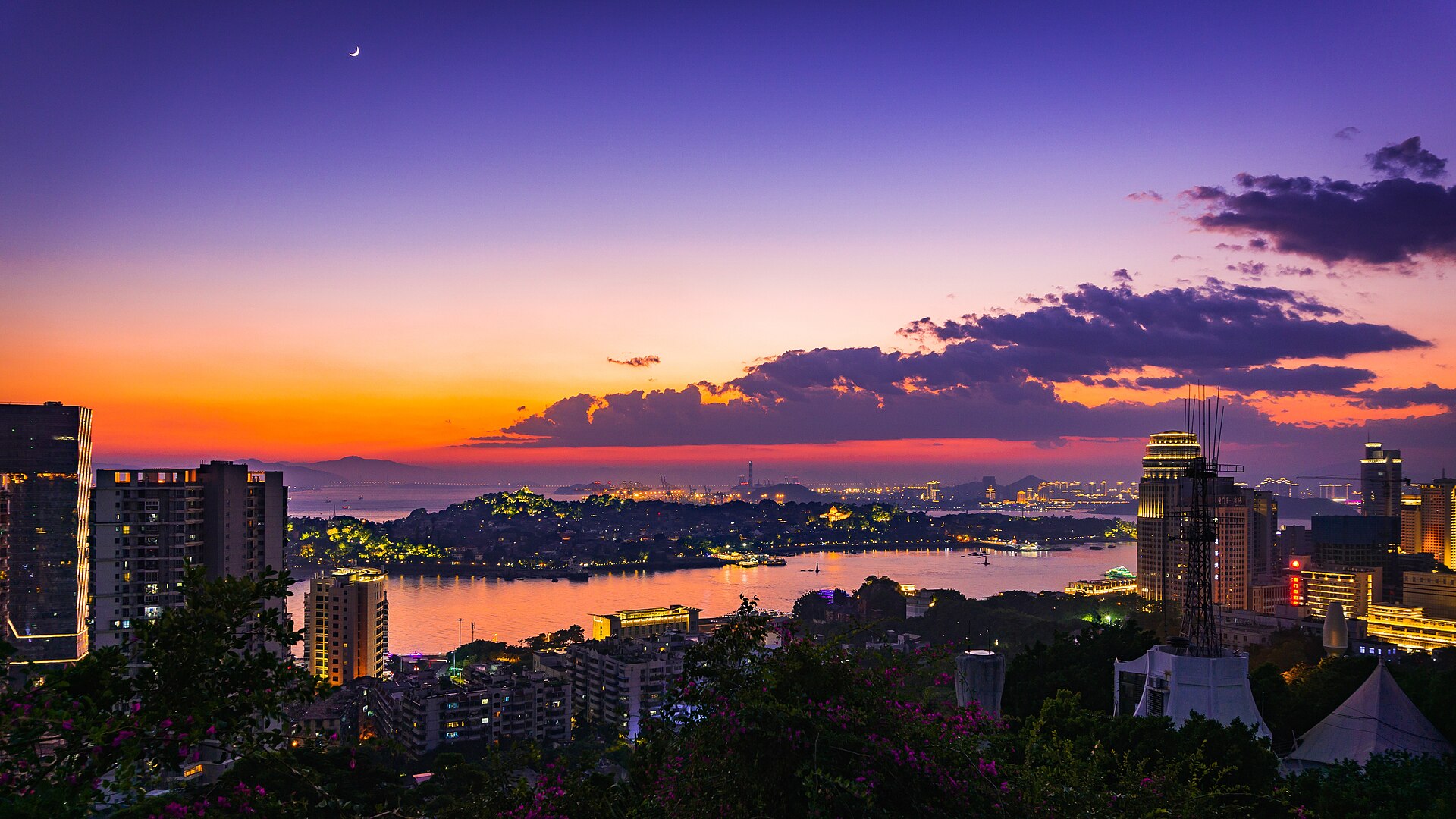
Start the day on Gulangyu Island (鼓浪屿), a small, car-free, UNESCO-listed island of red-roofed colonial villas, old gardens and piano notes drifting down the lanes. The single most important thing today is catching an early sailing. Tourists board at the Xiamen Cruise Terminal (邮轮中心厦鼓码头), not the local Lundu pier downtown. Buying a ticket needs your passport for real-name registration, and you choose a timed sailing in advance.
A standard return is about ¥35, an upgraded air-conditioned cabin about ¥50, and the crossing takes just 15 to 20 minutes — but in high season the morning sailings fill up fast. Book online ahead and arrive at the terminal 30 to 45 minutes before your slot, because you pass a ticket-and-passport checkpoint. The earlier you go, the fewer the crowds and the gentler the sun.
Off the ferry, walk the main highlights. First is Sunlight Rock (日光岩), the island's highest point — a short climb rewards you with a 360-degree view of Xiamen city, the sea and the red roofs across the whole island; entry is around ¥50–100 (sometimes bundled in a combo ticket). Next is Shuzhuang Garden (菽庄花园), a seaside garden that hides a zigzag bridge over the water and houses a Piano Museum that explains why this place earned the nickname 'Piano Island' (ticket around ¥30).
Spend whatever time is left wandering the small lanes between the old villas, stopping at a café and photographing the colonial-era architecture. This is the real charm of Gulangyu, the part no map can show. For a full breakdown of every stop and the best walking order, read the complete Gulangyu Island guide.
Around half past noon, take the ferry back to Xiamen at the Cruise Terminal (your return ticket covers the trip back), then find lunch. If you are heading to Zhongshan Road in the evening anyway, you can eat near there. Xiamen is a serious Minnan (闽南) food city — try Hokkien chicken rice, satay noodles (沙茶面), oyster omelette, or light local snacks before the afternoon walk. For what is worth ordering, see the full Xiamen food guide.
The afternoon offers two paths. The first is the temple-and-campus route, starting at Nanputuo Temple (南普陀寺), a Buddhist temple more than a thousand years old at the foot of Wulao Peak — free to enter, with free incense at the gate, a legendary vegetarian restaurant, and a climb up the hill behind it to a giant 佛 character and a view over the Gulangyu sea. Right next door is Xiamen University (厦门大学), rated one of the prettiest campuses in China, with red-brick buildings by the water, a lotus pond and shady trees. Note that everyone must book a campus entry slot in advance, and during term breaks and holidays slots go fast — check the booking system before you go.
The second path, for those who would rather eat than sightsee, is to walk back toward Zhongshan Road and duck into Bashi market (八市, 'Number Eight Market'), an old wet market in the lanes behind the main street. This is the real kitchen of Xiamen — fresh seafood, dried goods, and tiny Minnan snack stalls that have run for decades. It is busiest from morning to midday, but you can still eat your way through in the afternoon, just a few minutes' walk off Zhongshan Road.
Close the day on Zhongshan Road (中山路), the old town's main pedestrian street, defined by its qilou (骑楼) arcades — Minnan architecture with covered walkways running the whole length. In the evening the street lights up end to end, busy with shops, street food and local bakeries selling all kinds of filled pastries. Graze your way along and you can stretch it out, and at one end the street reaches the waterfront looking back at Gulangyu Island, where you stood this morning — a neat way to close the loop on the day.
If the street snacks have not filled you up, settle into a Minnan or seafood restaurant around here for a proper dinner. The evening mood is friendly and safe, and it is a place locals come to stroll too.
- The Fujian tulou earth houses (福建土楼) — the UNESCO-listed round Hakka clan houses are stunning but far out, a 2 to 4-hour drive and a full day. Save them for a 2 or 3-day plan.
- The old city of Quanzhou (泉州) — a UNESCO-listed ancient port, about 30 minutes by high-speed train from Xiamen North, but it eats a full day and splits off neatly from a one-day plan.
- Zengcuoan (曾厝垵) & the Island Ring Road (环岛路) — a fishing village turned food quarter plus a seaside cycling road, on the southern side of the island. Save them for a day with more time to stroll.
- Jimei School Village (集美学村) — the photogenic architecture on the Jimei side, near Xiamen North station, is on the opposite side from today's plan. Do the main island today and save Jimei for another day.