Home Shenzhen China Shenzhen Hotels About
Home  ›  Asia  ›  China  ›  Shenzhen  ›  Shenzhen or Hong Kong
🇨🇳 China Travel Guide · 2026

Base in Shenzhen or Hong Kong
The Day-Trip Decision

Two cities side by side — Futian to West Kowloon in just 14 minutes, plus several land borders. But crossing means two separate immigration borders, so where do you base?

Start here

These two aren't a choice —they're a pairing

Picture this. You're planning a trip through southern China and two names sit right next to each other on the map — Shenzhen, the young mainland tech megacity that grew from a fishing village into a forest of skyscrapers in a few short decades, and Hong Kong, the Special Administrative Region on Victoria Harbour that's Asia's finance and shopping hub. The question people ask is: which one is better?

Here's the honest answer first — for this pair the real question isn't "which city" but "where do you base". The two are genuinely neighbours. The high-speed train from Futian in the heart of Shenzhen to West Kowloon in Hong Kong takes just about 14 minutes, on top of land borders like Luohu and Futian that you cross via the MTR. People living in Shenzhen and Hong Kong cross between the two every day — it's completely routine.

But there's one thing to understand before you plan: the border and the visa. Even though both are "China," Hong Kong is a Special Administrative Region (SAR) with its own immigration, separate from the mainland. Crossing from Shenzhen to Hong Kong is a "mainland exit plus a Hong Kong entry," and coming back is a "fresh China entry." This guide lays out where it's cheaper to base, how to plan the visa, and — since this is a Shenzhen guide — we'll treat Shenzhen as the value base of the trip.

Quick verdict

The short answer before the details

If you had to pick a base right now

You care about value, cheaper hotels and food, shopping and spa, and you're not worried about multiple China entries Base in Shenzhen — roughly half the cost of Hong Kong, a modern young city, big theme parks, then day-trip Hong Kong on the 14-minute train (but check your multiple China-entry rights first).
You want an international city, the Victoria Harbour view, English everywhere, no VPN, and the simplest visa plan Base in Hong Kong — then day-trip Shenzhen across the border to eat, get a massage and shop, or finish Shenzhen first and cross to Hong Kong one-way before flying home, so you never re-enter China.
Shenzhen · 深圳

Value and a modern city —a base right next to Hong Kong
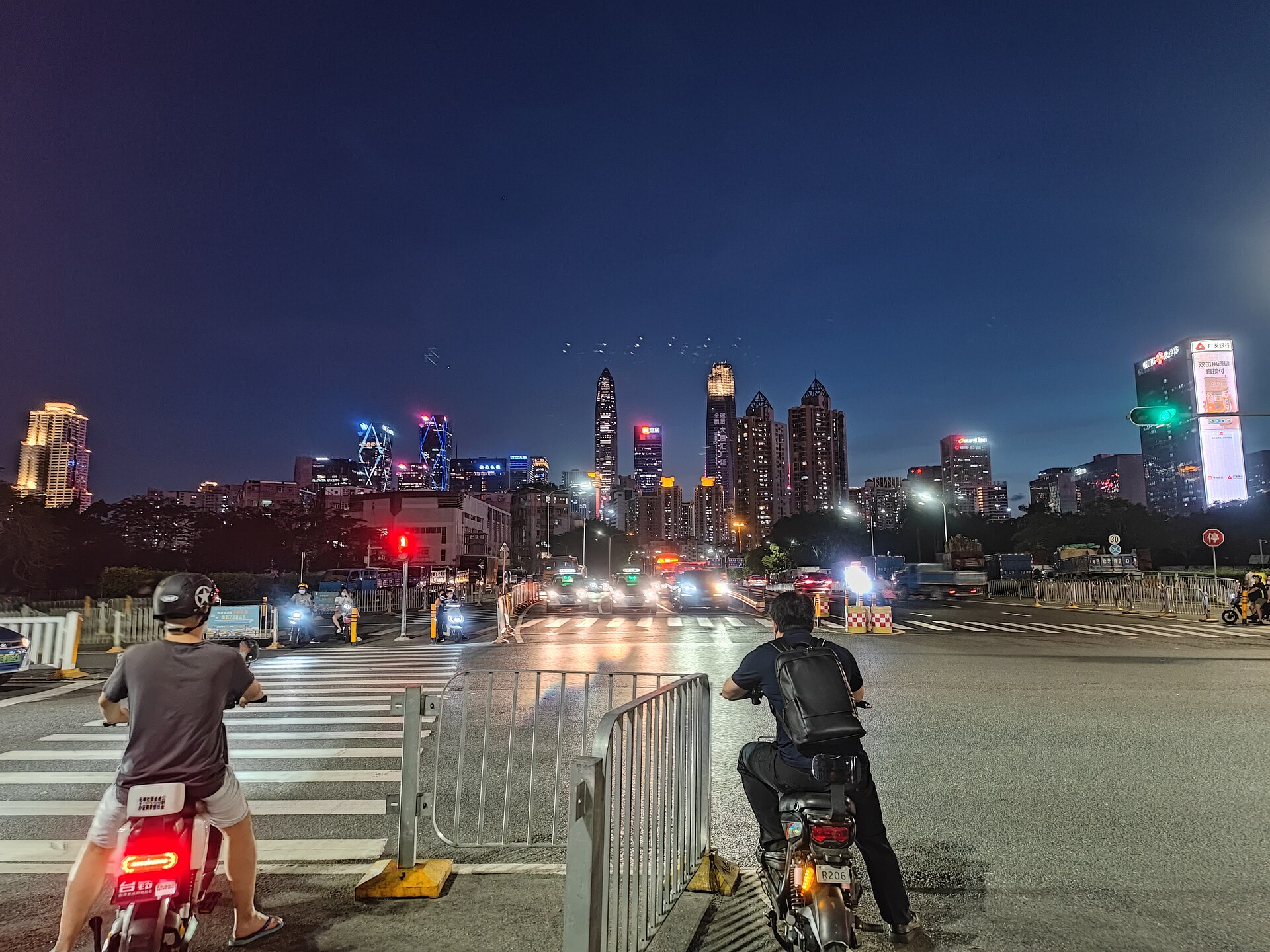
Shenzhen's skyscraper skyline at night — the Futian CBD, a mainland tech megacity right next to Hong Kong

Shenzhen has something Hong Kong can't match as easily — value, in a modern city right next door. This is the place that grew from a fishing village into a tech megacity in just a few decades, with skyscrapers like the Ping An Finance Center at 599 metres, big theme parks like Window of the World and Happy Valley, the arty OCT-LOFT, and wide waterfront greens like Shenzhen Bay Park.

On food, Shenzhen is a city of migrants from all over China, so you get Cantonese dim sum, roast meats, Chaoshan cooking and Hakka cuisine at mainland prices — plus the things Hong Kong residents cross the border for as a matter of habit: massage, spa, nails, haircuts and shopping, all far cheaper than across the water.

The real advantage is location and the money — Shenzhen sits right against Hong Kong, the train from Futian to West Kowloon takes just 14 minutes, Thais enter visa-free for 30 days, and everything costs clearly less than in Hong Kong, which makes it a cheap base that's right next to it.

Strengths · good to know
Great value — hotels and meals roughly half of Hong Kong's
Right next to Hong Kong — Futian to West Kowloon in 14 min + land borders
Massage, spa, nails, shopping and electronics at mainland prices
Big theme parks — Window of the World, Splendid China, Happy Valley
A QR-pay economy — Alipay/WeChat tap-pay almost everywhere
A huge, clean metro at low fares, ¥2–15 a ride
Less English than Hong Kong — you'll lean on a translation app
Set up Alipay/WeChat + a VPN before you go (China blocks some apps)
No harbour view to rival Victoria Peak, and no Disneyland like HK's
Summer (May–Sep) is hot, humid and wet — with typhoon risk
Don't-miss highlights · Shenzhen

The 3 things Shenzhen does best

🎡
Theme parks + the OCT district
Window of the World · Splendid China · Happy Valley

The OCT area in Nanshan lines up theme and culture parks side by side — Window of the World recreates global landmarks, Splendid China miniaturises the whole country, and Happy Valley is the big rides park. Tickets run about ¥200–260 (about ฿1,000–1,300) per park.

All Shenzhen attractions →
💆
Massage, spa + mainland-price shopping
Massage, nails, haircuts · electronics · food

One reason Hong Kong residents cross the border to Shenzhen every weekend is price — foot and body massage, nails and haircuts cost a fraction of Hong Kong, plus the Dongmen district and big malls for all-day shopping. See how to start in the Shenzhen first-timer guide.

Luohu district guide →
🍤
Food from across China + friendly prices
Dim sum · Chaoshan · Hakka · street food

Because it's a migrant city, you can eat your way across China in one place, from Cantonese dim sum to Chaoshan cooking. A tasty meal runs about ¥25–60 (about ฿125–300) a head — clearly better value than Hong Kong. See it all in the Shenzhen food guide.

Shenzhen food guide →
Hong Kong · 香港

Harbour view, shopping, Disney —an international city, separate border

Hong Kong has something Shenzhen can't offer — an international city feel on Victoria Harbour. From the top of Victoria Peak, you look down on the layered skyline of towers along the water that defines Hong Kong. Cross by Star Ferry for a few cents, and catch the Symphony of Lights show after dark. Hong Kong is a dense, vertical city of towers, markets and restaurants — exactly the one you've seen in films.

What makes Hong Kong special is its global polish and family attractions — there's Disneyland and Ocean Park, two big theme parks, brand-name shopping districts like Tsim Sha Tsui and Causeway Bay, and buzzing markets like Mong Kok. English works almost everywhere and signs are bilingual, so it's far easier to get around than the mainland, the Octopus card taps you onto the MTR, buses and into shops, and foreign apps like Google Maps work normally with no VPN.

Two honest caveats. First, price — Hong Kong is clearly more expensive than Shenzhen, both for hotels and food. Second, the border — if you base in Hong Kong and day-trip Shenzhen, the upside is that coming back to Hong Kong isn't a fresh China entry; but going to Shenzhen is a China entry, so if you'll cross several times you still need to check your multiple China-entry rights.

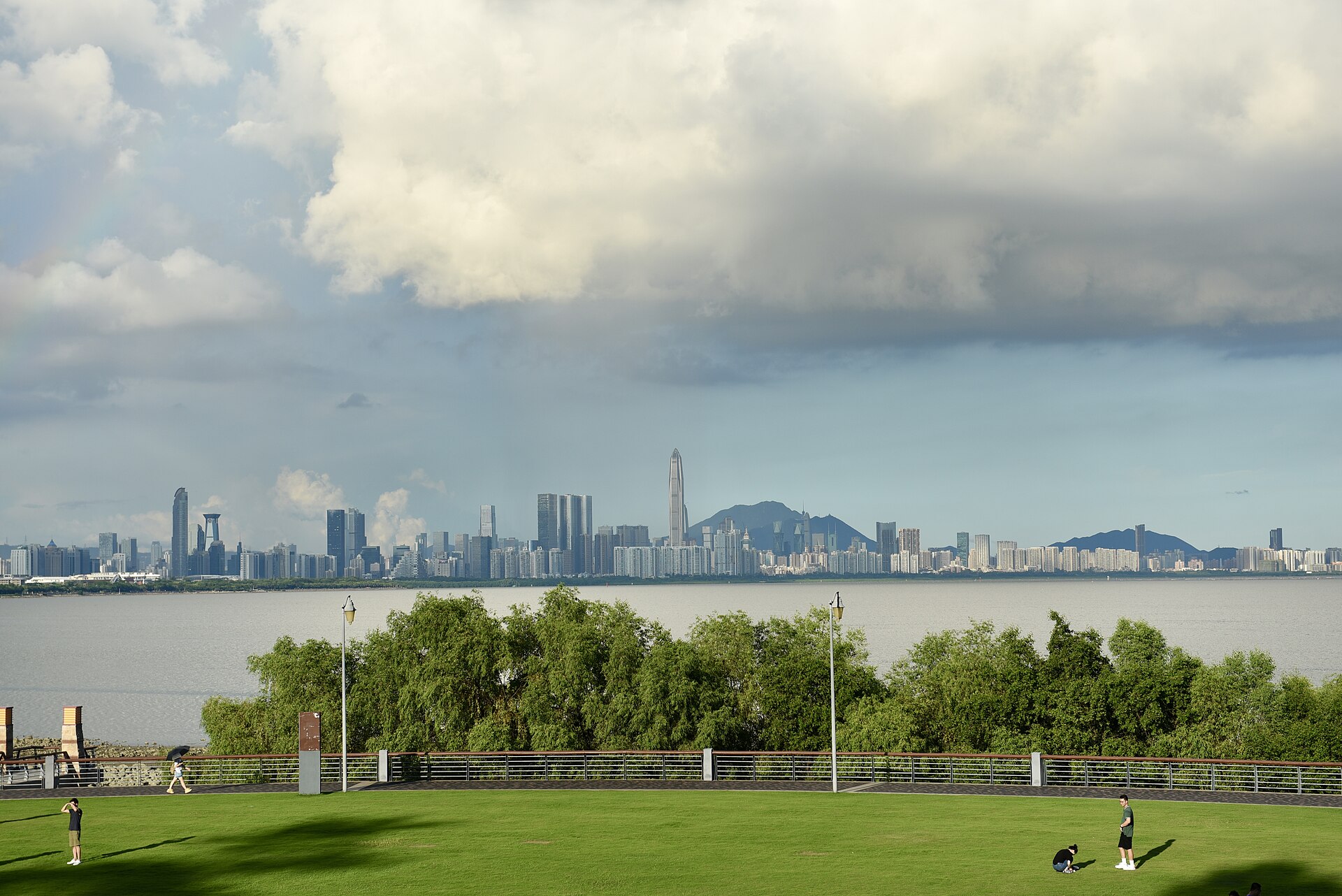
Shenzhen Bay Park on the waterfront looking across the bay toward Hong Kong — used here to represent the Shenzhen–Hong Kong border that sits side by side (not a photo of Hong Kong's Victoria Harbour)
Strengths · good to know
Victoria Harbour + Victoria Peak — an iconic waterfront skyline
Full-on shopping — brand names, markets, big malls, souvenirs
Big theme parks — Disneyland + Ocean Park, great with kids
English everywhere, bilingual signs — easy to get around
Octopus card taps you onto transport and into shops — no Alipay setup
Google Maps + foreign apps work normally (no VPN needed)
Much pricier than Shenzhen — hotels and food roughly double
A Special Administrative Region — a separate border from the mainland
Very dense, small rooms, big crowds especially on holidays
Cheap eats are harder to find than in Shenzhen — meals cost more
Don't-miss highlights · Hong Kong

The 3 things Hong Kong does best

🌃
Victoria Peak + Victoria Harbour
Iconic viewpoint · waterfront skyline · Star Ferry

Ride the Peak Tram up to Victoria Peak for the skyline over the harbour. After dark there's the Symphony of Lights show, and the Star Ferry crosses the water for just a few Hong Kong dollars — the whole Hong Kong picture in one place.

🛍️
Shopping + buzzing markets
Brand names · night markets · souvenirs

Tsim Sha Tsui and Causeway Bay for malls and brand names; Mong Kok for the Ladies' Market, the goldfish market, food and toys packed into every lane. For a lot of people, shopping is the reason they fly to Hong Kong at all.

🏰
Disneyland + Ocean Park
Two big theme parks · great for families

Hong Kong Disneyland and Ocean Park (theme park + aquarium + a sea-view cable car) are the trump card for families with kids — something Shenzhen doesn't have at this scale. Allow a full day for each.

Side by side

Every angle in one table

Aspect Shenzhen 深圳 Hong Kong 香港
Main draw Value, a modern city, theme parks, massage/spa, shopping Victoria Harbour view, shopping, Disney, an international city
The image of it A tech megacity grown from a fishing village + the 599 m Ping An tower A waterfront skyline of towers, a dense city, the one in films
Price / value Roughly half the cost — mid hotels rarely top ¥500 (~฿2,500) Much pricier — mid hotels HK$1,000–1,500 (~฿4,400–6,600)
Local food Food from across China — dim sum, Chaoshan, Hakka, roast meats (meals ¥25–60) Cantonese + international — but good meals often over HK$80 (~฿350)
Entry (Thai passport) Visa-free 30 days/entry (90 days per 180) — the mainland Visa-free 30 days — under Hong Kong's own rules (separate SAR border)
Getting there from Thailand Direct Bangkok → SZX ~3.5–4 hr (or fly HKG and cross the border) Direct Bangkok → HKG ~2.5–3 hr
Money / payments ¥ yuan · Alipay/WeChat QR almost everywhere HK$ Hong Kong dollars · tap-to-pay Octopus card
Language / internet Mandarin + Cantonese · little English · need a VPN Cantonese + English everywhere · Google/foreign apps work normally
How they connect Futian ↔ West Kowloon train ~14 min (¥68 · 130+ trains/day) + Luohu/Futian land borders via the MTR · clear immigration each time
Days suggested 2–3 days (OCT theme parks, massage/spa, shopping, food) 2–3 days (Victoria Peak, shopping, Disneyland/Ocean Park)
Best for Value seekers / shop-and-spa trips / a cheap base next to HK Families with kids / shoppers / an English-speaking global city
Crossing between them

14 minutes apart by train —but you exit and re-enter

Shenzhen and Hong Kong are neighbours and easy to cross between — but the immigration and visa point is the thing to get straight before you plan, because Hong Kong is a Special Administrative Region with a separate border from the mainland.

Futian ↔ West Kowloon by high-speed train (fastest): about 14 minutes, from Futian station in the heart of Shenzhen's CBD to Hong Kong West Kowloon, with well over 130 services a day from around 07:00 to late. Second-class tickets cost about ¥68 (about ฿340), and you clear immigration at the station under the co-location system — straight through in one building.
Luohu / Futian land borders (cheap and classic): if you're not in a hurry, cross at the land borders — Luohu (Lo Wu) or Futian (Lok Ma Chau) — then take the MTR East Rail Line into Hong Kong. Cheaper than the fast train but slower; the Futian checkpoint runs roughly 06:30–22:30, which suits a same-day round trip and budget travellers.
The visa angle to plan for (most important): Thais enter both places visa-free, but under different rules — the mainland (Shenzhen) is 30 days per entry, up to 90 days per 180, under the China–Thailand agreement that began 1 March 2024, while Hong Kong is 30 days under its own SAR rules. Crossing from Shenzhen to Hong Kong is a mainland exit plus a Hong Kong entry, and coming back to Shenzhen counts as a fresh China entry. If you'll base in Shenzhen and day-trip Hong Kong and back, check you're allowed multiple China entries. See the latest rules in the China visa-free guide for Thais.
How to book: reserve the train ahead on the Trip.com or 12306 app and board with your passport; book early around the long holidays. For the full how-to on booking and boarding, see the China high-speed rail guide.
The money, head to head

On cost —Shenzhen wins clearly

Both cities sit in the Pearl River delta and right against each other, but set the prices side by side and the gap is wide. Overall, Shenzhen is roughly half the cost of Hong Kong — which is exactly why Hong Kong residents cross the border to sleep, eat and get a massage in Shenzhen.

Shenzhen (¥ yuan) — a mid-range hotel rarely tops ¥500 (about ฿2,500) a night, a tasty meal is ¥25–60 (about ฿125–300), the metro is ¥2–15 a ride, and a foot or body massage starts around ¥80–150 (about ฿400–750). A comfortable day runs about ¥350–550 (about ฿1,750–2,750). See real numbers in the Shenzhen trip budget.
Hong Kong (HK$ dollars) — a mid-range hotel usually runs HK$1,000–1,500 (about ฿4,400–6,600) a night, and a decent meal under HK$80 (about ฿350) is harder to find. Daily costs run roughly double Shenzhen's, in exchange for the international feel and the full set of attractions.

The simple takeaway: if budget is the deciding factor, Shenzhen gives far better value — you stay in a nicer hotel for the same money, eat well, get a spa treatment and shop without flinching. In Hong Kong you pay more for the harbour view, the brand-name shopping and the global polish. A trick many travellers use is to base their sleeping, eating and spa in Shenzhen, then hit Hong Kong hard on a day trip — it keeps the budget in check, as long as you've sorted the multiple China-entry question first.

Do both

The "base in Shenzhen, day-trip Hong Kong" 4-5 day plan

The best-value route is to base in Shenzhen (cheaper), spend two days there, then day-trip Hong Kong for one or two days on the 14-minute train — but remember a round trip to Hong Kong is a China exit and a fresh China entry, so check your multiple China-entry rights first. If you'd rather not risk it, finish Shenzhen and cross to Hong Kong one-way (staying there), which is the simpler plan.

DAY 1
Shenzhen · arrival
Land at Shenzhen airport, into the city — Futian + first dinner

Fly direct into Shenzhen (SZX), about 3.5–4 hours, and take Metro Line 11 into the city. Check in around Futian or Luohu (close to the Hong Kong borders). In the afternoon, walk Lianhuashan Park for the skyline view with the Ping An tower, then find a Cantonese or Chaoshan spot for a first dinner. See how to begin in the Shenzhen first-timer guide.

DAY 2
Shenzhen · theme parks + spa
The OCT district in Nanshan + Dongmen shopping

In the morning, head to the OCT area in Nanshan — pick Window of the World or Happy Valley, then the arty cafés of OCT-LOFT. Late afternoon, come back to shop the Dongmen district, and finish with a friendly-priced foot or body massage — the thing Shenzhen does best of all.

DAY 3
Hong Kong day trip · the harbour
14-minute train → Victoria Peak + shopping

In the morning, go to Futian station and take the 14-minute train across to West Kowloon (clearing immigration at the station — this is your mainland exit plus Hong Kong entry). Ride the Peak Tram up to Victoria Peak for the skyline, shop Tsim Sha Tsui in the afternoon, cross on the Star Ferry, and after dark catch the Symphony of Lights — then take the train back to Shenzhen (a fresh China entry, so you'll need multiple-entry rights).

DAY 4
Hong Kong day trip · theme park / your call
Disneyland or Ocean Park (or more of Shenzhen)

With kids, cross to Hong Kong again for a full day at Disneyland or Ocean Park. If you'd rather not cross the border so often, swap in more of Shenzhen instead — Sea World in Shekou by the water, or Dameisha Beach, both easy days that don't involve a border crossing.

DAY 5
Loose ends, then fly
Souvenirs, then out to SZX or HKG

An easy morning — pick up souvenirs, then fly home from Shenzhen (SZX). Or, on a one-way plan, spend your last night in Hong Kong and fly home from HKG (so you never re-enter China). On a shorter trip, trim it to four days. For more ideas, see day trips from Shenzhen.

Make the call

Where to base if you are...

If value and shop-eat-spa come first — base in Shenzhen. Hotels and food at roughly half the cost of Hong Kong, plus massage, nails and mainland-price shopping, then day-trip Hong Kong on the 14-minute train — just check your multiple China-entry rights first.
If you want an international city and the kids — base in Hong Kong. The Victoria Harbour view, Disneyland, English everywhere and no VPN, then day-trip Shenzhen to eat, get a massage and shop, or finish Shenzhen first and cross one-way. Just budget more for it.
If it's your first trip to China and you're nervous about language or apps — Hong Kong is easier in English and needs no VPN, while Shenzhen is better value with better food and spa but needs Alipay/WeChat + a VPN set up beforehand. Choose by which trade-off you can live with.
If the border and visa worry you most — the simplest plan is to finish Shenzhen first, then cross to Hong Kong one-way (staying overnight there) and fly home from HKG, so you never re-enter China. This uses both visa-free arrangements in the most straightforward way.
Frequently asked

FAQ · Shenzhen or Hong Kong day trip

How fast can you get between Shenzhen and Hong Kong?
Very fast — Shenzhen and Hong Kong are neighbours. The quickest way is the high-speed train from Futian station, in the heart of Shenzhen's CBD, to Hong Kong West Kowloon in about 14 minutes, with well over 130 services a day from morning to late evening. Second-class tickets cost around ¥68 (about ฿340). Besides the train, there are land borders such as Luohu (Lo Wu) and Futian (Lok Ma Chau) that you cross via the MTR East Rail Line. The thing to know is that Hong Kong is a Special Administrative Region with its own border, separate from the mainland, so you clear immigration every time you cross. See booking and boarding in the China high-speed rail guide.
Is basing in Shenzhen and day-tripping Hong Kong really better value?
On money, clearly. Hotels and food in Shenzhen run roughly half the cost of Hong Kong's — a mid-range hotel in Futian rarely tops ¥500 (about ฿2,500) a night, while the equivalent in Hong Kong usually runs HK$1,000–1,500 (about ฿4,400–6,600). But there's an important catch to understand first: the visa. Thais enter the mainland (Shenzhen) visa-free for 30 days, and Hong Kong visa-free for 30 days under Hong Kong's own rules — but crossing from Shenzhen to Hong Kong and back to Shenzhen counts the return as a fresh China entry. So if you want to base in Shenzhen and day-trip Hong Kong and back in a day, check that you're allowed multiple China entries. See real numbers in the Shenzhen trip budget.
Do Thai passport holders need a visa for Shenzhen and Hong Kong?
No to both, but under different rules. Thai ordinary passport holders enter the mainland (including Shenzhen) visa-free for 30 days per entry (up to 90 days cumulatively within any 180-day period) under the China–Thailand agreement that began on 1 March 2024, and enter Hong Kong visa-free for up to 30 days under Hong Kong's own rules. The key point is that Hong Kong is a Special Administrative Region (SAR) with its own border, separate from the mainland — so crossing from Shenzhen to Hong Kong is a mainland exit plus a Hong Kong entry, and coming back is a Hong Kong exit plus a fresh China entry. Check the current rules before you go in the China visa-free guide for Thais.
If I base in Shenzhen and want a same-day return trip to Hong Kong, how do I plan the visa?
This is the part many people miss. A same-day return to Hong Kong from a Shenzhen base means you exit China in the morning (entering Hong Kong) and have to re-enter China in the evening (back to Shenzhen). The China visa-free arrangement allows multiple entries within the 90-days-per-180 window, but check the latest conditions carefully, as rules can change. An easier plan for some travellers is to finish Shenzhen first, then cross to Hong Kong one-way (staying overnight there) and fly home from Hong Kong — that way you don't re-enter China at all. Read the detailed rules in the China visa-free guide for Thais.
How big is the cost difference between Shenzhen and Hong Kong?
It's large. Shenzhen is roughly half the cost of Hong Kong overall. A mid-range hotel in Shenzhen rarely tops ¥500 (about ฿2,500) a night, while the equivalent in Hong Kong usually runs HK$1,000–1,500 (about ฿4,400–6,600). Food is just as stark — a tasty meal in Shenzhen is around ¥25–60 (about ฿125–300), whereas in Hong Kong a decent meal under HK$80 (about ฿350) is harder to find. Shenzhen is also a QR-pay city (Alipay/WeChat almost everywhere) and is known for cheap massage, nails and electronics shopping that Hong Kong residents cross the border to use all the time. See hotels at every level in the 10 best hotels in Shenzhen.
What does Hong Kong have that Shenzhen doesn't?
An international city feel that's hard to find elsewhere — the Victoria Harbour view from the top of Victoria Peak, the waterfront skyline that defines the city, Disneyland and Ocean Park, dense brand-name shopping and markets, English spoken almost everywhere, the tap-to-pay Octopus card, and foreign apps like Google Maps that work normally with no VPN. Shenzhen, by contrast, is strong on value, a modern young city, big theme parks like Window of the World and Happy Valley, massage and spa, and mainland-price shopping — choose by what you want most from this trip. See all the sights in the Shenzhen attractions guide.