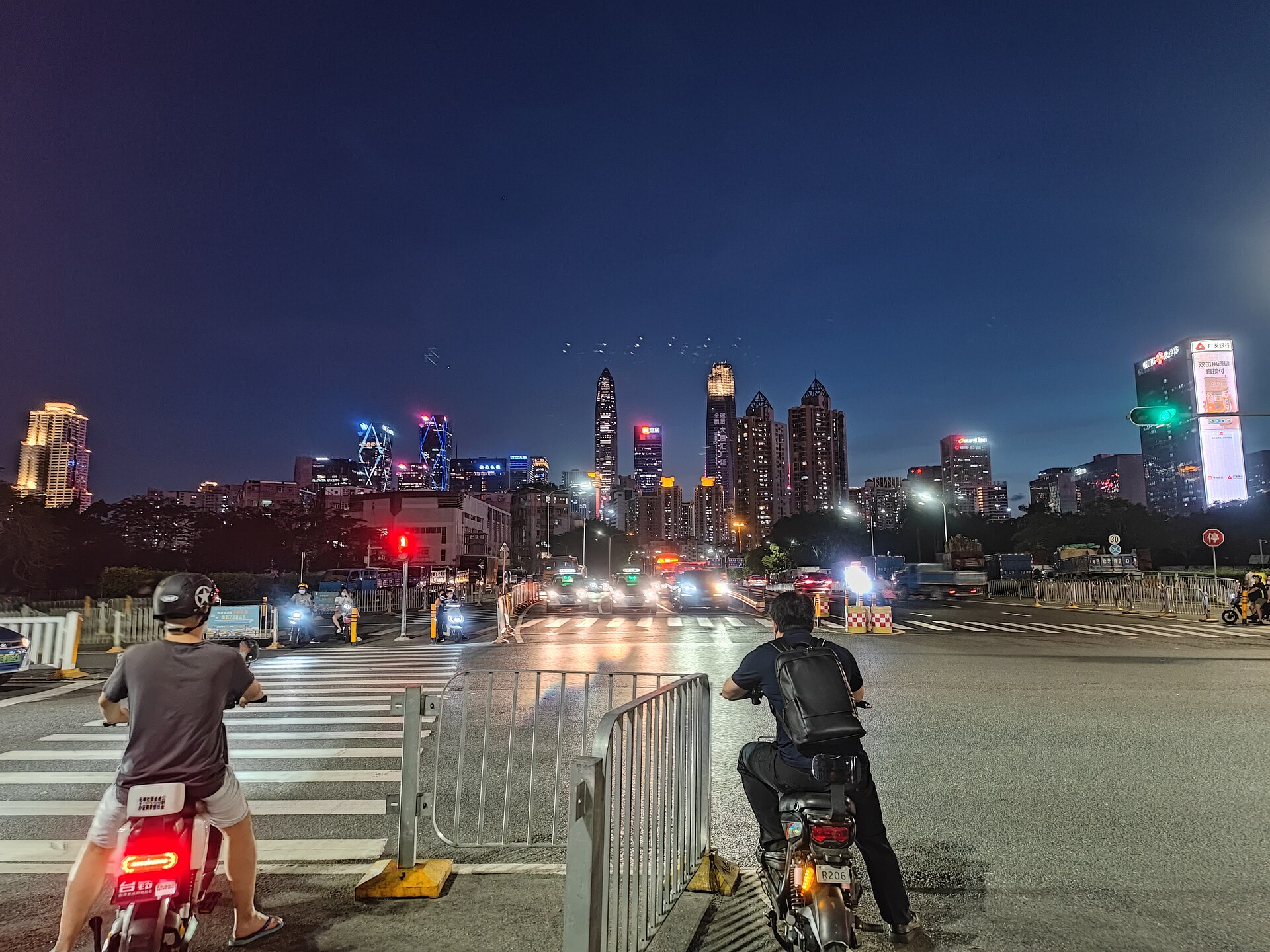
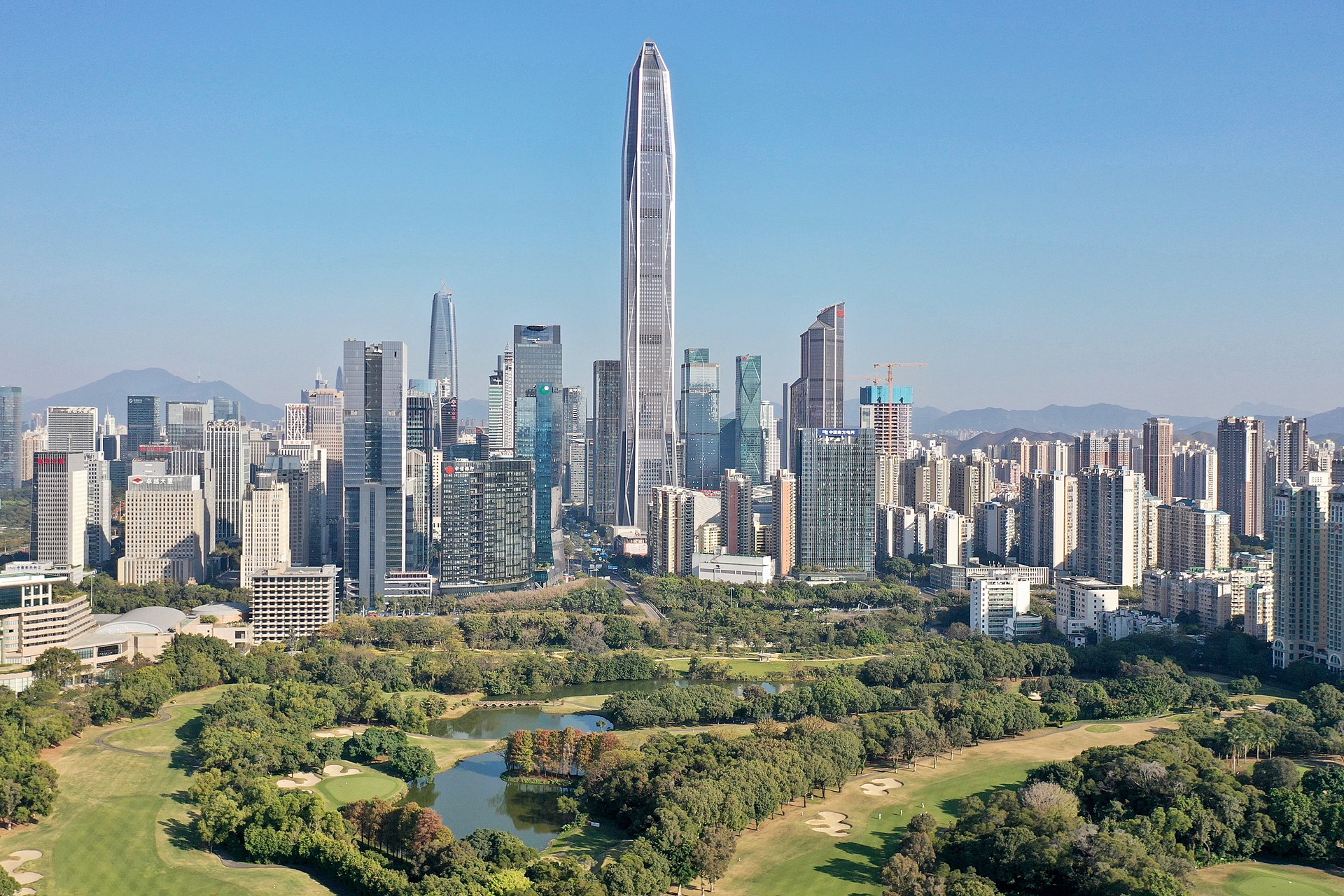
Luohu (罗湖) is where Shenzhen began — a 300-year-old shopping street at Dongmen, KK Mall and the KK100 tower with the St Regis up top, the Diwang observation deck on the 69th floor, and the Luohu border you can walk straight across into Hong Kong. It all sits central, with Metro Line 1 to reach the rest of the city.
Picture stepping off a train at Shenzhen Railway Station, walking a few steps to the Hong Kong border, with a multi-storey shopping mall across the street and, a little further on, a warren of pedestrian lanes selling cheap clothes and street food that you can smell from the corner. That is the appeal of Luohu (罗湖), the original downtown and the very place Shenzhen grew from before Futian and Nanshan became districts of glass towers. Luohu packs the old city, a shopping street, the land border and the railway station into one tight radius.
The spine of the area is Dongmen Pedestrian Street (东门步行街), the oldest shopping street in Shenzhen, walked by over 500,000 people a day. Beside it are KK Mall and the KK100 tower (京基100), 442 metres tall with the St Regis on the top floors. At the southern edge sit the Luohu border (罗湖口岸) — the busiest land crossing to Hong Kong — and Shenzhen Railway Station. The transport heart of it all is Metro Line 1 (Luobao), with Laojie (老街) station for Dongmen and Luohu (罗湖) at the line's end for the border and the trains.
What makes Luohu genuinely useful is value: stay in a business-district tower elsewhere and the bill climbs fast. Here you get a central location at a lighter price than Futian or Nanshan, you shop and eat from the hotel door, and you have the easiest hop into Hong Kong. That is why we point travellers here when the trip is mostly about shopping and food — and when they want a Shenzhen base for Hong Kong day trips.
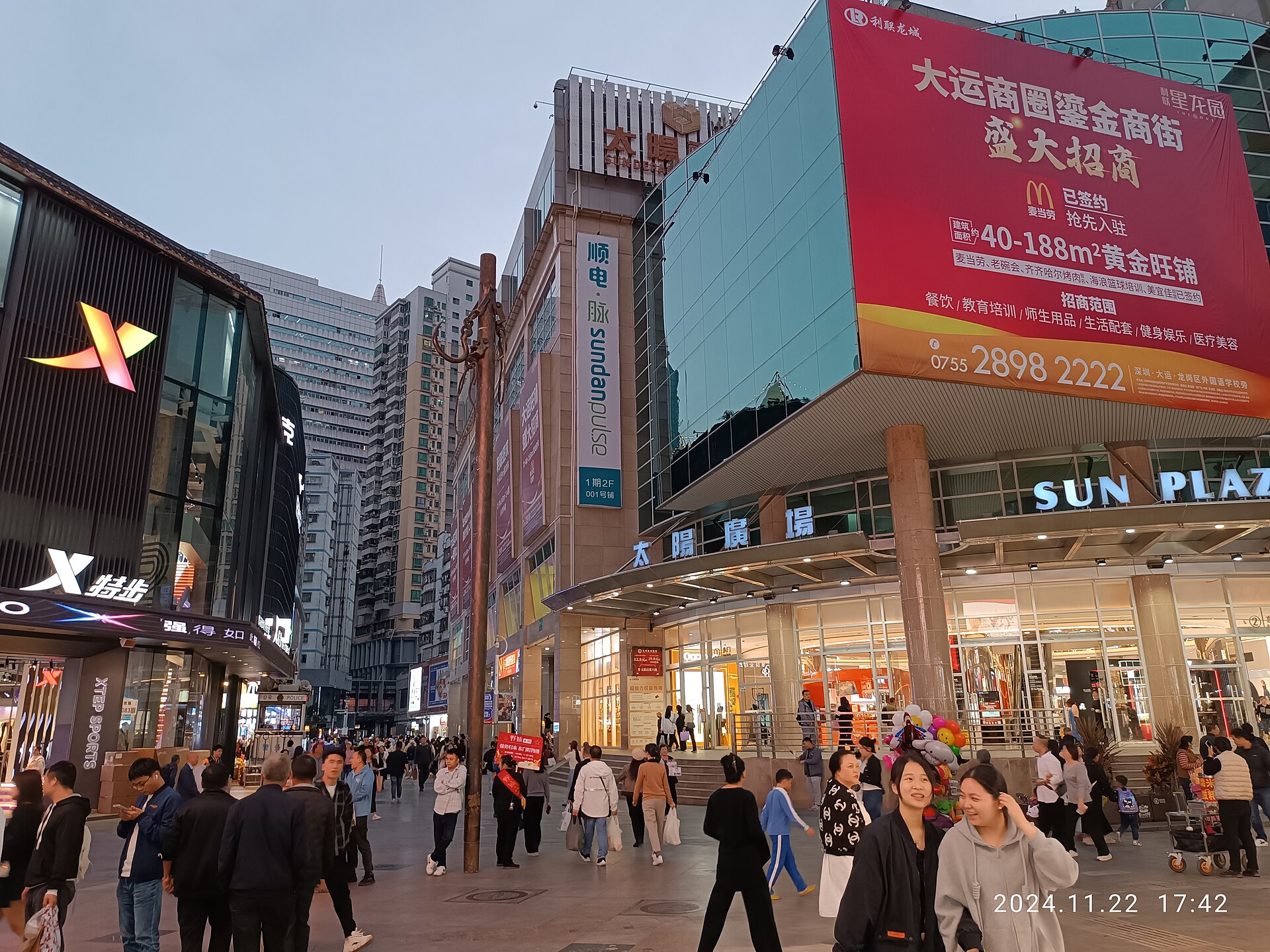
Luohu is not as polished as Futian or Nanshan — and that is the charm. It is a living old town: busy, energetic, and easy on the wallet.
It is worth saying plainly that Luohu is older and rougher than Shenzhen's newer districts. Some buildings show their age, the pavements are packed, and Dongmen in the evening is a crush of people. But if you like a Chinese city with real energy, Luohu is more fun than the quiet, orderly glass-tower districts. This is where Shenzhen locals come for cheap shopping and street food, and where Hong Kongers cross over for haircuts, nails, massages and meals at half the price of home.
Luohu is the best-value of Shenzhen's downtown districts for both rooms and food. There are plenty of affordable hotels, and a few steps from the door you hit street food and local rice shops at local prices. If money is tight but you still want to sleep central and walk to the sights, Luohu offers value Futian and Nanshan can't match.
If you plan to base yourself in Shenzhen and hop into Hong Kong for the day, Luohu is the best location going. Walk across the Luohu border and connect to the MTR East Rail Line straight into the city. Cross over in the morning, come back to a Shenzhen hotel in the evening at a fraction of Hong Kong room rates. Read the comparison in Shenzhen vs Hong Kong day trips.
Dongmen puts clothing, shoes, cosmetics, youth fashion and street-food lanes within walking distance of the hotels. You can haggle, and the variety is huge; by night the lights and the crowds give it real life. A late meal or a forgotten purchase is a few steps from your room. See what to eat in Shenzhen street food.
For a first trip, Luohu is easy to walk and hard to get lost in. Metro Line 1 reaches almost every major sight, including Window of the World and OCT over in Nanshan. If you want to compare it with other areas before booking, read where to stay in Shenzhen and the Shenzhen first-timer's guide.
The oldest shopping street in Shenzhen, tracing back more than 300 years to the original "Shenzhen market". It was pedestrianised in 1999 and now sees over 500,000 visitors a day. It is a warren of cheap-clothing shops, shoes, cosmetics, youth fashion and street-food lanes — you can haggle, and the variety is enormous. It suits people who like rough-and-ready shopping rather than air-conditioned malls. It is free and open whenever the shops are. Take the metro to Laojie (老街) on Lines 1/3 and you step right out onto it.
If Dongmen is Luohu's old, rough side, KK100 is its new, polished one. The tower is 442 metres and 98 floors; the lower levels are KK Mall, full of big brands and good restaurants, while floors 75 to 100 are the St Regis Shenzhen, whose lobby on the 96th floor looks out over the Shenzhen skyline, the bay and the green hills of Hong Kong. Nearby are the MixC mall and KingGlory Plaza, good places to escape the heat. Read the stay write-up at the St Regis Shenzhen review.
Luohu's legendary border, once the only land crossing into Hong Kong, is still the busiest land crossing between Shenzhen and Hong Kong, handling up to around 250,000 people a day on busy weekends. It connects directly to Luohu station at the end of Shenzhen's Metro Line 1 and to the MTR's Lo Wu station on the East Rail Line. Clear China exit control, walk across the bridge, and ride the train straight into Hong Kong. It is open roughly 06:30 to midnight daily. You need a passport and the right China visa to re-enter — check China visa-free entry for Thai passport-holders before you go.
Another of Luohu's older skyscrapers, with the Meridian View Centre observation deck on the 69th floor open for a 360-degree look over Shenzhen — on a clear day you can see all the way to the hills of Hong Kong and the sea. Up top there are exhibits on how Shenzhen went from fishing village to metropolis in a few decades. Entry is about ¥80 (~฿400); hours and prices change, so check first. The name "Diwang" (地王, "land king") comes from the record auction price the plot fetched at the time.
At the southern edge of the area sits Shenzhen Railway Station, with fast C-series trains to Guangzhou in as little as 63 minutes. The station merges with the Luohu border, Luohu metro station and the coach station in one giant complex. Across from it is Luohu Commercial City (LCC), a multi-floor mall famous for tailored suits, made-to-order bags, watches and well-made copies — haggle well and you'll do nicely. For onward travel to Guangzhou, see the China high-speed rail guide.
Luohu is the best-value district in Shenzhen for eating — from the street-food lanes of Dongmen to Cantonese roast-meat shops and old teahouses.
The lanes around Dongmen are heaven for grazers — grilled skewers, fried meatballs, soup wontons, cheung fun (steamed rice rolls), oyster omelettes and double-skin milk dessert. Snacks generally run just ¥10-30 (~฿50-150) a plate, perfect to eat as you shop. The street food here is varied because Shenzhen people come from all over China, so you'll find Cantonese, Sichuan and Chaoshan flavours side by side. More in Shenzhen street food.
Luohu hugs Hong Kong and is an old district, so it is thick with proper Cantonese restaurants — crispy pork, roast duck and char siu — plus teahouses for a Cantonese-style morning of dim sum. Prices here run noticeably lighter than Futian or Nanshan; a plate of roast meat over rice is around ¥30-50 (~฿150-250). For what to try, see Shenzhen Cantonese roast meats and the complete Shenzhen food guide.
This is the best-value central base in the city — walk to shopping and food from the hotel door, with the easiest hop to Hong Kong — from luxury in the KK100 tower to affordable rooms near Dongmen.
The strongest argument for basing yourself in Luohu is that you get a central location at a lighter price than Futian or Nanshan. Wake up to street food, shop Dongmen and ride the Diwang deck by day, browse KK Mall in the evening, and if you fancy Hong Kong you simply cross the Luohu border. The Lines 1 station at Laojie/Luohu takes you to other districts or out to the airport and railway stations. If your trip is mostly about shopping and food rather than skyscrapers, Luohu is good value and a lot of fun.
One thing worth knowing: Luohu is older and busier than the newer districts, and Dongmen is crowded and noisy at night. If you sleep lightly, pick a hotel on a higher floor or with rooms set back from the main street — you keep the good location but get a quieter night. And to weigh up luxury against value before you book, read luxury vs value stays in Shenzhen.
Or read the individual hotel reviews for properties in Luohu:
The heart of the area is Metro Line 1 (Luobao), with Laojie station for Dongmen and Luohu at the end of the line for the border and the railway station. Within the area, walking is easiest because the sights sit close together.
09:30 — Start at a teahouse in the area with a Cantonese-style morning of dim sum.
10:30 — Walk Dongmen Pedestrian Street, shopping cheap clothes and accessories — haggle for fun.
12:00 — Dip into the Dongmen street-food lanes for Cantonese snacks and double-skin milk dessert.
12:45 — Head to KK Mall under the KK100 tower to escape the heat and browse the brands.
13:30 — Lunch on Cantonese roast meat over rice at a local spot.
Follow the half-day route above through the morning, then continue:
14:30 — Ride the Diwang Building observation deck on the 69th floor for the view over Shenzhen and the Hong Kong hills.
15:30 — Walk to the railway-station side and shop Luohu Commercial City (tailored suits, bags — haggle).
16:30 — If you want more, cross the Luohu border into Hong Kong for the evening (allow time for immigration).
18:30 — Back for an evening walk through Dongmen, dinner and the lights.
Luohu pairs in one trip with the Nanshan side — take Metro Line 1 to Shenzhen's top attractions, including Window of the World and OCT, or go up the city's tallest tower at the Ping An Finance Center, and plan the whole trip with the complete Shenzhen city guide.