Home Hangzhou China Hangzhou Hotels About
Home  ›  Asia  ›  China  ›  Hangzhou  ›  Hangzhou or Suzhou
🇨🇳 China Travel Guide · 2026

Hangzhou or Suzhou
Which to Visit — or Both?

West Lake and a city of classical gardens — two sister cities of the Jiangnan, just ninety minutes apart by train.

Start here

The good news —you may not have to choose

Picture this. You're planning a trip through China's Jiangnan region (the lands south of the Yangtze) and these two names keep appearing side by side — Hangzhou, the lakeside city that Chinese poets have praised for a thousand years, and Suzhou, the city of classical gardens and ancient canals that people call the "Venice of the East." The classic question follows: if time is tight, which one do you visit?

Here's the honest headline first — the best thing about this pair is that the two cities are extremely close. High-speed trains link them in about 1 to 1.5 hours, and both also connect to Shanghai on the same rail line. Which means a lot of people don't pick one over the other at all — they fit both into a single trip.

This guide lays out clearly what each city does differently — the highlights, the food, the vibe and the crowds — then helps you work out which to choose if you only have time for one, and how to plan a trip that catches both (there's a 4-5 day itinerary at the end).

Quick verdict

The short answer before the details

If you had to choose right now

You want a big lake, tea hills, hilltop temples, a buzzing city with lots of cafés, and a direct flight from Thailand Pick Hangzhou — West Lake to wander all day, Lingyin Temple in the hills, the Longjing tea hills, a large city with plenty of food and cafés, and a direct flight from Bangkok.
You're drawn to classical Chinese gardens, ancient canals, old stone lanes, and a slow, quiet pace Pick Suzhou — the most beautiful UNESCO gardens in China, a canal network that earned it the Venice of the East nickname, the lovely Pingjiang Road, and a centuries-old silk heritage.
Hangzhou · 杭州

A lake, temples and tea hills —and a city that's alive
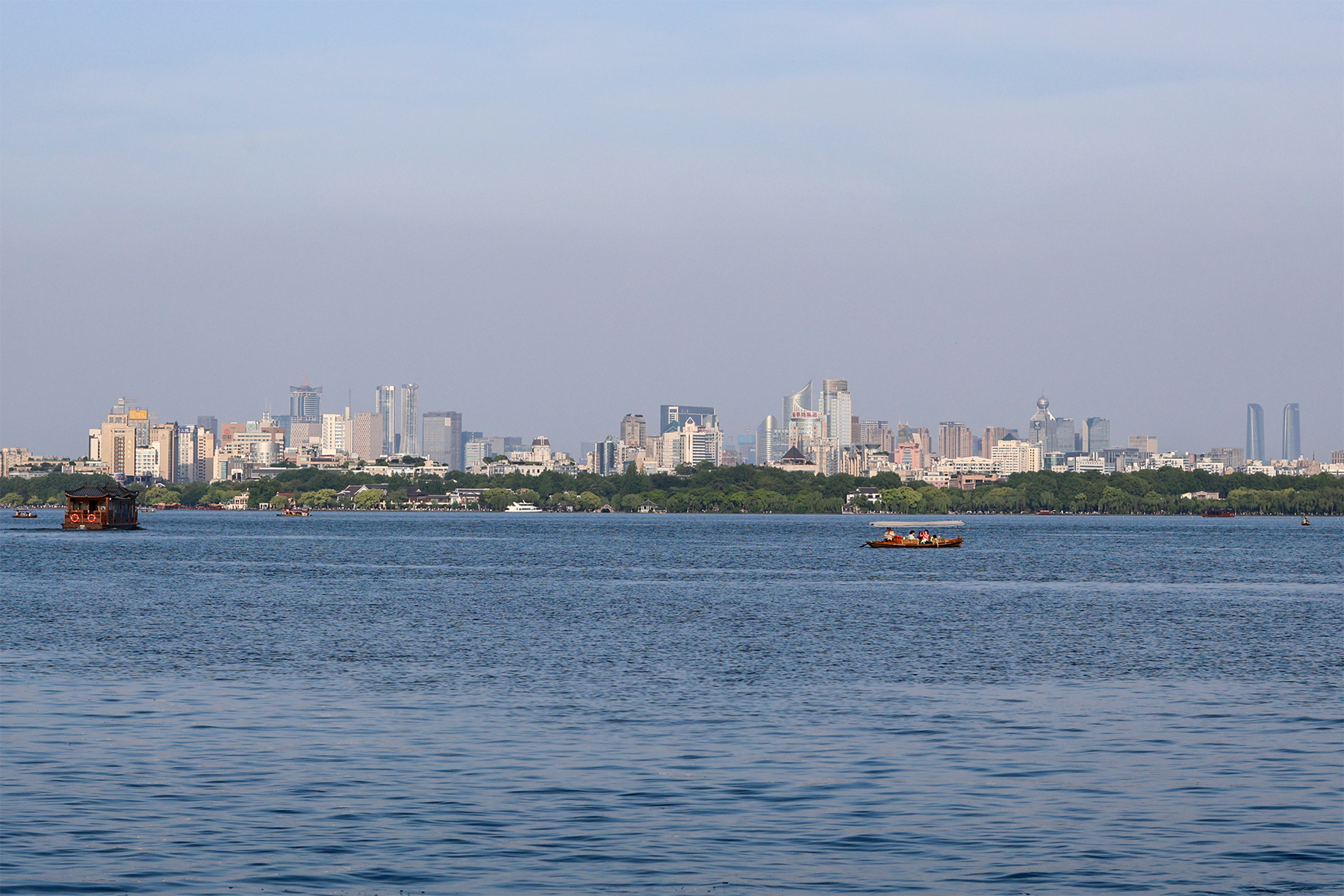
West Lake, Hangzhou — causeways and willows along the water, a UNESCO site celebrated by Chinese poets for centuries

Hangzhou has something Suzhou doesn't — a big lake you can wander all day. West Lake is the UNESCO-listed heart of the city, ringed by raised causeways, old bridges, the Leifeng Pagoda, and willows that poets have written about for a thousand years. Come early when mist still clings to the water, then cycle the loop — Hangzhou does this kind of day extremely well.

Beyond the lake there's Lingyin Temple, an ancient and still-busy Buddhist temple in the hills with its grottoes of carved Buddhas at Feilai Feng, and the Longjing tea village, where you can walk up emerald tea slopes and sip Longjing green tea fresh from the source. Hangzhou is a big, lively city — cafés, restaurants, and shopping streets like Hefang Street that keep going into the evening.

One real advantage is getting there — Hangzhou's Xiaoshan International Airport (HGH) has direct flights from Bangkok, around 4 to 4.5 hours, which makes it a convenient place to start a trip rather than flying into another city and taking the train.

Strengths · good to know
West Lake — walk it, cycle it, cruise it, all day without getting bored
Hilltop temple and tea hills — Lingyin, Feilai Feng, the Longjing tea village
A big, lively city — more cafés, restaurants and shopping
Direct flights from Bangkok — start the trip here, no train transfer needed
A solid first-timer base — hotels at every budget, wide metro coverage
Terminus of the Grand Canal — there are old canals to walk too
West Lake gets very crowded on weekends and during Golden Week
Lingyin Temple and the tea hills are outside the centre — bus or taxi
The city is spread out — getting between sights usually means the metro
No UNESCO-class classical gardens like Suzhou's
Don't-miss highlights · Hangzhou

The 3 things Hangzhou does best

🏞️
West Lake
UNESCO site · free to walk · best at dawn and sunset

The heart of Hangzhou. Walk the Su Causeway, cross the Broken Bridge, see the Leifeng Pagoda, or take a boat across the lake — cruises start around ¥55–70 (about ฿275–350). Come early for mist and fewer people.

West Lake guide →
🛕
Lingyin Temple + Feilai Feng
Hilltop Buddhist temple · ancient rock carvings · out of centre

One of the oldest and busiest temples in southern China, set among forest and the carved-Buddha grottoes of Feilai Feng. Combined entry runs around ¥75 (about ฿375). Take bus 7 or 27, or a taxi from the centre.

Lingyin Temple guide →
🍵
Longjing Tea Village
Green tea hills · easy uphill walk · tea fresh from source

Longjing (Dragon Well) is China's most famous green tea. Walk up the emerald hills behind the lake, stop at a farmer's teahouse, and taste it freshly brewed. The spring picking season is the prettiest and most fragrant time to go.

Tea village guide →
Suzhou · 苏州

Classical gardens, ancient canals —the Venice of the East

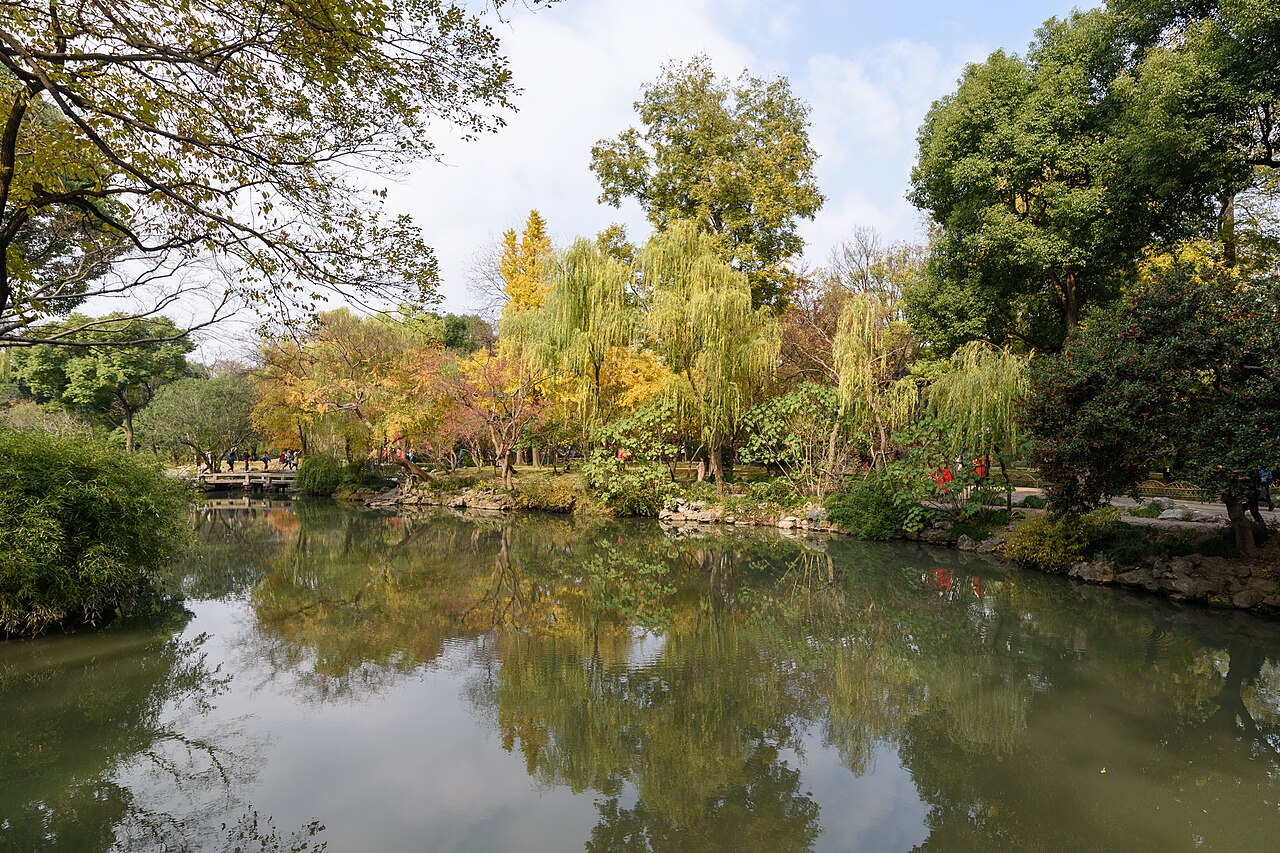
Suzhou has something Hangzhou doesn't — genuine UNESCO-listed classical Chinese gardens. The Humble Administrator's Garden, built in 1509, is the largest and most beautiful garden in Suzhou, designed around ponds, little bridges, wooden pavilions and meticulously placed rocks. The Lingering Garden (1583) is the best preserved of all. Both belong to the cluster of gardens UNESCO inscribed as World Heritage back in 1997.

What makes Suzhou special is the canals. The old town is so laced with waterways and arched stone bridges that it earned the nickname "Venice of the East." Pingjiang Road, running along a canal, is the loveliest stretch to stroll — old houses, teahouses, and boats you can ride. Tiger Hill carries a thousand-year-old pagoda that leans slightly, giving it the nickname "the Leaning Tower of China," and Suzhou has been a silk capital since ancient times.

The honest caveat is that Suzhou has no major airport of its own, so most visitors fly into Shanghai and take the train (about 30 minutes from Shanghai Hongqiao). Suzhou feels quieter and slower than Hangzhou — better suited to people who want to wander through gardens and canal lanes than to a big, buzzing city.

A classical Suzhou garden — a pond reflecting willows and a wooden pavilion, in the Jiangnan garden style listed as World Heritage
Strengths · good to know
UNESCO classical gardens — Humble Administrator's, Lingering, and more
An ancient canal city — arched stone bridges, rowboats, Venice of the East
Pingjiang Road — the prettiest canal-side lane to stroll
Quiet, slow atmosphere — ideal for unhurried walking and photos
A silk capital — silk museum and handicraft souvenirs
Very close to Shanghai — 30 minutes by train, easy to pair with it
No major airport of its own — fly into Shanghai, then train
Famous gardens get packed on holidays — go early, book ahead
No big central lake like West Lake (Lake Taihu lies outside town)
Less nightlife and fewer cafés than Hangzhou or Shanghai
Don't-miss highlights · Suzhou

The 3 things Suzhou does best

🌳
Humble Administrator's Garden
UNESCO site · built 1509 · the largest classical garden in Suzhou

Widely held to be the most beautiful garden in China — ponds joined by streams under little bridges, with covered pavilions and walkways. Entry runs roughly ¥70–90 (about ฿350–450) by season. Go at opening time to beat the crowds.

🛶
Pingjiang Road + the canals
Canal-side stone lane · old houses · rowboats · free to walk

Suzhou's loveliest stretch for a wander, running a kilometre along a canal lined with teahouses, snack shops and old wooden houses. A rowboat trip costs around ¥45–80 (about ฿225–400) per ride. The lantern light over the water at dusk is gorgeous.

🗼
Tiger Hill
A leaning thousand-year pagoda · historic hill

A hill just outside the old town, crowned by the thousand-year-old Yunyan Pagoda, which leans enough to be nicknamed "the Leaning Tower of China." Entry runs around ¥60–80 (about ฿300–400) by season. The climb is gentle and the old-town views are lovely.

Side by side

Every angle in one table

Aspect Hangzhou 杭州 Suzhou 苏州
Main draw West Lake, hilltop temples, Longjing tea hills UNESCO classical gardens, ancient canals, old stone lanes
The image of it Lake, hills, nature + a big city Gardens, canals, arched bridges — "Venice of the East"
Size & city life Big and lively — more cafés and restaurants Quieter, slower old town — built for strolling
Local food Zhejiang — balanced sweet-savoury (Dongpo pork, West Lake fish) Su cuisine — noticeably sweeter (squirrel fish, local sweets)
Getting there from Thailand Direct Bangkok → HGH, ~4–4.5 hr No major airport — fly into Shanghai, ~30 min train
Link to Shanghai HSR ~45–60 min (Hangzhou East ↔ Shanghai Hongqiao) HSR ~30 min (Suzhou ↔ Shanghai Hongqiao)
Crowds West Lake heaves on holidays — go at dawn Famous gardens busy on holidays — quieter overall
Days suggested 2–3 days (lake + temple + tea hills) 1.5–2 days (2–3 gardens + canals + Tiger Hill)
Best for First-timers / nature lovers / a big city + lake Garden lovers / slow walkers / photographers / pairing with Shanghai
How they connect

Ninety minutes apart by train —easy to pair

Hangzhou and Suzhou sit on the same high-speed rail line, with Shanghai in between, which makes moving among the three cities about as easy as travel in China gets.

Hangzhou ↔ Suzhou by train: around 1 to 1.5 hours. The fastest trains run from Suzhou South to Hangzhou West in about 45 minutes, but most services stop at Shanghai Hongqiao en route, so the total comes to roughly 1.5 hours. Trains run all day at high frequency; second-class tickets cost about ¥90–150 (about ฿450–750).
Via Shanghai: Shanghai Hongqiao is the hub that links both — about 45–60 minutes to Hangzhou and about 30 minutes to Suzhou. Many travellers run a triangle, Shanghai → Suzhou → Hangzhou, then fly home from Hangzhou, or swap the order to suit their flights.
How to book: reserve ahead on the Trip.com or 12306 app, and board with your passport. Book early around the long holidays. For the full how-to on booking and boarding, see the China high-speed rail guide.
Unpack once per city: because the distances are short and trains are frequent, there's no need to drag bags back and forth — check into one city, see your fill, then move. Travel in the morning or late afternoon so the daylight hours stay free for sightseeing.
The food, head to head

Sweet-leaning Jiangnan —but Suzhou is sweeter

Both cities belong to the Jiangnan region famous for its sweet leanings, but set them side by side and the difference is clear.

Hangzhou (Zhejiang) — a balanced sweet-savoury style. The icon is Dongpo pork, belly braised in soy until it melts, alongside West Lake sweet-and-sour fish and river shrimp stir-fried with Longjing tea leaves. More at the Hangzhou food guide.
Suzhou (Su cuisine) — noticeably sweeter. The icon is squirrel mandarin fish (deep-fried, shaped like a squirrel, under a sweet-and-sour glaze), plus clear-broth Suzhou noodles, traditional local sweets, and Biluochun green tea from the Dongting hills by Lake Taihu.

The simple takeaway: if you love properly sweet flavours you'll fall for Suzhou, while if you prefer a rounder, not-too-sweet balance, Hangzhou will suit you better. Both are delicious in their own way — if you're doing both cities, order each one's sweet-and-sour fish and compare. It's a fun exercise.

Do both

The "catch both cities" 4-5 day plan

The popular route is Shanghai → Suzhou → Hangzhou, then fly home from Hangzhou (or reverse it to suit your flights). No leg is more than ninety minutes by train.

DAY 1
Suzhou · arrival
Land in Shanghai, train into Suzhou — walk the canal old town

Fly into Shanghai and take the high-speed train into Suzhou, about 30 minutes. Check into a hotel near the old town. In the afternoon, stroll Pingjiang Road along its canal, ride a rowboat, and stop for tea. In the evening, take in the lantern light over the water and your first Su-cuisine dinner.

DAY 2
Suzhou · classical gardens
UNESCO gardens + Tiger Hill

Get to the Humble Administrator's Garden at opening time to beat the crowds, then continue to the nearby Lingering Garden. In the afternoon, climb Tiger Hill for the thousand-year leaning pagoda; silk fans can swing by the Suzhou silk museum. Late afternoon, take the train down to Hangzhou (via Shanghai, about 1.5 hr) and check into a hotel near West Lake.

DAY 3
Hangzhou · West Lake
Walk and cycle the lake + Leifeng Pagoda

A full day at West Lake — walk the Su Causeway in the morning mist, cycle the loop, take a boat out to the islands, and climb the Leifeng Pagoda for sunset. In the evening, stroll Hefang Street or catch the Impression West Lake show on the water.

DAY 4
Hangzhou · temple + tea
Lingyin Temple + Longjing tea village

Morning at Lingyin Temple and the carved-Buddha grottoes of Feilai Feng. In the afternoon, head up to the Longjing tea village to walk the tea slopes and sip green tea fresh from the source. With a fifth day, add a day trip from Hangzhou — the canal town of Wuzhen or the Grand Canal.

DAY 5
Hangzhou · loose ends, then fly
Cafés, souvenirs, then out to HGH

An easy morning — coffee, then pick up Longjing tea and silk souvenirs and wander the old Hefang market, before heading to Xiaoshan Airport (HGH) for the direct flight back to Bangkok. On a shorter trip, fold days 4 and 5 together and make it four days. See the full plan at the Hangzhou 3-day itinerary.

Make the call

Which city if you are...

If it's your first trip to China and you only have time for one city — pick Hangzhou. West Lake, temples, tea hills and a big city full of things to eat and do, plus the direct flight from Thailand, make it the more comfortable base for a first-timer.
If you're drawn to classical Chinese gardens, ancient architecture and a slow pace — pick Suzhou. UNESCO gardens like the Humble Administrator's and the Lingering, plus the canal-side Pingjiang Road, are things Hangzhou simply can't offer — and it pairs beautifully with a Shanghai trip.
If you're already in Shanghai and want a day trip — Suzhou is closer (30 minutes by train) and makes the easier day trip. Hangzhou (45–60 minutes) is more worth it if you stay at least one night.
If you have 4-5 days and want it all — do both, following the plan above: Shanghai → Suzhou → Hangzhou. Three cities on one rail line, about as easy to move between as travel in China gets.
Frequently asked

FAQ · Hangzhou or Suzhou

How long does the high-speed train between Hangzhou and Suzhou take?
They're very close. The high-speed train between the two cities takes around 1 to 1.5 hours. The fastest trains run from Suzhou South to Hangzhou West in about 45 minutes, but most services stop at Shanghai Hongqiao along the way, making the total trip around 1.5 hours. Second-class tickets cost roughly ¥90–150 (about ฿450–750). Trains run all day at high frequency, so pairing both cities in one trip is easy. See booking and boarding details in the China high-speed rail guide.
If I only have time for one city, should I pick Hangzhou or Suzhou?
If you want a big lake you can wander all day, hilltop temples, tea hills, and a lively city with plenty of cafés and restaurants — plus a direct flight from Thailand — pick Hangzhou. If you're drawn to classical Chinese gardens, ancient canals, old stone lanes, and a slow, quiet pace (and you're happy to fly into Shanghai and take the train), pick Suzhou. For a first trip to China that wants both nature and city life, Hangzhou usually makes the better base.
How is the food different in Hangzhou versus Suzhou?
Both cities sit in the Jiangnan region known for its sweet leanings. Hangzhou (Zhejiang) cooking is a balanced sweet-savoury style — signature dishes include Dongpo pork, West Lake sweet-and-sour fish, and shrimp stir-fried with Longjing tea leaves. Suzhou (Su cuisine) is noticeably sweeter, with the iconic squirrel mandarin fish and famous local sweets. If you love sweet flavours you'll adore Suzhou; if you prefer a rounder, less sugary balance, Hangzhou suits you better. See the standout dishes in the Hangzhou food guide.
How many days do I need to see both Hangzhou and Suzhou in one trip?
Four to five days is ideal. The popular plan is to fly into Shanghai, take the train to Suzhou for 1.5–2 days (UNESCO gardens, Pingjiang Road canals, Tiger Hill), then ride the train down to Hangzhou for 2–2.5 days (West Lake, Lingyin Temple, Longjing tea hills). All three cities sit on the same high-speed rail line, so moving between them is effortless — you only need to pack and unpack once per city. See the detailed Hangzhou plan in the Hangzhou 3-day itinerary.
What does Suzhou have that Hangzhou doesn't?
Genuine UNESCO-listed classical Chinese gardens — the Humble Administrator's Garden (built in 1509, the largest in Suzhou), the Lingering Garden (1583) and several more inscribed by UNESCO — plus a network of ancient canals that earned Suzhou the nickname Venice of the East, the canal-side Pingjiang Road, and a deep silk heritage. Hangzhou has a grand lake and major temples, but nothing matching gardens of this class.
Which city is quieter and less crowded?
Suzhou feels quieter and slower overall, especially the canal-side old town and the gardens — though the famous gardens like the Humble Administrator's get packed on holidays. Hangzhou is the bigger city with more buzz, and West Lake gets very busy on weekends and during Golden Week. The trick in both cities is to go early in the morning and to avoid China's long holidays (early October, early May, and Spring Festival).